Martien Hulsen is an Associate Professor at the Department of Mechanical Engineering , Eindhoven University of Technology (TU/e) . His research focuses on Computational Rheology , with applications in Polymer Processing , Microfluidics , and Additive Manufacturing (3D Printing) . Academic background: PhD in Mechanical Engineering (Delft University of Technology, 1988) Specializes in Numerical Methods for viscoelastic flow simulation Key applications: External Gear Pumps , Cell Sorting , and Micro-rheology Recent research trends: Interface Rheology , Particle Dynamics , and Thermal-Viscous Coupling His work has been published in top journals like Journal of Non-Newtonian Fluid Mechanics and Physics of Fluids . Martien serves on the editorial board of the Journal of Non-Newtonian Fluid Mechanics. Contact: m.a.hulsen@tue.nl
Soraya Caixeiro is a Research Fellow in the Department of Physics at the University of Bath, affiliated with the Centre for Photonics and Photonic Materials, NanoBioPhotonics, and multiple interdisciplinary research centres. Her work focuses on developing micro- and nanolasers for biosensing and biomedical applications, leveraging photonics, nanofabrication, and chemistry. She is actively involved in advancing laser-based technologies for real-time cellular and molecular monitoring, with a particular emphasis on early disease diagnosis and in vivo measurements. Education: She earned a Doctor of Philosophy in Physics from King’s College London (2014–2018), specializing in random lasing action from biocompatible materials. Her research integrates interdisciplinary expertise, including collaborations with institutions in Ireland, Germany, and the University of Bath’s Department of Life Sciences. Research Interests: Caixeiro’s multidisciplinary research combines photonics with nanofabrication to create compact laser sensors for biological applications. Key areas include enhancing laser specificity, optimizing geometric designs for sensitivity, and developing coatings for targeted biomolecular interactions. Her innovations aim to overcome limitations of traditional biosensing methods, such as low signal intensity and poor tissue penetration. Publications: Her recent work includes breakthroughs in DNA sensing using whispering gallery mode microlasers, hyperspectral confocal imaging for high-throughput analysis, and optical manipulation techniques for cellular delivery. These contributions highlight advancements in both fundamental photonics and translational biomedical applications. Outreach & Engagement: She actively participates in public lectures, school outreach programs, and interdisciplinary conferences (e.g., Photon 2024). Her commitment to diversity drives efforts to attract students from varied backgrounds to photonics research. Labs & Facilities: She utilizes state-of-the-art facilities at Bath, including the Nanofabrication Lab and Photonics and Nanoscience Labs, to pioneer functional biointegrated sensors for tissue and single-cell applications.
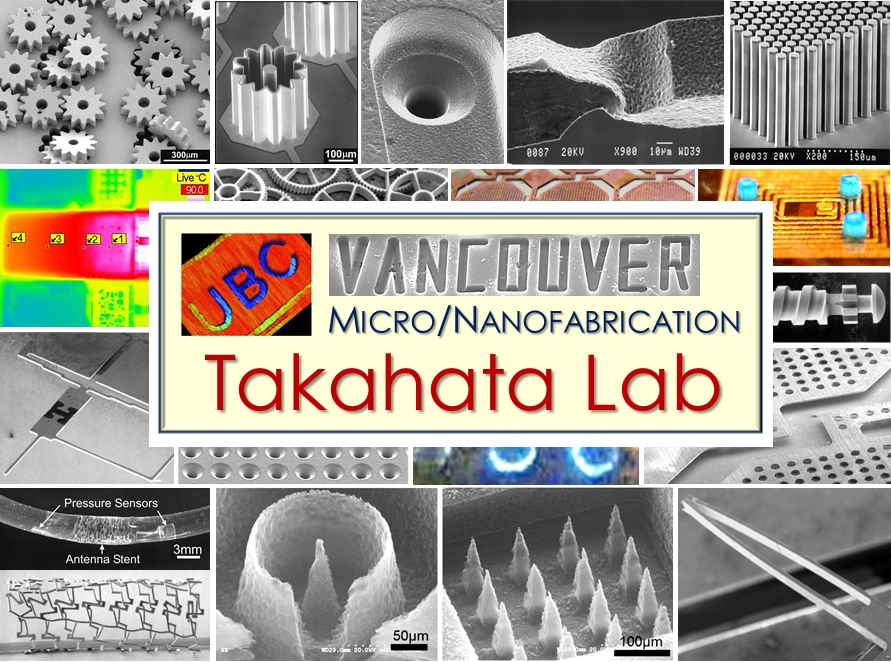
Prof. Kenichi Takahata is a Professor at the University of British Columbia's Department of Electrical & Computer Engineering, with an associate membership in the School of Biomedical Engineering. He holds a PhD from the University of Michigan (2005) and has over 25 years of experience in micro/nanofabrication and MEMS. His research focuses on developing advanced microdevices for biomedical applications, including implantable sensors, smart stents, and wireless drug delivery systems. Education: B.S. Physics (Sophia University, 1990), M.S. and Ph.D. in Electrical Engineering (University of Michigan, 2004/2005). Professional experience includes roles at Panasonic (Japan) and 3M (USA) before joining UBC in 2008. He leads the Takahata Lab, which pioneers innovations in micro/nanofabrication, medical MEMS, and energy harvesting. Research interests span microplasma control, wireless microactuators, and ferrofluid-based micromachines. Over 150 peer-reviewed publications and 10 patents highlight his contributions. His work includes developing the 'smart stent' for real-time vascular monitoring and microendoscopic imaging systems using ferrofluid actuators. Grants include a Canada Research Chair (2008–2018) and NSERC funding. Advising over 50 graduate students, he emphasizes interdisciplinary training across engineering, materials science, and biomedicine. The lab collaborates with industry and hospitals to translate technologies into clinical tools. Labs/Teams: Takahata Lab (UBC Microsystems & Nanotechnology Group), affiliated with the Canadian Institute for Advanced Research (CIFAR) and NSERC CREATE programs.
Dr. Jiling Feng is a Senior Lecturer in Mechanical Engineering at Manchester Metropolitan University, specializing in fluid mechanics applied to cardiovascular systems and biomedical engineering. Her research focuses on arterial waveform analysis, stent design, and material science for vascular disease treatment, supported by over £1.1 million in grants from EPSRC, UKRI, and Royal Society. She holds a BEng, MSc, PhD, and is a Chartered Engineer (CEng) and Fellow of the Higher Education Academy (FHEA). Education: BEng, MSc, PhD Professional Memberships: IMechE, IEEE, British Atherosclerosis Society Research interests include computational modeling of cardiovascular mechanics, fluid-structure interaction in arteries, and biomaterials for medical devices. She has authored over 40 peer-reviewed articles in top journals like Biomechanics and Modelling in Mechanobiology and serves on editorial boards for Mathematics and Frontiers in Biophysics . Recent projects include a KTP collaboration with Krohne (£235,000) and a Royal Society grant with Beijing University of Technology (£11,600). She supervises PhD and MSc projects on plaque mechanics and arterial waveforms. Labs/Teams: Active in vascular mechanics research groups, collaborating with vascular surgeons and industry partners.
J.M. Floryan is a Professor in the Department of Mechanical and Materials Engineering at Western University. He holds a Ph.D. from Virginia Tech (1980) and completed postdoctoral work at Northwestern University (1981). His research focuses on fluid mechanics , particularly flow manipulation strategies using surface roughness, heating patterns, and boundary conditions, with applications across laminar-turbulent transition, microchannel transport, and turbulent structures. Education : M.Sc. (Warsaw Technical University, 1974), Ph.D. (Virginia Tech, 1980), Postdoctoral (Northwestern University, 1981) His research interests span hydrodynamic stability, spectral methods, immersed boundary conditions, natural/forced convection, and biomedical flows. Methodologies include spectral algorithms for moving boundary problems and stability analysis of spatially modulated systems. Recent work emphasizes flow control via grooves and heating , drag reduction, and energy-efficient fluid systems. The 15 most recent publications (2022-2020) explore thermally-induced streaks, wall vibration effects, wavenumber lock-in, droplet impact physics, and peristaltic pumping. These studies employ direct numerical simulations , spectral accuracy, and experimental validation, with keywords covering hydrodynamic stability , drag reduction , buoyancy convection , and microfluidics . Scientific accolades include Fellowships from the American Physical Society , ASME , and Canadian Academy of Engineering , alongside the Humboldt Research Prize and Canada Research Chair . He has held visiting appointments at institutions like Technion (Israel), Tokyo Metropolitan University (Japan), and Darmstadt Technical University (Germany). Teaching includes graduate courses on Hydrodynamics Stability , Computational Fluid Mechanics , and seminars on Heat Transfer . He advises PhD/Master’s students like Y. Wang and S. Shadman. Professional roles include President of the Canadian Society for Mechanical Engineering and leadership in international mechanics symposia.
Sumita Pennathur is a Professor in the Department of Mechanical Engineering at the University of California, Santa Barbara. Her research focuses on nanoscale systems, integrating physics, biology, chemistry, and engineering to develop micro- and nanofluidic tools for biomedical applications. She leads the Pennathur Laboratory, pioneering innovations in electrokinetic transport, biosensors, and point-of-care diagnostics. Her academic honors include being a Fellow of the American Institute for Medical and Biological Engineering (2021), a DARPA Young Faculty Award (2008), and the prestigious Presidential Early Career Award in Science and Engineering (2010). Her work emphasizes both fundamental science and practical technological advancements, such as insulin pump improvements and glucose monitoring systems. Key Research Areas: Bioengineering, Nanofluidics, Electrokinetics, MEMS/NEMS, Biomedical Sensors Labs/Teams: Pennathur Laboratory (specializing in micro/nanofluidic systems) Grants/Funding: DARPA support, NSF grants, and industry collaborations Her recent projects include developing self-calibrating glucose sensors, enhancing insulin infusion set longevity, and creating bio-inspired nanofluidic diodes. These innovations bridge fundamental research and clinical applications, addressing critical challenges in healthcare and diagnostics.
Prof. Peter Innis is an Associate Professor at the University of Wollongong (UOW), affiliated with the Intelligent Polymer Research Institute (IPRI) and the Australian National Fabrication Facility (ANFF). He joined UOW in 1996 as an Associate Research Fellow after earning his PhD from the University of Technology Sydney (UTS). His research focuses on conducting polymers, electrofluidics, graphene composites, and advanced textile-based technologies. He has secured over $50 million in ARC grants since 1999 and currently leads the ANFF Materials Node, coordinating fabrication services nationwide. Prof. Innis has held two ARC Fellowships and is a Chief Investigator in the ARC Centre of Excellence for Electromaterials Science (ACES). His expertise spans electrochemical characterization, photoelectron transfer processes, and nanomaterial integration into devices. Recent work emphasizes electrofluidic separation technologies and wearable electrochemical sensors. Research interests include: conducting polymers, electrofluidics, graphene composites, 3D-printed materials, and textile electronics. He has pioneered innovations in textile-based microfluidics and electroosmotic pumps. His leadership roles include Associate Director of IPRI and Associate Dean (Research) at UOW's Australian Institute for Innovative Materials (AIIM). **Awards**: Australian Post-Doctoral Fellowship (1999), Queen Elizabeth II Fellowship (2003). **Grants**: 14 ARC grants, 2 ARC Centres of Excellence, and an NHMRC Development grant. His research teams focus on electrofluidic devices and sensors (EDS), combining 3D printing, advanced fibres, and textile architectures. **Labs/Teams**: IPRI, ANFF Materials Node, ACES CoE. Current projects involve neutron radiation shielding via additive manufacturing and electrofluidic cell culture integration.
David Inglis is an Associate Professor in the School of Engineering at Macquarie University, Australia. His research focuses on microfabrication technologies for biomedical applications, particularly particle separation systems and photonics. He holds affiliations with the Macquarie University BioFocus Research Centre and MQ Photonics Research Centre. Dr. Inglis earned a BSc in Engineering Physics from the University of Alberta (2001) and a PhD in Electrical Engineering from Princeton University (2007). His postdoctoral work included an Australian Postdoctoral Fellowship at Macquarie University's Physics Department (2008-2011). His research interests include deterministic lateral displacement (DLD) separations, electro-hydrodynamics, and microfluidic device development. Notable projects include liquid biopsy analysis for cancer diagnosis, high-throughput blood fractionation systems, and novel microfluidic sensors for extracellular vesicle detection. Inglis has led over 40 research projects and published 87 peer-reviewed articles. His work bridges engineering and medicine, with applications in diagnostics and therapeutic screening.
Emma Moonen is a Postdoc Researcher in the Microsystems Group at the Department of Mechanical Engineering, Eindhoven University of Technology (TU/e). She is a fellow in the national Faculty of Impact Program, focusing on commercializing sweat sensing devices for health monitoring. Her work involves discretized microfluidics and CRISPR-based analysis to enable non-invasive clinical insights from sweat. She holds a PhD (cum laude, 2024), MSc (2019), and BSc (2017) in Mechanical Engineering from TU/e. Her research spans wearable biosensors, microfluidic systems, and biomedical device development. Education: BSc in Mechanical Engineering, TU/e (2017) MSc in Mechanical Engineering, TU/e (2019) with research at the University of Cambridge on flexible electrodes for electrophysiology. PhD in Microsystems (2019–2024) under Prof. Jaap den Toonder, developing POC technology for antibody detection. Research Interests: Wearable sweat sensors, microfluidic platforms, point-of-care diagnostics, and biosensor integration. Her current projects include a hybrid patch for early health warnings and skin safety testing for electrowetting applications. Awards: PhD cum laude (2024) Grants & Roles: Funded by an NWO Faculty of Impact grant for commercializing sweat sensing devices. CTO of DXcrete, a startup potentially linked to her research. Member of the Eindhoven MedTech Innovation Center and Group Den Toonder. Labs & Teams: Eindhoven MedTech Innovation Center, Microsystems Group, and collaboration with institutions like the University of Cambridge and Jason Heikenfeld’s lab.
Ruxandra Dafinca is a Brain Science Research Fellow and Group Leader at the Nuffield Department of Clinical Neurosciences (NDCN), University of Oxford, where she leads research within the Oxford Motor Neuron Disease Centre. Her work focuses on unraveling molecular mechanisms in amyotrophic lateral sclerosis (ALS) and frontotemporal dementia (FTD) using cutting-edge patient-derived stem cell models. Her educational background includes: MSc DPhil Dr. Dafinca's research program investigates intracellular signaling pathways leading to synaptic deficiencies in ALS/FTD through spatial proteomics , transcriptomics , and live imaging of patient-induced pluripotent stem cell (iPSC)-derived neurons. She pioneered iPSC differentiation to motor and cortical neurons in 2013, establishing critical models for studying C9ORF72 hexanucleotide expansions and TDP-43 proteinopathies . Her work targets therapeutic discovery by identifying regulatory pathway disruptions in neurodegenerative processes. Analysis of her 15 most recent publications (2020-2025) reveals dominant themes in C9ORF72-related ALS/FTD mechanisms , mitochondrial dysfunction , axonal transport defects , and neuroinflammation . Key methodologies include high-throughput drug screening, CRISPR genome editing, and multi-omics integration, with strong translational emphasis on biomarker discovery and personalized drug evaluation for ALS therapeutics. Her research is funded by major grants from the My Name'5 Doddie Foundation , Motor Neuron Disease Association , and Oxford University's John Fell Fund and Medical Sciences Division Pump-Priming Award . She actively recruits postdoctoral researchers for multi-omics and microfluidics projects, indicating active mentorship in advanced neurodegenerative disease modeling. Dr. Dafinca collaborates extensively within the Oxford Motor Neuron Disease Centre alongside Professor Kevin Talbot (Head of Department), Associate Professor Martin Turner, and Professor Elizabeth Gray. Her laboratory leverages iPSC co-culture systems and advanced imaging to dissect neuron-microglia interactions and develop novel therapeutic strategies for ALS/FTD.
Professor Somchai Wongwises at King Mongkut's University of Technology Thonburi is a leading researcher in thermal engineering and fluid dynamics. His work focuses on advanced cooling systems, heat exchangers, and multiphase flow phenomena. Research trends from his recent publications highlight expertise in: microchannel heat sinks, nanofluid applications, two-phase flow modeling, and optimization of condensation heat transfer. Key innovations include dual-vapor thermosyphon designs and topology-optimized heat sinks for electronic cooling. His experimental and numerical studies span refrigeration systems, porous media integration in thermal collectors, and electrohydrodynamic flow simulations. Despite prolific contributions, no specific awards, student lists, or educational history are detailed in the provided data.
Roman Voronov is an Associate Professor in the Department of Chemical and Materials Engineering at the New Jersey Institute of Technology (NJIT). He joined NJIT in 2013 and holds a Ph.D. in Chemical Engineering from the University of Oklahoma (2010). His research focuses on microfluidics, tissue engineering, and computational modeling, with applications in bioprinting and cell migration studies. His work emphasizes developing cost-effective materials and technologies for biomedical applications, including addressable microfluidic systems and scaffold optimization for tissue culture. Education: Ph.D., Chemical Engineering, University of Oklahoma, 2010 M.S., Chemical Engineering, University of Oklahoma, 2006 B.S., Chemical Engineering, University of Oklahoma, 2003 Research Interests: Dr. Voronov’s research combines engineering principles with biomedical applications, including: Development of low-cost microfluidic platforms for cell manipulation and tissue engineering Computational modeling of mass transport and fluid dynamics in biological systems Bioprinting and 3D fabrication of functional tissues and organs Analysis of cell migration cues and decision-making in microfluidic environments Labs and Teams: His research is supported through collaborations and access to advanced facilities, including his lab’s online presence at http://cell.engineering .
Professor Chang-qing Xu is a faculty member in the Faculty of Engineering at McMaster University , holding the position of Professor in Engineering Physics and serving as an Associate Member of the McMaster School of Biomedical Engineering. He is currently accepting graduate students. Education : Ph.D. in Applied Physics, University of Tokyo (1991) M.Sc. in Physics, University of Science and Technology of China (1987) B.Sc. in Physics, University of Science and Technology of China (1985) Research Interests : Prof. Xu specializes in photonic devices, nonlinear optical materials, optical sensors, and laser applications. His work bridges photonics engineering with biomedical diagnostics, focusing on integrated photonic-microfluidic systems for health monitoring and environmental analysis. Recent Research Trends : His publications highlight advancements in mid-infrared laser sources, quantum networking schemes, and microfluidic cytometry for molecular detection. Key areas include speckle reduction in laser projection, polarization-insensitive grating couplers, and biomedical sensor development using periodically poled lithium niobate (PPLN). Scientific Awards : NSERC Alliance Grants (2024) for quantum research Global Water Futures Grant (2020) for water monitoring projects Advising and Grants : Prof. Xu mentors graduate students in projects involving quantum communication, optical biosensors, and laser engineering. His research is supported by significant grants from NSERC and Global Water Futures. Labs and Teams : He operates the photonic-microfluidic integrated device lab (JHE 214) at McMaster, focusing on compact optical sensors and biomedical diagnostic platforms.
Neeti Kalyani is a postdoctoral researcher at the Department of Biotechnology and Biomedicine, Technical University of Denmark. Her work focuses on digital microfluidics, biosensor development, and nanostructured materials for diagnostics. She actively contributes to advancing antifouling surfaces, point-of-care testing, and optical sensing technologies. Research Areas: Digital microfluidics, surface science, food safety, spinal cord injury diagnostics, environmental pollutant detection. Projects: Developing a handheld sensor for acute circulatory failure diagnosis (2024–2027). Supervision: Mentors PhD students and supervised multiple projects on microneedle biosensors, paper-based sensors, and resistive switching RAM. Her research bridges Nanotechnology , Biomedical Engineering , and Environmental Health , with trends in articles emphasizing point-of-care devices and antifouling innovations . Scientific Recognition Distinction in Doctoral Research (2022) She contributes to UN Sustainable Development Goals 3 (Health and Well-being) and 9 (Industry Innovation), with collaborations spanning Denmark and international institutions.
Jordi Ignés-Mullol is a Full Professor in the Department of Materials Science and Physical Chemistry at the Universitat de Barcelona and a member of the Institute of Nanoscience and Nanotechnology. His research focuses on experimental studies of soft condensed matter systems, including active protein suspensions, surfactant and colloidal Langmuir-Blodgett films, driven colloidal suspensions, and liquid crystals. He earned his PhD in Physics from the University of Pittsburgh and conducted postdoctoral research at École Normale Supérieure de Lyon and Tulane University. Research interests include: Pattern formation in complex fluids Dynamics of structures in liquid crystals Microrheology of Langmuir monolayers Active soft matter systems Colloidal assembly under external fields His recent publications explore topological defects in active nematics, liquid crystal-enabled colloid manipulation, and dynamic transitions in soft matter systems. Research trends show strong emphasis on non-equilibrium physics, interfacial phenomena, and experimental techniques development.