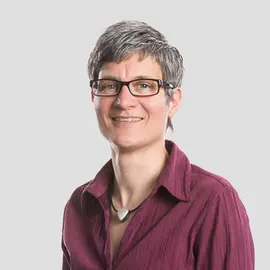
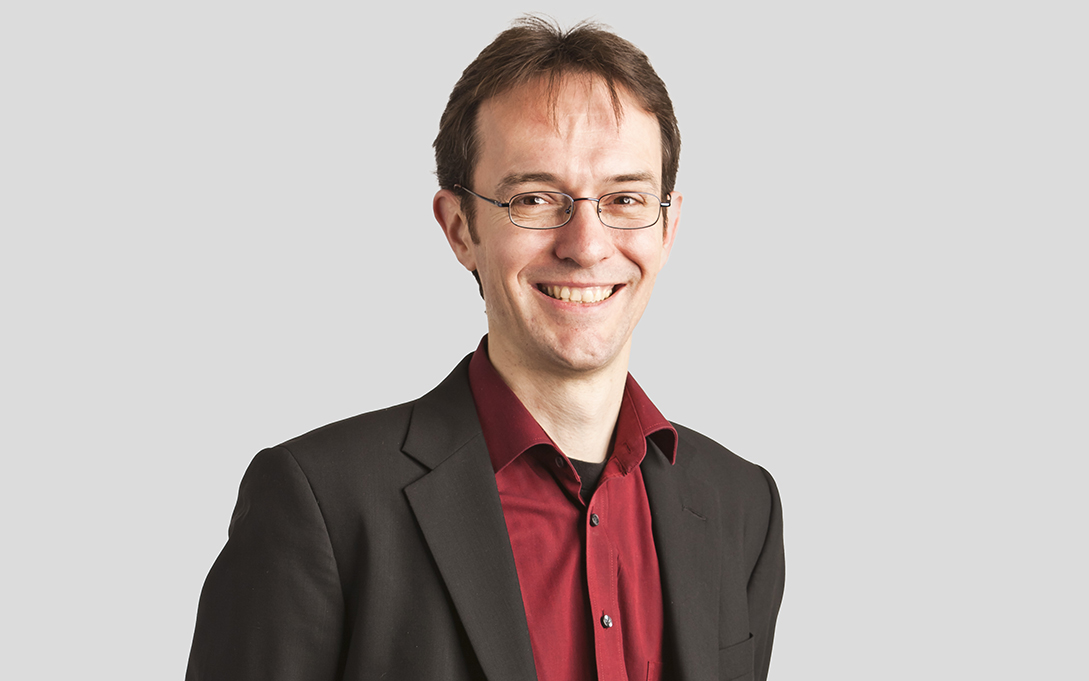
Jonathan Magnin is a Researcher at the Telecommunications Circuits Laboratory (TCL), affiliated with the School of Engineering at École Polytechnique Fédérale de Lausanne (EPFL). His work focuses on electrical engineering and telecommunications, particularly in circuit design and signal processing. University: École Polytechnique Fédérale de Lausanne (EPFL) School: School of Engineering (STI) Department: Telecommunications Circuits Laboratory (IEM, TCL) His research spans Telecommunications , Circuit Design , and Microelectronics , with applications in Communication Systems and Signal Processing .
Kai Zhu is a Researcher at the Embedded Systems Laboratory (ESL) within the School of Engineering at École Polytechnique Fédérale de Lausanne (EPFL). Additionally, Kai Zhu is a doctoral student in the Doctoral Program in Electrical Engineering at EPFL. Research Focus The research interests of Kai Zhu are rooted in embedded systems, electrical engineering, and computer science. Specific areas likely include microelectronics, real-time systems, signal processing, and system design, reflecting the expertise of the Embedded Systems Laboratory.
Halil Kerim Yildirim is a Doctoral Assistant at the Advanced Quantum Architecture Lab (AQUA) under the School of Engineering (STI) at École Polytechnique Fédérale de Lausanne (EPFL). He is also enrolled in the Doctoral Program in Microsystems and Microelectronics as part of EPFL's Student category. Research Interests: His work focuses on Quantum computing architectures Power semiconductor devices (GaN-on-Si, AlGaN/GaN) Integrated circuit design for high-frequency applications Passivation techniques in microelectronics Photonics and LiDAR systems Article Trends: Recent publications highlight advancements in gallium nitride (GaN) transistors, photonic-electronic integration for LiDAR, and high-frequency power electronics. Key subfields include device optimization, materials science, and circuit miniaturization. Laboratory Affiliation: Yildirim contributes to the Advanced Quantum Architecture Lab , which explores quantum technologies and integrated systems.
Mahsa Shoaran is a Tenure-Track Assistant Professor at EPFL (École Polytechnique Fédérale de Lausanne) jointly appointed at the Center for Neuroprosthetics and the Institute of Electrical Engineering . She is also the founding director of the Integrated Neurotechnologies Laboratory (INL) and contributes to several doctoral programs and teaching missions across EPFL’s School of Engineering (STI). Education: PhD in Electrical Engineering, EPFL (2015) M.Sc. & B.Sc., Sharif University of Technology Postdoctoral Fellow, California Institute of Technology (Caltech) (2015-2017) Former Assistant Professor, School of Electrical and Computer Engineering, Cornell University (2017-2019) Research Focus: Dr. Shoaran’s work sits at the convergence of integrated circuit design , machine learning , and neuroscience . Her group develops ultra-low-power, miniaturized system-on-chips (SoCs) capable of real-time neural recording , pathology detection , and closed-loop therapeutic intervention such as adaptive neurostimulation. Machine-learning algorithms running on-chip enable precise symptom detection in neurological and psychiatric disorders, while advanced circuit techniques guarantee energy efficiency suitable for long-term implantable or wearable neural interfaces. Scientific Awards & Grants: ERC Starting Grant 2021 Google Faculty Research Award in Machine Learning 2019 Swiss NSF Postdoctoral Fellowships NSF Award for Young Professionals – Smart & Connected Health MIT EECS Rising Star 2015 Doctoral Advising & Service: She currently supervises 14 PhD students in the Integrated Neurotechnologies Laboratory. Additionally, she serves on the PhD program committees for Electrical Engineering (EDEE), Microsystems & Microelectronics (EDMI), and contributes to the Neuro-X and SEL teaching programs. She is a Technical Program Committee member for IEEE CICC and serves on the Student Research Preview committee for ISSCC. Laboratory & Collaborative Teams: The Integrated Neurotechnologies Laboratory (INL) at EPFL Campus Biotech in Geneva hosts her interdisciplinary team of circuit designers, machine-learning researchers, and neuroscientists. The lab collaborates closely with clinicians to translate innovations into real-world neuroprosthetic and diagnostic devices.
Giovanni Ruffolo is a Doctoral Assistant and PhD candidate at the Laboratory for Advanced Fabrication Technologies (LAFT) within the School of Engineering (STI) at EPFL. He holds dual roles as staff (Researcher) and student in the Doctoral Program in Microsystems and Microelectronics under EPFL’s Doctoral School (EDOC/EDMI). Office: MC B4 224, EPFL campus. Education: B.Sc. Electronic Engineering, Università della Calabria (2020) M.Sc. Nanotechnologies for ICTs, Politecnico di Torino (2023) His research focuses on advanced fabrication technologies for microsystems and nanotechnologies, leveraging interdisciplinary approaches in microelectronics and ICT applications. Current work aligns with LAFT’s expertise in scalable manufacturing and material integration. No scientific awards or grants are explicitly listed in the provided data. Lab affiliations include LAFT’s interdisciplinary research team.
Dimitra Tatli is a Doctoral Assistant at the Embedded Systems Laboratory (ESL) , affiliated with the School of Engineering at Swiss Federal Institute of Technology Lausanne (EPFL) . She is also concurrently a student in the Doctoral Program in Electrical Engineering at EPFL. Educational Affiliation: Doctoral Program in Electrical Engineering, EPFL Research Interests: Her work focuses on Embedded Systems , integrating principles of Electrical Engineering and Computer Science . She contributes to Systems Engineering and Microelectronics through her research activities.
Guillermo Villanueva is an Associate Professor at the Ecole Polytechnique Federale de Lausanne (EPFL), Switzerland, affiliated with multiple departments including the Mechanical Engineering Institute (IGM), the School of Engineering (STI), and serving as Head of Section in SGM Administration. He leads the Advanced Nano-electromechanical Systems Laboratory (NEMS) and is actively involved in teaching across various programs including SMT and SGM. Dr. Villanueva received his educational background from Spanish institutions: a PhD in Microelectronic Engineering from CNM-IMB-CSIC/UAB (2002-2006), an MSc in Finite Element Modelling from UNED (2005), an MSc in Microelectronic Engineering from UAB (2002-2004), and an MSc in Physics from Zaragoza (1998-2002). Prior to his position at EPFL, he was a Marie Curie post-doctoral scholar at DTU (Denmark) and Caltech (California, US), and a post-doc at EPFL-LMIS1. His research focuses on MEMS/NEMS with expertise spanning design, analysis, fabrication and characterization of sensors, oscillators, and systems involving nonlinear and coupled dynamics, as well as fundamental noise processes. Dr. Villanueva has been active in these fields since the start of his PhD in 2002, with a particular emphasis on the practical applicability of nanomechanical systems. Analysis of his recent publications reveals a strong trend toward advanced materials for NEMS applications, particularly lithium niobate for acoustic resonators, hafnium oxide for flexoelectric devices, and innovative approaches to microfluidic systems with applications in biomedical engineering and energy harvesting. His work bridges fundamental nanomechanics with practical device implementation, with increasing focus on integration with photonic systems. Dr. Villanueva has co-authored more than 100 papers in peer-reviewed journals and more than 130 contributions to international conferences. He serves as editor in chief of the Physical Sensors section of MDPI Sensors and has been active in the organization of major conferences including MNE2014, SNC2015, Transducers 2019 short courses, and the 16th International Workshop on Nanomechanical Sensors (NMC2019). As a dedicated educator and academic leader, Dr. Villanueva serves on the PhD program committee for Microsystems and microelectronics and contributes significantly to curriculum development. His laboratory, the Advanced Nano-electromechanical Systems Laboratory, continues to push the boundaries of nanomechanical sensing and actuation technologies.
Frank Kagan Gürkaynak is Director of the Microelectronics Design Center (DZ) and a Researcher at ETH Zurich's Department of Information Technology and Electrical Engineering (D-ITET). He leads the PULP open-source hardware project and works closely with Prof. Luca Benini in the Integrated Systems Laboratory (IIS). His academic journey includes BSc/MSc from Istanbul Technical University and a PhD from ETH Zurich. Roles: Microelectronics Design Center Director, Senior Scientist in IIS, VLSI course lecturer Research focuses on energy-efficient digital circuits, cryptographic hardware security, and open-source processor architectures. Key projects include EU-funded initiatives like European Processor Initiative (EPI), Convolve, and NeuroSoC, along with SNSF grants Tiny Trainer and PEDESITE. Active in teaching VLSI design, embedded systems, and essential engineering skills. Publications emphasize secure cryptographic accelerators, low-power processor clusters, and GALS system design methodologies. Contributions include energy-efficient ASICs for IoT to HPC domains and pioneering work in side-channel attack-resistant hardware.
Vladimir Pesic is a Researcher at the École Polytechnique Fédérale de Lausanne (EPFL) , affiliated with two laboratories: the Laboratoire d'architecture quantique (AQUA) and the Laboratoire d'information quantique avec supraconducteurs (SQIL) . He works within the School of Engineering and the School of Basic Sciences, focusing on quantum architecture and superconducting quantum information systems. His contact email is vladimir.pesic@epfl.ch . His research interests span quantum computing, quantum information science, and superconductivity, with a particular emphasis on developing quantum architectures and exploring superconducting technologies for quantum information processing.
Prof. Dr. Caspar Demuth is affiliated with the Zurich University of Applied Sciences (ZHAW) at the School of Life Sciences and Facility Management, Institute of Chemistry and Biotechnology. His academic rank is Professor. Ph.D. in Sensor Technology, ETH Zurich (1994-1999) Diploma in Chemistry, University of Zurich (1988-1993) Research focuses on Sensor Technology , Bioprocess Analytics , and Chemical Sensors , with applications in bioreactor monitoring, pharmaceutical analytics, and industrial process optimization. His work spans Biotechnology , Applied Microbiology , and Biosensor Development . Recent publications (2016-2020) emphasize sensor innovation for bioprocessing, process analytics in academic institutions, and real-time measurement systems . Collaborative efforts include HPTLC identity testing for medicinal plants and microcarrier cultivation monitoring . Teaching areas include Analytical Chemistry , Measurement and Sensor Technology , and Biostatistics . He holds a patent (EP1889043 B1) for an electrochemical sensor and has contributed to international conferences in biotechnology and sensor technology.
Julian Leon Raub is a Doctoral Assistant at the MicroBioRobotic Systems Laboratory (MICROBS) within the School of Engineering at École Polytechnique Fédérale de Lausanne (EPFL). He is affiliated with the Institute of Mechanical Engineering and operates from office MED 3 2715 in Lausanne, Switzerland. Raub holds a dual role as both a staff member and a doctoral student in the Microsystems and Microelectronics program. Research Focus: Biomedical robotics and microsystem technologies Key Areas: Bio-microengineering, microfluidics, autonomous systems, and biomedical sensing Contact: julian.raub@epfl.ch | +41 21 693 86 52
Dr. Ines Stassen Böhlen is a researcher at the Zurich University of Applied Sciences (ZHAW) School of Engineering , focusing on Scientific Computing & Algorithmics . Her work bridges computational methods with industrial laser manufacturing technologies. Her research interests include: Laser micromachining of optical components CAD/CAM software integration for manufacturing tools Algorithm development for precision engineering Photonics applications in industrial settings Contact: ines.stassenboehlen@zhaw.ch ZHAW School of Engineering, Technikumstrasse 71, 8400 Winterthur, Switzerland
Gian Luca Barbruni is a Postdoctoral Researcher at the Bio/CMOS Interfaces Laboratory at École polytechnique fédérale de Lausanne (EPFL), Switzerland, where he focuses on designing novel circuital architectures for in-memory sensing and computing, and on drinkable µm-sized bioelectronics for enhanced brain imaging and precise diagnostics. He also served as a Doctoral Assistant at the Integrated Systems Laboratory (LSI1) at EPFL. Dr. Barbruni earned his Ph.D. in Microsystems and Microelectronics from EPFL in 2023, focusing on the design and development of innovative cortical visual prosthesis to revert blindness. Prior to that, he received his M.Sc. in Biomedical Instrumentation (2019) and B.Sc. in Biomedical Engineering (2017) from Politecnico di Torino, Italy. His research primarily centers on the intersection of low-power mixed-signal IC design, wireless power transfer, and microfabrication techniques for biomedical applications. His work spans brain-computer interfaces, vision restoration technologies, cancer diagnostics, and electrochemical sensing systems. Dr. Barbruni's approach integrates circuit design with electrode-tissue interface engineering to create miniaturized, wireless neural interfaces that overcome limitations of traditional neurostimulation systems. His research on frequency-switching inductive links has demonstrated significant improvements in efficiency and power delivery for large-scale neural interfaces. His publication record shows a clear progression toward increasingly sophisticated and miniaturized neural interface systems, with recent work focusing on in-memory sensing for cancer diagnostics and advanced microfabrication techniques for electrode integration. The consistent theme across his publications is the development of wireless, miniaturized systems that can operate within safety constraints while delivering sufficient power for neural stimulation and sensing applications. Dr. Barbruni has received several notable recognitions for his work: Best Student Paper Award in Electronics at IEEE MOCAST, 2022 in Bremen, Germany As a Principal Investigator, he has secured multiple competitive grants including MINT-CMOS (Enable 2022) and WIMOS-RES (Enable 2022). He serves as a reviewer for prestigious journals including IEEE Transactions of Biomedical Circuits and Systems and IEEE Sensors Journal, and as a TPC member for major conferences such as IEEE BioCAS, IEEE Sensors, IEEE MeMeA, and IEEE ICECS. Dr. Barbruni is actively involved with the Bio/CMOS Interfaces Laboratory in Neuchâtel, part of EPFL's School of Engineering, where he leads research on novel circuital architectures for in-memory sensing and computing. His work on 'Neural Dot' represents a significant advancement in fully integrated monolithic chips for neural interfaces, featuring wafer-level CMOS-compatible post-processing techniques for electrode integration that address traditional challenges in miniaturized neural implant design.
Charlotte Frenkel is a Tenure-Track Assistant Professor in the Microelectronics Department at Delft University of Technology (TU Delft), where she leads research in neuromorphic engineering and low-power AI hardware. Her work bridges the gap between biological intelligence and artificial neural networks, focusing on energy-efficient computing at the edge. Dr. Frenkel's research spans digital and mixed-signal IC design, computer architecture, learning algorithms, and neuroscience. She directs the Cognitive Sensor Nodes and Systems (CogSys) lab, which develops neuromorphic processors like ODIN, MorphIC, SPOON, and ReckOn that demonstrate competitive advantages over conventional neural network accelerators. Her publications reveal a strong focus on spiking neural networks, event-based processing, and on-chip learning. Key trends include developing hardware that leverages sparsity for energy efficiency, creating bio-inspired learning algorithms that solve weight transport and update locking problems, and establishing frameworks for benchmarking neuromorphic systems through initiatives like NeuroBench. Scientific Awards: IBM Innovation Award 2021 Nokia Bell Labs Scientific Award 2021 IEEE ISCAS 2020 Best Paper Award NEUROTECH/NICE Best Early Researcher Presentation 2021 AiNed Fellowship Grant Dr. Frenkel is actively expanding her research group through PhD and postdoc positions. She serves as Associate Editor for IEEE Transactions on Biomedical Circuits and Systems and Frontiers in Neuroscience, and has held numerous leadership roles in conference organization including Program Chair for tinyML Research Symposium 2024 and Neuro-Inspired Computational Elements conference 2023-2024. Her service includes extensive reviewing activities for top IEEE journals and conferences in her field.
Prof. Dr. Hanspeter Schmid is a Lecturer for Microelectronics and Signal Processing at the University of Applied Sciences and Arts Northwestern Switzerland (FHNW) within the School of Engineering and the Environment. He also serves as a part-time Senior Lecturer at ETH Zurich for Analog Signal Processing and Filtering. Diploma, Postgraduate, and Doctoral degrees from ETH Zurich His research focuses on fast low-power circuits for sensor electronics, signal integrity in analog systems , and sigma-delta modulation . Recent publications address noise analysis, statistical fallacies in small sample measurements, and mixed-signal circuit design. Key article trends include analog/digital filter design, signal-flow graphs, and FFT applications in noise measurement. His work bridges theoretical mathematics with practical circuit implementation, as seen in his 3σ Fallacy study and switched-capacitor tutorials. IEEE CAS Society : Co-Chair (2008-2010), Associate Editor (TCAS-I 2007-2011, TCAS-II 2016-2017) Distinguished Lecturer (2011-2012) and ESSCIRC committee member until 2019 He supervises research projects like Authenticity in Music Production , collaborating with digital music research centers to simulate electronic equipment. His professional affiliations include FHNW’s Institute for Sensors and Electronics and ETH Zurich.