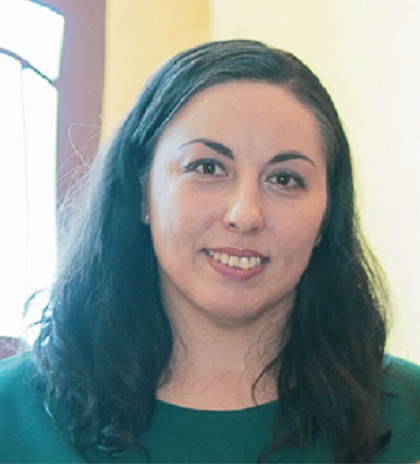
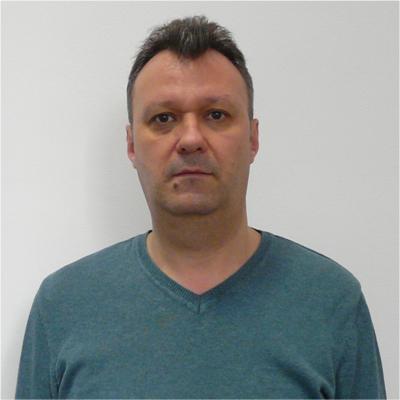
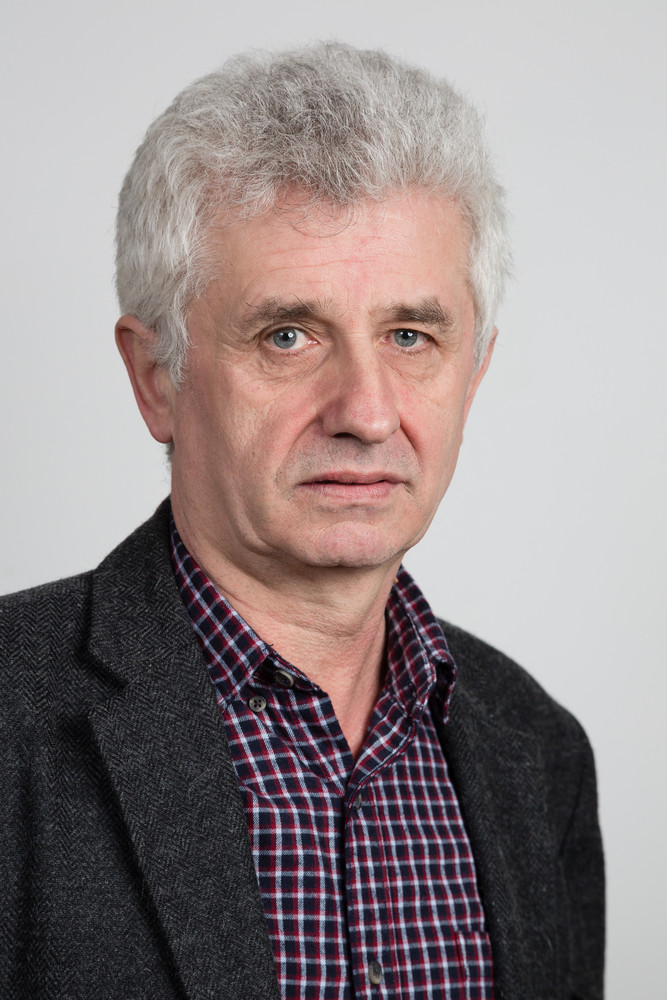
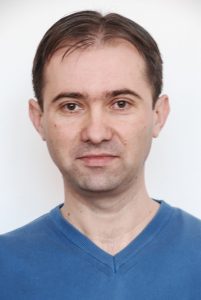
Marius MARCU is an Associate Professor at the Computer and Software Engineering Department , Faculty of Automation and Computers , Politehnica University of Timisoara , Romania. His career spans over two decades, combining academic rigor with industry collaboration, particularly in mobile systems and energy-efficient computing. PhD in Computer Science (2005) Master's in Advanced Computer Engineering (1996) BSc in Computer Systems Engineering (1995) His research focuses on Mobile Systems and Applications , Dynamic Power and Thermal Management , and Power-Aware Applications , with over 60 publications and leadership in 11 R&D projects. His work bridges theoretical advancements with practical implementations in wireless sensor networks and embedded systems. Recent publications emphasize energy characterization , thermal profiling , and wireless positioning accuracy across 2010–2011. He actively contributes to academic governance as Studies Program Manager for the Master of Information Technology and peer reviewer for IEEE and ACM. Merit Diplomas 2021 Project Director, FP7-eMuCo (2008–2010) Advisory roles for Alcatel-Lucent R&D contracts
Dr. Felicia Gheorghiu is a researcher at the Department of Exact and Natural Sciences , Alexandru Ioan Cuza University (UAIC), Romania , affiliated with the RAMTECH Center . Her work focuses on multiferroic systems , magnetoelectric properties , and oxide materials , particularly in multifunctional ceramics for microelectronics applications. PhD in Physics (2012) Expertise in dielectric spectroscopy, structural/magnetic characterization, and gel-combustion synthesis Her research explores multiferroic ceramics with magnetoelectric coupling, including single-phase and composite systems , and investigates the impact of doping , porosity , and microstructure on material properties. Recent studies highlight flexible electronics and miniaturized antenna design . While no scientific awards are explicitly listed, her publications demonstrate sustained contributions to materials science and solid-state physics . Contact: felicia.gheorghiu@uaic.ro .
Dr. Florin Tudorache is affiliated with the Department of Exact and Natural Sciences at Alexandru Ioan Cuza University of Iași , focusing on ceramic materials and sensor technologies. His research spans: Ceramic material synthesis Electrical and magnetic property characterization Humidity and gas sensor development Nanostructured thin films and composites Doping techniques for material optimization Multiferroic and perovskite oxides Recent articles highlight his work in: Humidity sensor materials with doped tin sulfides and zinc oxides Multifunctional polymer-carbon composites Thermal and microstructural effects on sensor performance Magnetic textile engineering Spinel ferrite applications His team explores mixed ionic-electronic conductors and cost-effective fabrication methods, with expertise in spray coating, electrospinning, and X-ray diffraction.
Dr. Andrei Drăgulinescu is an Associate Professor at the National University of Science and Technology POLITEHNICA Bucharest, Faculty of Electronics, Telecommunications and Information Technology, where he also serves as Head of University Works since 2009. His academic background includes a Doctor of Engineering degree (2004-2008) and postdoctoral studies (2010-2013) from the same institution. He has conducted international research internships in Finland, France, and Italy, focusing on semiconductor lasers, CMOS photodiodes, and optical technologies. Research Interests: His primary expertise spans optoelectronics and nanotechnologies, with specialized work in CMOS sensors, semiconductor lasers, and electrochemistry for energy applications. Key areas include: Design and simulation of quantum well lasers (InGaN/InGaAsN) CMOS photodiode characterization and reliability Optical correlators for image recognition Fiber laser applications in industrial metrology Electrochemistry in energy conversion devices Research Projects: He leads and collaborates on significant interdisciplinary projects: ENI Project (2018-2020): Project manager for intelligent soil mapping modules using eco-nanotechnologies. AMI-DETECT Project (2014-2017): Research member developing portable microbiosensor arrays for cardiac diagnostics. Laboratory Affiliations: Affiliated with the Optoelectronics Research Center at POLITEHNICA Bucharest, contributing to advancements in laser diagnostics and semiconductor testing.
Nina Anatolyivna Smirnova is a Senior Lecturer at the Department of Information Security and Nanoelectronics within the Faculty of Information Security and Electronic Communications at Zaporizhzhia National Technical University. She graduated from the same university in 2000 with honors, specializing in Microelectronics and Semiconductor Devices, earning the qualification of Electronics Engineer. Her scientific interests focus on chemical, temperature and optical effects in nanoscale devices and instruments, as well as nanosensors and nanometrology. She teaches Physics of Semiconductors, Information and Measuring Equipment Devices, and Basics of Control and Technical Diagnostics. Dr. Smirnova's recent research publications (2020-2008) demonstrate her expertise in nanoscale phenomena, particularly van der Waals interactions between nanoparticles, nanoscale measurement techniques, and thin-film technologies. Her work bridges fundamental physics with practical applications in nanoelectronics and sensor development. With 15 total scientific works including patents, journal articles, and conference presentations, her research has contributed to advancements in nanoscale measurement techniques and nanomaterial characterization. Her work shows a consistent focus on the intersection of microelectronics, nanotechnology, and measurement science. Dr. Smirnova has been active at the university since 2000 and continues to contribute to both the educational and research missions of the institution, specializing in the rapidly evolving field of nanoelectronics and nanoscale measurement technologies.
Dr. Damian Imbrea is an Associate Professor at the Department of Digital Integrated Circuits, Faculty of Electronics and Telecommunications, Technical University of Iasi. His academic focus aligns with his department's specialization in digital integrated circuits and related fields. Contactable via email at dimbrea@etc.tuiasi.ro or phone: 0232-213737. Research interests inferred from his departmental affiliation include VLSI design, microelectronics, and analog circuit design. No specific publications or awards were explicitly listed in the provided text. No advising records, grant information, or lab affiliations were mentioned in the source material.
Niculescu Titu is an Associate Professor at the Department of Automation, Computers, Electrical and Power Engineering within the Faculty of Mechanical and Electrical Engineering at the Politehnica University of Timişoara. His research focuses on electrical systems, power quality, and control systems, with a strong emphasis on practical applications using MATLAB/Simulink and NI-USB data acquisition systems. He has contributed extensively to topics such as transient analysis in electrical circuits, power factor correction, and safety in hazardous environments. His work spans reactive power compensation, harmonic reduction techniques, and the integration of renewable energy systems. Titu has also explored explosion-proof electrical equipment for mining applications, combining theoretical analysis with experimental validation. His methodologies often involve simulation tools to model real-world phenomena, ensuring practical relevance to industrial challenges. Key areas of contribution include electro-dynamic forces in short circuits, transient analysis of inductive/capacitive circuits, and the application of programmable microcontrollers in optimizing photovoltaic systems. His research underscores the intersection of theoretical electrical engineering principles with cutting-edge instrumentation and control strategies.
Olga Valentynivna Vasylenko is an Associate Professor in the Department of Information Security and Nanoelectronics at Zaporizhzhia Polytechnic National University. With over 15 years of academic experience since joining the university in 2010, she has established herself as a respected researcher and educator in the fields of micro- and nanoelectronics, semiconductor power converters, and automated control systems. Education Zaporizhia Industrial Institute (1990): Electronic Engineering Engineer National University "Zaporizhzhya Polytechnic": Master in Metrology and Information and Measuring Technology Candidate of Technical Sciences (2002): Thesis on "Macromodels based on B-elements for automated circuit design of power electronics devices" Dr. Vasylenko's research focuses on mathematical modeling and automated design of control systems, semiconductor power converters, and micro- and nanoelectronics devices. Her work bridges theoretical modeling with practical applications in power electronics, nanotechnology, and measurement systems. She has pioneered approaches in modeling energy characteristics of nanoclusters, simulation of multidomain automatic control systems, and design of information and measurement systems within Industry 4.0 frameworks. Her expertise spans from fundamental nanoscale phenomena to practical engineering applications in hybrid transportation systems and power electronics. Her extensive publication record (70 scientific works including 35 journal articles, 2 monographs, and 2 textbooks) demonstrates consistent scholarly productivity across multiple domains. The publication trend shows a clear evolution from fundamental power electronics research toward increasingly sophisticated modeling of nanoscale systems and integration with Industry 4.0 paradigms. Recent work focuses on adaptive models for power converters, energy conversion in hybrid vehicles, and advanced measurement systems. Scientific Recognition Lector of the Year award (ZDIA, 2009) Active presence in international scholarly databases (Scopus ID: 57194196732, Researcher ID: AAE-2262-2019, ORCID: 0000-0001-6535-3462) Dr. Vasylenko teaches a comprehensive curriculum including Modeling of micro- and nanosystems, Analysis of electronic circuits, Automatic control systems, Computer modeling, Measuring equipment power supplies, Design of measuring systems, Power semiconductor devices, and Scientific research methodology. Her teaching reflects the interdisciplinary nature of her research, connecting theoretical foundations with practical engineering applications across multiple domains. She actively participates in scholarly conferences and contributes to the advancement of her field through methodological innovations in simulation techniques and measurement system design. Her work demonstrates a consistent trajectory of increasing sophistication in modeling approaches applied to increasingly complex systems, from semiconductor power converters to nanoscale phenomena.
Dr. Zârbo Liviu-Petre is a Leading Researcher (R4) at the National Institute for Research and Development of Isotopic and Molecular Technologies (INCDTIM) in Romania, where he works in the Department of Materials, Energy and Advanced Technologies. He leads the Quantum Engineering research team and has over 17 years of research experience in condensed matter physics and quantum technologies. Dr. Zârbo earned his MSc in Theoretical Physics from Babeș-Bolyai University in Cluj-Napoca, Romania in 2001, followed by a PhD in Physics from the University of Delaware, USA in 2007. His research focuses on quantum phenomena in materials, with particular expertise in: Quantum computing and quantum information processing Condensed matter physics and quantum chemistry Quantum engineering applications Thermoelectric properties of oxides Ferroelectricity in perovskite materials Hydrogen storage modeling in nanoporous materials Spintronics and magnetoelectric composites Dr. Zârbo has been actively involved in numerous significant research projects spanning quantum communication infrastructure, quantum computation with Schrödinger cat states, skyrmionics materials, and advanced thermoelectric materials for space applications. His work demonstrates strong theoretical foundations combined with practical applications in emerging quantum technologies. His major scientific contributions include: Romanian National Quantum Communication Infrastructure (RoNaQCI) Quantum Computation with Schrödinger cat states (QuCos) Development of quantum information technologies in Romania High Performance Materials for Space Thermoelectric Generators Universal Multiscale Simulations for Hydrogen Storage Dr. Zârbo has established himself as a leading researcher in quantum technologies and advanced materials in Romania, contributing significantly to the country's participation in the European Quantum Technologies Flagship program and positioning Romania within the emerging quantum technology landscape.
Traian TULBURE is a Lecturer at the Department of Electronics and Computers within the Faculty of Electrical Engineering and Computer Science at the Technical University of Brașov. His research focuses on Very Large Scale Integrated Circuits, Digital Electronics, and reconfigurable architectures for structured ASIC technology. He has contributed to significant projects including the ATLAS experiment at CERN, particularly in developing readout controllers for muon spectrometers. Key research interests include optimizing testability in dynamic reconfigurable CPLD architectures and advancing structured ASIC applications. His work bridges microelectronics innovation with high-energy physics instrumentation, demonstrated through collaborations on particle detector systems. Publications emphasize both theoretical advancements (e.g., dynamic reconfiguration methodologies) and applied contributions to large-scale physics experiments. No scientific awards are explicitly mentioned, though his involvement in international collaborations like ATLAS highlights his professional standing. Advising activities and grant details are not detailed in the provided text. He has contributed to detector hardware development for the ATLAS New Small Wheel upgrade, reflecting his role in experimental physics instrumentation.
Elena-Raluca Bulai serves as a Lecturer at Stefan cel Mare University of Suceava, currently affiliated with the Faculty of Medicine and Biological Sciences since 2021. Previously, she held lecturing positions at the Faculty of Physical Education and Sports (2016-2021) and the Faculty of Mechanics, Mechatronics and Management (2011-2016). Her academic foundation includes advanced chemistry training from Gh. Asachi Technical University. Her educational credentials comprise: Master in Natural Products, Gh. Asachi Technical University, Faculty of Chemical Engineering and Environmental Protection, Iași (2005) PhD in Chemistry, Gh. Asachi Technical University, Faculty of Chemical Engineering and Environmental Protection, Iași (2011) Dr. Bulai's research centers on the molecular engineering of liquid crystalline materials, with emphasis on bent-core and asymmetric molecular architectures. Her work bridges synthetic organic chemistry with advanced materials characterization, exploring structure-property relationships in soft matter systems. This interdisciplinary approach addresses fundamental questions in mesomorphism while targeting applications in microelectronics and functional materials. Her publication trajectory from 2010-2018 reveals consistent innovation in liquid crystal design, particularly oxadiazole-based systems. The research demonstrates methodical progression from molecular synthesis to thermal and structural characterization, establishing clear connections between molecular geometry and mesophase behavior. This body of work contributes significantly to the fundamental understanding of bent-core liquid crystals. Her scientific recognition includes: EUROINVENT 2010 silver medal poster for 'New bent core liquid crystals with an asymmetric shape' 'Professor Bologna' title awarded in Iași (2019) Dr. Bulai has secured substantial research funding through national grant mechanisms, directing two CNCSIS TD projects on banana-shaped mesogens (2007, 2008) and contributing as team member to multiple CNCSIS A-type grants and PN II IDEI projects focused on biaxial liquid crystals for microelectronics. Her collaborative work spans institutional boundaries with Gh. Asachi Technical University researchers. Her research activities are conducted within university laboratories supporting organic synthesis and materials characterization, with ongoing investigations into novel liquid crystalline systems for advanced technological applications.
Dr. Marconi Sorin Daniel is a Senior Researcher (Cercetător consacrat R3 - CS II) at the National Research and Development Institute for Isotopic and Molecular Technologies (INCDTIM) in Cluj-Napoca, Romania, where he works in the Isotopic and Molecular Technologies Department within the Molecular and Biomolecular Technologies Research Group. His office is located in Building B, Room B1.05, and he can be contacted at daniel.marconi@itim-cj.ro. Dr. Marconi earned his Bachelor's degree in Physics (2002), Master's degree in Solid State Physics (2003), and PhD in Physics (2008), all from Babeș-Bolyai University in Cluj-Napoca, Romania. His research spans solid state physics, nanomaterials, thin films, and molecular physics, with particular expertise in nanotechnology, molecular beam epitaxy, pulsed laser deposition, and scanning probe microscopy. His research focuses on developing innovative nanotechnologies for medical diagnostics, particularly using Surface-Enhanced Raman Scattering (SERS) for pathogen detection, neurodegenerative disease diagnosis, and cancer biomarker identification. He has pioneered work on bioinspired 3D hierarchical nanostructures, gold nanourchin-based sensors, and microfluidic platforms for rapid, label-free detection of disease biomarkers. His work bridges fundamental nanoscience with practical applications in healthcare, environmental monitoring, and industrial materials. Dr. Marconi has led and participated in numerous significant research projects from 2012-2024, including as project coordinator for initiatives like the development of a microfluidic portable device for pathogen's rapid SERS detection (2017-2018) and the study of metal-insulator transition in oxide superconductor compounds (2007-2008). His current projects (2022-2024) focus on highly sensitive SERS aptasensors for medical diagnosis, SERS nanoplatforms for neurodegenerative diseases, and eco-friendly nanocomposites for automotive applications. His scientific contributions include publications in nanofabrication, biosensing, and materials science, with research demonstrating practical applications in medical diagnostics, environmental monitoring, and sustainable materials development. His work has advanced the field of nanoscale sensing technologies with real-world applications in healthcare and industry.
Sergey Oleksandrovych Sgadov is a Senior Lecturer in the Department of Computer Systems and Networks at Zaporizhzhia Polytechnic National University. With academic activity at the university since 1998, he has established himself as a dedicated educator and researcher in computer science and microprocessor technologies. His institutional affiliation places him within the Faculty of Computer Sciences and Technologies, where he contributes to both teaching and research initiatives. Education: Graduated from Zaporizhia National University in 1993 with honors, specializing in "Solid-state electronics and microelectronics" and receiving the qualification of "specialist". Dr. Sgadov's research spans multiple domains of computer science and engineering. His primary interests include microprocessor programming, application development using Delphi and C++, web programming with .NET technologies, and computer modeling of physical processes. He has made significant contributions to graph theory, particularly in topological graph drawing algorithms and their applications in printed circuit board design. His work bridges theoretical computer science with practical engineering applications, focusing on creating efficient algorithms for complex computational problems. Analysis of his publication record reveals a strong focus on graph theory applications in electronic design automation, microprocessor systems development, and educational tools for computer engineering. His research has evolved from fundamental theoretical work on graph algorithms to practical implementations in microcontroller programming and educational technology. The consistent thread throughout his work is the application of computational methods to solve complex engineering problems, particularly in circuit design and microprocessor systems. Dr. Sgadov teaches courses in microcontroller programming and programming of microcontroller systems, bringing his research expertise directly into the classroom. His teaching methodology likely incorporates practical, hands-on experience with modern microprocessor technologies, reflecting his research interests in ARM Cortex processors and microcontroller applications.