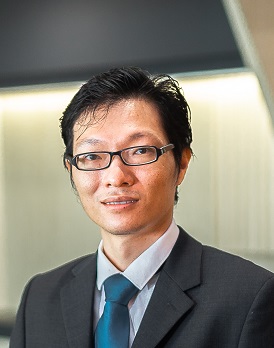
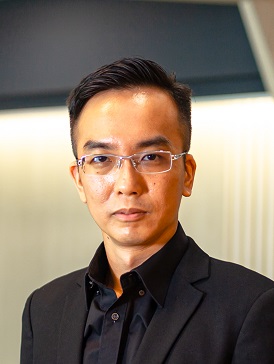
Associate Professor Torsten Lehmann is a faculty member in the School of Electrical Engineering and Telecommunications at the University of New South Wales (UNSW). He holds the position of Associate Professor in Microelectronics and maintains an active research program focused on advanced circuit design for biomedical applications and cryogenic systems. His work spans multiple disciplines at the intersection of electronics engineering, biomedical technology, and quantum computing interfaces. Dr. Lehmann's research interests encompass several cutting-edge areas of microelectronics: Solid-state circuits and systems CMOS circuits at cryogenic temperature Ultra low-power CMOS design Bio-medical microelectronics Cochlear implants and vision prostheses High-performance analogue circuits in deep sub-micron CMOS His recent publication record demonstrates a strong focus on neural interfaces and optrode technology, with significant contributions to the development of optical neural stimulation and recording systems. Over the past five years, his research has increasingly concentrated on optrode arrays, biopotential sensing, and charge-balanced stimulation techniques for neural applications. His work bridges the gap between traditional electronic circuit design and emerging biomedical applications, particularly in vision and hearing prostheses. A consistent theme throughout his publications is the development of specialized circuits for challenging environments, whether ultra-low temperatures for quantum computing or implantable medical devices requiring extreme power efficiency. Dr. Lehmann has made significant contributions to the field of microelectronics for biomedical applications, particularly in the development of circuits for vision prostheses and neural stimulation systems. His work on cryogenic circuits for quantum computing interfaces represents an important bridge between traditional electronics engineering and emerging quantum technologies. His research group appears to be actively involved in several collaborative projects related to neural engineering and biomedical implants, working with colleagues across UNSW and with clinical partners. The lab likely focuses on the design and testing of specialized integrated circuits for challenging applications where conventional electronics face significant limitations.