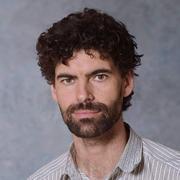
Isabelle Favre is a researcher at IMS Bordeaux - Integration: from Material to Systems laboratory , affiliated with Université de Bordeaux . Her work focuses on Microelectronics , Semiconductor Devices , and Reliability Engineering , particularly in automotive power electronics and thermal management. Key Research Themes : Microelectronics, Semiconductor Reliability, Thermal Analysis, Power Packaging Collaborative Projects : Involvement in hybrid circuits and sensor fabrication initiatives Her recent publications highlight advancements in printed electronics , silver sintering , and thermo-mechanical modeling for automotive applications. She has co-authored multiple conference proceedings and journal articles since 2007. No scientific awards or student advisement details were explicitly mentioned in the available data.
Ryan Behunin is an Associate Professor in the Department of Applied Physics and Materials Science at Northern Arizona University. His research focuses on fluctuation-induced phenomena, optomechanics, and quantum systems, with a particular emphasis on Brillouin physics—investigating light-sound interactions to develop high-performance chip-scale lasers, precision sensors, and laser cooling techniques. He leads the ¡MIRA! research group and contributes to the ¡MIRA! Center, which promotes interdisciplinary STEM innovation. Postdoctoral Research Associate, Yale University Postdoctoral Research Associate, Los Alamos National Laboratory PhD in Physics, University of Maryland BS in Physics, University of Utah Behunin’s work explores fundamental questions in quantum friction, laser noise, and energy dissipation through fluctuation-induced phenomena. His optomechanics research leverages Brillouin scattering to advance integrated photonics, including ultra-low-linewidth lasers and coherent microwave-photonic systems. Recent projects address quantum state preservation, phonon-electron coupling, and scalable quantum information solutions. Behunin’s publications from 2023-2025 focus on quantum optomechanics, Brillouin-based transduction, and multi-phonon state engineering. Collaborations span photonics, acoustics, and quantum information science, with applications in quantum computing, sensing, and communication protocols. Scientific honors include: NSF EAPSI Fellowship (2009) Ralph D. Myers Award for Excellence in Teaching (2007/2008 Honorable Mention) Ryan Behunin actively mentors K-12 students through Tynkertopia and science fairs, emphasizing STEM diversity. His ¡MIRA! group emphasizes interdisciplinary collaboration, partnering with institutions like the University of Maryland, Yale, and Los Alamos National Laboratory.
Dr. Herman Haustein is a Senior Lecturer at Tel Aviv University's School of Mechanical Engineering, where he heads the Micro Phase & Heat Transfer Laboratory . His research focuses on thermal management challenges in microelectronics through advanced heat transfer mechanisms. Education: B.Sc. with highest honors and direct Ph.D. from Technion Postdoctoral research at RWTH Aachen University, Germany Research Focus: Dr. Haustein investigates multiphase flow dynamics and phase-change phenomena, specializing in: Boiling mechanisms (nucleate pool, droplet) Impinging jet heat transfer (free-surface/submerged) Microscale convective enhancement Wavy film dynamics for cooling applications His work bridges experimental thermofluid dynamics with predictive modeling for electronic thermal management. Publication Trends: Recent articles (2012-2018) demonstrate consistent focus on experimental and theoretical analysis of boiling dynamics, jet impingement cooling, and reactive flows. Dominant methodologies include high-speed flow visualization, kinetic modeling of phase transitions, and optimization of thermal transport in constrained geometries.
Dr. Jeff Darabi is a Professor and Ph.D. Program Director in the Department of Mechanical and Mechatronics Engineering at Southern Illinois University Edwardsville (SIUE). He holds a Ph.D. in Mechanical Engineering from the University of Maryland. His research spans micro/nanofluidics, biomicrofluidics, energy systems, and multiphysics modeling, with applications in biomedical devices and thermal management. Research Interests: MEMS and Micro/Nanofluidics Biomicrofluidics for cell separation and diagnostics Nanoengineered thermal systems for electronics cooling Coupled physics simulations (fluid, thermal, electromagnetic) His recent publications (2016–2019) demonstrate a focus on magnetophoretic bioseparation chips, microfluidic device design, and advanced materials like copper-CNT composites. This work emphasizes computational modeling integrated with experimental validation.
Dr. Ali Kadir is a Reader in Mechanical Engineering at the University of Salford's School of Science, Engineering & Environment. Previously serving as International Exchange Director for the School of Computing, Science and Engineering for nearly two decades until 2020, he currently acts as Admissions Tutor for BEng (Hons) and MEng (Hons) programmes in Aeronautical Engineering and Aircraft Engineering with Pilot Studies. With extensive teaching experience spanning Engineering Mathematics, Engineering Dynamics, and Mechanical Systems across multiple engineering disciplines, his academic career demonstrates deep commitment to engineering education. Dr. Kadir's educational background includes: BSc (Hons) Applicable Mathematics (Part Time, 1985-1991) - Project: Finite element analysis of heat transfer problems PhD in High temperature gas turbine micro and nanocoating CFD, FEA and experimental (Part Time, 2013-2021) His research spans multiple interconnected domains with primary focus on high temperature corrosion, micro and nano coating materials for jet engines, Finite Element Analysis, and Computational Fluid Dynamics. Additional research thrusts include biomechanics and orthopaedic engineering (particularly bone fracture analysis), electromagnetic smart materials, medical fluid dynamics, and renewable energy systems with nanofluid solar collectors. His methodology consistently integrates advanced mathematical modeling, finite element simulation, computational fluid dynamics, and experimental validation through flame spray coating techniques. Dr. Kadir's publication trajectory reveals strong interdisciplinary trends, with recent work (2022-2025) increasingly focused on nanofluid applications across aerospace, marine engineering, medical technologies, and renewable energy systems. His research demonstrates sophisticated integration of computational and experimental approaches to solve multi-physical engineering problems, with particular emphasis on nano-scale materials engineering and cross-domain applications. Professional recognition includes: Fellow of the Institute of Mathematics and its Applications (FIMA) As an active PhD supervisor, Dr. Kadir mentors students in high temperature corrosion modeling, nanocoatings development for aerospace/medical/marine applications, orthopaedic biomechanics (spinal analysis, bone stress modeling), and mathematical modeling of electromagnetic smart fluids. He serves as Associate Director of the Multi-physical Engineering Sciences Research Group (MPESG) under Prof. Anwar Bég, which provides critical infrastructure for computational and experimental research across engineering disciplines. The MPESG facilitates collaboration between theoretical modeling, simulation, and experimental validation, with strong industry connections in aerospace, marine engineering, and medical device sectors that enable translation of research findings into practical engineering solutions for complex real-world challenges.