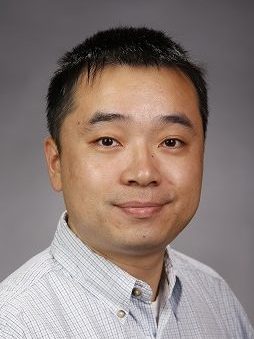
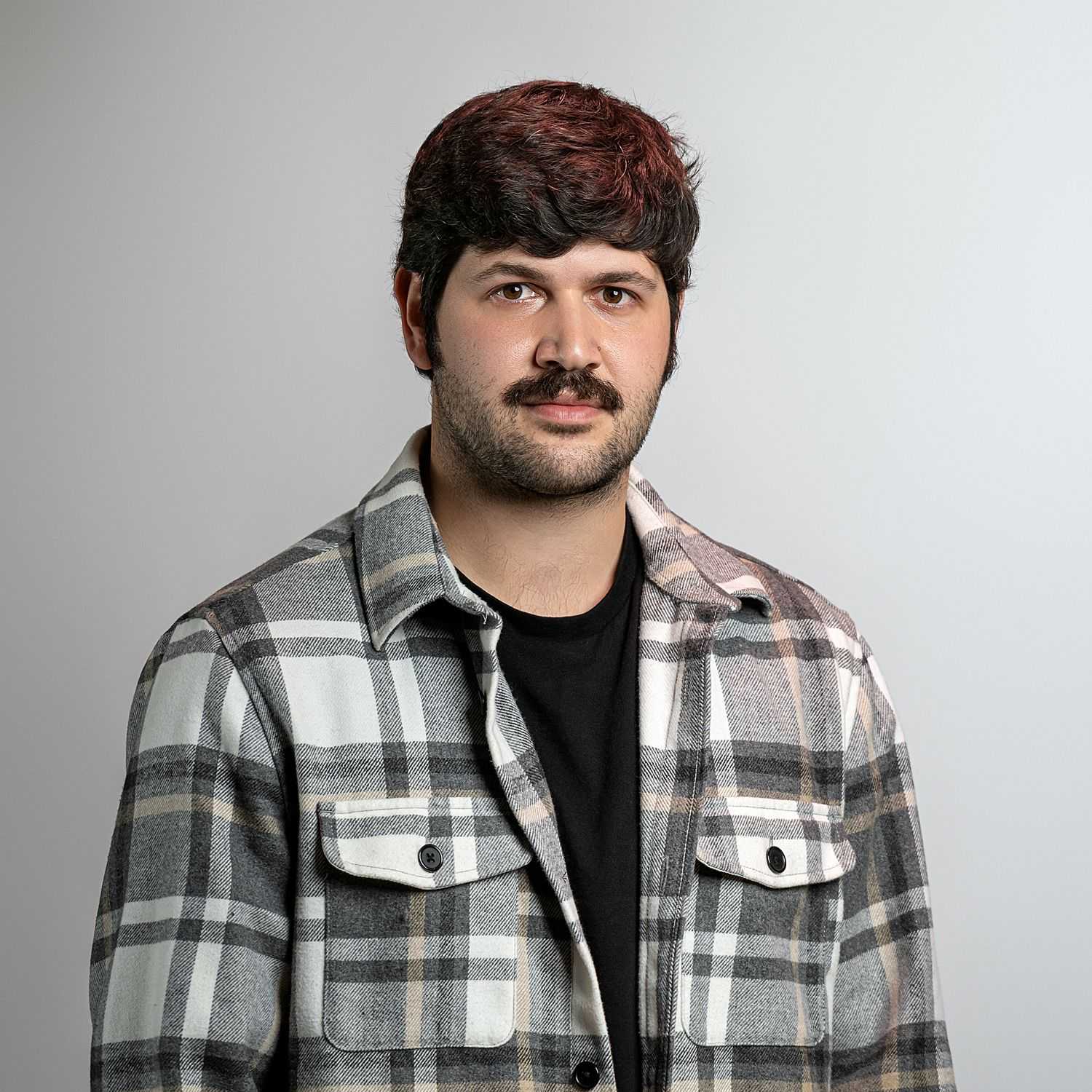
Greg Walker is an Associate Professor of Mechanical Engineering at Vanderbilt University's School of Engineering. His research focuses on micro-scale heat transfer, thermographic phosphors, and energy conversion devices. He leads the Thermal Physics Laboratory, which explores advanced thermometry techniques and noncontinuum energy transport phenomena. Education: Ph.D., Mechanical Engineering, Virginia Polytechnic Institute M.S., Mechanical Engineering, Auburn University B.S., Mechanical Engineering, Auburn University Research Interests: Dr. Walker's work bridges fundamental thermal physics with applied engineering challenges. Key areas include: Development of novel thermometry methods using ultrasonic and phosphor-based sensors Modeling phonon transport in nanostructured materials Quantum simulations of energy conversion devices High-performance computing for materials analysis Lab Activities: The Thermal Physics Lab conducts cutting-edge research on thermal barrier coatings, radiation effects in nanostructures, and advanced cooling technologies for microelectronics. Recent studies have explored thermal rectification in nanostructured interfaces and phonon transport in semiconductor superlattices. Teaching & Innovation: Dr. Walker has pioneered the use of tablet PCs in engineering education and developed computational modules to enhance heat transfer learning. His pedagogical approaches emphasize visualization and hands-on simulation tools.
Steven Shannon is a Professor of Nuclear Engineering in the Department of Materials Science and Engineering at North Carolina State University’s College of Engineering. His research focuses on plasma physics, nuclear fusion technology, and advanced plasma applications in materials processing and microelectronics manufacturing. He leads studies on inductively coupled plasma (ICP) systems, plasma surface interactions, and plasma-based depyrogenation for biomedical applications. Key research interests include ion source development for fusion reactors (e.g., DIII-D NBI system upgrades), plasma etching for semiconductor fabrication, and atmospheric pressure plasma jets (APPJ) for surface modification. His work integrates experimental diagnostics, computational modeling, and open-source simulation tools like Zapdos and MOOSE. Recent publications emphasize plasma parameter control, pulsed power delivery optimization, and plasma-liquid interface dynamics. Shannon collaborates on projects such as the LUPIN ion source, RISE/SupRISE test devices, and compact electromagnetic pumps for nuclear reactors. His lab explores cutting-edge plasma applications in energy, electronics, and biomedicine. He oversees the Plasma Research Group at NC State, hosting a website at go.ncsu.edu/plasma . His research has implications for advancing fusion energy, semiconductor manufacturing, and low-cost medical sterilization techniques.
Davide Piumatti is a Lecturer and Technical Services Coordinator at the Department of Control and Computer Science (DAUIN) , Polytechnic University of Turin . He actively contributes to teaching in Computer Engineering , Automotive Engineering , and Aerospace Engineering programs. Specializes in Power Electronics and Embedded Systems Focuses on Software Testing and Automotive Engineering Key interests: Digital Transformation and Public Administration Technologies His recent publications emphasize thermal modeling for power devices, multi-core testing in automotive systems, and reliability engineering . He contributes to IEEE conferences and journals like Microelectronics Reliability and Electronics . Piumatti is affiliated with the LABINF - Advanced Computer Science Teaching Laboratory (DAUIN) and collaborates with researchers such as Matteo Sonza Reorda and Francesco Angione . His work addresses fault detection , test library development , and cyber-physical system validation .
Sang M. Han is a Regents' Professor in the Department of Chemical and Biological Engineering and Electrical & Computer Engineering at the University of New Mexico (UNM). He earned his PhD and BS in Chemical Engineering from UC Santa Barbara and UC Berkeley, respectively, and has over 25 years of experience in electronic and photonic materials engineering. PhD, Chemical Engineering, University of California, Santa Barbara BS, Chemical Engineering with Honors, University of California, Berkeley Research Interests Selective growth of Ge quantum structures and high-quality heteroepitaxial films on Si III-V integration on Ge-on-Si virtual substrates for photovoltaics and sensors Hybrid micro/nanofluidic systems for bioseparation Nanocrystal synthesis for optical and biological applications Publication Trends Recent articles focus on carbon nanotube-reinforced composites for solar cell durability, stress-directed nanostructure patterning for light trapping, and radiative cooling coatings. His work spans semiconductor heterostructures, nanofluidics, and computational modeling of material behavior. Scientific Awards STC.UNM Innovation Fellow (2018) STC.UNM Innovation Award (2009–2018) Air Force Summer Faculty Fellowship (2012, 2014, 2015) NSF CAREER Award (2001) Advising and Entrepreneurship Professor Han has mentored graduate students and postdocs in his research group and serves as Chief Technical Officer of Osazda Energy LLC, a startup based on his UNM patents.
Dr.-Ing. Stefan Mönch is a Junior Professor at the Institute for Electrical Energy Conversion (Institut für Elektrische Energiewandlung) at the University of Stuttgart, where he leads the research group "Smart Converters for Emission-Free Mobility of the Future" as part of the InnovationsCampus Mobility of the Future (ICM). He was appointed to this position in December 2023, establishing his junior professorship within the framework of this Baden-Württemberg-funded initiative focused on sustainable mobility solutions. Dr. Mönch completed his Bachelor's and Master's degrees in Electrical and Information Technology with a focus on power electronics and microelectronics at the University of Stuttgart. He earned his doctorate (Dr.-Ing.) in 2021 with research on Gallium Nitride-based and integrated power semiconductor circuits. Prior to his current position, he worked as a scientist and project leader at the Fraunhofer Institute for Applied Solid State Physics (IAF) in Freiburg, and from 2017 he was an academic staff member at the Institute for Robust Power Semiconductor Systems (ILH) at the University of Stuttgart. Dr. Mönch's research focuses on highly efficient electrical energy converters for sustainable mobility applications. His work spans power electronics with novel topologies and operating concepts, compact voltage converters for intelligent charging and driving, and electrocaloric heat pumps for thermal management in mobile applications. His Smart Converters group investigates beyond 99% efficient partial-power-processing, multilevel topologies, integrated converters with sensors and control systems, AI-aided design optimization, and wide-bandgap semiconductor technologies including GaN and SiC across voltage ranges from 48V to 1.5kV. The group's mobility-specific research includes bidirectional DC battery charging, traction drive topologies, and wireless power transfer inverters, while their energy research explores solid-state cooling, electrocalorics, magnetocalorics, and energy recovery circuits. Analysis of Dr. Mönch's recent publications reveals a strong focus on high-efficiency power conversion technologies, particularly using wide-bandgap semiconductors like GaN. His work demonstrates consistent progress in achieving over 99% efficiency in various converter topologies, with significant contributions to electrocaloric heat pump systems, multilevel converter architectures, and novel GaN-based circuit designs. The research shows a clear trend toward integration, with numerous publications on monolithic and highly-integrated GaN power ICs that combine multiple functions on a single chip. Dr. Mönch actively supervises student research and thesis work at the University of Stuttgart and has guided numerous student projects throughout his career. He leads multiple research projects including HiPower 5.0 (2025-2028), COOLPOL (2024-2028), and SmartEnergyConversion (2024) at the university, while continuing his involvement with Fraunhofer IAF projects such as ECO-KÜHL (2025-2027), GaN4EmoBiL (2023-2026), and ElKaWe (2019-2024). The Smart Converters research group, led by Dr. Mönch, currently consists of the professor and four academic staff members (as of July 2025). The team includes researchers Adrian Söllner, Ines Bennour, Jan Schipper, and Ole Bauer, who collaborate on developing next-generation power electronics solutions for sustainable mobility applications. The group operates within the broader framework of the InnovationsCampus Mobility of the Future, which connects research expertise from both the University of Stuttgart and Karlsruhe Institute of Technology to accelerate progress in sustainable transportation technologies.
Mihai Burzo is a Professor of Mechanical Engineering and Frances Willson Thompson Fellow at the University of Michigan-Flint, College of Innovation and Technology. His work spans multiple departments including Computer Science, Engineering, and Physics. Dr. Burzo earned his Ph.D. in Mechanical Engineering from Southern Methodist University in 2001. His academic career includes positions as Assistant Professor at University of North Texas (2011-2013) and multiple roles at Southern Methodist University. His research interests focus on heat transfer in microelectronics and nanostructures, thermal properties of thin films, multimodal sensing of human behavior, and computational modeling of heat convection. His work bridges mechanical engineering with computer science through the application of machine learning techniques. His recent publications show a clear trend toward integrating machine learning with traditional thermal engineering problems, particularly in microelectronics thermal management, human behavior modeling, and environmental systems. His work spans from fundamental thermal science to applied human-centered engineering solutions. 2006 Harvey Rosten Award for Excellence Best Paper Award at PETRA conference (2016) Best Paper Award at Semitherm conference (2013 and 2006) Young Engineer of the Year from North Texas Section of ASME (2006) Leadership Award from SMU (2002) Valedictorian Award (1995) Dr. Burzo has secured significant research funding from diverse sources including DOD, Ford Motor Company, Toyota Research Institute, National Science Foundation, and Procter & Gamble. His projects include multimodal sensing of human behavior, thermoreflectance applications, and deception detection systems. He leads research teams working on thermal comfort detection, driver alertness monitoring, and thermal imaging applications.
Prof. Dr. Norbert Hofmann is a Lecturer in thermo-mechanical and casting simulation at the Institute of Thermal and Fluid Engineering within the School of Engineering and Environment at the University of Applied Sciences and Arts Northwestern Switzerland (FHNW) . His career spans over 25 years of research and teaching in computational mechanics and advanced manufacturing processes. Roles : Lecturer, Researcher, Conference Organizer Expertise : Numerical simulation, casting optimization, thermal analysis Collaborations : Swiss Nanoscience Institute, ETHZ, international automotive/energy sectors Research Interests focus on: Thermo-mechanical simulation of industrial casting processes Advanced solidification modeling with finite element methods Process optimization using automated systems Thermal management in electronics packaging Microspecimen mechanical testing at extreme temperatures Publication Trends show consistent contributions to casting technology innovation, spanning from aerospace turbine blades (1990s) to modern nanoscale bonding applications. His work bridges computational modeling with experimental validation across disciplines. Scientific Awards : Best Paper Award (2000) for innovative casting process development Outstanding ranking for thermophysical property data contributions As educator, he has mentored numerous students in Computational Mechanics and Advanced Manufacturing through hands-on simulation projects. His research has been supported by collaborations with ABB Turbo Systems AG , Honda Research Center , and Ford Research Center . Labs & Teams : Active participant in the Final COST526 Workshop and APOMAT research consortium. Maintains close ties with Foundry Center FHNW and Swiss NanoScience Institute at Basel University.
David Whalley is a Visiting Fellow in Electronics Packaging at Loughborough University, with visiting roles at Chalmers University of Technology and Nanyang Technological University. He holds advanced qualifications including BSc and MPhil degrees, and professional certifications such as CEng and FIMechE. His career spans over three decades, starting as a lecturer at Loughborough in 1990 and progressing to Senior Lecturer by 1998. His research focuses on electronics packaging, conductive adhesives, MEMS sensor technologies, and thermal management solutions. Key areas include material characterization, microfabrication processes, and reliability of electronic components under environmental stress. He has contributed to advancements in solder joint reliability, LED thermal management, and sustainable electronics manufacturing. Education: David graduated from Loughborough University in 1984 with a BSc, followed by an MPhil. He has held roles at Loughborough and Lucas Advanced Engineering Centre, blending academic and industry expertise. His research portfolio includes over 50 publications, emphasizing interdisciplinary approaches to electronics packaging challenges. Notable collaborations include work on polymer-based interconnects and inkjet etching technologies for microelectronic applications. Research Interests: His work spans electronics packaging design , MEMS sensor reliability , and conductive adhesive performance . He investigates thermal and mechanical stress effects on electronic components, with a focus on improving material durability and device longevity. Recent studies address damp-heat degradation in photovoltaic modules and the role of self-assembled monolayers in conductive adhesives. Articles trends: His publications from 2014–2023 highlight evolving themes in material science and microfabrication , including thermal management innovations and defect detection in MEMS devices. A significant emphasis is placed on sustainable electronics through advanced packaging and recycling-friendly designs. Grants & Advising: While specific grants are not listed, his extensive publication record indicates sustained research funding. No formal student advisees are documented in the provided texts. His work contributes to low-volume, high-complexity electronics manufacturing frameworks. Labs/Teams: His research aligns with Loughborough’s Electronics and Electrical Engineering Department, focusing on green electronics and advanced packaging solutions. Collaborations with Chalmers and NTU suggest involvement in international initiatives for sustainable manufacturing and material innovation.
Prof. Wilhelm Kleppmann is a Professor at the Faculty of Electronics & Computer Science at Hochschule Aalen, Germany. His primary research focuses on Design of Experiments (DoE), statistical process control, and reliability engineering. He has authored influential textbooks on optimization methodologies and contributed to Six Sigma integration in industrial processes. His work bridges theoretical statistical methods with practical applications in manufacturing and engineering systems. Key contributions include developing experimental design frameworks for machine learning integration, optimizing cooling circuits in automotive systems, and statistical evaluation of electromagnetic interference. He maintains active engagement with industry through software recommendations for DoE, emphasizing tools like Minitab and JMP. Kleppmann's educational efforts include curriculum development for engineering courses and promoting hands-on learning through simulation tools. His research spans decades with notable publications from 1980s semiconductor reliability studies to modern machine learning-driven process optimization. While no specific awards are listed, his extensive publication record and textbook revisions (e.g., 10th edition of 'Versuchsplanung') highlight sustained scholarly impact.
Dr. Sang M. Han is a Regents' Professor in the Departments of Chemical & Biological Engineering and Electrical & Computer Engineering at the University of New Mexico (UNM). He holds a PhD from UC Santa Barbara and a BS (with honors) from UC Berkeley. His research focuses on semiconductor materials engineering, nanofluidic systems, and photovoltaic integration, with over 50 peer-reviewed publications and 10 patents. Education : PhD, Chemical Engineering, UC Santa Barbara BS, Chemical Engineering with Honors, UC Berkeley Research Interests : Dr. Han’s work spans: Selective growth of Ge quantum structures on Si III-V integration on engineered Ge/Si virtual substrates Hybrid micro/nanofluidic systems for bioseparation Semiconductor surface modification Nanocrystal synthesis for optical/biological applications Publications & Patents : Over 50 journal articles and 10 UNM-affiliated patents, with recent work on carbon-nanotube-reinforced composites and bioinspired optical materials. Awards : NSF Career Award (2001) UNM Junior Faculty Research Excellence Award (2005) UNM Senior Teaching Excellence Award (2012) Multple UNM Creative Awards (2009-2014) Advising & Labs : Leads research groups focused on semiconductor heteroepitaxy and nanofluidic systems. Active in developing crack-tolerant photovoltaic gridlines and biomimetic optical coatings.
Yogendra Joshi is the John M. McKenney and Warren D. Shiver Distinguished Chair in Building Mechanical Systems and Professor at the Georgia Institute of Technology's College of Engineering, Department of Mechanical Engineering. His research focuses on thermal management of electronics, combustion, energy systems, and microthermal systems. He holds a Ph.D. from the University of Pennsylvania (1984), M.S. from SUNY Buffalo (1981), and B.Tech. from IIT Kanpur (1979). Prior to joining Georgia Tech in 2001, he held positions at the University of Maryland and Naval Postgraduate School. His research addresses transport phenomena in emerging technologies, including compact thermal management devices for high-heat-flux electronics, conjugate transport mechanisms in multi-scale systems, and energy-efficient data center thermal management. Key innovations include microfabricated thermosyphons, computational modeling for thermal design, and embedded evaporative cooling systems. Dr. Joshi has received awards such as IEEE Fellow (2012), IIT Kanpur Distinguished Alumnus (2010-2011), and IBM Faculty Award (2008). His lab (METTL) explores microelectronics thermal challenges and eco-friendly cooling solutions. Advising includes students like Adya Ali, and he has contributed to over 150 publications and patents. His work bridges thermal sciences, materials, and semiconductor engineering to enable next-gen electronics and sustainable energy systems.
Dr. Peter Bermel is the Elmore Professor of Electrical and Computer Engineering at Purdue University, affiliated with the Birck Nanotechnology Center. His expertise lies in nanophotonics, with a focus on improving photovoltaic, thermophotovoltaic, and microelectronic systems through advanced electromagnetic theory, simulation, and material engineering. Education: B.S. in Physics, University of North Carolina, 2000 MPhil in Physics, University of Cambridge, 2002 PhD in Physics, Massachusetts Institute of Technology, 2007 Research Interests: Dr. Bermel’s research spans photonic crystal design, thermal emitter optimization, and light-trapping strategies for solar cells. His work integrates computational modeling, fabrication, and experimental characterization to enhance energy conversion efficiency. Notable contributions include silicon photonic crystal solar cells and chip-scale thermophotovoltaic systems. Recent Trends in Publications: Recent work emphasizes high-temperature materials for thermophotovoltaics, radiative cooling for photovoltaic efficiency, and quantum sensing with nanodiamonds. His research bridges theory and application, addressing challenges in energy harvesting, semiconductor reliability, and sustainable agrivoltaic systems. Awards & Honors: NSF CAREER Award (2015–2020) Winston Churchill Foundation Scholar (2000–2001) NSF Graduate Research Fellowship (2001–2004) Advising & Grants: Currently supervises graduate students in topics like agricultural photovoltaics and quantum optoelectronics. Over $10M in grants secured from NSF, industry partnerships, and federal initiatives, including the NSF CAREER Award and NEPTUNE Center projects. Labs & Teams: Leads a lab focused on nanophotonics and energy systems at Purdue. Collaborates with MIT, NREL, and industry partners on advanced photovoltaic and thermal management technologies.
Dr. Zhi Liang is an Associate Professor in the Department of Mechanical and Aerospace Engineering at Missouri University of Science and Technology (MST). He serves as Director of the Nanoscale Thermal Fluids Laboratory (NTFL) and Principal Investigator there. His work focuses on computational micro/nanoscale heat and mass transfer phenomena, particularly dynamics of nanodroplets, nanobubbles, and nanoparticles. Education: Ph.D. in Mechanical and Aerospace Engineering (2010), Missouri University of Science and Technology M.S. in Materials Science and Engineering (2004), Shanghai Jiaotong University B.S. in Materials Science and Engineering (2001), Shanghai Jiaotong University Research interests include structure-property relationships for materials/interfaces and applications in microelectronics cooling, power generation, energy harvesting, and medical therapy. The NTFL lab develops advanced computational models to explore these phenomena.
Nicola Delmonte is an Associate Professor in the Department of Engineering and Architecture at the University of Parma, Italy. His academic and research career has been centered on power electronics, renewable energy systems, smart grids, and the reliability of electronic components, with applications in energy conversion and IoT technologies. PhD in Electronic Engineering, University of Parma (2003–2005) Master Degree in Electronic Engineering, University of Parma (1995–2002) His research interests focus on the design, modeling, and reliability of power electronic systems for renewable energy integration. He has led and contributed to numerous research projects including the EU-funded H2020 Sharc25, MARINET’s MORE project on ocean energy, and regional initiatives like FIL 2014 on DC Nano-Smart-Grids. His work bridges theoretical modeling with practical innovation, including the development of energy-harvesting piers and wireless monitoring systems for agriculture. The recent publications reflect a strong trend in energy systems modeling, thermal management of power electronics, and advanced instrumentation. Key themes include FEM-based thermal design, adaptive control for battery charging, laboratory-scale geophysical imaging, and integrated building energy models. These works span disciplines such as power electronics, renewable energy, and applied physics. Best Poster Award at GE 2012 for thermal modeling of converters 2nd place in the 2011 International Competition on Renewable Energy for Smaller Islands with the 'e-piers' concept Delmonte has supervised research teams and served as principal investigator on multiple grants, including projects funded by the European Commission, Regione Emilia Romagna, and national research programs (PRIN, COFIN). He teaches a range of courses in electronics and energy conversion across undergraduate and graduate programs in Computer, Electronic, and Communications Engineering, as well as Mechanical Engineering. He is a member of IEEE and the Order of Engineers of Parma, and has acted as a reviewer for journals such as Microelectronics Reliability and Transactions on Device and Materials Reliability. He is involved in experimental and applied research labs focusing on power electronics, smart grids, and renewable energy systems. His team has developed platforms for high-frequency characterization of semiconductor modules and testing of ocean energy harvesting devices. Current efforts include the development of 3D-printed cooling solutions and intelligent control systems for modular power converters.
Julián García Fernández serves as a Visiting Professor at the University of Santiago de Compostela, based in Laboratory S2. His contact details include email: julian.garcia.fernandez2@usc.es and phone: +34 881816392. His primary research interests include: Semiconductor Physics Machine Learning Solid-State Physics Microelectronics Device Physics Computational Physics Dr. García Fernández's recent work demonstrates a focus on applying machine learning to semiconductor device simulation (TCAD) and thermal management. He has developed tools such as MLFoMpy for post-processing semiconductor data and novel workflows for optimizing cooling devices using solid-state physics principles. His research addresses challenges in ultra-scaled transistor technologies and device fluctuations, bridging computational methods with experimental physics. He is affiliated with Laboratory S2 at the University of Santiago de Compostela, which supports advanced research in semiconductor technologies and device physics through interdisciplinary collaboration.