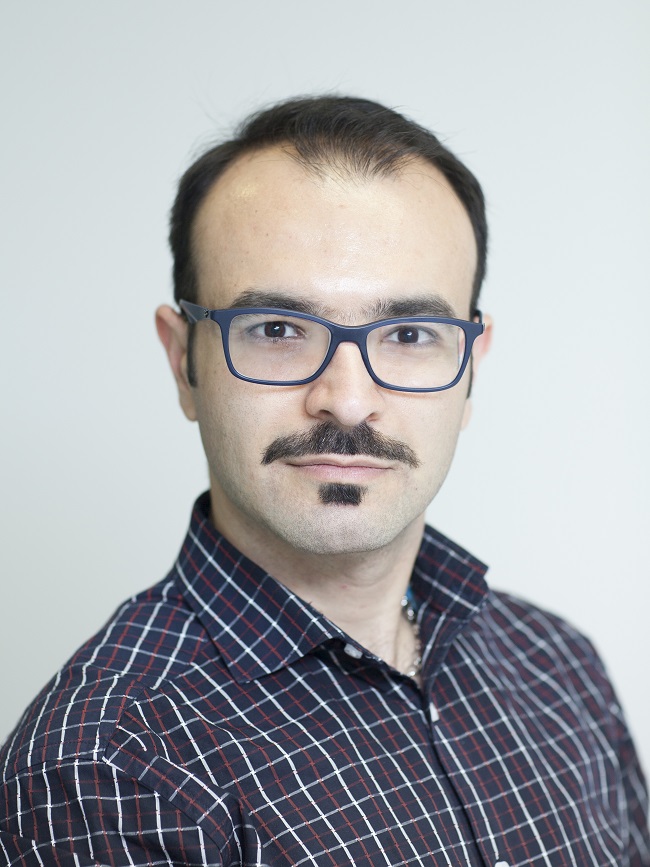
Dr. Kiana Aran is an Associate Professor of Bioengineering and Medicine at the University of California San Diego (UCSD), with a joint appointment at the UCSD School of Medicine. She leads the Aran Lab at Keck Graduate Institute (Claremont, CA), focusing on biomedical devices for diagnostics and therapeutics. Her research integrates BioMEMS, CRISPR, and graphene-based biosensors to address clinical needs in aging, cancer biomarkers, and drug delivery. She co-founded Cardea Bio and CRISPR QC, advancing precision biotechnology. Aran is Co-Director of UCSD’s Center for Technologies for Healthy Aging and a member of the National Academy of Sciences New Voices initiative. **Education**: PhD in Biomedical Engineering from Rutgers University; Postdoctoral training at UC Berkeley and the Buck Institute for Aging Research. **Key Roles**: Consultant for the Gates Foundation; CTO of Cardea Bio. **Awards**: 2025 Sony/Nature Top Women in Tech Award, 2024 Senior Member of the National Academy of Inventors, 2023 Inc. Top 200 Female Founders. Her research spans CRISPR-integrated electronics for genotyping Graphene biosensors for viral detection (e.g., SARS-CoV-2) Exosome-based diagnostics for neurodegenerative diseases Lab-on-a-chip systems for multiplexed diagnostics . Recent articles highlight innovations in multi-omics sensing and CRISPR quality control. **Awards**: Over 30+ patents, Nature Biomedical Engineering cover features, and recognition in global biotech leadership. **Grants**: NSF CAREER Award, NIH grants for electronic biosensor development. **Labs/Teams**: Aran Lab (Keck), collaborations with Paragraf and the National Academy of Engineering.
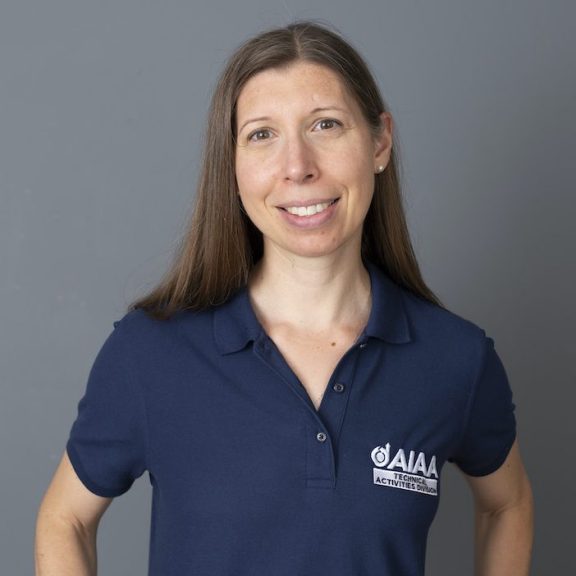
Kerri Cahoy is the Sheila Evans Widnall (1960) Professor in MIT's Department of Aeronautics and Astronautics, where she serves as Director of the Small Satellite Collaborative and Head of the Space Sector. Her work bridges electrical engineering and aerospace to advance space-based sensing and communication technologies through nanosatellite platforms. Her academic foundation includes: Ph.D. in Electrical Engineering, Stanford University (2008) M.S. in Electrical Engineering, Stanford University (2002) B.S. in Electrical Engineering, Cornell University (2000) Professor Cahoy's research integrates atmospheric sensing with exoplanet detection , pioneering laser communications and adaptive optics for space applications. She develops autonomy systems for nanosatellites to enable cost-effective Earth observation and astronomical missions, transforming how we study planetary atmospheres and distant worlds through innovative small satellite constellations. Her recent publications (2018-2020) demonstrate consistent focus on optical engineering for space systems, with core themes in CubeSat-based atmospheric tomography, laser communication terminal development, and wavefront correction techniques for exoplanet imaging. These works reveal interdisciplinary convergence of aerospace engineering, optics, and machine learning to solve extreme-environment challenges. Her scientific recognition includes: MIT Committed to Caring Award (2020) AIAA Associate Fellow (2018) MIT Outstanding UROP Mentor (2013) Cornell Co-Op Mentor of the Year (2008) As an educator, Cahoy champions hands-on satellite development through MIT's UROP program, with mentoring philosophy emphasizing technical rigor and mission-driven innovation. Her STAR Lab provides students direct experience in spacecraft design, laser communication testing, and orbital operations while securing research funding from NASA and aerospace industry partners for cutting-edge space technology development. She directs the Space Telecom, Astronomy & Radiation Lab (STAR Lab) and leads the Small Satellite Collaborative, driving projects in laser communication terminals, adaptive optics for space telescopes, and nanosatellite constellations for atmospheric science. These initiatives position MIT at the forefront of miniaturized space instrumentation and autonomous satellite operations.
Georgios Palasantzas is a Full Professor at the University of Groningen, holding positions in both the Faculty of Science and Engineering within the Nanostructured Materials and Interfaces group and the Faculty of Medical Sciences/UMCG in the Nanotechnology and Biophysics in Medicine (NANOBIOMED) program. His research spans multiple disciplines at the intersection of physics, materials science, and medical applications. Palasantzas earned his PhD in the group of Prof. J. Crimea in the USA, followed by mandatory military service in Greece and a postdoc at Delft University of Technology/DIMES (NEXT Lab). He joined the University of Groningen as a Metals Fellow within the Netherlands Institute of Metals Research (NIMR), became a Lecturer at the Zernike Institute for Advanced Materials in 2000, was promoted to Associate Professor, and has served as a Full Professor since 2019. His research focuses on fundamental nanoscale phenomena with applications in multiple fields. Key areas include Nanoscale surface roughness , Casimir forces , Nano/microelectromechanical systems , Nanoparticles , Kinetic roughening , Scanning probe microscopy , Adhesion , and Wetting . His work has significant implications for both fundamental physics and practical applications in nanotechnology and medicine. Analysis of his recent publications reveals a strong focus on Casimir force phenomena across various materials and conditions, with increasing interdisciplinary applications in medical contexts, particularly in understanding cellular mechanics and developing neuromorphic computing systems using nanoparticle networks. His research demonstrates a consistent trajectory from fundamental surface physics toward practical applications in nanotechnology and biomedicine. NWO/ENW-M1 grant on Surface roughness effects on DLVO forces between functionalized surfaces (Ranked 2, 2020) NWO/ENW-M1 grant on Casimir force control by reversible amorphous-crystalline phase transitions (Ranked 1, 2021) NWO/Open Technology Program (OTP) grant on Repulsive Casimir forces from topological insulators towards device actuation (Ranked 3, 2022) GogiCron/RUG grant on Neuromorphics with nanoparticles (2020) Professor Palasantzas leads research in the Nanostructured Materials and Interfaces group, with significant collaboration between the Faculty of Science and Engineering and the Faculty of Medical Sciences. His work bridges fundamental physics with practical applications in medical diagnostics and nanotechnology, particularly through the NANOBIOMED initiative which explores the intersection of nanotechnology and biophysics in medical contexts.
Joseph Talghader is the Cymer Professor in the Department of Electrical and Computer Engineering at the University of Minnesota, where he has been a faculty member since 1997, progressing from Assistant to Full Professor. He leads the Optical Micro+Nanosystems Group and holds appointments in the College of Engineering. Dr. Talghader's educational background includes a B.S. in Electrical Engineering from Rice University, followed by an M.S. (1993) and Ph.D. (1995) from UC Berkeley, where he was awarded an NSF Graduate Fellowship. Prior to joining academia, he worked at Texas Instruments and Waferscale Integration in process development and memory design. His research spans optics and micro/nano-mechanical systems with particular focus on infrared detectors, optical coatings, heat transfer mechanisms, and microsensors. His group has developed groundbreaking technologies including the highest sensitivity uncooled thermal detectors and the first tunable multispectral thermal detectors. Recent work has expanded into applications for glacial ice analysis and high-power laser systems. His research integrates theoretical modeling with advanced fabrication techniques, particularly atomic layer deposition. Analysis of his 15 most recent publications reveals a consistent focus on infrared technologies, optical coatings, and thermal phenomena. His work demonstrates strong interdisciplinary connections between electrical engineering, materials science, and optical physics, with increasing emphasis on practical applications in environmental sensing and high-power laser systems. Among his notable recognitions are three 3M Faculty Awards and being a Finalist for the Minnesota Cup for entrepreneurs. He has served on various program committees including the Army Research Office Electronics Division strategic planning panel and has chaired multiple IEEE conferences. Dr. Talghader actively mentors students and postdocs, with numerous publications listing junior researchers as lead authors. His group has secured significant research funding, though specific grant details aren't provided in the source material. He currently serves as an Editor for the NPG journal Light: Science and Applications, demonstrating his standing in the optics research community. The Optical Micro+Nanosystems Group maintains strong industry and interdisciplinary collaborations, with research spanning from fundamental materials properties to practical device implementation. Current projects focus on improving infrared detection technologies, developing advanced optical coatings for high-power applications, and exploring novel sensing mechanisms for extreme environments.
Michael Schneider is an Associate Professor at the Institute of Sensor and Actuator Systems, TU Wien. He leads the Christian Doppler Laboratory for Piezoelectric Silicon MEMS with Enhanced Sensitivity and Responsivity, focusing on improving PiezoMEMS sensitivity and responsivity through material analysis and bi-stable architectures. His research collaborates with Infineon Technologies AG and scia Systems GmbH. Education: PhD in electrical engineering (2014) with a thesis on aluminum nitride thin films, habilitation in 2021 (title: Piezoelectric Silicon Microsystems ), and a diploma in physics from Karlsruhe Institute of Technology (2009), focusing on Lorentz angle measurements in silicon strip detectors for LHC experiments. Research interests span piezoelectric materials, MEMS device development, and advanced sensor/actuator systems. His work bridges fundamental material science with applied engineering solutions for MEMS technology. Grants and Projects: Secured a 7-year Christian Doppler Research Association grant (2022) for the CD laboratory project. Tenure track position since 2020. Labs/Teams: Directs the Christian Doppler Laboratory, integrating academic and industry expertise in PiezoMEMS innovation.
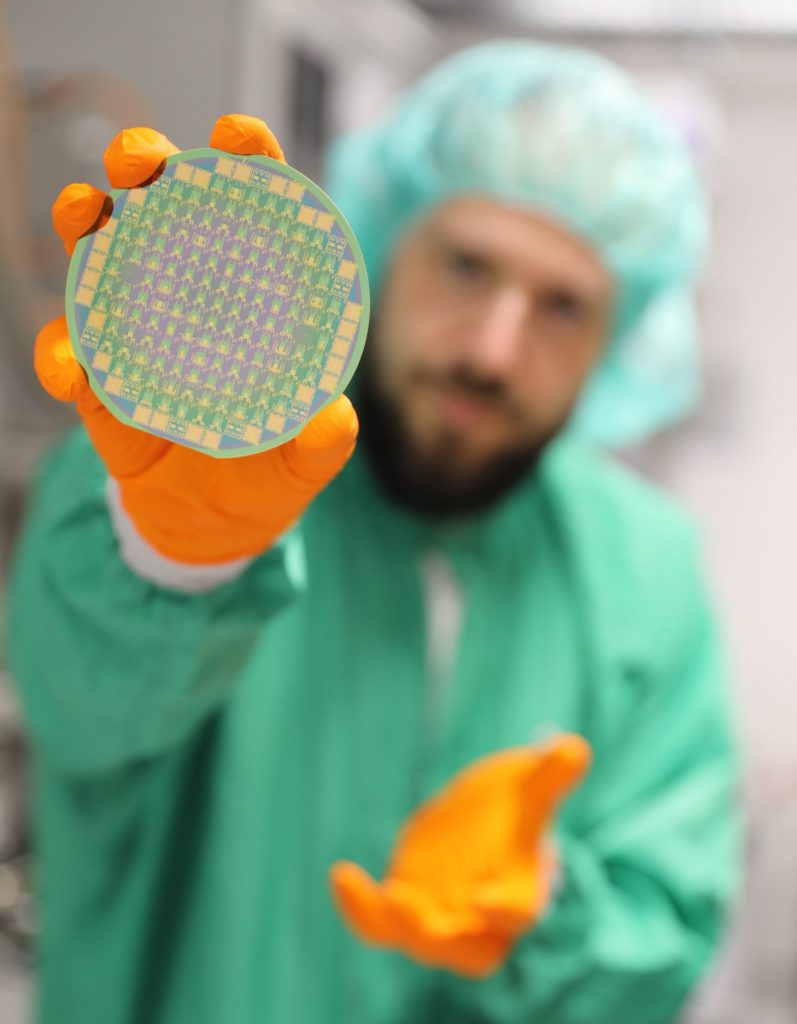
Dr. Hans-Joachim Grafe is a group leader at the Institute for Solid State Research within the Leibniz Institute for Solid State- and Materials Research (IFW Dresden) in Germany. His research focuses on Nuclear Magnetic Resonance (NMR) studies of quantum materials, particularly investigating high temperature superconductors and quantum magnets. Dr. Grafe completed his diploma thesis at TU Braunschweig on NMR measurements of Sr 14 Cu 24 O 41 under the guidance of Hans-Henning Klauß. He then pursued his PhD at IFW Dresden and TU Dresden, working with Bernd Büchner and Nicholas Curro at Los Alamos National Laboratory on NMR studies of rare earth co-doped lanthanum cuprates. His research interests span Nuclear Magnetic Resonance spectroscopy, high temperature superconductivity, quantum magnetism, and the development of novel NMR instrumentation. Dr. Grafe has made significant contributions to understanding the electronic and magnetic properties of unconventional superconductors using NMR techniques. Recently, he has been involved in developing self-assembled rolled-up microcoils for NMR on nanoliter-sized samples, expanding the capabilities of NMR spectroscopy for studying minute quantities of materials. Analysis of Dr. Grafe's recent publications (2021-2025) reveals a strong focus on applying NMR techniques to investigate quantum magnetic systems, high-temperature superconductors, and novel instrumentation development. His work spans condensed matter physics, materials science, and NMR methodology, with particular emphasis on frustrated magnets, iron-based superconductors, and innovative approaches to enhance NMR sensitivity for nanoscale applications. Dr. Grafe has presented his research at numerous international conferences and seminars, including the Mitteldeutsches Resonanztreffen, Analytica, and various university seminars across Europe. His invited talks often focus on NMR applications in quantum materials and recent advances in NMR instrumentation.
Richard B. Brown is the Dean of the College of Engineering at the University of Utah, a position he has held since 2004. Under his leadership, the College has experienced remarkable growth, with research expenditures increasing from $30 million to $97 million annually and student enrollment more than doubling to over 6,000 students. Brown is also a distinguished professor whose research has significantly advanced miniature technology and sensor development. Dr. Brown earned his bachelor's and master's degrees in electrical engineering from Brigham Young University in 1976, followed by a Ph.D. in electrical engineering from the University of Utah in 1985. After 19 years as a faculty member at the University of Michigan, he returned to Utah as Dean of Engineering. His academic journey reflects a deep commitment to both research excellence and educational innovation. Dr. Brown's research focuses on miniature technology, particularly solid-state chemical sensors and integrated circuits. His pioneering work includes developing miniature ion-selective electrodes, enzymatically- and immunologically-coupled sensors for complex biological molecules, and amperometric sensors for heavy metals and neurochemicals. His research group was first to incorporate both electrical and chemical sensors on silicon brain probes and first to differentiate spoken words from microelectrode arrays on human brains. His work spans high-speed microprocessors to low-power, implantable electronics, with significant commercial applications through multiple startups. Dr. Brown has authored 225 peer-reviewed publications, including one cited over 3,400 times, and holds 21 patents. His research has led to four successful companies: i-SENS (glucose sensors), Sensicore (chemical sensors), Mobius Microsystems (silicon clock generators), and e-SENS (water chemistry sensors). Industry applications include 1.7 million glucometers and 1.4 billion test strips sold annually. Life Fellow of the IEEE Fellow of the National Academy of Inventors Utah Governor's Medal for Excellence in Science and Technology University of Utah's Rosenblatt Prize (2018) Inaugural holder of the H.E. Thomas Presidential Endowed Dean's Chair (2020) As an educator, Dr. Brown has mentored 31 PhD students who have become leaders in their fields. His innovative integrated circuit design curriculum has transformed how this subject is taught worldwide. Under his leadership, diversity in the College has significantly increased, with women students growing from 10% to 20% and Students of Color from 20% to 34% of the student body, with retention rates for these groups exceeding those of their counterparts. His work with industry through departmental advisory boards has led to programs addressing workforce needs, including the Master of Software Development and systems engineering certificate. Dr. Brown has established strong industry connections through industrial advisory boards at both departmental and college levels. This engagement has resulted in programs tailored to industry needs, including a robust electrical power program, the Master of Software Development for career changers, and a systems engineering certificate developed in response to requests from companies like Northrop Grumman, which has 155 current openings for systems engineers. During the pandemic, he led the College in pivoting research to address COVID-19, with over a dozen faculty members focusing on detection, transmission, and prevention.
Bernardo Tellini is a Full Professor of Electrical and Electronic Measurements at the Department of Energy, Systems, Land, and Construction Engineering (DESTEC) at the University of Pisa, where he also serves as Vice-Rector for Doctoral Research. He has held this institutional role since 2020, overseeing doctoral program planning, accreditation, and admission procedures. Previously, he chaired the doctoral program in Energy, Electrical, and Thermal Engineering from 2012 to 2016 and served on the Leonardo da Vinci Doctoral School in Engineering from 2008 to 2016. Education: PhD in Electrical Engineering, University of Pisa (1999) Degree in Electrical Engineering, University of Pisa (1993) Postdoctoral research at Karlsruhe Research Center for Technology and Environment Industry experience at ABB Tellini's research focuses on electrical and magnetic measurement methodologies for high-power pulsed applications, characterization of electrical and magnetic properties of materials, aging processes in battery cells, and electromagnetic emissions from power circuits. His work spans from fundamental measurement theory to practical industrial applications, particularly in railway technologies where he represents the University on the Steering Committee of the District for Railway Technologies, High-Speed, and Network Safety in Tuscany. He has served as president of the European Pulsed Power Laboratories agreement and chaired major IEEE conferences including I2MTC 2015 and MELECON 2020. His recent publications reveal a strong emphasis on RFID-based localization systems , nanoparticle-enhanced optical sensors , and advanced battery characterization techniques . The research trajectory shows increasing integration of measurement science with emerging technologies like plasmonic sensing, microwire-based transducers, and smart systems for industrial monitoring. His team has developed innovative approaches for battery health monitoring under vibration stress, temperature sensing using magnetic materials, and precise localization methods using phase-based RFID systems. Professional Service: President of Italian Section of IEEE (2019-2021) Scientific director of Pisa research unit in Association of Electrical and Electronic Measurements (GMEE) Member of Certification Committee of Italcertifer SpA (since 2019) Representative on District for Railway Technologies Steering Committee (since 2013) Tellini has authored approximately 200 publications in international journals and conference proceedings. His leadership extends to academic governance through roles on the DESTEC Department Human Resources Committee and various university committees overseeing scientific qualifications and doctoral programs. His research bridges theoretical measurement principles with practical engineering solutions for energy systems, transportation infrastructure, and industrial monitoring applications.
Dr. Faisal Mohd-Yasin is a Senior Lecturer in the School of Engineering and Built Environment at Griffith University, specializing in Electrical and Electronic Engineering. He has been with Griffith University since 2010, initially as a Lecturer (2010-2016) and promoted to Senior Lecturer in 2017. He is also a member of the Queensland Quantum and Advanced Technologies Research Institute (QUATRI) since 2025. His research spans microelectronics, MEMS technology, compound semiconductors, and electronic sensors/instrumentation, with particular expertise in silicon carbide-based devices for harsh environments. Dr. Mohd-Yasin holds dual PhD qualifications: a Doctor of Philosophy (Engineering) from Multimedia University, Cyberjaya, Malaysia (2014) and a PhD in Engineering from Ibaraki University, Hitachi, Japan (2009). His educational background provides a strong foundation for his interdisciplinary research that bridges semiconductor physics, sensor technology, and electronic circuit design. His research interests focus on Microelectromechanical systems (MEMS), compound semiconductors (particularly $$ ext{SiC}$$), electronic sensors, and electronic instrumentation. He has made significant contributions to the development of silicon carbide MEMS devices for harsh environments, piezoelectric energy harvesters, and noise analysis in microelectronic systems. His work has important applications in sustainable cities (SDG 11), health and well-being (SDG 3), and clean energy (SDG 7). Analysis of his recent publications reveals a strong trend toward MEMS sensor technology, particularly silicon carbide-based devices for harsh environments, and noise analysis in piezoelectric sensors. His research also demonstrates a growing interest in engineering education, with several publications on practical electronics teaching methods. The publications span electrical engineering, sensor technology, energy harvesting, and engineering education, reflecting his interdisciplinary approach to research and teaching. Dr. Mohd-Yasin has successfully supervised multiple doctoral and masters students through completion, including Utkarsh Jadli (PhD on Parasitic Capacitances of Power Transistors), Siti Aisyah Zawawi (PhD on MEMS capacitive microphone), Mei Kum Khaw (PhD on magnetically actuated droplets), Abid Iqbal (PhD on AlN thin films), Noraini Marsi (PhD on MEMS pressure sensors), and Kai Meng Mui (Masters on Power management IC). He has also secured numerous research grants totaling over $1.5 million from various sources including Griffith University, Innovative Manufacturing CRC, IRU, and Malaysian research councils. He is actively involved in professional service as a peer reviewer for the IEEE Sensors Conference series (2015-2025), Micro and Nano Engineering Conference series (2009-2018), and the International Conference on Solid-State Sensors, Actuators and Microsystems (2018-2019). He is also a member of IEEE (Institute of Electrical and Electronics Engineers) since 1997. Dr. Mohd-Yasin's research is primarily conducted through the Queensland Quantum and Advanced Technologies Research Institute (QUATRI), where he collaborates with researchers working on advanced semiconductor technologies and quantum applications. His laboratory work focuses on MEMS fabrication, sensor characterization, and circuit design for harsh environment applications.
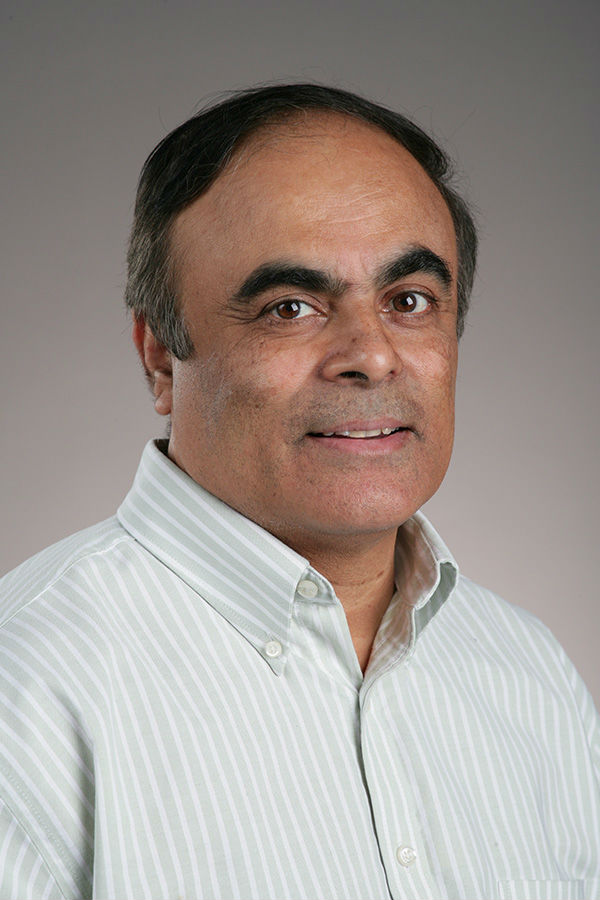
Dr. Ahalapitiya H. Jayatissa serves as Professor and Director of the Nanotechnology & MEMS Laboratory within the Department of Mechanical, Industrial & Manufacturing Engineering at the University of Toledo, with research funded by the National Science Foundation (NSF), DARPA, and the US Department of Energy. Education: He earned a Ph.D. in Electronics Engineering from Shizuoka University, Japan (1995), a BS in Physical Science with honors, and an MPhil in Physics from Ruhuna University. His doctoral studies were supported by the Japan Ministry of Education Scholarship (MONBUSHO, 1992), followed by a Research Fellowship from Japan's Science and Technology Corporation (JST, 1996). Research Focus: His expertise spans Nanotechnology, Microelectromechanical Systems (MEMS), Nanomaterials synthesis, Semiconductor Devices, Thin Films, Advanced Coating, Sensors, and Renewable Energy systems. Current projects emphasize energy conversion/storage devices and MEMS applications, reflecting interdisciplinary innovation at the intersection of materials science and engineering. Awards & Recognition: NSF CAREER Award (2003) Outstanding Faculty Research Award in Engineering (2011) Excellence in Supervision of Undergraduate Research Award (2012) Fellow of the Institute of Physics (FInstP) Japan Ministry of Education Scholarship (MONBUSHO, 1992) Science and Technology Corporation Fellowship (JST, 1996) Professional Leadership: As Director of the Nanotechnology & MEMS Laboratory, he oversees a research portfolio of 200+ refereed publications. Prior to UT, he held R&D positions at Japan Broadcasting Corporation (NHK) from 1996-1999 and Argonne National Laboratory (ANL). His professional affiliations include Senior Membership in IEEE (2000) and SME (2000), alongside active roles in ASME and SPIE.
Ronald N. Miles is a Distinguished Professor in the Department of Mechanical Engineering at Binghamton University, part of the Watson School of Engineering and Applied Science. He has held various administrative roles including Director of Graduate Studies, Department Chair, and Associate Dean for Research. His expertise spans mechanics, acoustics, MEMS, neurobiology, and control systems, with a focus on bio-inspired microacoustic sensors for healthcare and consumer electronics. Educated at the University of California, Berkeley (BSEE) and the University of Washington (MS/PhD in Mechanical Engineering), Miles has over 40 years of academic and industry experience. His research has led to over 100 publications, 20 patents, and significant grants totaling $17 million. Notable achievements include the Chancellor's Award for Excellence in Teaching and the Research Foundation's Outstanding Inventor Award. Miles' research emphasizes bio-inspired sensor design, acoustic flow sensing, and MEMS technology. His team has developed innovative microphones mimicking insect hearing mechanisms, with applications in hearing aids and medical devices. Current projects include NIH-funded work on acoustic measurements in the human ear canal. Award highlights include recognition for teaching (1996-1997 Chancellor's Award) and research innovation, including the 2005 First Patent Award. His work bridges engineering and biology, with labs focused on acoustic core technologies and vibrations research. Miles also serves as Associate Editor for the ASME Journal of Vibration and Acoustics.
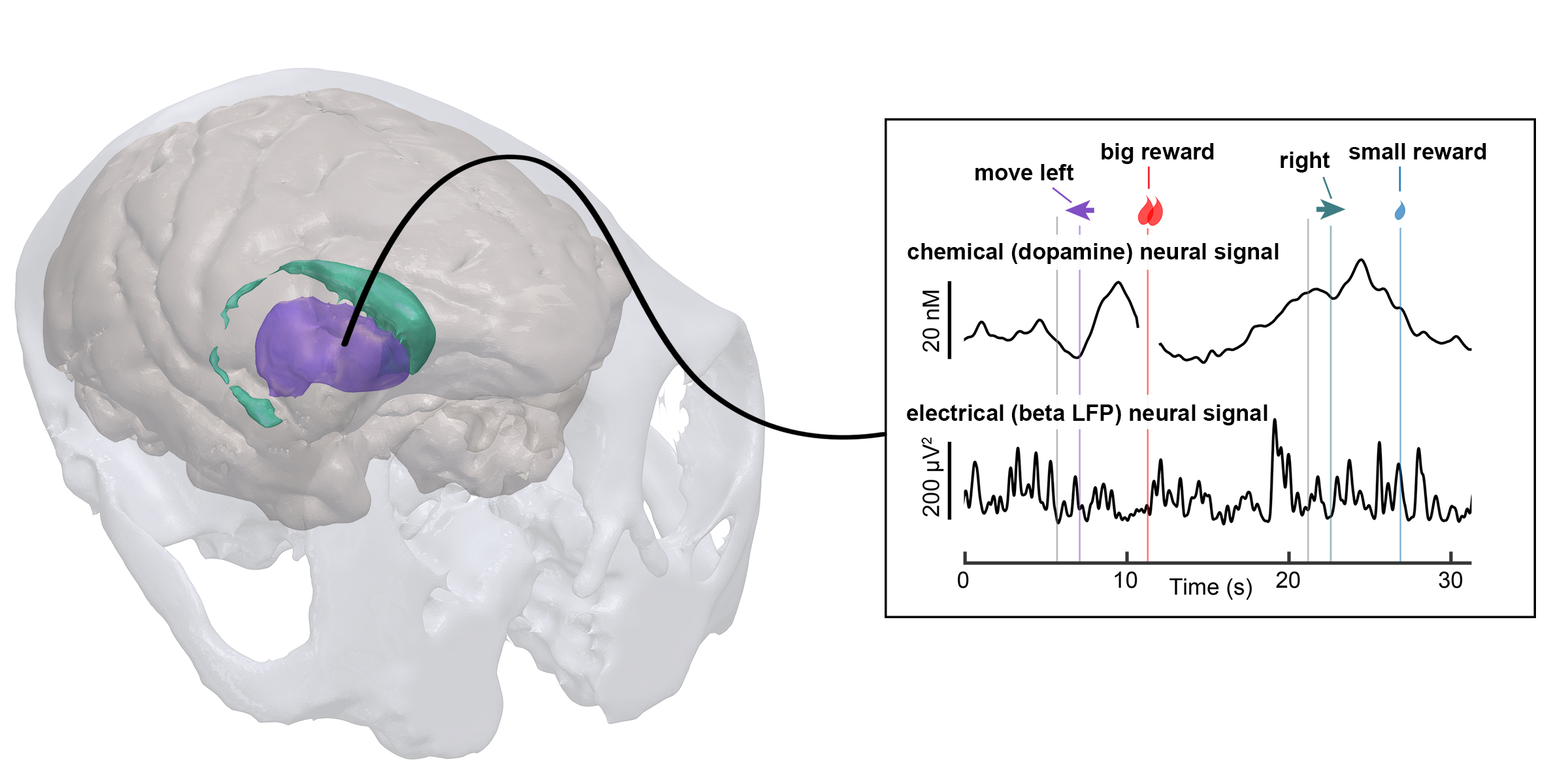
Helen N. Schwerdt is an Assistant Professor in the Department of Bioengineering at the University of Pittsburgh, affiliated with the Swanson School of Engineering and the Center for the Neural Basis of Cognition (CNBC). Her research focuses on developing implantable tools for probing electrical and chemical neural activity, with a particular emphasis on long-term monitoring in both rodents and primates. Key areas include dopamine signaling in Parkinson’s disease, neural interface design, and chronic neural recording systems. Her lab’s work spans interdisciplinary fields such as bioengineering, materials science, and neuroscience. Notable contributions include scalable carbon fiber electrode arrays for neurochemical monitoring and wireless passive neurorecording systems. Schwerdt’s team collaborates extensively, addressing challenges in neural prosthetics and translational neuroscience. Recent research highlights include the 2023 publication on rodent neurochemical arrays and 2020 studies on dopamine and motor control in primates. The lab actively recruits students and postdoctoral researchers across disciplines, emphasizing training in microfabrication, electrophysiology, and computational neuroscience.
Dr. Arash Khatamianfar is a Lecturer in the School of Electrical Engineering and Telecommunications at the University of New South Wales (UNSW), specializing in Control Engineering and Robotics. With a strong background in both academia and industry, he has made significant contributions to engineering education and control systems research. His educational background includes a B.Sc. in Electrical Engineering (Electronics major) from Iran (2005), an M.Sc. in Electrical Engineering (Control Engineering and Robotics major) from Iran (2008), and a Ph.D. in Electrical Engineering with focus on Control Systems and Robotics from UNSW (2015). Dr. Khatamianfar's research spans two primary domains: educational technologies in engineering education and advanced control systems. In engineering education, he has focused on developing effective online laboratory practices, managing hands-on labs during the pandemic, and comparing online versus in-person teamwork. In control engineering, his work centers on overhead crane systems, model predictive control, and applications in renewable energy systems. His publications reveal a clear trajectory from theoretical control methods to practical industrial applications, with recent work emphasizing educational technologies alongside continued contributions to control theory. Best Lab Demonstrator Award in the School of Electrical Engineering and Telecommunications at UNSW (2014) Nominated for Best Lab Demonstrator Award at UNSW (2015) Nominated for Best Lecturer Award in the Faculty of Engineering at UNSW (2018) Dr. Khatamianfar has demonstrated significant commitment to teaching excellence, earning the first-ever Best Lab Demonstrator Award in his school based on student satisfaction. His industry experience includes work at Buildings Alive Pty. Ltd. as a Systems and R&D Engineer, where he developed methods for improving energy consumption in commercial buildings, and professional training in SIEMENS PLC systems. He has been active in the Systems and Control group at UNSW, particularly in running teaching laboratories and collaborating in research laboratories. His work environment includes the Systems and Control Research laboratories at UNSW, where he has supervised undergraduate thesis students and contributed to developing advanced control methodologies with practical industrial applications.
Karl Böhringer is Professor of Electrical & Computer Engineering and Bioengineering at the University of Washington, where he also directs the Institute for Nano-Engineered Systems (NanoES). He holds an adjunct faculty position at the Paul G. Allen School of Computer Science & Engineering. With international academic engagements at institutions in Japan, Brazil, and Switzerland, his work focuses on interdisciplinary research bridging engineering and life sciences. Education Diplom-Informatiker, University of Karlsruhe (1990) MS in Computer Science, Cornell University (1993) PhD in Computer Science, Cornell University (1997) Postdoctoral training includes positions at Stanford University (1994-1995) and UC Berkeley (1996-1998). Research Focus Böhringer leads research in micro/nano-scale systems with applications spanning robotics, biotechnology, and computing. Key areas include: Design of microelectromechanical systems (MEMS) Precision manipulation from macro to nano scales Microfluidics for life science applications Autonomous microrobotics systems Convergence of photonics, nanotechnology, and biological computing Laboratory Leadership He directs the Böhringer Lab, developing innovations like parallel microactuator arrays, walking microrobots, and multi-batch self-assembling systems.
Claudia Lenk serves as Full Professor at Ulm University since 2024, leading the Biomedical Sensor Systems and Microsystems research group. Her work focuses on developing bio-inspired acoustic sensors to enhance human and machine hearing capabilities, particularly for speech processing in noisy environments through MEMS-based adaptive technologies. Education: Technical Physics, TU Ilmenau PhD in Biophysics (specializing in numerical/chemical modeling of atrial fibrillation mechanisms) Postdoctoral research developing MEMS-based artificial hair cells for hearing enhancement Her research integrates bio-inspired engineering with acoustic sensor design to create noise-robust systems that mimic biological hearing mechanisms. Key innovations include tunable MEMS resonators, neuromorphic auditory processing, and integrated signal pre-processing for hearing aids and robotics. This interdisciplinary approach bridges microsystems engineering, neuroscience, and auditory perception to address limitations in current speech processing technologies. Analysis of her 15 most recent publications (2020-2025) reveals a consistent trajectory toward adaptive neuromorphic acoustic systems. Dominant themes include resonance frequency control, dynamic range expansion through nonlinear dynamics, and bio-inspired feature extraction for low signal-to-noise ratio environments. These advancements target practical implementations in energy-constrained devices like hearing aids and autonomous systems. Scientific Awards: No awards documented in source materials Advising and Grants: Source materials contain no information regarding student supervision, research grants, or collaborative funding initiatives. Labs and Teams: She directs Ulm University's Biomedical Sensor Systems and Microsystems group, which develops cutting-edge sensor technologies for hearing applications, robotics, and speech processing systems through MEMS fabrication and neuromorphic computing approaches.