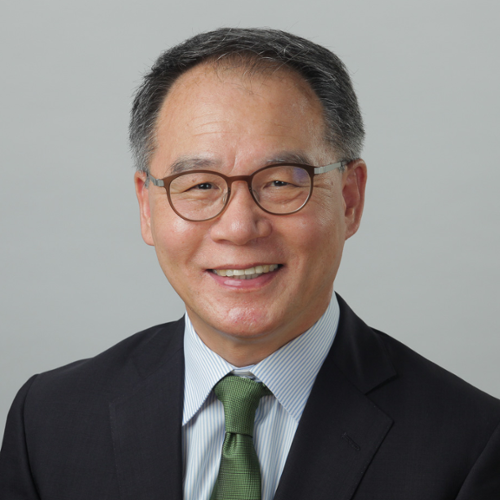
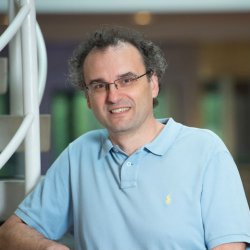
Jong H. Kim is an Associate Teaching Professor at Emory University, affiliated with the Faculty of Economics. His research focuses on Quantitative Analysis, Applied Microeconometrics, and Industrial Organization. He holds a PhD in Economics from Emory University (2005) and an MS in Applied Mathematics from Virginia Polytechnic Institute and State University (1994). Contact: jhkim@emory.edu, Office Location: Rich 311A.
Ben Ost is an Associate Professor of Economics at the University of Illinois at Chicago (UIC), affiliated with the Department of Economics within the College of Liberal Arts and Sciences. He holds a PhD from Cornell University (2011) and a BA from Grinnell College (2006). His research focuses on labor economics and the economics of education, with specific interests in teacher quality, higher education outcomes, and applied econometric methodologies. Educationally, Ost has contributed to understanding how academic policies like probation systems and honors programs affect student performance and earnings. He has examined generational differences in teacher effectiveness, employer connections in college networks, and omitted variable bias in statistical models. His work frequently employs regression discontinuity designs and value-added modeling to assess educational interventions and labor market dynamics. Key Research Themes: Teacher development, college access policies, human capital formation, and peer effects. Grant Funding: Principal Investigator for $47,000 Spencer Foundation grant and $3,894 OSSR grant. Teaching: Award-winning instructor in graduate microeconometrics, labor economics, and education economics courses. Recognized with the UIC TRP Award (2011-2016), Ost has advised numerous graduate and undergraduate students, serving as committee chair or member for over 20 advisees. His professional service includes peer-review roles for top journals like the Quarterly Journal of Economics and American Economic Review, alongside NSF grant reviewing.
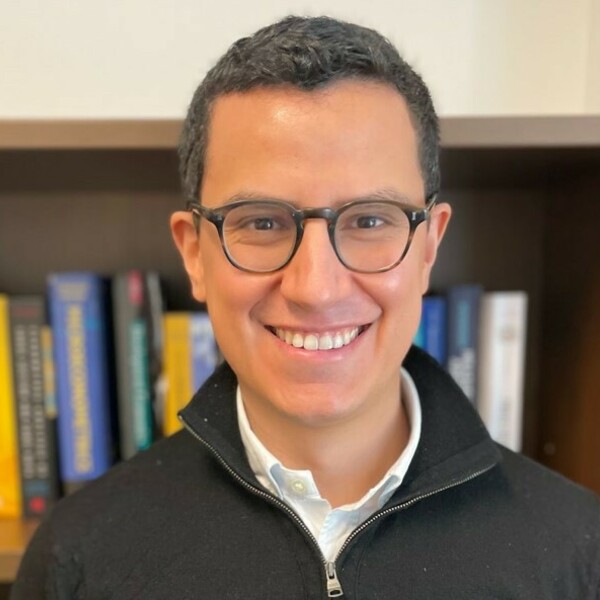
Manuel Alejandro Estefan Davila is an Assistant Professor at the Keough School of Global Affairs, University of Notre Dame. His research focuses on development policy in Latin America, particularly public finance, labor markets, and entrepreneurship. He previously held roles as a research scholar at the Institute for Fiscal Studies (London) and the University of Chicago’s Center for the Economics of Human Development, and worked as a policy analyst in Mexico’s Presidency. Education: Ph.D. in Economics, University College London (2019) M.Res. in Economics, University College London (2015) M.P.P., University of Chicago Harris School of Public Policy (2014) B.A., Instituto Tecnológico Autónomo de México (2012) Research Interests: Estefan explores how policies and institutions shape economic outcomes in developing economies. His work integrates microeconometric methods to evaluate interventions in sectors like entrepreneurship, labor markets, and technology adoption. Key themes include the impacts of extortion on businesses, digital training for micro-entrepreneurs, and the effects of export manufacturing on labor markets. Articles Overview: His recent work analyzes extortion’s role in entrepreneurial ecosystems (e.g., Guatemala’s micro-enterprises), the efficacy of digital training programs for SMEs, and the socioeconomic effects of Mexican labor policies. Earlier research examined property taxation and macroeconomic shocks in Mexico. Professional Experience: Policy Analyst, Presidency of Mexico Research Scholar, Institute for Fiscal Studies (London) Labs/Teams: While no specific lab is mentioned, his work collaborates with interdisciplinary teams studying Latin American development challenges.
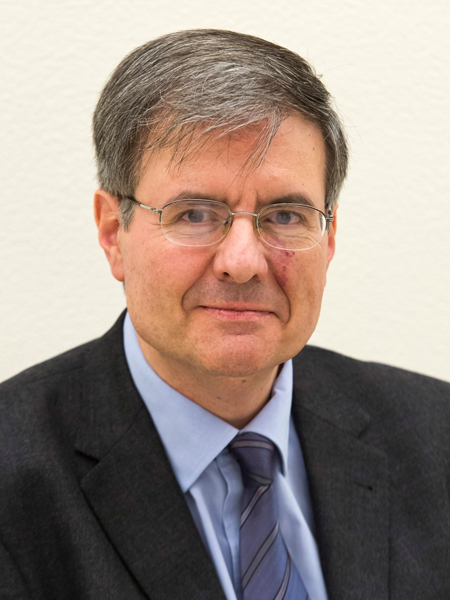
Prof. Thomas Wein is a Professor at the Institute of Economics (IVWL) at Leuphana University, specializing in Economic Policy. His work focuses on Applied Microeconomics, Empirical Economics, and Behavioral Economics, with a particular emphasis on societal transformation. He leads the PhD Program in Behavioral Economics and Societal Transformation and contributes to interdisciplinary research initiatives such as the Law and Economics Workshop and the Lüneburg Workshop in Economics. Research Interests: Empirical analysis of economic policy Microeconometric evaluation methods Behavioral insights for societal challenges Law and Economics intersections He coordinates research clusters and workshops, fostering collaboration among scholars like Miguel Abellàn, Jonas Dix, and Joachim Wagner. His academic activities include teaching, supervising the PhD program, and engaging in public outreach through press and events.
Chiara Monfardini is a Full Professor of Econometrics at the Department of Economics of the University of Bologna. Her academic discipline is ECON-05/A Econometrics. She holds a Degree in Statistics and Economics from the University of Padova (1992) and a PhD in Economics from the European University Institute (1997). Her career includes positions as an Assistant Professor (2001), Associate Professor (2005), and Full Professor (2017) at the University of Bologna. She is affiliated with the Institute for the Study of Labor (IZA) and CHILD-Collegio Carlo Alberto. As Co-Editor of the Review of Economics of the Household , she contributes to academic publishing. Her research focuses on microeconometrics, simulation-based inference, and applied studies in labor, household, and health economics. Key themes include parental time investments, gender gaps in time use, and the intergenerational transmission of educational choices. She leads projects like MINUTO (MindUsTogether), funded by PRIN2017, exploring mindful parenting interventions and parental engagement via digital tools. Teaching responsibilities include courses such as Econometrics , Microeconometrics , and Advanced Microeconometrics . Her work integrates quantitative methods with policy analysis, addressing issues like early childhood education impacts and voting behavior. Office hours are held on Mondays at 5 PM by appointment.
Bryan S. Graham is a Professor in the Department of Economics at the University of California, Berkeley, where he has held faculty positions since 2005, progressing from Assistant Professor to his current full Professor rank in 2017. His research focuses on the econometrics of social interactions and networks, with particular expertise in measuring the effects of stratification on inequality. He is an active member of the Inequality: Measurement, Interpretation, and Policy (MIP) Network and contributes significantly to the field of network econometrics. Professor Graham's educational background reflects exceptional academic achievement: B.A. in Quantitative Economics from Tufts University (1997), Summa Cum Laude, Phi Beta Kappa M.Phil. in Economics from Oxford University (2000) as a Rhodes Scholar Ph.D. in Economics from Harvard University (2005) His research program bridges theoretical econometric advances with practical applications to economic policy questions. Graham has pioneered methods for analyzing network data, identifying social interactions, and measuring segregation effects. His work appears in top journals including Econometrica, Review of Economic Studies, and Journal of Econometrics. He has authored the influential Handbook of Social Economics chapter on network econometrics and co-edited the comprehensive volume 'The Econometric Analysis of Network Data' (2020). Professor Graham's publications reveal a consistent focus on developing methodological tools for analyzing social networks and peer effects, with increasing sophistication in handling complex network structures and addressing identification challenges. His recent work has expanded into practical applications in education policy and spatial inequality while maintaining theoretical rigor in econometric methodology. His scientific contributions have been recognized through prestigious awards including election as Fellow of the International Association of Applied Econometrics (2023) and multiple competitive National Science Foundation grants totaling over $1 million. Early career recognition included the Rhodes Scholarship, Fulbright Scholarship, and National Science Foundation Graduate Fellowship. As an educator, Graham teaches undergraduate and graduate econometrics courses at UC Berkeley and has developed specialized short courses internationally on econometric methods for social spillovers and network data. He has served on numerous editorial boards including as Co-Editor of the Review of Economics and Statistics (2014-2019) and has organized major conferences including the Berkeley-Stanford Econometrics Jamborees. Beyond academia, he maintains active research affiliations with the National Bureau of Economic Research, Center for Evaluation and Development at the University of Mannheim, and the Human Capital and Economic Opportunity Working Group at INET.
Manuel Arellano is Professor of Economics at the Center for Monetary and Financial Studies (CEMFI) in Madrid since 1991, with prior appointments at the University of Oxford (1985-89) and London School of Economics (1989-91). A leading econometrician specializing in panel data analysis, his work bridges theoretical econometrics and labor economics applications. He earned his undergraduate degree from the University of Barcelona and Ph.D. from the London School of Economics. Arellano's research focuses on econometric methodology for panel data, particularly dynamic models with heterogeneity. His seminal book Panel Data Econometrics (2003) established foundational frameworks for nonlinear and dynamic panel estimation. Current work extends to distributional analysis of random coefficients and robust inference under uncertainty, maintaining consistent emphasis on labor market applications like unemployment duration and policy evaluation. His publication history reveals a 30-year trajectory advancing panel data econometrics, evolving from specification testing (1987-1995) to sophisticated dynamic and nonlinear models (2003-2014), with persistent focus on practical implementation and labor economics applications. Major honors include: President of the Econometric Society (2014) Foreign Honorary Member of the American Academy of Arts and Sciences (2014) Rey Jaime I Prize in Economics (2012) ISI Highly Cited Researcher status (2010) Fellow of the Econometric Society (2002) No information on student advising or research grants appears in the source materials. Similarly, details about research laboratories or collaborative teams are not documented in the provided texts.
Òscar Jordà serves as Professor of Economics at the University of California, Davis and Senior Policy Advisor at the Federal Reserve Bank of San Francisco. His academic career bridges rigorous econometric methodology with practical monetary policy applications, maintaining active roles in both academic and central banking institutions. Dr. Jordà's research spans five major areas: econometric methodology (particularly local projections), macroeconomics, monetary economics, economic history, and international economics. His methodological innovations in local projections have transformed how economists estimate dynamic causal effects, providing alternatives to traditional VAR approaches with greater robustness to model misspecification. His historical work with Moritz Schularick and Alan Taylor on centuries of financial data has revealed critical patterns in credit cycles, financial crises, and their macroeconomic consequences. His recent publications demonstrate significant evolution in research focus from traditional monetary policy analysis toward contemporary challenges including pandemic economic impacts, climate economics, and labor market stress measurement. The methodological thread connecting these diverse topics remains his expertise in dynamic causal inference and time series analysis. Dr. Jordà maintains extensive editorial responsibilities across leading economics journals including as Co-editor of the International Journal of Central Banking, Guest Editor for the European Economic Review, and Associate Editor for both the Journal of Applied Econometrics and the Journal of International Economics. He previously served on editorial boards for the Journal of Business and Economic Statistics and the Journal of the Spanish Economic Association. As Founding Chair of the Spanish Business Cycle Dating Committee, he has contributed to establishing systematic historical chronologies of economic activity. His work with Schularick and Taylor has produced influential datasets covering bank credit, financial crises, and asset returns across 17 advanced economies since 1870, enabling unprecedented historical analysis of financial stability.
Professor Bartosz Witkowski is a faculty member at the Warsaw School of Economics (SGH), serving as Rector’s Representative for the SGH Doctoral School and Director of the Institute of Econometrics. He holds a PhD in quantitative methods and focuses on econometrics, particularly panel data and applied econometrics. His research explores financial systems, banking regulation, economic growth, and education quality's impact on development. Collaborations include work with the National Bank of Poland, World Bank, and government ministries. His research interests include applied econometrics , panel data analysis , and financial stability mechanisms , with a focus on European and emerging markets. Recent studies address banking sector dynamics, crisis impacts on financial systems, and the role of education in economic catch-up processes. He has authored/co-authored over 20 articles in high-impact journals, focusing on topics like banking regulation, economic convergence, and policy effectiveness. His teaching includes courses on quantitative methods for institutions such as the World Bank. Led the Institute of Econometrics, managing research and training programs. No specific grants or awards mentioned, though his work underscores practical applications of econometric models in policy and industry.
Adam M. Rosen is a Professor of Economics at Duke University's Department of Economics, where he has served since 2019. Previously, he held academic roles at University College London (UCL), including Associate Professor (2013–2016) and Assistant Professor (2006–2013). He is an affiliated researcher with the Centre for Microdata Methods and Practice (CeMMAP) and the Institute for Fiscal Studies (IFS). His research focuses on econometric theory and applications, particularly in instrumental variable methods, partial identification, and structural models. Rosen earned his Ph.D. in Economics from Northwestern University (2006) and a B.A. in Economics and Mathematics with Computer Science from Cornell University (1999). His work has been published in top journals such as the Review of Economic Studies, Econometrica, and the Journal of Econometrics. He has received numerous awards, including Fellow of the Journal of Econometrics (2024) and the Best Associate Editor Award (2024). Rosen's research interests span econometric theory, partial identification, instrumental variables, and applied microeconometrics. His recent work includes advancements in IV methods for Tobit models, discrete choice models, and counterfactual analysis. He has advised over a dozen PhD students and contributes actively to professional service, including editorial roles at the Journal of Econometrics and Econometrics Journal. He has held grants from the European Research Council and ESRC, among others, and his teaching spans advanced econometrics courses at both UCL and Duke. His affiliations with CeMMAP and IFS reflect his commitment to advancing microdata methods and policy analysis.
Andrew Chesher is the William Stanley Jevons Professor of Economics and Economic Measurement at University College London (UCL) and holds Honorary Professor status at Beihang University. He previously served as Professor of Econometrics at the University of Bristol (1984–1999) and Lecturer in Econometrics at the University of Birmingham (1971–1983). He earned a Bachelor of Social Science from the University of Birmingham (1970) and a Doctor of Science, Honoris Causa from the University of Birmingham (2017). His research focuses on econometric methods, structural modeling, measurement error analysis, and applied microeconometrics. Key contributions include work on instrumental variable methods, panel data analysis, and applications in transportation economics, population policy, and market structure. Chesher has advised international agencies like the World Bank and UNDP, contributing to real-world policy solutions. He is a Fellow of the British Academy, Econometric Society, and Academy of Social Sciences. Chesher founded UCL’s Centre for Microdata Methods and Practice (2000), a global leader in econometric methodology. His awards include the 2017 Doctor of Science (honoris causa) and leadership roles such as President of the Royal Economic Society (2016–2018). Research highlights include modeling highway maintenance costs in Brazil/India (World Bank), Malaysia’s marriage/fertility policies (UNDP), and private-sector efficiency studies with firms like EDF Energy and regulators like Ofcom. His work bridges theory and practice, emphasizing robust methods for endogeneity, discrete choice models, and incomplete data scenarios.
Professor João Santos Silva is a Professor in Economics at the University of Surrey, Department of Economics. His academic journey includes a PhD in Economics from the University of Bristol (1992), a Master's in Applied Mathematics from the Technical University of Lisbon (1988), and a Bachelor's in Economics from the same institution (1985). Prior to Surrey, he taught at the Technical University of Lisbon and the University of Essex. His research focuses on theoretical and applied microeconometrics, with notable contributions in quantile regression, count data models, gravity equations in trade, and mode regression. He co-authored the seminal paper "The Log of Gravity" , recognized as a Classic in Economics. Silva has developed several Stata modules, including fqreg and ppml , advancing econometric software tools. He teaches courses such as ECOM042: Econometrics I and ECOM066: Advanced Econometrics 2. His work has been published in top journals like the Review of Economics and Statistics and Journal of Econometrics . Notable contributions include addressing endogeneity in count data models, machine learning applications in trade research, and analysis of price stickiness in firms. Silva’s research emphasizes methodological rigor and practical relevance in economic analysis.
Mogens Fosgerau is a Professor at the Department of Economics, University of Copenhagen, with a research focus on discrete choice theory, rational inattention, transportation and urban economics, congestion modeling, and entropy-based frameworks. He has held an ERC Advanced Grant (2017-2023) and completed a Grand Solutions project for the Innovation Fund Denmark (2016-20). Education: Mathematical Economics (Aarhus University, 1990), PhD in Mathematics (University College London, 1992). Current affiliations: Department of Economics (University of Copenhagen), Faculty of Social Sciences. Former roles: Guest Professor at DTU (2022-2023), member of the Commission for Green Transition of Passenger Cars (2019-2021). His research explores the intersection of information theory and discrete choice models, addressing complex substitution patterns and endogeneity issues through generalized entropy frameworks. He applies these models to transportation planning, urban economics, and climate policy analysis. Recent publications focus on perturbed utility models, inverse product differentiation logit, and rational inattention in spatial choice contexts. His work bridges theoretical econometrics with practical transport and environmental policy challenges. Awards: Recipient of the 2021 Transportation Science Meritorious Service Award. Former Editor-in-Chief of Economics of Transportation (2012-2020). Advising and Grants: Leads research projects funded by the European Research Council and Innovation Fund Denmark. Has participated in policy committees including the Danish Environmental Economic Council (2019-2025) and the Committee on Public Transport Mobility (2023-24).
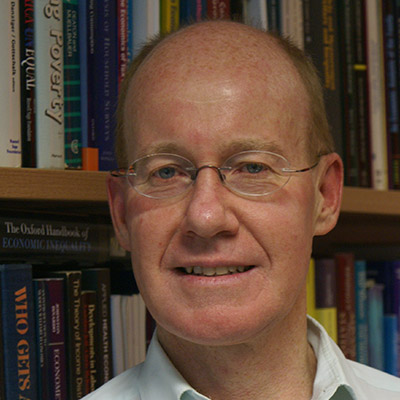
Professor Stephen Jenkins is a leading expert in Economic and Social Policy at the London School of Economics and Political Science (LSE) since 2011, with a focus on inequality , poverty dynamics , and applied econometrics . He has held leadership roles including Head of the Department of Social Policy (2016-2019, 2023-2024) and coordinates the Global Inequalities Observatory at LSE’s International Inequalities Institute. Education: BSc in Economics, University of Otago (1974-1977) PhD in Economics, University of York (1983) His research interests span: Analysis of income distribution, redistribution via taxation and social security Income mobility and poverty dynamics Measurement errors in survey and administrative data Survival analysis and limited dependent variable models Recent research trends emphasize: Top-income inequality using tax and survey data Labour market volatility and income risk Policy impacts on inequality and poverty Statistical methods for income distribution analysis Scientific awards and honors : Presidency of three major global associations: IARIW (2006-08), ECINEQ (2021-23), ESPE (1998) Distinguished Fellow of the New Zealand Association of Economists (2019) Research Fellow at IZA, Bonn (since 2000) Editorial leadership roles: Journal of Economic Inequality (2014-17), The Stata Journal (current) Advising and grants : Supervises doctoral research in inequality, poverty, and econometrics Contributed to high-impact policy reports for UK DWP, OECD, and New Zealand Treasury REF2021 Impact Case Study: Better measurement of income inequality Member of scientific advisory boards for IAB, WIFO, and Motu Labs and teams : Coordinator of the Global Inequalities Observatory at LSE Key member of LSE’s Department of Social Policy and International Inequalities Institute Collaborates with institutions including IZA, Motu, and IAB
Andrea Ichino is a Full-time Professor in the Department of Economics at the European University Institute (EUI) in Florence, Italy. He previously held positions at the University of Bologna, Bocconi University, and the EUI, where he was a Jean Monnet Fellow. His research focuses on Labour Economics, Education Economics, Family Economics, and Microeconometrics. His work addresses topics like intergenerational mobility, gender norms, judicial efficiency, and policy impacts on education and labour markets. Affiliations: EUI, University of Bologna (on leave), Research Fellowships at CEPR, IZA, and CESifo. Education: PhD in Economics from MIT (1990), Laurea in Economics from Bocconi University (1985). Research Interests: Ichino examines socio-economic policies, including childcare effects, taxation, and education systems. His recent work analyzes cognitive impacts of daycare, regional wage disparities, and pandemic economic strategies. He emphasizes causal inference and experimental methods in his analyses. Publications: Over 40 peer-reviewed articles in top journals like the Journal of Political Economy, American Economic Review, and Journal of Labor Economics. Recent work includes studies on multi-cutoff RD designs and pandemic policy implications. Awards: EALE Fellowship, CEPR Research Fellowship, and grants from the Unicredit Foundation for education research. Advising & Grants: Supervised over 40 PhD students across institutions. Received grants for projects on education policy, judicial productivity, and intergenerational mobility. Active in policy discussions on tax systems, wage equality, and public sector reforms. Labs/Teams: Collaborates with research clusters at EUI on topics like civic engagement and judicial efficiency. Leads projects on educational tracking systems and labour market dynamics.