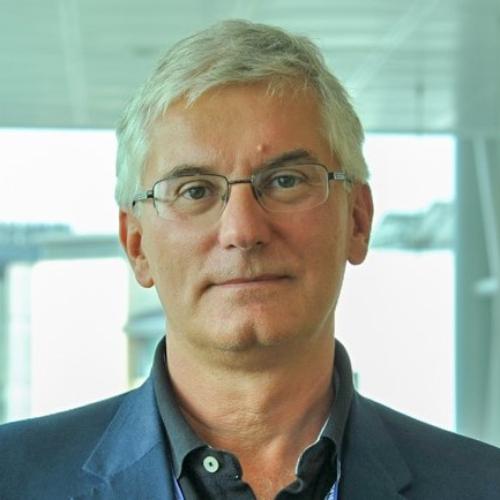
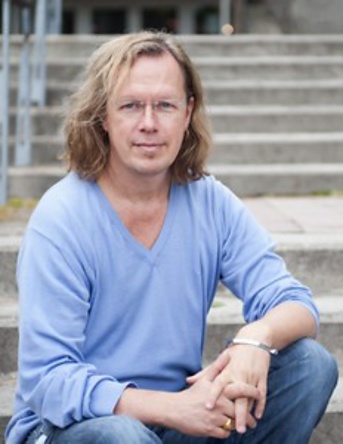
Claudio Antonio Giuseppe Piga is a Full Professor at the Department of Economics of the University of Genoa. He serves as Coordinator of the PhD program in Economics and Quantitative Methods, with teaching assignments across multiple degree programs including Economic and Financial Sciences, and Engineering Technology for Strategy and Security. Current academic rank: Professor Email contact: claudio.piga@unige.it Office hours: Tuesdays 10:30-12:30 (Teams) or by appointment His research spans political economy, labor economics, and behavioral economics, with particular focus on pricing strategies and market dynamics. Recent work examines sticky pricing in risk contexts, dynamic pricing during major events like UEFA Euro 2016, and ICT-enabled innovation through cooperative frameworks. Publications highlight interdisciplinary approaches combining traditional economic theory with behavioral insights and empirical analysis. Key trends include event-driven market responses , consumer behavior modeling , and regulatory impacts on pricing across hospitality and energy sectors.
Eric Bartelsman is a Full Professor at the Faculty of Economics and Business at Vrije Universiteit Amsterdam , with a PhD from Columbia University and a BS from MIT. He contributes to research on productivity growth through micro and macroeconomic lenses, focusing on: Firm dynamics and factor (re)allocation ICT impact on productivity Labor market policies and tax avoidance mechanisms European economic growth frameworks His work spans longitudinal firm-level studies and policy-oriented projects, including a major 2019-2022 EU growth initiative. Articles show specialization in productivity measurement, ICT diffusion, and reallocation efficiency, often leveraging microdata infrastructure. Scientific Awards: NWO Open Competition Grant (2021) Fellow, Tinbergen Institute (2000-present) Fellow, IZA Bonn (2000-present) He supervises PhD research, contributes to datasets like the CompNet microdata , and serves in editorial roles at Industrial and Corporate Change (2008-2017) and Tijdschrift voor Openbare Financiën (2012-present). Current ancillary roles include advisor to the Halle Institute for Economic Research and board member at De Nederlandsche Bank .
Tuomas Kosonen is a Research Professor at the VATT Institute for Economic Research in Helsinki, Finland, and an Academy Research Fellow of the Academy of Finland. He is also affiliated with the CESifo Institute in Germany. His work bridges public economics, labor economics, and empirical policy analysis. PhD in Economics (2011) and Master of Social Sciences in Economics (2005) from the University of Helsinki His research focuses on: Behavioral effects of consumption and income taxes Empirical analysis of tax compliance and evasion Impact of social welfare policies on labor supply and child outcomes Incidence of value-added and environmental taxes Labor market effects of foreign ownership Price-setting dynamics in response to tax reforms Recent publications include studies on: Excise tax substitution patterns in consumer goods Asymmetric VAT price incidence Carbon tax burden distribution Long-term consequences of child care subsidies Vehicle import tax evasion mechanisms Restaurant pricing behavior under tax changes Scientific recognition: Academy Research Fellow, Academy of Finland Collaborative networks span prestigious institutions including: MIT University of Michigan Uppsala University UCLA Aalto University VATT Institute for Economic Research
Roine Vestman is a Professor of Economics at Stockholm University , where he works in the Department of Economics . He also serves as Director of CeMoRe (Center for Microdata Methods and Practice) and holds positions as a Research Fellow at the CEPR (Centre for Economic Policy Research) and a Visiting Researcher at the Swedish House of Finance . His research focuses on household economics, public finance, and macroeconomic policy. His scholarly contributions include analysis of pension system design, mortgage market regulations, and monetary policy frameworks. He has extensively studied the relationship between housing wealth and economic behavior, household debt dynamics, and the implications of consumption-savings theories. Recent publications examine quasi-experimental evidence on homeownership benefits and the impact of macroprudential regulations. While no specific scientific awards are mentioned in the scraped text, his work frequently involves empirical research using Swedish datasets. His personal website ( www.roinevestman.com ) provides additional information about his academic activities, including data and methodological resources for his experiments.
Zhixiu Yu serves as Assistant Professor in the Department of Economics at Louisiana State University's E. J. Ourso College of Business, with additional research affiliation through the Human Capital and Economic Opportunity Working Group (HCEO) Markets Network at the University of Chicago's Becker Friedman Institute. Her scholarly work bridges macroeconomic theory with empirical policy analysis in labor, public finance, and health economics. Her educational foundation includes: PhD in Economics, University of Minnesota (2022) BS in Economics (with honors), University of Washington (2015) BA in Mathematics, University of Washington (2015) Yu's research program investigates how social insurance programs and taxation influence household economic decisions, particularly regarding labor supply and saving behavior. She employs structural modeling integrated with microdata analysis to examine health inequality, social insurance systems, digital currencies, and aging populations. Her methodological rigor combines econometric techniques with large-scale simulations to address policy-relevant questions in public economics. Recent publications (2023-2024) reveal consistent focus on economic policy impacts: analyzing Social Security's effect on older workers' labor supply, cryptocurrency-fiat money coexistence, and SNAP's role during the pandemic. This trajectory demonstrates growing expertise in evaluating how economic shocks and policy interventions affect vulnerable populations through rigorous quantitative frameworks. Current research includes EC-READ 2025 Project 4: 'The Hidden Costs of Care,' examining parental dementia's impact on work and retirement decisions. Her prior postdoctoral work at NBER and Harvard Medical School established foundations for this policy-oriented research agenda focused on health-economics intersections. Affiliation networks extend beyond LSU through active participation in the HCEO Markets Network, maintaining collaborative channels with leading economics research institutions while advancing her independent research program in economic policy analysis.
Claus Munk is a Professor at Copenhagen Business School's Department of Finance, where he researches dynamic asset allocation, life-cycle financial planning, and housing economics. His work employs stochastic modeling to analyze consumption-investment decisions under uncertainty. Research interests focus on: Optimal portfolio strategies across life stages Housing market interactions with financial decisions Retirement savings mechanisms and decumulation Stochastic interest rate and income risk modeling Welfare implications of financial regulations Publication analysis reveals consistent focus on life-cycle finance since 1998, with recent emphasis on retirement systems (2019), mortgage structures (2018), and ETF-based portfolios (2024). Methodologically, his work combines theoretical frameworks with empirical validation using household data. Professor Munk maintains research collaborations with Goethe University Frankfurt economists and co-advises projects through Copenhagen Business School. His personal academic website is available at: http://sites.google.com/view/clausmunk/home
Gunnar Andersson is a Professor in Demography at Stockholm University, where he also serves as a Lecturer in the Interdisciplinary Master's Programme in Demography. He holds the position of Associate Director at the Linnaeus Center on Social Policy and Family Dynamics in Europe (SPaDE) and coordinates the 'Register-based Research in Nordic Demography' initiative as part of SIMSAM (Swedish Initiative for research on Microdata in the Social and Medical Sciences). His research focuses on demographic trends with special emphasis on fertility patterns, family dynamics, migration effects on population structure, and mortality analysis. Andersson frequently examines Nordic populations, particularly Sweden, using register-based data to investigate how socioeconomic factors, welfare policies, and cultural contexts influence demographic behavior. His methodological expertise includes life-table techniques, cohort analysis, and sophisticated statistical modeling of population data. Analysis of his 15 most recent publications reveals consistent focus on contemporary demographic challenges, including the Swedish fertility decline of the 2010s, pandemic mortality patterns, immigrant fertility dynamics, and family formation processes in advanced societies. His work demonstrates strong methodological rigor and relevance to current demographic transitions. Andersson has made significant contributions to demographic methodology, particularly in adapting life-table techniques for contemporary family research. His publications in leading demography journals demonstrate both theoretical innovation and practical application of demographic methods to real-world population issues. His leadership roles in SPaDE and SIMSAM highlight his position as a key figure in European demographic research infrastructure, facilitating collaborative research on social policy and family dynamics across national boundaries.
Raul Eamets is a Professor at the University of Tartu, Faculty of Economics and Business Administration, where he has been employed since January 1994. He also serves as a Research Associate at Forschungsinstitut zur Zukunft der Arbeit (IZA) in Bonn, Germany, a position he has held since September 2004. His academic career spans over two decades with significant contributions to labor economics and migration studies, particularly in the context of Estonia and the Baltic region. His educational background includes: PhD in Economics from University of Tartu (1996-2000) Professor Eamets' research focuses on labor market flexibility, migration economics, economic policy analysis, and econometric modeling. His work frequently examines the Baltic states' economic transition, particularly Estonia's labor market dynamics during economic crises. He has made significant contributions to understanding wage determination, occupational mobility, and the impact of migration on labor markets in transition economies. His methodological approach combines rigorous econometric analysis with detailed case studies of specific economic phenomena in Eastern Europe. An analysis of Professor Eamets' recent publications reveals a consistent focus on labor market dynamics in transition economies, with particular attention to Estonia's experience. His work often examines the intersection of migration and labor market outcomes, exploring how temporary and permanent migration affects occupational mobility, wage determination, and workplace integration. A notable trend in his recent work is the examination of policy responses to economic crises, comparing different approaches taken by Eastern European countries. His research frequently employs innovative data sources, including online job search portals and firm-level microdata, to provide nuanced insights into labor market functioning. Professor Eamets has contributed significantly to understanding labor market institutions in transition economies, with particular expertise in the Baltic states. His work on trade union power, wage setting mechanisms, and labor market flexibility has informed policy discussions in Estonia and beyond. While specific grant information isn't detailed in the available materials, his extensive publication record suggests sustained research funding support. He appears to collaborate extensively with colleagues at the University of Tartu and internationally, contributing to the academic community through co-authored research and participation in research networks. Professor Eamets is associated with Kulno Türk's Lab at the University of Tartu, indicating his involvement in collaborative research projects and potentially mentoring junior researchers. His work connects closely with broader European research initiatives examining labor market dynamics in the context of EU enlargement and integration.
Carolina Villegas Sanchez is a Professor at ESADE's Department of Economics, Finance and Accounting and an Associate Professor at Universitat Ramon Llull. She serves as a researcher at GREF (Research Group in Economics and Finance) and a short-term consultant for the World Bank. She obtained her PhD from the European University Institute and MA from the University of Sussex. Education: PhD in Economics, European University Institute Master of Arts, University of Sussex Bachelor's in Economics (Licenciada en Economía) Research Focus: Her work centers on international economics and finance, employing firm-level data to examine financial integration, productivity, trade liberalization effects, and corporate market power dynamics. She maintains particular expertise in micro-macro linkages within European and global contexts. Affiliations: Primary appointment: Professor, ESADE Joint appointment: Associate Professor, Universitat Ramon Llull Researcher: GREF Economics Research Group Current consultancy: World Bank Past roles: European Commission, IMF, Université libre de Bruxelles Publication Trends: Her recent work (2013-2025) demonstrates evolving focus from trade/gender inequality toward firm-level productivity, data methodology, and market power analysis, with consistent output in top-tier economics journals. Lab Affiliation: She conducts research through GREF (Research Group in Economics and Finance), though no lab URL is provided.
Gisle James Natvik is a Professor of Economics at BI Norwegian Business School specializing in macroeconomics, monetary policy, and political economy. His research focuses on household finance, inequality, and the interaction between financial markets and macroeconomic stability. Natvik earned his Ph.D. from the University of Oslo in 2008 and built his career at Norges Bank (2003-2018) before joining BI Norwegian Business School as Assistant Professor (2014-2018) and subsequently Professor (2018-present). His primary research interests include macroeconomic policy transmission mechanisms, household balance sheet dynamics, sovereign debt crises, and the political economy of fiscal policy. His work frequently combines theoretical modeling with empirical analysis using rich microdata to examine how economic policies affect different demographic groups. Natvik's recent publications reveal a strong focus on wealth redistribution through asset price movements, the interaction between monetary policy and household debt, and political economy constraints on efficient public sector size. His 2025 paper in Journal of Political Economy examines how rising asset valuations redistribute welfare across generations and income groups, while his 2024 work in Journal of Public Economics explores fundamental tensions between competitive markets, free entry, and allocative efficiency in public sector economics. Asset Price Redistribution (2025) - Welfare effects of asset valuation changes The impossible trinity (2024) - Political economy constraints on public sector efficiency MPC Heterogeneity and Household Balance Sheets (2021) - Consumption responses to income shocks across wealth distribution Natvik directs the Center of Household Finance and Macroeconomic Research (HOFIMAR) and co-organizes the Oslo Macro Group and Oslo Macro Conference. He serves on the Norwegian Ministry of Finance's Advisory Panel of Fiscal Policy and contributes regularly to public debate as an op-ed columnist in Dagens Næringsliv, Norway's leading business newspaper.
Fredrik Wulfsberg serves as a Professor in the Department of Economics and Methodology at Oslo Business School, Oslo Metropolitan University. His research focuses on labor market dynamics, macroeconomic policy, and price formation mechanisms, with extensive empirical work using Norwegian datasets. He maintains an active public presence through economic commentary and policy analysis. Wulfsberg's core research examines wage rigidity phenomena, their institutional drivers, and macroeconomic consequences including inflation persistence and unemployment dynamics. His work critically analyzes Norway's fiscal rule regarding oil fund management and explores price dispersion patterns in retail markets. He bridges microeconomic foundations with macroeconomic policy outcomes through rigorous empirical methodology. Analysis of his 2014-2022 publications reveals consistent emphasis on empirical macroeconomics using microdata. Key trends include cross-country studies of wage rigidity (OECD), micro-level price adjustment evidence, and policy evaluations of Norway's oil wealth management. His recent work addresses pandemic-era macroeconomic challenges and fiscal sustainability, demonstrating strong policy relevance through frequent engagement with contemporary economic debates. No scientific awards were mentioned in the provided text. The available information does not specify any students supervised by Professor Wulfsberg or research grants he has administered, though his extensive publication record suggests significant research activity.