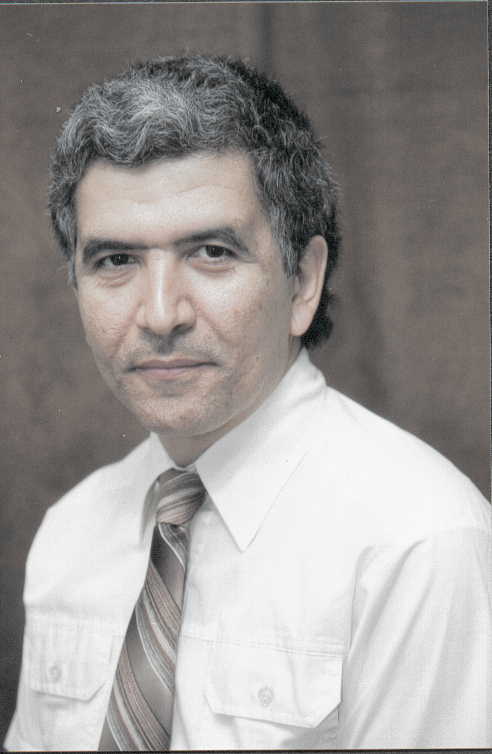
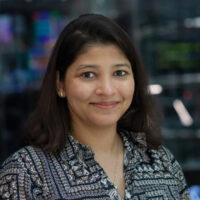
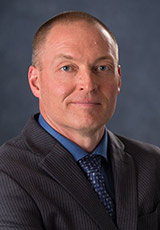
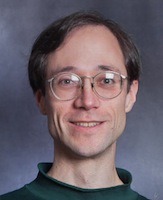
Mustapha C.E. Yagoub is a Full Professor at the School of Electrical Engineering and Computer Science, University of Ottawa, with over 500 publications in RF/microwave CAD, RFID systems, neural networks, and applied electromagnetics. He leads research in the ELEMENT Laboratory and RFM Research Group , focusing on wireless communication systems and nonlinear device modeling. PhD in Electronics (Institut National Polytechnique de Toulouse, 1994) Magister in Telecommunications (École Nationale Polytechnique d'Alger, 1987) Dipl.-Ing. in Electronics (École Nationale Polytechnique d'Alger, 1979) His research bridges Microwave Circuit Design with Artificial Intelligence , including applications in Energy Conservation and Telecommunication Systems . Key trends in his publications include hybrid modeling techniques combining Neural Networks with Computational Electromagnetics for optimizing Antenna Design and RF Components . He is a Senior Member of IEEE and licensed with the Professional Engineers of Ontario and Ordre des Ingénieurs du Québec . His lab teams focus on High-Tc Superconducting Devices and Directional Antenna Optimization for RFID networks.
Stefano Gregori is a Professor at the University of Guelph's School of Engineering. He specializes in analog and mixed-signal integrated circuit design, with a focus on low-power systems, sensor networks, and microsystem integration. His research involves collaborations with industry leaders like STMicroelectronics and TSMC, emphasizing practical applications in IoT, energy efficiency, and biomedical devices. He holds a PhD and is a Professional Engineer (PEng). His work bridges theoretical design and real-world applications, such as secure cryptographic circuits and sustainable materials for biomedical composites. He actively supervises graduate students and has mentored numerous scholars, many of whom now work in leading tech companies like Qualcomm and Thales. Gregori's funding sources include NSERC, CMC Microsystems, and the Ontario Centres of Excellence. He emphasizes ethics in engineering, advocating for safety and environmental responsibility. His lab, located in Richards Building Room 3521, focuses on cutting-edge projects like energy-efficient audio amplifiers and blockchain-based IoT security.
Mohamed Atia is an Associate Professor in the Department of Systems and Computer Engineering at Carleton University's Faculty of Engineering and Design. He conducts research in sensor fusion for autonomous systems, including robotics, autonomous vehicles, and the Internet of Things, with an emphasis on real-time embedded implementation. PhD, Electrical and Computer Engineering, Queen’s University (2013) M.Sc., Computer Systems, Ain Shams University (2006) B.S., Computer Systems, Ain Shams University (2000) His research focuses on sensor fusion , integrating data from heterogeneous sensors such as GNSS, IMU, Vision, Radar, and LiDAR under real-time constraints on embedded platforms like FPGAs and microcontrollers. He applies advanced signal processing, estimation theory, machine learning, and AI to solve challenges in state estimation, observability, fault tolerance, and concurrency management. Dr. Atia’s work has applications in intelligent vehicles, indoor navigation, mobile robotics, smart buildings, medical devices, and remote sensing . He leads a research lab focused on embedded multi-sensor systems, where students develop practical solutions for autonomous navigation and SLAM. His teaching emphasizes hands-on learning through labs and projects. He teaches undergraduate courses in computer systems, embedded systems, and signal processing, and a graduate course (SYSC 5807) on Advanced Topics in Computer Systems, specifically Sensor Fusion Systems . Scientific Awards: Alberta Innovate Association Award (2011) IEEE Excellence in PhD Research (2013) Mitacs Elevate Industrial Postdoc Award (2014) NSERC PDF Award (2015) Queen’s University Teaching Award (2016) Dr. Atia has advised graduate students such as Hamza Sadruddin and Alan Zhang , who have presented at IEEE Sensors and ION GNSS+ conferences, with Zhang winning Best Presentation. He has no listed grants in the provided text but has received prestigious fellowships. His research lab supports innovation in real-time embedded sensor fusion with links to industry and open-source tools.
Douglas A. Buchanan, Ph.D., P.Eng., FCAE, is Professor of Electrical and Computer Engineering at the University of Manitoba and a founding member of the Microelectronics and Nanotechnology Research Group. A Canada Research Chair (Tier II) in Microelectronic Materials from 2003-2013, he also served as Acting Dean of the Faculty of Engineering (2010-11) and Vice-President Commercialization at Innovate Manitoba (2012-14). His career combines 16 years at IBM Watson Research Center with two decades of academic leadership in Winnipeg. Education Ph.D. in Applied Physics & Electronics, University of Durham, U.K., 1986 M.Sc. in Electrical Engineering, University of Manitoba, 1982 B.Sc. in Electrical Engineering, University of Manitoba, 1981 Research Interests Prof. Buchanan’s work spans nano-scale CMOS gate dielectrics, high-κ metal oxides (HfO₂, ZrO₂, Al₂O₃), defect chemistry, quantum tunnelling, and dielectric reliability. Since 2010 his group has pioneered MEMS capacitive micromachined ultrasonic transducers (CMUTs) with multiple moving membranes for low-frequency, air-coupled imaging and NDT, as well as floating-gate MOS chemosensors functionalized with conducting polymers for olfactory applications. His publications reveal two dominant waves: the 1990s-2000s focus on ultra-thin SiO₂/high-κ stacks and the ITRS gate-stack roadmap, followed by a 2010s-2020s surge in CMUT design, anemometry, and polymer-based sensor arrays, demonstrating continuous adaptation from fundamental materials physics to applied micro-systems. Honours & Awards University of Manitoba Students’ Teacher Recognition Award – 2007 IBM Research Division Award – 1988 IBM Outstanding Technical Achievement Award – 1992 IBM Microelectronics Division General Manager’s Teamwork Award – 1997 Fellow, Canadian Academy of Engineering Senior Member, IEEE Professional Service & Grants He co-founded SEMATECH’s Gate Stack Engineering Working Group (1992-2000) that authored the ITRS gate-stack roadmap, co-chaired multiple MRS and IEEE Semiconductor Interface Specialists Conferences, and edited special issues of IBM J. Res. Dev. and MRS Proceedings on ultra-thin dielectrics. Grant support has included NSERC Canada Research Chair, CFI, and industrial partnerships with IBM, SEMATECH, and Manitoba HVDC Research Centre. Labs & Teams He leads the Microelectronics & Nanotechnology Research Laboratory within the University of Manitoba’s Faculty of Engineering, supervising graduate researchers in clean-room micro-fabrication, electrical characterization, and MEMS prototyping for ultrasound and chemical sensing systems.
Dr. Paul Gillard is a retired Professor in the Department of Computer Science at Memorial University of Newfoundland. His research focuses on computer architecture, VLSI design, computer graphics, and wireless protocols. He is affiliated with the Centre for Digital Hardware Applications Research. Education: B.Sc. in Computer Science, Memorial University M.Sc. in Computer Science, Memorial University Ph.D. in Computer Science, Memorial University Teaching: He instructs courses including CS3724 (Computer Organization), CS3725 (Computer Architecture), CS4723 (Introduction to Microprocessors), CS4725/EE8863 (VLSI Design), and CS4751 (Computer Graphics). His course materials emphasize practical lab work, programming (C and assembly), and project-based learning. Research & Projects: Dr. Gillard leads the Centre for Digital Hardware Applications Research, focusing on digital hardware and embedded systems. His courses involve hands-on projects with microprocessors, sensors, and circuit design. Awards: No scientific awards explicitly mentioned. Labs & Teams: He oversees laboratory modules in microprocessor interfacing, embedded systems, and analog/digital electronics. Course labs include work with AVR microcontrollers, SPI protocols, and sensor integration.
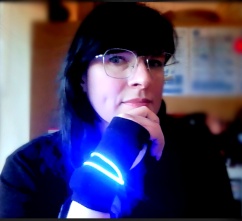
Christine Farion is an Instructor in the Faculty of Computer Science at Dalhousie University, Nova Scotia, Canada. She brings extensive experience in wearable technologies, prototyping, and microcontrollers for impactful human-centered interactions. Previously, she served as a Post Graduate Lecturer at The Glasgow School of Art, UK, where she taught innovation and interaction design with a focus on physical computing and electronics. PhD in Media & Arts Technology, Queen Mary University of London (EPSRC-funded) MSc in Creative Technology (Distinction), Leeds Beckett University, UK Her research focuses on enhancing quality of life through wearable technologies, particularly using conductive fabrics and experience-centred design. She specializes in creating interactive systems that support interpersonal communication and community well-being, often targeting accessibility for individuals with sensory impairments. Christine's recent work spans wearable prototypes—from clap-sensitive gloves to social distancing hats—using platforms like Arduino, ESP32, and Circuit Playground. Her projects emphasize participatory design, rapid prototyping, and open-source sharing. She has authored The Ultimate Guide to Informed Wearables and developed over 50 hands-on activities for building intelligent wearables. Her scientific recognition includes a 4-year EPSRC scholarship and project funding from the Arts Council and British Council (UK). 4-year EPSRC scholarship Arts Council, UK funding British Council, UK funding Christine actively mentors through tutorials, online courses (including a free soldering course on Patreon), and public installations. She has collaborated on projects like Sonic Bodies for visually impaired audiences and developed apps for cultural institutions. Her work bridges academic research, maker culture, and community engagement. She leads initiatives in physical computing education and maintains active involvement in DIY electronics, with a focus on accessibility and creative reuse. Her lab-style practice emphasizes iterative prototyping and open sharing of techniques.
Craig Scratchley is a Senior Lecturer in the Department of Engineering Science at Simon Fraser University’s Faculty of Applied Sciences. He holds a P.Eng. designation and a Ph.D. in Systems and Computer Engineering from Carleton University (2000), as well as a B.A.Sc. in Computer Engineering from SFU (1991). His teaching focuses on software development for engineers, including courses such as ENSC 151 (Introduction to Software Development) and ENSC 251 (Software Design and Analysis). He emphasizes multithreaded software and microcontroller systems in his instructional work. Dr. Scratchley’s academic background combines engineering practice with advanced research in systems design. His office is located in ASB 10845, and he can be reached at wcs@sfu.ca. While no specific grants or awards are listed, his contributions to undergraduate and graduate engineering education are central to his professional profile.
Amr Marzouk is a Senior Lecturer in the School of Mechatronic Systems Engineering at Simon Fraser University's Faculty of Applied Sciences, actively engaged in teaching and research with expertise in real-time embedded systems and intelligent sensor applications. Education: PhD in Mechatronic Systems Engineering, Simon Fraser University, Canada (2014) MASc in Mechatronics, School of Engineering Science, Simon Fraser University, Canada (2009) B.Sc in Electronics and Telecommunications Engineering, Arab Academy for Science and Technology, Egypt (2007) Research Focus: Dr. Marzouk specializes in real-time embedded systems and control with emphasis on intelligent sensors , driving innovations in robotics and industrial automation. His work integrates mixed-signal processing and power electronics to develop responsive mechatronic solutions for complex engineering challenges. Teaching Portfolio: He instructs core courses including Real-Time and Embedded Systems, Digital Logic and Microcontrollers, and Mechatronics Design I. Upcoming 2025 offerings include Mechatronic Design Studio I (MSE 112), Real-Time Embedded Control Systems (MSE 450), and advanced special topics courses (MSE 491, MSE 894). Awards: No scientific awards or honors are documented in the provided materials. Professional Activities: While student advising details are absent, his curriculum development for real-time systems courses demonstrates commitment to engineering education. Current materials indicate no active grant projects or lab affiliations.
Marc Feeley is a Full Professor at Université de Montréal's Department of Computer Science and Operations Research (DIRO), part of the Faculty of Arts and Sciences. He leads research in programming languages, compilers, and runtime systems. His work focuses on dynamic languages like Scheme and JavaScript, emphasizing efficient implementation, compiler optimization, and parallel processing. Education details are not explicitly listed, but his academic career includes a PhD in Computer Science (Brandeis University, 1993) and a Master's in Computer Science from Université de Montréal (1986). His research spans over 30 years with projects funded by CRSNG and FQRNT grants. Research interests include: Dynamic and functional programming languages Compiler optimization techniques Parallel computing architectures Runtime systems and garbage collection Language implementation for embedded systems Recent work focuses on: Small, efficient Scheme implementations (e.g., Gambit) Optimizing Python and JavaScript compilers Self-hosting transpilers for resource-constrained environments Key publications include foundational work on garbage collection algorithms, compiler optimizations for dynamic languages, and embedded system implementations. He has advised over 30 graduate students since 1996. Awards include a best paper award at IFL'09 and sustained research funding from major Canadian grants. His Gambit Scheme compiler remains a widely used open-source project.
Jean Pierre David is a Full Professor in the Department of Electrical Engineering at Polytechnique Montréal. He has been with the institution since January 2006, was promoted to Associate Professor in June 2013, and became a Full Professor in June 2021. His research focuses on digital systems design, reconfigurable systems, and hardware implementations of artificial intelligence applications. David received his Electrical Engineering degree (specializing in electronics) from the University of Liège (Belgium) in 1995. He completed his Ph.D. in June 2002 at the Catholic University of Louvain, with research focused on reconfigurable systems (FPGAs). Before joining Polytechnique Montréal, he was a professor at the University of Montreal from August 2002 to January 2006. Jean Pierre David's research spans several key areas in electrical engineering and computer science. His primary focus is on digital systems design, configuration, and programming, with particular expertise in reconfigurable systems such as FPGAs and microcontrollers. He has made significant contributions to Hardware Description Languages (HDL), developing methodologies for fast, safe, and simple design of digital architectures. His work extends to Hardware-in-the-Loop (HIL) simulation, Deep Packet Inspection (DPI) for high-speed communications (10GBE, 40GBE, 100GBE), and applications of digital systems in artificial intelligence, particularly neural network implementations. David's recent research has increasingly focused on energy-efficient AI hardware, RISC-V processor design for neural network acceleration, and specialized architectures for low-precision computation. His publication record shows a clear evolution from foundational work in digital system design and FPGA implementation toward increasingly sophisticated applications in artificial intelligence and neural network acceleration. The most recent publications demonstrate expertise in creating specialized hardware for efficient AI computation, with a strong emphasis on low-precision and binary neural networks that can run efficiently on resource-constrained devices. His work bridges computer architecture, electrical engineering, and artificial intelligence, creating practical hardware solutions for emerging computational challenges. David is affiliated with several important research groups and institutions including the Strategic Microsystems Group of Quebec (ReSMiQ), the Institute of Electrical and Electronics Engineers (IEEE), and the Institute for Data Valorization (IVADO). His work has been recognized through numerous publications in high-impact journals and conferences, with a total of 108 publications to his name. Professor David has supervised an impressive number of graduate students throughout his career, mentoring 9 Ph.D. students and 24 Master's students to completion. His students have worked on diverse topics including FPGA-based neural network acceleration, hardware implementations of deep learning algorithms, energy harvesting systems for IoT devices, and specialized architectures for low-precision computation. His lab appears to maintain strong connections with industry through various research projects and collaborations with researchers like Yves Savaria. His research laboratory focuses on the intersection of hardware design and artificial intelligence, with particular emphasis on creating efficient implementations of neural networks on specialized hardware platforms. The lab maintains strong connections with industry partners and collaborates extensively on projects related to network processing, AI acceleration, and energy-efficient computing systems.
Dr. Swati Mishra is an Assistant Professor at McMaster University's Faculty of Engineering, Department of Computing and Software, specializing in Human-Computer Interaction , Machine Learning , and Explainable AI . With 9 years of industry experience and a PhD in Information Science from Cornell University, she focuses on designing interactive AI systems for healthcare, computational journalism, and museum engagement. PhD: Cornell University (Bloomberg Data Science Fellowship) MSc: Computer Science (Cornell), Human-Computer Interaction (Indiana University) Her research explores Machine Teaching , Concept-Based Explanations , and Human-Centered AI , with publications in ACM SIGCHI, CSCW, UMAP, and IEEE VIS. Her lab develops tools to bridge human cognitive models with AI systems, emphasizing transparency and usability. Recent projects include: Risk Analysis Dashboard for FDA clinical trial documentation Gestural interaction systems for museums Interactive Transfer Learning tools She has received a Best Paper Award at ACM SIGCHI and held industry roles in AI product development. Contact: mishrs23@mcmaster.ca | Personal Website | Office: ABB C-531
Adam Wilson is Associate Professor and Chair of Electrical and Computer Engineering at the University of New Brunswick, where he also serves as Undergraduate Program Coordinator. His research develops biomedical instrumentation and embedded systems for rehabilitation applications. Research pillars include: Prosthetic control systems (UNB Hand development) Biomechanical sensing for clinical assessment Neural correlates of motor control (EEG studies) Wearable motion analysis technologies Standardized clinical evaluation toolkits Publications demonstrate consistent innovation in rehabilitation engineering since 2004, with recent work expanding into neural motor drive mechanisms and programmable microcontrollers. Over 60% of articles involve clinical validation studies. As Director of the Biological Control Systems Laboratory, he leads development of internationally recognized prosthetic systems and standardized assessment protocols. Service includes editorial roles for IEEE Transactions on Neural Systems and Rehabilitation Engineering.
Roberto Bittencourt is an Assistant Teaching Professor at the Department of Computer Science, University of Victoria (UVic), Canada. Previously, he served as a Professor at the State University of Feira de Santana (UEFS), Brazil from 2000 to 2023, where he founded the Computer Engineering Undergraduate Program (2003) and chaired the Computer Science Graduate Program (2018). His research focuses on computer science education and software engineering education, with a prior emphasis on social computing. He holds a Ph.D. from Federal University of Campina Grande (2012), M.Sc. from Linköping University (2000), and B.Sc. from Federal University of Paraíba (1996). His work emphasizes active learning methodologies, programming education, and computational thinking integration in K-12 curricula. He has developed educational tools like Python Enhanced Error Feedback and contributed to textbooks for computing education in Brazilian schools. His research also explores project-based learning (PBL), student motivation, and the role of open-source software in education. He remains an affiliated faculty member at UEFS, advising graduate students. Key contributions include founding academic programs, designing educational technologies, and publishing extensively on pedagogical strategies in computing education. His work bridges theory and practice, aiming to improve access and engagement in STEM fields through innovative teaching methods.
Carl Michal is a Professor in the Department of Physics and Astronomy at the University of British Columbia, with an associate membership in the Department of Chemistry. His research focuses on solid-state NMR applications across diverse materials systems, including biological tissues, nanomaterials, and polymers. Education: BSc Physics, University of British Columbia (1992) PhD Physics, Cornell University (1997) Postdoctoral Fellow, National Institutes of Health (1999) Professor Michal's research group investigates a wide variety of materials using solid-state NMR techniques. His primary research areas include studying white matter brain tissue to understand MRI contrast mechanisms, investigating nanomaterials such as cellulose nanocrystals, examining transport phenomena in polymer gels and electrolytes, and developing novel NMR methods. His work bridges physics, chemistry, materials science, and biomedical applications, with particular emphasis on understanding molecular structure and dynamics in complex systems. Analysis of his recent publications reveals a consistent focus on NMR methodology development alongside applications to diverse materials systems. His work spans fundamental physics of NMR techniques, biomaterials characterization (particularly spider silk and other protein-based materials), nanomaterials analysis (including cellulose nanocrystals), and practical applications in fields ranging from energy storage to medical imaging. The interdisciplinary nature of his research is evident in publications appearing in chemistry, physics, materials science, and biomedical journals. Professor Michal actively mentors graduate students, supervising both MSc and PhD candidates. His current students include Shu Han (PhD) working on whelk egg capsules and Alan Manning (MSc) characterizing mesoporous glass materials. His former students have completed research on topics including solid polymer electrolytes, protein-based biomaterials, nanocrystalline cellulose, spider silk, and hagfish slime threads. Based in the Hennings building at UBC (office 411, lab 100), Michal teaches PHYS 117 and PHYS 319, with the latter course focusing on embedded systems using the MSP430 microcontroller platform. His research group, the Solid-State NMR Group, maintains an active research program with ongoing projects in multiple areas of materials characterization.
Sebastian Fischmeister is a Professor and NSERC/Magna Industrial Research Chair in Automotive Software for Connected and Automated Vehicles at the Department of Electrical and Computer Engineering, University of Waterloo. His research focuses on systems at the intersection of software technology, distributed systems, and formal methods, with applications in automotive systems, avionics, and medical devices. He has pioneered frameworks for scalable location-based pervasive computing and verifiable real-time communication schedules, contributing to the ASTM F29.21 standard. Education: Dipl.-Ing. in Computer Science (Vienna University of Technology, 2000), Ph.D. in Computer Science (University of Salzburg, 2002) Research Themes: Real-time embedded systems, runtime monitoring, security analysis, data analytics for validation, and performance evaluation. Scientific Awards: APART Stipend (2005) Ontario Early Researcher Award (2014) Multiple best paper and tool awards He is an ACM Distinguished Speaker and actively participates in organizing conferences such as ESCAR, RTSS, DATE, and ICPE. His work includes significant contributions to anomaly detection, cybersecurity in automotive networks, and runtime verification techniques under unreliable conditions.