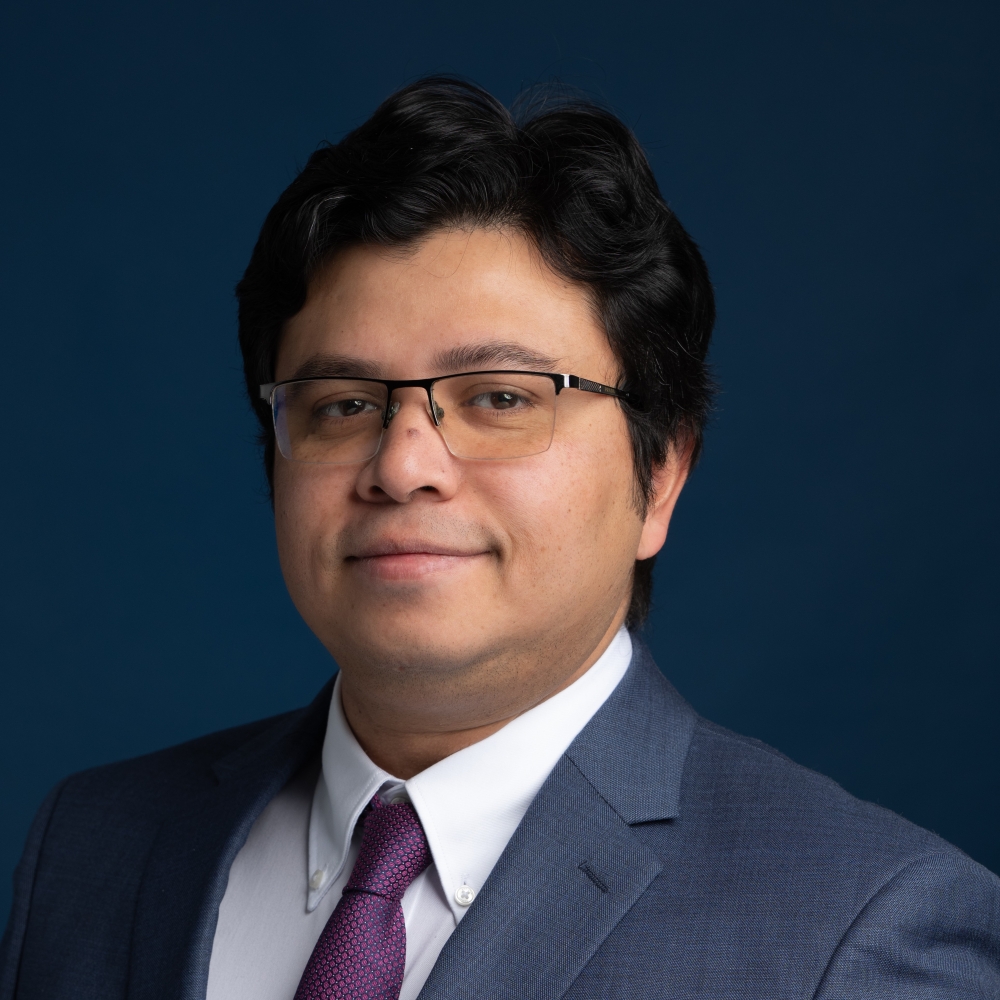
Dr. Md. Tahmidul Islam Molla is an Assistant Professor of Practice and Director of Undergraduate Studies in the Department of Computer Science at Marquette University. He specializes in wearable technology, pervasive computing, human-computer interaction, and data science. Previously, he held a Postdoctoral Researcher position at Cornell University and earned his Ph.D. from the University of Minnesota in 2020. His teaching roles include instructing core and advanced courses in computer science, data science, and embedded systems. He leads the NSF S-STEM project at Marquette, providing scholarships for low-income graduate students transitioning into computing careers. Courses taught include COSC 1000, COSC 2100, COSC 4290/5290, COSC 5500, COSC 6500, and COSC 6510. Research interests focus on wearable systems, soft/flexible electronics, and on-skin interfaces. His work explores manufacturing techniques for e-textiles and user experience in thermal microclimate control. Collaborative projects include the development of SkinKit and WovenProbe for prototyping on-skin interfaces. Dr. Islam’s research has led to innovations in e-textile fabrication, including surface-mount methods and laundering-resistant designs. He actively contributes to conferences like ACM International Symposium on Wearable Computers and ACM Designing Interactive Systems.
Kristy Robinson is an Associate Professor in the Department of Educational and Counselling Psychology at McGill University , where she investigates classroom teaching practices and contextual factors that enhance student motivation and wellbeing. Her research program focuses on creating theoretical and empirical frameworks to support equitable instructional strategies for students' goal achievement. SSHRC-funded researcher FQRSC grant recipient Key Research Areas Motivational climate theory Expectancy-value-cost models STEM education equity Self-determination theory Emotion dynamics in learning Awards & Recognition Canadian Psychological Society President's New Researcher Award AERA Division C Outstanding Early Career Scholar AERA Motivation SIG Wilbert C. McKeachie Early Career Award Top-Producing Educational Psychology Scholar (2024) Research Platforms Director of MILES Lab (Motivation, Instructional, and Learning Experience Study) Developer of "mFlip" flipped classroom framework
Howard S. Neufeld is a Professor in the Department of Biology at Appalachian State University, with expertise in plant physiological ecology and air pollution impacts. His research focuses on ozone effects on native flora in the Great Smoky Mountains National Park, water relations in plants, and invasive species ecology. Education Ph.D. from University of Georgia (1984) Neufeld's research examines plant responses to environmental stressors, particularly tropospheric ozone and water stress. His work on cutleaf coneflower, tall milkweed, and Galax urceolata has revealed critical insights into foliar injury mechanisms, antioxidant defenses, and seasonal adaptation strategies. He investigates how invasive species like Microstegium vimineum exploit light gaps and how hydraulic conductance affects plant drought tolerance. His publication record shows consistent focus on ozone impacts in southern Appalachian ecosystems, with recent work emphasizing seasonal variation in plant responses, stomatal behavior, and biochemical defense mechanisms. Key trends include the development of non-destructive monitoring techniques and spatial analysis of pollution effects across landscapes. Advising & Grants Directed 20 Master's theses on plant ecophysiology, invasive species, and pollution impacts Currently mentoring 7 graduate students on lichen nitrogen responses, heavy metal effects, and ozone physiology Funded by National Park Service, U.S. EPA, National Geographic Society, and Friends of the Smokies Collaborates with researchers from Auburn University, USDA, Oak Ridge, and international institutions Neufeld maintains active field research in the Great Smoky Mountains National Park and operates laboratory facilities for gas exchange and plant stress analysis, with ongoing projects examining nitrogen deposition effects on lichens and nickel pollution impacts on pines.
Dr. Tamas Mona is a Postdoctoral Research Associate in the Department of Plant Sciences at the University of Cambridge , affiliated with the Epidemiology and Modelling Group . His work focuses on environmental suitability models for large-scale epidemiological forecasting, particularly in wheat rust outbreaks across Africa, the Middle East, and Asia. Collaborations include the UK Met Office, CIMMYT, and institutions in Ethiopia, Kenya, Bangladesh, and Nepal. PhD in Environmental Sciences (2019), Eötvös Loránd University MSc in Meteorology (2013), Eötvös Loránd University BSc in Physics with Meteorology (2011), Eötvös Loránd University Research interests integrate meteorological applications with epidemiological models to predict crop disease outbreaks. Key projects involve tracking transmission pathways for stem rust pathogens and analyzing how irrigation creates green bridges for intercontinental pathogen spread. Publications emphasize environmental science and computational epidemiology . Current collaborations span Sub-Saharan Africa (EIAR, ATI, KARLO) and South Asia (BWMRI, NARC) through initiatives like the Global Food Security IRC . Modeling frameworks developed by Mona contribute to policy advisory systems for emerging pest threats, aligning with DEFRA and UK government strategies.
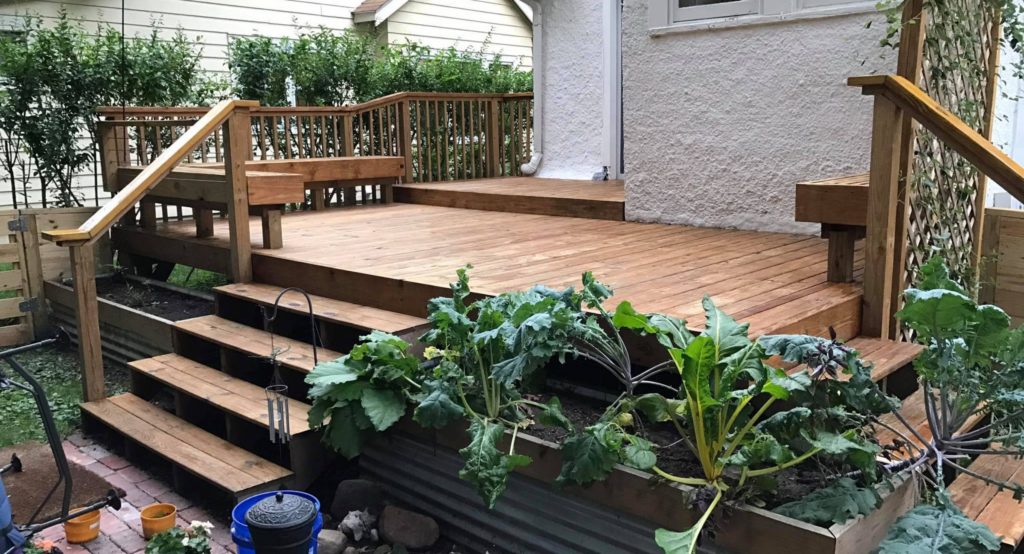
Keenan Gibbons is a Lecturer in Environment Sustainability and Development at the University of Michigan’s School of Environment, Art, and Society. A licensed landscape architect and urban design professional based in Detroit, he specializes in sustainable green infrastructure, parks, streetscapes, and innovative stormwater management strategies. With expertise in digital media, parametric modeling, and FAA-certified drone operations, he conducts research on urban heat island effects supported by the Landscape Architecture Foundation. Education Master of Landscape Architecture, Ball State University Bachelor of Science in Horticulture, Michigan State University His research interests integrate environmental sustainability with urban design , focusing on climate resilience through drone-based thermal imaging and low-impact construction . Publications highlight his work on UAV thermal disparity visualization and community-driven urban regeneration , including notable projects like Riverside Park Detroit . He received the LAF Deb Mitchell Research Grant for his heat wave visualization toolkit. Keenan’s projects include concrete-free construction for fences, decks, and planters, emphasizing reclaimed materials and DIY innovation . His work has been featured in CNN , The Weather Channel , and professional journals like MiASLA SITES . As an educator, he bridges environmental theory with hands-on design practice , often involving community stakeholders in his projects.
Jost-Diedrich Graf Von Hardenberg is a Full Professor in the Department of Environmental, Land and Infrastructure Engineering (DIATI) at the Polytechnic University of Turin. He serves as the Energy and Climate Change Area Coordinator and is a Scientific Advisor of the HPC-AI Advisory Council. His research focuses on climate science and geophysical fluid dynamics, with significant contributions to understanding climate change impacts and Earth system modeling. Professor Von Hardenberg's research interests span multiple areas of climate science, including climate dynamics, geophysical fluid mechanics, hydrological cycle analysis, numerical climate modeling, and precipitation downscaling. His work particularly emphasizes climate tipping points and extremes, Rayleigh-Bénard convection in geophysical contexts, high-resolution Earth-system climate modeling, and stochastic approaches to precipitation downscaling. His research integrates theoretical, computational, and observational approaches to address fundamental questions about climate system behavior and change. His recent publications demonstrate a strong focus on Atlantic Meridional Overturning Circulation (AMOC) dynamics, climate extremes in Alpine regions, urban climate effects, and interdisciplinary applications of climate science to ecological and conservation challenges. His work bridges fundamental climate dynamics with practical applications for climate adaptation and environmental management. Among his notable recognitions are the Research in Paris award from the Maire de Paris (2009) and Fellowships at the London School of Economics and Political Science (2001-2002, 2004-2006). He has participated in numerous research networks including the European Geosciences Union section 'Nonlinear Processes in Geophysics' (2004-2012), the EC-Earth Consortium (2012-present), and COST Action ES0805 TERRABITES 'The terrestrial biosphere in the earth system' (2010-2014). Professor Von Hardenberg actively supervises PhD students including Marianna Albanese, Maria Clara Corda, Sara Filippini, and Jacopo Grassi, among others. He leads multiple significant research projects such as ROTurb (Resolving Ocean Macroscale Turbulence), LocClima (Impact of LOCal conditions on Italian microCLIMAtes), CRAWL (Carbon Release in A Warming cLimate), and CliMOC (Climate Impacts of the Atlantic Meridional Overturning Circulation), with funding from EU, national programs, and commercial contracts. He is a member of the Interdepartmental Center SmartData@PoliTO - Big Data and Data Science Laboratory, where he contributes expertise in climate data analysis and modeling. His collaborative work extends to multiple institutions through non-commercial agreements with the National Research Council and various international research consortia focused on climate system understanding.
Bernardo Tellini is a Full Professor of Electrical and Electronic Measurements at the Department of Energy, Systems, Land, and Construction Engineering (DESTEC) at the University of Pisa, where he also serves as Vice-Rector for Doctoral Research. He has held this institutional role since 2020, overseeing doctoral program planning, accreditation, and admission procedures. Previously, he chaired the doctoral program in Energy, Electrical, and Thermal Engineering from 2012 to 2016 and served on the Leonardo da Vinci Doctoral School in Engineering from 2008 to 2016. Education: PhD in Electrical Engineering, University of Pisa (1999) Degree in Electrical Engineering, University of Pisa (1993) Postdoctoral research at Karlsruhe Research Center for Technology and Environment Industry experience at ABB Tellini's research focuses on electrical and magnetic measurement methodologies for high-power pulsed applications, characterization of electrical and magnetic properties of materials, aging processes in battery cells, and electromagnetic emissions from power circuits. His work spans from fundamental measurement theory to practical industrial applications, particularly in railway technologies where he represents the University on the Steering Committee of the District for Railway Technologies, High-Speed, and Network Safety in Tuscany. He has served as president of the European Pulsed Power Laboratories agreement and chaired major IEEE conferences including I2MTC 2015 and MELECON 2020. His recent publications reveal a strong emphasis on RFID-based localization systems , nanoparticle-enhanced optical sensors , and advanced battery characterization techniques . The research trajectory shows increasing integration of measurement science with emerging technologies like plasmonic sensing, microwire-based transducers, and smart systems for industrial monitoring. His team has developed innovative approaches for battery health monitoring under vibration stress, temperature sensing using magnetic materials, and precise localization methods using phase-based RFID systems. Professional Service: President of Italian Section of IEEE (2019-2021) Scientific director of Pisa research unit in Association of Electrical and Electronic Measurements (GMEE) Member of Certification Committee of Italcertifer SpA (since 2019) Representative on District for Railway Technologies Steering Committee (since 2013) Tellini has authored approximately 200 publications in international journals and conference proceedings. His leadership extends to academic governance through roles on the DESTEC Department Human Resources Committee and various university committees overseeing scientific qualifications and doctoral programs. His research bridges theoretical measurement principles with practical engineering solutions for energy systems, transportation infrastructure, and industrial monitoring applications.
Professor Runming Yao is a leading academic in building and urban sustainability at the University of Reading's School of Construction Management and Engineering. He holds roles as Director of Design and Management of Sustainable Built Environments and Module Convenor for Sustainable Design and Management Principles. His research focuses on energy efficiency, urban microclimates, indoor environmental quality, and thermal comfort, with particular emphasis on UK and China contexts. Yao is an EPSRC College member and serves on editorial boards for journals like the Journal of Building Engineering and Renewable Energy . He has led numerous high-impact projects funded by bodies like the European Commission, EPSRC, and the Chinese government, addressing topics such as low-carbon cities, green building technologies, and climate-resilient urban design. His professional memberships include Fellowships of CIBSE, the Chartered Institute of Building, and FHEA. Yao’s work bridges engineering, policy, and environmental science, with contributions to international standards and guidelines for sustainable construction. Education and Qualifications: BSc, MSc, PhD Research Interests: Yao’s research integrates technical innovation with societal needs, exploring: - Energy-efficient building systems and urban-scale simulations, - Impact of climate change on building design, - Sensor technology for smart building management, - Health implications of indoor/outdoor environmental quality. His work emphasizes cross-disciplinary solutions for sustainable urban development and climate resilience. Projects and Grants: Recent initiatives include: - LoHCool (EPSRC-funded low-carbon heating/cooling of cities), - REELCOOP (EU-funded renewable energy cooperation), - Halton Foundation-funded studies on school ventilation. He has secured over £10M in research funding, spanning academic and industry partnerships. Awards and Recognition: While no formal awards are listed, Yao’s leadership in global sustainability networks and his role in shaping policy frameworks reflect his significant influence in the field. Labs and Collaborations: He leads the Energy and Environmental Research Group and collaborates internationally with institutions like Chongqing University, Cambridge University, and the China Green Building Council. His work frequently involves cross-border initiatives to address climate challenges in rapidly urbanizing regions.
Professor Maria Kolokotroni is a full academic staff member at Brunel University's Department of Mechanical and Aerospace Engineering, within the College of Engineering, Design and Physical Sciences. She holds a Professorial rank and has extensive experience in urban environmental engineering and building energy systems. Her academic career began at UCL (MSc 1992, PhD 1995), followed by postdoctoral research on environmental design guidance and moisture management. She joined Brunel University in 1998 and contributed to the Building Research Establishment's indoor environment division prior to her academic appointment. Education MSc in Environmental Design and Engineering, Bartlett School, UCL (1992) PhD in Thermal Performance of Housing, UCL (1995) Postdoctoral Research: Environmental Design Guidance (UCL, 1996-1998) EPSRC-funded Postdoc: Moisture in Residential Buildings (University of Westminster, 1998) Research Interests Her work focuses on urban heat island mitigation, energy-efficient building technologies, ventilative cooling systems, and urban microclimate analysis. She actively collaborates on EU-funded projects like the IEA’s Annex 80 (Resilient Cooling) and Annex 62 (Ventilative Cooling), emphasizing practical applications of sustainable energy strategies. Key themes include: Urban albedo computation and reflective materials Thermal performance of residential and non-residential buildings Integration of renewable energy systems (photovoltaics, hydrogen) Building energy demand modeling Grants & Projects Recent projects include: PRELUDE: Real-time building energy optimization (EU, 2020-2024) PVadapt: Smart building-integrated photovoltaic systems (EU, 2018-2022) ReCO2ST: Near-zero energy retrofit platform (EU, 2018-2021) Urban albedo studies in high-latitude cities (EPSRC, 2017-2020) Advising & Collaborations Professor Kolokotroni leads interdisciplinary teams and collaborates with experts in mechanical engineering, environmental science, and urban planning. Her work bridges academic research with industry applications through projects like COOL ROOFS EU initiative and the IEA’s energy efficiency annexes. Labs/Teams Active in the International Energy Agency’s EBC Annex 80 (Resilient Cooling) and part of Brunel’s Institute for the Environment (IEF). Her research group focuses on building sustainability and climate resilience through advanced simulation tools and experimental validation.
Professor Ahmad Taki is a Professor of Building Performance and Sustainability at De Montfort University, affiliated with the Leicester School of Architecture and the Institute for Sustainable Futures. He previously served as Director of the Architecture Research Institute (2018–2024) and has played a key role in national research assessment exercises (REF). University: De Montfort University School: Leicester School of Architecture Research Group: Architecture Research Institute, Institute for Sustainable Futures His research focuses on sustainable built environments, human thermal interaction, energy efficiency, and climate-responsive design, particularly in developing countries. He has extensive expertise in passive design, building physics, and socio-cultural integration in sustainable housing. His recent publications reflect a strong trend toward sustainable materials (e.g., rice husk ash, cardboard), retrofit strategies, thermal comfort in hot climates, and culturally sensitive design frameworks. His work bridges technical performance with social relevance, emphasizing affordability, well-being, and resilience. Energy Champion, COP28 Sustainability Climate Award (DMU, 2023) PVC Dean Award for Best Contribution to Research Environment (2018) Senior Fellow, Higher Education Academy (SFHEA) Chartered Fellow, Chartered Association of Building Engineers (CABE) Professor Taki has successfully supervised 27 PhD students and is currently supervising 10, demonstrating strong mentorship. He has secured numerous research grants from EPSRC, DMU, and GCRF, supporting projects on Schlieren imaging, evaporative cooling, and sustainable housing. He founded the BSc Architectural Technology and MSc Architecture and Sustainability programmes, highlighting his educational leadership. He leads research on indoor environmental quality, using advanced optical systems, and collaborates internationally on low-energy building solutions.
Dr. David Searle is a Senior Lecturer at the University of Wolverhampton's School of Architecture and Built Environment , Faculty of Science and Engineering. With industrial experience from Tarmac Construction Ltd and TBV Stangers Ltd, he brings practical expertise in materials testing and environmental consultancy to his academic role. BEng (Civil), MSc (Eng), PhD (Construction Engineering & Management) Chartered Engineer (CEng) with multiple professional affiliations (MICE, MCIOB, MASCE, MNSE) His research focuses on construction sustainability , historic stone preservation , and digital analysis of materials . Recent work examines pollution-induced building degradation and concrete composition analysis through image processing. Key publication themes include: Climate change effects on historic structures Combustion particulate impact assessment Mineral magnetic sediment measurements Digital methodology for soiling pattern analysis Awarded the Ecology Prize for his environmental science dissertation, Dr. Searle maintains active involvement in research consortia addressing urban pollution and structural longevity challenges.
Professor Stefan Thor Smith is a distinguished academic at the University of Reading , serving as a Professor in the Department of Energy and Environmental Engineering . His work bridges energy systems with urban sustainability , focusing on the integration of social and technical aspects of energy demand , urban energy system modeling , and climate change resilience . Academic Qualifications Postgraduate Certificate in Academic Practice (University of Reading, 2016) PhD in Built Environment (University of Nottingham, 2009) MSc in Computer Science (University of Glasgow, 2002) BSc in Physics (University of Nottingham, 2001) His research interests span the dynamics of energy demand in socio-technical systems, urban heat fluxes, pollution exposure modeling, and climate adaptation strategies. He has developed novel models for energy demand-side management , building environmental control , and urban climate interactions . Recent publications highlight his expertise in areas such as EV charging infrastructure , urban tree radiative performance , phase change material storage , and anthropogenic heat emissions . His work often involves interdisciplinary collaborations with institutions like the Centre for Research into Energy Demand Solutions and the Institute of Physics . Smith supervises a diverse group of postgraduate students and contributes extensively to teaching modules including Numerical Modelling and Programming and Urban Sustainability . His professional affiliations include the Institute of Physics , International Association of Urban Climatology , and the Higher Education Association .
Şit Mihail is a coordinating scientific researcher at the Institute of Energy of the Academy of Sciences of Moldova, with a distinguished publication record spanning over 15 years in the field of thermal engineering and control systems. His work primarily appears in the journal Regional Energy Problems , reflecting his deep engagement with energy solutions relevant to the Moldovan context and broader applications. His research interests center on the design and control of thermal systems and processes , with particular expertise in power boilers, gas turbine installations, heat exchangers, refrigeration systems, and heat pumps. He has made significant contributions to automatic climate maintenance systems for large volumes and microclimate control, as well as the development of control systems for mobile land objects (tracked and wheeled vehicles) and robotic devices. His work consistently bridges theoretical control systems with practical thermal engineering applications across various sectors including agriculture, food processing, and urban heating systems. Analysis of his publication trends reveals a strong focus on energy efficiency optimization through innovative heat pump designs and control strategies. His later work (2016-2020) increasingly addresses integrated energy solutions for specific applications in agriculture (poultry farming, vineyards, dairy plants) and urban environments (district heating systems). A notable technical thread throughout his career is the development of variable geometry systems and adaptive control mechanisms to maximize thermal efficiency across changing operational conditions. Dr. Şit has collaborated extensively with colleagues including Журавлев А.А., Timcenko Dmitrii, and Şit Boris across multiple projects. His research demonstrates consistent practical application, with numerous publications addressing specific industrial challenges in Moldova's energy sector, particularly in optimizing traditional heating infrastructure through modern heat pump technology and advanced control systems.
Dr. Jean E. Bogner is a Research Professor Emerita in the Department of Earth and Environmental Sciences at the University of Illinois at Chicago (UIC). Her research focuses on landfill methane (CH4) emissions, biodegradation processes in soils, and waste management systems. She has led international collaborations to develop and validate the CALMIM model, a process-based tool for predicting methane emissions from engineered landfills globally. Her work integrates field measurements, laboratory studies, and climate modeling to address climate change mitigation strategies in waste management. Education: B.A. Geology (Augustana College, 1969), M.S. Geology (University of Illinois at Chicago, 1973), Ph.D. Geology (Northern Illinois University, 1996). Research interests include landfill gas dynamics, soil microbiology, climate modeling, and sustainable waste management practices. She has contributed to landmark studies on methane oxidation in landfill cover soils, the impact of operational practices on emissions, and global GHG mitigation strategies. Her collaborative projects span academia, government agencies, and industry across the U.S., Europe, Africa, Australia, and Asia. Key achievements include co-authoring the IPCC’s 2007 Nobel Peace Prize-winning 4th Assessment Report, leading the CALMIM model development, and advancing methodologies for quantifying methane emissions. Her work has informed policy and practice in reducing anthropogenic GHG contributions from waste systems. Awards include the Nobel Peace Prize (2007), the IWWG Lifetime Award (2013), and multiple recognitions for contributions to landfill gas science and engineering.
Farzad Hashemi serves as an Assistant Professor at the School of Architecture + Planning within The University of Texas at San Antonio (UTSA), affiliated with the Margie and Bill Klesse College of Engineering and Integrated Design. He leads the Climate-Sensitive Design Lab (CSDL), focusing on interdisciplinary research at the intersection of urban climate science, building performance, and environmental justice. Education: Ph.D., Pennsylvania State University Dr. Hashemi's research investigates urban heat island phenomena, building energy dynamics, and socio-spatial inequities in thermal exposure. His work employs advanced simulation techniques including GIS, ENVI-met, CFD, and machine learning to analyze climate impacts across diverse urban contexts. Key contributions include examining historical redlining's legacy on contemporary heat distribution, developing parametric workflows for energy modeling, and creating data-driven mitigation strategies for urban heat. His approach integrates technical building science with critical social analysis to address climate vulnerabilities in marginalized communities. His publication portfolio demonstrates consistent focus on urban heat mitigation, building energy performance, and environmental justice across multiple U.S. cities. Recent work emphasizes adaptive cooling strategies through computational modeling and examines thermal inequities through spatial analysis of social vulnerability indices. The research bridges technical climate modeling with socio-political dimensions of urban heat exposure. Honors and Awards: The 2024 ARCC Dissertation Award As director of the Climate-Sensitive Design Lab, Dr. Hashemi develops research initiatives that combine environmental simulation with community-focused design solutions. The lab's work informs both academic discourse and practical urban planning applications, particularly regarding climate adaptation in rapidly growing Sun Belt cities like San Antonio. Current projects integrate tree canopy data, occupancy patterns, and future climate scenarios to create resilient urban environments.