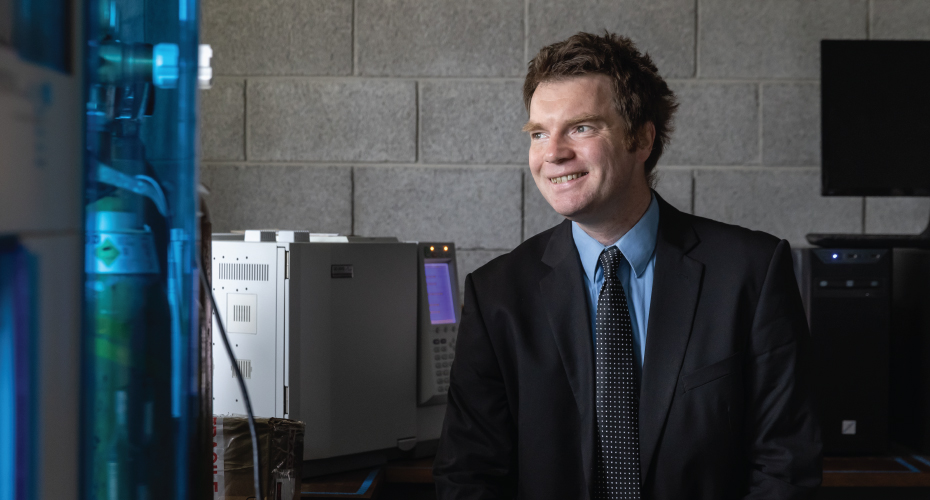
Yan Delaure is Associate Professor of Fluid Mechanics at Dublin City University's School of Mechanical and Manufacturing Engineering and Deputy Director of the DCU Water Institute. His research focuses on multiphase flows, environmental hydraulics, and computational fluid dynamics applications in wastewater treatment and marine systems. Research includes microbubble dynamics for aeration, fluid-structure interactions in deformable systems, and biomimetic antifouling solutions. Recent publications explore advanced simulation methods for turbulent flows and additive manufacturing process optimization.
Fiona O'Brien is a Senior Lecturer at the School of Pharmacy, Royal College of Surgeons in Ireland (RCSI). She specializes in Neonatal and Paediatric Pharmaceutics, with a focus on drug delivery systems, parenteral formulations, and patient safety in neonatal care. Her research involves collaborations with institutions like the Rotunda Maternity Hospital, Alder Hey Children’s Hospital, and Pfizer UK. She leads the Parenteral Formulations work stream for the European Paediatric Formulation Initiative (EuPFI). Education: PhD (Trinity College Dublin), MSc (Newcastle University), BSc (University College Dublin). Postdoctoral training at Trinity College Dublin. Certifications in Health Professions Education and Leadership. Research focuses on neonatal medication safety, parenteral nutrition compatibility, and co-designed drug information resources for parents. Key projects include the PADDINGToN feasibility study (NIHR/RCSI-funded) and compatibility studies of IV medications with TPN solutions. Teaching includes Immunology and Molecular Medicine modules. Grants include €1.2M from Pfizer and NIHR for formulation studies. Over 22 peer-reviewed publications since 2005, covering neonatal drug delivery, siRNA delivery systems, and pandemic education adaptations.
Professor Niall English is a leading academic at University College Dublin's College of Engineering & Architecture, specifically within the School of Chemical & Bioprocess Engineering. With over 20 years of dedicated research in gas hydrate systems, his work bridges fundamental science and industrial applications, particularly in climate change mitigation and wastewater treatment innovation. His research focuses on gas hydrate kinetics, methane emissions, and microbial regulation of hydrate stability , with groundbreaking contributions to understanding the relationship between Earth's magnetic field reversals and historical mass extinction events (the 'Belfast hypothesis'). Key interests include: Nanobubble engineering for industrial wastewater treatment Electromagnetic field effects on chemical processes Microbial-peptide regulation of gas hydrates Climate change implications of Arctic hydrate destabilization Professor English's recent publications (2024-2025) reveal a strong trend toward environmentally sustainable applications , particularly electric-field nanobubble technologies for wastewater treatment, biogas upgrading, and carbon capture. His work demonstrates significant cross-disciplinary integration of computational chemistry, environmental engineering, and geophysics. He received the Leverhulme Trust Research Project Award (2021-2023) for 'Exploring the potential for biocatalytic gas-hydrate formation (BioGHF)', reflecting the international recognition of his work. His commercialization efforts include two spin-out companies: Aqua-B (CEO) for nanobubble wastewater treatment and BioSimulytics for pharmaceutical crystal-structure prediction software. Professor English actively collaborates with Queen's University Belfast microbiologist Professor Chris Allen, filing joint patents for regulating gas hydrate growth using proteins and peptide sequences. Their research targets the $1 trillion wastewater treatment industry, aiming to solve challenges in processing heavily polluted water through hydrate-based separation techniques.