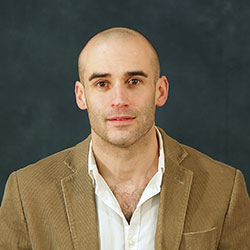
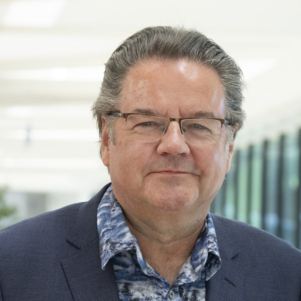
Massimo Mischi is a Full Professor at the Faculty of Electrical Engineering of the Eindhoven University of Technology (TU/e) and chairs the Signal Processing Systems (SPS) Division , the largest division at TU/e with over 250 researchers. He founded the Biomedical Diagnostics (BM/d) Lab in 2012, which now includes 180 researchers and clinical/industrial advisors, focusing on biomedical signal processing for diagnostics and monitoring.
Michel Versluis is a Full Professor at the University of Twente, Netherlands, specializing in Physical and Medical Acoustics within the Physics of Fluids group. His work focuses on microbubbles and microdroplets for medical imaging and therapy, as well as microfluidic applications in medicine and nanotechnology. University of Twente, Physics of Fluids group His research bridges physics and biomedical engineering, with publications in high-impact journals like PNAS and IEEE Transactions. Recent work emphasizes ultrasound-driven microbubble dynamics, additive manufacturing of flow phantoms, and deep learning for super-resolution imaging. 2025 publications: vascular phantoms, PROTEUS simulator, acoustic microbubble control 2024 innovations: 3D-printed medical devices, immunogenic cell death optimization Contact: m.versluis@utwente.nl
Robin Ras is a Professor and Head of Department at the Department of Applied Physics at Aalto University, where he leads the Soft Matter and Wetting research group. His work focuses on surface science, particularly superhydrophobic and superoleophobic materials, with applications spanning renewable energy, biomedical engineering, and agricultural science. Ras earned his Master's degree in Engineering and Technology from Catholic University of Leuven in 1999, followed by a Doctoral degree from the same institution in 2003. His academic journey has positioned him as a leading researcher in wetting phenomena and nanoscale surface engineering. His research interests center on understanding and manipulating liquid-solid interactions at micro and nanoscales. Ras's work explores how surface topography and chemistry affect wetting behavior, with particular focus on superhydrophobic surfaces, droplet dynamics, and liquid-repellent materials. His group develops innovative approaches for creating surfaces with controlled wettability for applications ranging from self-cleaning materials to advanced biomedical devices. The research trends evident in Ras's recent publications show a strong focus on precision control of liquid-solid interfaces, with increasing attention to underwater applications, molecular-scale surface engineering, and biomimetic approaches. His work bridges fundamental surface science with practical applications in energy, healthcare, and sustainability. Among his notable scientific achievements: Anton Paar Research Award for Instrumental Analytics & Characterization (2018) for Scanning Droplet Adhesion Microscopy invention Academy of Finland Research Fellow (2011-2016) ERC Consolidator Grant (2017) Ras has secured significant research funding including the ERC Consolidator Grant for the SuperRepel project (2017-2022) focused on superslippery liquid-repellent surfaces, and the Academy of Finland project 'Electric Field; an Active Method to Control Phase Change' (2019-2022). His research group actively collaborates with international institutions and industry partners to translate fundamental discoveries into practical applications. The Soft Matter and Wetting research group under Ras's leadership combines experimental and theoretical approaches to investigate surface phenomena. The team utilizes advanced imaging techniques, precision surface fabrication methods, and computational modeling to understand and engineer surfaces with tailored wetting properties. Their work has applications across multiple sectors including renewable energy, biomedical devices, and sustainable agriculture.
Nils Sponheim is an Associate Professor at Oslo Metropolitan University (OsloMet) in the Faculty of Technology, Art and Design, Department of Mechanical, Electrical and Chemical Engineering. His research focuses on ultrasound, medical imaging, and signal processing, with particular emphasis on contrast agents, Doppler imaging, and biomedical engineering applications. He has contributed extensively to ultrasound transducer design and problem-based learning pedagogy. Academic Affiliation: OsloMet – Faculty of Technology, Art and Design Research Areas: Ultrasound physics, contrast agent development, Doppler signal analysis, medical imaging instrumentation Education Focus: Problem-Based Learning (PBL) in engineering His publications span transient ultrasonic fields, synchronization techniques for contrast agents, and clinical applications in cardiology and oncology. Key subfields include pulse shaping, frequency resolution limitations, and transducer design. Sponheim's work bridges engineering and clinical diagnostics, with collaborations in cardiology and oncology imaging. Current projects focus on pulsed ultrasonic fields and practical measurement systems.
Dr. Tao Sun is an Assistant Professor of Bioengineering at Northeastern University and a core member of the Institute of Chemical Imaging of Living Systems. He joined Northeastern in 2023 after postdoctoral training at Brigham and Women’s Hospital, Harvard School of Engineering and Applied Sciences, and an Instructor role at Harvard Medical School. His research focuses on focused ultrasound (FUS), neuroimaging, and immunoengineering, aiming to treat neurological disorders like glioblastoma and Alzheimer’s disease. He leads the Sun Ultrasound and Neuroengineering (SUN) Lab, developing ultrasound-based therapies and diagnostic tools. Education: Ph.D., Electrical Engineering, Tufts University M.S., Biomedical Engineering, Columbia University B.S., Acoustics, Nanjing University Research Interests: Dr. Sun’s work integrates FUS with drug delivery and immunomodulation. He develops non-invasive methods to enhance drug penetration across the blood-brain barrier and studies ultrasound’s effects on neuroimmune interactions. His lab explores applications in cancer treatment, immunotherapy, and neurodegenerative diseases. Recent breakthroughs include using nonspherical microbubbles for targeted delivery and closed-loop control systems for drug delivery. Awards: Young Investigator Award, Focused Ultrasound Foundation (2022) Young Investigator Award, Acoustical Society of America (2021) Lab & Collaborations: The SUN Lab collaborates with institutions like Harvard and MIT, focusing on ultrasound device innovation and clinical translation. Dr. Sun co-authors high-impact papers in journals like PNAS and Science Translational Medicine , and his work is featured in WIRED and Medical Xpress .
Jaakko Timonen is an Associate Professor and Vice Head of the Department of Applied Physics at Aalto University, where he leads the Active Matter research group. He is also Deputy Director of the Center of Excellence in Life-Inspired Hybrid Materials (LIBER), and holds significant research funding from the Academy of Finland and the European Research Council (ERC StG). His academic journey includes a doctoral degree from Aalto (2013) and postdoctoral research at Northwestern and Harvard Universities. His research interests lie at the intersection of physics, chemistry, and biology, focusing on soft and active matter systems. Key areas include ferrofluids, electrohydrodynamics, liquid-liquid phase separation, colloidal nanoparticles, magnetic control of non-magnetic matter, and advanced optical microscopy. His recent publications span high-impact journals and reveal a strong trend toward bioinspired materials, responsive systems, and biomedical applications such as 3D bioprinting and cancer diagnostics. His work often involves interdisciplinary collaboration and the development of novel experimental techniques. ERC Starting Grant (2019–2024) Academy of Finland Research Fellow (2019–2023) Distinction prize for doctoral thesis (Aalto, 2013) Distinction prize for master’s thesis (Helsinki UT, 2009) Timonen actively supervises PhD and early-career researchers, with several students contributing to recent publications and projects. He leads multiple active grants, including projects on multiscale electrostatic phenomena in nanoparticles and food applications of Pickering emulsions. He also organizes academic events and participates in public outreach, such as the 'Life inspired materials' seminar. His research group maintains strong ties to both fundamental physics and real-world applications in health, sustainability, and advanced materials. He is involved in several research labs and collaborative networks, particularly through the LIBER Center of Excellence, focusing on hybrid materials with life-inspired functions. His team develops custom imaging systems and explores emergent behaviors in active and biological matter, contributing to fields such as non-equilibrium physics, microfluidics, and synthetic biology.
Jason Raymond, Ph.D., is a Research Assistant Professor at the Fralin Biomedical Research Institute (FBRI) at Virginia Tech-Carilion, where he also serves as the Focused Ultrasound Core Manager. He leads advanced research in therapeutic ultrasound and manages state-of-the-art facilities including MRI-guided focused ultrasound systems and a 9.4T small-bore MR-imaging platform. His work supports both preclinical and clinical trials in focused ultrasound applications. Ph.D. in Biomedical Engineering, University of Cincinnati Postdoctoral Research Fellow, University of Oxford Lecturer and Senior Research Associate, Department of Engineering Science, University of Oxford Junior Research Fellow, Kellogg College, Oxford B.S. and M.S. in Engineering Acoustics and Mechanical Engineering, Boston University Dr. Raymond’s research focuses on biomedical therapeutic ultrasound, with applications in drug delivery, blood-brain barrier opening, high-intensity focused ultrasound (HIFU) ablation, and acoustic cavitation. His expertise also extends to ultrasound contrast agents, photoacoustic imaging, and the physical interactions of sound and light in biological tissues. He has pioneered work in sonochemistry, microbubble dynamics, and non-invasive neuromodulation. His recent publications reveal a strong trend in leveraging ultrasound for chemical and biological applications, including sonochemical degradation, hydroxyl radical monitoring, and genetic engineering of biofilms. His work integrates acoustics, chemistry, and biomedical engineering to develop novel therapeutic and diagnostic tools. 38th F.V. Hunt Postdoctoral Research Fellowship, Acoustical Society of America Whitaker International Fellowship, Thoraxcenter–Erasmus Medical Center Junior Research Fellowship, Kellogg College, Oxford Dr. Raymond has been instrumental in establishing physical acoustics laboratories and has contributed to major advancements in focused ultrasound technology. He actively mentors researchers, supports collaborative projects across Virginia Tech, and provides technical guidance for industry and academic partners. His leadership in core facilities enables broad access to cutting-edge ultrasound technologies. He manages the Focused Ultrasound Technical Facilities at FBRI, which include a clinical transcranial MRI-guided focused ultrasound system (InSightec and Siemens) and a Bruker 9.4T MR system for small animal studies. These labs support research in non-invasive surgery, hyperthermia, ablation, and blood-brain barrier modulation.
Anxo Vidal Figueroa is an Associate Professor of Physiology at the University of Santiago de Compostela, where he has been a permanent faculty member since 2008. He is affiliated with the Faculty of Medicine and Dentistry, Department of Physiology, and is part of the Center for Research in Molecular Medicine and Chronic Diseases (CIMUS). Vidal leads the "MeMoEn" (Molecular Mechanisms of Disease) research group and previously contributed to the "FIFAEC" (Physiology and Pharmacology of Chronic Diseases) group. His academic journey began with a PhD in Cell Biology from the University of Santiago de Compostela in 1997, where he completed his thesis "Functional analysis of prothymosin alpha in cell cultures" under the supervision of Dr. Fernando Domínguez Puente and Dr. M. Clara Alvarez Villamarin. From 1998 to 2003, he pursued postdoctoral research at Memorial Sloan-Kettering Cancer Center in New York, working in the Laboratory of Cell Cycle Regulation under Dr. Andrew Koff. Vidal's research program focuses on understanding the molecular mechanisms of cancer development and progression, with particular emphasis on cell cycle regulation, tumor suppressor biology, and stem cell dynamics. His laboratory employs genetically modified mouse models to investigate how cell cycle regulators control cancer initiation, tissue homeostasis, and aging processes. In recent years, his work has expanded into nanomedicine and novel therapeutic strategies for advanced cancers, particularly through nanocarrier systems and immunotherapy approaches. Analysis of his recent publications reveals a strong trend toward translational cancer research, with increasing focus on nanomedicine applications (2022-2025). His work spans molecular mechanisms of tumor suppressors, cancer stem cell biology, and the development of innovative therapeutic tools including nanoengineered drug delivery systems, silver clusters as antitumoral agents, and immunotherapeutic approaches for pancreatic and ovarian cancers. 2006 Novartis Award in Endocrine Tumor Pathology Ranked #2 nationwide in Physiology for the Spanish "Ramon y Cajal" Program (2002) As a principal investigator, Vidal has secured competitive national and international research grants, including a Retos Colaboración grant with SunRock Biopharma and current grants for immunotherapy against ovarian cancer. He has supervised 16 PhD theses and mentored numerous researchers throughout his career. His laboratory, the Cell Cycle and Oncology group at CIMUS, focuses on five main research areas: mechanisms of p27Kip1 regulation, cooperative functions of cell cycle regulators, cell cycle-independent roles of CDK inhibitors in stem cell biology, molecular relationships between reprogramming and cancer, and development of new therapeutic tools in advanced cancer.
David Maresca is an Associate Professor in the Imaging Physics department at the Faculty of Applied Sciences, Delft University of Technology. His research focuses on the intersection of ultrasound imaging physics and molecular engineering, with the goal of enabling ultrasound imaging of cells across space and time in living opaque organs. His research interests include: Biomolecular acoustic sensors Functional ultrasound neuroimaging Transcranial ultrasound Nonlinear ultrasound imaging Engineering of acoustic biosensors Ultrasound imaging of brain function Dr. Maresca's work centers on developing technologies that combine ultrasound physics with molecular engineering to create new imaging capabilities. His lab pioneers approaches to image cells within opaque organs using ultrasound, with applications in neuroscience and biomedical imaging. His research spans from fundamental ultrasound physics to the development of acoustic biosensors and imaging techniques that can detect cellular processes. His recent publications demonstrate a strong focus on advancing ultrasound imaging capabilities, particularly in nonlinear ultrasound techniques, contrast-enhanced ultrasound, and applications in neuroimaging. His work shows increasing interdisciplinary collaboration across physics, engineering, and neuroscience. Dr. Maresca has received recognition including the HFSP Cross-Disciplinary Fellowship. His academic background includes a Ph.D. in Biomedical Engineering from Erasmus MC, an M.Sc. in Acoustics, and a Master's degree in Physics from Université Paris Diderot. He completed postdoctoral work at Caltech and Institut Langevin, ESPCI. His research is supported by collaborations across institutions, with recent work involving researchers from multiple universities and research centers. Dr. Maresca's lab is actively contributing to advancing ultrasound imaging technology and its applications in biomedical research.
Prof. Dr. Igor Potemkin is an Associated Researcher at Moscow State University, leading a group focused on theoretical studies and computer simulations of polymer self-organization, particularly in complex architectures like arborescent, comb, and gel-like polymers. His work intersects polymer physics, soft matter, and materials science, with collaborations at the DWI and other institutions. Research emphasizes micelle/gel formation, polyelectrolyte interactions, and applications in drug delivery and biomimetic systems. Education details are not explicitly stated in the text, but his academic trajectory is evident through his extensive publication record and project leadership. Key research interests include microgel behavior, interfacial phenomena, and nanoscale structure-property relationships. Notable projects include studies on amphiphilic microgels, ionic liquids, and gradient copolymers. His research group has explored over 100 publications, focusing on topics like microgel self-assembly, polyelectrolyte complexes, and molecular motor design. Collaborations span institutions worldwide, with a strong emphasis on computational modeling and experimental validation. The team includes postgraduates and students involved in projects such as 'Functional Microgels and Microgel Systems' (SFB-985) and Helmholtz-RSCF initiatives. Scientific contributions include advancements in polymer thin films, nanoparticle-stabilized colloids, and the development of novel biomaterials. His work bridges theoretical predictions with practical applications in nanotechnology and biomedical engineering.
James P. Basilion is a Professor at Case Western Reserve University, holding dual appointments in the Department of Biomedical Engineering (Case School of Engineering) and the Department of Radiology (School of Medicine). He serves as Co-Leader of the Cancer Imaging Program at the Case Comprehensive Cancer Center. His expertise lies in molecular imaging and theranostics, focusing on developing imaging agents and therapies targeting cancer biomarkers, particularly prostate and breast cancers. Dr. Basilion earned his PhD in Pharmacology from The University of Texas at Houston and a BA in Biochemistry from the University of Pennsylvania. Research interests include molecular imaging technologies, targeted nanoparticles, and protease-activatable imaging agents for surgical guidance. His work combines engineering, radiology, and oncology to enhance diagnostic precision and treatment efficacy. Notable contributions include advancements in PSMA-targeted therapies and ultrasound-based nanobubble contrast agents. Awards include the 2013 Distinguished Investigator Award from the Academy for Radiology and Biomedical Imaging Research, and recognition as a Fellow of the American Institute for Medical and Biomedical Engineering (2014). He has held leadership roles in organizations like the World Molecular Imaging Society and the American Academy of Nanomedicine. His research spans over 120 publications, emphasizing cancer imaging innovations, nanotechnology applications, and translational medicine. Active in professional societies, he contributes to advancing molecular imaging standards and technologies.
Outi Supponen is an Assistant Professor of Multiphase Fluid Dynamics at ETH Zurich's Department of Mechanical and Process Engineering, leading the Institute of Fluid Dynamics since 2020. She holds a MEng in Aeronautical Engineering from Imperial College London (2013) and a DSc in Mechanics from EPFL (2017). Prior to ETH, she was a Postdoctoral Fellow at the University of Colorado (2018–2019) and an Assistant Professor at McGill University (2019). Education: MEng, Aeronautical Engineering, Imperial College London (2013) DSc, Mechanics, Ecole Polytechnique Fédérale de Lausanne (2017) Her research focuses on experimental investigations of high-speed multiphase fluid phenomena, with applications in biomedical engineering , material science , and hydraulic machinery . Key areas include cavitation bubble dynamics, ultrasound-driven microbubble behavior, and fluid-structure interactions in medical and industrial contexts. Her work bridges fundamental fluid dynamics with practical applications, such as targeted drug delivery via microbubble jetting and kidney stone fragmentation mechanisms. She collaborates extensively with biomedical and engineering communities, leveraging advanced imaging techniques like X-ray phase-contrast and high-speed visualization. Grants & Advising: Supervises research on multiphase systems and collaborates on EU-funded projects on medical fluid dynamics. Labs/Teams: Leads the Fluid Dynamics Group at ETH, specializing in advanced experimental setups for high-speed fluid phenomena.
Nico de Jong is a researcher at Erasmus MC in the field of cardiology. His work focuses on advanced ultrasound technologies and contrast agents for cardiovascular diagnostics. Key research areas include microbubble dynamics, beamforming techniques, and high-speed 3D imaging systems. Institution: Erasmus MC Department: Cardiology Academic Role: Researcher Recent publications highlight innovations in: Capacitive Micromachined Ultrasound Transducer (CMUT) arrays for ultrafast 3D imaging Subharmonic contrast imaging for blood pressure monitoring Microbubble stabilization mechanisms and acoustic behavior
Paul Prentice is a Senior Lecturer in the Department of Systems, Power and Energy within the School of Engineering at the University of Glasgow. His research focuses on acoustic cavitation phenomena driven by ultrasound, employing ultra-fast framing cameras and acoustic detection methods to study bubble dynamics in liquids and tissues. His primary research interests include developing fundamental understanding of cavitation for medical applications (such as drug delivery and blood-brain barrier modulation) and industrial processes (including materials processing, metal recycling, and sustainable manufacturing). Recent work demonstrates significant contributions to ultrasonic recycling of photovoltaic modules, critical metal recovery from e-waste, and nanoparticle-based therapeutic delivery systems. The publication trends reveal a strong emphasis on interdisciplinary applications: 40% of recent articles focus on medical ultrasound applications (blood-brain barrier, drug delivery), 35% on sustainable materials processing (metal recycling, battery electrode delamination), and 25% on fundamental cavitation dynamics (bubble synchronization, shock wave physics). Key collaborations exist with researchers in Chemistry (Abbott, Ryder), Biomedical Engineering (Cochran, Lucas), and Physics (Cammarano). As Deputy Director of the Centre for Medical and Industrial Ultrasonics (C-MIU), Prentice leads strategic research directions. His supervision portfolio includes 4 active PhD students and multiple PDRAs, with graduated students now holding positions at institutions like Queensland Brain Institute and Theraclion. Major grants include Horizon Europe APOLLO (€3.5M), EPSRC Sustainable Manufacturing (£1.2M), and ERC Starting Grant TheraCav (€1.45M). Teaching responsibilities include convening Advanced Imaging and Therapy 5 (ENG5285) and Advanced Ultrasonics (ENG5316), plus mentoring Integrated System Design projects. His work bridges fundamental physics with real-world industrial and medical challenges through the C-MIU center.
Professor Antonius F.W. van der Steen is affiliated with Delft University of Technology (TU Delft) in the Faculty of Applied Sciences , specifically the ImPhys department. His career spans roles at Erasmus MC, including leadership in Biomedical Engineering and Experimental Echocardiography. Education: Master in Applied Physics (1989), PhD in Medical Sciences (1994) from Radboud University Medical Centre Research Interests : Focused on biomedical ultrasound, cardiovascular biomechanics, and advanced imaging technologies. Key areas include: Catheter-based imaging systems High frame rate ultrasound for real-time monitoring Ultrasound contrast agent development Biomechanical assessment of atherosclerosis Photoacoustic and intravascular ultrasound integration 2025 Research Trends : Recent publications emphasize computational imaging techniques, microbubble stability optimization, and multimodal diagnostic tools combining ultrasound with CT or photoacoustic modalities. Collaborations : Active in inter-institutional research networks, particularly with Erasmus MC and Delft University of Technology.