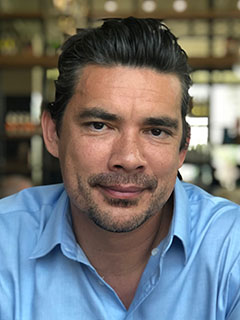
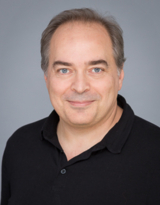
Kyall R. Zenger is a Research Fellow at James Cook University, specializing in conservation genetics, marine biology, and aquaculture genomics. His work focuses on understanding genetic diversity, population dynamics, and evolutionary processes in marine and terrestrial species, with a strong emphasis on conservation applications. Research interests include: conservation genomics of endangered species (e.g., frogs, koalas), molecular ecology of marine organisms (e.g., octopuses, shrimp), and genomic tools for aquaculture improvement. He collaborates extensively on projects addressing climate change impacts, disease dynamics, and larval connectivity in marine ecosystems. Key contributions include developing genomic resources for species like the black tiger shrimp and pearl oyster, and applying next-generation sequencing techniques to study microbial interactions in amphibian populations. His research bridges basic science and applied conservation, leveraging genetic insights to inform management strategies. Notable collaborations involve institutions like the Australian Institute of Marine Science, and his work has been published in journals such as Conservation Genetics , Marine Pollution Bulletin , and Molecular Ecology .
Jason Kennington is an Associate Professor at The University of Western Australia's School of Biological Sciences. He holds a PhD in population genetics from UWA (1997) and has held postdoctoral positions at University College London and La Trobe University. His research focuses on the genetics of adaptation, genetic threats to small populations, and the genetic basis of phenotypic variation in Drosophila, marine species, and small population consequences. He teaches courses including Conservation Genetics and Evolutionary Processes. Research interests include population genetics of marine species, conservation genetics, and evolutionary biology. His recent articles (2023–2025) explore topics such as genetic diversity in reintroduced species, nanoparticle toxicity in sea urchins, and hybridization dynamics in marine gastropods. He has supervised 16 research projects and contributed to grants addressing conservation genetics, marine biodiversity, and population genomics. Kennington collaborates internationally in marine and terrestrial ecology studies. His work aligns with UN Sustainable Development Goals related to biodiversity conservation and climate action.
Jan Janouskovec is a Lecturer in Ecology at the School of Biological Sciences, University of Southampton. He holds a PhD from the University of British Columbia and has held fellowships at institutions including San Diego State University and University College London. His research focuses on marine phytoplankton, parasites, symbiotic interactions, biodiversity, evolution, genomics, metabolism, photosynthesis, and bioluminescence. Jan’s research group at the University of Southampton explores the evolutionary relationships and ecological roles of protists, particularly apicomplexans and dinoflagellates. He has discovered new eukaryotic lineages and contributed to understanding phytoplankton evolution through studies of harmful algal blooms and symbiotic systems. His work integrates molecular biology, genomics, and field-based studies to address fundamental questions in evolutionary biology and environmental science. As a supervisor, Jan currently guides PhD and MRes students in projects related to marine biology, parasitology, and microbial ecology. He collaborates with international research groups and co-leads the research group at the Institute of Microbiology Trebon, Czechia, alongside Eva Horakova. His research is supported by interdisciplinary initiatives such as the Institute for Life Sciences and the Southampton Marine and Maritime Institute.
Madeleine van Oppen holds a halftime position as a Professor at the University of Melbourne (School of BioSciences) and a halftime role as Senior Principal Research Scientist at the Australian Institute of Marine Science (AIMS). Her research focuses on microbial symbiosis in corals, climate change adaptation, and coral reef connectivity, with a growing emphasis on 'assisted evolution' to enhance coral resilience. She earned her PhD from the University of Groningen (Netherlands) and has been a member of the ARC Centre of Excellence for Integrated Coral Reef Studies at James Cook University (2006–2021). She contributes to initiatives like the Great Barrier Reef Foundation’s Solutions and Adaptations working group (2009–2011) and the ReFuGe2020 consortium (2012–present). As a Subject Editor for Molecular Ecology since 2010, she bridges research and publication in marine genomics. Her academic career spans roles such as Adjunct Professorial Research Fellow and leadership in the 'A Healthy and Resilient GBR' program at AIMS. Her work integrates ecological, genetic, and evolutionary approaches to address climate challenges, emphasizing practical solutions for coral reef survival. Key collaborations include partnerships with the ARC Centre and international consortia focused on coral resilience. Publications highlight her contributions to understanding coral symbiosis, heat tolerance mechanisms, and the socio-ecological impacts of climate change. Her research underscores the urgency of adaptive strategies in marine conservation, blending fundamental science with applied solutions.
Dr. Line K. Bay is a leading marine geneticist at James Cook University , specializing in coral reef resilience, symbiosis, and climate adaptation. With a PhD in 2005 on "The population genetic structure of coral reef fishes on the Great Barrier Reef," she bridges ecological genetics and conservation biology. Education: PhD (JCU, 2005), focusing on marine population genetics. Affiliations: James Cook University (College of Science and Engineering), Australian Institute of Marine Science (AIMS). Research Interests center on coral-algal symbiosis dynamics, thermal tolerance mechanisms, and population genetic responses to climate stressors. Her work explores how symbiotic relationships and genetic diversity influence reef recovery post-bleaching, with implications for restoration strategies. Publication Trends reveal expertise in: Coral Genetics : Studying Acropora species and their adaptive potential. Symbiodiniaceae Studies : Investigating algal community shifts under thermal stress. Climate Resilience : Assessing fitness trade-offs and hybridization outcomes. Genomic Tools : Developing microsatellite markers and DNA methylation analyses. Restoration Ecology : Evaluating coral transplantation and selective breeding. Marine Policy : Contributing to adaptive management frameworks.
Katie Barott is an Associate Professor of Biology at the University of Pennsylvania's School of Arts & Sciences. Her research focuses on coral-microbial symbiosis, coral reef resilience, and the impacts of climate change on marine ecosystems. She leads a lab investigating ion transport, acid-base regulation, and metabolic responses in corals under environmental stressors like temperature and ocean acidification. Her work integrates cell biology, physiology, and field experiments to understand holobiont dynamics. Education: B.S., Michigan State University, 2006 Ph.D., San Diego State University/UC San Diego, 2012 Postdoc, Scripps Institution of Oceanography, 2012-2015 Postdoc, Hawaii Institute of Marine Biology, 2015-2017 Research Interests: Dr. Barott examines how symbiotic relationships between corals and microbes influence ecosystem health. Her lab explores physiological adaptations to stress, including pH sensing mechanisms, calcification pathways, and symbiont dynamics. Recent work emphasizes environmental memory effects and acclimatization potential in corals exposed to recurring heatwaves and acidification. Publications: Over 30 peer-reviewed articles highlight her lab’s contributions to coral symbiosis, stress physiology, and ecosystem resilience. Recent studies reveal how diel pCO2 variability enhances coral acid-base homeostasis, and how heatwave history shapes recovery trajectories. Her work bridges molecular mechanisms with ecosystem-scale observations. Labs/Teams: The Barott Lab at UPenn focuses on integrative approaches to coral physiology and climate adaptation. Collaborations span institutions like NOAA, the World Wildlife Fund, and international marine observatories to advance conservation strategies.
Elizabeth Turner is a Full Professor at the Harquail School of Earth Sciences at Laurentian University, where she has been faculty since 2005. Her research career spans over 30 years of remote field work in northern Canada, with expertise in Proterozoic to Paleozoic sedimentary systems and their economic potential. Dr. Turner earned her PhD from Queen's University in 1999, following a BSc in Geology (1991) and a BA in Languages (1988), both from the University of Toronto. Prior to joining Laurentian, she worked as a Research Scientist at the Canada-Nunavut Geoscience Office (2001-2005) and completed post-doctoral fellowships at the University of Chicago and University of Alberta. Her research focuses on tectonostratigraphic analysis of Proterozoic to lower Paleozoic sedimentary basins, with particular emphasis on paleobiological, geochemical, paleoenvironmental, sedimentological, and diagenetic evolution across more than a billion years of Earth history. Current projects include geological evolution of Mesoproterozoic, Neoproterozoic, and Paleozoic basins in northern Canada; sedimentary-rock-hosted ore deposits; carbonate facies and stratigraphy; carbonate and siliciclastic diagenesis; and early evolution of eukaryotes. Analysis of her recent publications reveals a strong focus on Precambrian geology, particularly the Mesoproterozoic and Neoproterozoic eras. Her work spans economic geology (particularly Zn-Pb-Cu deposits), paleoenvironmental reconstruction using geochemical proxies, early life evolution, and basin analysis. The research demonstrates interdisciplinary approaches combining field geology, geochemistry, paleontology, and economic geology. 2020 - Geological Association of Canada, Howard Street Robinson Medal for excellence in Precambrian geology 2010 - Canadian Journal of Earth Sciences Best Paper award for her 2009 work on Mesoproterozoic carbonate systems 2001 - PALAIOS Honourable mention for best paper on Neoproterozoic reefal stromatolites 1999 - Best Canadian PhD Thesis in Sedimentary Geology from the Canadian Society of Petroleum Geologists Dr. Turner actively mentors graduate students and post-doctoral fellows, currently supervising PhD student Chaneil Wallace, MSc students Christian Frost and Charlotte Stone, and post-doctoral fellow Jordan Mathieu. Her recently completed students include R. William Scott, Jordan Mathieu (PhD), Philippe Trudel, Quinn Dabros, Melanie Bouchard, and Katherine Hahn (post-doc). Her research has been supported by numerous grants enabling extensive field work in Canada's north and international collaborations, particularly in the Democratic Republic of Congo. Her work involves extensive field research in northern Canada (Nunavut and Northwest Territories), with a focus on carbonate systems and their relationship to mineral deposits. She collaborates with researchers across Canada and internationally, particularly on projects related to Precambrian life evolution and sedimentary-hosted mineral deposits.
John McGrath is Professor of Environmental Microbiology at Queen's University Belfast's School of Biological Sciences, and Director of the Irish Nutrient Sustainability Platform. He holds affiliations with the Institute for Global Food Security and Research Centre in Sustainable Energy. With a PhD supervision record of 15 completed and 12 ongoing doctoral students, he leads research in waste valorization and pathogen control. His research spans: Biogeochemical cycling of phosphorus/nitrogen in aquatic/terrestrial systems Metagenomic surveillance of pathogens (SARS-CoV-2, RSV, antimicrobial resistance) Development of biological/chemical waste treatment technologies Microbial ecology of anaerobic digestion systems Novel disinfection methods for ESKAPE pathogens Publications demonstrate strong focus on wastewater-based epidemiology (33% of recent articles), microbial phosphorus metabolism (27%), and pathogen genomics (20%). Research consistently integrates molecular biology with environmental engineering solutions. Current projects include: IMMACULATE: Sustainable mass spectrometry applications Irish Nutrient Platform development Phosphorus recovery technologies from wastewater Novel sorbents for nitrogen removal Leads cross-disciplinary teams at the Environmental Microbiology Lab, collaborating internationally on wastewater surveillance initiatives and microbial resource recovery projects.
Prof. Dr. Corina Brussaard is a Senior Research Leader at the Royal Netherlands Institute for Sea Research (NIOZ) within the Microbiology & Biogeochemistry department. Her work focuses on the ecological roles of marine viruses in global biogeochemical cycles and ecosystem dynamics. Research Interests: Marine virology (giant viruses, algal viruses) Viral shunt and carbon cycling Phytoplankton-virus interactions Climate change impacts on polar oceans Biodiversity regulation by viruses Microbial loop dynamics Recent Article Trends: Her publications emphasize temperature effects on viral dynamics, Antarctic/African marine viruses, phytoplankton community shifts, and biogeochemical impacts of viral lysis across diverse oceanic regions. Scientific Awards: Fellow of the American Academy of Microbiology (2016) NWO-Science XL Award for phytoplankton-virus research (2024) Grants & Collaborations: Led projects funded by NWO (VIRARCT, POMVIDDY) and Utrecht University, involving interdisciplinary teams studying polar and tropical marine systems.
García-Alai, M. is a researcher at the University of Hamburg's Medical Faculty, Department of Biochemistry. Affiliated with the Center for Structural Systems Biology (CSSB), their work bridges DESY, EMBL, and University Medical Center Hamburg-Eppendorf (UKE) collaborations. Research focuses on structural biology and biophysics, particularly protein dynamics and interactions. Key areas include development of analytical tools for biophysical techniques like circular dichroism and dynamic light scattering, investigation of protein complexes involved in cellular processes, and structural analysis of viral proteins for therapeutic applications. Recent publications demonstrate expertise in cryo-EM grid preparation, clathrin-mediated endocytosis mechanisms, and SARS-CoV-2 protease research. The work spans methodological development, fundamental protein science, and translational applications in drug discovery. García-Alai's collaborative approach is evident through co-authorship with researchers from multiple institutions across Europe, reflecting the interdisciplinary nature of modern structural biology research.
Dr. David Ngugi is a Researcher at GEOMAR - Helmholtz Centre for Ocean Research Kiel, where he leads the Aquatic Microbial Ecogenomics Group (AquaMEG) within the Research Division 3: Marine Ecology, specifically in the Marine Symbioses department. His work bridges microbial ecology, climate change impacts, and host-microbe interactions in aquatic systems. Dr. Ngugi's research focuses on two primary areas: (1) host-microbe interactions in non-model organisms, particularly examining microbial roles in sponge meta-organisms, invertebrate adaptation at marine/land boundaries, and the evolutionary history of herbivorous surgeonfish microbiomes; and (2) climate change microbiology in aquatic systems, investigating eco-evolutionary responses of microorganisms to environmental change and the relationship between microbial biodiversity and ecosystem services. His approach combines large-scale metagenomic and multi-omics data with computational biology techniques, including machine learning. His publication record shows a strong emphasis on microbial adaptation to environmental changes, with recent work spanning from European lakes to Red Sea ecosystems. His research demonstrates how microbial communities respond to and shape aquatic environments under climate change pressure, with particular attention to nitrogen cycling processes and host-microbe symbioses. ISME12 travel grant from the International Max Planck Research School DAAD Doctoral fellowship DFG research grants totaling over 500,000 € as PI and Co-PI (2020-2024) Dr. Ngugi serves as Managing Board Member for Peer Community in Microbiology and as Associate Editor for Marine Biology and Frontiers Microbiology. His research group includes MSc students, PhD candidates, and visiting scientists, reflecting his active role in mentoring the next generation of marine microbial ecologists. The group maintains extensive international collaborations across Germany, Saudi Arabia, South Africa, Tanzania, Switzerland, and Kenya.
Professor Suhelen Egan is a distinguished researcher at the University of New South Wales, serving in the School of Biological, Earth & Environmental Sciences. With over two decades of experience, she has established herself as a leading expert in marine microbial ecology and host-microbe interactions, particularly focusing on seaweed-associated microbial communities. Her educational background includes a PhD in Microbiology (2001) and a BSc (Honours Class 1) in Microbiology and Immunology (1995), both from UNSW Australia, along with a Graduate Certificate in University Learning and Teaching (2009). Dr. Egan's research program bridges fundamental microbial ecology with applied biotechnology, examining how marine microorganisms interact with their eukaryotic hosts from both ecological and cellular perspectives. Professor Egan's research interests focus on environmental microbiology, marine ecology, and biotechnology, with specific emphasis on microbial symbiosis in marine environments, the discovery of novel antimicrobials, and understanding the ecological role of bioactive metabolites. Her work spans molecular biology, genomics, proteomics, and ecological approaches to study microbial communities associated with seaweeds and other marine organisms. Recent publications demonstrate her leadership in examining holobiont systems, microbial pathogenesis in changing oceans, and applications for sustainable aquaculture. Her laboratory currently supervises multiple PhD and Honours students working on projects including the discovery of novel bioactive compounds from marine bacteria, deciphering mechanisms of microbial disease in macroalgae, and investigating the ecological role of antibiotic-producing bacteria in marine ecosystems. These projects employ a range of techniques from traditional culturing to modern culture-independent methods, antimicrobial bioassays, molecular biology, and natural product chemistry. Professor Egan's research has significant implications for understanding marine ecosystem health, developing new antimicrobial compounds, and improving sustainable aquaculture practices through microbiome manipulation. Her work on host-associated microbial communities contributes to broader understanding of symbiotic relationships in marine environments and their responses to anthropogenic stressors.
Dr. Daniel Jones is a Research Fellow at the University of Southampton with expertise in deep-sea ecology and oceanography. His work focuses on biogeography, marine biodiversity, and the impacts of human activities like deep-sea mining on abyssal ecosystems. He supervises multiple PhD students in the INSPIRE program. His research spans interdisciplinary topics including: Deep-sea biological recovery Connectivity of abyssal species Carbonate chemistry in oceanic zones Marine ecosystem services Recent publications in Nature and Nature Ecology and Evolution analyze the long-term effects of mining disturbances and biogeographical patterns in deep-sea environments. He collaborates with international researchers on projects related to marine conservation and environmental monitoring. PhD Students: Bethany Frances Fleming Eva Catherine Dawson Stewart Lucy Mary Harris
Andrew Baker is a Professor in the Department of Marine Biology & Ecology at the Rosenstiel School of Marine, Atmospheric, and Earth Science, University of Miami. His research focuses on coral symbiosis, climate change impacts, and coral reef resilience, particularly in the Caribbean and tropical Pacific. He explores how corals adapt to environmental stressors like warming oceans, sedimentation, and disease through symbiont dynamics, genetic diversity, and ecological interactions. Key research areas include thermal tolerance mechanisms, symbiont shuffling, coral disease ecology, and restoration strategies. His work integrates field studies, laboratory experiments, and molecular techniques to understand coral survival under climate change. Recent publications address heatwave impacts on symbiont communities, sediment effects on larval survival, and disease management in Caribbean reefs. Baker collaborates on interdisciplinary projects, such as artificial reef engineering for coastal protection and genomic approaches to enhance coral resilience. His findings contribute to conservation policies, restoration efforts, and global coral reef management strategies.
Agostino Merico is a Professor of Global Change Ecology at the University of Bremen and Work Group Leader at the Leibniz-Zentrum für Marine Tropenforschung (ZMT) GmbH. His research focuses on the modelling and analysis of complex ecological and socioeconomic systems , with applications to biodiversity, sustainability, ecosystem functions, climate change, and societal collapse. He teaches modules like Computational Systems Ecology and Scientific Writing at the University of Bremen. Research Interests Biodiversity Sustainability Ecosystem Function Climate Change Human Behavior Collapsoecology His recent publications highlight interdisciplinary work spanning marine ecology , computational modelling , archaeology , and socioecological systems . Key themes include phytoplankton dynamics, coral reef vulnerability, and human-environment interactions in historical contexts. Agostino Merico's work integrates empirical data with theoretical frameworks, emphasizing systems thinking and computational approaches to address global change challenges.