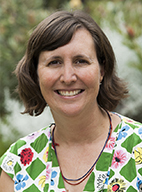
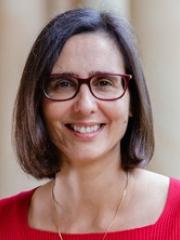
Dr. Anna Hopkins is a Senior Lecturer in conservation biology and molecular ecology at Edith Cowan University's School of Science. She is the Course Coordinator for postgraduate Environmental Science programs and has held academic positions since 2016. Her research focuses on soil microbial ecology, forest pathogens, eDNA applications, and climate change impacts. She has taught courses including Plant Pathology, Genetics, and Soil Processes. Education: PhD (University of Tasmania, 2007), Diploma of Modern Languages (UWA, 2002), BSc (Hons) (UWA, 2002) Her research interests include mycorrhizal-plant interactions, soil fungal responses to disturbances, and regenerative agriculture. Notable awards include the 2010 New Zealand Zonta Women in Science Award and the 2017 ECU Athena Swan Award. Recent articles highlight her work on soil microbial dynamics, invasive species management, and eDNA applications in ecology. She has led projects funded by organizations like the Australian Coal Association and WWF Australia, focusing on biodiversity restoration and ecosystem health. Awards: Multiple international and teaching awards, including recognition for poster presentations and research excellence. Advising & Grants: Supervises 5 PhD/MSc students and leads grants totaling over $1M in projects like eDNA tracking and Gilbert’s Potoroo conservation. Professional roles include Deputy Coordinator of the IUFRO Working Party on Forest Nurseries and Vice President of the Australasian Mycological Society.
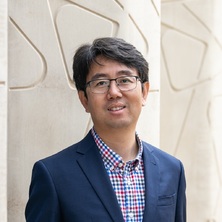
Professor Jianhua Guo is a faculty member at The University of Queensland (UQ), holding the position of Professor and UQ Amplify Fellow in the Australian Centre for Water and Environmental Biotechnology (ACWEB). He is also the ACWEB Deputy Director - Research. His research focuses on integrating process engineering, environmental microbiology, and biotechnology to develop sustainable solutions for contaminant removal in water and wastewater systems. He is a pioneer in studying the environmental dimension of antimicrobial resistance (AMR), particularly how non-antibiotic pharmaceuticals and chemicals contribute to AMR spread. His groundbreaking work has been featured in over 100 media outlets and has secured over $14M in research funding. He has published over 200 peer-reviewed articles in journals like Nature Microbiology , Water Research , and Environmental Science & Technology . His accolades include the 2013 DECRA and 2017 ARC Future Fellowship. He serves as an editor for Journal of Hazardous Materials and Water Science & Technology . Research Interests Environmental AMR and microbial ecology Methane-based biotechnology and bioconversion Nitrogen cycling microorganisms Bioremediation and biofilm reactors Microplastics and health risks Wastewater treatment innovations Grants & Funding $14M+ in ARC Discovery/Linkage grants and industry partnerships ARC Training Centre for Environmental and Agricultural Solutions to Antimicrobial Resistance (CEA-StAR) Dual-membrane upgrading and anaerobic alkane oxidation projects Awards 2013 DECRA 2017 ARC Future Fellowship Supervision Prof. Guo actively supervises PhD and master’s students in areas like AMR mitigation, methane-based bioreactors, and microbial ecology. Notable supervised projects include studies on antibiotic resistance in wastewater, novel disinfection processes, and microbial oxidation of gaseous alkanes. Labs & Teams He leads research teams within ACWEB and collaborates with the Queensland Alliance for Environmental Health Science. His lab focuses on cutting-edge technologies like membrane biofilm reactors and gas fermentation systems.
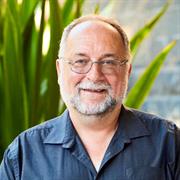
Andy Ball is a Distinguished Professor in the School of Science at RMIT University, specializing in environmental microbiology and biotechnology. He leads the ARC Training Centre for the Transformation of Australia’s Biosolids Resource and has held key roles at institutions including the University of Essex and Flinders University. His research focuses on bioremediation, organic waste treatment, and environmental pollution solutions, with over 300 peer-reviewed publications and significant industry collaboration. Andy's academic career spans 30 years, with roles such as Director of the Centre for Environment and Society at Essex and Director of Flinders Bioremediation. He has attracted >$22M in research grants, particularly in applied environmental microbiology. His awards include the Royal Society of Victoria Medal (2021) and RMIT Research Excellence Award (2018). Research interests emphasize sustainable remediation of contaminated environments, leveraging microbial ecology and biotechnology. His teaching spans environmental science and biotechnology programs at RMIT. Andy advises on projects addressing bioremediation, bioenergy, and pathogen survival, with active collaborations with industries like Shell and Melbourne Water.
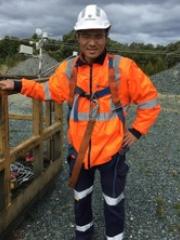
Dr. Chenming Zhang is an Advanced Queensland Industry Research Fellow at the School of Civil Engineering, The University of Queensland. His research focuses on hydrological processes in coastal and terrestrial groundwater systems, with particular emphasis on evaporation-driven mass and heat transport in soils and tailings, and hydrogeochemical dynamics in aquifers and mine waste systems. Specializes in IoT-based environmental monitoring Develops numerical models for coastal aquifer dynamics Conducts field and laboratory experiments on tailings behavior Research interests span coastal hydrology, groundwater modeling, mine waste management, and environmental monitoring. He works on contamination transport, aquifer protection, and climate impacts on water systems. Recent publications analyze: Iron curtain formation in subterranean estuaries Sea water intrusion mechanisms Salinity dynamics in tidal wetlands Smart sewer monitoring systems Scientific awards include the prestigious Advanced Queensland Industry Research Fellowship. He supervises multiple PhD projects on mine waste hydrology and coastal aquifer management, with notable collaboration on: Evolution Mining's gold tailings projects ARC Discovery Projects on coastal processes Grange Resources' PAF cell instrumentation His work combines field measurements, laboratory testing, and computational modeling to address critical environmental challenges in mining and coastal zones.
Prof. Ivan Cole is an Adjunct Professor at RMIT University's School of Engineering, specializing in rapid materials discovery for corrosion protection, nanostructures, and additive manufacturing. His work integrates computational modeling with high-throughput experimentation, focusing on corrosion inhibitors, biocompatible surfaces, and additive manufacturing process optimization. With over 30 years of experience across academia and industry (including leadership roles at CSIRO and Centro-Svilluppo Materiali), he leads the Rapid Discovery & Fabrication Team (RDF) to advance these research areas. Research Interests: Corrosion science, microbially induced corrosion (MIC), additive manufacturing surfaces, nanostructure sensing, multiscale modeling, and green materials discovery. His team addresses challenges in corrosion protection, biomedical implants, and environmental remediation through innovative methodologies. Awards: 2019 Australian Corrosion Medal 2016 CSIRO Lifetime Achievement Award 2013 Best Paper in NACE Corrosion Supervision & Projects: Active in mentoring PhD/Master’s students across corrosion inhibition, additive manufacturing, and nanostructure design. Notable projects include developing quorum sensing inhibitors for biofilm control, in-situ monitoring for metal AM, and eco-friendly corrosion inhibitors. Labs & Collaborations: Leads the Rapid Discovery & Fabrication Team and collaborates with industry partners to translate research into practical solutions for materials durability and sustainability.
Associate Professor Gilda Carvalho is a leading researcher at the Australian Centre for Water and Environmental Biotechnology (ACWEB) and the School of Chemical Engineering at the University of Queensland. She leads the Drinking and Recycled Water research group and specializes in Environmental Bioengineering , focusing on microbial processes for water/wastewater treatment and resource recovery. Research areas: Chemicals of Emerging Concern (CEC), Biological Nutrient Removal (BNR), biofilm systems, membrane processes, and polyhydroxyalkanoate (PHA) production Key methodologies: Molecular tools linking microbial ecology to process performance Academic output: Over 90 peer-reviewed papers and >40 multinational research projects with industrial partners Educational impact: Coordinator of Postgraduate Programs in Urban Water Engineering and supervisor of >20 PhD students Her recent research explores phage-based biofilm disruption , micropollutant removal via advanced oxidation, and resource recovery from waste streams. Current funding includes projects on biofilm solutions for drinking water and sustainable wastewater reuse. She integrates multidisciplinary approaches across biotechnology, chemical engineering, and environmental science to address global water challenges.
Professor Bing-Jie (Bruce) Ni is an Adjunct Professor at the University of Technology Sydney (UTS) within the School of Civil and Environmental Engineering and a full Professor at UNSW Sydney. He is an internationally recognised leader in environmental engineering, wastewater treatment, greenhouse-gas mitigation, microplastics fate, electrocatalysis and sustainable energy systems. Education PhD in Environmental Engineering, University of Science and Technology of China, Hefei (2005–2009) Research Interests Professor Ni’s research integrates process engineering, microbial biotechnology, materials science and mathematical modelling to develop sustainable technologies for high-efficiency pollutant removal, minimal carbon footprint and maximal energy recovery from wastewater. He is a global pioneer in: Modelling and control of nitrous oxide (N₂O) and methane (CH₄) emissions from wastewater systems, Micro- and nano-plastics ecotoxicity and mitigation in anaerobic digestion, Transforming sewage sludge into high-value liquid bio-energy (medium-chain fatty acids and long-chain alcohols), Designing cost-effective electrocatalysts from natural minerals for green hydrogen production and wastewater electrolysis. Research Output & Impact Over the last decade he has published 2 research books, 30 book chapters and >400 refereed journal papers , including 35 in Environmental Science & Technology and 85 in Water Research . His work has influenced global policy: the IPCC adopted his nitrous-oxide-emission model in 2019 to revise national greenhouse-gas inventories for the first time in 13 years. Awards & Recognition ARC Future Fellowship & ARC DECRA Fellowship Clarivate Analytics Highly Cited Researcher (Web of Science) Royal Society of Chemistry Highly Cited Researcher (2020–present) Mendeley Data Top 2 % Cited Researchers worldwide Listed among “Australia’s Most Innovative Engineers” (Engineers Australia, 2018) 50+ additional awards including Scopus Young Researcher Award, South Australian Water Awards, UQ Research Excellence Awards, and Outstanding Doctoral Dissertation Awards. Research Funding & Leadership He has secured ≈ AUD $10 million in competitive funding (six major ARC grants plus >20 government, university and industry projects). He serves as: Lead Guest Editor, Water Research Editorial Advisory Board, Environmental Science & Technology Associate Editor for Journal of Cleaner Production , Environmental Chemistry Letters , Environmental Research , Journal of Environmental Management Editorial Board member for five additional high-impact journals. Teaching & Supervision At UTS he teaches Renewable Energy Technologies , Environmental and Sanitation Engineering , Process Dynamics and Control , and Water and Wastewater Treatment . He is available to supervise Masters and PhD students in environmental biotechnology, process modelling and sustainable energy systems. Laboratory & Commercial Translation He heads active research teams at both UNSW and UTS and is the inventor of >10 granted patents , some of which are currently being commercialised to deliver real-world impacts in greenhouse-gas-neutral wastewater treatment and renewable energy production.
Dr. Erica Garcia is a Senior Lecturer in Environmental Science at Charles Darwin University’s Faculty of Science and Technology, specializing in aquatic ecology. She leads research on river, wetland, and groundwater ecosystems, focusing on food web dynamics and biodiversity in changing environments. Her current projects include citizen science initiatives for groundwater security and wetland condition assessments. Dr. Garcia holds a PhD from Michigan State University (2006) and a B.A. from the University of California, Berkeley (1999). She teaches courses in ecology and resource management and collaborates on interdisciplinary projects addressing water sustainability in Northern Australia. Her research spans observational, experimental, and molecular methods to understand ecosystem processes. Education: PhD in Zoology/Ecology, Evolutionary Biology and Behavior, Michigan State University (2000–2006) Bachelor of Science in Integrative Biology, University of California, Berkeley (1995–1999) Research Interests: Dr. Garcia’s work emphasizes freshwater ecosystems, including food web interactions, groundwater ecology, and the impacts of human activities on riverine systems. She employs eDNA, isotopic analysis, and remote sensing to assess ecosystem health and biodiversity. Current projects investigate groundwater resources and citizen science approaches to environmental monitoring. Grants & Projects: Co-lead on the Northern Australian Community Groundwater Security Project (citizen science) Principal Investigator for the Adelaide River Aquatic Ecosystem Mapping project (2023–2024) Collaborator on the Water Security for Northern Australia Program (2023–2026) Labs/Teams: She is affiliated with the Research Institute for the Environment and Livelihoods at CDU and collaborates with international networks on global river ecology and climate change impacts.
Professor Stuart James Khan is an Adjunct Professor in the School of Civil & Environmental Engineering at the University of New South Wales (UNSW). He previously served as Director of the Australian Graduate School of Engineering (AGSE). His research focuses on sustainable urban water management, water treatment processes, and chemical contaminant analysis. Khan holds a PhD in Environmental Engineering from UNSW (2003) and a BSc (Hons 1 in Organic Chemistry) from the University of Sydney (1995). His research interests include water recycling, desalination, disinfection byproduct formation, and the safe management of chemical contaminants. He has advised over 15 PhD students on topics ranging from advanced treatment technologies to risk assessment frameworks. Khan has published extensively, with over 200 journal articles and 18 book chapters, emphasizing interdisciplinary approaches to water quality challenges. Key contributions include advancing membrane bioreactor performance, optimizing water recycling systems, and assessing risks associated with emerging contaminants. His work bridges fundamental science and practical engineering solutions, addressing global water security challenges. Current projects explore wastewater-based epidemiology, PFAS remediation, and climate-resilient water infrastructure. Khan collaborates internationally on water reuse strategies and has contributed to policy frameworks for safe water management. His teaching spans courses like Water & Wastewater Treatment and Environmental Risk Analysis, reflecting his commitment to educating future engineers in sustainable practices.
Professor Chris Greening is a Research Professor in the Department of Microbiology at Monash University, leading the One Health Microbiology group at the Biomedicine Discovery Institute. He holds a first-class degree in Molecular and Cellular Biochemistry from the University of Oxford (2010) and a PhD from the University of Otago (2013). His career includes postdoctoral roles at Otago, CSIRO, and the Australian National University, followed by appointments as a group leader in Monash’s School of Biological Sciences (2016) and a medically-focused NHMRC EL2 Fellow in the Department of Microbiology (2020). Research Focus: Bacterial persistence mechanisms, microbial metabolism, antimicrobial resistance (AMR), and One Health approaches linking environmental, clinical, and public health challenges. Awards: Fenner Medal (2022) and Jim Pittard Award (2019). Key Projects: RISE, Global Research Alliance on Agricultural GHGs, SAEF, and the ARC Carbon Utilisation Hub. Leads Monash’s AMR R&D Facility. Research spans metabolic pathways enabling bacterial survival in extreme conditions (e.g., hydrogen oxidation, F420 cofactor roles), climate impacts (greenhouse gas regulation), and translational programs addressing diarrheal diseases and AMR. Grants: ARC DECRA Fellowship, NHMRC EL2 Fellowship. Cross-disciplinary collaborations with engineers, ecologists, social scientists, and industry. Lab facilities include advanced microbiology, structural biology, and systems biology tools. Contributions align with UN SDGs: climate action (SDG13), good health (SDG3), and sustainable cities (SDG11).
Professor Nick Paul is a marine scientist at the University of the Sunshine Coast (UniSC), leading applied research in seaweed and algae for sustainable product development. He holds a PhD and BSc (Hons) from UNSW and a Graduate Certificate in Tertiary Education Management from the University of Melbourne. His work focuses on seaweed aquaculture innovations, including waste-to-resource biotechnology, functional foods, and environmental remediation. He leads international projects funded by organizations like ACIAR, CSIRO, and Advance Queensland. Research interests include seaweed-based solutions for livestock health, wastewater treatment, and sustainable aquaculture expansion near the Great Barrier Reef. He has pioneered commercial land-based seaweed farming and developed intellectual property in this field. Awards include the 2015 UNAA World Environment Day Award for Sustainable Water Management and the 2015 Queensland Water Innovation Forum Best Paper. He serves on the Asian Fisheries Society Council and Fiji’s National Seaweed Taskforce. Key publications span seaweed cultivation methods, marine genomics, and socio-economic impacts of aquaculture in the Pacific. Grants total over A$3.7 million for projects like diversifying Pacific Island seaweed industries and improving Indonesian seaweed production.
Professor Jochen J. Brocks is a faculty member at the Research School of Earth Sciences (RSES) at the Australian National University (ANU). He holds a PhD in Organic Geochemistry from the University of Sydney (2002) and a Diplom Chemie (~MSc Chemistry) from the University of Freiburg, Germany. His research focuses on Paleobiogeochemistry, using molecular fossils (biomarkers) to study ancient ecosystems and evolutionary processes, including the origin of life and the emergence of complex organisms. He is particularly interested in the conditions that led to the appearance of multicellular life and the role of primary producers in mass extinctions, as well as the potential existence of a 'lost world' of complex life in Earth's early oceans. He previously served as a Junior Fellow of the Harvard Society of Fellows (2001–2004). His research group, Brocks Geobiology, explores topics such as the molecular signatures of early organisms, the geochemical record of ancient oceans, and the preservation mechanisms of organic matter in sedimentary deposits. Brocks collaborates on projects like the biogeochemistry of salt lakes and the analysis of Precambrian rocks to trace microbial diversity. Education: PhD (Organic Geochemistry, University of Sydney, 2002), MSc (Chemistry, University of Freiburg, Germany). His research interests span the intersection of organic geochemistry and paleontology, with a focus on applying biomarker analysis to understand Earth's history. Recent work includes studies on the environmental aftermath of Snowball Earth glaciations, the origins of Dickinsonia as an early animal, and the preservation of ancient biomolecules in extreme conditions like evaporites and concretions. Brocks has contributed to significant debates in the field, such as reinterpreting steroid biomarkers to challenge early animal evolution timelines and identifying novel preservation mechanisms for plant fossils. His work often integrates experimental geochemistry with field studies, particularly in northern Australia and Mauritania, to explore the co-evolution of life and Earth's systems. Awards: Junior Fellow of the Harvard Society of Fellows (2001–2004). He supervises multiple research projects, including those investigating the Velkerri Formation and the McArthur River deposit. Brocks also collaborates on initiatives like the Sedimentary Geochemistry and Paleoenvironments Project, which synthesizes global data to inform Earth history. His lab work emphasizes the development of analytical techniques to distinguish syngenetic biomarkers from contaminants in ancient samples.
Vijini Mallawaarachchi is a Research Fellow in Bioinformatics at Flinders University's Flinders Accelerator for Microbiome Exploration (FAME). His research focuses on developing computational methods for metagenomic analysis, particularly viral genome recovery from metagenomes. He holds a PhD in Computer Science from the Australian National University (2022) and a BSc in Computer Science and Engineering (Honours) from the University of Moratuwa, Sri Lanka (2018). Education: Doctor of Philosophy (Computer Science), Australian National University, 2018–2022 Bachelor of Science (Computer Science & Engineering, Honours), University of Moratuwa, 2014–2018 Research Interests: Metagenomics, algorithms for genome recovery, bacteriophage discovery, machine learning applications in bioinformatics, and software engineering for computational biology. His work emphasizes leveraging assembly graphs and computational models to analyze microbial communities and viral genomes. Grants & Awards: 2025: National Computational Merit Allocation Scheme Grant (Co-CI) - A$412,000 2025: ARC Discovery Projects Grant (Co-CI) - A$685,781 2024: Outstanding PhD Thesis Award (ABACBS) 2023: Australian Society for Microbiology Early Career Award Professional Engagement: Active member of ISMB, ISVM, ACM, IEEE, ABACBS, ASM, and RSE AU/NZ. Supervises HDR and Honours students in bioinformatics and computational biology. Labs & Tools: Leads projects at FAME, developed tools like GraphBin, Phables, and ConDiGA for metagenomic analysis. Collaborates on open-source initiatives like the cogent3 Python APIs.
Professor Martin Van Kranendonk is the Head of School at the School of Earth and Planetary Sciences (EPS), part of Curtin University's Faculty of Science and Engineering. He holds a portfolio role in the Office of the Provost. His research focuses on early Earth history, astrobiology, and the geological processes that shaped microbial life. He leads investigations into ancient stromatolites, hydrothermal systems, and the environmental conditions conducive to life’s origins. Van Kranendonk’s work spans over four decades, with a strong emphasis on the Pilbara Craton and other Archaean-Proterozoic terrains. His studies integrate geochemistry, sedimentology, and geobiology to unravel the co-evolution of life and Earth’s systems. He collaborates globally, contributing to Mars sample return mission planning and astrobiological studies of extraterrestrial environments. Key research themes include: 1) Early Earth geochemical and tectonic evolution; 2) Microbial biosignatures in ancient rocks; 3) Hydrothermal systems as life’s incubators; and 4) Planetary habitability. His publications emphasize interdisciplinary approaches, linking field geology with cutting-edge analytical techniques. Recent articles highlight advancements in understanding prebiotic chemistry, mantle evolution, and microbial adaptation in extreme environments. While no awards are explicitly listed, his contributions have significantly impacted astrobiology and Archaean geology. He oversees research teams and advises projects at Curtin’s EPS, fostering collaborations across disciplines. Van Kranendonk’s work has implications for both Earth science and planetary exploration, bridging the gap between ancient terrestrial records and future space missions.
Adjunct Professor Robert Speight holds a position at Queensland University of Technology (QUT) within the Faculty of Science, School of Biology & Environmental Science. His primary role is Director of CSIRO's Advanced Engineering Biology Future Science Platform. He focuses on microbial biotechnology, enzyme engineering, and industrial biotechnology applications. His research spans protein engineering, microbial production systems, and biocatalyst development for industrial processes. Education: BSc (Chemistry) from Imperial College London (1996) PhD in Biochemistry from the University of Cambridge (2000) Research Interests: Enzyme optimization for industrial applications Microbial protein production systems Biocatalytic processes for chemical manufacturing Biorefinery development and techno-economic assessments Synthetic biology for future foods and sustainable bioproduction Grants & Projects: Lead investigator for the $6.5M Queensland Sustainable Aviation Fuel Initiative ARC Centre of Excellence in Synthetic Biology (2020–present) Biorefineries for Profit Phase 2 (RnD4Profit 2019) Collaborations: Works with industry partners and academic groups, including the ARC Centre of Excellence in Synthetic Biology and the Centre for Agriculture and Bioeconomy at QUT. Affiliations: President of Synthetic Biology Australasia CSIRO Director of Advanced Engineering Biology Future Science Platform Labs/Teams: Maintains collaborations in enzyme engineering and microbial systems through QUT’s adjunct role and CSIRO leadership.