Swapna Bhat is an Associate Professor in the Department of Biology at the University of North Georgia's College of Science, Engineering and Technology. Her work focuses on microbial systems, particularly the complex cell signaling and developmental processes in Myxococcus xanthus , a Gram-negative bacterium renowned for its multicellular fruiting body formation. Education: Ph.D. in Microbiology (University of Georgia, 2011), M.S. in Microbiology (Maharaja Sayajirao University, India, 2004), B.S. in Biotechnology (Sardar Patel University, India, 2002) Courses Taught: Principles of Biology, Microbiology, Cell Biology, Immunology, Environmental Microbiology, and General Microbiology Her research integrates multidisciplinary approaches to unravel the molecular mechanisms governing bacterial cellular morphogenesis and intercellular communication during nutrient deprivation. Publications highlight lipid signaling pathways and proteomic analysis of outer membrane dynamics in M. xanthus , contributing to understanding prokaryotic developmental biology.
Kelley Gallagher is an Assistant Professor in the Department of Microbiology at Cornell University's College of Agriculture and Life Sciences (CALS). Her research focuses on bacterial development and antibiotic production in Streptomyces species, which are soil-dwelling actinobacteria with complex life cycles. Education: B.S. in Biological Sciences (2009) from the University of Pittsburgh; Ph.D. in Biological Oceanography (2015) from Scripps Institution of Oceanography at UC San Diego Her lab investigates how regulatory cascades coordinate sporulation and antibiotic production in Streptomyces, with broader implications for understanding bacterial evolution and improving antibiotic discovery. Key research areas include cyclic di-GMP signaling, cell division mechanisms, and secondary metabolism regulation. Kelley's publications reveal consistent themes in bacterial signaling and developmental regulation, particularly focusing on Streptomyces' multicellular differentiation and environmental adaptation. The lab's work bridges molecular microbiology with ecological and evolutionary perspectives to manipulate antibiotic production pathways. She teaches BIOMI 4850/6850: Bacterial Genetics, and her research has been published in prestigious journals including Nature Communications, Molecular Cell, and Nature Microbiology. The Gallagher Lab maintains active research programs in both fundamental bacterial biology and applied antibiotic discovery.
Richard Losick is a distinguished Professor in the Department of Molecular and Cellular Biology within Harvard University's Faculty of Arts and Sciences. After more than 50 years at Harvard, he recently closed his research laboratory but continues his active teaching career at the university. Losick's research has profoundly impacted bacterial cell biology, focusing on Spore formation in Bacillus subtilis Biofilm formation mechanisms Stochasticity in cell fate determination Bacterial differentiation processes His work demonstrated how bacteria exhibit sophisticated spatial organization and multicellular behaviors previously thought to exist only in higher organisms. His recent publications reflect his continued contributions to understanding bacterial social behaviors, including the 2024 paper on Staphylococcus aureus biofilm formation. The trajectory of his work shows a consistent progression from fundamental molecular mechanisms to complex bacterial communities. Losick remains actively engaged in teaching, offering courses including 'The History of Molecular Biology' (MCB 149) and 'Talking About Science' (MCB 208). He recently taught his history course at the University of Warwick in Spring 2025 and plans to teach at the University of Texas Southwestern Medical Center next Spring. Over his career, Losick has mentored approximately 50 graduate students and numerous postdoctoral fellows, many of whom have gone on to distinguished careers in academia and industry. His teaching philosophy emphasizes how being an educator has made him a better scientist by forcing him to think in broader contexts.
Craig Thompson is a Professor at the Weill Cornell Medicine Graduate School of Medical Sciences, a key academic partner of the Sloan Kettering Institute. His work bridges fundamental biological principles with translational cancer research, focusing on how metabolic dependencies govern cell survival and transformation in multicellular organisms. His research investigates the hypothesis that metazoan cells lack intrinsic mechanisms for nutrient uptake, making them dependent on environmental cues—a foundational concept that may explain both the evolution of multicellularity and the origins of cancer. This work falls at the intersection of cell signaling , signal transduction , and cancer metabolism , with implications for therapeutic targeting of tumor metabolism. Dr. Thompson is affiliated with the PhD programs in Cell & Developmental Biology and Immunology & Microbial Pathogenesis , reflecting the interdisciplinary nature of his research. His laboratory explores how metabolic pathways integrate with immune responses and developmental signals to regulate cell fate decisions. The breadth of his research suggests strong connections to molecular biology, systems biology, and immunometabolism. Although no specific publications are listed, the conceptual depth of his lab's focus indicates sustained contributions to understanding the metabolic underpinnings of cancer and cell regulation. No scientific awards are mentioned in the provided text. Dr. Thompson mentors students through his laboratory and program affiliations, contributing to the training of future scientists in biomedical research. While specific grants or funding sources are not listed, his position and research scope imply active grant support from major biomedical agencies. His lab serves as a hub for innovative research at the interface of metabolism, oncology, and cell biology. The Thompson Laboratory continues to advance a paradigm-shifting view of cellular autonomy and nutrient dependence, positioning it at the forefront of cancer biology and systems physiology research.
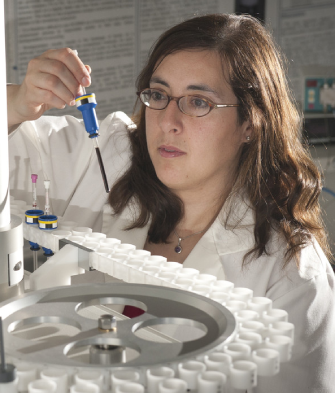
Sanna Koskiniemi is a Professor at the Department of Cell and Molecular Biology, Uppsala University. Her research focuses on bacterial evolution, antibiotic resistance mechanisms, and microbial interactions. Key affiliations: Uppsala University, Department of Cell and Molecular Biology Research areas: Microbiology, Immunology, CRISPR-Cas9 systems, Contact-Dependent Inhibition (CDI) Her work explores how bacteria compete via toxin delivery systems, evolve resistance under low antibiotic exposure, and interact with human microbiomes. Recent publications highlight innovations in silicon-based diagnostics and fundamental mechanisms of bacterial warfare. Her research team investigates bacterial competition systems (CDI, T6SS), CRISPR applications for preventing resistance, and microbiome dynamics in human diseases like obstructive sleep apnea. Projects integrate evolutionary genetics, molecular microbiology, and bioengineering.
Prof. Dr. Seraphine Valeska Wegner is a Full Professor at the Institute of Physiological Chemistry and Pathobiochemistry within the Medical Faculty of the University of Münster. She leads the AG Wegner research group focused on light-controlled systems, with her laboratory located at Waldeyerstraße 15, 48149 Münster. Her research integrates principles from synthetic biology, optogenetics, and tissue engineering to develop innovative approaches for controlling cellular behavior. Dr. Wegner's research centers on the spatiotemporal control of cell-material and cell-cell interactions using visible light. Her group develops photoswitchable interactions that enable non-invasive remote control over cell adhesions, allowing precise self-assembly and self-sorting of cells into multicellular functional architectures. This work bridges fundamental cell biology with practical applications in tissue engineering and synthetic biology. Her research spans from creating synthetic minimal cells that reduce complexity while capturing key cellular features to engineering light-controlled bacterial biofilms with specific properties. Her recent publications demonstrate a strong focus on optogenetic control systems, photoswitchable protein engineering, and the development of light-responsive biomaterials. The research trends show increasing sophistication in multi-color control systems (green, red, and far-red light), reversible adhesion mechanisms, and applications in both fundamental biological questions and translational biomedical contexts including cancer immunotherapy and antimicrobial strategies. ERC Consolidator Grant (2024): LIGHTHOUSE project on nonchemical cell-to-cell communication ERC Starting Grant (2018): ARTIST project on artificial cell-cell interactions Faculty Member of the Max Planck Graduate Center (MPGC) Young Leaders in Science Program, Schering Foundation Research Grant from the Daimler and Benz Foundation Professor Wegner actively mentors numerous PhD students and postdoctoral researchers, with her lab comprising multiple technical staff and a substantial alumni network. Her research group is involved in several collaborative networks including CRC 1348, where she is scheduled to present a lecture in October 2025 titled 'Bottom-up Synthetic Biology - A Building Block Kit for the Cell.' The group's work has significant implications for understanding fundamental biological processes while developing novel therapeutic and biotechnological applications.
Georg Seelig is a Professor at the Paul G. Allen School of Computer Science & Engineering and the University of Washington Department of Electrical & Computer Engineering with a joint appointment. He is an Adjunct Professor in the Department of Bioengineering and leads the Seelig Lab for Synthetic Biology and Molecular Information Systems Lab (MISL) . Ph.D. in Physics, University of Geneva (2004) Postdoctoral work in Synthetic Biology and DNA Nanotechnology at Caltech Research Interests : Seelig's lab focuses on designing biochemical networks with DNA/RNA components to engineer cellular behavior . His work integrates molecular circuitry design in vitro and in vivo with biological pathway analysis , aiming to apply DNA nanotechnology to diagnostics and therapy. Recent trends include 5'UTR engineering , microRNA regulation , and single-cell RNA-Seq protocols like MP3-seq and microSPLiT . Cell Type-Specific Enhancer Design mRNA Stability Prediction via microRNA Localized DNA Circuits for Rapid Diagnostics Scientific Awards : Rozenberg Tulip Award (2023) NSF CAREER Award (2010) Sloan Research Fellowship (2011) DARPA Young Faculty Award (2012) ONR Young Investigator Award (2014) Burroughs Wellcome Foundation Career Award at the Scientific Interface (2008) Advising & Grants : Seelig has mentored numerous students and postdocs, including Dr. Yin , Dr. La Fleur , and Dr. Johannes . His lab secures grants from NSF and NHGRI , with collaborations at Moderna and Altius Institute . Notable tools developed include APARENT2 , UNCURL , and SPLiT-seq .
Bruce Ayati is a Professor in the Department of Mathematics at the University of Iowa, with a secondary appointment in the Department of Orthopedics & Rehabilitation and an affiliate role in the Applied Mathematical and Computational Sciences program. His research bridges computational mathematics and biological systems, focusing on modeling multicellular processes such as osteoarthritis, bone remodeling, microbial biofilms, and gut microbiota interactions. He holds a PhD from the University of Chicago and has contributed extensively to interdisciplinary research, collaborating across disciplines to address complex biomedical questions. His work emphasizes the development of innovative numerical methods for solving partial differential equations in biological contexts. Ayati’s research interests include mathematical biology, dynamical systems, and computational mathematics. His recent studies explore the interplay between mechanical forces and cellular responses in cartilage damage, microbial interactions in the gut, and the pathophysiology of multiple myeloma-induced bone disease. His computational frameworks integrate spatial and temporal scales to model complex biological systems. His publications highlight advancements in simulating bone remodeling, cytokine dynamics in cartilage lesions, and bacterial swarm colony development. Collaborative projects with clinicians and experimentalists drive translational efforts toward medical interventions for musculoskeletal disorders and oncological conditions. Ayati’s academic contributions extend to teaching and mentoring, though specific advisee details are not provided here. His lab focuses on computationally intensive modeling, leveraging numerical analysis to tackle challenges in translational medicine and systems biology.
Myrna Simpson is a Professor at the University of Toronto Scarborough, affiliated with the Department of Physical & Environmental Sciences. Her research focuses on molecular-level environmental chemistry, particularly soil organic matter dynamics, climate change impacts, and ecotoxicological applications of metabolomics. She leads the Environmental NMR Centre, utilizing advanced techniques like nuclear magnetic resonance (NMR) and mass spectrometry to study soil carbon sequestration, contaminant sorption, and organismal responses to pollutants. Her work integrates biogeochemistry, analytical chemistry, and environmental science to address global challenges such as Arctic soil thaw, agricultural sustainability, and early warning systems for ecosystem health. Current initiatives include the NSERC-funded Climate-Smart Soils CREATE program, enhancing training in agri-food sector soil science. Simpson collaborates across disciplines, engaging with long-term ecological research sites and international networks. Research interests span soil organic matter turnover, contaminant bioavailability, and metabolomic tools for ecotoxicology. Her group develops NMR-based methods to assess sub-lethal toxicity in organisms like earthworms and Daphnia, advancing rapid environmental health monitoring. Ongoing projects include studying permafrost thaw transitions, bentonite clay interactions, and industrial effluent analysis using NMR spectroscopy. Her contributions bridge fundamental science and applied solutions, emphasizing interdisciplinary approaches to environmental challenges. Simpson actively mentors students through graduate programs in Chemistry and Environmental Sciences, as well as undergraduate research opportunities.
Dr. Daniel Wall is a Professor and Chair of the Department of Molecular Biology at the University of Wyoming, part of the College of Agriculture, Life Sciences, and Natural Resources. He holds a Ph.D. from the University of Utah (1994) and a B.A. from Sonoma State University (1988). His research focuses on understanding how individual cells coordinate processes within multicellular organisms, using Myxococcus xanthus as a model organism. His lab investigates outer membrane exchange (OME), a process enabling social interactions and kin recognition in bacteria. Key research areas include cell-cell communication, evolutionary mechanisms, and the molecular basis of social behaviors in microbes. Research Highlights : Discovery of OME, a mechanism for resource sharing and toxin exchange between clonemates. Analysis of TraA/TraB proteins mediating kin recognition and social group formation. Investigation of polymorphic toxin systems and their role in microbial conflicts. Studies on myxobacterial predation and adaptation in diverse environments. Publications reflect cutting-edge work on OME mechanisms, toxin-antitoxin systems, and evolutionary adaptations in microbial communities. His work bridges molecular biology, microbiology, and evolutionary biology, with implications for understanding social behavior in bacteria. Lab & Collaborations : The Wall Lab collaborates across disciplines, integrating genetics, biochemistry, and microscopy to explore microbial sociality. Recent projects address OME’s role in tissue repair, conflict resolution, and ecological interactions.
Dr. Mayya Gogina is a Researcher at the Leibniz Institute for Baltic Sea Research Warnemünde, specializing in Biological Oceanography. She holds a Ph.D. from the University of Greifswald and has extensive experience in postdoctoral research focusing on benthic ecosystems, environmental modeling, and marine conservation. Her work integrates multivariate statistical analysis, GIS, and species distribution modeling to investigate benthic community dynamics and their responses to environmental changes. Education: Ph.D. in Marine Geology and Biological Oceanography (2006–2010), Leibniz Institute for Baltic Sea Research (IOW) and University of Greifswald M.Sc. in Hydrology (Specialization: Hydroecology), Lomonosov Moscow State University (1999–2004) Research Interests: Dr. Gogina’s research focuses on benthic macrofauna ecology, habitat mapping, environmental impact assessments, and the functional roles of benthic communities. She employs advanced techniques such as multivariate analysis, GIS, and species distribution modeling to address critical questions in coastal and marine ecosystems, including climate change impacts, fisheries management, and biodiversity conservation. Key Projects: She leads and contributes to projects like ECOMAP (habitat mapping), SECOS (sediment services), and BSW (benthic fauna community analysis). Her work often involves interdisciplinary collaborations to bridge ecological and biogeochemical processes with policy-relevant outcomes. Grants & Advising: Supervised M.Sc. theses on benthic ecosystem functioning and sampling strategies. Peer-reviewed manuscripts for journals such as Marine Environmental Research and Journal of Sea Research . Labs & Teams: Active member of the WG Ecology of Benthic Organisms , contributing to field surveys, experimental design, and data analysis. Collaborates with international networks to advance marine conservation and sustainable management practices.
Alexander Petroff is an Associate Professor of Physics at Clark University, specializing in experimental biophysics and microbial systems. His research integrates hydrodynamics, reaction-diffusion models, and microbiology to study microbial organization and dynamics in natural environments. He holds a Ph.D. in Geophysics from MIT (2011) and a B.A. in Physics and Mathematics from Carleton College (2006). Research focuses on magnetotactic bacteria, active matter, and microbial ecosystems. Key topics include bacterial navigation in porous media, oxygen dynamics in stratified communities, and collective behavior in chiral fluids. His work bridges physics and biology, exploring self-organized nutrient cycles and energy capture mechanisms. Recent publications emphasize microbial interactions with environmental constraints, such as pore networks and magnetic fields. Notable grants include NSF CAREER funding for studies on bacterial morphogenesis and locomotion. Awards include recognition for interdisciplinary contributions to biophysics and active matter research. Presentations span institutions like MIT, University of Chicago, and Rockefeller University, reflecting engagement with both physics and biology communities. His lab’s collaborations highlight cross-disciplinary approaches to understanding microbial systems.
Dr. Thibault Verdenal is a Lecturer at ETH Zurich's Department of Environmental Systems Science, with additional affiliation at Agroscope research institute. His work explores molecular mechanisms underlying bacterial developmental processes, particularly in multicellular organisms. His recent research investigates regulatory roles of small RNAs in bacterial development systems, using Myxococcus xanthus as a model organism to understand genetic pathways controlling complex cellular behaviors.
Professor Alistair Elfick holds a Personal Chair in Synthetic Biological Engineering at the University of Edinburgh's School of Engineering, where he directs the Centre for Engineering Biology and the BBSRC Synthetic Biology Network on Standardisation. His interdisciplinary work bridges mechanical engineering principles with advanced biological systems. His academic background includes a PhD in Biomedical Engineering (University of Durham, 1999), MSc in Bioengineering (University of Strathclyde, 1994), and BSc in Mechanical Engineering (University of Durham, 1993). Elfick's research pioneers synthetic biology standardization for multicellular mammalian systems, nonlinear optical microscopy for label-free cellular imaging, and DNA nanotechnology applications. He develops tools like the PUFFFIN cell-labeling system and PaperClip DNA assembly method, while investigating nanoparticle toxicity through CARS microscopy and impedance biosensing. His work emphasizes translational applications in tissue regeneration, drug delivery, and environmental biotechnology. Recent publications reveal a strong focus on mammalian synthetic biology standardization, with key themes including plasmid engineering for cell-neighborhood mapping, Raman-based toxicity screening, and DNA nanoswitch development. His team consistently bridges optical physics with biological engineering to create non-invasive monitoring solutions. Major scientific awards include the Fulbright Distinguished Scholars Award (2003), EPSRC Advanced Research Fellowship (2004-2009), and Royal Academy of Engineering Global Research Award (2003). US-UK Fulbright Commission, Distinguished Scholars Award, University of California Berkeley, 2003 EPSRC Advanced Research Fellowship, 2004-2009 Royal Academy of Engineering, Global Research Award, University of California Berkeley, 2003 Fellow of the Society of Biology Elfick currently leads EPSRC-funded projects including Formulating MetaVarnish (2025-2026) for metamaterial coatings and DASA's Engineering Biology for Defence initiative (2023), building on prior BBSRC grants for biomanufacturing optical materials. His grant portfolio demonstrates consistent success in securing major UK research council funding for bioengineering innovation. As Director of the BBSRC Synthetic Biology Network, he coordinates national standardization efforts while maintaining active collaboration with the Orthopaedic Research Society and European Society for Biomaterials through his Centre for Engineering Biology.
Dr. David Martinez Martin is a Senior Lecturer in Biomedical Engineering at the University of Sydney's School of Biomedical Engineering, where he serves as Deputy Director of Sydney Microscopy & Microanalysis (SMM) and Co-Chair of the Sensors and Diagnostics cluster within the NanoHealth Network. He holds a PhD in Physics from the Autonomous University of Madrid (Summa Cum Laude) and a BSc/MSc from the University of Valladolid, where he received the University Medal for outstanding academic achievement. Dr. Martinez-Martin is the co-founder of the Sydney Innovation Program, fostering interdisciplinary solutions at the intersection of law, science, and technology. His research focuses on developing novel instrumentation to study cellular biophysics, particularly real-time cell mass dynamics in health and disease. Key innovations include the patented inertial picobalance technology for single-cell mass measurement. Research themes span nanotechnology, scanning probe microscopy, and bionanotechnologies, with applications in cancer, diabetes, and cardiovascular disease diagnostics. His work bridges molecular biophysics, biomedical engineering, and materials science. Analysis of recent publications (2017-2024) reveals consistent focus on: (1) Advanced microscopy techniques like atomic force microscopy for nanoscale biological imaging, (2) Single-cell biophysical analysis including mass fluctuation studies, and (3) Diagnostic technology development for medical applications. His articles frequently appear in high-impact journals including Nature, Nature Nanotechnology, and Nature Communications. Awards and honors include: World Intellectual Property Organisation (WIPO) distinction (2022) University of Sydney Research Accelerator Prize (2020) Alberto Elzaburu Innovation Award (2018) Spanish Physicists' Excellence Award (2016) EMBO Long-term Fellowship (2012-2014) Royal Spanish Academy of Doctors Research Award (2012) Dr. Martinez-Martin leads the Strategic Research Partnership with Bruker, establishing Australia's first nanomedicine facility. He has secured significant grants including AUD$2.2M from the Swiss Technology Commission (2018) and AUD$150,000 SOAR funding (2020). He mentors PhD and Master's students in cell biophysics and diagnostic technology development, though specific advisees are unnamed in source materials.