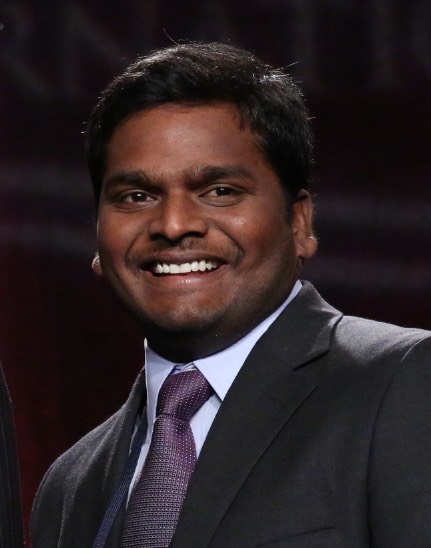
Dr. V.M. (Bala) Balasubramaniam is a Professor in the Department of Food Science and Technology at The Ohio State University. He holds editorial roles in food engineering journals and is a Fellow of IFT and IUFoST. His research focuses on clean food manufacturing technologies, particularly high-pressure and nonthermal methods, emphasizing microbial inactivation and nutrient preservation. He teaches unit operations in food engineering and contributes to industry via short courses and pilot plant demonstrations. Education: B.S. (Tamil Nadu Agricultural University), M.S. (Asian Institute of Technology), Ph.D. (Ohio State University). Research Interests: Thermal/nonthermal processing, food safety/quality modeling, and innovative applications of high-pressure technologies. Recent work includes ultra-shear technology development and superheated steam sanitation. Over 100 scientific papers, 20 book chapters, and co-edited books on high-pressure processing. Awards include the 2021 IFT Research & Development Award and 2017 Calvert L. Willey Award. Advising: Supervises graduate students like Liz Astorga Oquendo and Shruthy Seshadrinathan. Industrial outreach includes a USDA consortium for ultra-shear commercialization. Labs/teams focus on pilot-scale equipment testing and microbial efficacy studies.
Linda J. Harris, Ph.D., is a Distinguished Professor of Cooperative Extension in Microbial Food Safety at the University of California, Davis, within the Department of Food Science and Technology. She served as Department Chair from 2016 to 2021. Her research focuses on microbial food safety, particularly in fresh produce and tree nuts, emphasizing pathogen behavior, antimicrobial treatments, and standard microbiological methods validation. She collaborates with food producers, processors, and government agencies to address food safety challenges. Dr. Harris earned her Ph.D. in Food Science from North Carolina State University in 1991. Her work integrates laboratory studies with extension activities to ensure practical applications in food safety. Key areas include evaluating pathogen survival on produce, developing sanitation protocols, and assessing risks associated with low-moisture foods. Her research trends highlight advancements in pathogen detection (e.g., MALDI-TOF technology), contamination prevention in postharvest handling, and consumer practices affecting food safety (e.g., homemade nut-based products). Recent articles address Salmonella and Listeria survival on produce, irrigation impacts on pathogens, and validation of pathogen reduction processes. Awards: 2021 AAAS Fellow 2018 Institute of Food Technologists Fellow 2004 Elmer Marth Educator Award Her advising and grants focus on low-moisture food safety, extension education, and industry partnerships. She leads initiatives like the Scientific Integrity Consortium and collaborates on national food safety guidelines. Dr. Harris is affiliated with the Robert Mondavi Institute for Wine and Food Science at UC Davis.
Helen Nguyen is a Professor in the Department of Civil and Environmental Engineering at the University of Illinois at Urbana-Champaign , where she has held positions since 2006. She also serves as an Affiliate at the Carle Illinois College of Medicine and the Institute for Genomic Biology . Her academic roles include chairing the Environmental Engineering and Science Program (2017-2019) and prior positions as Associate and Assistant Professor at UIUC. Ph.D. (2005), M.S. (2004) in Environmental Engineering from Johns Hopkins University M.S. (2000) in Earth and Environmental Science from University of Illinois at Chicago B.S. (1995) in Geology from Ivan Franko National University of L'viv Nguyen's research focuses on pathogens and biofilms in drinking water distribution systems , environmental surveillance of pathogens , and water and food safety . Her work spans microbial inactivation mechanisms, biofilm dynamics, and innovative water treatment strategies. Her recent 15 articles (2023-2025) emphasize coronavirus stability , legionella contamination , rotavirus on produce , biofilm mechanics , and climate-pathogen interactions . Trends include environmental virology, microbial risk assessment, and disinfection science. Scientific awards include the NSF CAREER award , Fulbright Specialist , AEESP/CH2M Hill Outstanding Dissertation Award , and University of Illinois College of Engineering Research Excellence Awards at both Assistant and Associate Professor levels. Nguyen advises 10 undergraduate students on pathogen removal and has mentored award-winning graduate students like Ruiqing Lu (2015) and Chamteut Oh (2024). She leads Engineers Without Borders teams and collaborates on USDA-funded food safety workshops .
Bérénice Benayoun, PhD is an Associate Professor at the USC Leonard Davis School of Gerontology , with secondary appointments in the Department of Molecular and Computational Biology (USC Dornsife College of Letters, Arts and Sciences) and the USC Norris Comprehensive Cancer Center . Her research bridges aging biology , epigenetics , and sex differences using vertebrate models like the African turquoise killifish and machine learning . Education : École Normale Supérieure (BSc, MSc), Paris Diderot-Paris 7 University (PhD in Genetics and Cell Biology) Her lab investigates epigenome and transcriptome remodeling during aging , focusing on how biological sex influences these processes. Key themes include inflamm-aging , genomic instability , and immune senescence , with applications in neurodegeneration and reproductive longevity . Recent publications highlight sex-dimorphic gene regulation in neutrophils , macrophages , and brain aging , alongside novel insights into transposable elements and MOTS-c mitochondrial signaling . She pioneers the use of single-cell transcriptomics and multi-omics in aging research. Scientific awards include: 2024 Vincent Cristofalo Rising Star in Aging Research Award 2023 AGHE Rising Star Early Career Faculty Award 2023 USC Mentoring Award 2023 Rising Star in Reproductive Biology 2021 Nathan Shock New Investigator Award 2019 Rosalind Franklin Young Investigator Award Her editorial roles include Geroscience , Translational Medicine of Aging , and eLife . She mentors students across PhD programs in Biology of Aging , Neuroscience , and Molecular Medicine , as well as Master's and undergraduate trainees.
Dr. Patrick J. McNamara is an Associate Professor in the Department of Civil, Construction and Environmental Engineering at Marquette University's College of Engineering. He directs the McNamara Research Group, which focuses on understanding how chemicals from consumer products impact public health and the environment once they pass through water treatment systems. His research bridges environmental engineering and microbiology to address critical water quality challenges facing modern infrastructure. Dr. McNamara's educational background includes: Ph.D., 2012, Civil Engineering, University of Minnesota, Twin Cities M.S., 2008, Environmental and Water Resources Engineering, University of Texas at Austin B.S., 2006, Civil Engineering (Minor - Spanish for the Business Professions), Marquette University His research program investigates how consumer product chemicals impact engineering treatment processes that rely on healthy bacteria to treat water. The McNamara Research Group develops non-traditional treatment processes to remove these chemicals from water and mitigate their environmental effects. His work spans antibiotic resistance in water systems, micropollutant removal technologies, pyrolysis of biosolids, PFAS contamination, and electrochemical treatment processes. Specific areas include the impact of corrosion inhibitors on antibiotic resistance, removal of chemicals via drinking water treatment, environmental antibiotic resistant bacteria, beneficial biosolids reuse, and pyrolysis applications. Dr. McNamara's publication record demonstrates a strong focus on emerging water quality challenges, particularly the intersection of chemical contaminants and antibiotic resistance. His recent work examines corrosion inhibitors' impact on antibiotic resistance in drinking water, PFAS mitigation through advanced treatment processes, and environmental drivers of antibiotic resistance in stormwater systems. His research combines fundamental microbiology with practical engineering solutions to address complex water quality issues. Dr. McNamara has received numerous honors and awards: 2022 OCOE Outstanding Researcher Award from Marquette University Marquette University's Campus 2020 KEEN Rising Star Faculty Scholar Award from Provost Office (2019) Central States Water Environment Association Bill Boyle Outstanding Educator Award (2018) Way Klingler Young Scholar Award (Marquette University, 2018) Excellence in Review Award – Environmental Science & Technology (2017) Dr. McNamara has secured significant research funding as Principal Investigator on multiple projects, including NSF grants focused on mitigating antibiotic resistance in drinking water and studying the environmental impacts of quaternary ammonium compounds. His current research portfolio includes projects on PFAS removal through novel electrocoagulation-peroxidation processes, designing green stormwater infrastructure to combat antibiotic resistance, and removing contaminants from greywater using electrocoagulation technology in collaboration with industry partners like Kohler Company. The McNamara Research Group at Marquette University maintains strong collaborations with researchers across multiple institutions and works closely with water utilities and industry partners to translate research findings into practical solutions for water treatment challenges. Their work addresses critical infrastructure needs while protecting environmental and public health through innovative engineering approaches.
Dr. Janie McClurkin Moore is an Assistant Professor in the Department of Biological and Agricultural Engineering at Texas A&M University, part of the College of Agriculture & Life Sciences. Her research focuses on post-harvest technologies, food safety, and innovative engineering education strategies. She holds a PhD in Agricultural and Biological Engineering from Purdue University and has extensive expertise in applying cold plasma technology to agricultural challenges. Education: B.S., Bio-Environmental Engineering, North Carolina A&T State University (2006) M.S.A.B.E., Agricultural and Biological Engineering, Purdue University (2009) Ph.D., Agricultural and Biological Engineering, Purdue University (2015) Research interests span post-harvest treatment innovations, biomass valorization, and educational methodologies. Her work emphasizes non-thermal plasma applications for food safety, mycotoxin mitigation, and sustainable agriculture practices. Publications reveal a strong focus on plasma technology for pest control, food preservation, and hydroponic systems. Her engineering education research explores inclusive pedagogy and curriculum development in diverse educational settings. Advising and grants include contributions to the NSF Convergence Accelerator project addressing food security in extreme environments. She is affiliated with Texas A&M AgriLife Research, advancing applied agricultural solutions through interdisciplinary collaboration.
David J. Brenner serves as Higgins Professor of Radiation Biophysics in Radiation Oncology and Environmental Health Sciences at Columbia University Medical Center. He directs both the century-old Center for Radiological Research and the Radiological Research Accelerator Facility (RARAF), leading interdisciplinary teams focused on radiation applications in medicine and safety. BA in Physics from Oxford University (1974) MSc in Radiation Physics from University of London (1976) MA in Physics Philosophy from Oxford University (1979) PhD in Physics from University of Surrey (1980) His research spans dual aspects of radiation: therapeutic applications in cancer treatment and risk assessment across diverse scenarios. Key initiatives include advancing carbon-ion therapy for pancreatic cancer, developing safe far-UVC light for pathogen elimination, and investigating low-dose radiation risks from medical imaging to nuclear terrorism. His team leverages RARAF's unique capabilities for mechanistic studies of radiation effects. Publications reveal dominant themes in radiation biophysics, with significant contributions to biodosimetry (RABiT platform), UV disinfection technology, and cancer risk modeling. Recent work emphasizes translational applications including medical countermeasures for radiation exposure and precision radiation oncology techniques. National Academy of Sciences Nuclear and Radiation Studies Board member National Council on Radiation Protection and Measurements member Radiation Research Society Failla Gold Medal recipient (2011) Oxford University Weldon Prize for mathematical biology (2015) Robert D. Moseley Award for Radiation Protection in Medicine Brenner leads multiple NIH-funded projects including biodosimetry development and UV disinfection research. His mentorship extends through directing Columbia's Radiological Research Accelerator Facility and training programs in radiological sciences. Current lab efforts focus on carbon-ion therapy mechanisms and 222-nm UV applications against drug-resistant pathogens, with active collaborations across oncology, microbiology, and physics disciplines.
Kaliramesh (Kali) Siliveru is an Associate Professor and University Outstanding Scholar in the Department of Grain Science and Industry at Kansas State University. His work focuses on grain processing, food safety, and process modeling , with expertise in milling technologies, particle mechanics, and material handling. He holds a B.S. in Food Science from Acharya N.G Ranga Agricultural University, India, and a Ph.D. in Grain Science from Kansas State University. Dr. Siliveru’s research has produced 75+ peer-reviewed articles, 13 book chapters , and impactful studies on reducing microbial contamination in wheat-based products, optimizing pulse processing, and advancing nonthermal technologies like cold plasma. He has received prestigious awards including the ASABE Early Career Engineer of the Year and the University Distinguished Faculty Award for undergraduate mentoring. He teaches GRSC 310 (Materials Handling) , GRSC 810 (Particle Technology) , and GRSC 840 (Advanced Grain Processing) . His lab affiliations include the BIVAP Feed Quality Assurance Lab and Hal Ross Flour Mill, where he explores milling efficiency, microbial control, and sustainable food processing . Current projects address novel applications for minor millets and engineering solutions for safe, nutritious food production.
R. D. Cusick is an Associate Professor in the Department of Civil & Environmental Engineering at the University of Illinois at Urbana-Champaign. He earned his B.S. from the University of California, Riverside (2005), and his M.S. and Ph.D. from Pennsylvania State University (2010 and 2013). His research focuses on advancing sustainable water treatment technologies by integrating electrochemical processes with energy systems and nutrient recovery from wastewater. Dr. Cusick also serves on multiple professional committees, including the Demographics Committee of the Association of Environmental Engineering and Science Professors. Education: Ph.D. Environmental Engineering, Pennsylvania State University, 2013 M.S. Environmental Engineering, Pennsylvania State University, 2010 B.S. Environmental Engineering, University of California, Riverside, 2005 Research Interests: Electrochemical water treatment, nutrient recovery from wastewater, process modeling, and energy-water-environment sustainability. His work emphasizes developing technologies to recover nutrients (e.g., phosphorus) and energy from wastewater while reducing environmental impacts. Professional Activities: Member of the American Chemical Society, Electrochemical Society, Water Environment Federation, and the International Working Group for Capacitive Deionization. He chairs the Energy-Water-Environment Sustainability Program and serves on several departmental and national committees. Awards: W. Wesley Eckenfelder Graduate Research Award (2013) Penn State Alumni Association Dissertation Award (2013) Dow Sustainability Student Challenge Award (2012) Grants & Consulting: Active consulting roles with companies like Island Water Technology and Aquapod. His research is supported by grants from NSF, DOE, and the Bill & Melinda Gates Foundation. Labs & Teams: Leads the Cusick Lab, focusing on electrochemical technologies and nutrient recovery. Collaborates with industry partners to advance scalable solutions for water infrastructure challenges.
Hong Li is an Associate Professor at the University of California, Davis, specializing in interdisciplinary research at the intersection of food science, engineering, and biotechnology. Their work focuses on innovative food processing technologies, including infrared drying systems, catalytic thermal treatments, and microbial inactivation methods. Li's research also addresses sustainable production of alternative proteins, nutraceuticals, and optimization of agricultural by-products. Key research interests include food safety, energy-efficient processing, and the application of advanced technologies like cold plasma and mathematical modeling in food systems. Li has contributed to advancements in nut drying, fish meat quality, and fungal protein production. Their work emphasizes practical solutions for industrial applications while maintaining nutritional and sensory quality. Publications highlight Li's expertise in food physics, interdisciplinary collaboration, and bridging theoretical models with real-world processing challenges. Despite extensive contributions, no scientific awards or named grants are explicitly mentioned in the text.
Bruno A.M. Carciofi is an Assistant Professor in the Department of Biological and Agricultural Engineering at the University of California, Davis. His research focuses on food processing engineering, predictive microbiology, and innovative food technologies. He holds multiple degrees from the Federal University of Santa Catarina, Brazil, including a Ph.D. in Food Engineering. Education: B.S. in Food Engineering (Federal University of Santa Catarina) B.S. in Chemical Engineering (Federal University of Santa Catarina) M.S. in Food Engineering (Federal University of Santa Catarina) Ph.D. in Food Engineering (Federal University of Santa Catarina) Research interests include non-thermal processing technologies, agro-industrial by-product valorization, and mathematical modeling of food systems. Recent work emphasizes cold plasma applications for food safety and sustainability, microwave drying optimization for plant-based products, and microbial growth modeling. His publications span food engineering innovations, such as plasma-activated water for pest control and advanced drying techniques for nutrient retention. He actively contributes to Sustainable Development Goals through biotechnology solutions for food waste reduction. Notable contributions include development of antimicrobial packaging systems and engineered plant-based protein structures. His research bridges food science, engineering, and biotechnology to address global challenges in food safety and resource efficiency.
Dr. Lin Wei is a Professor and Graduate Coordinator in the Department of Agricultural and Biosystems Engineering at South Dakota State University (SDSU). He holds a B.S. in Agricultural Engineering from China Agricultural University, M.S. in Mechanical Engineering (Guangxi University), and M.S./Ph.D. in Biological Engineering (Mississippi State University). His research focuses on biomass conversion, bioenergy production, smart agriculture, and food safety. He leads projects on biochar-based fertilizers, cold plasma food safety technologies, and AI-driven precision farming. Dr. Wei has authored over 80 peer-reviewed papers and secured $7M+ in grants. He chairs multiple professional committees (ASABE Renewable Energy, USDA-S1075, ISO-WG6) and serves as editor for journals like Agricultural Engineering and Transactions of the ASABE. Recent grants include biochar soil health studies ($583K USDA) and nanobubble dairy waste management ($22K SD WRI). His team develops smart sensors for crop monitoring and biopolymer nanocomposites for food packaging. Notable awards include 2024 Outstanding Researcher (College of Agriculture) and 2022 Excellence in Editing (ASABE). Ongoing work integrates thermochemical processes with AI to enhance biofuel production efficiency and environmental sustainability.
Carmen Moraru is a Professor in the Department of Food Science at Cornell University's College of Agriculture and Life Sciences (CALS). Her research focuses on enhancing food safety, quality, and shelf life through advanced processing methods such as membrane separation, light-based technologies, high-pressure processing (HPP), and microwave vacuum drying. She also studies intermolecular interactions in foods and nanoscale surface engineering to prevent microbial contamination. Dr. Moraru teaches courses like Food Processing and Engineering (FDSC 4250) and co-instructs Advanced Food and Bioprocessing Systems (FDSC 6650) . Her lab, the Moraru Lab, explores emerging technologies in food safety and processing, with recent projects addressing microbial inactivation, nanomaterials, and sustainable drying methods. She advises multiple graduate students and has supervised notable projects, including studies on pea protein functionality and antimicrobial surfaces. Education: Doctorate in Food Science (PhD details not explicitly stated in provided texts). Lab Affiliations: Moraru Lab at Cornell University. Her scientific awards include the Kosi Award in Food Science (2019) and recognition for student achievements like Andreea Beldie's 2019 ADSA Poster Competition win. Recent publications highlight innovations in UV-C light disinfection, microwave drying, and nanotopography-based antimicrobial surfaces. Research collaborations span industry and academia, addressing challenges in dairy processing, plant-based foods, and food packaging safety. Her work frequently integrates computational modeling, experimental validation, and interdisciplinary approaches to solve complex food engineering problems.
Zeynep Atamer is an Assistant Professor at Oregon State University's Food Science and Technology Department, affiliated with the Food Innovation Center in Portland, OR. Her research focuses on dairy science and technology, particularly bacteriophage dynamics, spore inactivation, milk protein behavior, membrane processing, and food safety optimization. Primary affiliation: Oregon State University, Food Innovation Center Department: Food Science and Technology Research interests include: Dairy bacteriophages and their thermal/non-thermal inactivation Spore-forming bacteria in dairy processing Milk protein fractionation and functional properties Membrane separation technologies for dairy applications Cheese and fermentation process optimization Development of phage-free dairy products and sensitive detection systems Recent publications highlight advancements in UV-C/phage reduction strategies, casein-based material development, bitter peptide characterization in cheese, and encapsulation technologies for microbial control. Key subfields include dairy processing stressors, whey protein stability, and gut microbiota modulation via phage delivery. Her work integrates industrial-scale validation with lab-to-commercial translation, addressing critical challenges in dairy safety and functionality through interdisciplinary approaches spanning microbiology, biochemistry, and food engineering.
Kirk D. Dolan is a Professor at Michigan State University (MSU), holding joint appointments in the Department of Food Science and Human Nutrition (lead) and the Department of Biosystems & Agricultural Engineering within the College of Agriculture & Natural Resources. His research focuses on thermal processing modeling of foods and inverse problems in food science, utilizing advanced computational tools like MATLAB and COMSOL for parameter estimation. He actively contributes to food safety through extension work, including co-teaching the FDA-mandated Better Process Control School and HACCP courses. PhD, Agricultural Engineering, Michigan State University, 1989 MS, Agricultural Engineering, University of California, Davis, 1985 BS, Agricultural Engineering, University of Florida, 1983 Dolan’s research spans thermal processing technologies (canning, drying, aseptic processing), inverse problem solving, and statistical methods for food researchers. His recent publications emphasize antioxidant analysis, kinetic modeling, and computational approaches in food systems. Recent publications highlight advancements in parameter estimation for food processing, including studies on thermal conductivity in cherry pomace, starch viscosity models, and microbial inactivation dynamics. His work bridges computational methods with practical applications in food safety and quality preservation. 2019 CANR Camden Endowed Teacher/Scholar Award Dolan chairs the triennial Inverse Problems Symposia at MSU and co-teaches graduate courses like BE 835 (Modeling Methods in Biosystems Engineering). His extension work supports Michigan food entrepreneurs through FDA product registration assistance and industry training programs.