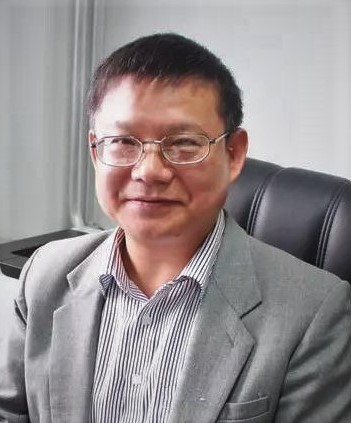
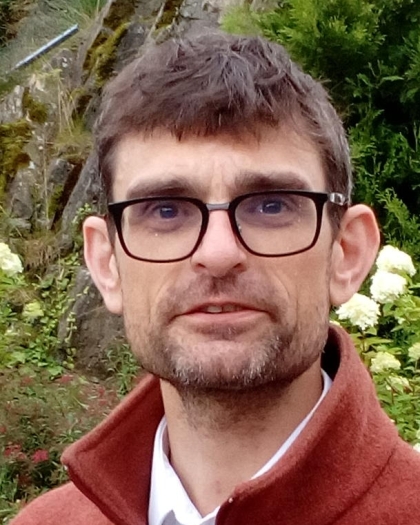
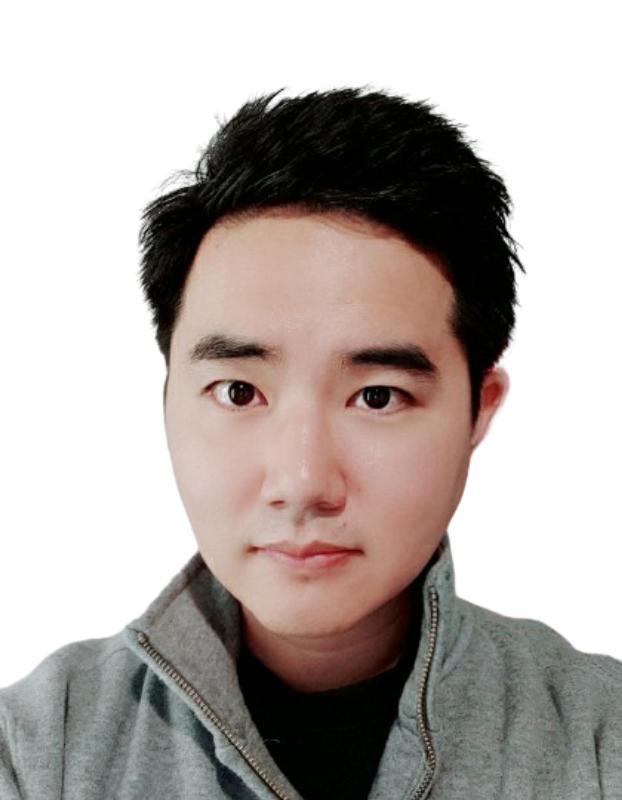
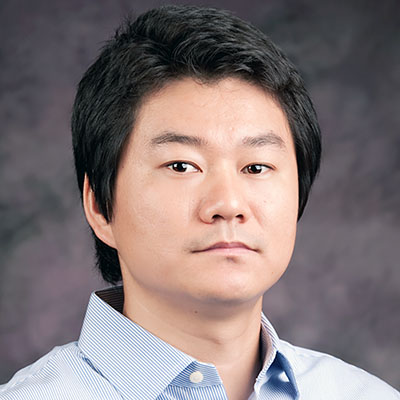
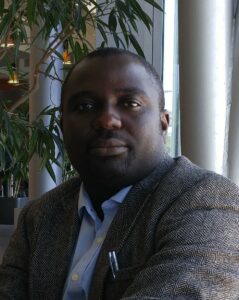
Professor Youming Zhang is a leading academic at Shandong University , serving as Director of the Shandong University–Helmholtz Institute of Biotechnology and the State Key Laboratory of Microbial Technology since 2013. He has pioneered advancements in biotechnology through cross-border collaborations between Germany and China. Ph.D. in Medicine (University of Heidelberg, 1995) Postgraduate studies (Chinese Academy of Medical Science, 1988-1990) Bachelor’s degree (Xiamen University, 1985) His research focuses on synthetic biotechnology , genome editing , and microbial natural product biosynthesis , with groundbreaking work in Red/ET DNA recombineering and heterologous gene expression. His publications span high-impact journals like Nature , Nature Biotechnology , and PNAS , emphasizing techniques for efficient DNA manipulation and natural product discovery. He has received major accolades including the Elsevier 'Chinese Most Cited Researchers' (2018) and the National 'Thousand People Plan' expert (2013) . His career includes founding Gene Bridges GmbH (2000) and holding EMBO Long-Term Fellowships at EMBL (1997-2000).
Bin Liu is an Associate Professor in the Department of Physics at the University of California Merced. His research focuses on fluid dynamics, microfluidics, and active matter systems, with emphasis on bacterial motility, geometric control of fluid flows, and origami-based mechanics. He explores applications in biomedical engineering and material science through innovative microfluidic device designs and theoretical frameworks. His work integrates experimental and computational approaches to study phenomena such as symmetry-protected flows, bacterial behavior in structured environments, and topological properties of origami metamaterials. Liu’s contributions bridge physics, engineering, and biology, addressing challenges in lab-on-a-chip technologies and active matter systems. Key research topics include stress-free microfluidic manipulation, size-dependent transport in micropillar arrays, and the dynamics of bacterial aggregates. His studies often reveal how geometric and symmetry principles can be leveraged to control fluid flows and microbial behavior at microscopic scales.
Ulrich H.E. Hansmann is a Professor in the Department of Chemistry and Biochemistry at the University of Oklahoma. He holds a Ph.D. from Freie Universität Berlin (1990), followed by postdoctoral research at Florida State University and ETH Zürich. His research focuses on computational biophysical chemistry, specifically protein folding, aggregation, and enhanced sampling techniques. His lab develops algorithms and software, such as the SMMP package, to study biomolecular processes relevant to diseases like Alzheimer’s and cancer. Recent work includes investigating the role of microbial infections in amyloidogenesis and SARS-CoV-2 interactions with proteins. He leads the Hansmann Group, which collaborates on projects involving protein-ligand binding and membrane interactions. Education: M.A. (1983), Diplom (1985), Ph.D. (1990) from Freie Universität Berlin. Research Keywords: Protein folding, aggregation, enhanced sampling, amyloidosis, computational modeling. His research explores mechanisms of protein misfolding and aggregation, with applications in drug design and disease pathology. Collaborations include studies on viral proteins’ effects on amyloid formation and antibiotic peptide stability. The SMMP software, developed by his group, enables efficient simulations of large biomolecules.
Mette Hedegaard Thomsen is a Professor at the Department of Chemistry and Bioscience, Aalborg University. Her research focuses on biorefinery systems, halophyte utilization, and microbiologically influenced corrosion (MIC) mitigation. She leads projects involving valorization of organic waste, development of natural biocides, and sustainable biofuel production. Research Interests: Halophyte-based biorefineries Microbial corrosion inhibition Organic waste-to-energy conversion Phenolic compound extraction Probiotic/postbiotic applications Key Projects (2018–2027): Biorefinery of Biomass Residues for High-Value Compounds Improving GreeN Innovation for Sustainable Animal Farming Halophyte Extracts as Natural Corrosion Inhibitors Advising & Grants: Supervisor for 4 PhD students Funded by EU Horizon 2022 and industry partnerships Labs/Teams: Halophyte Biorefinery Lab Corrosion Inhibition Research Group Waste Valorization Consortium
Håkon Dahle is a Professor and Group Leader at the Computational Biological Unit (CBU) at the University of Bergen. He also leads the 'Energy and Life' work package at the K.G. Jebsen Centre for Deep Sea Research. His affiliation is with the Department of Biological Sciences (BIO). His research focuses on microbial ecology, investigating how natural and human-driven factors influence microbial communities and ecosystems across diverse environments, including hydrothermal vents, aquaculture systems, and marine ecosystems. Key research questions include understanding microbial community structure in hydrothermal systems, the interplay between geochemistry and microbial life, and optimizing recirculating aquaculture systems (RAS). Dahle employs bioinformatics, field observations, and population modeling to address these questions. He collaborates on projects like VIRVAR (NFR-funded), exploring algal-virus interactions, and MONITOR, advancing RAS microbial monitoring. His work spans microbial diversity in extreme environments such as Arctic hydrothermal vents and the impacts of deep-sea mining tailings. Notable contributions include studies on Zetaproteobacteria in hydrothermal mats and the microbiome dynamics in salmon farming. Dahle has supervised doctoral candidates like Jan Pieter Vander Roost (2018) and Runar Stokke, advancing microbial ecology and geobiology. Publications highlight interdisciplinary approaches, from viral genomics to aquaculture engineering. His research bridges fundamental microbiology with applied challenges in sustainable aquaculture and environmental stewardship.
Dr Sean Tomlinson is an ARC Grant-Funded Researcher (A) in the Department of Ecology and Evolutionary Biology at the University of Adelaide. His work focuses on integrating physiological and ecological principles to address challenges in conservation biology, restoration ecology, and biodiversity management. Key research areas include seed germination dynamics, animal metabolic responses to environmental stressors, and the application of physiological tools to inform conservation strategies. His research employs interdisciplinary approaches, combining field studies, experimental laboratory work, and computational modeling to understand ecological processes at multiple scales. Notable contributions include studies on the impacts of climate change on plant and animal physiology, the reconstruction of historical ecological dynamics, and the development of frameworks for effective ecological restoration. Recent work emphasizes the importance of physiological data in guiding translocation programs for threatened species, optimizing seed-banking strategies for degraded landscapes, and bridging gaps between theoretical models and applied conservation practices. Dr Tomlinson collaborates extensively with government agencies, NGOs, and international research networks to ensure his work informs policy and on-ground management decisions. His publications highlight innovative methodologies such as LiDAR-based habitat analysis for endangered species, high-resolution niche modeling informed by edaphic factors, and quasi-mechanistic spatial models for insect energetics. Ongoing projects explore the interplay of temperature, moisture, and bioclimatic factors in shaping species' distributions and resilience to anthropogenic pressures.
Walter K. Dodds is a University Distinguished Professor in the Division of Biology at Kansas State University, affiliated with the College of Arts and Sciences. His research lab, established in 1990, is a leading center for freshwater ecology, focusing on nutrient cycling, water quality, and stream conservation. He is actively involved in major research initiatives including the Konza Long Term Ecological Research (LTER) project and the MAPS (Microbiomes of Aquatic Plant and Soil Systems) program. Research Interests: Dr. Dodds' work centers on aquatic ecology, particularly the trophic state of rivers and streams influenced by biotic and abiotic factors. His lab emphasizes nitrogen cycling, nutrient criteria development, valuation of ecosystem services, scaling of ecological patterns, and prairie stream dynamics. His research bridges fundamental science with environmental policy and conservation. Publication Trends: His recent publications reflect a strong focus on macrosystems ecology, environmental impacts of nanomaterials, nutrient retention in agricultural landscapes, and interdisciplinary connections among aquatic, plant, and soil microbiomes. These works appear in high-impact journals such as Science of The Total Environment , Frontiers in Ecology and the Environment , and Bioscience , showcasing his leadership in synthesizing ecological knowledge across scales. Scientific Contributions: Although specific awards are not listed in the provided texts, Dr. Dodds is a recognized authority in limnology, evidenced by his widely adopted textbook Freshwater Ecology (3rd ed., 2019). He is affiliated with numerous professional societies, including the Society for Freshwater Science, Ecological Society of America, and Sigma Xi. Advising and Grants: Over the past three decades, Dr. Dodds has mentored more than 20 graduate students, 8 postdoctoral associates, and over 30 undergraduates, reflecting a strong commitment to training the next generation of scientists. His lab has been supported by long-term funding from programs like the Konza LTER, indicating sustained grant success and collaborative research impact. Labs and Teams: The Dodds Lab at K-State is a vibrant research group engaged in field, lab, and theoretical work. Key projects include the Konza LTER, studies on riparian fencing and cattle impacts, and the MAPS project exploring microbiomes across ecosystems. The lab has a documented history of collaborative science, international partnerships, and contributions to ecological theory and application.
Pedro Brancoli is a Senior Lecturer at the Swedish Centre for Resource Recovery within the University of Borås' Faculty of Textiles, Engineering and Business. His research focuses on environmental aspects of resource recovery, waste management, and food waste reduction, particularly in supermarket and bakery contexts. He collaborates with doctoral students Zisen Liu and Samira Syed, and his work emphasizes quantitative methods like material flow analysis and life cycle assessment. Research Interests: Environmental sustainability through waste valorization Automated food waste quantification systems Climate impact of food production and distribution Key Outputs: Recent publications include studies on household food waste patterns, bakery surplus reduction, and carbon footprint analysis of street market waste in Brazil. His work bridges theoretical frameworks with practical applications in circular economy models. Grants & Awards: No specific awards listed, but research is supported by grants like the Swedish Environmental Protection Agency (2022–00077). Labs/Teams: Active within the Swedish Centre for Resource Recovery, focusing on cross-disciplinary solutions for sustainable resource management.
Norman Van Rhijn is a Wellcome Trust Early Career Fellow at the University of Manchester's Division of Evolution, Infection and Genomics. His research focuses on microbial evolution with specific emphasis on fungal pathogens, particularly Aspergillus fumigatus . He leads work on antimicrobial resistance (AMR), climate change impacts on fungal diseases, and genetic tools for non-model organisms. He holds affiliations with MERman (Microbial Evolution Research Manchster) and the Manchester Fungal Infection Group (MFIG). Education: BSc Biology (Leiden University), MSc Medical Mycology (University of Manchester), PhD in Molecular Biology (University of Manchester). Research highlights include developing CRISPR-based genome editing methodologies, studying fungal adaptation to environmental pressures, and investigating dual-use fungicides. His work contributes to UN Sustainable Development Goals related to health and environmental sustainability. Award: Wellcome Trust Early Career Fellowship. Labs/Teams: PI in the MFIG project, editorial board member for mBio , and active in professional societies including the Microbiology Society and British Society for Medical Mycology.
Dr. Seunghwan Shin is a postdoctoral researcher at ETH Zurich's Department of Mechanical and Process Engineering, affiliated with the Institute of Fluid Dynamics and working within Prof. Filippo Coletti’s group . His research spans fluid dynamics, polymer science, and biophysics, with a focus on multiphase flows, shear-banding in entangled polymers, and bacterial motility in complex fluids. Bachelor’s Degree : Chemical & Biological Engineering from Seoul National University (minor in Economics) PhD : Chemical Engineering at the University of Minnesota under Prof. Xiang Cheng and Prof. Kevin D. Dorfman His work explores turbulent suspensions , polymer microstructure , and active matter systems , combining experimental and rheological approaches. Publications emphasize quasi-2D turbulence , shear-banding , and colloidal media interactions in both synthetic and biological systems. The 15 most recent articles highlight trends in non-Newtonian fluid behavior , DNA-polymer dynamics , and enhanced motility mechanisms , with subfields spanning viscoelastic flows , microscale transport , and active colloids . He is part of the Coletti Group at ETH Zurich, advancing research on fluid dynamics and complex media.
Kun Chen is a Professor in the Department of Statistics at the University of Connecticut's College of Liberal Arts and Sciences. His research bridges advanced statistical methodology with critical applications in healthcare, environmental science, and mental health. His research focuses on large-scale statistical learning , machine learning optimization , and healthcare analytics , particularly in suicide risk prediction using electronic health records and health information exchanges. Recent work integrates natural language processing with social determinants of health for veteran suicide prediction and develops novel tensor regression methods for longitudinal data with missing observations. Analysis of his 15 most recent publications reveals a dominant trend in mental health data science (73% of articles), with significant contributions to statistical methodology (53%) including reduced-rank regression extensions and sparse factor modeling. His environmental statistics work (20%) focuses on nanomaterial applications in contaminated agriculture and microbiome-environment interactions. Scientific Recognition: Co-authored seminal 2023 Springer monograph Multivariate reduced-rank regression: theory, methods and applications (2nd Edition) Developed rrpack R package for reduced-rank regression (2019) His collaborative work spans UConn Health, Veterans Affairs, and multiple national consortia, with recent grants supporting data fusion techniques for suicide prevention and Parkinson's disease progression modeling. Current projects include transfer learning frameworks for hospital suicide risk prediction and gut microbiome analysis in neurological disorders. Dr. Chen maintains active leadership in statistical ecology applications and serves on editorial boards for biostatistics journals, with recent work on quantum dot analysis demonstrating methodological versatility across physical and health sciences.
Giuseppe Palladino is an Honorary Research Fellow at the University of Aberdeen's School of Geosciences. His research focuses on structural geology, sedimentology, and tectonics with particular emphasis on sandstone intrusions, landslide dynamics, and carbonate reservoir characterization. He has conducted extensive fieldwork in Southern Italy, California, and the Apennine regions, contributing to understanding hydrocarbon reservoir connectivity, tectonic deformation processes, and geohazard mitigation strategies. Key research areas include: Structural controls on sedimentary basin evolution Diagenetic processes in fault-related sandstone intrusions Landslide monitoring using InSAR and geophysical techniques Geoheritage preservation in Mediterranean mountain regions His recent work (2020-2025) emphasizes: UKCS hydrocarbon reservoir modeling using sand injectite analysis Tectonic reconstruction of Southern Apennines thrust belts Biomineralization in Triassic carbonates as paleoenvironmental indicators Publications (2017-2025) demonstrate interdisciplinary approaches integrating field geology, remote sensing, and quantitative petrographic analysis to address applied geological challenges in energy exploration and environmental management.
Dr. Oliver T. Iorhemen is an Assistant Professor in the Department of Environmental Engineering at the University of Northern British Columbia (UNBC), where he has been contributing since August 1, 2021. He is actively engaged in research, teaching, and graduate supervision in the field of environmental and wastewater engineering. His educational background includes a PhD in Civil Engineering (Environmental Engineering specialization) from the University of Calgary, an MSc in Environmental Engineering and Project Management from the University of Leeds, UK, and a B.Eng in Water Resources and Environmental Engineering from Ahmadu Bello University, Nigeria. Dr. Iorhemen's research focuses on biological wastewater treatment , resource recovery from wastewater and biosolids , nutrient removal , removal of emerging contaminants , and rural water supply and sanitation . His work emphasizes sustainable technologies such as aerobic granular sludge (AGS), biofiltration, and constructed wetlands, especially in cold climates. He leads a dynamic research team involving multiple MASc students and interns. The trends in his recent publications reflect a strong emphasis on AGS technology , resource recovery (e.g., xanthan, curdlan, amino acids), hybrid treatment systems , and data-driven modeling of bioreactors. His work bridges fundamental microbiology with practical engineering applications, aiming at scalable and resilient water treatment solutions. Dr. Iorhemen teaches courses including ENGR 210 (Material and Energy Balances), ENGR 358 (Water and Wastewater Systems), ENVE 310 (Environmental Engineering Processes), and ENGR 498/798 (Advanced Treatment Processes). He has also taught graduate-level biological processes at the University of Calgary. He actively supervises graduate students and has led collaborative projects with municipalities and industry. His research team includes current MASc students working on oily wastewater, resource recovery from AGS, biofilters for rural water, and constructed wetlands in cold climates. Past undergraduate and intern researchers have contributed to AGS bioreactor development and nutrient removal studies.
Dario Viberti is a Full Professor at the Polytechnic University of Turin, affiliated with the Department of Environmental, Land and Infrastructure Engineering (DIATI). He is a member of the Interdepartmental Center Ec-L - Energy Center Lab and actively contributes to the Master's and Continuing Education School. He serves as Coordinator for both Master’s levels I and II of the Natural Resources Development and Storage program and participates in doctoral colleges for Civil and Environmental Engineering and Materials, Sustainable Processes, and Systems for the Transition. His research focuses on flow in underground porous media , geoenergy , and underground energy storage , particularly hydrogen and CO₂ storage. His expertise spans numerical modeling, reservoir engineering, fluid mechanics, well testing, and energy transition systems. He is involved in commercial research projects with ENI Corporate University and leads initiatives related to sustainable energy applications. His recent publications reveal a strong trend in underground hydrogen storage , biogeochemical modeling , pore-scale simulation , and PVT analysis of gas mixtures . These works emphasize safety, efficiency, and long-term integrity of subsurface storage systems using advanced computational and experimental methods. Scientific Manager, Underground CO2 Storage Project (2022) Scientific Manager, Reservoir Modeling Project (2022) Coordinator, Master’s Program in Natural Resources Development and Storage Member, SEASTAR Competence Center Committee (2020–2025) He mentors several PhD students, including Michel Tawil, Marialuna Loffredo, Alice Raeli, and Alice Massimiani, supporting research in microfluidics, Lattice Boltzmann simulations, and thermodynamic characterization. He teaches courses such as Numerical Modeling for Multiphase Flow , Underground Energy Storage , and Well Logging and Testing across multiple degree programs. His work aligns with UN SDGs 7 (Affordable and Clean Energy), 9 (Industry, Innovation, and Infrastructure), and 13 (Climate Action).
Prof. Martijn Bezemer is a Professor of Ecology of Plant-Microbe-Insect Interactions at Leiden University's Institute of Biology Leiden (IBL), Department of Plant Sciences. His research focuses on understanding how plants influence soil biota and how these changes affect subsequent plant growth and insect interactions. Key areas include grassland ecosystems, horticultural soils, and soil microbiome applications in restoration and agriculture. He leads a team of PhD students and postdocs conducting experiments in greenhouses, growth chambers, and field settings. Current projects include TRIPS (Thrips Reduction In Production Systems), Self Defense (mimicking plant defense mechanisms), and Soils2Guts (soil microbiome health impacts). Collaborations with restoration practitioners aim to enhance grassland biodiversity through soil inoculation and plant-driven soil improvements. Recent work includes studies on blue-green roof vegetation dynamics, plant community legacy effects on decomposition, and steering crop microbiomes via soil feedback principles. His research bridges fundamental ecology with applied solutions for sustainable agriculture and ecosystem restoration.