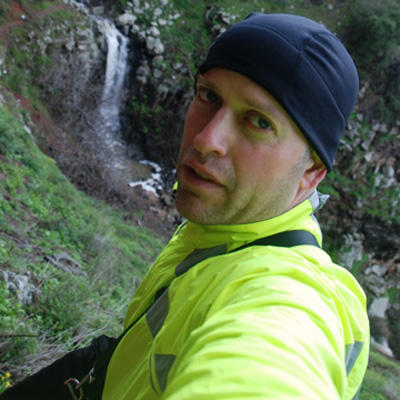
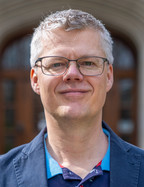
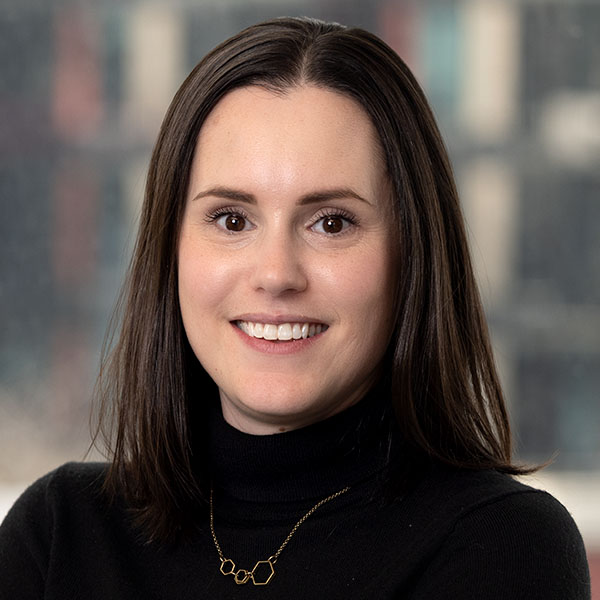
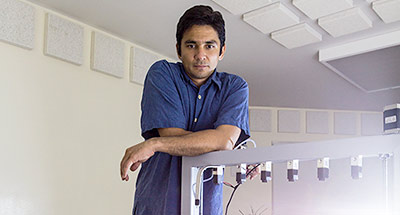
Bao-Zhu Yang is a Researcher at Yale School of Medicine , specializing in the Department of Psychiatry . With a PhD from University at Albany (2001), his work focuses on genetic mechanisms underlying psychiatric disorders. Positions: Research Scientist in Psychiatry Labs: Gelernter Lab, Division of Human Genetics His research explores gene-environment interactions , admixture mapping , and comorbid substance use-depression using linkage/association methods. Supported by NIH K01 funding, he investigates genetic bases for conditions including childhood depression , alcoholism , and PTSD . Recent publications highlight: Microbiome studies in methamphetamine use disorder (2023-2025) Genetic polymorphism analyses in NGF and GABAergic pathways (2020-2024) Network approaches to nicotine-alcohol comorbidity (2019) Epigenetic research on child maltreatment effects (2020) Scientific Recognition: Young Investigator Award (2011) from NARSAD Brain and Behavior Research Foundation Active grant support includes NIH K01 career development award for gene-mapping in comorbid disorders. Collaborates with leading researchers including Joel Gelernter and Hongyu Zhao across 30+ joint publications. His work spans 15+ years with recent focus on integrative -omics approaches to addiction psychiatry. Based at 300 George St, New Haven, CT , Yang's laboratory work involves genetic epidemiology , transcriptomic integration , and neurogenetic mapping of substance use disorders.
Kevin O'Connor is a Full Professor in the School of Biomolecular and Biomedical Science at University College Dublin (UCD), where he has held academic positions since 1999, progressing from Assistant College Lecturer to his current role as Full Professor since 2018. He serves as Director of the BiOrbic Bioeconomy SFI Research Centre, leading Ireland's national research efforts in bioeconomy development. His academic career spans over 25 years with continuous advancement through UCD's academic ranks. Professor O'Connor's research focuses on two primary areas: biodegradable polymer synthesis by bacteria and enzymes as biocatalysts. His work in biodegradable polymers centers on polyhydroxyalkanoates (PHAs), investigating bacterial production methods using waste and bio-based resources. His enzyme research explores biocatalysis under mild conditions with high specificity, using protein engineering to enhance enzyme activity for producing pharmaceuticals and fine chemicals. His laboratory investigates waste valorization, upcycling plastic monomers, CO 2 conversion to biopolymers, and hydroxytyrosol applications in food and animal nutrition. His publication record reveals a strong trend toward solving plastic pollution through biotechnological approaches, with significant work on converting plastic waste to valuable biopolymers. Recent publications demonstrate expertise in bioprocess engineering for fungal cultivation, metabolic engineering of bacterial strains for PHA production, and developing sustainable alternatives to fossil-based plastics. His research bridges fundamental microbiology with practical industrial applications in the circular bioeconomy. NovaUCD innovation award (2016) Professor O'Connor has secured significant research funding including the Horizon Europe 'PROMOFER' project (2024-2028) focusing on PHB production optimization and the SFI 'BEACON' partnership (2019-2027) as part of the BiOrbic Bioeconomy Research Centre. He has coordinated the 'Applied Enzymology and Protein' module for over seven years and serves as PhD thesis supervisor. His leadership extends to chairing the Scientific Committee of the Biobased Industries Joint Undertaking and serving on the EC Expert Group for bio-based products. As Director of BiOrbic, Professor O'Connor leads a major national research center focused on developing Ireland's bioeconomy, with particular emphasis on creating rural economic opportunities through bio-based innovations. His work includes establishing the Lisheen bioeconomy innovation and pilot facility campus, demonstrating his commitment to translating research into practical applications that support primary producers in innovating and diversifying through science and technology.
Gideon Hartman is an Associate Professor in the Anthropology Department at the University of Connecticut, where he conducts interdisciplinary research at the intersection of paleoenvironmental reconstruction, plant and animal eco-physiology, anthropology, and archaeology. His work primarily employs stable isotope methods to reconstruct past environments, human mobility patterns, paleodiets, and ancient economic systems. Dr. Hartman received his Ph.D. from Harvard University in 2008. His educational foundation in anthropology and archaeological science has enabled his innovative approach to stable isotope analysis. Rather than treating isotopic values as static markers, he investigates the mechanisms causing variability in stable isotope ratios as they move along foodwebs from soil and atmosphere to plants and then to animals and humans. Hartman's research program uniquely begins in the contemporary world to establish principles that can be reliably applied to archaeological settings. His work spans diverse geographical regions including the Eastern Mediterranean, Levant, Jordan Valley, and Armenian Highlands, with temporal coverage from the Middle Pleistocene to the Early Bronze Age. He has made significant contributions to understanding how environmental factors like water availability, temperature, and soil conditions affect isotopic signatures in modern ecosystems, creating robust models for archaeological interpretation. His publication record demonstrates consistent productivity in high-impact journals, with research trends showing increasing sophistication in multi-isotope approaches applied to complex archaeological questions about pastoralism, trade networks, human migration, and human-environment interactions. His work increasingly integrates zooarchaeological, archaeobotanical, and geochemical evidence to build comprehensive pictures of past societies. As director of the Stable Isotope Preparation Lab at UConn, Hartman leads a research team that processes and analyzes samples from archaeological sites worldwide. His laboratory serves as a hub for interdisciplinary collaboration between archaeologists, anthropologists, geoscientists, and biologists seeking to apply isotopic methods to their research questions. His work has been instrumental in refining methodologies for interpreting strontium, carbon, nitrogen, and oxygen isotope data in archaeological contexts, particularly regarding animal and human mobility patterns in the Eastern Mediterranean region.
Dr. Peter Zilm is an Associate Professor in the Adelaide Dental School at the University of Adelaide, part of the Faculty of Health and Medical Sciences. His research focuses on bacterial biofilm dynamics, particularly in oral pathogens linked to caries and periodontal disease, and their systemic implications. Key projects include developing oral microbiome transplantation therapies and pH-responsive 'intelligent particles' as antimicrobial agents. Collaborations with chemical engineers and industry aim to advance nano-technological solutions for dental applications. Research interests span biofilm inhibition mechanisms, the gut microbiome's role in gastrointestinal inflammation triggered by periodontitis, and the development of novel antimicrobial coatings for medical devices. His work integrates advanced technologies like cellular impedance (exCELLigence) and next-generation sequencing. He has secured NHMRC funding (2020-25) for oral microbiome transplantation research. Projects are based at the Helen Mayo South Building and involve collaborations with institutions in Spain, the UK, and elsewhere. Dr. Zilm supervises Honours, Masters, and PhD students across multiple translational projects, including anti-biofilm agents, oral microbiome transplantation efficacy, and the relationship between oral bacteria and systemic diseases like cardiovascular issues and cancer. His recent publications highlight innovations in nano-technology, biofilm disruption, and probiotic interventions for periodontal disease.
Lars Rehmann serves as a Professor in the Department of Chemical and Biochemical Engineering within the Faculty of Engineering at the University of Western Ontario. He also holds a Visiting Professor position at RWTH Aachen University in Germany. His academic journey includes a Ph.D. in Chemical Engineering from Queen's University (Canada), a Diplom in Biotechnology from Technical University of Braunschweig (Germany), and an NSERC Post-Doctoral Fellowship at the University of Manchester (2007-2009). Dr. Rehmann's research focuses on sustainable biochemical conversion processes for producing biofuels and value-added chemicals. His work spans multiple interconnected areas including anaerobic digestion, biorefinery design, biochar applications, wastewater treatment, and microbial metabolism in Clostridia species. He has made significant contributions to understanding acetone-butanol-ethanol (ABE) fermentation processes, pyrolysis byproduct valorization, and advanced extraction techniques using ionic liquids. Analysis of his recent publications reveals a strong emphasis on circular economy approaches, particularly in utilizing biochar to enhance biogas production from aqueous pyrolysis condensates. His work increasingly integrates sustainability metrics through exergetic and techno-economic analyses, with recent research expanding into metabolic oscillation phenomena in Clostridia and novel wastewater denitrification methods using solid-phase carbon sources. NSERC Post-Doctoral Fellow (University of Manchester, 2007-2009) Dr. Rehmann maintains an active research program with numerous graduate student opportunities in biochemical engineering. His laboratory infrastructure supports advanced fermentation studies, biomass conversion processes, and analytical characterization of biofuels and biochemicals. Current research directions include developing sustainable alternatives for wastewater treatment, optimizing biochemical conversion pathways for maximum resource recovery, and investigating metabolic engineering strategies for improved product yields in microbial systems.
Abigail Johnson, PhD, RD is an Assistant Professor in the Division of Epidemiology & Community Health at the University of Minnesota. She also serves as the Associate Director of the Nutrition Coordinating Center (NCC) and is a Member of the Masonic Cancer Center (MCC). Dr. Johnson earned her PhD in Nutrition and completed her Registered Dietitian (RD) training at the University of Minnesota, where she also obtained her BS in Nutrition Science and Biology. Her research explores the relationships between diet and the human gut microbiome in health and disease using novel computational methods for dietary data. Her current focus areas include: analysis of diet and microbiome after dietary interventions, methods development for dietary data analysis and visualization, and understanding the interactions between foods, microbes, and fungi during different stages of development. She is particularly interested in how diet and the microbiome interact to influence chronic diseases including prediabetes, diabetes, and cancer. Dr. Johnson's research demonstrates significant trends in microbiome analysis, dietary assessment, and computational methods. Her work increasingly focuses on personalized nutrition approaches, longitudinal microbiome dynamics, and the integration of multi-omics data to understand diet-microbe-host interactions in disease contexts. Her scientific contributions include: Development of methods for dietary data analysis and visualization Research on diet-microbiome interactions in chronic diseases Studies on how immigration and dietary changes affect the gut microbiome Investigations into personalized diet-microbiome associations Dr. Johnson actively mentors students and researchers in the fields of nutritional science, microbiome research, and computational biology. Her work has been supported by various research grants focused on understanding the complex relationships between diet, the microbiome, and human health.
Paul Carini is an Associate Professor in the Department of Environmental Science at the University of Arizona. His research focuses on microbial genomics, environmental microbiology, and microbial diversity in extreme environments. He is affiliated with the School of Animal and Comparative Biomedical Sciences through a joint Micro Graduate Program. His work emphasizes genomic sequencing of understudied microbes, particularly those from arid soils and subseafloor sediments. He explores microbial adaptation strategies to nutrient-poor and extreme conditions, including anaerobic respiration and toxic gas utilization. Recent studies highlight culturomics advancements, such as high-throughput cultivation and predictive modeling of microbial growth. Key contributions include genome-based taxonomic frameworks for uncultivated archaea and bacteria, and insights into microbial roles in climate change mitigation. His research bridges traditional cultivation methods with modern genomic tools, addressing challenges in capturing Earth's microbial biodiversity.
Rainer Schuhmacher is a Full Professor for Plant and Microbe Metabolomics at the University of Natural Resources and Life Sciences, Vienna (BOKU), affiliated with the Department of Agricultural Sciences and the Institute of Bioanalytics and Agro-Metabolomics in Tulln an der Donau. His research focuses on metabolomics, analytical chemistry, and plant-microbe interactions, with emphasis on fungal secondary metabolites, mycotoxin resistance, and environmental stress responses in crops. He leads projects funded by the Austrian Science Fund (FWF), European Commission, and national agencies. Research interests span: Metabolomic profiling of plant-pathogen interactions (e.g., Fusarium -wheat systems) Stable isotope-assisted techniques for metabolic pathway analysis Cold stress mitigation in plants using Antarctic bacteria Development of computational tools for untargeted metabolomics data processing His work integrates analytical chemistry, bioinformatics, and molecular biology to study metabolic crosstalk in agricultural systems. Awards include the Fritz-Feigl-Preis (2012) and Dr.-Wolfgang-Houska-Preis (2005). He has supervised multiple PhD projects and leads the Plant-Microbe Metabolomics group, managing core metabolomics platforms and international collaborations. Key projects: Chemical crosstalk in mycoparasitic interactions (FWF) Metabolomics of cold stress tolerance mediated by psychrotolerant bacteria Extension of metabolomics platforms for plant-pathogen studies
Sophia Lunt is a Professor in the Department of Biochemistry & Molecular Biology and Chemical Engineering & Materials Science at Michigan State University , where she has been since 2015 (Assistant Professor 2015-2021, Associate Professor 2021-2025, Professor 2025-present). She leads the Lunt Lab , focusing on cancer metabolism , particularly metabolic reprogramming in tumor proliferation, heterogeneity, and metastasis . Her work combines mass spectrometry , genetic cancer models , cell biology , and fluorescent agents to develop targeted cancer therapies . Ph.D. (2010) & B.S. (2005) in Chemistry Postdoctoral Fellow at MIT (2010-2015) NSF CAREER awardee (2019) 20+ peer-reviewed publications since 2007 Research Focus : Cancer metabolism (Warburg effect, PHGDH heterogeneity, TIGAR regulation) Photodynamic therapy (counterion-tuned agents, metal halide nanoclusters) Metabolomics (tumor-immune interactions, microbiome effects) Selected Scientific Awards : 2022 MSU College of Natural Science Teacher-Scholar Award 2022 MSU BMB Teaching Award 2020 MANA Young Investigator Award 2019 NSF CAREER & METAvivor Early Career Investigator Awards Her teaching includes BMB 101: Frontiers in Biochemistry (curriculum overhaul for freshman success) and BMB 461: Advanced Biochemistry I , covering metabolic regulation and pathways.
Kyria Boundy-Mills is a Professional Research Microbiologist at the University of California, Davis in the Department of Food Science and Technology , where she has curated the Phaff Yeast Culture Collection since 2001. She maintains this global resource of 9,000 yeast strains for academic, industrial, and governmental researchers. Current research focuses on yeast/insect ecology Screening yeasts for protein, lipid, and carotenoid production Microbial interactions in food fermentations Applications in biofuels and biotechnology Her publications highlight collaborations across entomology, biotechnology, and food microbiology, with applications in wine fermentation, fruit pests, and biofuel production. Awards include the UC Davis Academic Federation Award for Excellence in Research (2015) and the American Society for Microbiology USFCC/J. Roger Porter Award (2016). She advises undergraduate researchers in her lab and contributes to culture collection management standards through the United States Culture Collection Network. Her work intersects microbial diversity, ecological interactions, and industrial innovation.
Jeffrey L. Blanchard is an Associate Professor in the Department of Biology at the University of Massachusetts Amherst. He holds an AS in Electrical Engineering from Vermont Technical College (1983), BS in Biology from Worcester Polytechnic Institute (1987), and PhD in Botany from University of Georgia (1995). His research uses genomic and computational methods to study gut and forest soil microbiomes, focusing on ecological responses to climate change. Current projects investigate soil community changes in long-term warming experiments at Harvard Forest, leading to discoveries of novel bacterial species and metabolic processes. Dr. Blanchard's laboratory specializes in anaerobic bacterial culturing and molecular biology techniques. His work has implications for probiotics development, climate change understanding, and biotechnology applications.
Camilo Mora is a Professor in the Department of Geography at the University of Hawaii at Manoa, where he maintains an active research laboratory and teaches courses on environmental issues, biogeography, and data analysis. His academic journey began with a BSc in Marine Biology from Universidad del Valle in Colombia (1999), followed by a PhD in Biology from the University of Windsor, Canada (2005). He completed postdoctoral fellowships at the University of Auckland (2005), Scripps Institution of Oceanography (2006-2008), and Dalhousie University (2008-2010). BSc, Marine Biology, Universidad del Valle, Colombia (1999) PhD, Biology, University of Windsor, Canada (2005) Postdoctoral Fellow, University of Auckland (2005) Postdoctoral Fellow, Scripps Institution of Oceanography (2006-2008) Postdoctoral Fellow, Dalhousie University (2008-2010) Mora's research spans interconnected lines focused on understanding biodiversity patterns and their modification by human activities, with particular emphasis on climate change impacts. His lab specializes in big data analytics applied to diverse environmental challenges including heatwaves, disease transmission, marine ecosystems, and even unconventional topics like Bitcoin's environmental footprint. The Mora Lab operates on a 'divide and conquer' approach to tackle large research questions by breaking data gathering into individual parts that can be concatenated into central databases. Mora has received the CSS Excellence in Research award (2014) for his significant contributions to environmental science. His influential publications include groundbreaking work on the global risk of deadly heat (2017), the projected timing of climate departure from historical variability (2013), and the finding that over half of known human pathogenic diseases can be aggravated by climate change (2022). CSS Excellence in Research (2014) Highly cited publications in Nature and Nature Climate Change Research featured in major international media outlets Development of innovative research methodologies for large-scale analyses Mora leads an active research group that engages students in the full scientific process from idea generation to publication. His approach to mentoring involves creating yearly classes where graduate students, professors, and international advisors collaborate to tackle significant research questions, with papers typically completed within a single semester. His Carbon Neutrality Challenge project, spearheaded by his daughter Asryelle Mora, provides a practical mechanism for individuals to offset carbon emissions through tree planting. The Mora Lab maintains a distinctive approach to environmental research, working on seemingly diverse topics from reef fishes to Bitcoin, united by their reliance on big data analytics. This interdisciplinary methodology has produced impactful research across multiple domains of environmental science and climate change impacts, establishing Mora as a significant contributor to our understanding of humanity's environmental challenges.
Bouke de Jong is a Professor and Unit Head of Mycobacteriology at the Institute of Tropical Medicine in Antwerp, Belgium. She holds a PhD and MD in Medicine, alongside an MSc in Epidemiology from the Netherlands Institute for Health Sciences and the University of Amsterdam. Her research focuses on molecular epidemiology of Mycobacterium species, including tuberculosis (TB), Buruli Ulcer, and leprosy, emphasizing improved diagnostics, treatment optimization, and evaluating public health interventions to curb transmission. Supported by an ERC Starting Grant, she leads a team studying the impact of interventions on disease spread in endemic regions. Education and Academic Qualifications: PhD in Medicine, University of Amsterdam MD in Medicine MSc in Epidemiology, Netherlands Institute for Health Sciences Research Interests: Improved molecular diagnostics for TB, Buruli Ulcer, and leprosy Phylogeography and phylodynamics of Mycobacterium species Optimized treatment regimens for drug-resistant strains Public health strategies to reduce transmission Grant and Project Activity: Dr. de Jong oversees 82 active projects, including ERC-funded research on drug-resistant TB lineages and USAID-supported Tuberculosis Implementation Framework Agreements (TIFA DRC). Notable collaborations involve studies in The Gambia, Rwanda, Niger, the Comoros, and Cuba, addressing TB epidemiology, drug resistance, and clinical intervention efficacy. Scientific Contributions: Her work has advanced understanding of M. africanum, transmission dynamics of M. leprae, and the development of rapid diagnostic methods like ethanol-based RNA preservation and tongue swab culturing. She advocates for global health security funding and participates in clinical trials optimizing treatments for multidrug-resistant infections.
Zeynep Atamer is an Assistant Professor at Oregon State University's Food Science and Technology Department, affiliated with the Food Innovation Center in Portland, OR. Her research focuses on dairy science and technology, particularly bacteriophage dynamics, spore inactivation, milk protein behavior, membrane processing, and food safety optimization. Primary affiliation: Oregon State University, Food Innovation Center Department: Food Science and Technology Research interests include: Dairy bacteriophages and their thermal/non-thermal inactivation Spore-forming bacteria in dairy processing Milk protein fractionation and functional properties Membrane separation technologies for dairy applications Cheese and fermentation process optimization Development of phage-free dairy products and sensitive detection systems Recent publications highlight advancements in UV-C/phage reduction strategies, casein-based material development, bitter peptide characterization in cheese, and encapsulation technologies for microbial control. Key subfields include dairy processing stressors, whey protein stability, and gut microbiota modulation via phage delivery. Her work integrates industrial-scale validation with lab-to-commercial translation, addressing critical challenges in dairy safety and functionality through interdisciplinary approaches spanning microbiology, biochemistry, and food engineering.
Mandy de Wilde is an Assistant Professor at Leiden University's Institute of Cultural Anthropology and Development Sociology within the Social and Behavioural Sciences faculty. Her research focuses on environmental anthropology, political ecology, and Science and Technology Studies (STS), exploring sustainable farming practices, indigenous crop valuation, and climate resilience in Northwestern Europe. She conducts fieldwork at the PolderLab Vrouwe Venne, studying experimental farming with wet crops like rice and cranberries. Previously, she held postdoctoral positions at the University of Amsterdam, Wageningen University, and the University of Antwerp, and was a visiting fellow at institutions including the University of Edinburgh and Humboldt University Berlin. Her work examines intersections of ecological, economic, and social relations, emphasizing more-than-human agency and gendered normativities in sustainability movements. She teaches courses on economy-ecology linkages, anthropological research methods, and urban belonging. Notable publications include studies on rats as political agents in Amsterdam and gender dynamics in zero-waste living. Her research bridges academic inquiry with practical experiments in sustainable agriculture and urban ecologies.