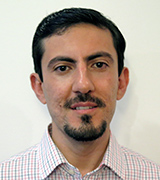
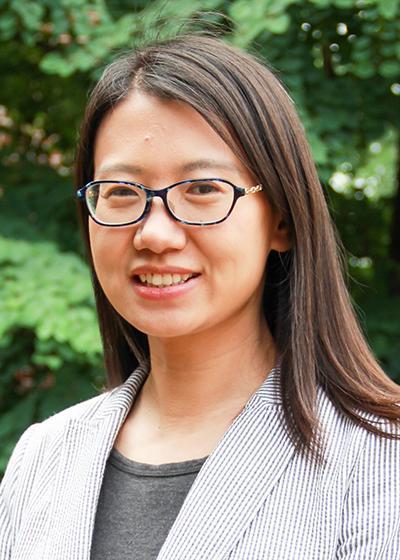
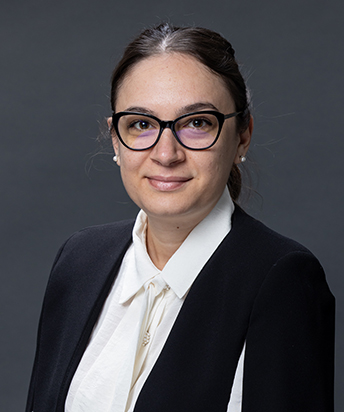
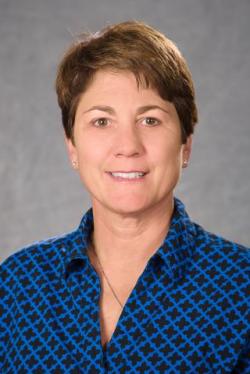
Prof. Gülgün Fatma ŞENGÖR is a leading academic at Istanbul University's Faculty of Aquatic Sciences , Department of Fisheries and Seafood Processing Technology. With a career spanning over three decades, she has held academic positions from Assistant Professor (1998) to her current Professor status (2021). Her research focuses on seafood safety, nanotechnology applications in food preservation, and sensory/chemical quality assessment . Doctorate (1995): Ege University, Fishery Processing Technology Postgraduate (1991): Ege University, Fishery Processing Technology Undergraduate (1987): Ege University, Fishery Processing Technology Her work explores nanofiber coatings, sous-vide cooking, and time-temperature indicators to enhance seafood shelf life and safety. She has published extensively in Journal of Food Safety , LWT-Food Science and Technology , and Turkish Journal of Fisheries . Awards include Elsevier Review Certificates and TÜBİTAK's Başarılı Araştırmacı Ödülü (2012). She supervises doctoral theses and consults on national/international research projects. Scientific Contributions: 16+ funded projects (2008-2025) Key role in EU Hygiene Standards implementation Editorial roles in journals like Acta Aquatica Turcica
Michèle Prévost is a tenured Professor at Polytechnique Montréal's Department of Civil, Geological and Mining Engineering. She holds the NSERC Industrial Chair on Drinking Water (CIEP) and founded the CREDEAU water technology platform. With over 25 years of experience in drinking water R&D, her expertise covers source protection, water treatment (disinfection, biological processes, contaminant oxidation), and distribution network issues like bio-stability and Legionella control. 2024 - King Charles III Coronation Medal 2021 - Fellow of the Canadian Academy of Engineering 2017 - Acfas Michel-Jurdant Prize 2016 - A.P. Black Award from AWWA Her research focuses on: Drinking water contamination risks Emerging pollutants (toxins, pharmaceuticals) Legionella and Pseudomonas aeruginosa in plumbing Climate change impact on water supply Advanced monitoring systems for water quality Lead pipe removal strategies The 15 most recent publications (2024-2025) analyze: Legionella transmission mechanisms, real-time water monitoring tools, lead mitigation, chlorine management, cooling tower safety, and emerging contaminant oxidation. Trends show strong emphasis on microbial risk modeling, climate resilience, and hospital water system optimization. Students she has supervised include 30 PhD and 48 master's graduates, with recent work on Legionella airborne transmission, cyanobacteria monitoring, and waterborne pathogen dynamics. Media mentions since 2015 highlight her warnings about lax water regulations and lead contamination in Quebec schools.
Ahmad Shakibaeinia is a Full Professor at the Department of Civil, Geological and Mining Engineering in Polytechnique Montréal , holding the Tier 2 Canada Research Chair in Digital Hydrosystems . He serves as a researcher in the Experimental and Digital Water Flow Engineering Group (GENIE EAU) and is affiliated with the Interuniversity Study Center for Structures under Extreme Loads (CEISCE) . Research Domains : Computational fluid mechanics, multiphase flows, granular flow dynamics, cold-region hydraulics, fluvial mechanics Methodologies : Specializing in mesh-free particle methods (SPH, MPS) for simulating complex hydro-environmental flows His work focuses on multi-physics hydro-environmental flows involving water-air-sediment-ice interactions, with applications in flood risk assessment , tailings dam breach modeling , and cold-region river dynamics . Recent publications demonstrate expertise in floating breakwater systems , microbial risk assessment , and ice-structure interaction simulations . Key scientific contributions include: Developing enhanced weakly-compressible MPS/SPH methods for free-surface and granular flows Pioneering fully Lagrangian DEM-MPS models for ice-wave dynamics Creating integrated numerical frameworks for cold-region water quality assessment He has supervised 12 graduate students (3 PhD, 9 Master's) and secured multiple NSERC Alliance Grants for projects on climate change impacts and critical infrastructure vulnerability . His 74 publications span topics from sediment transport to particle method development , with significant contributions to oil sands tailings dam failure and transboundary river pollution understanding.
Meng Wang is an Associate Professor in Environmental Systems Engineering at the John and Willie Leone Family Department of Energy and Mineral Engineering within Penn State University's College of Earth and Mineral Sciences. Her research focuses on integrating environmental biotechnology with physical-chemical processes for pollution control, resource recovery, and sustainability. PhD, University of Massachusetts Amherst - Civil Engineering (2013) MS, Xi'an Jiaotong University - Environmental Engineering (2008) BS, Zhengzhou University - Environmental Engineering (2005) Her research explores hybrid systems combining ion exchange with biological processes for wastewater treatment, algae-based nutrient management, and bioremediation strategies. Current projects include modeling nitrogen removal in photo-bioreactors and optimizing resource recovery through algal biomass utilization. Key trends in her recent publications (2012-2018) emphasize wastewater valorization through microbial synergy, energy recovery from algal biomass, and mathematical modeling of treatment systems. She actively investigates food-energy-water nexus solutions for sustainable resource management. She contributes to academic governance as a member of the Diversity Council and leads the Water-Environment-Sustainability Lab, which develops innovative technologies for contaminant removal and resource recovery in water systems.
Professor Ruiting Lan is a Professor of Medical Microbiology at the School of Biotechnology and Biomolecular Sciences, UNSW Sydney. He teaches medical microbiology to science and medical students. His research focuses on pathogen evolution, genomic epidemiology, and host-pathogen interactions, particularly concerning gastrointestinal and respiratory bacterial pathogens. Education: Undergraduate degree in China PhD (1992) and postdoctoral training at the University of Sydney Research interests span bacterial pathogenesis, genomic adaptation in response to vaccines/antibiotics, and developing molecular typing tools like Multilevel Genome Typing (MGT). His lab studies Bordetella pertussis , Salmonella , Shigella , and Escherichia coli , emphasizing real-time outbreak surveillance and pathogenomics. His publications predominantly explore genomic epidemiology, microbial evolution, and host-microbe interactions. Recent work highlights trends in antimicrobial resistance, probiotic therapeutics for metabolic disorders, and high-resolution pathogen tracking using whole-genome sequencing and AI-driven outbreak detection tools. Awards and Honors: Fellow of Australian Society for Microbiology Guest Professor, Chinese Centre for Disease Control and Prevention He leads a research team developing the MGTdb platform for global pathogen surveillance and collaborates internationally on cholera, pertussis, and enteric pathogen genomics. His lab focuses on translating genomic insights into public health interventions.
Dr. Lavinia Iancu is an Assistant Professor and Director of the Forensic Science Program at the University of North Dakota's College of Arts & Sciences. Specializing in forensic entomology and microbiology, her research focuses on identifying novel biomarkers for postmortem interval (PMI) estimation through the study of necrophagous insects and bacterial dynamics in extreme climates. Education : B.Sc. in Biology (University of Bucharest); two master's degrees (European Master of Forensic Sciences, Medical Biology); Ph.D. in Biology (Romanian Academy, Institute of Biology Bucharest) Her work spans decomposition ecology in cold and warm seasons, forensic microbiome analysis, and insect colonization patterns on remains. Key publications highlight microbial dynamics in Lucilia sericata , buried remains studies, and temperature-dependent forensic models. Scientific awards include: Fulbright Senior Award AAFS Outstanding Early Career Achievement Award Romanian Academy 'Grigore Antipa' Award Itterman Faculty Professional Development Award Dr. Iancu teaches courses such as Forensic Entomology (FS 499), Forensic Microbiology (FS 490), and Courtroom Proceedings for Forensic Scientists (FS 498), while leading international collaborations in decomposition research.
Professor Milutin Đorđević is a Full Professor at the Department of Zoohygiene, University of Belgrade. His career focuses on veterinary hygiene, environmental protection, and animal health management. Teaching subjects: Organic waste and environmental protection, Bioclimatology, Biosecurity, and Preventive Veterinary Medicine Research spans parasitology, toxicology, and zoonotic disease prevention His recent publications highlight trends in veterinary hygiene and environmental health, including: Chemical control of mosquito vectors (2022) Sanitation practices in meat production (2018) Sustainable animal nutrition alternatives (2015) Parasitic infections in livestock (2013-2012) While no specific awards or grants are mentioned, his work demonstrates expertise in: Bioclimatology Food safety Animal welfare Public health veterinary science
Snežana Bulajić is a Professor at the Department of Hygiene and Technology of Food of Animal Origin, Faculty of Veterinary Medicine, University of Belgrade. Her research focuses on food safety, dairy microbiology, and antimicrobial resistance in traditional dairy products. She teaches courses including Methods of Food Examination , Hygiene and Technology of Milk , and Integrated Food Safety Systems . Her work emphasizes the microbiological safety of Serbian artisanal cheeses, antimicrobial resistance in dairy-associated bacteria (e.g., Lactobacilli , Staphylococci , Enterococcus ), and biopreservation techniques. She employs advanced methods like MALDI-TOF mass spectrometry for microbial identification. Publications (2003–2022) predominantly explore: Antibiotic resistance phenotypes in dairy bacteria Enterotoxin risks in raw-milk cheeses Sensory and safety evaluation of traditional Serbian cheeses (e.g., Sjenica, Sombor)
Melissa Morgan serves as an Associate Professor in the Department of Animal and Food Sciences within the Martin-Gatton College of Agriculture, Food and Environment at the University of Kentucky. Her work spans extension, instruction, and research activities focused on food safety and microbiology. Based in the W.P. Garrigus Building in Lexington, Kentucky, she contributes significantly to the academic and research missions of the university. Dr. Morgan earned her Ph.D. and M.S. from the University of Kentucky in 1990 and 1987 respectively, following her B.S. and A.S. from Thomas More College in 1984. Her educational background provided the foundation for her career in food microbiology and safety. Her research interests focus primarily on food safety, with specific expertise in evaluating microbial safety of food products related to thermal processing and storage conditions. She develops production, processing and handling strategies for minimizing pathogenic microbial contamination, investigates foodborne pathogens during animal production, studies antibiotic resistant bacteria in livestock, and examines naturally occurring volatile compounds to control pathogenic bacteria on fruit. Her work bridges fundamental microbiology with practical food safety applications. Analysis of her publication record reveals consistent expertise in food microbiology, particularly in pathogen control in various food matrices. Her research shows progression from fundamental studies of bacterial growth and antibiotic resistance to applied research on antimicrobial compounds and food preservation techniques. Recent work demonstrates increasing focus on natural antimicrobial compounds and edible coatings for food safety applications, reflecting industry trends toward natural preservation methods. Dr. Morgan teaches several key courses including FSC 530 Food Microbiology, FSC 540 Plant Sanitation, and FSC 632 Foodborne Disease Agents. These courses form the foundation for students pursuing careers in food safety and microbiology.
Professor Joby Boxall FREng is Chair of Water Infrastructure Engineering at the University of Sheffield ’s School of Mechanical, Aerospace and Civil Engineering. His research protects public health by ensuring the quantity and quality of global drinking water supply through interdisciplinary approaches combining hydraulic engineering, applied microbiology, and AI. Core Expertise: Hydraulic modeling, water distribution network analysis, biofilm ecology, contaminant ingress, and fatigue mechanics of ageing infrastructure. Notable Achievements: Leader of the EPSRC Water Grand Challenges consortium, pioneer of discolouration prediction research with real-world impact, and innovator in self-teach open-channel flow laboratory classes. Research Trends show increasing focus on digital water systems, climate change adaptation, and AI-driven leak detection. His work spans fundamental fluid dynamics to practical solutions for multi-million-pound efficiency savings in water utilities. Scientific Awards: Fellow of the Royal Academy of Engineering Fellow of the Chartered Institution of Water and Environmental Management Teaching & Leadership includes roles as Head of Department (2017-2021) and Director of Research (2009-2014). His full description below details over 20 years of publications, grants, and collaborative projects.
Dr. Swaid Abdullah is a Senior Lecturer in Veterinary Parasitology at the School of Veterinary Science, Faculty of Science, University of Queensland. He holds a PhD from the University of Bristol, along with a Master's and Bachelor's in Veterinary Science from Indian institutions. His research focuses on vector-borne diseases (VBDs), zoonotic parasites, and drug resistance mechanisms in veterinary pathogens. Current projects include climate-based predictive modeling for Haemonchus contortus in sheep, benzimidazole resistance in canine hookworms, and zoonotic parasite distribution in Southeast Queensland. Research themes integrate climate change impact on vector ecology, sustainable parasite control strategies, and public health risks from pet-associated zoonoses. Recent publications (2025–2021) address anthelmintic resistance, myxozoan parasites in wildlife, and flea/tick epidemiology. Grants include NHMRC IDEAS Grant (2021–2026) for spectroscopy-based disease surveillance and industry partnerships with Virbac Australia. He supervises multiple PhD students on topics spanning tick paralysis in bats, equine hypersensitivity, and canine drug resistance. Collaborations span Australia, UK, India, and Saudi Arabia, with expertise in molecular epidemiology and geospatial modeling.
Lucas Goehring is a Professor in the Physics and Maths department at Nottingham Trent University (NTU), where he leads an experimental research group studying pattern formation and complex fluids. His work spans fundamental physics of mechanical instabilities to interdisciplinary applications in geophysics and biophysics. He teaches condensed matter physics, forensic image processing, and first-year physics labs, with prior teaching experience in environmental physics, non-linear dynamics, and soft matter physics. Goehring's educational background includes a PhD from the University of Toronto on columnar joints (e.g., Giant's Causeway), followed by postdoctoral research at the University of Cambridge studying colloidal drying and cracking. He later habilitated while teaching at the University of Göttingen during his tenure as a research group leader at the Max Planck Institute for Dynamics and Self-Organisation. His research centers on complex fluids and solids – multi-phase materials where microscopic structure determines macroscopic properties. Key themes include: Mechanical instabilities (fractures, wrinkling, buckling) Geophysical pattern formation (salt polygons, columnar joints, mud cracks) Colloidal dispersion dynamics (drying paint, biogenic systems) Cross-scale physics connecting nano/micro to macro behavior This work addresses fundamental questions about structural emergence in nature, applying solid mechanics and complex systems theory to diverse phenomena from reptile scales to Martian permafrost. Analysis of his 15 most recent publications reveals dominant trends in porous media convection (salt lakes, dry soils), biophysical pattern formation (cyanobacteria mats), and colloidal drying mechanics . These span interdisciplinary fields including geophysics, soft matter physics, and active matter, with consistent focus on experimental validation through microfluidics and advanced imaging techniques. Goehring actively supervises PhD students including P.S. Atkinson (2024) and M. Emerse (2023), with research opportunities available in MPhil/PhD programs at NTU. His major international collaborations include Bernard Cabane (ESPCI ParisTech), Ran Holtzman (Hebrew University), Eleni Katifori (University of Pennsylvania), and Max Planck Institute researchers in biophysics. He maintains an affiliated position at the Max Planck Institute for Dynamics and Self-Organisation and serves on the editorial board of Proceedings of the Royal Society A , while leading an experimental lab focused on pattern formation in complex materials.
Lakshmi Rajagopal serves as an Adjunct Professor of Microbiology and Professor of Pediatrics and Global Health at the University of Washington School of Medicine. She is affiliated with Seattle Children's Hospital where her office is located at 1900 Ninth Ave, Seattle, WA 98101. Her research bridges microbiology, infectious diseases, and maternal-fetal medicine with a particular focus on Group B Streptococcus and viral infections during pregnancy. Dr. Rajagopal's research interests center on microbial pathogenesis, particularly Group B Streptococcus infections in pregnancy and neonatal contexts, congenital viral infections including Zika virus, and the neurodevelopmental consequences of maternal infections. Her work spans basic microbiology, immunology, and translational studies using nonhuman primate models to investigate how infections during pregnancy affect fetal brain development. Analysis of her recent publications reveals a strong focus on understanding the mechanisms of bacterial and viral pathogenesis during pregnancy, with particular attention to Group B Streptococcus and Zika virus. Her research bridges basic science with clinical implications, examining how these infections impact fetal development, placental function, and neonatal outcomes. She frequently employs nonhuman primate models in her research, which provides valuable translational insights. Dr. Rajagopal has published extensively in high-impact journals including Nature Communications, Acta Neuropathologica Communications, and mBio. Her collaborative approach is evident in her numerous multi-investigator studies, particularly with the Adams Waldorf research group at Seattle Children's. Her work has significant implications for understanding and preventing infectious complications of pregnancy, with potential applications for improving maternal and child health outcomes globally. She appears to be an active researcher with publications spanning from 2021 through 2025, demonstrating ongoing contributions to her field.
Mats Åström is a Professor of Environmental Geochemistry at the Faculty of Health and Life Sciences, Linnaeus University . His research focuses on geochemical processes in the Boreal Zone , particularly acid sulfate soils and estuarine/marine sediment chemistry, alongside secondary minerals and groundwater in bedrock fractures. He leads the Environmental Geochemistry Research Group and collaborates with the Linnaeus University Centre for Ecology and Evolution in Microbial model Systems (EEMiS) . Funded by Formas , The Swedish Research Council , Swedish Environmental Protection Agency , Swedish Nuclear Fuel and Waste Management Co , and the EU Botnia-Atlantica program Expert in KLIVA and STASIS projects under EU Interreg Botnia-Atlantica Research spans metal contamination (iron, aluminum, uranium, rare earth elements) in water resources, acid sulfate soil characterization , and biogeochemical cycling in deep terrestrial biosphere fracture systems. Key projects include Massiw (metal accumulation in the Baltic Sea), MinImpact (sulfidic soil stabilization), and studies on technology-critical elements (TCE) in soil-crop systems. His work integrates field studies, laboratory experiments, and geochemical modeling to address environmental risks from soil acidification and metal leaching. Recent publications (2023-2025) examine uranium redox cycling, manganese transport in estuaries, microbial community responses to temperature, and remediation strategies for acid sulfate soils. Collaborative studies with the Aspo Hard Rock Laboratory investigate rare earth element fractionation in deep fractures.
Manpreet Singh is the Department Head and Professor in the Department of Food Science & Technology at the University of Georgia's College of Agricultural & Environmental Sciences. His research focuses on foodborne pathogen dynamics, microbial safety in food processing, and antimicrobial resistance. Ph.D., Iowa State University M.S., Kansas State University B.S., Punjab Agricultural University Research Interests: Foodborne pathogen persistence and transmission in processing environments Development of microbial safety intervention strategies Validation of pathogen detection methods under varying conditions Antimicrobial resistance mechanisms in foodborne bacteria Publication Trends: Recent work emphasizes Campylobacter and Salmonella reduction in poultry and meat products, antimicrobial efficacy, biofilm behavior, and innovative detection technologies.