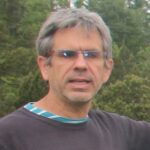
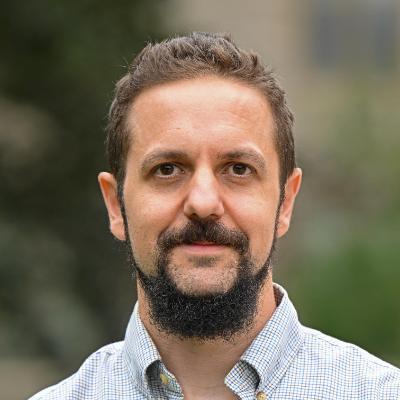
Philippe Binet is a Professor at the University of Franche-Comté affiliated with the Chrono-environment laboratory (UMR 6249). His research focuses on plant-microorganism associations, mycorrhizal symbioses, and their responses to anthropogenic disturbances including pollution and climate change. Research axes: contaminant fate in ecosystems Climate change impacts on peatlands/forests Key sites: SNO Tourbières (Frasne), Living Lab Phytomanagement (Vieux-Charmont), Franche-Comté forests His work combines interdisciplinary approaches with emphasis on environmental monitoring systems and carbon flux analysis in temperate peatlands. Current projects include ECOPOLIS for industrial wasteland rehabilitation using phytomanagement strategies. Scientific contributions demonstrate expertise in: Atmospheric pollutant translocation Plant-microbe-metal interactions Climate change simulation experiments Peatland hydrology and biogeochemistry Microbial community dynamics
Marcin Sidoruk is a researcher at the Department of Water Management and Climatology , Faculty of Agriculture and Forestry , University of Warmia and Mazury in Olsztyn . He holds a PhD and DSc in Engineering, focusing on environmental engineering, agricultural sciences, and water quality assessment. Research Interests : Impact of catchment areas on inland water quality Heavy metal accumulation in river and reservoir sediments Water management technologies in aquaculture systems Pollution risk assessment for aquatic ecosystems Ecohydrological interactions in river-lake systems Scientific Contributions : His research spans 2004–2025, with 17 WoS/Scopus publications (H-index: 5) and 201 Google Scholar citations. Recent work includes natural wastewater treatment systems, heavy metal bioaccumulation in Phragmites australis, and hydrological impacts on Baltic coastal lakes. Articles highlight interdisciplinary approaches combining geochemistry, ecotoxicology, and aquaculture engineering. Supervision & Grants : Willing to supervise doctoral students; research is supported by institutional funds and infrastructure. No specific awards mentioned, but his work addresses critical environmental challenges in agricultural and aquaculture contexts.
Andrei Tsurykau is a Professor at the Department of Biology, Francisk Skorina Gomel State University in Gomel, Belarus. His research spans lichenology, mycology, biodiversity, and chemotaxonomy, with a focus on taxonomic revisions, fungal ecology, and conservation biology in Eastern Europe. He earned his PhD from the same institution (2005–2009) and maintains an active research profile. His work emphasizes the taxonomy and distribution of lichen genera such as Usnea , Sarcogyne , and Parmelia , utilizing morphological, chemical, and molecular approaches. Primary research interests include: Lichen and fungal diversity in Belarus and Northern Eurasia Chemotaxonomy of secondary metabolites Conservation strategies for cryptogamic species Lichens as bioindicators in forest ecosystems Tsurykau's recent publications (2020–2025) reflect a strong focus on taxonomic revisions, regional biodiversity surveys, and contributions to global fungal classification systems. His articles frequently address species discovery in understudied regions like Belarus, Kamchatka, and the Baltic, integrating field ecology with laboratory analysis. He actively collaborates with international mycological consortia and contributes to foundational resources like the Outline of Fungi . No awards, students, or contact details are documented in the source material.
Timothy Becker serves as the John D. MacArthur Assistant Professor of Computer Science at Connecticut College, where he joined in 2023. His research focuses on transforming complex datasets into functional instruments through advanced computational techniques. His academic background includes: B.M. in Music Production from The Hartt School of Music B.S. in Computer Science from the University of Hartford Ph.D. in Computer Science and Engineering from the University of Connecticut Becker specializes in genomics applications but maintains active interdisciplinary collaborations in ecology and transportation. His core methodology integrates deep learning, generative modeling, and data visualization to develop open-source software tools. He emphasizes practical implementations for real-world data analysis and creates interactive tutorials to foster persistent student learning. His publication record from 2018-2025 reveals consistent contributions to bioinformatics and environmental data science, particularly in structural variation analysis and river connectivity modeling. Key trends include developing neural network frameworks for genomic data integration and creating visualization methods for multi-omic datasets. Becker actively seeks undergraduate research collaborators, encouraging students with domain-specific data or research questions to initiate projects. His interdisciplinary approach connects computer science with life sciences and environmental studies through numerous cross-institutional partnerships.
Tatjana Mijošek Pavin is a Postdoctoral Fellow at the Laboratory for the biological effects of metals within the Institute for Marine and Environmental Research at Rudjer Boskovic Institute in Zagreb, Croatia. She holds a PhD in Biological responses in indicator organisms to wastewater exposure in Dinaric and Pannonian rivers from the Faculty of Science, Zagreb (2021), and a Master's degree in Morphological and genetic diversity of populations of the invasive crayfish Pacifastacus leniusculus from the same institution (2015). Her educational background includes doctoral research at the University of Zagreb focusing on biomarker responses in aquatic organisms exposed to wastewater in Croatian river systems. Her Master's thesis examined genetic diversity of invasive crayfish populations, establishing her early interest in aquatic ecology and anthropogenic impacts on freshwater systems. Dr. Mijošek Pavin's research program centers on environmental toxicology with emphasis on metal bioaccumulation in aquatic food webs. She investigates how wastewater discharges affect metal(loid) distribution in karst river ecosystems, particularly the Krka River in Croatia. Her innovative work explores acanthocephalan parasites as sensitive bioindicators of environmental pollution, examining molecular mechanisms through transcriptomics and advanced imaging techniques. She has developed expertise in electrochemical determination of metallothioneins, metal distribution in fish calcified structures, and multi-biomarker approaches to assess ecological risks. Analysis of her publication record reveals a sophisticated evolution from basic ecotoxicology to integrated molecular approaches. Her recent work combines traditional biomonitoring with cutting-edge techniques like NanoSIMS imaging and CiteSpace literature analysis. A consistent theme is the examination of parasite-host systems as environmental sentinels, with particular attention to spatial and temporal patterns of pollution in karst hydrological systems. While specific awards are not documented in the available information, her extensive publication record in high-impact journals including Scientific Reports, Environmental Pollution, and Science of the Total Environment indicates significant recognition within the environmental toxicology community. Dr. Mijošek Pavin actively participates in collaborative research networks, frequently co-authoring with Vlatka Filipović Marijić, Zrinka Dragun, and Sara Šariri. Her work appears to be supported by institutional research programs at Rudjer Boskovic Institute focused on environmental monitoring and pollution assessment in Croatian aquatic ecosystems. Within the Laboratory for the biological effects of metals, she contributes to multidisciplinary teams investigating metal speciation, bioavailability, and toxic effects in freshwater systems. Her research integrates field studies in contaminated river sites with laboratory analyses of biomarkers, metal distribution, and molecular responses across multiple trophic levels.