Dr. G.K. Knopf is a Professor in the Department of Mechanical & Materials Engineering at Western University, Canada. He holds a Ph.D. (1991), M.Sc. (1987), and B.E. (1984) from the University of Saskatchewan. His work bridges product design, advanced manufacturing, and bio-inspired technologies. Research Focus: Dr. Knopf’s research spans 3D shape reconstruction , laser microfabrication , micro-optics , and bioelectronic imaging arrays . Recent projects emphasize light-driven actuators , flexible electronics , and graphene-based inks for printing circuits on unconventional substrates like silk and paper. Publications: Over 150 peer-reviewed works, including two edited CRC Press volumes ( Smart Biosensor Technology , Optical Nano and Micro Actuator Technology ). Key contributions involve non-lithographic fabrication , bacteriorhodopsin photodetectors , and self-organizing feature maps for data visualization. Awards/Patents: Co-inventor of two U.S. patents (6,542,249 for 3D surface measurement; 7,573,024 for bioelectronic imaging arrays). Teaching: Leads graduate courses in Medical Device Design and Optomechatronic Systems , as well as undergraduate Mechatronics and Medical Device Development courses.
Michael P. Bradley is a Professor in the Department of Physics and Engineering Physics at the University of Saskatchewan, affiliated with the College of Arts and Science. He holds a Ph.D. from MIT and is a Professional Engineer (P.Eng.). His research focuses on precision measurement techniques, plasma-based nanofabrication, and quantum metrology, including work on diamond NV-centre magnetometers and superconducting watt balance systems. He leads the University of Saskatchewan Plasma Physics Laboratory (U of S PPL) and has received a Canada-UK Joint Quantum Technology grant for quantum sensor development. Education BSc (Honours) in Applied Physics, University of New Brunswick Ph.D. in Physics, Massachusetts Institute of Technology (MIT) Research Interests Bradley specializes in quantum magnetometry , plasma processing , semiconductor nanostructures , and precision electromagnetic measurements . His lab develops novel techniques for materials characterization and fabrication, including plasma immersion ion implantation (PIII) for micro- and nano-scale engineering, graphene doping, and silicon photonics. Recent work includes advancements in diamond NV-centre magnetometry for quantum technologies. Grants & Collaborations Recipient of a prestigious Canada-UK Joint Quantum Technology grant (2023). Collaborated internationally, including at the Bureau International des Poids et Mesures (BIPM) in France, where he contributed to superconducting watt balance prototypes for redefining mass standards. Teaching Teaches courses in optics, thermodynamics, and planetary astronomy, including EP421: Optical Systems & Materials and ASTR104: Planetary Astronomy .
Dr. Jayshri Sabarinathan is an Associate Professor in the Department of Electrical and Computer Engineering at Western University's Faculty of Engineering, and a Faculty Member with the Institute for Earth and Space Exploration. She joined Western University in Fall 2003, received the NSERC University Faculty Award in 2004, and was promoted to Associate Professor in 2010. She previously served as Associate Director of Training (2019-2022) with the Institute for Earth and Space Exploration. Education: Ph.D. in Electrical Engineering, University of Michigan, Ann Arbor (2003) M.S.E. in Electrical Engineering, University of Michigan, Ann Arbor (1999) B.S.E. in Electrical Engineering and Engineering Physics, University of Michigan, Ann Arbor (1997) Her research focuses on developing novel nano-photonic sensors and miniature remote sensing instrumentation, with expertise spanning photonic crystals, plasmonic sensors, and CubeSat technology. Her work integrates nanofabrication techniques with practical applications in precision agriculture, geology, and space exploration. She has extensive experience with nanofabrication facilities including the University of Michigan Solid State Electronics Laboratory and Western's nanofabrication facility. Analysis of her 15 most recent publications reveals strong emphasis on plasmonic sensing technologies, photonic crystal applications, and nanoscale optical phenomena. Her research consistently bridges fundamental photonics with practical sensor development, particularly for environmental monitoring and space applications. The publications demonstrate progression from basic photonic crystal research to applied space instrumentation. Scientific Awards: NSERC University Faculty Award (2004) US Patent 8839683 for Photonic Crystal Pressure Sensors (2014) OSA (Optica) Senior Member Co-founder of LightSail Ltd space startup Dr. Sabarinathan actively mentors graduate students through her Nanophotonic Sensors Engineering (NPSE) and Remote Sensing Instrumentation (RSI) research groups. She has secured significant funding including Canadian Space Agency projects, notably as PI for the Western University-Nunavut Arctic College CubeSat Project Ukpik-1. Her research has resulted in three patents for micro photonic-sensors and multi-spectral camera innovations. Her labs focus on two primary research thrusts: the NPSE group developing hybrid photonics micro/nano-sensors including IR/THz plasmonic sensors and bio-photonic sensors, and the RSI group creating multispectral camera imagers for UAV/mobile robots with XRD instrumentation miniaturization for Mars rovers.
Huiyan Li, PhD, P.Eng., is an Associate Professor in the Department of Biomedical Engineering at the University of Guelph. Her research focuses on developing micro/nanoscale biosensors and lab-on-a-chip technologies for cancer diagnostics and personalized medicine. Dr. Li holds a Ph.D. in Biomedical Engineering from McGill University and completed postdoctoral training at Harvard Medical School/Massachusetts General Hospital. Her multidisciplinary research integrates biosensing, micro/nanofabrication, bio-optics/electronics, and computational tools to study cancer molecular complexity. Current openings exist for M.A.Sc. students interested in biosensing research. Key research areas include extracellular vesicle analysis, multiplexed immunoassays, magnetic/nanoparticle-enhanced bioassays, and graphene-based biomedical sensors. Recent work emphasizes point-of-care diagnostics and enhanced protein detection via novel material integration. Teaching responsibilities include ENGG 6301 (Advanced Micro/Nano Biotechnology) and undergraduate courses in bio-instrumentation and biomedical signal processing. Her work spans biomaterials classification, microfluidic systems, and antimicrobial nanocomposite development. Research outputs emphasize scalable microarray formats, EV-based biomarker discovery, and sensor sensitivity enhancement through nanomaterial innovations. Current projects address EV concentration measurement, 3D antibody microarrays, and magnetic-responsive hydrogel discs for bioassay improvements.
Dr. Scott Chen is an Assistant Professor in the Department of Electrical & Computer Engineering at McMaster University, where he focuses on teaching and research in embedded systems, RF technologies, and biomedical sensors. He previously held roles as a lecturer at the University of Waterloo and program coordinator at Conestoga College, alongside industry experience in embedded systems engineering and sensor development. Education: B.A.Sc. (Simon Fraser University, 2007) and Ph.D. (University of Waterloo, 2015), followed by a MITAC postdoctoral fellowship. His industry experience includes roles at Thalmic Labs/North, Sober Steering Sensors, and Equustek Solutions. Research interests span embedded systems for IoT, RF biomedical sensors, cleanroom micro/nano-fabrication, and game design in Unity. Notable achievements include a 2018 US patent for ethanol sensing technologies and a 2021 teaching award nomination. Current courses taught include Principles of Programming (COMPENG 2SH4), Data Structures and Algorithms (COMPENG 2SI3), and Introduction to Electrical Engineering (ELECENG 2CI4). Awards: US Patent 9,958,444B2 (2018), nominated for Aubrey Hagar Distinguished Teaching Award (2021). His work bridges academia and industry, emphasizing practical applications in wearable sensors, quantum computing components, and interdisciplinary engineering solutions.
J. Stewart Aitchison is a Professor at the University of Toronto's Department of Electrical & Computer Engineering, holding the Nortel Chair in Emerging Technology. He serves as Associate Scientific Director for the Network Centre of Excellence, IC-IMPACTS, fostering Canada-India research collaborations. Aitchison co-founded ChipCare Corporation, developing portable HIV monitoring systems, and previously directed the Emerging Communications Technology Institute. He received a BSc (1984) and PhD (1987) in Physics from Heriot-Watt University, UK, followed by a postdoctoral position at Bellcore. His research focuses on: Nonlinear optics and plasmonics for optical signal processing Micro/nano-scale photonic devices and integrated circuits Optical biosensors for healthcare applications (e.g., HIV monitoring) Algal biofilm photobioreactors for sustainable energy His 250+ publications emphasize semiconductor waveguides, quantum optics, and lab-on-chip systems, with recent work advancing polarization management, entanglement generation, and point-of-care diagnostics. Awards & Fellowships: Fellow of Royal Society of Canada, Royal Society of Edinburgh, AAAS, OSA, and Institute of Physics Professional Engineering Ontario Research Medal (2016) IEEE Photonics Society Distinguished Lecturer (2016-2017) University of Toronto Inventor of the Year (2012) NSERC Synergy Award (2006) He leads the Aitchison Group, supervising over 60 PhD/Master's students in photonics and microfabrication. His team collaborates globally and utilizes the Toronto Nanofabrication Centre. ChipCare, his spin-off, secured $7M+ funding for blood-testing platforms enhancing healthcare in remote communities.
Sylvain G. Cloutier is a Professor in the Department of Electrical Engineering at École de technologie supérieure (ÉTS) in Montreal, Canada, where he holds the Canada Research Chair in Inkjet-Printed Materials and Flexible Hybrid Electronic Devices. He also serves as an Adjunct Assistant Professor in the Department of Electrical and Computer Engineering at the University of Delaware. His research focuses on developing novel nanomaterials and fabrication techniques for printed electronics applications. Cloutier earned his Ph.D. in Engineering from Brown University in 2006, followed by an M.S. in Physics and B.Eng. in Engineering Physics from Université Laval in 2003 and 2001, respectively. He previously held a faculty position at the University of Delaware before joining ÉTS in 2011. His research interests span nanotechnologies, nanomaterials, nanostructures, nanofabrication, optical micro-spectroscopy, and optoelectronic devices including light-emitting diodes and photovoltaic cells. He has pioneered work in inkjet-printed materials and flexible hybrid electronic devices, with applications in solar cells, light-emitting diodes, photodetectors, thermoelectric converters, and sensors. His research integrates photonic processing techniques with printed electronics to create next-generation optoelectronic devices. Analysis of his recent publications reveals a strong focus on printed electronics, particularly using perovskite materials for solar cells, photonic curing techniques for material processing, flexible sensors, and integration of machine learning for device optimization. His work bridges fundamental nanomaterials research with practical applications in renewable energy and sensing technologies. Scientific Awards: Outstanding Thesis Award from Brown University (2006) DARPA Young Faculty Award (2009) Cloutier has supervised over 25 graduate students across various projects related to printed electronics, nanomaterials, and optoelectronic devices. His research has been supported by numerous grants from organizations including NSERC, FRQNT, NSF, and DOE. He regularly serves as an examiner for major research funding agencies in Canada and the United States. He leads the Canada Research Chair in Inkjet-Printed Materials and Flexible Hybrid Electronic Devices, which focuses on developing low-cost hybrid optoelectronic nanomaterials that can be integrated into simple device architectures for various applications. His research team develops new fabrication and characterization tools for studying optoelectronic materials, with emphasis on controlled nano-fabrication, large-scale manufacturing at low cost, and contact-free 3D micro-spectroscopy techniques.
Kuljeet Kaur is a Professor in the Department of Electrical Engineering at École de technologie supérieure (ÉTS) in Montreal, Canada. Her research is conducted through the LACIME (Communications and Microelectronic Integration Laboratory), a renowned research unit focusing on communications and microelectronic integration. She maintains an active research program with numerous publications and student supervision activities. Professor Kaur's research spans multiple interconnected domains focused on next-generation computing and communication systems. Her primary research axes include Sensors, Networks and Connectivity; Intelligent and Autonomous Systems; and Software Systems, Multimedia and Cybersecurity. Within these broad areas, she specializes in Cloud Computing, Edge/Fog Computing, Internet of Things (IoT), Cybersecurity, Privacy, Federated Learning, and Energy Management. Her work bridges theoretical foundations with practical implementations in intelligent transportation systems, healthcare applications, and smart grid technologies. Analysis of Professor Kaur's recent publications reveals a strong focus on security and privacy challenges in emerging computing paradigms. A significant portion of her work addresses federated learning approaches that maintain data privacy while enabling collaborative AI model training. Her research also demonstrates expertise in edge computing architectures, particularly for IoT applications, with emphasis on energy efficiency and security. The publications show consistent interdisciplinary collaboration across computer science, electrical engineering, and transportation domains. Professor Kaur actively supervises multiple graduate students at various levels. Her supervision portfolio includes doctoral candidates working on topics like decentralized AI networks and secure federated learning, as well as master's students focusing on edge AI for IoT applications, sensor drift compensation, and zero trust architecture for IoT. She also guides project students working on practical implementations of AI for smart grid optimization and secure IoT protocols. Her research is conducted within the LACIME laboratory, which brings together researchers working on everything from micro- and nanofabrication processes to communication protocols and signal processing. The lab provides a transdisciplinary environment where Professor Kaur's work on cyber-physical systems and secure communications benefits from complementary expertise in integrated circuit design and microsystems.
Ghyslain Gagnon is a Professor in the Department of Electrical Engineering at École de technologie supérieure (ÉTS) in Montreal, Canada. He leads research activities within the LACIME – Communications and Microelectronic Integration Laboratory, focusing on cutting-edge developments in microelectronics, sensors, and communication systems. His work bridges theoretical research and practical applications across multiple domains including health technologies, wireless communications, and quantum engineering. Education: B.Ing. from École de technologie supérieure M.Ing. from École de technologie supérieure Ph.D. from Université de Carleton Professor Gagnon's research spans several interconnected domains with emphasis on Radiofrequency circuits and antennas, Microelectronics, Wireless communications, Sensors and monitoring systems, Machine learning applications, Health technologies, and Quantum engineering. His work demonstrates a strong commitment to translating theoretical concepts into practical solutions with real-world impact, particularly in the areas of health monitoring systems and advanced communication technologies. His recent publications reveal a clear trajectory toward increasingly interdisciplinary research, combining traditional electrical engineering with machine learning, health monitoring, and quantum technologies. The trend shows growing emphasis on practical applications in automotive safety systems, wireless communications for next-generation networks, and health monitoring technologies that leverage flexible electronics and novel sensor designs. Professor Gagnon has successfully supervised numerous graduate students through their doctoral and master's research, with recent theses focusing on smart hearing protection devices, machine learning applications, energy monitoring systems, and flexible sensor technologies. His supervision record demonstrates consistent productivity and relevance to contemporary engineering challenges. He is an active member of the LACIME research laboratory, which focuses on six key areas: Functional materials, Micro- and nanofabrication processes, Conception and design of integrated circuits, Design and fabrication of hybrid components, Photonic and electronic microsystems, and Signal processing and communication. This environment provides students with access to cutting-edge tools and fosters innovation through interdisciplinary collaboration.
Vahé Nerguizian is a full Professor in the Department of Electrical Engineering at École de technologie supérieure (ÉTS) in Montreal, Canada, where he has established himself as a leading researcher in microelectronics, MEMS, and biomedical applications. Affiliated with the LACIME (Communications and Microelectronic Integration Laboratory), his work bridges engineering disciplines with healthcare innovations, particularly in cancer research and point-of-care diagnostics. His educational background includes a B.Ing. from Polytechnique Montréal, an M.Eng. from McGill University, and a Ph.D. from Concordia University. This strong foundation in electrical engineering has enabled his interdisciplinary research across multiple domains. Nerguizian's research focuses on the intersection of microfluidics, MEMS, and biomedical applications, with particular emphasis on cancer cell detection, liposome production for drug delivery, and microelectronic integration for healthcare solutions. His laboratory develops microfluidic devices for synthesizing nanoparticles and liposomes, with applications in cancer therapeutics and diagnostics. The work combines microwave engineering, bio-MEMS, and microelectronics to create innovative diagnostic tools and therapeutic delivery systems. His recent publications (2021-2025) demonstrate a clear trajectory toward increasingly sophisticated biomedical applications of microfluidic and MEMS technologies, with growing emphasis on cancer research, extracellular vesicle analysis, and therapeutic delivery systems. The research has evolved from fundamental MEMS and microwave engineering toward highly translational biomedical applications. 2015: Excellence in Teaching Award from the Board of Directors Nerguizian has supervised over 25 graduate students across doctoral and master's programs, with current projects focusing on microfluidic systems for nanoparticle synthesis and sensor systems for biomolecule detection. His research has received significant funding through collaborations with medical researchers, particularly with Julia Burnier's team at McGill University. The LACIME laboratory, where he conducts his research, provides state-of-the-art facilities for micro- and nanofabrication, integrated circuit design, and photonic microsystems. As part of the LACIME research group, Nerguizian contributes to a dynamic environment focused on both fundamental and applied research with strong industry connections. The laboratory's work spans from materials science to communication protocols, with particular strength in developing innovative solutions for healthcare applications.
Ricardo Izquierdo is a Professor in the Department of Electrical Engineering at École de technologie supérieure (ÉTS), where he holds a prominent position as Director of the LACIME (Communications and Microelectronic Integration Laboratory). He earned his B.Ing., M.Sc.A., and Ph.D. in Physics Engineering from Polytechnique Montréal. His research spans multiple interdisciplinary fields, with a focus on printed electronics, nanomaterials, and sustainable energy systems. Department: Department of Electrical Engineering Research Laboratories: LACIME (Director), ÉDÉ Sustainable Energy Laboratory Office: A-2475 Email: ricardo.izquierdo@etsmtl.ca Professor Izquierdo's research interests center on micro- and nanosystems (MEMS/NEMS), nanotechnology, printed electronics, biosensors, organic solar cells, and embedded systems for sports equipment. His work bridges fundamental materials science with practical applications in healthcare, environmental monitoring, and sustainable energy. He has developed innovative approaches to printed flexible sensors, photonic curing techniques for solar cells, and graphene-based materials for gas sensing applications. An analysis of his 15 most recent publications reveals a strong focus on printed flexible electronics for sensing applications, advanced photonic curing techniques for perovskite solar cells, and novel materials for energy applications. His work demonstrates a consistent trend toward developing practical, manufacturable solutions that address real-world challenges in healthcare monitoring, environmental sensing, and renewable energy conversion. Professor Izquierdo has received significant recognition through his extensive publication record, with numerous articles in high-impact journals including ACS Omega, Nanomaterials, and IEEE Sensors Journal. His research has practical applications in smart packaging, wearable health monitoring, and sustainable energy systems. He actively supervises a large cohort of graduate students across multiple project types including doctoral theses, master's theses, applied projects, and industry interventions. His students work on cutting-edge topics such as printed temperature and pH sensors, perovskite solar cells, microfluidic biosensors, and graphene-based gas sensors. His research has attracted funding for projects related to printed electronics, sustainable energy systems, and biomedical applications. As Director of LACIME, Professor Izquierdo leads a research group focused on six key areas: functional materials, micro- and nanofabrication processes, integrated circuit design, hybrid components fabrication, photonic and electronic microsystems, and signal processing and communication. The laboratory serves as a hub for innovation in printed electronics and microsystem technologies.
Yves Blaquière is a Professor in the Department of Electrical Engineering at École de Technologie Supérieure. He is affiliated with the Communications and Microelectronic Integration Laboratory (LaCIME), focusing on microelectronics, integrated circuit design, and power integrity in advanced electronic systems. His research spans VLSI/ASIC design, FPGA-based reconfigurable computing, MEMS for avionics, and radiation effects on electronics. Aeronautics and Aerospace Intelligent and Autonomous Systems Microelectronics and VLSI Power Integrity Modeling MEMS Switch Design Radiation-Resilient Circuits His recent publications highlight innovations in GHz-range power integrity for SiP, FPGA-based SHEPWM inverters, and MEMS switches for avionic power systems. Collaborations with researchers like Frédéric Nabki and Nicolas Constantin reflect his focus on industrial applications and technology transfer. Professor Blaquière co-supervises PhD candidates including Hachem Bensalem, Gabriel Nobert, and Abdurrashid Hassan Shuaibu, covering topics such as heterogeneous optimization, power converter modeling, and MEMS switch development. His work contributes to wafer-scale prototyping platforms like WaferBoard and advanced tools for radiation testing in FPGAs. LaCIME, under his involvement, emphasizes equity, diversity, and inclusion, offering students opportunities to engage in cutting-edge projects from materials to communication protocols. The lab's expertise includes micro/nanofabrication, photonic microsystems, and signal processing.
Dr. Mojtaba Kahrizi is a Professor in the Department of Electrical and Computer Engineering at Concordia University, Montreal, Canada. His research focuses on Material Sciences, Solid State Devices, Microelectromechanical Systems (MEMS), and Nanotechnology with applications in biomedical sensors, energy storage, and greenhouse gas detection. He leads the Nanodevice and MEMS laboratories, overseeing interdisciplinary projects involving micro/nanostructure fabrication and sensor development. His work integrates experimental and computational methods, yielding over 200 journal/conference publications. Research Interests: - Micro/Nano Fabrication Techniques - Gas Ionization Sensors (e.g., ZnO/Si nanowires) - Photonic Sensors (Fiber Bragg Gratings, Surface Plasmon Resonance) - Energy Applications (Solar Cell Efficiency Enhancement) - Structural Health Monitoring Lab Members: Supervises 15+ graduate students (PhD/M.A.Sc.) across nanodevices, MEMS, and photonics domains Key Projects: Low-cost nanowire fabrication, FBG sensor networks, and graphene-based biosensors Expertise: SEM/TEM characterization, finite element modeling, and multiparameter sensing systems Lab Infrastructure Conducts research in two core labs: Nanodevice Lab : Nanofabrication, nanowire growth, and advanced material characterization MEMS Lab : Microstructure etching, optical sensor prototyping, and vibration analysis Publication Trends Recent works emphasize: Graphene-based biosensors for viral/bacterial detection FBG sensors for simultaneous strain/temperature/vibration monitoring Nanowire-enabled low-voltage gas sensors Perovskite solar cell interface engineering
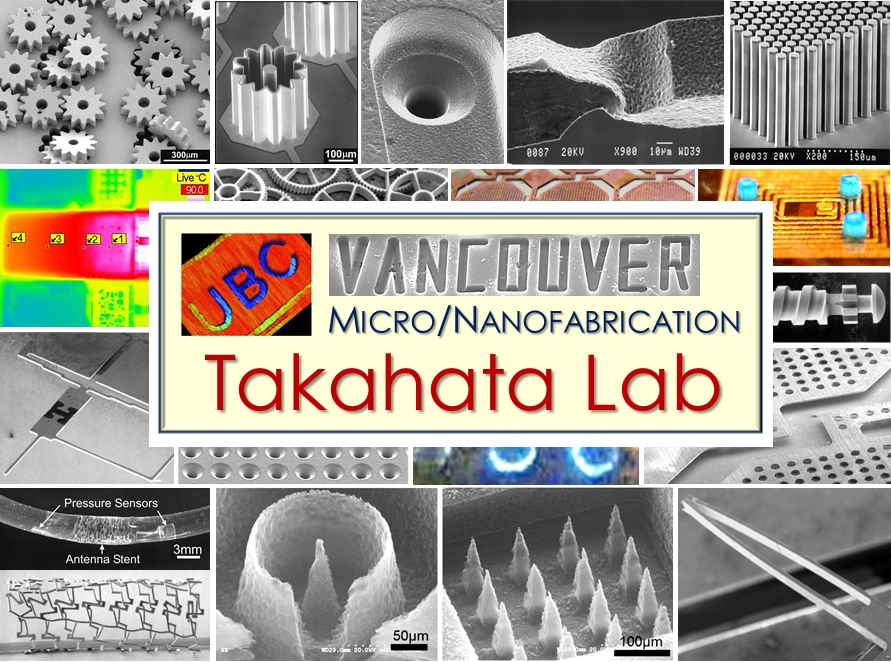
Prof. Kenichi Takahata is a Professor at the University of British Columbia's Department of Electrical & Computer Engineering, with an associate membership in the School of Biomedical Engineering. He holds a PhD from the University of Michigan (2005) and has over 25 years of experience in micro/nanofabrication and MEMS. His research focuses on developing advanced microdevices for biomedical applications, including implantable sensors, smart stents, and wireless drug delivery systems. Education: B.S. Physics (Sophia University, 1990), M.S. and Ph.D. in Electrical Engineering (University of Michigan, 2004/2005). Professional experience includes roles at Panasonic (Japan) and 3M (USA) before joining UBC in 2008. He leads the Takahata Lab, which pioneers innovations in micro/nanofabrication, medical MEMS, and energy harvesting. Research interests span microplasma control, wireless microactuators, and ferrofluid-based micromachines. Over 150 peer-reviewed publications and 10 patents highlight his contributions. His work includes developing the 'smart stent' for real-time vascular monitoring and microendoscopic imaging systems using ferrofluid actuators. Grants include a Canada Research Chair (2008–2018) and NSERC funding. Advising over 50 graduate students, he emphasizes interdisciplinary training across engineering, materials science, and biomedicine. The lab collaborates with industry and hospitals to translate technologies into clinical tools. Labs/Teams: Takahata Lab (UBC Microsystems & Nanotechnology Group), affiliated with the Canadian Institute for Advanced Research (CIFAR) and NSERC CREATE programs.
Professor Fabio Variola holds a joint academic appointment at the University of Ottawa as a Professor in the Department of Mechanical Engineering , cross-appointed in the Departments of Physics (Faculty of Science) and Cellular and Molecular Medicine (Faculty of Medicine) . He earned his BEng and MEng from the University of Trieste (Italy) and a PhD from a joint program at the Institut National de la Recherche Scientifique-Énergie, Matériaux et Télécommunications (INRS-ÉMT) and Université de Montréal . His research focuses on developing micro- and nano-structured biomaterials to control cellular responses for applications in tissue engineering , medicine , and biophysics , with an emphasis on understanding how cells interact with physicochemical environments. Research interests include biomedical engineering , biomaterials , biophysics , nanotechnology , and regenerative medicine . His work spans surface engineering of titanium implants , nanocomposite hydrogels , plasmonic carbon materials , and 3D in vitro disease models . Recent studies explore applications in neuroengineering , cardiac tissue repair , and targeted cancer therapy . Key research trends in his articles include laser-material interactions , biomaterial-cell interfaces , and nanostructured materials for medical devices . His work bridges materials science and biomedical applications , with a focus on in vitro and in vivo validation of novel materials. Professor Variola has no listed scientific awards but maintains a prolific publication record. His research group collaborates across departments at the University of Ottawa and international institutions. He advises students in interdisciplinary biomaterials and biomedical engineering, though specific advisee names are not publicly listed.