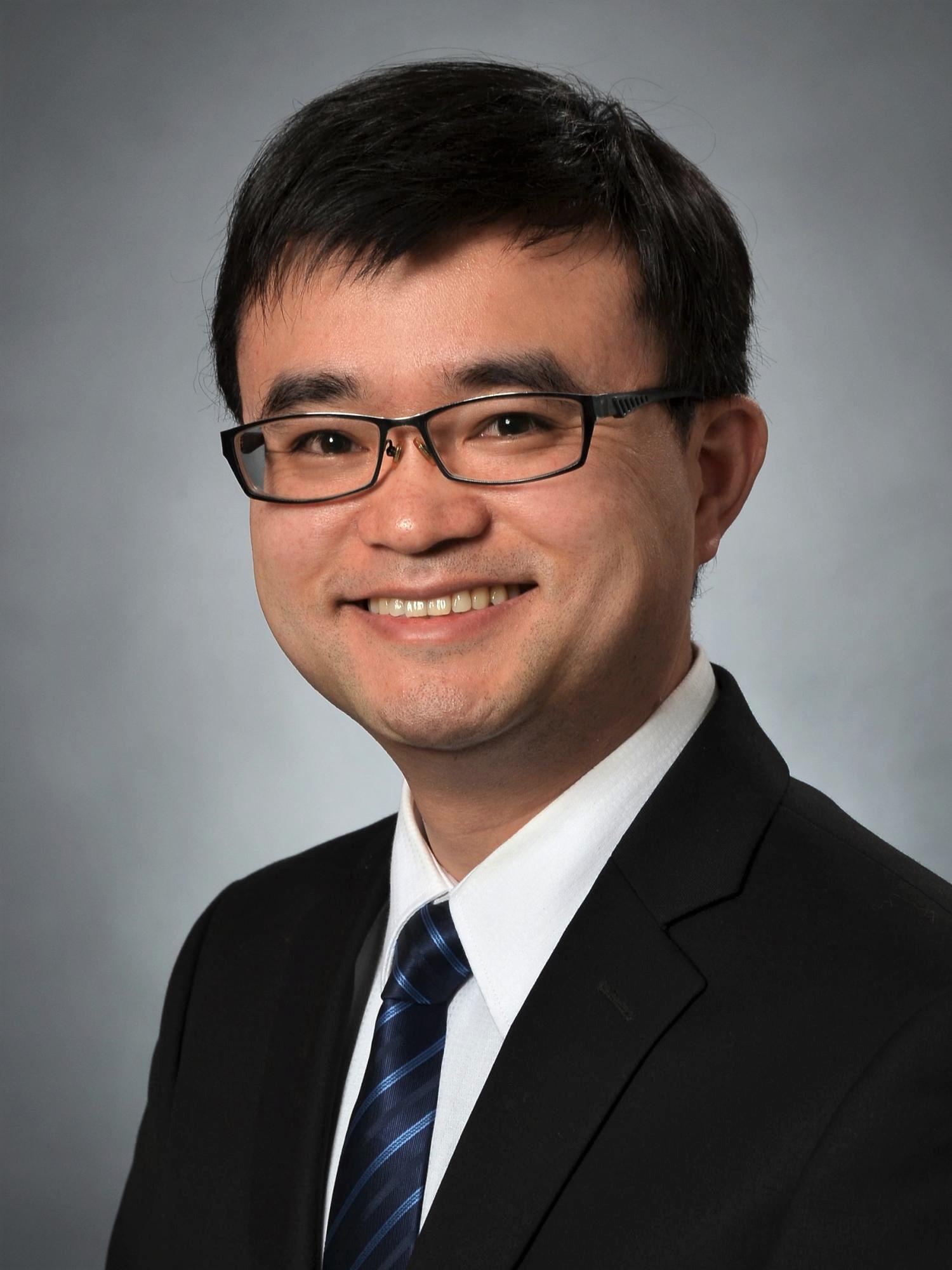
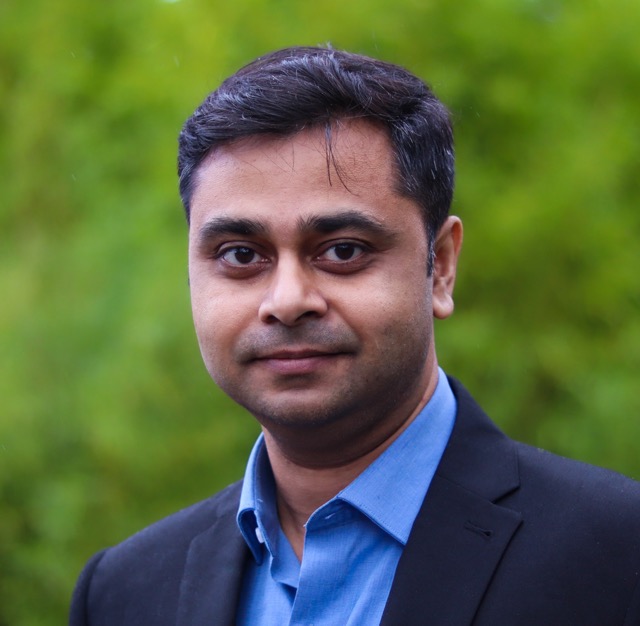
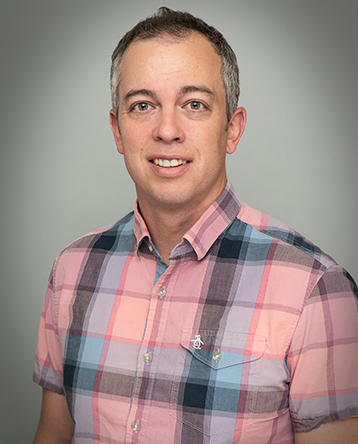
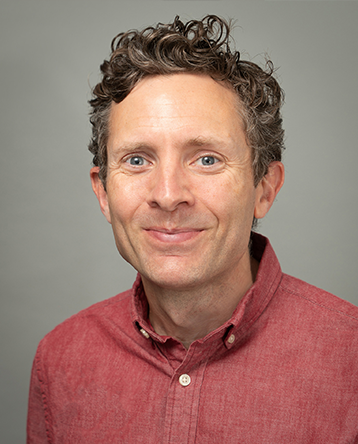
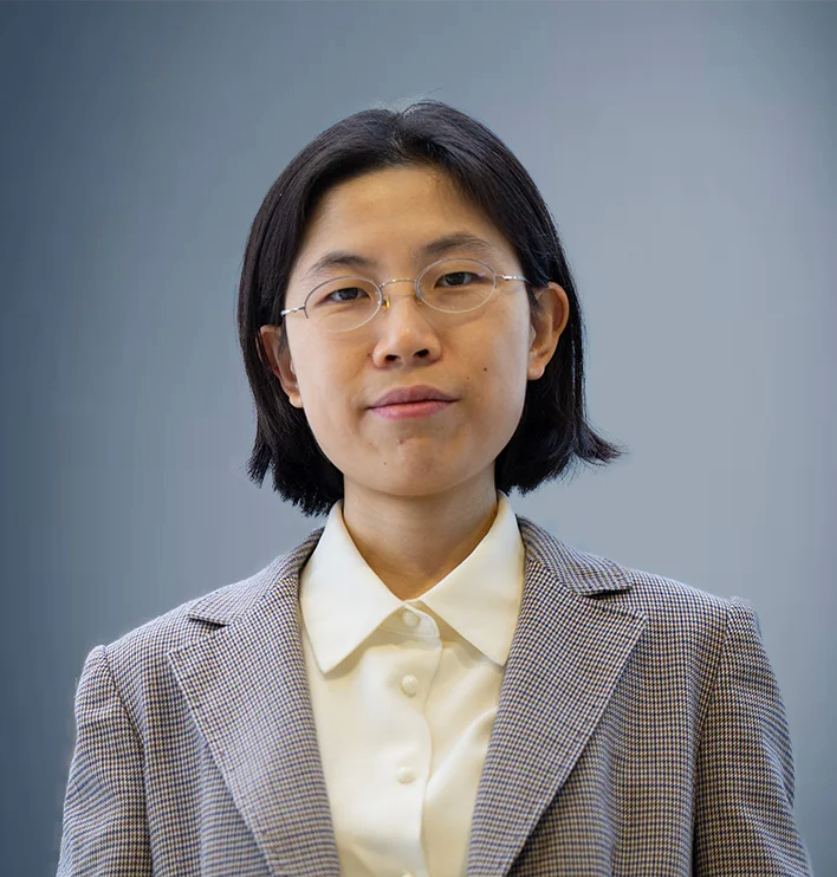
Xiaoyun 'Sean' Ding is an Associate Professor and Bruce S. Anderson Faculty Fellow at the University of Colorado, specializing in Biomedical, Micro/Nanoscale, and Thermo Fluid Sciences. Her research focuses on developing micro/nano systems for biomedical applications, including cell-based therapies and diagnostics through acoustic and microfluidic technologies. She leads a lab exploring intracellular delivery, lab-on-a-chip systems, and acoustofluidics. Research interests span biomedical microfluidics, intracellular delivery mechanisms, and precision engineering of cellular systems. Her group integrates micro/nanoengineering, acoustics, and applied physics to advance biomedical applications such as drug delivery and immunotherapy. Notable projects include acoustic-based cell separation and droplet manipulation for diagnostics. Her work has been recognized with awards like the NIH MIRA Early Stage Investigator Award (2021) and the Penn State Alumni Society Early Career Award (2022). Key publications include innovations in acoustic wave technology for biomaterials and cell membrane poration. Her lab's work aims to improve healthcare through engineering solutions for disease diagnosis and therapy.
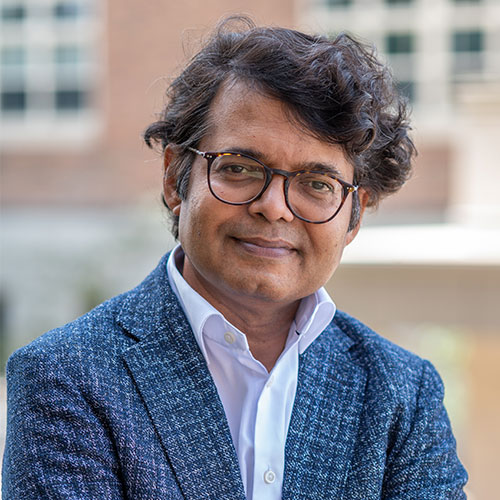
Dr. Subramanian Ramakrishnan is an Associate Professor in the Department of Mechanical and Aerospace Engineering at the University of Dayton. He holds a B.Tech. from Mahatma Gandhi University, M.Sc. from the University of Calgary, MSE from Johns Hopkins University, and a Ph.D. from Rutgers University. His research focuses on nonlinear stochastic dynamics and control, with applications in robotics, nanoelectromechanical systems, and epidemiological modeling. He has received grants from the NSF and U.S. Army Research Office, including a 2022 NSF grant for epidemic spread modeling. His work spans theoretical analysis and computational modeling, with over 60 peer-reviewed publications. He advises graduate students and mentors undergraduates, emphasizing interdisciplinary research. Dr. Ramakrishnan serves as an associate editor for ASME and IFAC conferences and reviews for multiple journals. Current research explores spatiotemporal epidemic dynamics, stochastic energy harvesting systems, and robotic swarm control. He collaborates with public health experts to develop predictive models using PDE-based frameworks. Notable projects include modeling traffic jam formation via stochastic processes, enhancing piezoelectric energy harvesters through noise-driven stabilization, and applying Lévy flight strategies in robotic swarms. His recent work on Alzheimer's EEG modeling demonstrates cross-disciplinary impact. Future efforts prioritize improving pandemic response strategies through advanced control methodologies and data-driven models.
Shyam Aravamudhan is a Professor of Nanoengineering at North Carolina A&T State University and Director of the Joint School of Nanoscience and Nanoengineering (JSNN) Core Facilities. His research bridges micro/nanotechnology with life sciences, focusing on nanobioelectronic systems for diagnostics, regenerative engineering, and environmental health impacts of nanomaterials. He leads efforts in 2D materials for flexible electronics and functional additive manufacturing. Director of JSNN Core Facilities Ph.D. in Engineering (implied from title) Research interests include: Nanobioelectronic systems for disease diagnostics Toxicity of engineered nanomaterials Hexagonal boron nitride in microelectronics Regenerative engineering using nanotechnology Funding Sources: NSF, NIH, Semiconductor Research Corporation, and North Carolina Biotechnology Center. His work spans 15+ years with over 80 publications, emphasizing nanomaterials synthesis, defect engineering, and bioelectronic applications. Current students investigate topics like 3D printing of MoS₂ structures, EHS of CMP slurries, and mechanical stimuli on cell function. Outreach includes SENIC programs promoting STEM education and nanotechnology awareness.
Christin Schülke is a PhD Research Fellow in Biomedical Engineering at the Department of Physics, Faculty of Mathematics and Natural Sciences, University of Oslo (UiO) since April 2017. Her work is part of the EU-Project Training4CRM within the Horizon 2020 program and Marie Sklodowska-Curie Innovative Training Networks, focusing on bridging gaps in Cell-based Regenerative Medicine for neurodegenerative disorders including Parkinson's, Huntington's, and Epilepsy. Her academic background includes a Master of Science in Biochemistry from Leipzig University, Germany (2014-2016), with thesis work on neuronal differentiation potential of hiPS cells, and a Bachelor of Science in Biochemistry from the same institution (2011-2014). She also completed an Erasmus Exchange semester in Molecular Biology at Aarhus University, Denmark. Christin's research interests span Bioimpedance, Stem cells, Regenerative medicine, Neurobiology, Biosensors, Biochemistry, Biomedical instrumentation, and Biomedical physics. She specializes in developing electrode systems for non-invasive monitoring of vital cell parameters and neurotransmitter release, combining micro and nanoengineering with biotechnology. Her publication record shows a clear trajectory in bioimpedance applications, evolving from stem cell characterization to advanced brain implant technologies. The research demonstrates interdisciplinary integration of physics, engineering, and neuroscience to address challenges in regenerative medicine. She collaborates extensively with international partners including Oslo University Hospital, Center for Biotechnology and Biomedicine at Universität Leipzig, Technical University of Denmark, Universidad Autónoma de Madrid, Lund University, Verigraft AB, and Sciospec Scientific Instruments GmbH. Christin is an active member of the Oslo Bioimpedance group and the Martinsen Research Group, contributing to cutting-edge developments in biomedical instrumentation and neurotechnology through both theoretical and applied research approaches.
Seong Kim is a distinguished Professor at Pennsylvania State University, holding joint appointments in the Department of Chemistry, Chemical Engineering, and Materials Science and Engineering. His research focuses on tribology, glass surface science, and nanomaterials, with a particular emphasis on understanding surface interactions and mechanochemical reactions at solid interfaces. He leads the Kim Group, which employs advanced techniques like AFM, XPS, and SFG spectroscopy to study materials' mechanical and chemical properties. Education: BS in Chemistry (Yonsei University, 1990), MS in Chemistry (Yonsei University, 1992), Ph.D. in Chemistry (Northwestern University, 1998), and postdoctoral research at UC Berkeley (2001). Research interests include: Tribology, Glass durability, Cellulosic nanomaterials, Surface chemistry, and Biomaterials. Recent work explores mechanochemical reactions in tribofilms and the tribology of glass materials. His group's studies on automotive clearcoats and glass corrosion have implications for industries like electronics and nuclear waste storage. Key awards include the Dean's Fellow (2017–2019) and the PSEAS Premier Research Award (2019). Collaborators include Dr. Carlo Pantano (Materials Science) and Dr. John Mauro (Glass Science). His lab investigates topics like nanoscale friction, polymer brushes, and glass surface defects.
Dr. Matteo Ghidelli is a permanent CNRS Researcher at Laboratoire des Sciences des Procédés et des Matériaux (LSPM) and Guest Group Leader at the Max-Planck-Institut für Eisenforschung (MPIE, Germany) since 2020. He holds a double master’s degree in materials engineering from Politecnico di Milano and Turin (Italy), followed by a joint PhD from Université Grenoble Alpes (France) and Université catholique de Louvain (Belgium). His research focuses on synthesizing nanostructured thin films and advanced materials through innovative nanoengineering concepts, with emphasis on in situ mechanical-electrical characterization techniques like SEM nanoindentation and TEM tensile testing. He leads the 'Thin films & Nanostructured Materials' group at MPIE and currently supervises 6 PhD students and 1 postdoc. His work has been recognized with the HDR (Habilitation à diriger des recherches) from Sorbonne Paris Nord University (2022). Education: Double Master’s in Materials Engineering (Politecnico di Milano & Turin, Italy) Joint PhD in Materials Science (Université Grenoble Alpes & Université catholique de Louvain) Research Themes: Nanostructured metallic glasses (ZrCu, ZrCuAl) High entropy alloys and multilayered materials In situ mechanical testing at micro/nano scales Thin film adhesion and fatigue resistance optimization Awards: Habilitation à diriger des recherches (HDR), Sorbonne Paris Nord University (2022) Grants & Labs: LSPM’s in situ mechanical-electrical characterization platform Secured national/international research funding His interdisciplinary work bridges materials synthesis, characterization, and performance optimization for applications in electronics, energy, and wear protection.
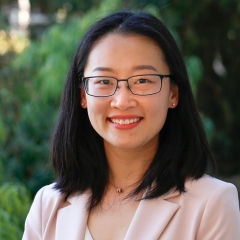
Dr. Yangying Zhu is an Assistant Professor in the Department of Mechanical Engineering at the University of California, Santa Barbara (UCSB). Her research focuses on thermo-fluid engineering approaches for thermal management of electronics, sustainable energy solutions, and electrocatalytic systems. She combines fundamental heat/mass transfer principles with novel materials fabrication to address challenges in battery technology, electronic cooling, and renewable energy systems. Dr. Zhu holds a PhD and MS in Mechanical Engineering from MIT and a BS in Structural Engineering from Tsinghua University. Her honors include a Hellman Foundation Faculty Fellowship, ONR Young Investigator Award, NASA Early Career Award, and NSF Early Career Award. She has contributed to over 50 peer-reviewed publications since 2012, with recent work emphasizing microgravity fluid dynamics, lithium battery thermal management, and photo-responsive materials. Her research group actively explores: 1) Advanced thermal management systems for next-gen electronics 2) Electrochemical energy storage mechanisms in batteries 3) Novel material surfaces for phase-change heat transfer. Current projects include developing nanoscale three-phase electrochemical pathways for formaldehyde oxidation and optimizing battery thermal conductivity measurement techniques. Key Awards: Hellman Fellowship (2021), ONR YIP (2020), NSF CAREER (2019) Lab Focus: Nanoengineered surfaces, micro/nano thermal systems, electrochemical characterization Collaborations: Cross-disciplinary partnerships in materials science, electrical engineering, and environmental sustainability
Dr. Changji Pan is a Professor at ETH Zürich, affiliated with the Department of Nanostructures and X-ray Laser Physics. His research focuses on ultrafast laser processes, plasma dynamics, and the fabrication of advanced nanostructures for optoelectronic and materials science applications. He leads efforts in understanding laser-material interactions at femtosecond timescales and their implications for next-generation device engineering. His work emphasizes the development of novel fabrication techniques using femtosecond lasers, such as temporally modulated pulse lithography and double-pulse strategies to control micro/nanostructures in semiconductors like Si, WS2, MoS2, and GaN. Key applications include high-performance optoelectronic devices, surface-enhanced Raman scattering, and LED efficiency enhancement. He also investigates plasma expansion and shockwave dynamics in laser ablation processes. Changji Pan has contributed to the study of self-trapped excitons for hologram quality improvement and asymmetrical optoelectronic device design using perovskite materials. His research bridges fundamental physics insights with practical engineering solutions, particularly in semiconductor and nanomaterial systems. While no formal scientific awards or grants are explicitly listed, his publications reflect sustained contributions to ultrafast laser science and nanotechnology. He holds a full-time position and can be reached at chapan@phys.ethz.ch .
Dr. Saikat Datta is a Senior Lecturer in Mechanical Engineering at Swansea University's Faculty of Science and Engineering. He holds a PhD from the Indian Institute of Technology Kharagpur (2018) and completed postdoctoral research at the University of Edinburgh. His research focuses on micro/nanofluidics, multiphase flow, and multiscale modeling using molecular dynamics and computational fluid dynamics. He has published in top-tier journals like Nano Letters and received the Leverhulme Trust Early Career Fellowship (2021) for his work on vibration-driven de-icing. Education: PhD in Mechanical Engineering, IIT Kharagpur (2018) Postdoctoral Research Associate, University of Edinburgh (2018–2021) Research Interests: Molecular dynamics simulations of nanoscale fluid behavior Computational fluid dynamics (CFD) for multiphase systems Vibration-driven de-icing and anti-icing technologies Mesopore transport in unconventional energy systems Acoustothermal effects on surface phenomena Advising & Grants: Principal Investigator: EPSRC Tier-2 Cirrus Service grant for ultrahigh-frequency vibration studies (2023–2024) Co-PI: UKRI ARCHER2 HPC grant for freeze-desalination research (2024) Awards: Leverhulme Trust Early Career Fellowship (2021)
Jonathan Malen is a Professor in the Department of Mechanical Engineering at Carnegie Mellon University’s College of Engineering. His research spans nanoscale thermal transport, energy materials, and additive manufacturing, with significant contributions to thermal management in electronics and thermoelectric energy conversion. Malen earned a Ph.D. in Mechanical Engineering from UC Berkeley (2009), an M.S. in Nuclear Engineering from MIT (2003), and a B.S. in Mechanical Engineering from the University of Michigan (2000). He joined CMU in 2009 and has since led groundbreaking experimental work in thermal science. His research interests include thermal transport in advanced materials such as ultrawide bandgap semiconductors (GaN, Ga₂O₃), organic-inorganic hybrids (superatomic crystals, perovskites), and high-thermal-conductivity polymers. The Malen Laboratory uses ultrafast laser spectroscopy, microfabrication, and thermal imaging to study heat transfer in electronics, additive manufacturing, and cryopreservation. Key applications include thermoelectric waste heat recovery, thermal management in microprocessors, and process monitoring in metal 3D printing. Malen’s recent publications reveal a strong focus on thermal conductivity in polymers and composites, melt pool dynamics in additive manufacturing, and phonon transport in nanostructured materials. His work increasingly integrates machine learning for process modeling and defect prediction in metal printing. There is a clear interdisciplinary trend combining materials science, mechanical engineering, and data-driven modeling. Benjamin Richard Teare Teaching Award (2019) David P. Casasent Outstanding Research Award (2016) ASME Bergles-Rohsenhow Young Investigator Award in Heat Transfer Army Research Office Young Investigator Award (2014) National Science Foundation CAREER Award (2012) Air Force Office of Scientific Research Young Investigator Award (2010) Malen has advised numerous PhD students, many of whom now work in industry (e.g., Intel, Northrop Grumman, Apple) or academia. His research is supported by the NSF, DoD, ARO, AFOSR, and NIH. He collaborates with Alan McGaughey (CMU), Dmitri Talapin (University of Chicago), and X. Roy (Columbia), among others. He is also involved with CMU’s Data Storage Systems Center, NextManufacturing Center, and Wilton E. Scott Institute for Energy Innovation. The Malen Laboratory operates at the intersection of experimental thermal science and advanced manufacturing, focusing on both fundamental understanding and technological applications. The team includes postdocs and PhD students working on topics such as in-situ thermal imaging, deep learning for defect prediction, and thermoelectric cooling. The lab is known for developing innovative measurement techniques like two-color thermal imaging and frequency-domain thermoreflectance.
Alan McGaughey is a Professor in the Department of Mechanical Engineering at Carnegie Mellon University's College of Engineering. He leads the Nanoscale Transport Phenomena Laboratory, where his research bridges mechanical engineering, materials science, physics, and chemistry to study atomic-level transport of mass, momentum, and energy. His work emphasizes phonon, photon, electron, and fluid particle dynamics using advanced simulation techniques. Bachelor of Engineering, McMaster University (1998) Master of Applied Science, University of Toronto (2000) Ph.D., University of Michigan (2004) Post-doctoral training, University of Florida Alan McGaughey's research interests center on nanoscale thermal transport , with applications in energy technologies , materials for energy efficiency , and multiscale modeling . His lab develops molecular- and meso-scale simulation methods, including molecular dynamics, lattice dynamics, density functional theory, and Boltzmann transport equation modeling. Key research areas include thermal transport in nanostructures and interfaces, hybrid organic-inorganic materials, electrocaloric cooling, and liquid-vapor phase change. The team also applies machine learning to accelerate materials discovery and property prediction. The recent publications (2023–2025) reflect a strong focus on thermal conductivity prediction in diverse systems—from polymers and 2D materials to disordered crystals and thin films. The work integrates first-principles simulations , uncertainty quantification , and machine learning to uncover fundamental mechanisms of phonon transport and interfacial heat transfer. A recurring theme is the role of structural disorder —static, dynamic, or rotational—in modulating thermal properties. Air Force Office of Scientific Research Young Investigator Program (2009) Benjamin Richard Teare Teaching Award (2014) National Academy of Engineering’s Frontiers of Engineering Education Symposium (2015) Professor of the Year by MechE seniors (2012, 2015, 2017) 2019 & 2024 College of Engineering Faculty Awards 2021 Viskanta Fellowship, Purdue University McGaughey has advised numerous Ph.D. and Master’s students, many of whom have gone on to impactful research careers. His group has secured funding from agencies such as the Department of Defense and the Department of Energy, including Scott Institute seed grants for energy research. He collaborates extensively with experimentalists, including Jonathan Malen, Reeja Jayan, Chris Wilmer, and others, ensuring strong theory-experiment integration. He is also involved in educational innovation and was named faculty chair-elect for the College of Engineering. The Nanoscale Transport Phenomena Laboratory is a vibrant research group that combines computational modeling with interdisciplinary collaboration to advance fundamental understanding and enable next-generation thermal materials and devices.
William P. King is a Professor and Ralph A. Andersen Endowed Chair in Mechanical Science and Engineering, Electrical and Computer Engineering, and Materials Science and Engineering at the University of Illinois Urbana-Champaign. He is also an affiliate faculty member in the Carle Illinois College of Medicine. His research focuses on nanotechnology, thermal transport, advanced materials, and additive manufacturing. Key roles include founding Chief Technology Officer of MxD (a Manufacturing USA Institute) and co-founder of Fast Radius, a digital manufacturing company. Education: Ph.D. (2002), M.S. (1998), and B.S. (1996) in Mechanical Engineering from Stanford University and the University of Dayton, respectively. Research Interests: Nanotechnology, instrumentation, materials science, thermal transport, micro- and nano-manufacturing, additive manufacturing, health and bio-design, and energy systems. Articles Trends: Focus on nanoscale thermal analysis, microbatteries, superhydrophobic surfaces, graphene devices, and additive manufacturing. Highlights include pioneering work on nanoimprint lithography and thermal metrology. Scientific Awards: Includes ASME Gustus-Larson Award, PECASE, R&D 100 Awards, and fellowships from ASME, APS, and AAAS. Advising & Grants: Advised over 20 PhD students and secured grants from DOE, NSF, and industry. Collaborates with companies like IBM, Bruker, and McKinsey. Labs: Leads the Nanoengineering Laboratory, specializing in micro/nano-fabrication and thermal systems.
Shengxi Huang serves as Associate Professor in both Electrical and Computer Engineering and Materials Science and NanoEngineering at Rice University, specializing in quantum material characterization and sensing technologies development. Educational background: Ph.D. Electrical Engineering and Computer Science, MIT (2017) M.S. Electrical Engineering and Computer Science, MIT (2013) B.S. Micro and Nano Electronics, Tsinghua University (2011) Her research program centers on light-matter interactions in quantum systems, with three interconnected pillars: fundamental investigation of optical/electronic properties in 2D materials and Weyl semimetals; development of novel biochemical sensing platforms for medical diagnostics; and exploration of quantum optical phenomena for advanced sensing applications. The SCOPE Lab integrates physics, materials engineering, physical chemistry, and bioengineering to create innovative optoelectronic solutions. Scientific recognition: 2022 AFOSR Young Investigator Award 2020 NSF CAREER Award 2019 Johnson & Johnson STEM2D Scholar’s Award (sole global awardee in discipline) 2020–2022 Dean’s Faculty Research Award, Penn State College of Engineering 2021 Multidisciplinary Research Award, Penn State College of Engineering 2018 Convergence Research Award, Penn State 2017 Jin Au Kong Award for Best PhD Thesis, MIT 2017 Ginzton Fellowship, Stanford University 2017 Kavli Fellowship for Nanoscience Huang leads the SCOPE (Sensing, Characterization, and OPtoElectronics) Lab, which pioneers material engineering approaches to develop next-generation sensing mechanisms through quantum material-molecule interface coupling.
Xuanjie Wang is an Assistant Professor in the Department of Mechanical Engineering & Mechanics at Lehigh University's P.C. Rossin College of Engineering and Applied Science. His research focuses on advancing energy conservation, transport, and storage technologies through innovative materials and systems. Education: Post-Doc at MIT, Ph.D. at Rensselaer Polytechnic Institute, M.S. at Hong Kong University of Science and Technology Research interests include: Thermal and Fluids Engineering Radiation Heat Transfer and Thermal Management Clean Energy Production and Energy Storage His work employs heat and mass transfer principles, thermodynamics, micro/nanotechnology, and computational modeling. Dr. Wang's group actively recruits PhD students, and he has contributed to strengthening Lehigh's energy research initiatives since joining in 2024. Contact: xuw224@lehigh.edu | Lab Website: Packard Laboratory, 19 Memorial Drive West, Bethlehem, PA 18015
Masoud Mahjouri-Samani is the Godbold Associate Professor in the Department of Electrical and Computer Engineering at Auburn University, College of Engineering. He leads the Laser-Assisted Science and Engineering (LASE) Lab and is actively involved in interdisciplinary research on laser-based nanomanufacturing, space-based electronics fabrication, and 2D materials. Education: Ph.D. in Electrical Engineering, University of Nebraska-Lincoln B.S. in Electrical Engineering, University of Nebraska-Lincoln Research Interests: His work spans laser-assisted synthesis and processing of nanomaterials, with focus on 0D, 1D, and 2D materials, hybrid structures, and their applications in nanoelectronics, optoelectronics, and photonics. He pioneers additive nanomanufacturing techniques, especially dry printing for space and terrestrial applications. His research enables on-demand fabrication of multifunctional devices using lasers with precise spatial, temporal, and spectral control. Scientific Contributions and Recognition: Senior Editor, Journal of Laser Applications (JLA) Associate Editor, International Journal of Extreme Manufacturing (IJEM) Associate Editor, Journal of Laser Micro/Nanoengineering (JLMN) Principal Investigator on over $10 million in grants from NASA, NSF, FAA, and U.S. Army Lead of Auburn Space Manufacturing Initiative Successful testing of nanoparticle 3D printer in zero-gravity parabolic flights Founder and President of NanoPrintek, Inc. Advising and Grants: He mentors graduate students, including doctoral candidate Parvin Fathi-Hafshejani. His funded projects include NSF grants for quantum materials and biodegradable papertronics, NASA grants for in-space electronics manufacturing, and federal grants for advancing additive manufacturing in aerospace and defense. He collaborates across disciplines with researchers in materials science and mechanical engineering. Labs and Teams: He founded and leads the LASE Lab at Auburn University, establishing a state-of-the-art laser facility for synthesis, processing, and in-situ diagnostics of nanomaterials. The lab supports a vision of Auburn as a regional and national hub for laser-enabled research and innovation.