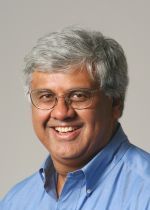
Ewan Wade is a Research Associate at Heriot-Watt University, affiliated with the School of Engineering & Physical Sciences and the Institute of Photonics and Quantum Sciences. His work focuses on advanced photonics and quantum science applications, particularly in Lidar technology and optical radar systems. Research activities include modeling and optimizing single-photon detection systems for long-range and high-resolution imaging. His publications highlight innovations in depth imaging, spatial resolution improvement, and performance analysis of dToF SPAD Lidar systems under extreme conditions. Current research trends center on enhancing photonics-based sensing technologies through algorithmic refinements and hardware design improvements, particularly in low-light and high-noise environments.
Kechun Ma is a Researcher in the Department of Biomedical and Environmental Sensorsystems at the University of Twente, Netherlands, with continuous research contributions spanning nearly three decades from 1994 to 2023. His work focuses on the development and application of micro and nanoscale systems for sensing, fluid handling, and material processing. His primary research interests include Sensors , MEMS , Microfluidics , Plasma Etching , Catalysis , and Microreactors , reflecting his expertise in creating innovative microsystems for biomedical engineering, environmental monitoring, and chemical processing. His research integrates materials science, fluid dynamics, and microfabrication to solve complex engineering challenges. Analysis of his recent publications reveals a strong trend in advancing MEMS-based solutions, particularly in catalyst characterization (2023 microreactor for X-ray microscopy), precision fluid control (2021 electrochemical micropump), and semiconductor manufacturing (2020-2021 plasma etching techniques). These works demonstrate consistent innovation in fabrication processes and real-world applications, with significant citations and downloads indicating community impact. While no specific scientific awards are documented in available sources, Ma's collaborative work with University of Twente's MESA+ Institute researchers (including patents like the 2019 Coriolis flow sensor) highlights his integrated role within the institution's research ecosystem. His ongoing projects continue to push boundaries in microsystem technologies, particularly in catalytic process monitoring and sensor development.
Dr. Simone Iadanza is a Researcher at the Paul Scherrer Institute (PSI) within the Laboratory for Nano and Quantum Technologies, part of the PSI Center for Photon Science. His work focuses on advancing integrated photonics, quantum technologies, and nanoscale sensing systems. He specializes in photonic crystal devices, hybrid lasers, and materials science for optical applications. Recent research includes developing ultra-sensitive refractive index sensors, cryogenic photodetectors for quantum networks, and metasurface-based mid-infrared sensing platforms. Key projects involve integrating III-V semiconductor devices with silicon photonics using micro-transfer printing, optimizing photonic crystal cavities for low-temperature operation, and enhancing AFM-IR imaging techniques for heterogeneous materials. His contributions span both experimental and computational studies, addressing challenges in optical material characterization and sensor miniaturization. Dr. Iadanza collaborates on multi-disciplinary projects involving quantum photonics, thermo-optical effects in nanomaterials, and the design of compact optical sensors for industrial and biomedical applications. His lab emphasizes CMOS-compatible fabrication processes to enable scalable photonic integration.
Shujie Yang is an Assistant Professor in the Department of Mechanical Engineering and Applied Mechanics . Their research focuses on acoustofluidics , integrating acoustic wave technologies with micro/nanofluidics for biomedical and engineering applications. Key areas include particle/cell manipulation, lab-on-a-chip systems, and diagnostic tools for exosome-based liquid biopsies. Dr. Yang develops innovative devices such as acoustic tweezers, picoinjectors, and automated plasma separators. Their work bridges mechanical engineering with biomedicine, addressing challenges in tissue engineering, single-cell analysis, and virus isolation. Recent breakthroughs include topological acoustofluidics and aerosol-jet-printed microfluidic components. Publications span Advanced Science , Lab on a Chip , and other top journals, with a focus on scalable, low-cost technologies for healthcare and materials science. Their research emphasizes practical applications like point-of-care diagnostics and biomanufacturing.
Dr. Michael Pantic is a Researcher in the Professorship for Autonomous Systems at ETH Zürich , affiliated with the Department of Mechanical and Process Engineering. His work focuses on advancing autonomous systems , particularly in aerial robotics , control systems , and sensor fusion . He specializes in developing innovative solutions for obstacle avoidance, navigation algorithms, and robotic manipulation in complex environments. His research emphasizes omnidirectional micro aerial vehicles (OMAVs) , reactive planning, and real-time obstacle avoidance techniques. Recent projects include corrosion inspection of infrastructure using autonomous robots and integrating radar with vision for robust depth prediction. Dr. Pantic's contributions bridge theoretical advancements with practical applications in industrial robotics and structural monitoring. Publications highlight trends in reactive navigation strategies , multi-resolution mapping , and physical interaction control . His work addresses challenges like local minima escape in path planning and minimizing actuator complexity in aerial manipulators. No scientific awards or student advisees are listed in the provided materials. Collaborative efforts include contributions to the MBZ International Robotics Challenge and the CleanSpace One Mission .
Amitav Tikadar is an Assistant Professor in the Department of Mechanical Engineering at the University of Mississippi. His research focuses on thermal management for e-mobility powertrains, micro and macro-scale heat transfer, computational fluid dynamics (CFD), and machine learning (ML). He holds a Ph.D. from Georgia Institute of Technology (2024), an M.S. from the University of South Carolina (2019), and a B.Sc. from Bangladesh University of Engineering and Technology (2015). Education: B.S. Mechanical Engineering, Bangladesh University of Engineering & Technology (2015) M.S. Mechanical Engineering, University of South Carolina-Columbia (2019) Ph.D. Mechanical Engineering, Georgia Institute of Technology (2024) Research Interests: Dr. Tikadar's work emphasizes thermal management solutions for electric vehicle (EV) motors, including flow boiling in microchannel heat sinks, 3D-printed cooling systems, and machine learning-driven thermal performance optimization. His research addresses challenges in high-power-density motor cooling and heat dissipation for e-mobility applications. Publications: Recent work includes studies on flow boiling thermal performance, hybrid heat sink designs, and additive manufacturing for pulsating heat pipes. His articles highlight trends in CFD modeling, ML prediction of thermal behavior, and evaporative cooling innovations for EV components. Awards: Best Paper Award at ITherm Conference Best Poster Award at ITherm Conference Advising & Grants: While specific grants are not listed, Dr. Tikadar has authored/co-authored over 40 publications, reflecting active research engagement. His work aligns with industry needs for sustainable thermal solutions in e-mobility.
Professor Kate Sugden is Deputy Dean of the School of Engineering & Applied Science at Aston University, where she leads research in photonics and fibre optic technologies. She holds appointments in the Mechanical, Biomedical & Design Engineering department and directs the Aston Institute of Photonic Technologies (AiPT). With industrial experience spanning ADC Pty Ltd, Oxford Fiber Optic Tools, and Indigo Photonics, she bridges academic research and commercial applications. Education: BSc (Hons) Physics, University of Birmingham (1989) MSc (Distinction), University of St Andrews (1991) PhD in Fibre Bragg Grating Applications, Aston University (1996) Her research develops novel fibre optic sensing platforms for industrial and biomedical applications, with core expertise in femtosecond laser processing, Bragg grating fabrication, and interferometric sensing. Current projects focus on miniaturized optical sensors for harsh environments, medical device monitoring, and energy systems diagnostics. Publication analysis reveals sustained innovation in optical metrology, with recent emphasis on medical sensing applications (40% of 2018-2025 outputs), multi-parameter sensor designs (30%), and low-cost detection systems (20%). This reflects strategic alignment with industrial biotechnology and energy conversion challenges. Honors: Medici Fellowship (2004) Chartered Physicist (CPhys) Member, Institution of Engineering and Technology Council (2014-2019) She coordinates industry partnerships for student placements and has supervised 12 PhD candidates. Current grants include EPSRC funding for wearable optical biosensors and EU Horizon support for offshore energy monitoring systems.
Dr. Shishir Gaur is an Associate Professor in the Department of Civil Engineering at the Indian Institute of Technology (Banaras Hindu University). He holds an affiliated professorship at the Environnement, Ville et Société (EVS) laboratory at the École des Mines de Saint Étienne, France (2023-2025). His research focuses on numerical modeling, optimization techniques, machine learning, and remote sensing applications in water resources management. Key projects include the CNRS International Research Project (IRP) on river-aquifer exchanges in the Ganga and Rhône basins, and collaborations with institutions like CNRS, ANR, and ISRO. Education: PhD from IIT Delhi (with École des Mines collaboration), Postdoc at EMSE, France. He has led over 40 publications and multiple research projects funded by EU, DST, and MHRD. Current advising includes 4 PhD and 3 M.Tech. students. His work emphasizes Franco-Indian partnerships, such as the MoU between ENS de Lyon and IIT Varanasi. Research interests span groundwater management, river quality monitoring (hyperspectral data), and sustainable solutions for water resources. Notable publications include studies on river-aquifer exchanges, sediment load prediction, and thermal pattern analysis of the Ganges. Collaborations extend to projects like H2O'Lyon Summer School and international workshops on river rehabilitation. Grants include Danish Embassy funding for clean river solutions, ISRO grants for water quality sensors, and DBT-EU initiatives for biotechnical treatments. Technical skills include MATLAB, GMS, and GIS software. He has organized conferences like RHAR-2019 and serves on national committees like AICTE’s Induction Programme.
Dr. Ali Javey is the Lam Research Distinguished Chair in Semiconductor Processing and a professor of Electrical Engineering and Computer Sciences (EECS) and Materials Science and Engineering (MSE) at UC Berkeley. He serves as a senior faculty scientist at the Lawrence Berkeley National Laboratory where he leads the Electronic Materials (E-Mat) program and co-directs the Berkeley Sensor and Actuator Center (BSAC). His research spans multiple centers including the Berkeley Sensor & Actuator Center (BSAC), Center for Energy Efficient Electronics Science (E3S), and Electronic Materials Program at LBNL. Dr. Javey received his Ph.D. in Physical Chemistry from Stanford University in 2005 and was a Junior Fellow of the Harvard Society of Fellows from 2005 to 2006 before joining UC Berkeley. His educational background includes a B.S. in Chemistry from Old Dominion University (2001). His research program focuses on materials innovation for enabling new device structures and concepts, studying a wide range of electronic materials in both planar and 3D geometries. Javey's work balances short- and long-term applications with interdisciplinary collaboration across electrical engineering, chemistry, chemical engineering, materials science, and physics. His current research emphasizes nanomaterials, semiconductor devices, wearable sensors, and 2D materials, with particular focus on black phosphorus, tellurium, transition metal dichalcogenides, and flexible electronics for health monitoring applications. Analysis of his recent publications reveals a strong trend toward practical applications of 2D materials in optoelectronics, particularly in mid-infrared technologies using black phosphorus. His work increasingly integrates materials science with practical wearable health monitoring systems, especially sweat-based biosensors. There's also significant focus on tellurium-based semiconductors and their applications in transistors and photodetectors. IEEE Fellow (2023) Bakar Fellows Spark Award (2016) MRS Outstanding Young Investigator Award (2015) Nano Letters Young Investigators Lectureship Award (2014) Electrical Engineering Award for Outstanding Teaching (2012) Sloan Research Fellow (2010) NSF CAREER Award (2009) William O. Baker Award for Initiatives in Research (2009) MIT Tech Review TR35 (2009) Dr. Javey has advised numerous PhD students whose research spans wearable sweat sensors, 2D semiconductor optoelectronics, black phosphorus applications, and novel transistor technologies. His research has been supported by significant grants including the NSF CAREER Award, Bakar Fellows Spark Award, and multiple industry partnerships. His lab maintains strong connections with Lawrence Berkeley National Laboratory's Electronic Materials program. The Javey Research Group operates as a highly interdisciplinary team with members from electrical engineering, chemistry, chemical engineering, materials science, and physics backgrounds. The group maintains strong connections with Lawrence Berkeley National Laboratory and focuses on translating fundamental materials discoveries into practical devices, particularly in the areas of flexible electronics and wearable health monitoring systems.
S. Shankar Sastry is a distinguished academic and researcher holding the title of Professor in the Departments of Electrical Engineering and Computer Sciences, Bioengineering, and Mechanical Engineering at the University of California, Berkeley. He served as Dean of the College of Engineering from 2007 to 2018 and previously directed CITRIS (Center for Information Technology Research in the Interest of Society), the EECS Department, and the DARPA Information Technology Office. His academic journey includes a B.Tech. from IIT Bombay (1977) and advanced degrees from UC Berkeley (M.S. EECS 1979, M.A. Mathematics 1980, Ph.D. EECS 1981). Research interests span artificial intelligence, control systems, robotics, cyber-physical systems, and security. He leads initiatives at the Berkeley Artificial Intelligence Research Lab (BAIR), Berkeley Center for New Media, and the Blum Center for Developing Economies. Notable contributions include work on sparse representation for face recognition, hybrid system analysis, and biomimetic robotics. His publications (15+ highlighted here) showcase expertise in dynamic games, networked control, and quantum computing. Awards include the Rufus Oldenburger Medal (2021), Berkeley Citation (2018), and multiple fellowships. Sastry has advised numerous students and oversees labs focusing on autonomous systems and human-robot interaction. Teaching includes courses on feedback control and linear system theory.
Niels R. Tas is an Associate Professor at the MESA+ Institute, University of Twente, specializing in Mesoscale Chemical Systems. His research integrates micro- and nanoscale engineering with applications in fluidics, sensing, and biological systems. His research interests include MEMS, NEMS, micro-mechatronics, low Re fluidics, transducer science, adhesion, and capillarity. These are deeply rooted in electrical and mechanical engineering, with strong interdisciplinary links to physics and biomedical applications. Recent publications demonstrate a consistent focus on nanofabrication, microfluidic devices, and advanced imaging techniques. His work spans from fundamental fluidic phenomena to applied systems in cell imaging and electrochemical sensing, highlighting a trajectory toward integrated lab-on-a-chip and diagnostic platforms. Scientific Awards: Best poster award (8 Jul 2025) EIPBN 2024 Best Journal Paper Award (2025) Niels R. Tas has actively contributed to collaborative research and has supervised multiple research projects, as indicated by supervised work records. He has been involved in significant research activities, including invited and oral presentations, particularly in nanofabrication and microsystem technologies. His work is supported by extensive publication output and ongoing research grants, though specific funding sources are not detailed in the provided text. He is associated with advanced research infrastructure at the MESA+ Institute, focusing on cleanroom fabrication, microsystem integration, and experimental validation in chemical and biological contexts.
Prof. Hans Zappe is a Full Professor in the Institute of Microsystem Technology at Albert-Ludwigs-Universität Freiburg, Germany. He holds the Gisela-und-Erwin-Sick-Professur für Mikrooptik (Microoptics). His primary affiliation is with the Faculty of Engineering, focusing on advanced optical systems, MEMS, and medical optoelectronics. Areas of Expertise include Optics, Micro-Optics, Optical MEMS, Photonics, and Medical Optics. He leads Research Area B and oversees the IDEASfactory@FIT innovation hub. Current projects include the 'Autonomous Eyeball' initiative exploring light-driven optical systems and V4DA actuators for programmable materials. His research emphasizes liquid crystal-based actuators, adaptive optical systems, and optofluidic devices. Over 150 peer-reviewed articles demonstrate expertise in tunable microlenses, endoscopic imaging probes, and bio-inspired optical systems. Notable collaborations include DFG-funded livMatS projects and high-throughput glass fabrication innovations. Dr. Zappe advises current PhD candidates Sruthy Dinesh and Shalini Soman, with former student Dr. Jasleen Kaur Lall contributing to liquid crystal actuator research. His work bridges fundamental optics research with practical applications in biomedical devices and smart manufacturing systems. Labs/Teams: IDEASfactory@FIT (innovation lab), livMatS core team, and Advanced Optical Microsystems Group. Active in academic outreach through workshops like Core Lectures and Master Lab programs.
Heidi Tuorila is a Postdoctoral Researcher in the Physics department at Tampere University, specializing in hybrid photonic integration for mid-infrared applications. Her work focuses on advancing GaSb-based optoelectronics integrated with silicon photonics platforms to enable compact spectral sensors for gas and bio-detection. Education: Bachelor of Science (Technology) in Science and Engineering (2015) Master of Science (Technology) in Science and Engineering (2016) Doctoral Thesis: Advanced GaAs, InP and GaSb Optoelectronics for Hybrid Photonic Integrated Circuits (2024) Her research centers on overcoming integration challenges in mid-infrared photonics, particularly through innovative waveguide designs (e.g., U-bend geometries) and hybrid laser architectures. Key contributions include developing discretely and widely tunable GaSb/Si 3 N 4 lasers operating at 2.5–2.7 µm for multiwavelength spectroscopy, with emphasis on low-loss performance and manufacturability via micro-transfer printing techniques. Analysis of her 15 most recent publications reveals a consistent trajectory toward practical mid-IR photonic systems: 73% focus on GaSb hybrid lasers, 65% on silicon nitride integration, and 58% on U-bend waveguide optimization. This work directly enables next-generation sensors for environmental monitoring and medical diagnostics. No scientific awards or formal student advising roles are documented in available sources. Her collaborative network includes prominent researchers like M. Guina and J. Viheriälä, with institutional ties to Tampere University's photonics research infrastructure supporting advanced optoelectronic fabrication and testing.
Adamu Muhammad Buhari is a Lecturer at the School of Information Technology, Monash University. His expertise spans Computer Vision, Artificial Intelligence, Real-Time Machine Learning, and IoT integration in smart systems. He holds a PhD in Engineering (Computer Vision) from Multimedia University, alongside advanced degrees in Engineering and Telecommunication. Research interests include micro-expression recognition using graph-based features, real-time emotion analysis algorithms, and scalable video coding with watermarking. His work bridges theoretical advancements with practical applications in embedded systems and energy-efficient IoT networks. Recent collaborations focus on smart building HVAC automation and solar-powered sensor networks for smart homes. He has been awarded the School Research Grant 2022 for contributions to clinical pharmacy education research. His publications span journals like Journal of Imaging and Multimedia Tools and Applications , with a focus on real-time systems and machine learning applications. Research output highlights include: Invisible emotion magnification algorithms for micro-expression detection IoT-based HVAC systems using machine learning Scalable video coding with low-complexity watermarking His work emphasizes real-world impact through embedded systems and energy harvesting solutions.
Anpan Han is an Associate Professor (Senior Forsker) in the Department of Civil and Mechanical Engineering at the Technical University of Denmark (DTU), specializing in Manufacturing Engineering. He has been at DTU since 2014, first as an Assistant Professor at DTU Nanolab and currently as an Associate Professor in Mechanical Engineering. His research spans micro- and nanoscale additive manufacturing, nanofabrication, and biomedical applications. Education: Ph.D. in Micro and Nanotechnology, Institute of Microtechnology (now part of EPFL), Université de Neuchâtel, Switzerland (2006) M.Sc. in Biophysics, University of Copenhagen, Denmark (2002) B.Sc. in Biophysics and Physics, University of Copenhagen, Denmark (2002) His research interests focus on micro- and nanoscale additive manufacturing , particularly 3D lithography and Icetronix , as well as nanofabrication technologies such as diamond MEMS and complex MEMS processes. His work aims to address climate challenges and advance biomedical engineering, including neural implants and tissue scaffolds. He has pioneered techniques in ice lithography and contamination-free nanodevice fabrication. His recent publications highlight advancements in ice-based lithography , neural interface technologies , and plasma processing . These works reflect a strong trend toward biomedical applications of nanomaterials, precision manufacturing, and integration of microsystems for neuroscience and medical implants. Scientific Awards: Carlsberg Foundation Postdoctoral Fellowship (2008–2010) Danish Council for Independent Research Ph.D. Grant (2003–2006) Dr. Han has secured over €2.7 million in research grants from foundations such as Lundbeck, Villum, and Innovation Foundation, and EU programs like Eurostar and Marie Curie. He has supervised multiple Ph.D. students and postdocs, including current advisees Affan Waafi, Nicolas Bergtram, and Rubaiyet Haques. He is also actively involved in teaching courses on additive manufacturing and micro/nanofabrication at DTU and previously at EPFL. He leads and collaborates on interdisciplinary research projects, serves on conference committees (e.g., IEEE Sensors, MNE), and has editorial experience with Elsevier’s Microelectronic Engineering. His work is supported by strong international collaborations with institutions in Switzerland, the USA, and across Europe.