
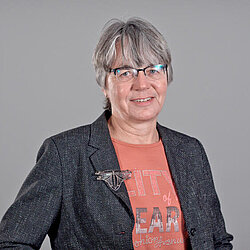
Ursula Bilitewskiمشاهده پروفایل
استاد مدعو
- Biochemistry
- Drug Discovery
- Molecular Mechanisms
- +۳ مورد دیگر
Prof. Dr. Ursula Bilitewski is a Research Group Leader at the Helmholtz Centre for Infection Research (HZI) in Braunschweig, Germany, where she has been working since 1988. She is also an Adjunct Professor of Biochemistry at the Technical University of Braunschweig since 2002. Since 2016, she has headed the "Compound Profiling and Screening (COPS)" working group, focusing on drug discovery and molecular mechanisms of action. Her educational background includes: Chemistry studies at the University of Münster Doctorate from the Institute of Physical Chemistry Habilitation in Biochemistry at the Technical University of Braunschweig (1994) Prof. Bilitewski's research spans multiple disciplines in biochemistry and infectious disease. Her primary focus areas include antimicrobial drug discovery, biosensor development, and molecular mechanism elucidation. She has made significant contributions to understanding pathogen-host interactions, particularly with Staphylococcus aureus and Helicobacter pylori . Her work bridges fundamental biochemistry with practical applications in diagnostics and therapeutics, with a strong emphasis on developing innovative screening methodologies for compound profiling. Analysis of her recent publications (2022-2025) reveals a strong focus on antimicrobial research, particularly targeting bacterial pathogens through novel compound discovery and mechanism elucidation. Her work spans multiple approaches including synthetic chemistry, biosensor development, and molecular pharmacology. Key themes include Staphylococcus aureus virulence factors, Helicobacter pylori pathogenesis, and innovative screening methodologies for drug discovery. While specific awards aren't detailed in the provided information, her sustained research leadership and extensive publication record spanning over two decades indicate significant recognition in her field. Prof. Bilitewski has mentored numerous researchers through her leadership of the COPS working group at HZI. Her research has been supported by various funding mechanisms enabling her innovative work in antimicrobial discovery and biosensor development. She has contributed significantly to collaborative research initiatives, including the EU-OPENSCREEN project which facilitates chemical biology research across Europe. She leads the "Compound Profiling and Screening (COPS)" working group at HZI, which focuses on establishing micro-scale bioanalytical systems and advancing drug discovery research. The group employs interdisciplinary approaches combining biochemistry, microbiology, and analytical chemistry to identify novel drug targets and develop innovative screening methodologies.