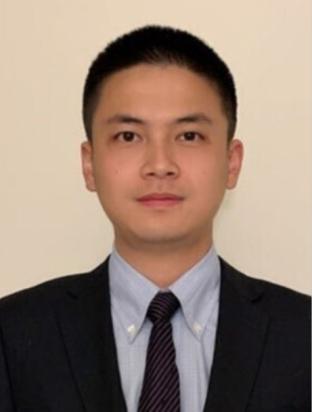
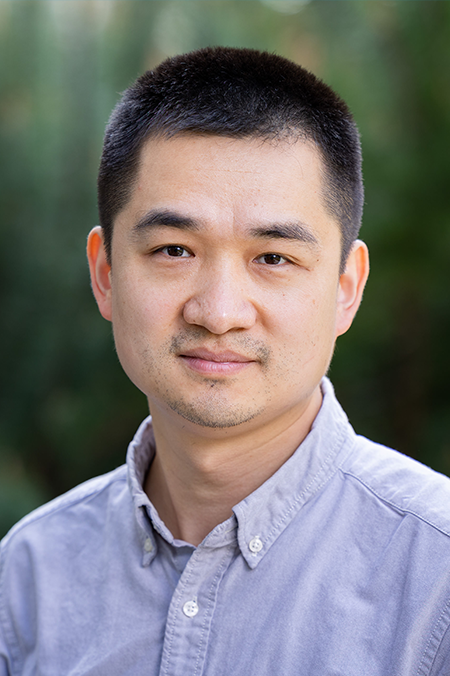
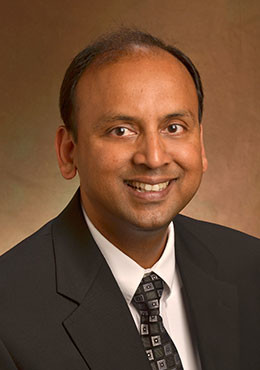
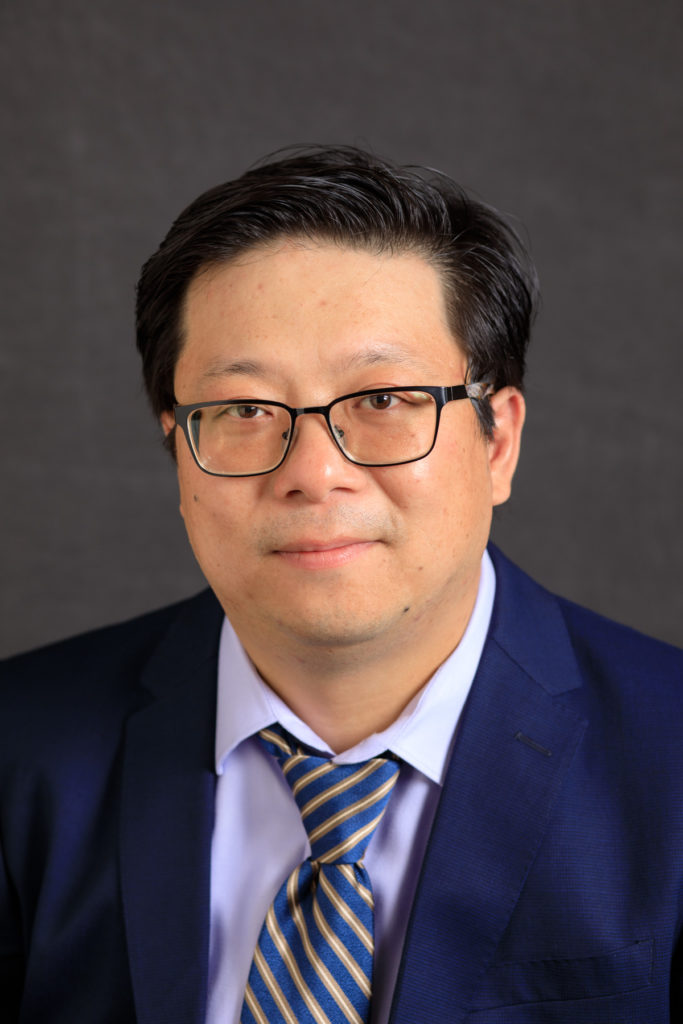
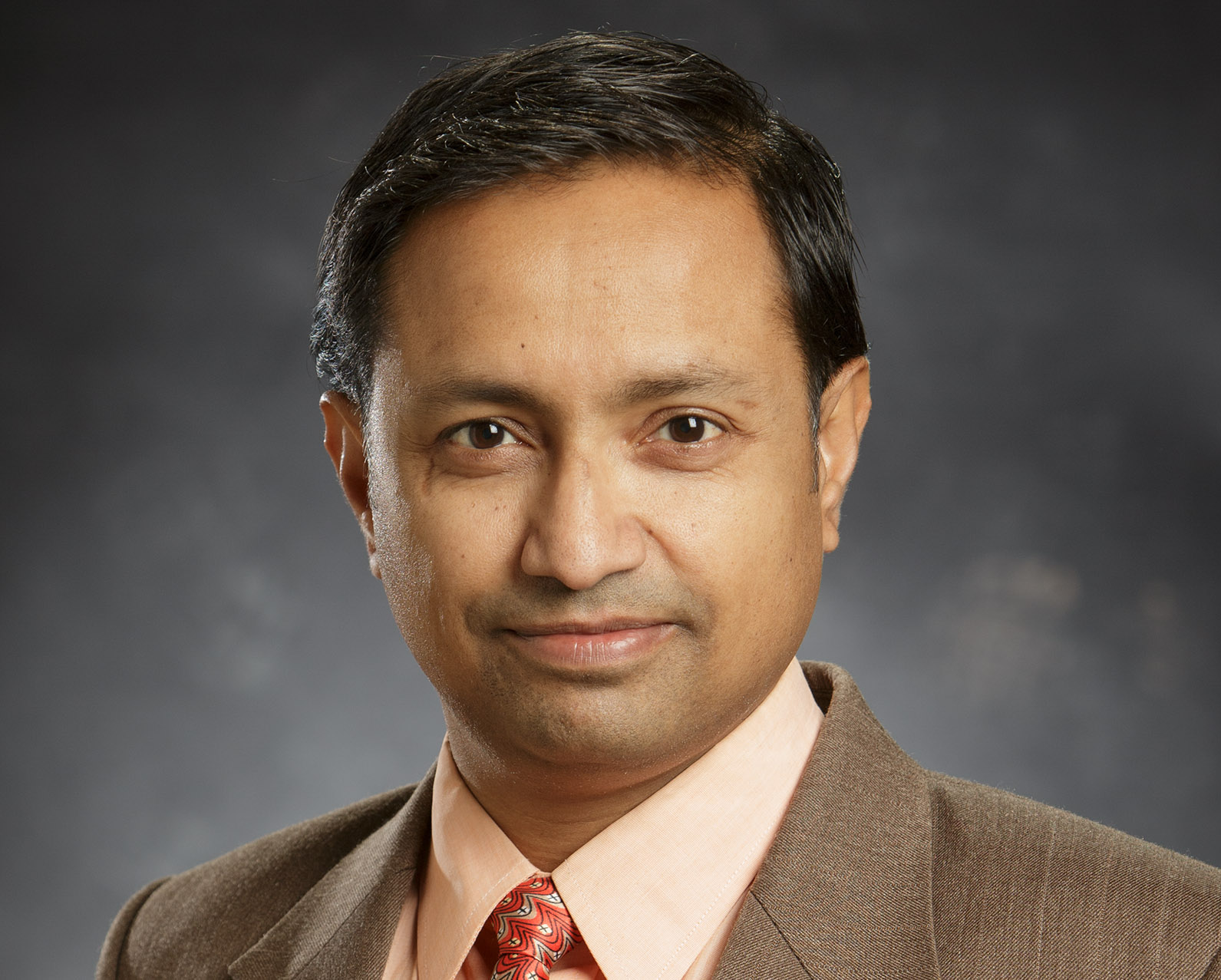
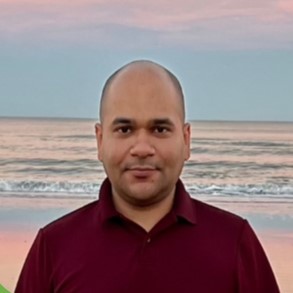
Yachao Wang is an Assistant Professor in the Department of Mechanical Engineering at the University of North Dakota, joining the institution in May 2020 after completing a two-year postdoctoral fellowship at the University of Cincinnati. His teaching responsibilities include: ME 418: Manufacturing Process ME 301: Materials Science ME 428: Advanced Manufacturing ME 524: Deformation and Fracture ME 550: Laser Aided Manufacturing Dr. Wang's research program centers on advanced manufacturing methodologies, with primary emphases on nano/micro-scale fabrication techniques, hybrid additive manufacturing systems, comprehensive materials characterization protocols, computational modeling of laser-material interactions, and the integration of smart manufacturing technologies for industrial applications.
Xiaoliang Jin is an Associate Professor and Canada Research Chair in Advanced Manufacturing within the Department of Mechanical Engineering at the University of British Columbia's Faculty of Applied Science. His research focuses on advanced manufacturing processes for next-generation materials and systems. His academic background includes: B.Sc. and M.Sc. from Beihang University Ph.D. from the University of British Columbia Dr. Jin's research spans cutting-edge manufacturing domains with emphasis on machining of composite materials (particularly carbon fiber reinforced polymers), hybrid additive-subtractive manufacturing , and advanced machining mechanics . His work integrates analytical modeling , experimental validation , and computational techniques to solve complex challenges in material processing, surface integrity, and process dynamics. Current investigations include vibration-assisted machining, micro-scale manufacturing, and real-time process monitoring systems. Analysis of his recent publications (2022-2025) reveals strong methodological trends: increasing application of machine learning for predictive modeling (especially in tool wear prediction), sophisticated residual stress characterization in additive manufacturing, and novel analytical frameworks for chip formation mechanics . His work bridges fundamental mechanics with industrial applications across aerospace and advanced materials sectors. His scientific recognition includes: Canada Research Chair in Advanced Manufacturing As a Canada Research Chair holder, Dr. Jin directs a significant research program securing substantial funding for advanced manufacturing innovation. He mentors graduate students in experimental and computational manufacturing research, with projects often involving industry partnerships to address real-world production challenges. His group develops specialized instrumentation for process monitoring and control. He leads the Advanced Manufacturing Processes (AMP) Laboratory (amp.mech.ubc.ca), which features capabilities for precision machining of composites and metals, vibration-assisted systems, hybrid additive-subtractive platforms, and dynamic process analysis. The lab supports fundamental research while maintaining strong connections to industrial manufacturing applications.
Christoph Beckermann is the University of Iowa Foundation Distinguished Professor of Mechanical Engineering and Director of the Solidification Laboratory at the University of Iowa's College of Engineering. He has been a faculty member since 1987, progressing from Assistant to full Professor in 1996, and holds one of the highest academic honors at the university. His educational background includes a Vordiplom from the University of Hannover and M.S. and Ph.D. degrees in Mechanical Engineering from Purdue University. He served in the German military before pursuing higher education. Beckermann's research focuses on solidification science, metal casting, thermal and fluid sciences , with strong emphasis on computational modeling of multiphase systems, heat transfer, and materials processing. His work spans from fundamental phase-field simulations to industrial-scale casting and additive manufacturing. He integrates numerical methods with experimental validation to understand microstructure evolution, inclusion dynamics, and macrosegregation. The 15 most recent publications reflect a consistent trend in multiscale and multiphysics modeling of solidification phenomena, combining phase-field methods with fluid dynamics, thermomechanics, and granular flow. Keywords include solidification, materials processing, computational modeling, and transport phenomena, with subfields ranging from dendritic growth to residual stress prediction in additive manufacturing. Fulbright Award (1982–84) NSF Presidential Young Investigator Award (1989) Bruce Chalmers Award, TMS (2010) Heat Transfer Memorial Award, ASME (2017) Nagy El-Kaddah Award, TMS (2021) Founders' Choice Award, SFSA (2022) Beckermann has supervised 25 Ph.D. and 23 M.S. students , along with 12 postdocs and 20 visiting scholars. He has secured approximately $20 million in external research funding from federal and industrial sources. His editorial roles include long-term service on Metallurgical and Materials Transactions and the International Journal of Cast Metals Research . He has delivered over 60 invited seminars and 13 plenary lectures globally. He leads the Solidification Laboratory at the University of Iowa, which focuses on computational and experimental studies of solidification processes. The lab develops advanced models for inclusion transport, grain motion, and macrosegregation, with applications in steel casting, additive manufacturing, and aerospace materials.
Santanu Paul is a Postdoctoral Research Associate in the Department of Mechanical and Industrial Engineering at Northeastern University. His work focuses on advanced manufacturing technologies, particularly additive manufacturing and laser cladding processes. Contact him via email at s.paul@northeastern.edu or visit his office at 360 Huntington Ave, Boston, MA 02115. Research Interests: Dr. Paul specializes in the process-structure-property relationships in additive manufacturing, with an emphasis on nickel-based superalloys, residual stress modeling, and thermal-mechanical analysis. His studies integrate experimental characterization and numerical simulations to optimize material properties and process parameters for applications like die repair and structural restoration. Advising & Grants: While no formal advisees are listed, his research contributions span over a decade with a focus on collaborative projects in advanced materials engineering. Grants and funding sources are not specified in the provided text. Labs & Teams: No specific lab or team affiliations are detailed in the text.
Dayakar Penumadu is a Professor in the Department of Civil and Environmental Engineering at the University of Tennessee, Knoxville (UT), where he has been a faculty member since 2001. He holds the Fred N. Peebles Professorship and the Institute for Advanced Materials and Manufacturing (IAMM) Chair of Excellence, a joint position with Oak Ridge National Laboratory. He served as Department Head from 2007 to 2014. His research spans multiple domains in civil and materials engineering. Key areas include: Carbon fiber reinforced polymeric composites and sandwich structures Environmental degradation and multi-scale mechanics Non-invasive characterization using neutron and X-ray tomography and diffraction Mechanics of multi-phase and granular materials Direct Numerical Simulations in porous media His recent publications reveal a strong focus on advanced characterization techniques such as neutron diffraction and X-ray tomography applied to composites, metals, and granular materials. Themes include structural health monitoring, fire damage effects, composite manufacturing, and micromechanical modeling. He frequently collaborates with national labs and industry partners. Notable scientific recognitions include: Fred N. Peebles Professorship Institute for Advanced Materials and Manufacturing (IAMM) Chair of Excellence Penumadu has secured research funding from major agencies including the National Science Foundation, Office of Naval Research, Department of Energy, Defense Threat Reduction Agency, General Motors, Entergy Corporation, National Nuclear Security Administration, and the Tennessee Department of Transportation. He has advised numerous students and leads a vibrant research group focused on next-generation materials and structural systems. He is actively involved in experimental and computational research with applications in transportation, energy, and defense sectors.
Hongyu 'Nick' Zhou is an Associate Professor in the Department of Civil and Environmental Engineering at the University of Tennessee, Knoxville, within the Tickle College of Engineering. He joined the university in August 2019 after serving on the faculty at the University of Alabama in Huntsville. He leads the Sustainable and Adaptive Built Environment (SABE) Group, focusing on transformative research in sustainable, energy-efficient, and resilient infrastructure systems. PhD in Civil Engineering, Arizona State University, 2013 MSE in Civil Engineering, Arizona State University, 2012 BS in Civil Engineering, Tongji University, China, 2010 Dr. Zhou's research spans smart and energy-efficient buildings, bio-inspired materials, additive construction, and cyber-physical systems in infrastructure. His work integrates materials innovation, structural design, and advanced manufacturing to enhance building performance and sustainability. He emphasizes multi-scale, multi-physics analysis and the development of carbon-negative and adaptive construction technologies. The 15 most recent publications highlight a consistent focus on sustainable cementitious composites, 3D printing of concrete, thermal and mechanical performance of lightweight materials, and bio-inspired design. The research trends emphasize energy efficiency, resilience, and the integration of functional materials into structural systems, supported by advanced modeling and experimental techniques. Scientific Awards: New Faculty Research Award, UAH, 2015 Individual Investigator Distinguished Research Award, UAH, 2014 Higher Education Research Experience (HERE) Fellow, ORAU, 2012 Dr. Zhou actively advises graduate and undergraduate research assistants, including Adam Brooks, Yawen He, and Zhenglai Shen. His research is supported by prestigious grants from the National Science Foundation (NSF), U.S. Department of Energy (DOE), Alabama Department of Transportation (ALDOT), and DOE REMADE Institute. He serves as an Associate Editor for the Journal of Sustainable Cement-based Materials , contributing to the advancement of sustainable construction science. The SABE Group conducts interdisciplinary research in biomimicry, robotic construction, building weatherization for vulnerable communities, and multi-sensory inspection. The group collaborates with Oak Ridge National Laboratory (ORNL) and other institutions, leveraging neutron imaging and large-scale 3D printing to push the boundaries of material science and construction technology.
Prof. Dr. Jens Freudenberger is a renowned Professor and Department Head in Metal Physics at the Institute for Materials Science (Institut für Werkstoffwissenschaft), Technische Universität Bergakademie Freiberg , while holding a part-time position at IFW Dresden . His work bridges fundamental metallurgy and advanced functional material development. Key Research Interests : Alloy design, deformation mechanisms, metallography, powder-in-tube processing, and high-conductivity/high-strength materials. Publication Trends : Focus on high-entropy alloys, phase transformations, cryogenic deformation, and biomedical/metamagnetic materials. Recent studies highlight atomic-scale insights in multi-component systems and thermomechanical processing of shape-memory alloys. Scientific Awards : Innovation Award of the Deutscher Kupferinstitut (DKI, 2007) Georg-Sachs-Preis of the Deutsche Gesellschaft für Materialkunde (DGM, 2009) Leadership & Collaboration : Leads metal physics research at IFW Dresden, collaborating extensively on superconductivity, magnetocaloric effects, and biomedical alloys.
Ming Chen is an Assistant Professor at the University of Nevada, Reno, specializing in materials processing, physical metallurgy, and advanced characterization techniques. His research focuses on additive manufacturing of metals and ceramics, freeze-casting of porous materials, metallurgy for battery technology, and micro-/nano-scale mechanical testing using X-ray diffraction and tomography. Ph.D. in Materials Science from ETH Zurich (2020) M.Sc. in Physical Metallurgy and Materials Science from RWTH Aachen University (2015) B.Eng. in Metallurgical Engineering from University of Science and Technology Beijing (2012) His recent publications highlight breakthroughs in additive manufacturing (direct ink writing of high-entropy superalloy microlattices), thermoelectric materials (Yb14MnSb11 printing), and redox cycling resistance in Fe-W foams. Research trends include size-dependent material behavior, twin-boundary strengthening in magnesium alloys, and radiation effects on diamond structures. Chen actively seeks motivated students for Ph.D. positions, postdoctoral research, and summer internships, emphasizing collaboration through CV submission and reference provision. His laboratory integrates advanced fabrication techniques with synchrotron X-ray characterization to address challenges in energy materials, structural alloys, and nanoscale mechanics.
G. Güven Yapıcı is a Professor in the Department of Mechanical Engineering at Özyeğin University's Faculty of Engineering. He received his Ph.D. in Mechanical Engineering from Texas A&M University in 2007 and completed his undergraduate studies at Boğaziçi University. Ph.D.: Mechanical Engineering, Texas A&M University (2007) B.Sc.: Mechanical Engineering, Boğaziçi University His research focuses on the processing-microstructure-property relationships of structural and smart materials through experimental characterization and computational modeling at micro/nano scales. Additional interests include design for manufacturing and product development methodologies. Dr. Yapıcı's work has been funded by agencies such as TÜBİTAK , the European Commission (FP7) , and U.S. institutions including NSF , AFRL , and DARPA . He established the MEMFIS (Mechanics and Manufacturing of Functional and Structural Materials) Group at Özyeğin University in 2011. Notable activities include invited talks at international conferences like TMS Annual Meeting (2015) , NanoSPD6 (2014) , and Thermec (2013) . He has previously held research positions at Los Alamos National Laboratory and industry roles in energy systems design.
Hans van Dommelen is Associate Professor of Micromechanics at Eindhoven University of Technology (TU/e), Department of Mechanical Engineering, where he leads the Group Van Dommelen . His research couples microstructure to mechanical and functional behaviour of materials spanning nuclear fusion, additive manufacturing, polymers, and biomechanics. Education PhD in Mechanical Engineering, TU/e (2003) – Micromechanics of particle-modified semicrystalline polymers Visiting researcher, MIT (1999–2000), University of Virginia (2003–2004), and Cambridge University (2010–2012) Research Interests Van Dommelen’s work focuses on multi-scale mechanics and structure–property relationships . Using microstructural modelling and homogenization techniques, he links phenomena at the microscale to macroscopic response in: Crystalline and heterogeneous materials Nuclear fusion reactor materials (tungsten, liquid-metal shields) Additive manufacturing (wire-arc, selective laser sintering, vat photopolymerization) Semi-crystalline polymers and short-fiber composites Traumatic brain injury biomechanics Scientific Output He has authored over 230 peer-reviewed publications (h-index > 40) in leading journals such as Journal of the Mechanics and Physics of Solids , Biomechanics and Modeling in Mechanobiology , Nuclear Fusion , and Additive Manufacturing . Recent trends include viscoelastic-viscoplastic metamaterials, anisotropic food printing, recrystallization kinetics of tungsten under fusion loads, and multiscale fracture of additively manufactured metals. Teaching & Supervision Van Dommelen coordinates and lectures in: Structure and Properties of Materials Computational and Experimental Micro-mechanics Fusion Reactor Materials and Plasma-Wall Interaction He has supervised >85 MSc and PhD theses to date. Laboratory & Collaborations He heads the Group Van Dommelen within the Mechanics of Materials section, maintaining strong collaborations with DIFFER, ITER, and international partners on liquid-metal technologies for fusion blankets and advanced additive manufacturing processes.
Nele Famaey is an Associate Professor at KU Leuven's Department of Mechanical Engineering, Faculty of Engineering Sciences, where she leads the Soft Tissue Biomechanics research group. She also serves as a visiting professor at Ghent University's BioMMeda group and has been the coordinator of FIBEr (KU Leuven Core Facility for Biomechanical Experiments) since 2017. Her leadership extends to roles as division head of FIBEr Division and subdivision head of Subdivision FIBEr General. Her primary research focuses on the biomechanics of damage, growth, and remodeling phenomena in soft biological tissues, particularly in the cardiovascular system, cartilage, and brain. She employs a combined approach integrating experimental mechanical characterization with nonlinear constitutive and numerical modeling to support clinical decision-making through in silico simulations. Her research spans: Biomechanical analysis of damage, growth and remodeling in soft biological tissues Nonlinear constitutive and numerical modeling of mechanobiological behavior Experimental characterization of material properties of soft biological tissues Analysis of her recent publications reveals a strong emphasis on cardiovascular biomechanics, particularly arterial tissue modeling, aortic aneurysms, and the Ross procedure for heart valve replacement. Her research increasingly incorporates advanced computational methods including multiscale modeling, machine learning approaches, and in silico clinical trials. There is also growing interest in additive manufacturing applications for biomimetic materials and the mechanical properties of novel biomaterials like mycelium-based products. Dr. Famaey leads multiple significant research projects running from 2024-2029 as Promotor, focusing on arterial wall remodeling, cardiovascular material characterization, and risk assessment for aortic aneurysms. Her leadership extends to membership in the iSi Health Institute and participation in faculty and departmental councils. She teaches a comprehensive range of courses spanning fundamental mechanics, tissue mechanics, numerical modeling in biomedical engineering, and medical technology design, demonstrating her commitment to educating the next generation of biomedical engineers.
Associate Professor Dr. Ahmet Turan is currently Vice-Head of the Department of Materials Science and Nanotechnology Engineering at Yeditepe University, Faculty of Engineering . Since 2021 he has led research and teaching in extractive metallurgy, advanced ceramics, and sustainable materials processing, while previously serving as doctoral lecturer and lecturer at Yalova University (2010-2021) and visiting researcher at Heriot-Watt University (2017). Education PhD, Metallurgical & Materials Engineering, Istanbul Technical University (2014) MSc, Production Metallurgy & Technologies, Istanbul Technical University (2009) BSc, Metallurgical & Materials Engineering, Sakarya University (2006) Research Interests Dr. Turan’s work centres on extractive metallurgy , self-propagating high-temperature synthesis (SHS) , refractory and advanced ceramics , metallothermic reduction , waste valorisation , magnesium and light alloys , and carbon-capture materials . His laboratory explores sustainable routes to synthesise borides, carbides, and intermetallics from domestic ores and industrial by-products, while also investigating additive manufacturing of metallic lattice structures. Publication Profile Across 2013-2022 his peer-reviewed output reveals a clear trajectory from fundamental studies on SHS of TiB 2 , ZrB 2 and B 4 C towards applied processing of mill-scale, EAF slags, aluminium dross and demolition concrete for CO 2 capture and metal recovery. Recent emphasis lies on vacuum metallothermy for magnesium–strontium alloys and FeCo-based magnetic materials. Grants & Projects Coordinator, H2020 ABTOMAT (2022-ongoing) – valorisation of aluminium-bearing raw materials Researcher, COST Action TrANsMIT (2022-ongoing) – carbon mitigation technologies Principal Investigator, TÜBİTAK 1002 – TiC production via SHS (2020-2021) Principal Investigator, TÜBİTAK 1002 – Al 2 O 3 ceramics from aluminium black dross (2019-2020) Multiple national grants on FeCo, FeCrNiMo alloys, vanadium carbide, and sponge iron production from wastes Advising & Supervision He currently supervises 6 MSc and 3 PhD students at Yeditepe University on topics ranging from high-entropy oxides for energy materials to 3-D-printed aluminium lattice structures and rare-earth magnet recycling. Laboratory & Teams Dr. Turan leads the Advanced Materials Processing & Sustainability Laboratory , equipped for SHS, spark plasma sintering, vacuum metallothermy, and additive manufacturing, fostering collaboration with Istanbul Technical University, Heriot-Watt University, and COST/Horizon networks.
Sundar Madihally is a Professor and Undergraduate Program Director at the Department of Chemical Engineering at Oklahoma State University . He also serves as the ABET Coordinator and directs the Laboratory for Tissue Regeneration . Education: Ph.D., Chemical Engineering, Wayne State University, 1998 M.S., Chemical Engineering, Wayne State University, 1996 B.S., Chemical Engineering, Bangalore University, 1992 Research Fellow, Surgical Services, Massachusetts General Hospital, 2001 Research Interests include: Molecular Bioengineering: Investigating molecular mechanisms in stem cell differentiation and proliferation using engineering tools. Stem Cell Based Tissue Regeneration: Exploring iPSCs and adult stem cells for tissue repair at micro/nano-scales. Bioreactor Design: Developing fluid dynamic models for tissue regeneration with CFD software and oxygen distribution analysis. Recent Article Trends highlight innovations in 3D-printed hydrogels, multiaxial electrospinning, bladder reconstruction, and computational modeling for tissue engineering. Scientific Awards: George Lappin Program Committee Service Award, 2020 Distinguished Alumni Award, 2019 Graduate Teacher of the Year, 2012-2016 National Outstanding Student Chapter Advisor of the Year, 2011 Halliburton Excellent Young Teacher Award, 2005 Advising has been a core strength, with over 20 PhD and MS students mentored. His Laboratory for Tissue Regeneration focuses on scaffold synthesis, bioreactor development, and drug delivery systems.
Chandra Prakash is an Assistant Professor at the College of Engineering , Indian Institute of Technology Hyderabad . He holds a Ph.D. from Purdue University and specializes in mechanical and aerospace engineering. His research focuses on materials under extreme environments, multiscale modeling, and advanced manufacturing technologies. Research Interests : Materials Under Extreme Environment, Nano/Micro-scale Experimental Mechanics, Shock, Spallation, Fracture, Damage, Multiscale/Multiphysics Modeling, Multifunctional Materials, Sensors, Additive Manufacturing, Multiscale Modelling, AI/ML, Energy Nanoscience & Technology, High Performance Computing (HPC), Optics/Photonics/Spectroscopy, Materials Processing.
Yoshito Nozaki serves as an Assistant Professor (Junior Researcher) at Waseda University's Research Organization for Nano & Life Innovation since 2015, currently holding this position as of 2023. His work bridges microfluidics, thin film physics, and nano/micro-systems with applications in chemical synthesis and materials science. His research focuses on advanced microfluidic systems for precise droplet generation, enabling breakthroughs in chemical synthesis, organic reactions, and microreactor design. Key innovations include 3D microchannel architectures for sub-10μm droplet production, tail-breakup mechanisms for single-micron droplets, and organic solvent-compatible devices. His work demonstrates significant reductions in reagent consumption, reaction times, and byproducts compared to conventional methods. Analysis of his 13 publications (2016-2021) reveals consistent focus on droplet manipulation physics and thin film magnetic materials . The publications show strong international collaboration (Scopus h-index: 5) with primary emphasis on experimental device fabrication and fluidic characterization. His most impactful work involves microdroplet-based azo compound synthesis achieving 900x faster reaction times and 10x lower reagent concentrations. Professional memberships include: Japan Society of Applied Physics (2014-present) Surface Science Society of Japan (2013-present) His laboratory within the Research Organization for Nano & Life Innovation specializes in microfabrication techniques including soft lithography, focused ion beam machining, and silicon/glass device integration. Current projects emphasize chemical applications of microdroplets and magnetic thin film development for next-generation electronic devices.