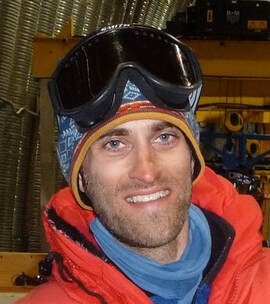
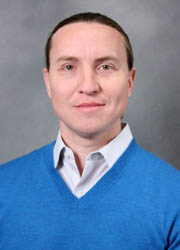
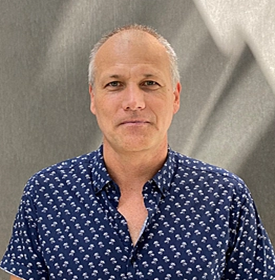
Navid Aslani is a Researcher at Bournemouth University's Faculty of Science and Technology , focusing on biomedical engineering and prosthetic design. His work bridges biomechanics, sensor technology, and computational modeling to enhance mobility solutions for amputees and orthopedic patients. Education: PhD in Biomedical Engineering (2017) from Bournemouth University. Research Interests center on prosthetic limb optimization, load monitoring systems, and kinematic modeling for surgical applications like reverse shoulder arthroplasty. He utilizes inertial measurement units, electromyography, and AI-driven simulations to improve device performance and clinical outcomes. Publication Trends show interdisciplinary expertise spanning Biomedical Engineering , Artificial Intelligence , Mechanical Engineering , and Rehabilitation Technology . Recent work (2024) explores AI-based load sensors for knee replacements, while older studies (2016–2019) address gait asymmetry, prosthetic foot dynamics, and deltoid muscle mechanics. Collaborations include partnerships with researchers such as Siamak Noroozi , Philip Sewell , and Mihai Dupac , often involving experimental and computational analyses for clinical applications.
John M. Fegyveresi is an Assistant Professor of Practice at Northern Arizona University's School of Earth and Sustainability, serving as Graduate Program Director for the Climate Science and Solutions MS program since 2019. Previously, he held roles at Boston University as an Adjunct Assistant Professor (2016-2019) and at the US Cold Regions Research and Engineering Lab (CRREL) as a Research Physical Scientist (2015-2019). He earned a PhD in Geosciences from Pennsylvania State University (2015), with earlier degrees in Engineering from Case Western Reserve University (BS, 1998) and Geosciences from PSU (MS, 2010). His research focuses on glaciology and climate science, specializing in ice core analysis and polar ice sheet dynamics. Key interests include modeling past climates using ice core data, quantifying ice-sheet deformation, and developing proxies for paleo-environmental conditions. He employs techniques like thin-section microscopy, micro-CT imaging, and numerical modeling to study ice microstructure, bubble trapping mechanisms, and brittle-ice behavior. His work has contributed to major ice core projects such as the South Pole Ice Core (SPICEcore) and the Hercules Dome Ice Core initiative. Recent studies emphasize links between ice microstructure (e.g., chessboard subgrain boundaries) and mechanical properties, as well as paleoenvironmental reconstructions based on bubble number-density and air content variability. Notable projects include collaborations with the International Ocean Discovery Program (IODP) Expedition 379 to study Amundsen Sea ice sheet history and development of hyperspectral imaging systems for ice core analysis. His research bridges field measurements, laboratory analysis, and computational modeling to address critical questions in polar climate science.
Erkin Şeker, Ph.D. , is a Professor in the Department of Electrical and Computer Engineering at the University of California, Davis, where he also serves as Co-Director of the Center for Neuroengineering and Medicine and Chair of the Designated Emphasis in Neuroengineering . His research integrates micro- and nanofabrication, electrochemical biosensors, multifunctional neural interfaces, and microfluidic tissue chips to address challenges in healthcare and life-science miniaturization. Education: Ph.D. in Electrical Engineering, University of Virginia (2007) Research Interests Prof. Şeker’s group operates at the intersection of nanoporous metals , microfluidics , and device engineering . Current thrusts include: Nanostructured electrochemical biosensors for nucleic-acid detection in food safety, water quality, and medical diagnostics. Multifunctional biomedical device coatings that combine neural recording with on-demand drug delivery to combat epilepsy and other neurological disorders. Nanoporous metal morphology libraries for high-throughput investigation of structure–property relationships. Microphysiological models of neuroinflammation and gut–brain-axis interactions using tri-culture tissue chips. Publication Trends Over the past decade the group has produced >80 peer-reviewed articles spanning Analytical Chemistry , ACS Applied Materials & Interfaces , Advanced Functional Materials , Lab on a Chip , and Journal of Neuroinflammation . The work reveals a clear trajectory from fundamental studies of nanoporous gold mechanics and surface chemistry to translational applications in closed-loop neural control, nucleic-acid diagnostics, and tissue-level disease models. Scientific Awards & Honors NSF CAREER Award NIH NIBIB Trailblazer Award UC Davis Academic Senate Distinguished Graduate and Professional Teaching Award UC Davis Graduate Studies Distinguished Graduate and Postdoctoral Mentorship Award BMES Cellular & Molecular Bioengineering Young Innovator Next Level Research Award (College of Engineering) Fund for Medical Discovery Award (Massachusetts General Hospital) Elevation to IEEE Senior Member Advising & Funding Prof. Şeker has mentored >25 Ph.D. and M.S. students and numerous undergraduates. Active funding includes NSF, NIH (NIBIB, NINDS, NIA, NCCIH), USDA-NIFA, UC Lab Fees, and industry partnerships totaling several million dollars. He is PI or Co-PI on grants such as: "NeuralStorm: Taking Neuroengineering by Storm" (NSF NRT) "Closed-Loop Electro-Fermentation…" (USDA-NIFA) "Next-Generation Neural Interfaces Based on Axonal Confinement…" (NIH NIBIB Trailblazer) "A Scalable Primary Cortical Tri-Culture Model…" (NIH R03) Labs & Teams He directs the Şeker Research Group , a multidisciplinary team of graduate students, post-docs, and undergraduates housed in the UC Davis College of Engineering. Shared resources include College clean-room facilities, the Center for Neuroengineering and Medicine, and collaborative ties with the UC Davis Alzheimer’s Disease Research Center, Comprehensive Cancer Center, and Environmental Health Sciences Center.
Marcial Gonzalez is an Associate Professor of Mechanical Engineering at Purdue University's School of Mechanical Engineering. He holds a Ph.D. in Aeronautics from the California Institute of Technology and has expertise in multi-scale modeling of granular systems, pharmaceutical manufacturing, and energetic materials. His research focuses on predictive modeling of particulate processes and their applications in industries like pharmaceuticals and energy. Education: Ph.D., Aeronautics (Minor in Materials Science), California Institute of Technology, 2011 M.Sc., Aeronautics, California Institute of Technology, 2006 Mechanical Engineer, University of Buenos Aires, 2002 Research interests emphasize multi-scale modeling of microstructure evolution in granular systems, particulate product design, and continuous manufacturing. Key areas include pharmaceutical tablet performance, energetic materials thermomechanics, and biomass processing. Notable awards include multiple Seed for Success Awards (totaling over $1M in grants) and teaching accolades like the Robert W. Fox Outstanding Instructor Award. He is affiliated with Purdue's Center for Particulate Products and Processes and Ray W. Herrick Laboratories. Awards: Purdue Insights Fellow (2025-2026) Fellow of Purdue University Teaching Academy (2025) Outstanding Engineering Teacher (2024, 2019) Robert W. Fox Outstanding Instructor Award (2021) Grants and advising: Active in securing grants for projects like FDA-funded Industry 4.0 frameworks and DOE biomass transport studies. His work bridges micromechanics with industrial-scale manufacturing challenges. Labs/Teams: Leads research at the Gonzalez Research Group, focusing on granular dynamics and particulate product engineering.
Dr. Matteo Pedrotti is a Senior Lecturer in Civil and Environmental Engineering within the Faculty of Engineering at the University of Strathclyde. His academic career focuses on geomechanics and advanced geomaterials research, with a particular emphasis on understanding material behavior from nano-to-micro scales to field applications. He leads multiple research projects and serves as a peer reviewer for prominent journals in his field. Dr. Pedrotti's research interests span the design and characterization of advanced composite systems of geomaterials and synthesized hydrogels. His work investigates how atmospheric interactions, stress history, and groundwater chemistry influence hydro-mechanical characteristics at the nano and micro scales. This research enables the engineering of advanced porous networks with unprecedented macroscopic bulk performance. His vision includes establishing a research group to develop "super soils" with enhanced water retention for agriculture, increased mechanical strength for construction, self-healing capabilities against desiccation cracking, and zero water permeability for environmental barriers. Analysis of Dr. Pedrotti's publication record reveals a strong focus on clay mechanics and soil characterization techniques. His research employs advanced methods like X-ray Computed Tomography to study particle kinematics and microstructural behavior. The work spans fundamental micromechanics of clay particles to practical applications in soil stabilization and environmental protection. Key themes include drying-induced volumetric behavior, pore-scale modeling, and the utilization of materials like mica for soil improvement. Dr. Pedrotti actively supervises postgraduate research and leads multiple funded projects. His current research portfolio includes: Exploring natural fibers to improve resilience of unreinforced masonry structures in Malawi (£24,986 funding) Experimental characterization of Bentonite hydromechanical behavior in high salinity environments (multiple projects totaling approximately £122,000) Mechanisms of stress transfer in clayey materials using X-ray Computed Tomography at Diamond Light Source (£60,000) An energy-free pump using nanoporous gels for passive subsurface water lifting Dr. Pedrotti maintains active professional engagement through peer review activities for journals like ACS Sustainable Chemistry and Engineering and Scientific Reports. He organizes the Geotechnical Engineering Course (CL-314) and participates in international symposia including IS-Grenoble2024 and the EPSRC Multi-Disciplinary IM3AGES Facility Workshop.
Professor Ingvars Birznieks is a Senior Research Fellow at the Department of Physiology, School of Medical Sciences, UNSW Medicine in Sydney, where he leads the Tactile Research Group at Neuroscience Research Australia (NeuRA). Previously, he held an academic position as Senior Lecturer (Physiology) at the School of Science and Health, Western Sydney University from 2011 to 2014. Dr. Birznieks is a sensory neurophysiologist specializing in sensory information encoding mechanisms, with research spanning tactile perception, neural coding, and bionic applications. His work integrates neuroscience, biomedical engineering, and clinical rehabilitation to understand how touch receptors encode information and how this knowledge can be applied to develop advanced prosthetics and rehabilitation technologies. His research program covers tactile receptors and sensorimotor control of the human hand, with applications in stroke rehabilitation, diabetic neuropathy, and bionic hand development. His recent publications reveal a strong focus on neural coding mechanisms in tactile perception, particularly the burst gap code for frequency perception, friction sensing mechanisms, and intensity coding. These studies consistently bridge fundamental neuroscience with practical applications in bionics and rehabilitation. His interdisciplinary approach connects neurophysiological findings with engineering solutions for artificial touch. Dr. Birznieks has secured significant grant funding, including ARC Discovery Projects and NHMRC Ideas Grants totaling over $2.5 million, supporting research on neural coding, sensorimotor control, stroke rehabilitation, and bionic technologies. His current major project 'The secret of tiny hand movements to feel and manipulate objects' (ARC DP230100048) investigates how humans use micro-movements to extract tactile information during object manipulation. He actively supervises students across neuroscience, biomedical engineering, and computer science disciplines, with recent publications featuring undergraduate and graduate students as first authors. His research group maintains collaborations with institutions in France and Sweden, providing international research opportunities for students. Dr. Birznieks' laboratory has developed unique non-invasive mechanical stimulation technology that allows precise control of neural communication at the single neuron level, enabling unprecedented investigation of how spiking activity influences perceptual experience.
Wudyalew Wondmagegn is an Associate Professor in the Department of Electrical and Computer Engineering at The College of New Jersey (TCNJ). His research focuses on semiconductor devices, polymer semiconductors, and sensor technology. He holds a Ph.D. in Electrical Engineering from New Mexico State University (2007), an M.Sc. in Physics from Addis Ababa University (1998), and a B.Sc. in Physics from Addis Ababa University (1991). His research interests include developing advanced sensors using polymer semiconductors and thin film transistors for environmental monitoring and gas detection. He has published extensively in journals like Journal of Computational Electronics and Nano-Micro Small , focusing on optimizing sensor performance and mitigating environmental interference. Wondmagegn has received the 2023 Support of Scholarly Activities (SOSA) Award from TCNJ. He has led NSF-funded research projects totaling over $300,000, including work on polymer semiconductor sensors for mixed carbonyl compounds and stabilization strategies for vapor sensing. He advises TCNJ’s College Volleyball team and serves on committees such as the LLC Task Force, Faculty Senate, and School of Engineering Academic Standards. His teaching includes courses like Circuit Analysis, Control Systems Laboratory, and Embedded Systems.
Jason Michael Quinn is a Research Associate Professor of Political Science at the Kroc Institute for International Peace Studies, University of Notre Dame. He specializes in civil war dynamics, peace agreement design and implementation, and post-conflict peacebuilding. His work focuses on conflict termination, recurrence prevention, and the effectiveness of peace processes globally. Quinn has contributed to negotiations in Colombia, Myanmar, Syria, and other regions, and co-leads the implementation verification unit for Colombia's 2016 peace agreement. Education: Ph.D. in Comparative Politics (University of North Texas, 2010) M.A. in Comparative Politics (University of Memphis, 2002) B.A. in Political Science (University of Memphis, 1999) Research Interests: Quinn’s work examines civil war termination mechanisms, peace accord implementation strategies, and the role of international third parties in conflict resolution. He has authored/co-authored over 30 peer-reviewed articles and book chapters, with a focus on Colombia’s peace process and comparative peacebuilding. Awards & Grants: Recipient of the Team Irish Award (2018) for the Colombia Barometer Project Total grants over $7 million from State Department, Humanity United, and UN agencies for peace process research Recognition for exceptional graduate research at University of North Texas Advising & Leadership: Co-Principal Investigator for major Colombia-related grants, directs the Peace Accords Matrix project, and advises international organizations like the UNDP and Norwegian Ministry of Foreign Affairs. His work bridges academic research and policy impact. Labs & Teams: Leads the Peace Accords Matrix (PAM) program, a global initiative tracking peace agreement implementation. Collaborates with teams in Colombia through the Colombia Barometer Initiative to monitor post-accord progress.
Fabrizio Cesare Filippo Di Pasquale is a Full Professor of Telecommunications and Director of the Institute of Mechanical Intelligence at Sant'Anna School of Advanced Studies in Pisa, Italy. With a career spanning academia and industry, he holds electronic engineering and information technology doctorates from Italian universities and has held research positions at University College London, Pirelli, and Cisco before joining Sant'Anna. His educational background includes: Electronic Engineering degree, University of Bologna (1989) Ph.D. in Information Technology, University of Parma (1993) Professor Di Pasquale's research focuses on optical fiber sensors, silicon photonics, and optical communication systems, with significant applications in structural health monitoring for aerospace, transportation, and composite materials. His work bridges fundamental photonics with industrial deployment through numerous patents and commercial applications. Recent projects include the SmartRail initiative for railway infrastructure monitoring and embedded sensor systems for spacecraft propellant tanks. Analysis of his 2023-2024 publications reveals a concentrated research trajectory toward miniaturized photonic sensors, radiation-hardened silicon devices, and embedded optical sensing in composite structures. Key trends include silicon photonics for aerospace applications, micro-interferometer-based interrogation systems, and distributed sensing for infrastructure monitoring, demonstrating consistent innovation in translating laboratory research to field-deployable solutions. With 25 patents filed and over 250 scientific publications, Professor Di Pasquale has established significant intellectual property in optical sensing technologies. His co-founding of Infibra Technologies S.r.l. demonstrates successful technology transfer, while his leadership of the Institute of Mechanical Intelligence drives cross-disciplinary research in intelligent mechanical systems and advanced sensing solutions for critical infrastructure. He directs the Institute of Mechanical Intelligence where his team develops next-generation optical sensing platforms, including the SmartRail project for continuous railway monitoring and embedded sensor systems for composite structures in aerospace applications. Current research emphasizes real-time structural health monitoring through embedded fiber optic networks and silicon photonic integrated circuits for harsh environments.
Professor Karina Bakkeløkken Hjelmervik is a Professor in the Department of Maritime Operations , Faculty of Technology, Natural Sciences and Maritime Studies at the University of South-Eastern Norway , Campus Vestfold. Since 2009 she has combined mathematics and oceanography to advance numerical modelling of coastal waters, in particular the Oslofjord system. Education: PhD in Fluid Mechanics, University of Oslo, 2009 – thesis on wave–current interactions in coastal tidal currents. Cand. Scient. in Oceanography, University of Bergen – thesis on cold CO₂ droplets in seawater. Cand. Mag. in Science, University of Bergen. Research interests revolve around fluid mechanics and physical oceanography . She develops and validates high-resolution numerical models that simulate water currents, tides, waves, and dispersion processes. Her work supports operational ocean forecasting, tidal-energy assessment, oil-spill contingency planning, and maritime training simulators. Project leadership spans more than 15 funded initiatives totalling over 30 MNOK. Flagship projects include the FjordOs series (2013–2021) that produced an operational forecast model for the Oslofjord, and collaborative grants on tidal power, clean propulsion, and micro-technology for pathogen detection. Publications and dissemination include 20+ peer-reviewed journal articles since 2012, keynote talks at IEEE OCEANS and JONSMOD, and popular lectures such as Mathematics in the Oslofjord . Student supervision is extensive: she mentors master’s and PhD candidates across mathematics, physics, and maritime programmes, though specific student names are not listed. Contact: karina.hjelmervik@usn.no | +47 31 00 93 25
Woei Ming Lee is a Research Fellow and Group Leader at the John Curtin School of Medical Research, College of Science and Medicine, Australian National University. He holds a PhD in Optics and Biophysics from the University of St Andrews (2010) and conducted postdoctoral research at Harvard Medical School (2010–2012). His research focuses on optical and fluidic technologies to study cell dynamics under extracellular cues like fluid forces and 3D topography. He leads the Optical Biofluidic Group (O-BIG), which aims to advance biomedical imaging and tissue engineering through biophysical approaches. Key affiliations include membership in the Centre for Computational Biomedical Sciences Division of Genome Sciences and Cancer Research interests span Biological Physics, Cell Adhesion/Migration, Fluid Dynamics, Optics, and Imaging. His work integrates optical traps, nonlinear nanofluid analysis, and volumetric imaging to address challenges in tissue engineering and disease modeling. Recent projects include developing micro-Avatars for tissue substitutes and studying cell-cell communication under fluid flow. Publications reflect advancements in microscopy techniques, such as adaptive optics, holographic imaging, and miniaturized systems. His work has been recognized with awards like the ARC DECRA, Eureka Prize, and Royal Society Fellowship. Scientific achievements include innovations in label-free imaging, thrombus dynamics analysis, and mold-free lithography for microfluidics. His lab’s focus on translational biomedical research bridges physics and medicine, with applications in disease modeling and clinical imaging.
Anna Rissanen is the Director of OtaNano, a national research infrastructure at Aalto University, leading advanced research in nanotechnology and microsystems. Her work focuses on MEMS (Micro-Electro-Mechanical Systems) and MOEMS (Micro-Opto-Electro-Mechanical Systems) technologies, particularly in developing spectral imagers and interferometers for applications in sensing and imaging. She has pioneered compact, high-performance devices such as handheld hyperspectral imagers and miniature MOEMS systems. Her research aligns with global sustainability goals, emphasizing innovative sensor solutions for environmental and industrial challenges. Research interests include MEMS fabrication, optical sensor design, and nanofabrication techniques. Notable contributions include patents on Fabry-Perot interferometers and collaborative projects advancing miniaturized sensing platforms. Current projects, such as FIRI NAMAQU and FIRI COMQURE, aim to enhance OtaNano's capabilities in addressing complex research demands from academia and industry. Her work has been featured in journals like the Encyclopedia of Analytical Chemistry and SPIE proceedings. As Principal Investigator on multiple Academy of Finland-funded projects, she oversees grants totaling millions of euros, fostering interdisciplinary collaborations. OtaNano serves as a hub for cutting-edge nanotechnology research, with ongoing projects extending through 2028.
Preda Ioana is an Associate Professor at the Haute école d'ingénierie et d'architecture de Fribourg (HEIA-FR), affiliated with the iPrint Institute. She specializes in dielectric materials, high-voltage insulation systems, and additive manufacturing for electrical engineering applications. Her research focuses on developing novel materials and sensor technologies for energy systems, biomedical applications, and industrial processes. Teaching roles: BSc Electrical Engineering courses (Electromagnetism, Materials Science, High Voltage Engineering) and MSc programs in Micro/Nano Technology. Leading projects: BRIDGE Discovery (solar cell processing), Hydrogen Fuel Cell Lab, and GreenSKHy (hydrogen sector skills development). Her research interests span dielectric characterization, printed electronics, and sensor innovation. Notable projects include low-cost distillation sensors for beverage production and advanced capacitors using inkjet printing. She collaborates with EPFL, CSEM, and industry partners on renewable energy and materials science initiatives. Recent publications address wireless bioelectronics for wound healing, high-voltage capacitor materials, and dielectric condition monitoring. Total project funding exceeds CHF 2.3M across ongoing and completed grants.
Mina Shahi serves as an Associate Professor in Thermal Conversion and Storage at the University of Twente's Faculty of Engineering Technology. Her research is anchored in the Department of Mechanics of Solids, Surfaces & Systems, where she leads investigations into advanced thermal energy systems. Her research spans Thermal Energy Storage , Nanofluid Dynamics , and Thermochemical Conversion , with specific expertise in salt hydrate systems, magnetic fluid applications, and combustion modeling. The fingerprint analysis of her work reveals dominant themes including Nanofluid Physics (100%), Free Convection (75%), Combustor Engineering (62%), and Magnetic Fields (52%). Recent publications demonstrate a clear focus on thermochemical storage optimization through advanced imaging and modeling techniques. Her 2024 work emphasizes micro-CT characterization of salt hydrates, algorithmic optimization of reaction kinetics, and novel reactor design for improved cyclability – reflecting a strategic push toward commercially viable thermal storage solutions. With 58 total research outputs since 2010 and an h-index of 20, her work shows consistent productivity peaking in 2024 with 10 publications. Her research actively contributes to UN Sustainable Development Goals through clean energy innovation. Dr. Shahi has supervised 5 research projects including PhD theses, and maintains strong external collaborations across international research networks. Her laboratory work centers on experimental validation of thermal storage materials using advanced imaging and magnetic fluid systems.
Alicja Anuszkiewicz, D.Sc., is an Associate Professor at the Institute of Electronic Systems within the Faculty of Electronics and Information Technology at Warsaw University of Technology (PW). With 35 publications, 6 projects, and 1 patent, her work focuses on optics, fiber Bragg gratings (FBG), birefringence engineering , and sensor development . Her research spans nanostructured optical fibers , mode-division multiplexing , and medical/photonics applications . Academic Rank: Associate Professor Email: alicja.anuszkiewicz@pw.edu.pl Consultations: Mondays 14:15–15:15 Research Highlights : Developed numerical tools for FBG spectral analysis in few-mode fibers. Engineered nanostructured ZEBRA fibers for polarization-insensitive sensors. Optimized weakly-coupled few-mode fibers for telecommunications systems. Created 3D-printed mechanical elements with embedded FBG sensors. The tag cloud derived from her work includes optoelectronics, UV radiation, fiber optic sensors , and graded index optics . Her bibliometric indices (h-index: 7, Total CiteScore: 111.2) reflect significant impact in automation, electronics, and space technologies .