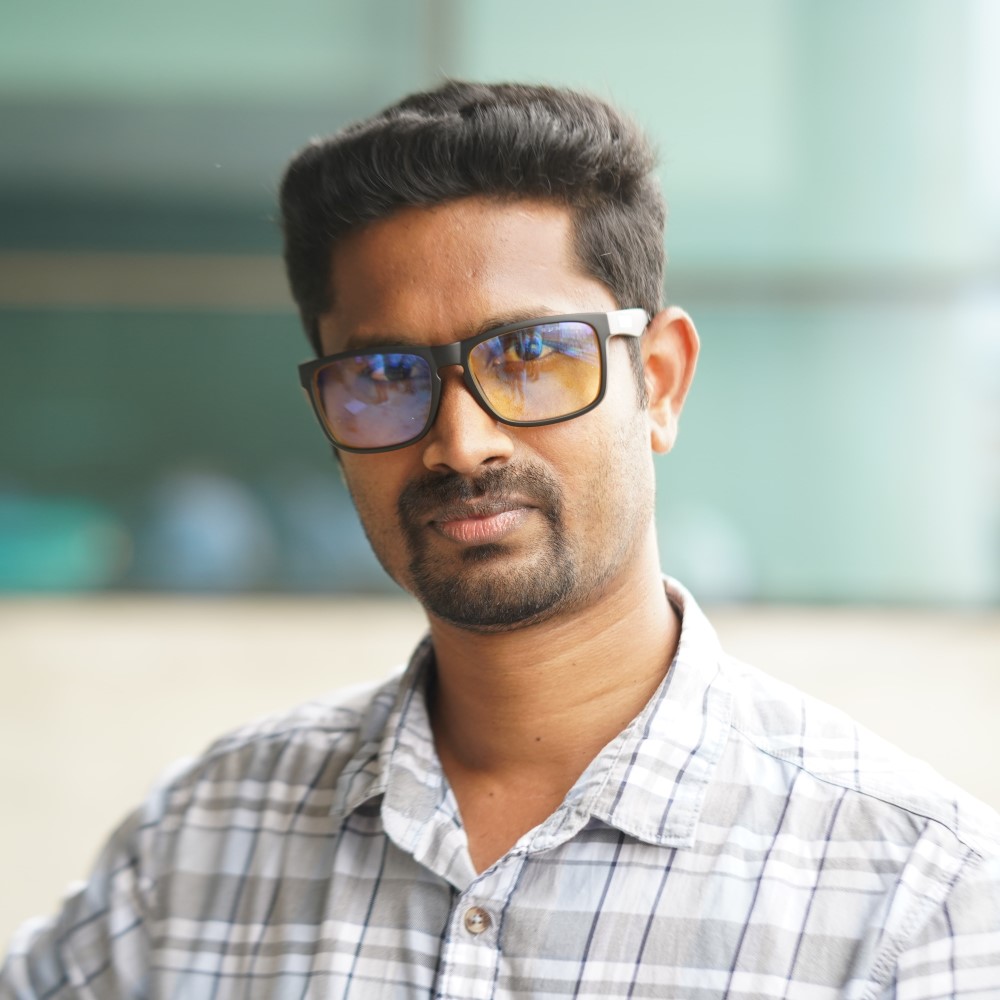
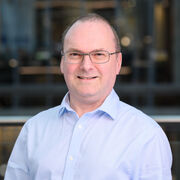
Christoph Veyhl is a Professor at the University of Applied Sciences Mannheim, College of Engineering, Department of Mechanical Engineering. He specializes in materials science and mechanical engineering with a focus on cellular metals, finite element analysis, and industrial computed tomography. Research Interests: His work explores the mechanical and thermal properties of sintered metallic structures, additive manufacturing, and 3D printing technologies. Utilizing micro-computed tomography and advanced numerical simulations, he investigates anisotropy, strain rate sensitivity, and thermal conductivity in cellular materials like metallic foams and hollow sphere structures. Publications: With 14 publications and 422 citations, his research spans topics from scan quality estimation in industrial CT using neural networks to mechanical testing of diffusion-bonded hollow spheres. Key methodologies include finite element analysis and lattice Monte Carlo simulations. Contact: Email: c.veyhl@hs-mannheim.de | Phone: +49 621 292 6154 | Office: Building L, Room 252
Dr. Nithyanandan Kanagaraj is an Assistant Professor in the Department of Physics at the Indian Institute of Technology Hyderabad, leading the Ultrafast Fiber Optics and Complex Photonics Laboratory . His interdisciplinary research bridges photonics, computational science, and materials engineering. Ph.D. from Pondicherry Central University Collaborates with engineers in Electrical, Communications, and Computer Science domains His research focuses on fiber lasers, nonlinear photonics, and ultrafast optical phenomena , with applications in sensing, high-performance computing, and additive manufacturing. Recent publications highlight trends in dissipative solitons, spectral pulsations, and advanced fiber devices , often leveraging AI/ML and quantum technologies for pulse optimization. CEIFPRA/IFCPAR Industry-Academic Grant (180 Lakhs) JICA Friendship Grant 2.0 OSA Senior Member (2021) Bureau of Indian Standards (BIS) member He mentors a diverse team of Ph.D. and Master's students, including Amala Jose, Subrata Manna, Ashish Kumar Kok , and others, while collaborating with international experts like Prof. Philippe Grelu (France) and Prof. David Richardson (UK).
Professor Faiz Shaikh holds the position of Professor in the School of Civil and Mechanical Engineering at Curtin University, Perth. His academic career spans over two decades, with roles including Associate Professor (2016–2022), Senior Lecturer (2012–2016), and Lecturer (2009–2012). He has also held industry roles as a Structural Engineer and Postdoctoral Researcher in Japan. His research focuses on sustainable construction materials, including geopolymer composites, recycled aggregates, nano-technology applications, and concrete durability. Key projects include lithium refinery residue utilization, recycled tire integration in construction, and geopolymer-based fire-resistant coatings. Shaikh has secured over A$3.285 million in grants since 2014, including projects on lithium slag applications, recycled glass concrete, and battery industry waste. He has authored 227 peer-reviewed publications, with an h-index of 55 (Google Scholar) and 52 (Scopus). Recipient of the IAAM Scientist Medal (2021) and Sentinel of Science Award (2016), he serves as an associate editor for Australian Journal of Structural Engineering and Frontiers in Materials . His teaching includes advanced structural modeling, concrete materials, and civil engineering sustainability.
Sören Östlund is a Professor in the Department of Material and Structural Mechanics at KTH Royal Institute of Technology. His research focuses on paper mechanics, fracture mechanics of paper and board, deformation and damage mechanisms in wood fiber-based materials, and forming of complex paper structures. He supervises graduate students, including Petri Mäkelä (PhD candidate in Solid Mechanics) and Adam Attemalm (Master’s student in Mechanical Engineering). His educational contributions include teaching courses such as Solid Mechanics, Fibre Technology, and Mechanics of Fiber Networks. He also serves as an examiner and course responsible in multiple engineering programs. His work integrates experimental and computational methods to advance understanding of material behavior under various conditions, particularly in packaging and structural applications. Key research trends in his publications emphasize numerical modeling of material behavior, fracture mechanics in composites, and the influence of environmental factors like moisture on material properties. His studies bridge fundamental mechanics with industrial applications, particularly in sustainable materials and packaging technologies.
Rolands Cepuritis is an Associate Professor at the Department of Structural Engineering , Norwegian University of Science and Technology (NTNU) . With over 20 years of international experience in cement production, concrete technology, and academia, his research focuses on sustainable concrete materials and advanced rheological modeling. Research Highlights: Leading MiKS (Microproportioning with Crushed Sand) project to optimize crushed sand in concrete Coordinating COIN (High Quality Manufactured Sand) initiatives Developing the FlowCyl one-parameter rheology test for cement paste Investigating calcium sulfoaluminate binders for carbonation resistance Advancing steel fiber-reinforced concrete for thin overlays Publication Trends: Recent work emphasizes manufactured sand optimization, rheological modeling with neural networks, acid resistance of novel binders, and sustainable tunnel lining solutions via SUPERCON project. Contact: Email: rolands.cepuritis@ntnu.no Office: Materialteknisk, 3-202, Gløshaugen, Richard Birkelands vei 1a, Norway
Dr. Christophe Pinna serves as a Senior Lecturer in Mechanical Engineering at the University of Sheffield's School of Mechanical, Aerospace and Civil Engineering. He graduated with a PhD from Ecole Polytechnique in France in 1997 and has been affiliated with the University of Sheffield since then. His academic roles include co-Directorship of the Sheffield Tomography Centre and membership on the Aerospace Division Board of the Institution of Mechanical Engineers. Pinna's research centers on mechanics of materials with specific expertise in fatigue, fracture, and manufacturing process modeling. His work bridges experimental mechanics (utilizing techniques like digital volume correlation, SEM-based DIC, and micro-CT) and computational mechanics (including finite element modeling, crystal plasticity, and phase-field simulations). Key application areas include automotive advanced high strength steels, thermo-mechanical processing of metals, and aerospace composite materials. His publications demonstrate consistent focus on multi-scale material characterization, with recent work emphasizing in-situ testing of composites and metal processing. The research output shows strong interdisciplinary collaboration across materials science, mechanical engineering, and manufacturing disciplines. Professional service highlights include: Section Editor and Editorial Board Member for European Journal of Materials Editorial Board Member for Materials journal Member of international scientific committees for EUROMAT2023 and FATIGUE2024 Full College Member of EPSRC As an advisor, Pinna has supervised numerous PhD students working on topics ranging from composite fatigue to advanced steel processing. His research is supported by significant grants from EPSRC, EU programs including Horizon 2020, and industry partnerships with companies like Tata Steel and BAE Systems. Current projects focus on X-ray micro-CT facilities, life cycle prediction of automotive materials, and fracture across scales. He co-directs the Sheffield Tomography Centre, which provides advanced imaging capabilities for multi-scale material characterization, particularly supporting research in damage evolution and microstructural analysis.
Dr. Christopher Smith is a Research Fellow at the Advanced Technology Institute (ATI) of the University of Surrey. He holds a Ph.D. and BSc (Hons) in Chemistry from Surrey, with doctoral research funded by DSTL on carbon nanomaterial applications. His career includes postdoctoral work at the University of Leeds on graphene hybrids and industrial collaborations with William Blythe Ltd. Smith specializes in carbon nanomaterials, porous materials, and advanced material characterization techniques like X-ray tomography and Raman spectroscopy. Education: BSc(Hons) Chemistry (University of Surrey), Ph.D. in Advanced Technology (University of Surrey). Research Interests: Focuses on carbon nanomaterials (graphene, CNTs), porous matrices (aerogels, hydrogels), plasma deposition, and hybrid material engineering. His work addresses applications in electronics, energy storage, environmental remediation, and space technology. Recent projects include developing ultra-stable polymer composites for ESA/NASA missions and non-destructive imaging of nanoparticle uptake in carbon sponges. Publications span 2014-2020, emphasizing material characterization and functionalization. Key areas include optimizing carbon nanotube quality via field emission analysis, creating magnetic carbon hybrids for contaminant adsorption, and advancing organic photovoltaic efficiency through novel interface layers. Collaborations include DSTL, William Blythe Ltd, and international academic partners. Current work continues at ATI on industrially-funded research in nanomaterials and emerging technologies.
Catherine Van is a Senior Lecturer at Universiti Kebangsaan Malaysia (UKM) specialising in earthquake engineering and structural dynamics. She transitioned to academia in 2024 after several years of structural engineering practice with a multinational consultancy in Malaysia. Education: PhD in Structural Engineering (Earthquake Engineering), Universiti Sains Malaysia, 2020 MSc in Civil Engineering (Earthquake Engineering), Universiti Sains Malaysia, 2014 BEng (Hons) in Civil Engineering, Universiti Sains Malaysia, 2012 Research Interests: Her work spans seismology, seismic hazard modelling for Peninsular Malaysia, dynamic analysis of structures, seismic assessment and design, and the rehabilitation of damaged buildings. She focuses on masonry-infilled reinforced-concrete frames and the development of practical macro-models for engineering practice. Publications Trend: Between 2014 and 2022 she authored seven peer-reviewed outputs, beginning with regional seismic hazard studies that refine ground-motion attenuation relationships for Sumatra subduction events affecting Malaysia, and progressing to experimental and analytical investigations on the cyclic behaviour of masonry-infilled RC frames, culminating in advanced fibre-hinge macro-models. Scientific Awards & Funding: No awards or grant details are listed in the supplied material. Students & Supervision: No advisees are reported in the provided text. Labs & Teams: The text does not specify research group affiliations or laboratory facilities.
Jarno Jokinen is a University Lecturer at Tampere University's Faculty of Engineering and Natural Sciences, specializing in Materials Science and Environmental Engineering. His research focuses on advanced composite materials, adhesive bonding technologies, and structural integrity analysis with applications in aerospace and manufacturing sectors. Research Interests: Jokinen's work centers on composite materials' mechanical behavior, fracture mechanics, and failure analysis under various loading conditions. He employs advanced computational tools like Finite Element Analysis (FEA), Virtual Crack Closure Technique (VCCT), and Digital Image Correlation (DIC) to model material performance. Key areas include adhesive joint certification, delamination prediction, and polymer interface characterization. Recent Trends in Publications: His recent studies emphasize predictive modeling of composite damage initiation (e.g., delamination in CFRP laminates), high-strain rate effects, and environmental conditioning impacts on material properties. He also explores innovative testing methods (e.g., microbond tests) and material systems such as tungsten-CFRP hybrids and plasma-coated composites. Awards: No specific scientific awards listed in current texts. Advising & Grants: While specific grants or student advisees are not detailed here, his extensive publication record indicates active engagement in academic and industrial collaborations.
Jay Srisuriyachot is a Research Associate in the Department of Mechanical Engineering at the University of Bath, affiliated with the Centre for Integrated Materials, Processes & Structures (IMPS). His research employs synchrotron X-ray diffraction and micro-computed tomography to investigate carbon fiber composites under cryogenic and mechanical loading conditions, with applications in aerospace and hydrogen storage systems. His primary research interests include composite materials characterization, X-ray diffraction techniques, cryogenic behavior of carbon fiber reinforced polymers, fiber orientation analysis, and failure mechanisms in structural composites. He specializes in advanced synchrotron-based methodologies to resolve microstructural responses during deformation and thermal cycling, particularly focusing on void formation, kink-band development, and thermal expansion anomalies in CFRP systems. Recent publications reveal a concentrated research trajectory in synchrotron-enabled composite characterization, with dominant themes in cryogenic material behavior (2023-2025), deformation mechanism analysis through combined XRD/μCT techniques, and failure prediction in aerospace-grade composites. His work bridges fundamental materials science with engineering applications in liquid hydrogen storage and propeller-blade design. Dr. Srisuriyachot serves as Co-Investigator on multiple externally funded projects including Micromechanical analysis of filament wound composite cylinders at cryogenic temperatures (2025-2026), X-ray diffraction of cryogenic carbon fibre composites for liquid hydrogen storage (2025-2026), and Understanding failure mechanisms of fibrous plaster elements in historic ceilings (2023-present), demonstrating sustained grant capture in advanced materials characterization. He operates within the IMPS research centre at Bath, leveraging state-of-the-art facilities for synchrotron diffraction, micro-tomography, and mechanical testing, while maintaining active collaborations with Diamond Light Source and international research teams.
Neha Chandarana is a Senior Lecturer at the School of Civil, Aerospace and Design Engineering, University of Bristol, and a Visiting Researcher at the University of Manchester. She is affiliated with the Bristol Composites Institute and leads the ACCIS Engineering Education Research Group. Research Focus: Composite materials, sustainable development, acoustic emission monitoring, and damage detection in carbon fibre laminates. Projects: Principal Investigator for the IGNITE Network+ and Ca-pow! projects, addressing energy research inclusivity and educational equity for marginalized students. Publications: Recent work explores mycelium composites for Africa, tooling pressure effects in composites, and sensor integration for damage detection. Education: BSc Hons and PhD in engineering-related disciplines.
Professor Kate Sugden is Deputy Dean of the School of Engineering & Applied Science at Aston University, where she leads research in photonics and fibre optic technologies. She holds appointments in the Mechanical, Biomedical & Design Engineering department and directs the Aston Institute of Photonic Technologies (AiPT). With industrial experience spanning ADC Pty Ltd, Oxford Fiber Optic Tools, and Indigo Photonics, she bridges academic research and commercial applications. Education: BSc (Hons) Physics, University of Birmingham (1989) MSc (Distinction), University of St Andrews (1991) PhD in Fibre Bragg Grating Applications, Aston University (1996) Her research develops novel fibre optic sensing platforms for industrial and biomedical applications, with core expertise in femtosecond laser processing, Bragg grating fabrication, and interferometric sensing. Current projects focus on miniaturized optical sensors for harsh environments, medical device monitoring, and energy systems diagnostics. Publication analysis reveals sustained innovation in optical metrology, with recent emphasis on medical sensing applications (40% of 2018-2025 outputs), multi-parameter sensor designs (30%), and low-cost detection systems (20%). This reflects strategic alignment with industrial biotechnology and energy conversion challenges. Honors: Medici Fellowship (2004) Chartered Physicist (CPhys) Member, Institution of Engineering and Technology Council (2014-2019) She coordinates industry partnerships for student placements and has supervised 12 PhD candidates. Current grants include EPSRC funding for wearable optical biosensors and EU Horizon support for offshore energy monitoring systems.
Professor Christoph Bruecker is a leading figure in fluid mechanics and aeronautical engineering at City, University of London, where he holds the BAE SYSTEMS Sir Richard Olver Chair and the Royal Academy of Engineering Research Chair in Nature-Inspired Sensing and Flow Control for Sustainable Transport. He is based in the Department of Mechanical Engineering and Aeronautics within the School of Science and Technology, conducting interdisciplinary research at the intersection of biofluid mechanics, micro-fluidics, aeroacoustics, and sustainable transport. His research is centered on developing bio-inspired solutions for flow control and sensing, particularly through the creation of aerodynamic ‘skins’ for future aircraft, inspired by natural systems such as peregrine falcons and barn owls. His work combines experimental fluid dynamics with advanced optical sensing, including fibre-optic whiskers and flexible micro-pillar arrays, to detect and control complex flow phenomena. The 15 most recent publications highlight a strong trend toward bio-inspired engineering, with a focus on flow sensing, vortex control, morphing wings, and noise reduction. His team investigates how biological systems like bird flight and seal whiskers can inform the design of next-generation sensors and aerodynamic surfaces. The research spans from fundamental fluid dynamics to applied aerospace and renewable energy technologies. Professor Bruecker has received several prestigious awards, including: BAE SYSTEMS Sir Richard Olver Chair on Aeronautical Engineering Royal Academy of Engineering Research Chair in Nature-Inspired Sensing and Flow Control for Sustainable Transport President’s Award for Outstanding Research Engagement: Media and Outreach at City (2018) He actively supervises a team of research students, including Raphael Glick, Muthuramalingam Muthuramalingam, Oliver Selim, and Anna Court, and leads projects supported by the Royal Academy of Engineering and BAE SYSTEMS. His lab is equipped with advanced experimental facilities, including wind tunnels and optical measurement systems, and his research has been featured in media outlets such as BBC2. He has no reported grants listed in the text, but his chair positions imply significant institutional and industrial funding. His work is conducted in close collaboration with interdisciplinary teams, focusing on real-world applications in sustainable aviation, underwater sensing, and energy systems. Future directions include further development of self-adaptive aerodynamic surfaces and intelligent flow-sensing skins.
Dr. Jean Elizabeth Aaron is a Visiting Lecturer in the School of Biomedical Sciences at the University of Leeds, where she has maintained a long-standing research presence following a distinguished career in bone biology. She was formerly Director of the Bone Structural Biology Laboratory and an MRC Visiting Fellow, and has supervised numerous PhD students and collaborated with leading institutions including the University of Sheffield, University of Bristol, and Merck Sharpe & Dohme. BSc in Applied Biology, University of Bradford PhD in Bone Biology, University of Leeds (1974) Her research focuses on the microarchitectural and macromolecular basis of skeletal fragility , particularly in osteoporosis and osteoarthritis. She pioneered techniques in undecalcified bone cryomicrotomy , computer-assisted histomorphometry , and 3D mapping of osteocyte networks . Her work challenges conventional views by proposing a Golgi-directed bone mineral biosphere , where intracellular mineralization in osteocytes forms calcified microspheres that constitute a dynamic, stress-responsive inorganic microskeleton. This model integrates periosteal Sharpey’s fibres as conduits for mechanical signaling, linking muscle forces to bone remodeling. The 15 most recent publications reveal a consistent trajectory: from foundational work on trabecular disconnection and histomorphometry to cutting-edge hypotheses on the evolutionary origins of bone mineralization, drawing parallels with protozoan and bacterial systems. The articles span cell biology , biomechanics , developmental biology , and paleohistology , with recurring themes of stress conductance , mineral quality over mass , and embryomimetic repair mechanisms . Techniques include electron microscopy, immunohistochemistry, micro-CT, and computational modeling. She received the Millennium Prize for Best Paper in BONE (2001) from the International Bone and Mineral Society and presented her work at Buckingham Palace. Her research has been supported by the MRC and Action Medical Research. Dr. Aaron has supervised several PhD students, including K.M. Linton, V. Fallon, and D.H. Carter, and has collaborated with clinicians such as L.D. Hordon and J.A. Kanis. She previously taught undergraduate modules on 'Bone in Health & Disease' and gross anatomy. Her laboratory hosted visiting scientists from around the world and trained numerous undergraduates through research projects. She remains active in research, with ongoing work at the Leeds Institute of Musculoskeletal Medicine, exploring novel histological explanations for bone marrow lesions in osteoarthritis and the clinical applications of Sharpey’s fibre biology in oral surgery, recently termed 'Embryomimetic Surgery'.
Dr. Francesco Dal Grande is a Research Fellow at Newcastle University specializing in solid oxide fuel cell technology. His work from 2008-2014 focused on micro-tubular and hollow fibre fuel cell architectures, with emphasis on anode and electrolyte materials engineering. His research spans Fuel Cell Technology , Materials Science , and Electrochemistry , particularly investigating nickel-based anodes, yttria-stabilized zirconia (YSZ), and ceria-gadolinia (CGO) electrolytes. He pioneered morphological control techniques for electroless-plated anodes and developed asymmetric electrolyte structures to optimize fuel cell efficiency and durability. Analysis of his 2008-2014 publications reveals consistent innovation in ceramic fuel cell materials, comparing anode-supported versus electrolyte-supported designs and advancing hollow fibre fabrication methods. His work established critical relationships between microstructure, material composition, and electrochemical performance. Dr. Dal Grande collaborated extensively with Professor Ian Metcalfe and Dr. Alan Thursfield in Newcastle University's energy research group, contributing to foundational developments in micro-tubular solid oxide fuel cell technology.