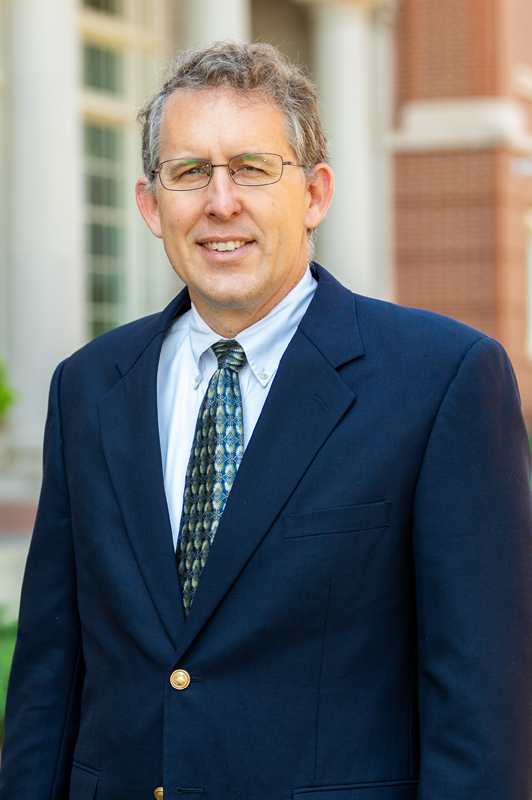
Jonathan J.L. Higdon is Dennis and Cathy Houston Professor in Chemical and Biomolecular Engineering at University of Illinois. His research investigates geophysical fluid dynamics of meandering rivers, simulations for petroleum reservoirs, and micro-scale dynamics of complex fluids. Research expertise includes computational algorithms for multiphase flows in porous media and rheology of colloidal suspensions. Has developed novel simulations for microstructure and dynamics of colloidal gels.
Ryan Wagner is a Research Assistant Professor in the School of Mechanical Engineering at Purdue University. He holds a B.S. (2008) and Ph.D. (2014) in Mechanical Engineering from Purdue University, with a minor in Physics. His research focuses on nanotechnology, microscopy, metrology, and dynamics, with applications in optomechanics and micro/nanotechnology. He has held postdoctoral positions at the National Institute of Standards and Technology (NIST) and Asylum Research, specializing in atomic force microscopy (AFM) instrumentation and optomechanical force standards. Education: B.S. in Mechanical Engineering, Purdue University (2008) Ph.D. in Mechanical Engineering, Purdue University (2014), Thesis: Advanced AFM Techniques for Cellulosic Nanomaterials Research Interests: Nanomechanics and optomechanics AFM-based material characterization Development of force/mass standards using optical cavities Biomedical applications of nanotechnology Articles Trends: Recent work emphasizes optomechanical systems, precision measurements in AFM, and interdisciplinary applications in biomedicine and materials science. Publications span Nature , Proceedings of the National Academy of Sciences , and Optics Express . Awards: National Research Council Postdoctoral Fellowship (2014) Office of Naval Research Summer Faculty Fellowship (2021) Charles C. Chappelle Fellowship (2009) Advising/Grants: Active in mentoring graduate students and securing grants for interdisciplinary projects. His lab focuses on applying vibration dynamics to multiphysics problems in collaboration with industry and national labs. Labs/Teams: Leads research in optomechanical force standards and AFM instrumentation development at Purdue’s School of Mechanical Engineering.
Sorin Mitran is a Professor in the Department of Mathematics at the University of North Carolina at Chapel Hill. His research focuses on computational simulation of multiscale and multiphysics systems, data-driven constitutive relations for hyperelastic materials, and information geometry for reduced stochastic models. PhD in Aerospace Engineering from Politehnica University Bucharest (1995) Professional background includes fellowships at University of Tokyo (1993), Karlsruhe Institute of Technology (1998-1999), and University of Washington (1999-2002) His research develops numerical tools to predict macro-scale behavior from micro-scale interactions, such as plastic deformation of metals from lattice defect dynamics, microtubule mechanics from molecular dynamics, and protein folding from atomic-level simulations. Mathematical approaches include adaptive computation, machine learning for constitutive law prediction, and information geometry for stochastic process analysis. Recent publications (2023-2018) span computational biology, multiscale fluid dynamics, and medical applications of continuum mechanics. Articles frequently explore data-driven modeling, wave propagation in biological systems, and GPU-accelerated numerical methods like Lattice Boltzmann and Lattice Fokker-Planck formulations.
F. Alijani is a researcher at TU Delft in the Dynamics of Micro and Nano Systems department. Their work focuses on nonlinear dynamics, nanomechanical resonators, and graphene-based sensor technology. Department: Dynamics of Micro and Nano Systems Research interests include: Nonlinear dynamics of 2D materials Graphene engineering for bio-sensing Atomic force microscopy (AFM) applications Optimization of nanomechanical systems Structural and aeroelastic modeling Recent publications highlight advancements in topology optimization, bacterial nanomotion detection, and AFM techniques. Collaborations include institutions like TU Delft and TU Delft - 4TU.ResearchData for datasets. No scientific awards are explicitly mentioned in the provided data. Labs & teams: Dynamics of Micro and Nano Systems group at TU Delft, working with Prof. P.G. Steeneken and Prof. A.M. Aragón.
Dr. Igor Chernyavsky is a Senior Lecturer in Applied Mathematics at the Department of Mathematics, The University of Manchester. His research focuses on complex living systems, particularly transport phenomena and biofluid dynamics in tissue physiology. He leads projects in continuum mechanics, mathematics in life sciences, and uncertainty quantification. His work contributes to UN Sustainable Development Goals through initiatives like Digital Futures, Christabel Pankhurst Institute, and Henry Royce Institute. Research interests include placental hemodynamics, biomimetic models, and multiscale modeling of biological systems. Key projects involve placental circulation modeling for stillbirth prediction, umbilical cord dynamics, and microfluidic studies of blood flow in porous media. He collaborates on placental imaging, bioreactor engineering, and clinical placentology. Recent publications highlight placental oxygenation, umbilical cord solute transfer, and robust fabrication of PDMS microcapsules mimicking red blood cells. His work bridges experimental and theoretical approaches, emphasizing clinical translation. He supervises PhD students and leads grants totaling £ millions, including Maternal & Fetal Health Research Centre (2018-2035) and ROBUST-BIOPRINT (2023-2025). He actively seeks collaborations in biomaterials, fluid dynamics, and biomedical engineering. Labs/teams: Continuum Mechanics Group, Mathematics in Life Sciences Team, and Uncertainty Quantification & Data Science Group.
Dr. Jie Feng is an Assistant Professor in the Department of Mechanical Science and Engineering at the University of Illinois at Urbana-Champaign. He holds a PhD from Princeton University and completed postdoctoral research there before joining UIUC in 2019. His research focuses on micro-scale transport phenomena in complex fluids and interfaces, with applications in energy, environmental sustainability, and healthcare engineering. Key areas include bubble dynamics, vesicle delivery systems, and fluid-structure interactions. Education: BSc (Thermal Engineering, Tsinghua University, 2009), MSc (Thermal Engineering, Tsinghua University, 2011), PhD (Mechanical and Aerospace Engineering, Princeton University, 2016). Awards include the Blavatnik Regional Postdoctoral Award nomination (2018), ACS PRF Doctoral New Investigator Award (2019), and Emerging Investigator recognitions from Soft Matter, RSC Advances, and Nanoscale journals (2023-2025). His lab, the Fluids, Interfaces & Transport (FIT) Laboratory, explores topics like contaminated bubble bursting’s role in pollutant transmission, vesicle-based drug delivery, and thin-film flows. Recent work includes studies on magnetically driven lipid vesicles and light-triggered cargo release. Teaching: Ranked Excellent in courses like ME 310 (Fluid Dynamics) and TAM 435 (Intermediate Fluid Mechanics). Lab Members: Supervises graduate and undergraduate researchers in experimental and theoretical fluid mechanics. Outreach: Engages in STEM education through programs like Worldwide Youth in Science and Engineering.
R.E. Khayat is a Professor in the Department of Mechanical & Materials Engineering at Western University, specializing in fluid mechanics, heat transfer, and non-Newtonian fluid dynamics. He holds a Ph.D. in Chemical Physics from McGill University (1989) and has over 35 years of academic and research experience, including roles at NRC Industrial Materials Institute and McGill University. Education: B.Eng. (Honours) Mechanical Engineering (1980), M.Eng. Civil Engineering (1982), Ph.D. Chemical Physics (1989), all from McGill University. Research focuses on thermal convection, free-surface flows, and hydrodynamic stability, with contributions to chaos theory in non-Newtonian flows. Has supervised nearly 50 graduate students and published over 150 journal papers in prestigious journals like Journal of Fluid Mechanics and Physical Review Letters . Active in academic leadership roles, including Associate Chair (2003–2005) and Associate Professor (1998–2003) at Western University. His research group explores micro-scale thermal convection, nano-fluid dynamics, and multiphase flow phenomena, with applications in polymer processing and materials science. Collaborative projects include studies on viscoelastic jet behavior and hydraulic jump formation in complex fluids. Awards and recognitions include international acclaim for work on chaos theory in fluid dynamics. His lab focuses on computational modeling and experimental validation of fluid flow phenomena, supported by grants from NSERC and industry partnerships.
James Schiffbauer holds the Marie M. & Harry L. Smith Endowed Professorship in Geological Sciences at the University of Missouri, where he directs the X-Ray Microanalysis Laboratory. His research investigates early animal evolution during the Ediacaran-Cambrian transition using paleobiological, geochemical, and advanced microscopy approaches. Education: PhD (Virginia Tech), MS (University of Kansas), BS (University of Nebraska-Lincoln) Research examines taphonomic processes governing soft-tissue fossil preservation, with emphasis on early complex multicellular fossils. Analytical techniques include scanning electron microscopy and synchrotron-based X-ray tomography to resolve biological signals from preservational artifacts. Recent publications explore Ediacaran 'death mask' preservation mechanisms, bilaterian gut evolution in cloudinomorphs, and Cambrian SPICE event biogeochemistry. Earlier work established micro-CT approaches for coprolite analysis and volcanological applications. Awards: Marie M. & Harry L. Smith Endowed Professorship GSA Geobiology Division Pre-Tenure Award MU System President's Award for Early Career Excellence NSF CAREER Award Teaches Environmental Geology, Geochemistry, and specialized courses on taphonomy and the Ediacaran-Cambrian transition. Directs the X-Ray Microanalysis Lab supporting interdisciplinary materials characterization.
Dr. Shelley Anna is Professor of Chemical Engineering at Carnegie Mellon University with courtesy appointments in Mechanical Engineering and Physics. She serves as Vice Provost for Faculty and directs the Anna Laboratory focusing on microfluidic systems and interfacial phenomena. Her research explores: Multiphase microfluidics for biomedical applications Interfacial rheology of complex fluids Nanoparticle transport at fluid interfaces Recent publications demonstrate advancing capabilities in micro-scale bioreactors and engineering education equity initiatives. Major honors include: NSF CAREER Award American Physical Society Fellowship Carnegie Science Award recognition The Anna Lab develops experimental methods for microscale interfacial analysis, supported by NSF, DOE, and industry partners.
Martien Hulsen is an Associate Professor at the Department of Mechanical Engineering , Eindhoven University of Technology (TU/e) . His research focuses on Computational Rheology , with applications in Polymer Processing , Microfluidics , and Additive Manufacturing (3D Printing) . Academic background: PhD in Mechanical Engineering (Delft University of Technology, 1988) Specializes in Numerical Methods for viscoelastic flow simulation Key applications: External Gear Pumps , Cell Sorting , and Micro-rheology Recent research trends: Interface Rheology , Particle Dynamics , and Thermal-Viscous Coupling His work has been published in top journals like Journal of Non-Newtonian Fluid Mechanics and Physics of Fluids . Martien serves on the editorial board of the Journal of Non-Newtonian Fluid Mechanics. Contact: m.a.hulsen@tue.nl
Prof. Dr.-Ing. Ulrich Schwarz serves as Professor of Design, Construction and Manufacturing of Wood Products at Eberswalde University of Sustainable Development, where he has been Dean of the Department of Wood Engineering since 2012. His academic leadership oversees comprehensive wood engineering programs while maintaining active research in advanced wood technologies. Schwarz earned his doctorate from Technical University Dresden in 2003 with research on decontamination processes for contaminated waste wood. His educational background includes Dipl.-Ing. degrees in Wood and Fiber Materials Technology from TU Dresden (1993) and Wood Technology from Rosenheim University of Applied Sciences (1990), establishing a strong foundation in both theoretical and applied wood science. His research program focuses on quality assurance systems, adhesive technology innovations, sawmill production optimization, solid wood processing techniques, and building physics measurement. Schwarz has pioneered work in piezoresistive bond lines for structural health monitoring, developing multifunctional wood adhesives that serve as integrated sensors in timber construction. His research bridges traditional wood technology with modern sensing methodologies to enhance structural safety and longevity. Analysis of his 15 most recent publications reveals a clear research trajectory evolving from fundamental wood adhesive properties toward smart material applications. His recent work demonstrates increasing sophistication in using impedance spectroscopy to optimize piezoresistive measurements in wood adhesives, with significant contributions to understanding mechanical properties of wood composites and curing behavior of advanced adhesive systems. As Department Dean, Schwarz manages academic programs and research infrastructure while maintaining his Ingenieur-Büro-Schwarz consultancy practice established in 2001. His career demonstrates exceptional integration of academic scholarship with industrial application, particularly in developing practical solutions for wood processing challenges and structural monitoring systems.
Dr. Gail Bornhorst is a Professor in the Departments of Biological & Agricultural Engineering and Food Science & Technology at the University of California, Davis. Her research focuses on quantitative methods to understand material transport, breakdown, and absorption in the gastrointestinal tract, aiming to improve food safety, quality, consumer health, and food processing efficiency. Her lab develops next-generation dynamic in vitro models to study digestion mechanics, food structure impacts, and processing effects on nutrient release. Research interests include: Food digestion dynamics (mechanical breakdown, acid/moisture uptake) Development of predictive gastric digestion models Impact of food structure on digestion kinetics and nutrient bioavailability Optimization of food processing techniques for health benefits Her work spans interdisciplinary applications such as: Plant breeding evaluations using digestion models Food waste valorization (e.g., Brazil nut byproducts) Protein gel innovation (pea/whey hybrids) Antioxidant bioavailability enhancement Key contributions include frameworks to correlate in vitro digestion results with in vivo outcomes, and advancements in understanding starch/protein hydrolysis mechanisms. Her lab collaborates on engineering digestion simulators and applying advanced imaging techniques (e.g., micro-CT) to track food breakdown in real-time.
Dr. Anil Misra is the Chair and Professor in the Department of Civil and Environmental Engineering at Florida International University (FIU), Miami. Previously, he served as the Glenn L. Parker-James L. Tyson Professor of Engineering Mechanics at the University of Kansas (KU) and Associate Director of KU's Institute for Bioengineering Research. He also held faculty positions at the University of Missouri-Kansas City (UMKC) from 1990 to 2007. He holds a bachelor’s degree in civil engineering from the Indian Institute of Technology (IIT), Kanpur, India (1985), and M.S. and Ph.D. degrees from the University of Massachusetts Amherst (1988 and 1991). His teaching focuses on engineering mechanics, materials engineering, computer methods, and geotechnical engineering. Dr. Misra’s research bridges mechanics and materials science, emphasizing granular micromechanics, biomaterials, and geotechnical engineering. His work includes pioneering the granular micromechanics approach (GMA) to model granular materials and metamaterials. He has authored over 350 publications, co-edited four books, and guest-edited six journal special issues. His research has been funded by governmental agencies and industry. He has received the 2017 Eugenio Beltrami Senior Scientist Prize for contributions to granular micromechanics and a 2018 Fulbright Specialist award. He actively serves on editorial boards, technical committees, and provides industry consulting. His lab explores interdisciplinary topics like dental adhesives, metamaterials, and computational mechanics.
Robert Jackson is the Albert Smith Jr. Professor in the Department of Mechanical Engineering at Auburn University’s Samuel Ginn College of Engineering. He holds a Ph.D., M.S., and B.S. in Mechanical Engineering from the Georgia Institute of Technology and is a leading researcher in tribology, contact mechanics, friction, wear, and lubrication. He serves as Editor-in-Chief of the ASME Journal of Tribology and leads a research group focused on multiscale modeling, electrical contact reliability, and sustainable biolubricants. His research interests include: tribology, friction, wear, surface engineering, surface fatigue, lubrication, nano-lubricants, surface texturing, and multiphysics modeling. He applies these to challenges in electric vehicles, aerospace systems, and biomedical devices. His work integrates experimental validation with finite element and statistical modeling to understand contact behavior across scales. His recent publications focus on electrical erosion in EV bearings, nanoparticle-enhanced greases, mixed lubrication models, and biolubricants from waste oil. These works reflect a strong trend toward sustainable engineering, advanced materials, and predictive modeling in mechanical systems. His interdisciplinary approach bridges mechanical, materials, and electrical engineering. ASME Fellow Fellow, Society of Tribologists and Lubrication Engineers (STLE) Ralph Beard Memorial Academic Award Editor-in-Chief, ASME Journal of Tribology Dr. Jackson advises graduate students such as Jack Janik and collaborates with researchers on projects involving electrical connectors, solenoid valves, and biolubricant development. His lab engages in both fundamental contact mechanics and applied industrial problems. He leads the tribology minor and student sections of ASME and STLE at Auburn.
Irene Rocchi is an Associate Professor in the Department of Environmental and Resource Engineering, specializing in Geotechnics & Geology at the Technical University of Denmark (DTU). Her research integrates experimental soil mechanics with innovative engineering solutions, focusing on ground characterization, soil behavior across scales, and sustainable geotechnical practices. She leads key projects such as SoIA (Soil is alive) and B-test, contributing to advancements in geotechnical instrumentation and interdisciplinary soil science. PhD, City University of Hong Kong (2010–2014) MSc in Civil Engineering, Politecnical School of Turin (2007–2009) Bachelor in Civil Engineering, University of Bologna (2004–2007) Her research interests center on experimental soil mechanics, with a strong focus on laboratory and field characterization, unsaturated soils, micro-scale analysis, and the influence of biological factors on soil behavior. She emphasizes innovation and the translation of research into practical engineering applications, particularly in flood protection, ground improvement, and sustainable infrastructure. The recent publications reflect a consistent trend in advanced geotechnical testing, probabilistic modeling, and interdisciplinary biogeotechnics. Her work spans from fundamental soil behavior studies to applied technologies like digital twins and energy storage in geomaterials, demonstrating a strong integration of mechanics, sustainability, and innovation. Semper Ardens Excellence Grant (Carlsberg Foundation) InnoExplorer Grant (B-test project) Irene Rocchi actively supervises PhD students and contributes to major research projects at DTU. She has been involved in industrial collaborations and has led funded projects focusing on sustainable underground construction, soil swelling, and infrastructure performance. Her work bridges academic research and real-world engineering challenges. She is involved in the SoIA research group and contributes to DTU’s Sustainable Geotechnics initiative, where she develops new sensing technologies and promotes interdisciplinary approaches to soil science. Her lab focuses on advanced soil testing, NMR-based homogeneity assessment, and biologically influenced soil mechanics.