Professor Denis Doorly is a Professor of Fluid Mechanics in the Department of Aeronautics at Imperial College London's Faculty of Engineering. His research focuses on biomedical fluid mechanics, particularly respiratory and cardiovascular systems, with expertise in computational fluid dynamics (CFD) and aerosol transport. He has published extensively on nasal airflow modeling, cardiovascular MRI simulations, and aerosol dynamics in medical contexts. Key contributions include CFD cohort studies on nasal decongestion effects, benchmarking models for SARS-CoV-2 transmission, and ventilator strategies during the pandemic. Research interests span biological fluid mechanics, biomedical flows, and medical device design. His work integrates computational modeling with clinical applications, addressing issues like tracheal compression, myocardial perfusion, and aerosol extraction during surgeries. Collaborations include studies on isolated heart models and particle deposition in respiratory systems. Affiliations include the Biological Fluid Mechanics and Biomedical Flows groups at Imperial. His publications (139+ articles) highlight interdisciplinary applications of fluid mechanics to healthcare challenges.
Laura Alvarez is a Junior Chair (Tenure Track) at the University of Bordeaux since 2022, conducting research at the Paul Pascal Research Center (CRPP), a joint CNRS-University of Bordeaux unit. Her office is located at B-224, 115 Avenue du Dr Albert Schweitzer, 33600 Pessac, France, with contact via (+33) 05 56 84 30 27 or laura.alvarez-frances@u-bordeaux.fr. She leads the BIO 2.0 team's research on active matter and colloidal systems. Her educational trajectory includes: PhD at University of Bordeaux and KU Leuven (2013-2016) under Prof. MP Lettinga and Dr. Eric Grelet Postdoctoral research at ETH Zurich (2017-2021) with Prof. Lucio Isa SNSF Spark postdoctoral fellowship (2020-2021) Her research centers on Active Matter , Chemical Communication , and Bio-inspired microsystems , investigating active liposome design, colloidal-lipid membrane interactions, and collective colloidal behavior. Key methodologies include optical tweezers and microfluidics for studying enzymatic particle navigation and colloidal lattice assembly. Her publication record (2017-2023) reveals a strong focus on programmable active colloids and microfluidic applications , with significant contributions to artificial microswimmers and reconfigurable systems appearing in Nature Communications, PNAS, and Physical Review Letters. Emerging trends show increasing emphasis on biomedical applications of active matter. Key recognitions include: Spark postdoctoral grant (SNSF, 2020) IdEx PhD fellowship (2013) She secured major grants including ANR JCJ Project MYMESYS (2023) and France-Berkeley Fund (2023), while her mentoring role involves graduate student supervision through University of Bordeaux's tenure-track framework. As BIO 2.0 team lead at CRPP, she directs experimental work on active colloidal particles using microfluidic platforms and optical manipulation, maintaining active collaborations with ETH Zurich, University of Bordeaux, and international partners across Europe.
Dr Yulai Zhang is a researcher in the Department of Materials Physics at the Australian National University . His work focuses on advanced imaging techniques for material and geological analysis. Expertise: X-ray micro-computed tomography (μCT), pore-scale and multiscale modeling, coal seam and ore characterization Collaborations: International partnerships in coal bed methane, mineral liberation, and rock failure analysis His research applies 4D/X-ray tomography to study dynamic processes in copper ores, shale, and coal, including fragmentation, diffusion, and fracture networks. Recent publications highlight innovations in super-resolution imaging , feature extraction methods , and in-situ studies of mineral behavior under stress. Dr Zhang actively supervises students and contributes to ore beneficiation, CO2 geo-sequestration, and unconventional reservoir characterization. Collaborative projects involve institutions in Australia and Indonesia, with a focus on digital rock physics and microstructural evolution .
Dr. Seher Ata is an Associate Professor in the School of Minerals and Energy Resources Engineering at the University of New South Wales (UNSW). Prior to joining UNSW, she was a Research Academic at the Centre for Multiphase Processes, Newcastle University. Her research focuses on fundamental and applied aspects of froth flotation, bubble-particle interactions, and water chemistry effects in mineral processing. PhD in Chemical Engineering, University of Newcastle, Australia MSc and BSc in Mining Engineering, Hacettepe University, Turkey Her work spans froth flotation dynamics, bubble coalescence, and recovery of fine/coarse particles, with recent projects addressing lithium recovery from brines and tailings reprocessing. She has led ARC Centre of Excellence, ARC Linkage, and ACARP-funded research initiatives. Dr. Ata has published over 100 articles in high-impact journals and holds editorial roles at Mineral Processing and Extractive Metallurgy Journal and International Journal of Mining Science and Technology . She was elected to the University of Newcastle’s Emerging Research Leadership Program (2011) and recognized in the world’s top 2% of scientists in Mining and Metallurgy (2021). Supervised PhD/Masters students: Yesenia Saavedra Moreno, Yueyi Pan, Feng Zheng, Manivannan Selvaraju Grants: BHP Tailings Challenge, ARC Centre of Excellence, ACARP projects on flotation standards and water chemistry
Prof. Daryl W. Yee is a Tenure Track Assistant Professor at École Polytechnique Fédérale de Lausanne (EPFL), affiliated with the Institute of Electrical and Micro Engineering (IEM) and multiple teaching units. He holds a B.Eng. from Imperial College London, and M.Sc. and Ph.D. from Caltech, followed by postdoctoral research at MIT. His research focuses on integrating molecular design and materials processing to develop advanced functional materials addressing societal challenges in healthcare, energy, and climate change. Key research directions include Polymer-to-X additive manufacturing, dynamic polymers, microstructure control in polymers, and novel 3D printer development. Education highlights include: B.Eng in Materials Science and Engineering, Imperial College London (2011-2014) M.Sc. and Ph.D. in Materials Science, Caltech (2014-2020) Postdoctoral Associate at MIT (2020-2022) His lab, ALCHEMY, emphasizes democratizing advanced materials manufacturing through accessible chemistries and processing strategies. Current teaching roles span Materials Science and Engineering and Microengineering. Four PhD students are currently advised, and he oversees courses in electrical engineering and materials engineering. Research interests emphasize hydrogel-based additive manufacturing, nanoparticle superlattices, and polymer design. Though no funded PhD/postdoc positions are currently open, self-funded researchers are encouraged to contact him directly.
Per Augustsson is an Associate Professor and Senior Lecturer at Lund University's Division for Biomedical Engineering (Faculty of Engineering, LTH). He leads the Acoustofluidics group and serves as Principal Investigator at NanoLund: Centre for Nanoscience. He is affiliated with LTH Profile Areas in Engineering Health, Nanoscience, Photon Science, and LU's Light and Materials initiative. His research focuses on acoustofluidic technologies for biomedical applications, including ultrasound-driven cell/nanoparticle separation, with contributions to UN Sustainable Development Goals. He has secured grants from the Swedish Research Council and Horizon Europe. Research Interests: Acoustofluidics : Designing devices that use ultrasonic waves to manipulate microscopic objects (e.g., blood cells, nanoparticles) in fluids. Microfluidics : Developing lab-on-a-chip systems for biomedical diagnostics. Thermoacoustic Phenomena : Investigating heat-induced fluid motion for precision control in microsystems. Recent Work Trends: Recent publications (2024–2025) highlight advancements in high-energy acoustofluidic devices, label-free cell separation techniques, and real-time acoustic streaming analysis. His work bridges physics and engineering to address challenges in precision medicine and nanotechnology. Awards: Ingvar Carlsson Award (2017) The Phabian Award (2013) Lund University Faculty of Engineering PhD Thesis of the Year (2011) Grants & Projects: - Microscale Thermoacoustic Streaming (Swedish Research Council, 2025–2030) - BLOODFLOW: Acoustic Whole Blood Imaging (Horizon Europe, 2024–2026) - Single-Cell Mechanical Fingerprint (2024–2025 grant) Infrastructure: Manages Micro Particle Imaging Velocimetry (µPIV) and Confocal Microscopy facilities for fluid dynamics analysis.
Dr Mahdi Davoodianidalik is a researcher in the Department of Nuclear Physics & Accelerator Applications at the Australian National University (ANU). He is affiliated with the Space plasma power and propulsion group and the Physics of fluids group, focusing on interdisciplinary research at the intersection of plasma physics, fluid dynamics, and space propulsion technologies. His research interests include Turbulence and wave-driven flows Plasma thrusters and electrothermal propulsion Fluctuation-induced forces and interactions Fluid-structure dynamics Thermal engineering of micro-thrusters Nonlinear phenomena in fluids Recent publications highlight his work on analogs of the Casimir effect in turbulent flows, passive propulsion mechanisms, and advanced propulsion systems using solid hydrocarbon propellants. He has contributed to understanding turbulence in both fundamental and applied contexts, with a focus on energy transfer and chaotic flow phenomena. His collaborations span ANU colleagues including Nicolas Francois and Michael Shats, with a strong emphasis on experimental and computational fluid dynamics.
Alison Elder, Ph.D., is an Associate Professor in the Department of Environmental Medicine at the University of Rochester School of Medicine and Dentistry. She is affiliated with several research programs including the Environmental Health Sciences Center, the Inhalation Exposure Facility, the Toxicology Training Program (as Co-Director), the Lung Biology and Disease Program, and the Multidisciplinary Training in Pulmonary Research Program. Her research focuses on the toxicology of inhaled ultrafine particles (UFPs) and engineered nanomaterials, with implications for pulmonary, cardiovascular, and central nervous system health. Ph.D. in Environmental Toxicology, University of California, Irvine (1997) B.S. in Chemistry, Chatham College (1992) Post-doctoral Fellow, Department of Environmental Medicine, University of Rochester (1997–2000) Dr. Elder’s research centers on the health impacts of airborne particulate matter, particularly how age, co-pollutants, and health status influence responses to inhaled particles. Her work explores the translocation of particles to extrapulmonary tissues, including the brain, and their role in neurodegenerative diseases like Alzheimer’s. She investigates mechanisms such as oxidative stress, inflammation, and glymphatic dysfunction. Her lab also studies airborne micro- and nanoplastics, focusing on exposure characterization and health implications. Her recent publications span topics including Alzheimer’s disease models, glymphatic impairment, nanoparticle dissolution, and diesel exhaust effects on lung barriers. These works emphasize particle-induced inflammation, neurotoxicity, and the intersection of environmental exposure with neurological outcomes. Young Investigator Award, Society of Toxicology (2009) Cornerstone Alumna Award, Chatham University (2007) Graduate Student Fellowship, U.S. EPA (1995–1996) College Chemistry Award, Society for Analytical Chemists of Pittsburgh (1992) Dr. Elder mentors graduate students in toxicology and has trained numerous postdoctoral fellows and technicians. She leads an active research laboratory funded by NIH and DOD, investigating air pollution’s role in brain health and military burn pit exposures. Her collaborative research includes work with experts in neuroscience, materials science, and environmental engineering. She is also involved in national workshops on nanomaterial risk assessment and children’s environmental health. She leads the Elder Lab, which conducts studies on air pollution and Alzheimer’s disease, characterizes airborne micro- and nanoplastics, and develops models for nanoparticle toxicity. The lab uses advanced techniques in particle characterization, animal modeling, and cellular assays to assess health risks.
Amirreza Aghakhani is a Assistant Professor and Director of the Institute for Biomaterials and Biomolecular Systems at the University of Stuttgart . His work focuses on Microrobotics and Biomedical Engineering , particularly in targeted drug delivery, microsurgery, detoxification, and diagnostics using micro- and nanofabrication and ultrasound technologies . Research Interests: Microrobotics, biomedical applications, wireless actuation, acoustic manipulation, lab-on-a-chip systems, and smart materials. Recent publications highlight advancements in piezoelectric energy harvesting , magnetic microrollers for therapy, and acoustic trapping of particles. His team explores adaptive microrobotic agents and biologically-inspired designs to bridge biomedical research with clinical applications.
Dr. Olga Barrera is a Reader in Mechanical Engineering at Oxford Brookes University, School of Engineering, Computing and Mathematics. She serves as a year tutor for undergraduate engineering programs and has previously held a Research Fellow position at the Department of Engineering Science, University of Oxford (2008–2017), and a consultancy role at China Medical University Hospital, Taiwan. Her academic work spans teaching, supervision, and leading a research lab focused on image-based multi-physics modeling of multi-phase materials. Reader in Mechanical Engineering, Oxford Brookes University (2018–present) Research Fellow, Department of Engineering Science, University of Oxford (2008–2017) Consultant, Department of Medical Research, China Medical University Hospital, Taiwan Her research interests lie at the intersection of computational mechanics, biomechanics, and materials science, with a focus on soft load-bearing tissues such as the knee meniscus. She integrates advanced imaging (micro-CT), experimental testing, and fractional calculus-based modeling to study tissue behavior and bio-inspired materials. Her work also extends to hydrogen embrittlement in metals and innovative finite element methods. Her recent publications (2023–2025) reveal a strong trend in image-driven modeling of biological tissues, fractional viscoelasticity, and bioinspired engineering solutions. Key themes include the mechanical behavior of meniscal tissue, fluid-structure interaction, anomalous transport in porous media, and deep learning applications in tissue mimicry. These works are published in high-impact journals such as Philosophical Transactions of the Royal Society A , Materials & Design , and Acta Biomaterialia . Scientific awards and grants highlight her international recognition and research leadership: Marie Skłodowska-Curie Individual Fellowship (€190K, 2018–2020) EPSRC HemS grant (Co-I, £340K, 2014–2017) Research Excellence Award, Oxford Brookes (2021–2022, £20K) Visiting Professor Scholarship, France (2023, €4K) FNR Luxembourg Crucible Grant (€8K, 2021–2022) She has supervised numerous postgraduate students including PhD and MSc researchers, and has advised over 30 undergraduate final-year projects across Oxford and Oxford Brookes. She has led or co-led significant research grants from EPSRC, FNR, Rolls-Royce, and the Oxford Orthopaedic Engineering Centre. Her lab, the Oxford image-based multi-physics modelling of multi-phase materials, collaborates with institutions in Italy, Luxembourg, and France. She is an active member of the Materials Processing and Modelling (MPM) research group.
Roland Larsson is a Professor and Head of Subject in Machine Elements at Luleå University of Technology, Sweden. His research focuses on Tribology, particularly lubrication regimes (boundary to elastohydrodynamic), contact mechanics, surface roughness effects, and applications in rolling element bearings, clutches, hydraulic systems, tires, and sports equipment. He has supervised over 20 doctoral and licentiate students, contributed to advanced courses, and developed teaching methods like Flipped Classroom and Constructive Alignment . Education: Ph.D. (1996, Luleå University of Technology), Docent (2001), M.Sc. in Mechanical Engineering (1988). Research: Central themes include elastohydrodynamic lubrication, surface roughness in contact interfaces, and sustainable lubricants. His work explores water-based lubricants, ionic liquids, and glycerol mixtures. Publications: Recent articles (2025) investigate water-based lubricants' film formation, ski-snow friction dynamics, and tribochemical properties of green lubricants. Earlier works (2024-2023) cover micropitting, wear models, and multi-scale contact analysis. Awards: Recipient of multiple tribology awards including ASME Best Paper, Nordea's Vetenskapliga Pris, and Venture Cup North. He has held leadership roles at Luleå University, including Dean and Vice-Dean of the Faculty of Engineering Board. Collaboration: Active in international research networks as peer-reviewer, faculty opponent, and external examiner. His post-doctoral work includes affiliations with Leeds University and SKF Engineering Research Centre.
Elvis Genbo Xu is an Associate Professor at the Department of Biology, University of Southern Denmark. His research focuses on environmental toxicology, particularly micro/nanoplastics and crude oil pollutants. He employs transcriptomics and bioinformatics to study marine ecosystems and embryonic model systems. University of Southern Denmark Department of Biology Active since at least 2018 Research Interests: Micro/Nanoplastics Crumb Rubber Marine Protected Areas Endocrine Disruptors Transcriptomics Bioinformatics Article Trends (2018-2019): Focus on nanoplastics and microplastics Environmental impact assessment Toxicity mechanisms in aquatic organisms Methodological innovations in plastic analysis Interdisciplinary approaches combining toxicology, materials science, and molecular biology Scientific Recognition: 2024 World's Top 2% Scientists 2023 Undervisningsprisen på Naturvidenskab 2021 Faculty Research Dissemination Prize 2020 Best ES&T Letters Paper Advising & Editorial Roles: Active PhD/Postdoc supervision Junior Editor at Journal of Hazardous Materials (2020) Editorial Board member for Environment International (2022)
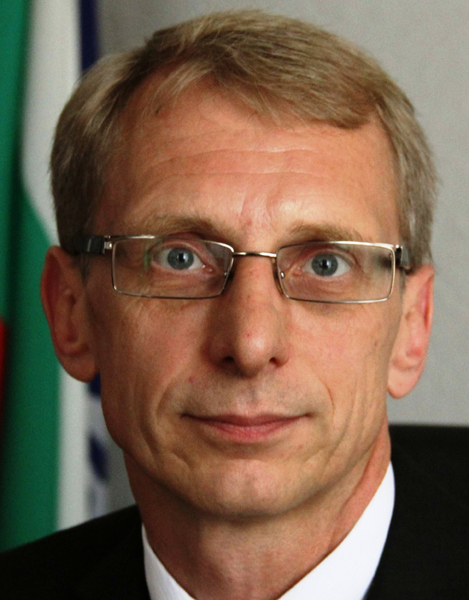
Nikolai Denkov is a Professor of Physical Chemistry at Sofia University's Faculty of Chemistry and Pharmacy, leading the Laboratory of Active Formulations and Materials since 2017. His administrative roles include Head of the Department of Chemical Engineering (2008–2015), Deputy Minister (2014–2016), and Minister of Education and Science of Bulgaria (2017). He holds a DSc from Sofia University (2007) and has authored over 160 peer-reviewed articles with an h-index of 45. Research focuses on colloid science, surfactant systems, and interfacial phenomena, including foam rheology, emulsion stability, and self-shaping of oil droplets. His studies bridge fundamental physics and industrial applications in cleaning agents, food technology, and pharmaceuticals. Key contributions include discovering antifoam mechanisms and self-emulsification processes. Recipient of the Solvay Prize (2019) and Bulgaria's highest scientific honor, 'Pythagoras' (2010) Supervised 12 PhD students and led 40+ industry-funded projects with companies like Unilever and BASF Active in international organizations: IACIS Council member, ERC panel chair, and ESA advisor His work emphasizes translational research, with patents in formulation technologies and over 7,300 citations. Current research explores smart materials and micro/nanostructured systems.
Kevin Chetty is a Professor of Wireless Sensing at University College London (UCL), leading the Urban Wireless Sensing Lab within the Department of Security and Crime Science. His work bridges radar technology, machine learning, and healthcare applications, with a focus on passive sensing systems. Education: PhD in Medical Ultrasound Physics (Imperial College London, 2004-2007), MRes in Image and X-Ray Physics (King's College London, 2003), BSc in Physics (King's College London, 1999) Research spans radar micro-Doppler signature analysis for human behavior classification, software-defined radar development, and integrated communication-sensing systems, with applications in security, healthcare, and smart environments. Recent work emphasizes privacy-preserving technologies and edge processing for real-time operations. Scientific awards include the 2022 IET Radar Systems Best Paper Runner-Up, 2022 IEEE Radar Conference 2nd Place, and 2015 National Instruments Engineering Impact Award. He has received funding from government and industry sectors in telecommunications, IoT, security, and healthcare. Teaching roles: Programme Convener for MSc Crime Science and IEP Minor in Crime and Security Engineering; Module Convener for Security Technologies and Crime Mapping & Spatial Analysis Consultancy: Huawei Technologies (2020-2022), Metropolitan Police Service (2019)
Yuebing Zheng is a Professor of Mechanical Engineering & Materials Science and Engineering at the University of Texas at Austin, holding the Cullen Trust for Higher Education Endowed Professorship. He leads a research group innovating optical nanotechnologies for applications in health, energy, and manufacturing. His work focuses on light-matter interactions, optically active materials, and interdisciplinary training. Key roles include Graduate Advisor for the Materials Science Program and past leadership as Associate/Assistant Professor since 2013. Education: PhD in Engineering Science and Mechanics (2010), Penn State University Postdoctoral Researcher (2010-2013), UCLA (Chemistry and Biochemistry) MSc in Physics (2003), National University of Singapore BSc in Physics (2001), Nankai University Research Interests: Optical manipulation technologies (e.g., optothermal tweezers) Nanophotonics and metamaterials Machine learning for materials discovery Biomedical applications (e.g., cell analysis, chiral sensing) Clean energy systems Recent Article Trends: Focus on AI-driven materials design, optothermal microrobotics, and advanced optical systems for energy and biomedical applications. Key innovations include photonic batteries, graphene moiré systems, and steerable active particle swarms. Awards: 2025 SPIE Fellow 2024 Optica Fellow 2017 NIH New Innovator Award 2014 Beckman Young Investigator Multiple best paper awards (2019–2023) Advising & Grants: Supervised over 20 PhD students/postdocs. Active grants from NIH, NSF, ONR, NASA, and industry partnerships. Current lab focuses on optical manipulation, metamaterials, and AI-integrated nanotechnology. Labs/Teams: Director of the Zheng Research Group, affiliated with the Texas Materials Institute. Collaborates on projects merging nanoscience with machine learning and biomedical engineering.