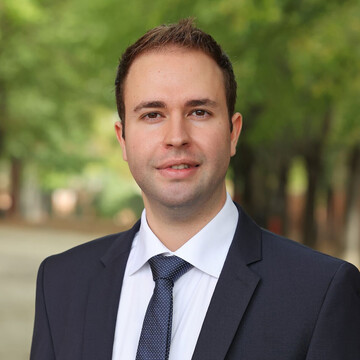
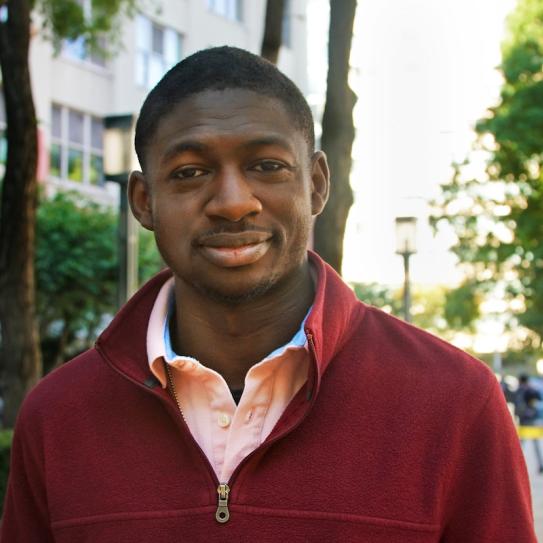
Chiara Malavasi is a Postdoctoral Researcher at ZEW - Leibniz Centre for European Economic Research in Mannheim, Germany, and a member of the Italian Economic History Association (ASE) since 2016. She is also associated with the Collaborative Research Centre (CRC TR 224) at the University of Bonn and University of Mannheim. Education: Bachelor's degree in Economics from the University of Rome Tor Vergata, Italy Master's degree in Economics from the University of Pisa and Sant’Anna School of Advanced Studies, Italy Exchange semester at the University of Hamburg, Germany Research Interests Her work focuses on applied micro-econometric methods to investigate intersections between labour economics, health economics, public economics, and education economics, with a specific emphasis on socio-economic determinants of life expectancy and policy impacts on social insurance systems. Labs and Teams Research Unit 'Labour Markets and Social Insurance' at ZEW Collaborative Research Centre (CRC TR 224) in Mannheim, Germany Contact Information Email: chiara.malavasi@zew.de Phone: +49 (0)621 1235-334 Address: ZEW - Leibniz Centre for European Economic Research, L7, 1, 68161 Mannheim, Germany
Philipp Wangner serves as an Assistant Professor in the Department of Economics at the University of Mannheim since September 2024, following a postdoctoral position at Columbia Business School's Economics Division. He earned his Ph.D. in Economics from the Toulouse School of Economics in 2023. His educational background includes: Ph.D. in Economics, Toulouse School of Economics, 2023 Wangner's research centers on Macroeconomics with emphasis on household heterogeneity's impact on aggregate outcomes and implications for fiscal/monetary policy design across business cycles and growth horizons. He employs heterogeneous agent New Keynesian (HANK) models and DSGE frameworks to investigate inequality dynamics, stabilization policies, and optimal taxation mechanisms. His work frequently examines how marginal propensities to consume and invest interact with economic shocks. His recent publications reveal a cohesive research trajectory focused on the intersection of wealth distribution, policy effectiveness, and macroeconomic stability. Wangner consistently explores how household heterogeneity shapes policy transmission mechanisms, with particular attention to tail distributions in inequality metrics and the trade-offs between short-term stabilization and long-term growth objectives. His collaborative work with researchers like Alexandre Gaillard demonstrates methodological innovation in integrating political economy constraints into macroeconomic modeling. Wangner has not received any publicly documented scientific awards or fellowships. No information is available regarding graduate student supervision or specific research grants. His work appears to be conducted independently within the Department of Economics without dedicated lab infrastructure or team affiliations mentioned in the source materials.
Gustav Martinsson is a Professor of Finance at Stockholm University , affiliated with the Swedish House of Finance and the Mistra Center for Sustainable Markets (MISUM) . His research sits at the intersection of corporate finance, sustainability, and the real economy, focusing on carbon pricing, environmental regulation, and finance's role in innovation. Role: Professor, Stockholm Business School Research: Climate policy, R&D financing, transparency, and government crisis lending His recent work analyzes how carbon taxes and biofuel policies affect firm emissions and productivity, with empirical evidence from Sweden. He has published in top-tier journals including the Journal of Finance , Review of Financial Studies , and Management Science . Key findings include: Carbon pricing reduces emissions but shows sectoral heterogeneity Stock markets better enable technology-led growth than credit markets Transparency enhances corporate R&D and patenting Scientific awards: Highly Commended Financial Times Responsible Business Education Award 2025 Runner-up Financial Times Responsible Business Education Award 2023 His work has been cited in policy evaluations by institutions like the Swedish National Audit Office and Swedish Energy Agency . Current projects examine payout taxes and R&D financing mechanisms.
Cristina Viegas is an Assistant Professor of Finance at the Faculty of Economics, University of Algarve, and a Researcher Collaborator at CEFAGE-UE. With over 35 years of continuous service at the university, she progressed from Tutor (1987) through Lecturer, Instructor, and Invited Assistant Professor roles to her current position since 2006. Her educational foundation includes: Ph.D. in Management, University of Algarve (2006) M.A. in Management, ISEG (1993) B.A. in Business Management, University of Algarve (1988) Dr. Viegas specializes in Financial Markets, Financial Derivatives, Real Options, and Mathematical Finance , with significant contributions to green banking and SME performance analysis in tourism. Her research uniquely bridges advanced quantitative modeling with Portuguese and European market applications, particularly evident in her work on credit default swaps during the Eurozone crisis and recent sustainable finance studies. She has published in journals including the International Journal of Financial Studies and Journal of Sustainable Finance & Investment . Analysis of her 15 most recent publications reveals three distinct research phases: foundational work on derivative valuation (2008-2012), Eurozone crisis-related studies of sovereign debt markets (2014-2016), and contemporary focus on sustainable finance and regional SME performance (2019-2024). This evolution demonstrates both methodological consistency in quantitative finance and responsive adaptation to emerging economic challenges. As a long-standing faculty member, she contributes to both teaching and research infrastructure at the University of Algarve, collaborating with CEFAGE-UE on projects examining regional economic development and financial innovation. Her current work emphasizes the intersection of traditional financial modeling with sustainability imperatives, particularly in Portuguese banking and tourism sectors.
Daniel Vignon is an Assistant Professor in the Department of Civil and Urban Engineering at NYU Tandon School of Engineering , and a key member of the C2SMARTER University Transportation Center. Since 2022 he has led the FEATS laboratory (For the Economic Analysis of Transportation Systems), where he integrates engineering and economics to design policies for emerging mobility services and smart infrastructure. Education Ph.D., Civil Engineering, University of Michigan, Ann Arbor, 2022 M.A., Economics, University of Michigan, Ann Arbor, 2022 B.S., Mechanical Engineering, MIT, 2017 Research Interests Dr. Vignon’s scholarship lies at the intersection of transportation economics , operations research , and urban policy . He develops analytical and empirical models to understand how new mobility technologies—ride-hailing, connected and automated vehicles, and smart infrastructure—affect market outcomes, social welfare, and regulatory effectiveness. His work informs evidence-based policy design aimed at reducing congestion, enhancing safety, and ensuring equitable access. Recent Research Trends Across 11 major publications (2021-2025), his research has progressively deepened from foundational studies on ride-hailing driver labor supply and parking strategies for automated vehicles to comprehensive evaluations of congestion-pricing policies and the economic underpinnings of automated-driving safety and liability. A clear trajectory emerges: early micro-behavioral analyses of driver responses to incentives have evolved into large-scale policy evaluations using rich empirical data from New York City and nationwide, culminating in forward-looking investigations of taxation and insurance regimes for automated-vehicle markets. Scientific Awards No specific awards are listed in the provided material. Advising & Grants Dr. Vignon currently advises PhD student Yanchao Li on a project examining the welfare impacts of NYC’s ride-hailing congestion surcharge, funded under the $15 million C2SMARTER Tier 1 UTC grant (2023-2028). Additional grant and fellowship details are not disclosed in the text. Labs & Teams He directs the FEATS laboratory and is an active researcher within the C2SMARTER consortium, a seven-university center led by NYU Tandon that tackles urban mobility challenges through integrated research, education, and technology transfer initiatives.
Dr. Madhusudan Acharyya serves as a Senior Lecturer at Glasgow Caledonian University London, where he focuses on risk management research and education. His academic work spans financial and non-financial risk domains with particular expertise in enterprise risk management frameworks, operational risk, and regulatory compliance. Dr. Acharyya's research interests form a comprehensive portfolio addressing critical risk challenges across multiple sectors. His work encompasses enterprise risk management, operational risk management, capital adequacy regulations, corporate risk governance, climate change risk, alternative risk financing mechanisms, micro-finance, micro-insurance, and SME risk management. These interests demonstrate both theoretical depth and practical relevance to contemporary risk challenges facing organizations globally. Analysis of his publication history from 2006 through projected 2026 reveals consistent scholarly output with increasing focus on emerging risk domains. His research demonstrates interdisciplinary connections between traditional financial risk management and newer areas like cyber-risk, climate adaptation, and pandemic response. The trajectory shows evolution from foundational risk management studies toward more specialized applications in emerging risk areas. Dr. Acharyya actively supervises PhD students and welcomes inquiries from potential candidates interested in developing research proposals within his expertise areas. His work connects with multiple UN Sustainable Development Goals, demonstrating commitment to research with societal impact. His publications appear in reputable journals including Expert Systems with Applications, The Geneva Papers on Risk and Insurance, and Risk Management and Insurance Review.
Professor Rebecca Bednarek is a leading scholar at the School of Management, Te Herenga Waka-Victoria University of Wellington, specializing in strategy as practice, organizational paradoxes, and financial markets with particular expertise in (re)insurance. She serves on editorial boards for top journals including Academy of Management Journal and Organization Studies, and is incoming Editor at Strategic Organization. Her research bridges theoretical insights with practical implications for addressing global challenges, particularly in disaster insurance. Her research focuses on the social practices of organizations and financial markets, examining strategizing in complex settings including the New Zealand Science Sector, reinsurance industry, and public-private collaborations addressing global insurance protection gaps. Bednarek is an expert in qualitative methods, with emphasis on global ethnography, studying paradoxes, and presenting persuasive ethnographic findings. Her work explores how organizations navigate paradoxical tensions, particularly in contexts of disaster risk and insurance protection. Bednarek's publication trajectory shows consistent contribution to top management journals, with recent work focusing on translating research into impact for grand challenges, organizational paradoxes during the pandemic, and interdisciplinary approaches to paradox theory. Her most significant contributions include the book Making a Market for Acts of God (Oxford University Press) examining the global reinsurance industry and the recent Disaster Insurance Reimagined (2023) exploring public-private mechanisms addressing insurance protection gaps. Best Paper Award (2017) Best Paper Award (2015) Best Paper Award (2014) Fellow, Higher Education Academy (2018) Bednarek currently supervises doctoral research on Governance in Maori Organisations and leads the grant-funded project 'Strategizing for Resilience: Developing new forms of disaster insurance to enable sustainable indigenous community development' (2024-2026). She teaches Strategic Management and Research Methods across undergraduate, MBA, and executive programs, demonstrating commitment to both theoretical advancement and practical application of management knowledge. Her research team approach emphasizes the ebb-and-flow dynamics necessary for sustained impact on complex societal issues.
Preston C. Sprenkle, MD is an Associate Professor of Urology at Yale School of Medicine and Director of the Urology Research Fellowship. He holds multiple leadership positions including Division Chief of Urology at the VA Connecticut Healthcare System and Chair of the National Comprehensive Cancer Network Prostate Cancer Early Detection Guidelines Committee. Dr. Sprenkle is affiliated with Yale Cancer Center, the Prostate & Urologic Cancers Program, and the Urologic Oncology team. Dr. Sprenkle earned his BA in Human Biology from Stanford University (1998), MD from Columbia University (2004), completed residency at New York Presbyterian Hospital (2009), and a fellowship at Memorial Sloan Kettering Cancer Center (2011). He also participated in the Yale School of Management Emerging Leaders Program (2018). His research focuses on improving prostate cancer diagnosis and treatment through advanced imaging techniques. Dr. Sprenkle was one of the first physicians nationwide to implement the Artemis Device in 2009, merging 3D ultrasound with MRI for precise cancer identification. He is a pioneer in 'focal therapy' that treats only cancerous lesions rather than the entire prostate, minimizing side effects like erectile dysfunction and incontinence. His current research examines ablation technologies (cryoablation, irreversible electroporation, TULSA, laser ablation) and uses machine learning to enhance diagnostic accuracy. Recent publications demonstrate his focus on MRI-fusion biopsy, social disparities in prostate cancer care, AI applications in diagnosis, and comparative treatment outcomes. His work spans clinical trials, imaging technology validation, and healthcare equity research. Dr. Sprenkle has received several honors including the Mentor Appreciation Award (2017-2020), Best Poster Podium Presentation (2009), and was a Finalist in the NY section AUA Valentine Essay Contest (2007, 2009). As a clinician, Dr. Sprenkle emphasizes individualized treatment plans, stating: 'I want my patients to feel that I hear their concerns and treat them like a person. I am pleased at the end of a long consultation when they feel like they understand their disease and their options.' He serves as Principal Investigator and Sub Investigator for multiple clinical trials evaluating novel prostate cancer treatments.
Fredrik Wulfsberg serves as a Professor in the Department of Economics and Methodology at Oslo Business School, Oslo Metropolitan University. His research focuses on labor market dynamics, macroeconomic policy, and price formation mechanisms, with extensive empirical work using Norwegian datasets. He maintains an active public presence through economic commentary and policy analysis. Wulfsberg's core research examines wage rigidity phenomena, their institutional drivers, and macroeconomic consequences including inflation persistence and unemployment dynamics. His work critically analyzes Norway's fiscal rule regarding oil fund management and explores price dispersion patterns in retail markets. He bridges microeconomic foundations with macroeconomic policy outcomes through rigorous empirical methodology. Analysis of his 2014-2022 publications reveals consistent emphasis on empirical macroeconomics using microdata. Key trends include cross-country studies of wage rigidity (OECD), micro-level price adjustment evidence, and policy evaluations of Norway's oil wealth management. His recent work addresses pandemic-era macroeconomic challenges and fiscal sustainability, demonstrating strong policy relevance through frequent engagement with contemporary economic debates. No scientific awards were mentioned in the provided text. The available information does not specify any students supervised by Professor Wulfsberg or research grants he has administered, though his extensive publication record suggests significant research activity.
Johan N.M. Lagerlöf serves as Associate Professor in the Department of Economics at the University of Copenhagen's Faculty of Social Sciences, specializing in industrial organization, political economy, and microeconomic theory with applications in game theory and contract theory. He teaches master's-level courses including industrial organization, contract theory, and Micro III (game theory). Education: PhD, Stockholm School of Economics (1998) His research investigates strategic market interactions through rigorous game-theoretic modeling, focusing on welfare implications of information structures, pricing strategies, and market design. Key contributions examine consumer privacy in digital markets, insurance market dynamics, and contest mechanisms, consistently bridging theoretical microeconomics with real-world policy relevance. Publications from 2017-2024 reveal sustained emphasis on information asymmetry and strategic behavior across industrial organization contexts. Core themes include welfare effects of anonymous shopping, Bertrand competition under uncertainty, and hybrid contest designs, demonstrating methodological coherence in applying microeconomic theory to diverse market settings. He actively supervises students in industrial organization and political economy while maintaining significant peer-review contributions to leading journals including Journal of Economic Theory, International Economic Review, and Journal of Public Economics, reflecting his standing in the economics research community.
Pierre Cahuc is Professor of Economics at Sciences Po, Paris, and Research Fellow at CEPR. He has been an IZA Research Fellow since 1999 and served as IZA Program Director for Labor Market Institutions (2004-2023), Editor of IZA Journal of Labor Economics (2012-2023), and Editor-in-chief of IZA World of Labor since 2023. Previously, he advised the French Prime Minister as member of the Conseil d'Analyse Economique (2006-2010, 2012-2016). His research centers on labor market institutions, unemployment dynamics, and wage-setting mechanisms within macroeconomic frameworks. Cahuc has published extensively in premier journals including American Economic Review, Econometrica, and Quarterly Journal of Economics, and co-authored the MIT Press graduate textbook Labor Economics (2014) with Carcillo and Zylberberg. Recent publications (2023-2024) reveal continued focus on institutional impacts: analyzing temporary work wages, short-time work efficacy, employment protection legislation, labor court biases, and apprenticeship systems. These works demonstrate methodological diversity through micro-macro linkages and policy evaluations, maintaining his signature emphasis on real-world labor market frictions and institutional design.