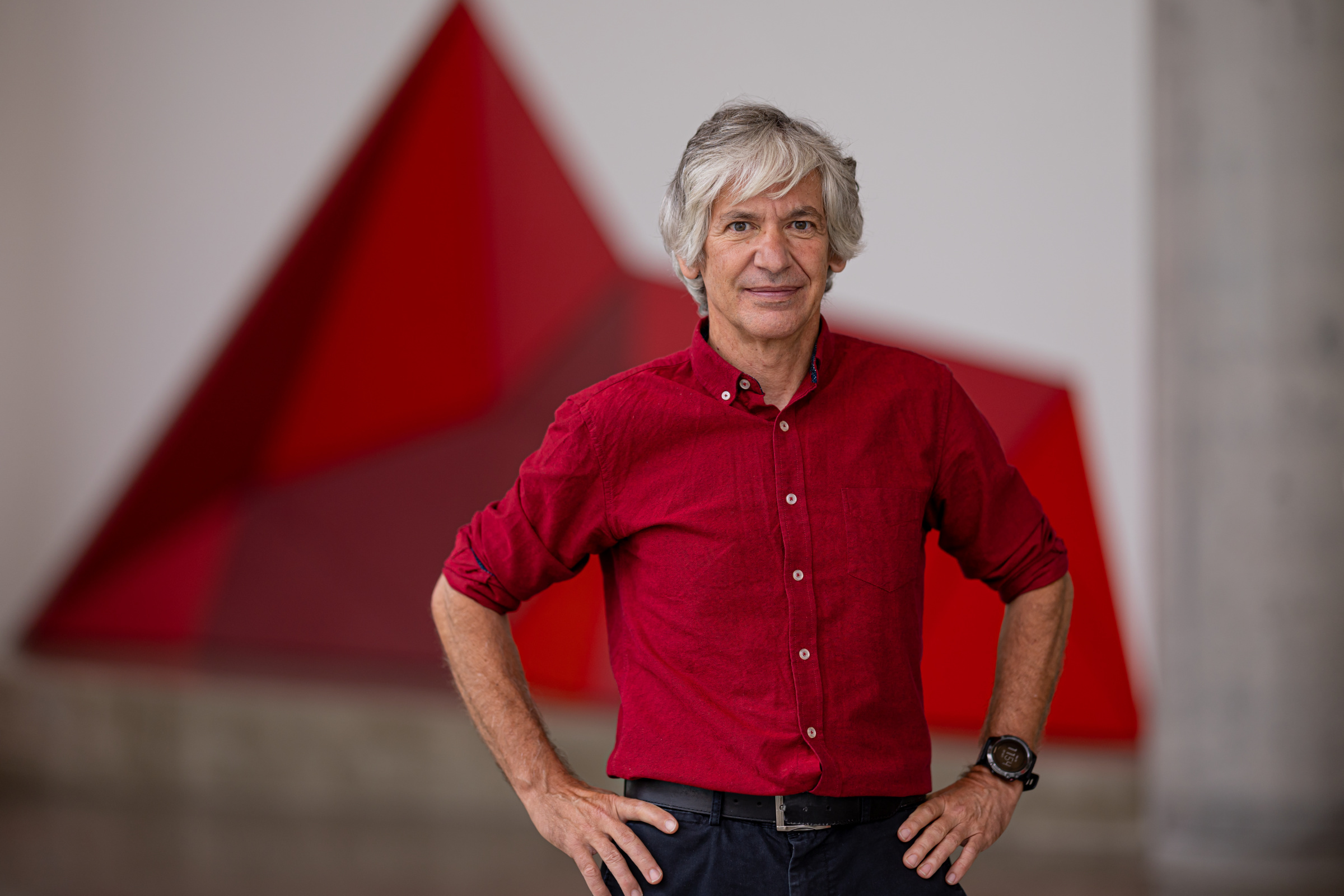
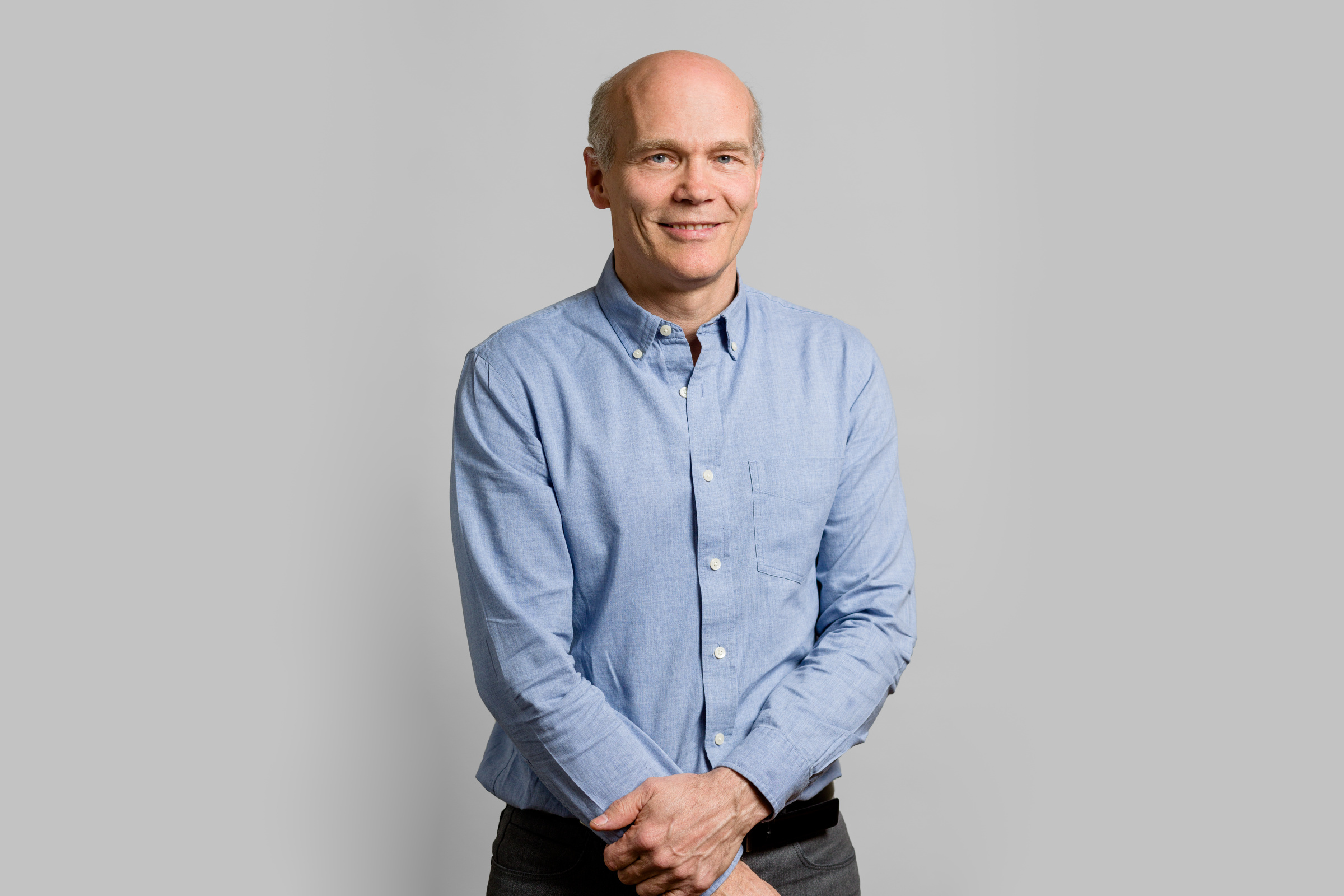
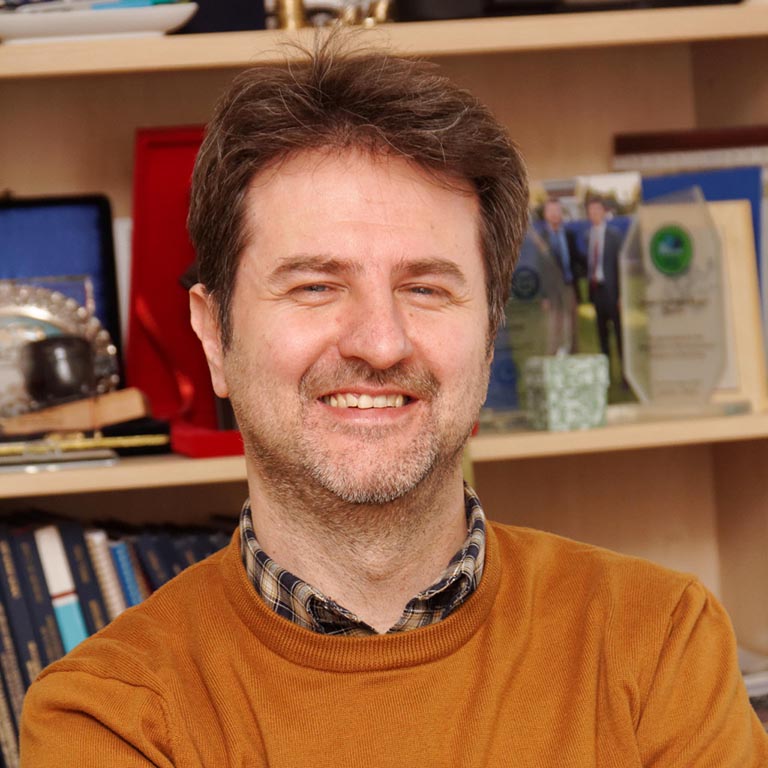
Dr. Dietmar Schlosser is a Group Leader in Environmental Mycology at the Department of Applied Microbial Ecology within the Helmholtz Center for Environmental Research - UFZ since 2005. His research program focuses on fungal biodegradation of environmental pollutants, particularly synthetic polymers, micro-pollutants, and recalcitrant organic compounds. Education : Diploma in Biology (1990), Friedrich Schiller University Jena PhD in Technical Microbiology (1993), Friedrich Schiller University Jena His research integrates ecological principles with applied biotechnology , emphasizing fungal biochemistry, physiology, and enzymology. Key projects include: TapNature (2021-2027): Exploiting natural fungal systems for bioeconomy FINEST Microplastics (2022-2027): Sustainable materials management PUreValue (2024-2027): Polyurethane biodegradation for upcycling CLEANER (2023-2026): Water cycle resilience in cities Article trends reveal expertise in mycoremediation , lignocellulose valorization , and fungal attack on synthetic polymers , with recent work spanning environmental engineering, microbiology, and biochemical monitoring techniques. He maintains active collaborations with institutions across Europe and contributes to sustainable technology development through his leadership in Environmental Mycology .
Professor Hakan Ürey has been a faculty member at Koç University since 2001 and currently serves as Vice President for Research and Innovation. He holds a PhD in Electrical and Computer Engineering from Georgia Institute of Technology and leads the Optical Microsystems Laboratory (OML). Education: PhD (1997), Georgia Institute of Technology MSc (1996), Georgia Institute of Technology BS (1992), Middle East Technical University Research Interests: His work spans optical microsystems, MEMS technology, augmented reality displays, and biomedical systems including ophthalmology and neuroscience. Recent projects focus on holographic displays for vision simulation and implantable sensors. Scientific Awards: TÜBA-GEBİP Award TÜBİTAK-Encouragement Award Sedat Simavi Science Award Elginkan Technology Award Outstanding Faculty Award En Başarılı Koçlular Award (multiple times) Labs and Teams: Director of the Optical Microsystems Laboratory (OML), which has produced 60+ licensed patents and five spinoff companies. Collaborated with KUTTAM, KUAR, and N2STAR research centers.
Dr. Glenn Myers is a Research Fellow in the Department of Materials Physics at Australian National University (ANU), where he works within the X-ray tomography and applications research group. His work focuses on advanced imaging techniques, particularly in the field of X-ray tomography and computed tomography. He collaborates extensively with researchers across multiple institutions and has made significant contributions to the development of imaging methodologies for both scientific and industrial applications. Dr. Myers' research interests span X-ray tomography, computed tomography, micro-CT imaging, image reconstruction algorithms, and beam hardening correction techniques. His work addresses fundamental challenges in imaging physics, including photon statistics, spectral information extraction, and dose reduction in imaging procedures. He has developed novel approaches for motion correction, alignment, and high-fidelity imaging of complex materials, particularly additively manufactured metal components. His research bridges theoretical physics with practical applications in materials science and non-destructive testing. Analysis of Dr. Myers' publication record reveals a strong focus on advancing X-ray imaging technologies, with particular emphasis on ghost imaging techniques, neutron imaging applications, and methods for improving image quality and reducing radiation dose. His work demonstrates consistent innovation in imaging methodology over the past decade, with applications spanning medical imaging, materials characterization, and environmental science. The interdisciplinary nature of his research connects physics, engineering, and materials science to solve complex imaging challenges. Key Collaborators: Andrew Kingston, Wilfred Fullagar, Shane Latham, Glenn Sheppard Research Group: X-ray tomography and applications group Primary Applications: Materials characterization, non-destructive testing, medical imaging
Professor Gareth Taylor is a Professor of Power Systems and Director of the Brunel Interdisciplinary Power Systems (BIPS) Research Centre at Brunel University London's College of Engineering, Design and Physical Sciences. He serves as Module Leader for the MSc Sustainable Electrical Power program and has been actively involved with the university since May 2000, progressing from National Grid Post-doctoral Scholar to his current position as Professor (appointed in 2012). He previously served as Head of the Department of Electronic and Electrical Engineering from May 2019 to June 2023 and holds a Visiting Professor position at Imperial College London (2023-2026). Professor Taylor earned his BSc in Applied Physics from Royal Holloway College, University of London (1987), followed by an MSc in Scientific and Engineering Software Technology from the University of Greenwich (1992), and completed his PhD in Computational Solid Mechanics at the University of Greenwich in March 1997. His doctoral research focused on finite volume methods for material non-linearity within multi-physics frameworks. His research spans power systems engineering with particular emphasis on smart grid technologies, renewable energy integration, and advanced computational methods. Professor Taylor has contributed to over 250 research publications in areas including power system operation and management, reactive power control, voltage regulation, and high-performance computing applications in electrical power systems. His work addresses critical challenges in modern power systems, particularly those related to the integration of renewable energy sources and the development of more resilient grid infrastructure. Analysis of his recent publications reveals a strong focus on addressing contemporary power system challenges, particularly the integration of renewable energy sources, smart grid technologies, and advanced computational methods. His work spans from fundamental power system analysis to practical applications in grid operation, with increasing emphasis on cybersecurity aspects of power system monitoring and the challenges posed by reduced system inertia in grids with high renewable penetration. Senior Member of IEEE Fellow of the Institute of Engineering and Technology (FIET) Chartered Engineer Fellow of the Higher Education Academy (FHEA) UK Regular Member for CIGRE Study Committee D2 (2016-2022) Member of Strategic Advisory Group for CIGRE Study Committee D2 (2023) Professor Taylor has led numerous significant research projects including TDX-ASSIST (€5.2M), e-HIGHWAY2050 (€8.2M), and HiPerDNO (€5.4M), with funding from EPSRC, European Commission, National Grid, and other major organizations. His current research portfolio includes projects on novel decoupled active/reactive power oscillation response, digitalization of power systems operation, and examining net zero policy in European energy markets. He also directs the BIPS Research Centre, which focuses on interdisciplinary power systems research with strong industry connections.
Ricardo Izquierdo is a Professor in the Department of Electrical Engineering at École de technologie supérieure (ÉTS), where he holds a prominent position as Director of the LACIME (Communications and Microelectronic Integration Laboratory). He earned his B.Ing., M.Sc.A., and Ph.D. in Physics Engineering from Polytechnique Montréal. His research spans multiple interdisciplinary fields, with a focus on printed electronics, nanomaterials, and sustainable energy systems. Department: Department of Electrical Engineering Research Laboratories: LACIME (Director), ÉDÉ Sustainable Energy Laboratory Office: A-2475 Email: ricardo.izquierdo@etsmtl.ca Professor Izquierdo's research interests center on micro- and nanosystems (MEMS/NEMS), nanotechnology, printed electronics, biosensors, organic solar cells, and embedded systems for sports equipment. His work bridges fundamental materials science with practical applications in healthcare, environmental monitoring, and sustainable energy. He has developed innovative approaches to printed flexible sensors, photonic curing techniques for solar cells, and graphene-based materials for gas sensing applications. An analysis of his 15 most recent publications reveals a strong focus on printed flexible electronics for sensing applications, advanced photonic curing techniques for perovskite solar cells, and novel materials for energy applications. His work demonstrates a consistent trend toward developing practical, manufacturable solutions that address real-world challenges in healthcare monitoring, environmental sensing, and renewable energy conversion. Professor Izquierdo has received significant recognition through his extensive publication record, with numerous articles in high-impact journals including ACS Omega, Nanomaterials, and IEEE Sensors Journal. His research has practical applications in smart packaging, wearable health monitoring, and sustainable energy systems. He actively supervises a large cohort of graduate students across multiple project types including doctoral theses, master's theses, applied projects, and industry interventions. His students work on cutting-edge topics such as printed temperature and pH sensors, perovskite solar cells, microfluidic biosensors, and graphene-based gas sensors. His research has attracted funding for projects related to printed electronics, sustainable energy systems, and biomedical applications. As Director of LACIME, Professor Izquierdo leads a research group focused on six key areas: functional materials, micro- and nanofabrication processes, integrated circuit design, hybrid components fabrication, photonic and electronic microsystems, and signal processing and communication. The laboratory serves as a hub for innovation in printed electronics and microsystem technologies.
Yves Blaquière is a Professor in the Department of Electrical Engineering at École de Technologie Supérieure. He is affiliated with the Communications and Microelectronic Integration Laboratory (LaCIME), focusing on microelectronics, integrated circuit design, and power integrity in advanced electronic systems. His research spans VLSI/ASIC design, FPGA-based reconfigurable computing, MEMS for avionics, and radiation effects on electronics. Aeronautics and Aerospace Intelligent and Autonomous Systems Microelectronics and VLSI Power Integrity Modeling MEMS Switch Design Radiation-Resilient Circuits His recent publications highlight innovations in GHz-range power integrity for SiP, FPGA-based SHEPWM inverters, and MEMS switches for avionic power systems. Collaborations with researchers like Frédéric Nabki and Nicolas Constantin reflect his focus on industrial applications and technology transfer. Professor Blaquière co-supervises PhD candidates including Hachem Bensalem, Gabriel Nobert, and Abdurrashid Hassan Shuaibu, covering topics such as heterogeneous optimization, power converter modeling, and MEMS switch development. His work contributes to wafer-scale prototyping platforms like WaferBoard and advanced tools for radiation testing in FPGAs. LaCIME, under his involvement, emphasizes equity, diversity, and inclusion, offering students opportunities to engage in cutting-edge projects from materials to communication protocols. The lab's expertise includes micro/nanofabrication, photonic microsystems, and signal processing.
Prof. Dr. Yiğit Karpat is a faculty member at Bilkent University with a joint appointment in the Department of Industrial Engineering and Mechanical Engineering. He leads research at the Micro System Design and Manufacturing Center and collaborates with UNAM (National Nanotechnology Center). Ph.D., Industrial Engineering, Rutgers University (2007) M.S., Mechanical Engineering, Middle East Technical University (2000) B.S., Mechanical Engineering, Dokuz Eylul University (1996) His research focuses on precision manufacturing, micro machining, and composite material processing, particularly for CFRP and titanium alloys. Key interests include: Digital twin modeling for machining processes Surface integrity analysis Friction and wear in micro cutting Tool design optimization Additive manufacturing integration Recent publications analyze micro-scale process mechanics and surface integrity in silicon and titanium machining. Current projects funded by TÜBİTAK and TAI include: Development of digital process twin for micro milling (TÜBİTAK 1001, 2024-2026) Ductile mode machining of silicon (TÜBİTAK 1001, 2019-2021) Brittle material machining with nanostructured tools (TÜBİTAK 1001, 2015-2017) He supervises both M.Sc and Ph.D students while serving on multiple TÜBİTAK and defense industry projects.
Tim Dallas is an Associate Dean of the Graduate School and Professor of Electrical and Computer Engineering at Texas Tech University's Whitacre College of Engineering. His roles include overseeing graduate fellowship programs and developing innovative MEMS-based educational tools. Dr. Dallas is renowned for co-creating the Solar-Powered Digital Classroom-in-a-Box, deployed in off-the-grid African regions using pico projectors. Co-founded Class on a Chip, Inc. (2008) for commercializing micro-experimental devices Established the Technology Start-up Lab (2014) in partnership with business classes Principal Investigator for NSF-REU, CCLI, and S-STEM grants His research spans renewable energy systems, biometric authentication, and interdisciplinary learning. Dr. Dallas has secured funding from Keck and Welch Foundations for MEMS-based education technologies and served as Associate Editor for IEEE Transactions on Education. He is a Senior Member of IEEE and affiliated with ASEE and SPIE.
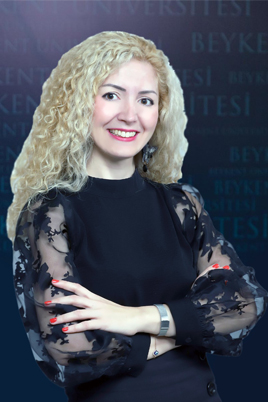
Sevgi AYDIN serves as an Assistant Professor in Logistics Management at Beykent University's Faculty of Business. Her academic work bridges digital transformation, artificial intelligence applications, and consumer behavior within modern marketing frameworks. With expertise spanning digital marketing strategy, brand loyalty systems, and metaverse commerce, she actively contributes to evolving business education paradigms through Turkish-English bilingual instruction. Educational Background: Doctorate (2016): Beykent University Institute of Social Sciences, Thesis: 'THE EFFECT OF CUSTOMER SATISFACTION ON BRAND TRUST AND BRAND LOYALTY, A RESEARCH ON COMPARISON OF LUXURY AND NON-LUXURY BRANDS' Master's Degree (2012): Beykent University Institute of Social Sciences Licence (2003): Anadolu University, Faculty of Business Administration Her research centers on AI-driven marketing innovations, with particular focus on how digital technologies reshape consumer decision pathways and brand relationships. Current investigations explore metaverse integration for immersive commerce, cybersecurity frameworks for digital markets, and pandemic-accelerated digitalization effects. Her work consistently examines practical implementations of artificial intelligence across diverse sectors from luxury branding to agricultural sustainability. Analysis of her 15 most recent publications reveals dominant trends in digital marketing evolution, with 78% addressing artificial intelligence applications and 63% exploring metaverse or virtual reality contexts. Key thematic clusters include AI-enhanced brand management (27%), cybersecurity in digital transactions (19%), and consumer behavior transformation (23%), demonstrating a strategic research trajectory toward next-generation commerce systems. Academic Supervision: SEVİL AYDIN (2024): 'THE USE OF SOCIAL MEDIA IN HOSPITAL CHOICE AND THE EFFECT OF WORD-OF-MOUTH MARKETING ON BRAND LOYALTY' RUKEN BAYONET (2021): 'The role of the food engineer in ensuring occupational health and safety management in food businesses producing hot meals' MERYEM BALTACI (2023): 'The Future of Graphic Design and the Impact of Artificial Intelligence on Graphic Design: Maw Agency Client Applications'
Selda Güney is an Assistant Professor in the Department of Electrical and Electronics Engineering at Başkent University's Faculty of Engineering. She holds a PhD (2013), Master's (2007), and Bachelor's (2004) in Electrical-Electronics Engineering from Karadeniz Technical University. Her professional experience includes roles as an R&D Engineer at DEKA Digital (2004-2005), Research Assistant at Karadeniz Technical University (2005-2013), and Assistant Professor at Başkent University (2013-present). Her research spans: Machine Learning : Applications in medical imaging, radar, and industrial systems Signal/Image Processing : Focus on real-time classification and fault detection Pattern Recognition : Electronic nose systems and biometric analysis Her recent publications demonstrate strong emphasis on deep learning applications in healthcare (chest X-ray classification, fracture detection) and industrial automation (real-time fault detection systems). Over 70% of her last 15 articles involve medical/industrial AI implementations using convolutional networks. Awards & Honors: TÜBİTAK Domestic PhD Scholarship IBEC ERASMUS Scholarship Research Leadership: Supervised 20+ graduate theses (e.g., radar data classification, medical image steganography) and led 9 R&D projects including: AI-based pathology classification in lung X-rays VR glove development Smart parking systems She is a member of IEEE and ISOCS, and teaches courses including Pattern Recognition, Signals and Systems.
Cameron Murray is an Associate Professor in the Department of Civil Engineering at the University of Arkansas. He specializes in concrete research with a focus on alternative cement technologies, particularly belitic calcium sulfoaluminate (BCSA) cement, and prestressed concrete structures. Dr. Murray directs a research group that investigates rapid-setting concrete materials for infrastructure repair and bridge engineering applications. His work bridges fundamental material science with practical engineering solutions for transportation infrastructure. Dr. Murray's educational background includes: Ph.D. in Civil Engineering from the University of Oklahoma (2017) M.S. in Civil Engineering from the University of Arkansas (2014) B.S. in Civil Engineering from the University of Arkansas (2012) Dr. Murray's research focuses on innovative concrete technologies with particular emphasis on alternative cementitious materials that offer environmental benefits and rapid-setting properties. His work explores the structural applications of belitic calcium sulfoaluminate (BCSA) cement for infrastructure repair, prestressed concrete systems, and bridge engineering. He investigates material properties, durability mechanisms, and structural performance to develop practical solutions for transportation infrastructure challenges. His research addresses critical issues such as early-age concrete behavior, corrosion resistance, and sustainable construction practices that reduce carbon emissions in the concrete industry. Analysis of Dr. Murray's recent publications reveals a strong focus on alternative cement technologies, particularly belitic calcium sulfoaluminate (BCSA) cement and its structural applications. His work spans material characterization, structural performance testing, and practical implementation in transportation infrastructure. Key research themes include rapid-setting concrete for infrastructure repair, prestressed concrete behavior, and sustainable concrete technologies with reduced carbon footprints. His publications demonstrate a progression from fundamental material studies to applied research addressing real-world infrastructure challenges, particularly in bridge engineering and rapid repair applications. Dr. Murray has received significant recognition for his teaching and research contributions: Department's outstanding teacher award (three times) College of Engineering Rising Teacher Award (2022-23) ACI Walter P Moore, Jr. Faculty Achievement Award (2022) Dr. Murray has successfully mentored numerous graduate students through their research projects, with a particular focus on concrete technology and structural engineering applications. His research group has secured substantial external funding totaling $6.2 million as PI or Co-PI, with additional $650,000 in equipment donations. Current funding sources include state DOTs, concrete industry groups, private industry, and federal agencies such as the US Army Corps of Engineers. His projects address critical infrastructure needs including rapid bridge deployment systems, alternative cement technologies, and concrete durability solutions. Dr. Murray directs the Concrete Research Laboratory at the University of Arkansas, located at the Grady Harvell Civil Engineering Research and Education Center (CEREC). The laboratory features a 20,000 sq. ft. high-bay testing area with a 100 ft. by 40 ft. strong floor, capable of handling large-scale structural testing. The facility includes specialized equipment for concrete material characterization, structural testing of reinforced and prestressed concrete members, and environmental monitoring systems. His research team collaborates with industry partners including Coreslab Structures and government agencies to address practical infrastructure challenges.
Professor Rashid Abu Al Rub is a distinguished academic and researcher currently serving as the Director of the Advanced Digital & Additive Manufacturing (ADAM) Center and Professor of Mechanical & Nuclear Engineering at Khalifa University of Science and Technology. He has held leadership roles, including Acting Chair of Aerospace Engineering and Associate Department Chair of Mechanical Engineering at Khalifa University, and Department Head of Mechanical and Materials Engineering at Masdar Institute of Science and Technology. With prior appointments at Texas A&M University, Louisiana State University, and Catholic University of America, he brings extensive experience in multi-scale computational mechanics and material modeling. PhD in Mechanical Engineering from Louisiana State University (2004) MSc in Mechanical Engineering from Jordan University of Science and Technology (2001) BSc in Mechanical Engineering from Jordan University of Science and Technology (1999) His research focuses on developing constitutive models and computational tools for advanced materials, particularly leveraging additive manufacturing and 3D printing in aerospace, defense, and automotive industries. He is a pioneer in damage and fracture mechanics, multifunctional materials, and nano/micro-structured composites. Professor Abu Al Rub has received numerous accolades, including the Student-Led Teaching Excellence Award (2009, 2011), Truman R. Jones Graduate Teaching Award (2010), and the Ferdinand P. Beer Outstanding Educator Award (2011). He has secured over $27 million in research funding and holds 6 patents, including a book on Non-Local Damage and Plasticity. Member of American Institute of Aeronautics and Astronautics (AIAA) Member of American Society of Mechanical Engineers (ASME) Member of American Society for Engineering Education (ASEE)
Luciano Castillo is a Professor at the School of Mechanical Engineering within the College of Engineering at Purdue University . His research spans turbulent boundary layers, wind energy, renewable energy integration, and bio-inspired engineering, with a focus on societal impacts such as energy-water nexus and social equality. Turbulent Flow Modeling with emphasis on initial conditions and micro-surfaces Wind Energy optimization and boundary layer interactions Renewable Energy Integration with water and thermal storage Biomedical Engineering applications in respiratory flow studies His recent publications explore robotics for classroom safety, mangrove-inspired erosion prevention, and renewable-powered desalination. Awards include the Alumni Distinguished Career Award (2023), ASME Fellow (2013), and multiple best paper awards. He leads initiatives like the US-Mexico Energy Corridor and contributes to interdisciplinary labs focusing on energy and societal challenges.
Dr. Oliver Plümper is an active researcher at Utrecht University's Faculty of Geosciences, specifically within the Earth Sciences department and the Structural Geology & Electron Microscopy group. His work spans multiple disciplines at the intersection of geology, chemistry, physics, and materials science, with a particular focus on understanding processes occurring at the nanoscale that influence large-scale geological phenomena. Plümper's research interests center around fluid-rock/mineral interaction, nano(geo)sciences, mineral physics, and rock deformation. He employs a multi-faceted approach that combines natural observations, experimental techniques, micro and nano-analytics, and numerical modeling to address fundamental questions in Earth sciences. His work particularly emphasizes how nanoscale processes in the Earth's interior can influence large-scale geological structures and phenomena, including mountain building, earthquake generation, and the carbon cycle. His current research portfolio includes several major projects: the ERC Starting grant 'nanoEARTH' investigating mineral-water interactions deep within the Earth; the Dutch Research Council Vidi project 'RELEASE' studying carbon cycling in subduction zones; the EU INFRAIA project 'EXCITE NETWORK' as co-Principal Investigator supporting access to advanced imaging facilities; the UIO-UU project 'serpAI' using artificial intelligence to study mantle rock alteration; and the UU-NIOZ project 'I-NANO' examining iron nanoparticles' effects on ocean biogeochemistry. These projects collectively demonstrate his focus on understanding how nanoscale processes influence planetary-scale phenomena. Plümper is a strong advocate for open science and transdisciplinary research, leading a diverse team of scientists from earth sciences, chemical engineering, mathematics, physics, and chemistry. He actively contributes to the Utrecht University Electron Microscopy Center and is involved in multiple initiatives promoting open access to analytical facilities. His collaborative approach is evident in his extensive publication record across high-impact journals including Nature Geoscience, PNAS, and Geology, with research spanning from fundamental mineral physics to applications in geothermal energy, raw material extraction, and carbon storage.
Anna C. Balazs is the John A. Swanson Chair of Engineering and Distinguished Professor of Chemical Engineering at the University of Pittsburgh Swanson School of Engineering, with an adjunct appointment in the Department of Chemistry. She has held visiting professorships at the Scripps Research Institute, University of Texas at Austin, and Oxford University. Dr. Balazs serves on the Advisory Board of the Materials Council for Materials Sciences and Engineering Division of the Department of Energy, Basic Energy Sciences, and is a member of the Editorial Advisory Boards of Langmuir, Soft Matter, and Polymer Reviews. Education: A.B. in Physics from Bryn Mawr College (1975) Ph.D. in Materials Science from MIT (1981) Postdoctoral research at Brandeis University, MIT, and University of Massachusetts Dr. Balazs specializes in the statistical, mechanical, and computer modeling of complex chemical systems, with particular expertise in polymer blends and the behavior of polymers at surfaces and interfaces. Her research focuses on developing theoretical frameworks for understanding responsive materials, particularly self-oscillating polymer gels, active matter systems, and nanocomposites. She investigates how chemical reactions can drive mechanical motion and pattern formation in soft materials, creating biomimetic systems with lifelike functionality. Her work bridges fundamental theoretical modeling with practical applications in microfluidics, drug delivery, and smart materials design. Analysis of Dr. Balazs' recent publications reveals a strong focus on the integration of chemistry, fluid dynamics, and mechanics to create responsive materials systems. Her research demonstrates how chemical reactions can drive complex mechanical behaviors in polymer gels and microstructures, enabling the spontaneous formation of 3D patterns, self-propulsion, and lifelike functionality. The work spans from fundamental theoretical modeling to practical applications in microfluidics and soft robotics, with a particular emphasis on enzyme-powered systems, chemically responsive materials, and the autonomous assembly of hierarchical structures. Dr. Balazs has made significant contributions to the field through her extensive publication record in top journals including Proceedings of the National Academy of Sciences, Nature Nanotechnology, and Advanced Functional Materials. Her work has been widely cited and has influenced multiple disciplines including materials science, chemical engineering, and soft matter physics. As a leading researcher in computational materials science, Dr. Balazs has mentored numerous students and postdoctoral researchers throughout her career. Her research has been supported by various funding agencies including the National Science Foundation and Department of Energy. She has established herself as a leading authority in the theoretical modeling of complex soft matter systems. Dr. Balazs' research group at the University of Pittsburgh focuses on developing computational models to understand and predict the behavior of responsive materials. Her team employs a range of simulation techniques to study phenomena ranging from molecular-scale interactions to macroscale material behaviors, with particular emphasis on the coupling between chemical reactions and mechanical responses in polymer systems.