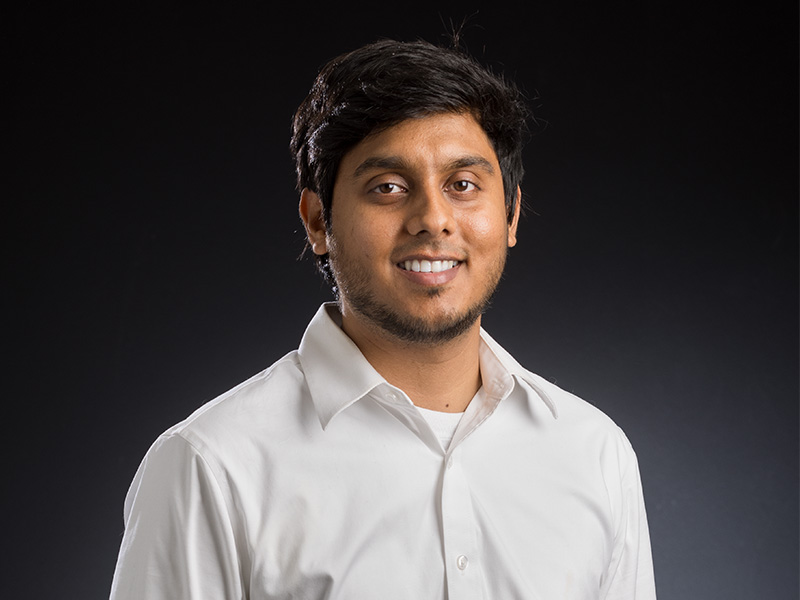
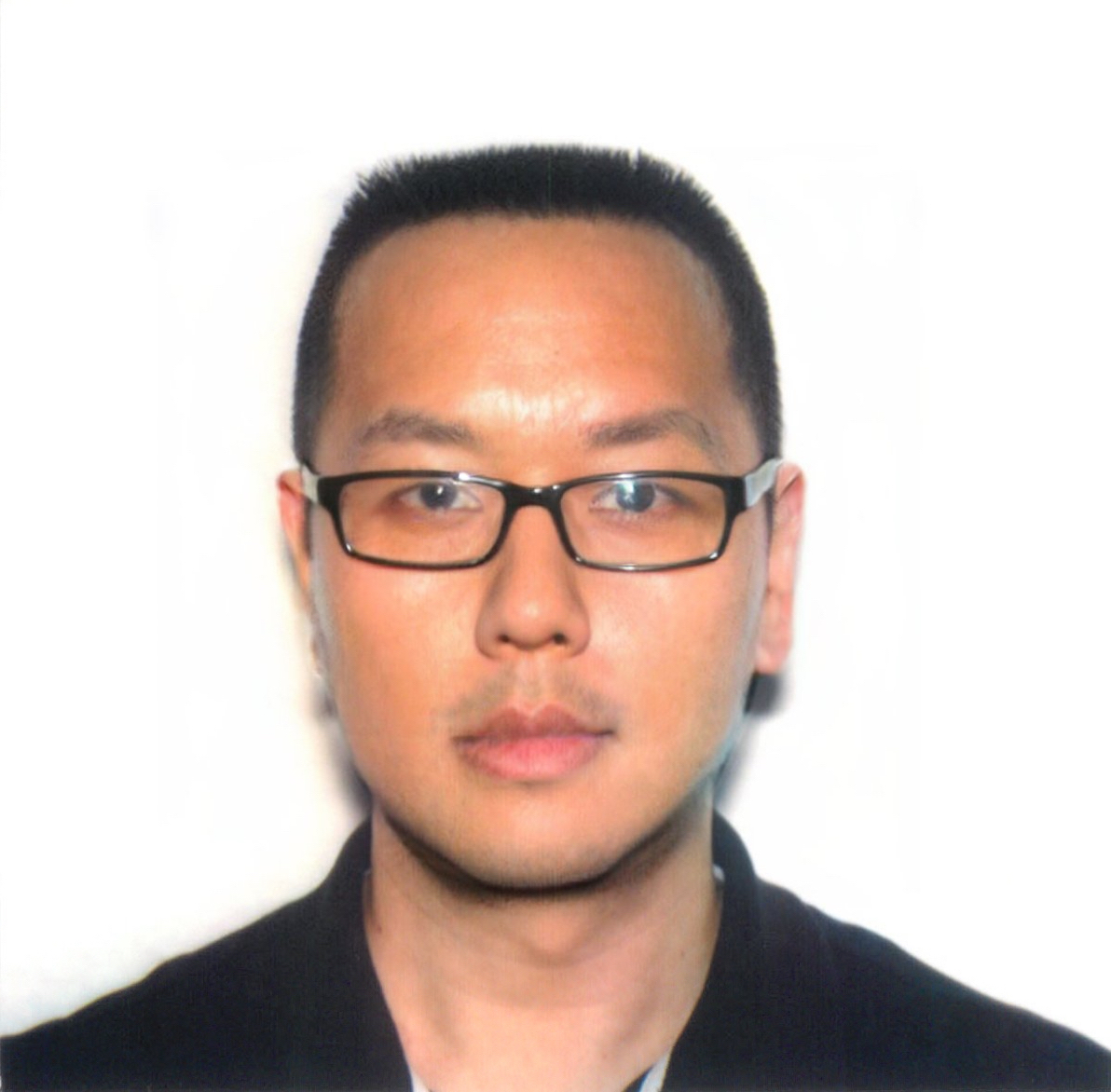
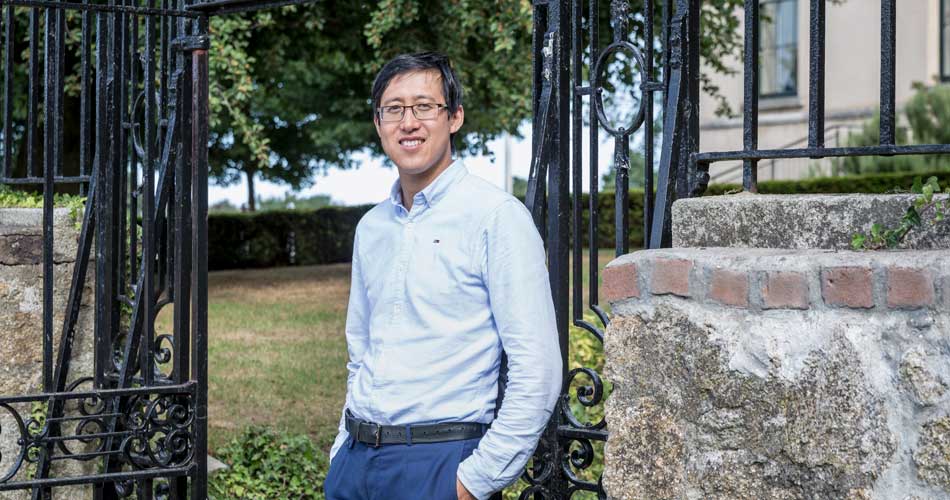
Professor Vishal Saxena is a faculty member in the Department of Electrical and Computer Engineering at the University of Delaware since 2019. Previously, he held positions at Boise State University (2010–2016) as Assistant and Associate Professor, and served as the Micron Endowed Professor of Microelectronics at the University of Idaho (2016–2019). His research focuses on analog electronic and photonic integrated circuits (ICs), particularly in sustaining IC design advancements post-Moore scaling through hybrid CMOS-photonic integration, neuromorphic computing, and energy-efficient embedded intelligence. Dr. Saxena earned his B.Tech. in Electrical Engineering from IIT Madras (2002), followed by M.S. and Ph.D. in Electrical and Computer Engineering from Boise State University (2007–2010). He has industry experience in semiconductor and telecommunication engineering. His work is supported by NSF, AFOSR, DARPA, NASA, and industry collaborators. Notable awards include the NSF CAREER (2015), AFOSR YIP (2016), and DARPA YFA (2019). His research interests span silicon photonic ICs for optical interconnects, RF photonic systems, neuromorphic circuits using emerging NVM devices, and high-speed analog-to-digital converters. He has pioneered compact modeling techniques for photonic components and developed energy-efficient architectures for spiking neural networks. Dr. Saxena’s publications reflect advancements in photonic integration, neuromorphic hardware, and mixed-signal IC design. He actively contributes to the IEEE community through editorial roles and conference steering committees, including MWSCAS and ISCAS.
Dr. Srikanthan Ramesh serves as an Assistant Professor in the School of Industrial Engineering and Management within Oklahoma State University's College of Engineering, Architecture and Technology. Since establishing the Advanced Materials and Additive Manufacturing Laboratory in August 2022, he has led interdisciplinary research at the intersection of materials science, physical phenomena, and advanced manufacturing technologies, with applications spanning healthcare, aerospace, and electronics sectors. His educational foundation includes a Ph.D. in Mechanical and Industrial Engineering from Rochester Institute of Technology (2022) and an M.S. in Industrial and Manufacturing Systems Engineering from Iowa State University (2017). This academic background enables his innovative approach to manufacturing science. Dr. Ramesh's research program focuses on biological and micro-scale additive manufacturing (bio-AM), specializing in biomaterial development for tissue engineering and regenerative medicine. His work integrates computational fluid dynamics, machine learning, and real-time process monitoring to achieve precise control over mechanical, biological, and electrical properties of manufactured structures. He develops experimental tools and process frameworks for droplet-based and extrusion-based AM systems, with particular emphasis on wound healing applications and space-compatible microelectronics. Analysis of his 14 publications from 2020-2025 reveals a strong trajectory toward AI-driven manufacturing solutions, with increasing emphasis on multi-objective Bayesian optimization for bioink design, aerosol jet printing process refinement, and bioprinted tissue construct development. His recent work demonstrates sophisticated integration of machine learning with physical manufacturing processes to solve complex biomedical challenges. His scientific recognition includes: Doctoral Dissertation Pitch Competition (Runner-up), IISE, 2021 Best Oral Presentation, Graduate Showcase, Rochester Institute of Technology, 2019 Gilbreth Memorial Fellowship, IISE, 2018-2019 Wakonse College Teaching Fellowship, Iowa State University, 2018-2019 Graduate Research Excellence Award, Iowa State University, 2017 Best Overall Oral Presentation, Nano@IAstate, Iowa State University, 2017 Dr. Ramesh currently leads significant research initiatives including as Principal Investigator for an NSF REU Site on Additive Manufacturing and Cybersecurity ($464,606, 2025-2028) and a NASA EPSCoR Travel Grant for aerosol jet printing in space missions (2024-2025). As Co-PI on an NSF grant for Privacy-aware Collaborative Design in additive biofabrication ($599,981, 2025-2028), he develops frameworks for mass personalization in medical applications while addressing data security challenges. These projects support his lab's mission to advance manufacturing science through rigorous experimentation and computational innovation. The Advanced Materials and Additive Manufacturing Laboratory operates as a collaborative hub where Dr. Ramesh directs research teams in developing novel biomaterials, optimizing printing processes, and creating functional prototypes for wound dressings, liver tissue models, and space-rated microelectronics. The lab's interdisciplinary approach combines expertise in materials characterization, computational modeling, and machine learning to push the boundaries of what's possible in additive manufacturing for critical applications.
Leon Lefferts is a Full Professor in Catalytic Processes and Materials at the University of Twente, affiliated with the Faculty of Science and Technology and the MESA+ Institute for Nanotechnology. He has held visiting professorships at Tokyo Institute of Technology (2005–2007) and Aalto University in Helsinki (2011 onward), where he was appointed Finnish Distinguished Professor (2011–2015). His research focuses on three interconnected themes: (1) heterogeneous catalysis in liquid phase , particularly for drinking water purification via hydrogenation of nitrate, nitrite, and bromate, with innovations such as micro-structured 'hairy foams' and membrane contactor reactors; (2) activation of stable molecules like alkanes using breakthrough techniques including plasma-catalysis, soft oxidants, and electrical fields, in collaboration with DIFFER and the University of Antwerp; and (3) catalytic upgrading of biomass , especially flash-pyrolysis oil, inspired by early work at Twente and leading to industrial application by KiOR. His group has pioneered in-situ IR spectroscopy for aqueous-phase catalytic studies under elevated conditions. Recent publications highlight a shift toward electrified and sustainable chemical processes, including membrane-assisted dehydrogenation of ethane and propane using green electricity, plasma-catalytic nitrogen fixation, and in-situ adsorption strategies to improve energy efficiency. These works reflect a strong trend toward integrating catalysis with renewable energy and plasma technologies for decarbonized chemical production. Finnish Distinguished Professor (2011–2015) Leon Lefferts has supervised 38 students and early-career researchers, contributing significantly to education and training in catalysis. His research has been supported by collaborations with major institutions including DIFFER, Aalto University, and the University of Antwerp. He has delivered numerous invited talks and participates actively in interdisciplinary workshops, especially in the emerging field of plasma-catalysis. He leads a research group at the forefront of catalytic innovation, with strong ties to industrial applications and sustainability goals. The team operates within the MESA+ Institute, leveraging advanced nanofabrication and characterization facilities for developing next-generation catalytic materials and reactor systems.
Fabiana Corami is a Researcher in Environmental Sciences at Ca' Foscari University of Venice, affiliated with the Department of Environmental Sciences, Computer Science and Statistics. Her work focuses on microplastics analysis, environmental pollution, and toxicological evaluations of contaminants in aquatic ecosystems. She collaborates with the Research Institute for Green and Blue Growth and the Research Institute for Complexity, contributing to interdisciplinary projects addressing marine and terrestrial pollution. Research Interests: Microplastics distribution, trace metal bioaccumulation, sediment toxicity, environmental remediation, and biomonitoring using aquatic organisms. Key Projects: Studies on microplastic contamination in Svalbard glaciers, Venice Lagoon sediments, and highway runoff. Development of novel methodologies for microplastic detection using FTIR and Py-GC/MS. Her recent publications (2020-2024) investigate microplastic ingestion by marine species, toxicogenomic effects of contaminants, and geochemical speciation of trace elements in ecosystems. She also explores environmental policies for sustainable sediment management in lagoon environments. Corami's research integrates analytical chemistry, ecotoxicology, and field studies to address global environmental challenges, with a focus on climate-impacted regions like the Arctic and Mediterranean.
Ashwani Gupta is a distinguished University Professor of Mechanical Engineering at the University of Maryland. His research focuses on combustion science, pyrolysis, and waste-to-energy technologies. Key areas include swirl flows, fuel sprays, high-temperature combustion, and environmental pollution mitigation. He has pioneered studies on catalytic pyrolysis of biomass/plastics and CO2-assisted gasification. Education details are not explicitly stated, but his academic role suggests advanced qualifications in mechanical engineering. Research interests span thermal sciences, renewable energy, and sustainable processes. Over 50 peer-reviewed articles (2022–2024) highlight work on co-pyrolysis of biomass/plastics, hydrogen-enriched combustion, and distributed combustion regimes. Notable contributions include thermal barrier coating advancements and wastewater toxicity studies in Pisum sativum. Publications frequently address synergistic effects in thermochemical processes, waste valorization, and energy recovery from expired food/industrial waste. His work integrates experimental and computational methods, with applications in micro-combustor design and carbon-neutral technologies. No listed awards, but his high citation count reflects academic impact. Advising and grants details are not provided. Research teams likely focus on combustion dynamics and environmental engineering. Active in interdisciplinary projects, including clinical trials on yoga for diabetes prevention and Ayurvedic dietary interventions.
Hengky Chandrahalim is an Associate Professor of Electrical and Computer Engineering at the U.S. Air Force Institute of Technology (AFIT) , where he also serves as Faculty Director of the AFIT Nanofabrication & Characterization Facility . He is affiliated with the Graduate School of Engineering & Management and leads the Microsystems Laboratory. Education: Ph.D., Electrical and Computer Engineering, Cornell University M.Sc., Electrical and Computer Engineering, Cornell University M.Eng., Electrical and Computer Engineering, Cornell University B.Sc., Electrical and Computer Engineering, The Ohio State University His research interests span optics and photonics, MEMS, RF/microwave systems, optical sensing, and micro/nanosystems . He specializes in integrating microscale sensors with optical fibers, radiation-hardened MEMS, and optofluidic systems. His work combines advanced fabrication techniques like two-photon nanomachining with applications in aerospace, defense, and biomedical sensing. The trends in his recent publications emphasize optical fiber tip sensors, nonlinear damping in flow sensing, and radiation effects on MEMS resonators . His research demonstrates a strong focus on miniaturization, robustness under extreme environments, and novel transduction mechanisms in photonic and mechanical systems. Scientific Awards: Fellow, Institute of Physics (IOP) (2024) Fellow, Institution of Engineering & Technology (IET) (2023) IEEE Dayton Section Harrell V. Noble Award (2025) AFIT Civilian of the Year (2024) Arthur S. Flemming Award, Applied Science & Engineering (2024) SASE Professional Achievement Award (2022) Dean’s Distinguished Teaching Professor Award (2020–2021) He advises multiple graduate and undergraduate researchers , including Jeremiah C. Williams and David D. Lynes, and has secured significant recognition for both research and teaching. He has served as a mentor for national fellowship programs and student competitions. His lab, the Microsystems Laboratory , fosters innovation in sensor design, microfabrication, and photonics integration, contributing to both military and civilian technological advancement.
Robert Czechowski, PhD , is an Assistant Professor at the Faculty of Information and Communication Technology , Wrocław University of Science and Technology , Poland, stationed in the Department of Telecommunications and Teleinformatics . His office is located in building D-20, room 421, and he holds regular consultation hours on Tuesdays 14:00–15:00, Wednesdays 15:00–17:00, and Thursdays 13:00–15:00. His research portfolio is centred on securing the next generation of electrical power systems. Core interests include: Cyber-security architectures for smart grids and micro-grids Artificial-intelligence-driven intrusion detection and prevention systems (IDS/IPS) Network protocols and time-synchronisation security in SCADA environments Simulation of information flow in complex, dynamically reconfigurable networks IPv4/IPv6 network design and security policy enforcement in power-system automation Database and expert-system solutions for real-time energy-management and fraud detection Between 2014 and 2019 he authored or co-authored more than fifteen peer-reviewed works. The publications reveal a clear longitudinal trend: early work established foundational security policies and good-practice guidelines, while later studies pivot toward advanced AI/ML techniques for anomaly detection and risk quantification in smart-metering infrastructures. A recurring theme is the integration of communication-protocol security (IEC 61850, PLC, IPv4/IPv6) with higher-level cyber-physical risk governance. Scientific recognitions: None explicitly mentioned in the supplied text. Advising & Grant activities: The provided material does not list specific doctoral or master’s students, nor does it enumerate funded projects. Laboratories & Teams: He conducts research within the Department of Telecommunications and Teleinformatics, leveraging university laboratories and the wider ICT Faculty infrastructure, although no dedicated lab name is specified.
Navdeep Singh Dhillon is an Associate Professor in the Department of Mechanical and Aerospace Engineering at California State University, Long Beach (CSULB), where he has been since Fall 2016. He holds a Ph.D. in Mechanical Engineering from UC Berkeley, an M.S. in Electrical Engineering and Computer Sciences (UC Berkeley), an M.S. in Mechanical Engineering (Purdue University), and a B.Tech in Ocean Engineering and Naval Architecture (IIT Kharagpur). His research focuses on enhancing thermo-fluidic and phase change processes through experimental imaging and CFD methods, with applications in renewable energy, nuclear safety, and electronics cooling. Education Ph.D., Mechanical Engineering (UC Berkeley, 2012) M.S., Electrical Engineering and Computer Sciences (UC Berkeley, 2012) M.S., Mechanical Engineering (Purdue University, 2009) B.Tech., Ocean Engineering and Naval Architecture (IIT Kharagpur, 2007) His work leverages surface micro/nano-engineering to advance solar-thermal energy technologies and improve carbon emission reduction strategies. He has collaborated on government and industry projects, including with DARPA and Chevron Corporation. Dr. Dhillon has published in prestigious journals like Nature Communications and serves as a reviewer for journals such as Nature Scientific Reports and International Journal of Heat and Mass Transfer . He is a member of professional societies including ASME, APS, and MRS. Scientific Awards Shapiro Postdoctoral Fellow Dr. Dhillon teaches Thermal-Fluids courses and conducts experimental/theoretical research on boiling heat transfer. His lab, STEAMi (Thermal-Fluids and Multiphysics Innovation Lab), develops MEMS and microfluidic systems for electronics cooling and medical diagnostics. His recent work on boiling crisis modeling highlights his expertise in phase change dynamics. Contact: Office: ECS-628 | Phone: 562.985.2613 | Office Hours: Tues./Thurs. 7:30-9:00 p.m. (via Zoom) | Lab Website
HUANG Teng is an Assistant Professor of Finance at NEOMA Business School in France, specializing in Corporate Finance, Banking, and Empirical Industrial Organization. He earned his PhD in Finance from IESE Business School in Barcelona and previously held a Research Fellow position at Luiss University in Rome. Research Focus: Structural Estimation, Financial Flexibility, Bank Competition Key Affiliations: NEOMA Business School (Faculty), Luiss University (Former Research Fellow) Recent publications analyze stock comovement mechanisms, household deposit supply dynamics, and bank monopsony power. His empirical work connects macro-financial market trends with micro-level banking behaviors, emphasizing market structure effects on corporate financial decisions. Huang's scholarly activities include presentations at international conferences such as the FMA European Conference and EARIE . His methodological approach combines structural econometric models with large-scale empirical datasets to evaluate financial market efficiency and banking sector competition.
Stefano Invernizzi is an Associate Professor at the Department of Structural, Geotechnical and Building Engineering (DISEG) of Politecnico di Torino. His expertise spans civil and structural engineering, focusing on fracture mechanics, finite element analysis, and numerical modeling of historical masonry and concrete structures. Teaches Statics and structural analysis courses at the Faculty of Architecture. Supervised numerous PhD and degree theses on masonry, concrete, and computational mechanics. Research emphasizes scale effects on material strength, fractal properties of structural materials, contact mechanics, and seismic vulnerability of historical buildings. He co-developed the sequentially linear saw-tooth softening model for robust analysis of reinforced concrete structures. Collaborated with Prof. Jan Rots on computational mechanics and contributed to projects like TOMORROW (additive manufacturing for building walls) and DURA_LAM (nano-materials for timber durability). His work aligns with SDGs 9 (Industry Innovation) and 11 (Sustainable Cities). He leads the Laboratorio di Meccanica della Frattura and has authored over 30 publications in journals like Engineering Fracture Mechanics and International Journal of Fracture . His research integrates statistical theories of strength with nonlinear numerical simulations for disordered materials.
Cameron Murray is an Associate Professor in the Department of Civil Engineering at the University of Arkansas. He specializes in concrete research with a focus on alternative cement technologies, particularly belitic calcium sulfoaluminate (BCSA) cement, and prestressed concrete structures. Dr. Murray directs a research group that investigates rapid-setting concrete materials for infrastructure repair and bridge engineering applications. His work bridges fundamental material science with practical engineering solutions for transportation infrastructure. Dr. Murray's educational background includes: Ph.D. in Civil Engineering from the University of Oklahoma (2017) M.S. in Civil Engineering from the University of Arkansas (2014) B.S. in Civil Engineering from the University of Arkansas (2012) Dr. Murray's research focuses on innovative concrete technologies with particular emphasis on alternative cementitious materials that offer environmental benefits and rapid-setting properties. His work explores the structural applications of belitic calcium sulfoaluminate (BCSA) cement for infrastructure repair, prestressed concrete systems, and bridge engineering. He investigates material properties, durability mechanisms, and structural performance to develop practical solutions for transportation infrastructure challenges. His research addresses critical issues such as early-age concrete behavior, corrosion resistance, and sustainable construction practices that reduce carbon emissions in the concrete industry. Analysis of Dr. Murray's recent publications reveals a strong focus on alternative cement technologies, particularly belitic calcium sulfoaluminate (BCSA) cement and its structural applications. His work spans material characterization, structural performance testing, and practical implementation in transportation infrastructure. Key research themes include rapid-setting concrete for infrastructure repair, prestressed concrete behavior, and sustainable concrete technologies with reduced carbon footprints. His publications demonstrate a progression from fundamental material studies to applied research addressing real-world infrastructure challenges, particularly in bridge engineering and rapid repair applications. Dr. Murray has received significant recognition for his teaching and research contributions: Department's outstanding teacher award (three times) College of Engineering Rising Teacher Award (2022-23) ACI Walter P Moore, Jr. Faculty Achievement Award (2022) Dr. Murray has successfully mentored numerous graduate students through their research projects, with a particular focus on concrete technology and structural engineering applications. His research group has secured substantial external funding totaling $6.2 million as PI or Co-PI, with additional $650,000 in equipment donations. Current funding sources include state DOTs, concrete industry groups, private industry, and federal agencies such as the US Army Corps of Engineers. His projects address critical infrastructure needs including rapid bridge deployment systems, alternative cement technologies, and concrete durability solutions. Dr. Murray directs the Concrete Research Laboratory at the University of Arkansas, located at the Grady Harvell Civil Engineering Research and Education Center (CEREC). The laboratory features a 20,000 sq. ft. high-bay testing area with a 100 ft. by 40 ft. strong floor, capable of handling large-scale structural testing. The facility includes specialized equipment for concrete material characterization, structural testing of reinforced and prestressed concrete members, and environmental monitoring systems. His research team collaborates with industry partners including Coreslab Structures and government agencies to address practical infrastructure challenges.
Jeff Dix is an Assistant Professor in the Department of Electrical Engineering at the University of Arkansas, College of Engineering. He received his B.S., M.S., and Ph.D. in Electrical Engineering from the University of Tennessee at Knoxville in 2013, 2015, and 2018, respectively. He leads the Integrated Systems Laboratory for ANalog Design (ISLAND), focusing on analog/mixed-signal integrated circuits for energy-efficient applications. B.S., Electrical Engineering, University of Tennessee at Knoxville M.S., Electrical Engineering, University of Tennessee at Knoxville Ph.D., Electrical Engineering, University of Tennessee at Knoxville His research spans four key areas: (1) Neural network/neuromorphic hardware for IoT/edge computing; (2) Extreme environment IC design (radiation-hardening, temperature extremes); (3) Subthreshold/weak inversion IC design for ultra-low power; and (4) Power electronics for electric vehicles and micro-grids. His work emphasizes energy efficiency and robustness in specialized operational contexts. Recent publications highlight trends in radiation-hardened analog circuits (2021), RF energy harvesting (2022), and neuromorphic hardware (2023). Key keywords include Integrated Circuit Design, Machine Learning Hardware, and Low Power Electronics. He teaches courses in analog/digital IC design, microelectronics, and neural network hardware, including Circuits I (ELEG 2103), Electronics II (ELEG 3223), and IC Design Lab I (ELEG 4243L/5253L).
Selda Güney is an Assistant Professor in the Department of Electrical and Electronics Engineering at Başkent University's Faculty of Engineering. She holds a PhD (2013), Master's (2007), and Bachelor's (2004) in Electrical-Electronics Engineering from Karadeniz Technical University. Her professional experience includes roles as an R&D Engineer at DEKA Digital (2004-2005), Research Assistant at Karadeniz Technical University (2005-2013), and Assistant Professor at Başkent University (2013-present). Her research spans: Machine Learning : Applications in medical imaging, radar, and industrial systems Signal/Image Processing : Focus on real-time classification and fault detection Pattern Recognition : Electronic nose systems and biometric analysis Her recent publications demonstrate strong emphasis on deep learning applications in healthcare (chest X-ray classification, fracture detection) and industrial automation (real-time fault detection systems). Over 70% of her last 15 articles involve medical/industrial AI implementations using convolutional networks. Awards & Honors: TÜBİTAK Domestic PhD Scholarship IBEC ERASMUS Scholarship Research Leadership: Supervised 20+ graduate theses (e.g., radar data classification, medical image steganography) and led 9 R&D projects including: AI-based pathology classification in lung X-rays VR glove development Smart parking systems She is a member of IEEE and ISOCS, and teaches courses including Pattern Recognition, Signals and Systems.
Edwin Hwu is an Associate Professor at the Department of Health Technology, Technical University of Denmark (DTU), leading the MIDAS research group focused on Micro Medical Devices and hardware hacking-based technologies. His work spans Atomic Force Microscopy (AFM), 3D printing, and drug delivery systems. Research Focus: Skin barrier function assessment, liver fibrosis treatment using siRNA, and repurposing consumer electronics for biomedical sensing. Projects: Currently leads "Repurposing Microelectronics for Gut Sensing" (2025-2028) and previously completed "Rapid Clinical Assessment of Skin Barrier Function by Corneocytes Nanotexture" (2021-2023). His publications highlight interdisciplinary work in Atomic Force Microscopy , 3D Printing , and Nanoscale Engineering , with applications in dermatology and neglected tropical diseases. He actively engages in guest lectures on hacking consumer electronics for scientific research. Awards: VILLUM Experiment Grant for micro/nanoscale 3D printing projects. Hwu supervises PhD students and collaborates with researchers like Anja Boisen (DTU) and others, focusing on translating microelectronics into medical solutions. His lab develops compact, high-resolution devices for diagnostics and drug delivery.
Dr. Nan Zhang is a research leader at the UCD School of Mechanical and Materials Engineering , focusing on precision manufacturing technologies for micro/nano-scale devices. His work bridges lab-scale prototyping and industrial mass production, with applications in medical devices, microfluidics, and functional surfaces. Research Keywords : Precision Manufacturing, Microfluidics, Nanotechnology, Materials Science, Medical Devices, Advanced Manufacturing Research Trends : Recent publications highlight advancements in digital light processing (DLP) 3D printing, machine learning-optimized microfabrication, liquid metal antenna technologies, and scalable nanocomposite mold development. His work emphasizes industrial feasibility, biocompatibility, and surface engineering. Scientific Awards : Smurfit Kappa Newman Fellowship Award ERC Grants (contextual institutional affiliation) Labs & Collaborations : Based at the UCD Engineering and Materials Science Centre, Dr. Zhang’s research involves partnerships with industry and academic networks, focusing on precision tooling, microfluidic scale-up, and novel material applications (e.g., bulk metallic glasses, bio-plastics).