Dr Piotr Rafał Maleszyk is a Senior Lecturer at the Faculty of Economics, Maria Curie-Skłodowska University (UMCS) in Lublin, Poland. He serves as a researcher at the Department of Market and Competition Analysis and leads teams preparing analyses for Lublin 2030 Strategy. Education : Economics and International Relations graduate from UMCS. Research Focus : Labor economics, regional development, youth migration, human capital, smart cities, and economic policy. His recent publications (2023-2025) examine youth migration dynamics during the pandemic, smart city governance tools, and cross-border human capital potential. He has 53 publications with over 7,853 reads and a Google Scholar h-index of 5. Dr Maleszyk contributes to public policy through projects like the Lublin 2030 Strategy and the European Network on Regional Labour Market Monitoring. His work bridges academic research and practical applications in regional development, vocational education alignment with labor market needs, and urban climate policy participation.
Ritam Sengupta is a faculty member at O.P. Jindal Global University's Jindal School of Art and Architecture, with additional affiliations at the Centre for Studies in Social Sciences, Calcutta, and Leibniz-Zentrum Moderner Orient where they work as a Post-Doc on the ERC Project 'Timely Histories'. Their academic journey includes graduate training in Cultural Studies at EFL-U Hyderabad and Social Anthropology at SOAS, London, culminating in a PhD in Social Sciences from the Centre for Studies in Social Sciences, Calcutta. PhD in Social Sciences, Centre for Studies in Social Sciences, Calcutta MA in Anthropology, SOAS, University of London Graduate training in Cultural Studies, EFL-U Hyderabad Sengupta's research centers on the historical intersections of technology, politics, and social transformation, with particular focus on electrification in colonial and post-colonial India. Their work examines how energy transitions serve as keys to understanding political and economic transformations, especially regarding the relationship between electricity infrastructure and agricultural development in northern India. They also investigate contemporary issues of digital governance, big data, and data centers as emerging political institutions in India's postcolonial context. Their scholarship bridges historical analysis with anthropological methods to explore how technological systems shape and are shaped by social relations, power dynamics, and governance structures. Analysis of Sengupta's publications reveals a consistent thematic trajectory examining how technological systems mediate political power, particularly in postcolonial contexts. Their work moves from historical studies of electrification in colonial India to contemporary examinations of digital infrastructure, maintaining a critical perspective on how technological systems reproduce and transform power relations. The research demonstrates particular expertise in analyzing the intersection of infrastructure development with agrarian transformations and the politics of everyday life. Sengupta has conducted research projects with organizations including the Centre for Internet and Society and Calcutta Research Group, focusing on small town urbanity, big data phenomena, and data centers in contemporary India. Their scholarly contributions appear in journals such as Indian Economic and Social History Review, Refugee Watch, and Development Policy Review, as well as in edited volumes exploring digital governance in India. Current research includes a post-doctoral project on 'The Making of Agrarian Temporalities in Northern India since the second half of the 19th century,' continuing their investigation of how technological systems shape temporal experiences and social organization in agrarian contexts.
Prof. Stanisław Korenik is the Head of the Department of Spatial Management and Local Government Administration at the Wrocław University of Economics' Faculty of Economics and Finance. His primary role involves academic leadership and spatial policy research. Research Focus: Prof. Korenik specializes in regional socio-economic development, urbanization processes, spatial planning, and local governance. Key themes include globalization's impact on regional economies, coal-dependent regions' transition challenges, and small towns' resilience during crises. Recent Trends in Articles: Recent work emphasizes post-pandemic recovery of small towns in Lower Silesia, just transition strategies for Polish coal regions, and metropolitan-area spatial relationships. He also addresses barriers to regional development in new economic realities and the role of social capital in location decisions. Notable Contributions: Analysis of Lower Silesia's socio-economic trajectory (2004-2022), critical evaluation of coal basin transformation efforts, and exploration of smart city models in modern economic contexts. Consultations: Available Thursdays 9:30-11:00 in Room B305. Collaborations: Actively engaged in socio-economic environment cooperation, focusing on regional policy implementation and cross-border initiatives with Czech enterprises.
Anupam Nanda is a Professor of Urban Economics & Real Estate (Full Professor/Chair) at the University of Manchester, UK, and serves as Co-Deputy Director of the Manchester Urban Institute. He previously held roles at the Henley Business School, University of Reading, and worked in non-academic positions at Deloitte and the National Association of Home Builders (US). His research focuses on property markets, regional and urban studies, household sentiment, cross-border investment, ESG in urban markets, and infrastructure impacts. Education: PhD in Economics (University of Connecticut, 2006), MSc in Economics (University of Calcutta), BSc (Hons) in Economics (St. Xavier's College, Kolkata). Research interests include real estate firm operations, housing policies, cross-border investment, ESG integration, and climate adaptation. He chairs the European Real Estate Society’s refereed conference section and serves on editorial boards of journals like Journal of Real Estate Research . His work contributes to UN SDGs related to sustainable cities, climate action, and responsible consumption. Major projects include studies on housing inequality, foreign investor demand, and infrastructure impacts. Awards include the 2015 Nick Tyrrell Research Prize and 2020 Harold Samuel Prize. He advises on major government projects, such as the UK’s 1.5 million homes initiative. Current PhD supervision includes topics like ESG performance in real estate and infrastructure impacts. Completed PhDs span cross-border investment, migration, and housing dynamics.
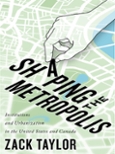
Zack Taylor is an Associate Professor in the Department of Political Science and Local Government Program at Western University, Canada, with cross-appointments in Geography and Environment. He serves as Editor-in-Chief of Territory, Politics, Governance and leads the Canadian Communities Policy Observatory under Western’s NEST initiative. A Fellow at the Institute on Municipal Finance and Governance (University of Toronto’s School of Cities) and non-practicing Registered Professional Planner, his career spans academic leadership and policy engagement. His research focuses on urban political economy, multi-level governance, municipal elections, and immigration policy. Funded by SSHRC grants, his projects include Money and Local Democracy (2022–26), City in Comparative Political Development (2019–24), and Canadian Census Data Discovery Partnership (2021–23). His book Shaping the Metropolis (2019) explores institutional frameworks in US-Canada urban governance. Key trends in his recent publications include spatial analysis of electoral behavior, institutional impacts on urban-rural divides, and historical census data methodologies. He investigates how urbanization shapes political development and policy outcomes, with a focus on Canada’s federal structure. Scientific awards include the 2020 Dean’s Excellence Award (Western University) and the 2016 Best Doctoral Dissertation Award (Urban Politics Section, APSA). Collaborations span institutions like University of Toronto, Calgary, Dalhousie, and INRS-Urbanisation.
Erica Frankenberg is a Professor of Education and Demography in the College of Education at Pennsylvania State University. She also serves as Associate Director of the Penn State Social Science Research Institute, is an affiliate faculty member at Penn State Law, and is a research associate for the Population Research Institute. Dr. Frankenberg directs Penn State's Center for Education and Civil Rights, which uses research to inform policy and law to expand access to educational opportunity and reduce racial inequality in education. Her educational background includes: Ed.D. in Administration, Planning, and Social Policy-Research from Harvard University M.Ed. in Administration, Planning, and Social Policy from Harvard University A.B. in Education Policy from Dartmouth College Dr. Frankenberg's research focuses on racial desegregation and inequality in K-12 schools , examining the connections between school segregation and other metropolitan policies. Her work explores how demographic patterns relate to school segregation, the relationship between housing and school segregation, and how school choice policies affect racial and economic stratification. She has conducted extensive research on the implementation of diversity policies following the Supreme Court's 2007 voluntary integration decision. Her research has been cited in U.S. Supreme Court decisions, and she has served as an expert witness in numerous school desegregation cases. Dr. Frankenberg has received funding from prestigious organizations including the National Science Foundation, Spencer Foundation, and W.T. Grant Foundation. Her notable awards and recognitions include: Named one of education's most influential scholars (EdWeek, January 2017) Fellow of the National Education Policy Center Member of the National Coalition for School Diversity's Research Advisory Panel Dr. Frankenberg has advised numerous school districts on integration policies and has co-planned voluntary integration convenings with the U.S. Department of Education. She serves as the only researcher on Connecticut's statewide advisory committee regarding one of the nation's leading school desegregation cases. She has directed several research projects examining suburban racial change, school district responses to Supreme Court decisions on integration, and the impact of school choice policies on segregation. Her work combines demographic analysis with policy evaluation to address educational inequality.
Juan Ramon Gallego Bono is a Full Professor at the Department of Applied Economics at the University of Valencia (Spain), affiliated with the Faculty of Social Sciences. He is part of the CONCORDIA Research Unit for Social Economy, Cooperatives, Social Innovations, and Public Policies, and previously contributed to the EMPRECOOP group focusing on entrepreneurship and cooperative management. His doctoral thesis (1997) examined technological change in Spain's ceramic industry. His research focuses on territorial development, social economy, industrial clusters, and sustainable innovation systems with emphasis on cooperatives, regional policy, and rural-urban dynamics. Key topics include economic institutionalism, circular economy, and multi-stakeholder governance models. Recent work analyzes social innovation in Mexico, post-industrial region revitalization (e.g., Sagunto), and policy networks in the Valencian Community. He emphasizes territorial governance through collective learning, community practice, and stakeholder engagement. Educational Background : Doctorate in Economics from University of Valencia (1997) Major Contributions : Theoretical-methodological frameworks for territorial policy design, comparative studies of agro-industrial systems (France/Spain/Mexico), and evaluation of employment pacts. Labs/Teams : CONCORDIA Research Unit, collaborating with institutions in Europe and Latin America. His work bridges academic theory with policy application, emphasizing how local actors drive systemic change through institutional innovation and cooperative networks.
Yuba Raj Baral is a Lecturer in Public Health at the University of Northampton, affiliated with the Faculty of Health, Education and Society and the School of Health Education and Society. He holds a PhD in Public Health from London Metropolitan University, an MSc from the University of Aberdeen, and an MA in Population Studies from Tribhuvan University, Nepal. PhD in Public Health – London Metropolitan University, UK MSc in Health Services and Public Health Research – University of Aberdeen, Scotland, UK MA in Population Studies – Tribhuvan University, Nepal Dr. Baral's research spans public health domains including health promotion, maternal and child health, mental health, migration and health, and health equity. His work emphasizes qualitative, quantitative, and mixed-methods approaches, particularly in low-resource and vulnerable populations. His recent publications reveal a strong focus on occupational health among informal waste workers in Nepal and maternal healthcare access in rural settings. Themes include mental health risks, health behavior change, and health system challenges. His research combines empirical data with policy-relevant insights. Scientific contributions include peer-reviewed articles, book chapters, and technical reports. Notable collaborations involve Medecins Du Monde, Phase Nepal, and the University of Sheffield. While no formal awards are listed, his sustained scholarly output demonstrates significant impact. Dr. Baral supervises PhD students and leads research projects related to public health surveillance and evaluation. He has extensive experience in project management and has taught modules such as Health Promotion, Epidemiology, and Project Management in Public Health. He previously served as Associate Professor and MPH Program Coordinator at MMIHS, Kathmandu. He is actively involved in academic writing and publishing, contributing to resources on scholarly communication. His work supports capacity building in health research, particularly in Nepal and South Asia.
Peter Kvistgaard is a Part-Time Lecturer at the Department of Culture and Learning within the Faculty of Social Sciences and Humanities at Aalborg University . His work focuses on Politics and Administration Tourism , with a particular emphasis on sustainable development, digital transformation, and power dynamics in regional tourism systems. Fields of Interest : Regional Tourism Planning, Sustainable Tourism, Digital Transformation, Experience Economy, Coastal Tourism Key Projects : Green Transition in Danish Rural Tourism, Hub-and-Spoke Connectivity Between Copenhagen and North Zealand, Strategic Tourism Development in Nordic Regions Collaborations : Erhvervsstyrelsen, Destination Himmerland, VistNordsjælland Research Trends : Kvistgaard's recent publications (2017-2023) analyze sustainable practices, digital maturity in tourism SMEs, and strategic planning challenges. His work bridges academic research with practical policy solutions for regional growth. Media Engagement : Frequently contributes to public discourse through 223 press/media appearances, including topics on destination redesign (e.g., Hundested revitalization) and sustainable tourism communication. Labs & Teams : Affiliated with the Tourism Research Unit (TRU) at Aalborg University, focusing on empirical studies and policy translation for tourism stakeholders.
Linda Stihl is a postdoctoral researcher and lecturer at Lund University, affiliated with both the Department of Human Geography and Economic Geography (as a Lecturer ) and the Department of Economic History (as a Researcher ). Her research spans two core areas: (1) regional development in non-metropolitan and lagging regions, focusing on agency and growth pathways, and (2) sustainable transformation of global value chains through circular economy initiatives. She teaches spatial analysis using GIS and economic geography, with a focus on areas outside major cities. Research Focus : Regional development in Sweden's Borås, Kiruna, and Olofström (30–40-year longitudinal analysis). International projects: ACORE (Agents of Change in Old Industrial Regions in Europe), Regrow (Regional Growth Against All Odds), and Circular Economy: Multi-level Value Chain and Policy Dynamics . UN Sustainable Development Goals (SDGs) related to sustainable cities and responsible consumption. Teaching : Qualified Teacher (QTP) in Lund University's Pedagogical Academy for Social Sciences. Specializes in GIS-based spatial analysis, cartography, and qualitative research methods. Projects : Active in Circular Value & Supply Chains, Regional Development, and Multi-Level Policy Dynamics (2024–2027). Contributor to the Excellence Programme for Sustainable Development (2021–2027). Collaborations : Networks across Sweden, Finland, and Nordic countries. Active in workshops and seminars like the Lund University Research Conference on Sustainable Development and Nordic City Network .
Frank Veraart is an Assistant Professor at Eindhoven University of Technology in the Technology, Innovation & Society group under the Department of Industrial Engineering and Innovation Sciences. His research explores the historical development of sustainability trade-offs in transnational resource chains, focusing on how international trade impacts well-being and sustainability across social, economic, and ecological dimensions. Academic Background : PhD in History of Technology (2008) and MSc in Technology & Society from TU/e. Research Leadership : Project coordinator of the NWO-funded STONEM project (Sustainability Trade-offs in the Netherlands' Entangled Modernization, 1900-2020). Research Interests encompass the historical interplay between technology and societal development, with specific attention to resource commodification, environmental modernities, and governance challenges in global supply chains. His work bridges disciplines like Environmental Studies , History of Mobility , and Computing . Recent Publications (2023-2024) analyze digitalization in EU energy systems, AI governance, and transnational histories of fossil materials and agricultural commodities. These studies emphasize sustainability trade-offs, decarbonization, and technological entanglement. Scientific Awards : Recipient of the Sophie Coe Prize (2023). Supervision includes co-promoting four PhD candidates on topics like AI in energy systems, bicycle-train integration, and global histories of plant oils. He has also contributed to multidisciplinary workshops and public engagements on resource politics and sustainable transitions.
Eva Andersson is a Professor at Stockholm University within the Department of Human Geography. Her research focuses on urban and social geography, residential and school segregation, neighborhood effects, life course analysis, migration patterns, and elderly housing. She employs Swedish register data combined with spatial analysis methods to investigate how residential contexts influence socioeconomic outcomes. Current research projects include Migrant Trajectories (2019-2024), exploring migrant life courses across five domains. Lyckliga gatan examines spatial polarization and social cohesion in Sweden. Socio-spatial stratification analyzes housing tenure trajectories across 21 years. Her work demonstrates that neighborhood context at multiple scales affects educational attainment, income trajectories, and family formation. She finds stronger microscale effects on education and macroscale impacts on income, with Sweden showing less segregation than the Netherlands. Schools in 75% of municipalities successfully mix students from diverse backgrounds, though performance gaps correlate with socioeconomic peer groups. She teaches urban social geography at both undergraduate and graduate levels, supervises doctoral students, and contributes methodological innovations through individualized neighborhood analysis. Her housing research reveals increasing homeownership trends in Sweden and age-related shifts toward central urban housing for elderly populations.
Jean-Michel Tarrier is a Lecturer at the University of Toulouse 2 - Jean Jaurès , affiliated with the Cognition, Languages, Ergonomics (CLLE) laboratory's ERSS team. His career spans both teaching and research, with a focus on phonology, variationist linguistics, and sociolinguistics. Co-coordinator of the LVTI Program (Language, City, Work, Identity) since 2013 Active participant in the PFC Program (Phonology of Contemporary French) His research investigates language variation in urban contexts, particularly examining socio-phonological patterns in Toulouse French through fieldwork and corpus analysis. Key interests include phonological leveling, dialect modeling, and interdisciplinary approaches to spoken language study. Publication trends reveal consistent contributions to phonological variation in French, with particular emphasis on Urban-rural dialect contrasts Interview-based data collection Transcription system development Comparative sociophonology Language change mechanisms Identity construction through speech Current affiliations include CLLE Laboratory , where he works with the ERSS team on projects related to language structure and variation.
Alexander Abdullaev serves as a Senior Lecturer and Junior Research Fellow at the Faculty of Urban and Regional Development / Higher School of Urban Studies named after A.A. Vysokovsky at the National Research University Higher School of Economics (HSE) in Moscow. He has been with HSE University since 2021. Abdullaev's research focuses on socio-economic geography, urban and regional economy, spatial development of cities, urban infrastructure, public utilities infrastructure, and centralized heating systems. His academic work demonstrates a strong emphasis on practical urban management issues, particularly regarding municipal utility infrastructure and financial accessibility of communal services. His scholarly output shows a clear trend toward addressing practical challenges in Russian urban development, with particular focus on tariff policy, infrastructure financing, and socioeconomic analysis of urban agglomerations. The publications reveal a progression from broader urban studies topics toward increasingly specialized research on utility infrastructure economics. Best Teacher 2024 Winner of the Competition for the Best Russian-Language Scientific and Popular Science Works by HSE Employees 2024 High Professional Potential Group (New Researchers category) 2024-2025 Abdullaev actively participates in academic advising and is involved in multiple research projects related to urban utility infrastructure, tariff policy, and regional development. His teaching responsibilities include courses on urban data, city engineering infrastructure, and municipal utility management across both bachelor's and master's programs. He is currently engaged in ongoing research seminars focusing on transaction costs in communal sectors, particularly examining heating supply, water supply and drainage enterprises, and concession agreements in the communal sector.
Marja Aartsen serves as Research Professor at Oslo Metropolitan University within the Centre for Welfare and Labour Research (Norwegian Social Research), specializing in the Ageing Research and Housing Studies department. Her work bridges sociological theory and empirical gerontological research with significant contributions to understanding social dynamics in later life across European contexts. Education: PhD in Sociology from VU University Amsterdam A leading scholar in social gerontology, Aartsen's research examines loneliness, social exclusion, and inequalities through longitudinal modeling of social functioning interactions with cognitive, mental, and physical health domains. Her methodological expertise in statistical analysis of life-course trajectories informs policy-relevant studies on aging populations, with particular focus on gendered pathways and cross-national welfare system impacts. Recent publications (2023-2025) demonstrate concentrated exploration of macro-social influences on loneliness, multidimensional social exclusion frameworks, and mortality implications of isolation. Her work consistently employs European comparative data while addressing measurement challenges in cross-cultural aging research. Aartsen actively leads major international collaborations including GENPATH (Romanian-Norwegian partnership) and AMASE projects, while contributing to Norway's Life-course, Ageing and Generations study (NorLAG). Her editorial experience with the European Journal of Ageing underscores her field leadership.