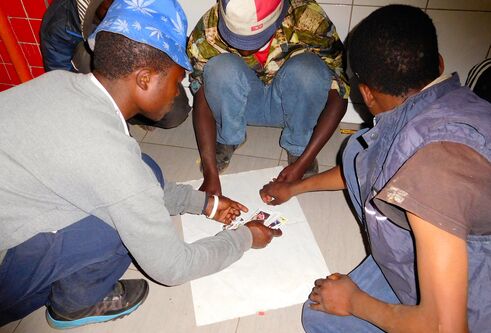
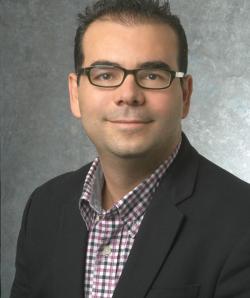
Lorraine van Blerk is a Professor of Human Geography at the University of Dundee's School of Humanities, Social Sciences and Law. She serves as Chair of Human Geography and leads the Research Centre for Transformative Change: Educational & Life Transitions (TCELT) in Education and Society. Her work focuses on street children/youth, refugees, and global inequalities. Academy of Social Sciences Fellow (2021) Stephen Fry Awards - Public Engagement Project of the Year (2017) Market Research Society President’s Medal (2015) Research interests include: Street youth resilience mapping Intergenerational partnerships Transitions to adulthood in crises Policy development for marginalized groups Coastal socio-ecological systems Cultural geographies of homelessness Recent publications address global street youth resilience frameworks (2REST project) and cinema's role for Harare street youth. Key collaborations include universities in Pretoria, Cape Town, Makerere, and Ryerson University. Scientific contributions recognized through: 6 major research prizes 16 funded projects 149+ research outputs International visiting appointments (Toronto Metropolitan University, National University of Singapore)
Olga Fernández López is an Associate Professor at the Department of History and Theory of Art, Universidad Autónoma de Madrid, and holds a PhD in Geography and History (History of Art) from Universidad Complutense de Madrid (UCM). She collaborates with institutions including Intermediae (Matadero Madrid), CA2M Madrid, and Andalusian Center for Contemporary Art Seville. PhD Curating Contemporary Art, Royal College of Art (2017) PhD in History of Art, UCM Master’s in Cultural Management, Fundación Ortega y Gasset Her research focuses on: History of exhibition models and curatorial practice Contemporary art in Spain and Latin America Visual culture and political philosophy Museum decolonization Recent publications explore: Urban curatorial practices (2016-2021) Postwar European visual culture (2019) Decolonial exhibition strategies (2020) Scientific awards include: Salvador de Madariaga grant (2020) for research at Columbia University Key projects: PUBLISHERS: Publics of Contemporary Art (2019-2021) European Forum for Advanced Practices (2019-2022) Decentralized Modernities: Cold War Art (2018-2020)
Dr. Florian Urmetzer serves as Associate Teaching Professor and founding Director of the Ecosystems, Platforms & Strategy (EPS) Research Group at the University of Cambridge's Institute for Manufacturing (IfM). His expertise centers on strategy formulation tools for business ecosystems and platforms within manufacturing and services sectors. He teaches the Business Ecosystem Strategy course and leads IfM Engage consultancy projects for clients including IBM, ATOS, ABN-AMRO, CEMEX, Pearson Education, Leonardo rescue helicopters, and the NHS. Urmetzer holds a distinction MSc in Network Centred Computing and PhD from the University of Reading's School of Systems Engineering. His doctoral research developed real-time usability evaluation methods for distributed collaborative environments. Academically, he has been a visiting researcher at Barcelona Supercomputing Center and Politecnico di Milano. His research investigates industrial ecosystems from strategic and managerial perspectives, encompassing supply chains, digital platforms, and business ecosystem dynamics. This work has been published in leading journals including Journal of Business Research, European Journal of Information Systems, and Journal of Service Research. Analysis of his recent publications reveals dominant trends in technological sovereignty, platform ecosystem governance, and manufacturing relocation strategies. Prior to Cambridge, Urmetzer gained extensive industry experience as a consultant at Accenture in Zürich, Senior Researcher at SAP labs, and roles at Volkswagen AG, Gartner Inc., and IBM. He currently leads the EPS Research Group, which develops frameworks for organizations navigating complex industrial ecosystem dynamics.
SangHyung Ahn is a Lecturer at the School of Civil Engineering , University of Queensland (UQ), since 2017. He joined UQ as a postdoctoral research fellow in 2015 after earning his PhD in Civil Engineering (Construction Engineering and Management) from Purdue University, USA. Prior to his academic career, he worked as an assistant manager at Hyundai Engineering and Construction Co., Ltd. (2003-2007) and holds an MBA in international business from Hanyang University and a B.Sc in Civil Engineering from Korea University. Research Focus: Construction process modelling with virtual reality, decision support systems for construction, automation of data-driven simulation modelling, sensor-based operations analysis, and integration of Building Information Modelling (BIM). Teaching: Coordinates undergraduate courses Introduction to Project Management (CIVL3510) and Construction Engineering Management (CIVL4522) . Research Trends: His recent publications highlight interdisciplinary work in transportation engineering, structural design, and AI-driven simulation tools. Key themes include application of machine learning to car-following models, drone-based vehicle identification, and optimization of public transport systems using agent-based simulations. Supervision: Available for supervision, with completed supervision of PhD and Master’s theses on topics such as BIM-LCA integration, pedestrian trajectory analysis, and AI-driven driving behavior models.
Professor Jürgen Richter-Gebert is a full professor of Geometry and Visualization at the Technical University of Munich (TUM), working within the TUM School of Computation, Information and Technology. Born in 1963, he has been at TUM since 2001, following positions at ETH Zurich (1997-2001) and TU Berlin (1994-1997). His educational background includes studies at TU Darmstadt (1983-1988) and dual PhDs from TU Darmstadt and KTH Stockholm (1991-1992). Richter-Gebert's research spans combinatorial and computer-oriented geometry, with particular expertise in polytope theory and mathematical visualization software. He develops processes for the automatic generation of geometric problem solutions and is actively involved in raising the public profile of mathematics. Richter-Gebert's publications and research focus on the intersection of mathematics and computer science, with particular emphasis on projective geometry, dynamic geometry, polytope theory, and combinatorial geometry. His work demonstrates how mathematical structures can be made accessible through computerized interactive visualizations. His most notable publications include "Perspectives on Projective Geometry" (2011) and "Geometriekalküle" (2009), along with numerous papers on dynamic geometry systems. Ars Legendi Prize for excellent university teaching (2011) Karl Max von Bauernfeind Medal of the TUM (2010) MedidaPrix - media didactic university prize (2008) EASA - European Academic Software Award (2000) Communicator Preis for science communication (2021) As founder and director of the ix-quadrat mathematics exhibition at the Garching Campus, Richter-Gebert has made significant contributions to mathematics education and outreach. He has developed influential mathematical visualization tools including Cinderella, CindyJS, and iOrnament, which have received multiple awards for educational software excellence. His research group focuses on mathematical foundations, authoring systems, and mathematical visualizations with applications in education and public scenarios.
Nathaly Carolina Pinto Torres is a Doctoral Researcher at Aalto University's Department of Design, working on critical design interventions for marginalized communities. Since 2020, she has led the "Emergencia de Educación en la Amazonía Ecuatoriana" project, collaborating with indigenous students and Confeniae to develop pictographic communication systems challenging social exclusion. Her research spans: Participatory design with indigenous communities Gender justice in education during crises Epistemic justice in plurinational contexts Visual resistance strategies in Amazonian regions Postcolonial educational frameworks Design for socio-environmental transformation Publication trends show focus on: Visual communication systems for marginalized groups Crisis-driven educational design Decolonial methodologies Intersectional analysis of exclusion Epistemic justice in academia Collective resilience building Scientific recognition includes: Best Demo Award (2021) SENESCYT International Graduate Scholarship (2019) Netherlands Fellowship Programmes (NFP) (2010)
Hirokatsu Kataoka serves as Chief Senior Researcher at the National Institute of Advanced Industrial Science and Technology (AIST) in Japan, with multiple academic affiliations including Academic Visitor at the Visual Geometry Group (VGG) at University of Oxford, Visiting Associate Professor at Keio University, and Adjunct Associate Professor at Tokyo Denki University. He is Principal Investigator of both cvpaper.challenge and LIMIT.Lab, and serves as Research Advisor for SB Intuitions. Dr. Kataoka earned his Ph.D. in Engineering from Keio University (April 2011 - March 2014), where he received the Fujiwara Prize in 2014 as valedictorian equivalent. His research primarily focuses on innovative pre-training methodologies that eliminate dependency on natural image datasets, with his Formula-Driven Supervised Learning (FDSL) framework being particularly influential in the field. Kataoka's research interests center around representation learning with limited data resources, including zero-shot, unsupervised, and synthetic learning approaches. His work explores how visual/multimodal models can be effectively trained with minimal real-world data, addressing critical ethical concerns related to large-scale datasets. He has pioneered methods using fractal geometry, mathematical formulas, and procedural generation to create effective pre-training frameworks that rival traditional ImageNet-based approaches. His publication record shows a clear trajectory toward solving the challenges of learning with limited resources, with recent work expanding FDSL to audio processing, microfossil analysis, and visible-to-infrared translation. His papers consistently address the core challenge of building robust visual recognition systems without relying on massive annotated datasets, with increasing focus on practical applications across diverse domains. Scientific Awards & Recognition ACCV 2020 Best Paper Honorable Mention Award for 'Pre-training without Natural Images' AIST Best Paper Award (2019, 2022) BMVC 2023 Best Industry Paper Finalist Featured in MIT Technology Review His 3D ResNets paper ranks among the top 0.5% most-cited CVPR papers over a five-year period Dr. Kataoka actively advises numerous researchers across multiple institutions, with his research team comprising Ph.D. and Master's students from various universities. He has served as Area Chair for CVPR 2024 and 2025, will serve as IEEE TPAMI Associate Editor beginning in 2025, and organizes the LIMIT Workshop series at major computer vision conferences. His LIMIT.Lab, established in June 2025, serves as a collaboration hub focused on building multimodal AI models under constrained resources including compute, data, and labels.
Nezihe Merve Gürel is an Assistant Professor in Computer Science at Delft University of Technology (TU Delft), affiliated with the Pattern Recognition & Bioinformatics Group within the Intelligent Systems Department of the Faculty of Electrical Engineering, Mathematics and Computer Science. Her research focuses on developing robust, reliable, and efficient machine learning methods with enhanced reasoning capabilities, bridging theoretical rigor and practical applications. She emphasizes data-centric approaches to improve ML systems. Education: PhD in Computer Science from ETH Zurich, MSc from EPFL (Switzerland). Research Interests: ML robustness, reliability, reasoning, data-centric ML, federated learning, and explainable AI. Her recent work includes certified robustness for retrieval-augmented models and time-efficient learning algorithms. She has contributed to the Journal of Data-centric Machine Learning Research as an executive editor and served as a reviewer for top ML conferences (NeurIPS, ICML, ICLR). She previously held roles at IBM Research, Stanford University's Human-Centered AI Lab, and Westlake Institute for Advanced Study. Her awards include the Generation Google Scholarship and Cisco Research Funding . Scientific Awards : Generation Google Scholarship (2021) Cisco Research Center University Funding Labs & Teams : She leads research in the Pattern Recognition Laboratory at TU Delft and collaborates with international institutions like Stanford and Westlake Institute for Advanced Study.
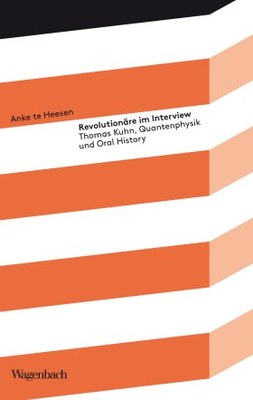
Professor Anke te Heesen is Chair of the History of Science with a focus on the history of education and the organization of knowledge in the 19th and 20th centuries at Humboldt-Universität zu Berlin. She has held this position since 2011 and is also the spokesperson (since 2024) of the DFG Center for Advanced Studies 'Applied Humanities – Politics and Genealogy,' alongside Professor Viktoria Tkaczyk. Previously, she served as Professor for Empirical Cultural Studies at the University of Tübingen (2008-2011) and founding director of the Museum of the University of Tübingen (2006-2008). Her academic career includes research positions at the Max Planck Institute for the History of Science in Berlin (1999-2006), the German Hygiene Museum Dresden (1998-1999), and the Research Center for the European Enlightenment (1996-1997). Professor te Heesen's research spans multiple interconnected fields including the history of humanities, natural history in the early modern period, museum and exhibition history, organization and notation methods of sciences, and the relationship between science and art. She has a particular interest in how knowledge is formed, organized, and presented through various material and institutional practices. Her work often examines the intersection of academic knowledge production with material culture, focusing on objects, collections, and exhibition practices as sites of knowledge formation. Her recent publications reveal a strong focus on the history of interviews as research methodology, the development of exhibition catalogs as scholarly monographs, and the material history of knowledge practices. The analysis of her 15 most recent articles shows consistent engagement with themes of materiality, the organization of knowledge, and the historical development of scholarly practices, particularly in the humanities. Her work frequently bridges historical analysis with contemporary scholarly concerns about knowledge production and dissemination. Spokesperson of the DFG Centre for Advanced Studies 'Applied Humanities: Genealogy and Politics' (since 2024) Senior Fellow, Collegium Helveticum, Zurich (WS 2023/24) Visiting Scholar, Max Planck Institute for History of Science (since 2021) Dibner Research Fellowship, Huntington Library (2020) Senior Research Fellowship, Lichtenberg Kolleg (2020) Professor te Heesen has held significant leadership roles including Ombudsperson of Humboldt University of Berlin (since April 2024) and Head of the Commission for Studies and Teaching at the Institute of History (since April 2024). She serves on multiple advisory boards including the Scientific Advisory Board of the project 'Serious Donations' at the Museum of Natural History in Berlin (since 2020), the DFG Review Board for History (2020-2024), and the Robert K. Merton Center for Science Studies at Humboldt University (since 2019). She is also a member of the editorial boards of several scholarly journals including Reports on the History of Science and History of Science and Humanities. Her work extends to museum practice and curation, with significant contributions to understanding how universities can leverage their collections to create meaningful educational experiences that connect historical context with contemporary research. She has initiated important publication series including 'Sonderdruck' (since 2016) and 'Minima Literatur- und Wissensgeschichte kleiner Formen' (since 2020).
Dr. Gaoheng Zhang is an Associate Professor of Italian Studies at the University of British Columbia's Faculty of Arts. His research analyzes cultural mobilities within Italy's and Western Europe's global networks with Asia, America, and Africa, focusing on transculturality and dialogism through multilingual and multisited methodologies. Key Focus Areas: Migration/Postcolonial Studies, Gender and Masculinity, Film/Communication Studies, Italian-Chinese Relations Teaching: Italian Food/Fashion Cultures, Mafia Movies, Pandemic Literature, (Post-)Colonial Cultures His scholarship includes pioneering works on China-Italy cultural exchanges through Mobility, Architecture, Chronotopes (2023), and the upcoming monographs Italian Dumplings and Chinese Pizzas (2025) and Fashion Communications Between Italy and China (2025). He is co-editing The Handbook on Modern China-Italy Relations (2026-2027) with Valentina Pedone. Dr. Zhang's research has received prestigious recognition including: SSHRC Insight Grant (2025-2029) UBC Killam Faculty Research Fellowship (2022-2023) Jean Monnet Fellowship (2022-2023) SSHRC Insight Development Grant (2018-2020) Provost’s Postdoctoral Scholarship at USC (2012-2014) He serves on the executive committee of UBC's Centre for Migration Studies and advisory board of Green College, while maintaining affiliations with the Centre for European Studies and Asian Canadian/Asian Migration Studies program.
Trevor Goodyear is an Assistant Professor at the University of British Columbia (UBC) Faculty of Applied Science, School of Nursing. His research explores substance use, mental health, and health equity among marginalized populations, particularly 2S/LGBTQ+ youth and people who inject drugs. Education: MSN, MPH, PhD Research Interests: Harm reduction, LGBTQ+ health, mental health, public health, health equity, social determinants of health His recent work examines harm reduction strategies, structural vulnerabilities, and health narratives in urban drug scenes. Publications analyze cannabis use, overdose prevention, conversion practices, and the intersection of gender identity with substance use. His research employs qualitative methods like photovoice and narrative analysis to center marginalized voices. Key trends in his articles include the role of stigma in healthcare, policy implications of substance use research, and the impact of the COVID-19 pandemic on mental health disparities. He advocates for evidence-informed policies and community-driven interventions to address systemic inequities.
Eliese-Sophia Lincke is a Junior Professor at the Department of History and Cultural Studies, Freie Universität Berlin, since May 2022. Her work bridges computational methods with Egyptology, focusing on digital tools for studying ancient texts. Bachelor's and Master's in Egyptology, Humboldt-Universität zu Berlin (2007) PhD in "The Conception of Spaces in Language" (TOPOI Cluster, 2012) Research interests include: Digital Humanities : Developing machine learning models for Hieroglyphic, Demotic, and Coptic text processing Linguistic Typology : Analyzing classifier systems in Ancient Egyptian and Sign Languages Spatial Linguistics : Investigating prepositions and spatial adverbs in Egyptian-Coptic Recent publications focus on Neural Lemmatization , OCR for Coptic , and Classifier Semantics , demonstrating her commitment to computational Egyptology. Scientific awards include the Humboldt-Preis 2008 for best Master's thesis and the Prize for Good Teaching 2014 . She has co-organized workshops like "Wege zum Ägyptischen" and served as Co-Editor for Lingua Aegyptia . Her teaching contributes to the Digital Studies of Ancient Texts Master's program.
Dr Bela Bonita Chatterjee is a Senior Lecturer in Law at Lancaster University School of Law , with a focus on teaching and scholarship since 2020. Her work bridges cyberlaw , artificial intelligence , robotics , and gender/sexuality in legal contexts. She has received multiple teaching accolades, including the 2023 Blue Plaque Award and the 2018 FASS Dean’s Senior Teaching Award . Dr Chatterjee’s research interrogates the interdisciplinary intersections of law and technology , particularly cybercrime , AI and criminal law , and widening participation in legal education . Her recent scholarship explores robotics in criminal law and business attire/fashion as legal subjects. 2025 : 'The Speakeasy' conference paper 2023 : Invited discussant on child sex dolls/robots 2022 : Workshops on assessment design and audio-visual feedback 2020 : Decolonizing the curriculum and digital teaching practices 2019 : Robotics in family law, child protection, and Lex Robotica 2018 : Robotics and sexual violence Scientific Awards: 2023 Blue Plaque Award 2022 Highly Commended Award 2018 FASS Dean’s Senior Teaching Award 2006 Sir Alistair Pilkington Prize Nominee/Shortlisted for HEA NTFS and OUP Law Teacher of the Year Awards Dr Chatterjee has supervised and examined numerous PhD and LLM dissertations , served on editorial boards of journals like Frontiers of Legal Research , and co-organized conferences such as the British Association for Canadian Studies Legal Studies Group Annual Conference . She contributes to committees including the CREST Security Research Ethics Committee and EPSRC Fellowship Advisory Board .
Mehmet Koyutürk serves as the Andrew R. Jennings Professor in the Department of Computer and Data Sciences at Case Western Reserve University's Case School of Engineering, with additional affiliation as a Member of the Cancer Genomics and Epigenomics Program at the Case Comprehensive Cancer Center. His computational research bridges algorithm development with biological applications, focusing on network-structured data analysis to address complex biomedical challenges. Dr. Koyutürk earned his Ph.D. in Computer Science from Purdue University following B.S. and M.S. degrees in Electrical Engineering and Computer Engineering from Bilkent University. His primary research domains include high-throughput biological data analysis, systems/network biology methodologies, data mining algorithms, and scientific computing optimization, with particular emphasis on phosphorylation networks, genomic interactions, and multi-omics integration. Recent publication trends reveal expanding applications of his network science expertise into Alzheimer's disease phosphoproteomics, bipolar disorder biomarker discovery, and intimate partner violence analysis, while maintaining core contributions to graph neural networks and biological link prediction. His group actively develops open-source analytical tools like RokaiXplorer for phospho-proteomic data accessibility. Scientific Recognition Andrew R. Jennings Professorship Dr. Koyutürk leads multiple NIH-funded initiatives including R01-LM012980 for phosphoproteomics analysis, U01-CA198941 (BD2K program) for big network integration, and R01-LM011247 for GWAS enhancement, complemented by NSF CAREER Award CCF-0953195. He serves on the steering committee for CWRU's Systems Biology and Bioinformatics graduate programs and as Associate Editor for IEEE/ACM Transactions on Computational Biology and Bioinformatics (TCBB), with extensive collaboration through Mark Chance's Center for Proteomics and Bioinformatics. His laboratory specializes in developing scalable algorithms for biological network analysis, currently advancing projects on kinase-substrate association prediction, co-phosphorylation network characterization in cancer, and network-based approaches to intimate partner violence data mining, with strong emphasis on translating computational methods into biomedical insights through open-source software dissemination.
Jennifer Ryan is a Professor of Numerical Analysis and Division Head of Numerical Analysis, Optimization, and Systems Theory at the Department of Mathematics, KTH Royal Institute of Technology. Her research focuses on designing and developing numerical schemes to extract accuracy from simulations, particularly through superconvergence properties and computational efficiency improvements. She applies these techniques to applications such as imaging, fluid visualization, and plasma dynamics. Education: PhD in Applied Mathematics, Brown University; MS in Mathematics, Courant Institute; BA in Applied Mathematics, Rutgers University. Professional Activities: Member of editorial boards for BIT Numerical Mathematics, ESAIM:M2AN, and Communications on Applied Mathematics and Computation; Steering committee member of AWM's Women in Numerical Analysis and Scientific Computing (WINASc). Her publications emphasize discontinuous Galerkin methods, SIAC filtering, and applications in fluid dynamics. She has served on multiple grant review panels and received awards for diversity and inclusion initiatives. Grants: Principal Investigator for projects funded by the Swedish Research Council, NSF, and US Air Force Office of Scientific Research. Awards: Fellow of UK Higher Education Academy, DAAD Fellowship, and Householder Fellowship.