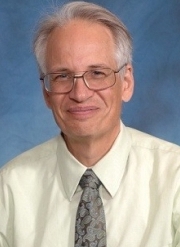
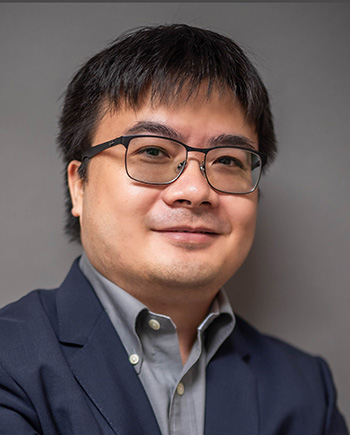
Dr Gareth McCray is a Research Associate at Keele University's School of Medicine, affiliated with the Research Institute for Primary Care and Health Sciences. He holds a PhD in Applied Social Statistics from Lancaster University (2014) and previously worked there as a Research Associate before joining Keele in 2016. His research focuses on statistical methodologies applied to healthcare, including child development assessment tools (e.g., Global Scales for Early Development), clinical evaluation (e.g., OSCE score adjustments), and musculoskeletal health questionnaires (MSK-HQ). He contributes to courses like MMedSci Statistics and Epidemiology and external psychiatric training programs. McCray is actively involved in international collaborations such as the GSES and INDIGO projects, aiming to standardize developmental assessments for young children. He also serves on the Royal Statistical Society's Young Statisticians Section Committee. His work emphasizes rigorous statistical validation of healthcare tools, with recent publications focusing on examiner variability in medical exams, cross-cultural validation of developmental scales, and the creation of caregiver burden measures (CLCF-SF). His articles span medical education, child development, and psychometric methods, reflecting his interdisciplinary approach to health sciences research.
Anahid Behrouzi is Associate Professor in the Architectural Engineering Department at California Polytechnic State University's College of Engineering. Specializing in earthquake engineering and reinforced concrete design, her research focuses on seismic performance of structures, engineering education innovation, and post-disaster reconnaissance methodologies. Key research areas include: Seismic behavior of non-rectangular concrete structures under bidirectional loading Development of active learning tools for structural engineering education Automated damage assessment technologies for post-earthquake reconnaissance Diversity and inclusion initiatives in engineering programs Her educational innovations integrate physical experimentation, computational tools (Python programming), and industry-standard software (Bluebeam) into undergraduate curricula. Recent publications demonstrate strong emphasis on hands-on learning approaches including large-scale structural testing, fabrication projects, and physical demonstration models for teaching structural dynamics and design principles.
Dr. Maria Konsta Gdoutos is a Professor of Civil Engineering and Materials Science and Engineering at The University of Texas at Arlington. She serves as the co-founder and Associate Director of the Center for Advanced Construction Materials (CACM), a state-of-the-art interdisciplinary center advancing smart materials for infrastructure. Her research focuses on sustainable concrete, nanotechnology, and multifunctional cement-based composites, with emphasis on CO2 sequestration, renewable energy integration, and infrastructure durability. Affiliations: CACM Director, ACI 241 Committee Chair, RILEM Technical Committee member, and Associate Editor of Cement and Concrete Composites . Leadership: UTC Director of the $10M DuRe-Transp Center, NSF PIRE grant recipient, and recipient of international awards including Fellowships from European and Russian Academies. Research interests span advanced nanocomposites, smart concrete for real-time monitoring, and eco-efficient materials. Her work addresses societal needs through nanotechnology-enabled solutions for construction sustainability and resilience. Over 150 peer-reviewed publications and patents on CNT-reinforced concrete and smart materials highlight her contributions. Grants include NSF PIRE (#2230747) for CO2 sequestration and a DOT Tier 1 UTC. Awards include Empirikion (2017) and Fulbright (2005). She advises multiple PhD and MS students, leading projects on carbon-negative concrete and waste material utilization. Labs/Teams: CACM, where interdisciplinary teams develop nanoengineered materials for infrastructure. Current projects include thermoelectric concrete for anti-icing and additive manufacturing of cementitious materials.
Dr. Habib Ahmari is an Associate Professor in the Department of Civil Engineering at The University of Texas at Arlington (UTA), licensed in Texas and Ontario. With over 20 years of experience, his expertise spans environmental hydraulics, sediment transport, and fluvial geomorphology. He holds a PhD from Queen's University (2010) and advanced degrees from Sharif University (Iran). Research Focus: Urban hydrology, climate change impacts, river restoration, and hydraulic engineering. Leadership: Directed UTA's CE Department Learning Center (2016–2020), chaired ABET accreditation (2017–2020), and serves on ASCE technical committees. Grants: Secured funding from TxDOT, GLO, and NCTCOG for studies on sediment transport, bridge resilience, and coastal dynamics. His research bridges theoretical and applied engineering through projects like ArcGIS-based erosion toolkits and biofiltration swale testing. Awards include UTA's Outstanding Teaching Award (2019) and Queen's University's R. Samuel McLaughlin Fellowship (2006). Dr. Ahmari advises 40+ graduate students and teaches courses in fluid mechanics, sediment transport, and open channel hydraulics. He collaborates with agencies like Trinity River Authority and presents at international conferences such as the World Environmental & Water Resources Congress.
Raad Azzawi is a Professor of Instruction in Civil Engineering at the University of Texas at Arlington (UTA), College of Engineering. He holds a PhD in Civil Engineering from the University of Baghdad (2000) and an MBA in Projects Finance and Investment from UTA (2021). With over two decades of academic experience, he progressed from Assistant Professor to full Professor within UTA's Civil Engineering Department, while maintaining industry engagement through consulting roles with firms including Transtech Co. and Miad Construction Co. Education: MBA in Business Administration, University of Texas at Arlington (2021) PhD in Civil Engineering, University of Baghdad (2000) MS in Civil Engineering, University of Baghdad (1995) BS in Civil Engineering, University of Baghdad (1989) Azzawi's research centers on sustainable structural engineering solutions with emphasis on fiber-reinforced concrete systems and energy-efficient construction . His experimental work investigates seismic retrofitting techniques, steel-fiber reinforced concrete (SFRC) behavior under eccentric loading, concrete breakout strength of anchors in FRC, and innovative applications of expanded polystyrene (EPS) for insulating concrete forms. He actively explores composite steel-concrete systems for bridge decks and structural components, combining laboratory testing with numerical simulations to advance sustainable infrastructure design. His 15 most recent publications reveal a strong focus on experimental validation of novel concrete composites (particularly SFRC), sustainable construction materials (EPS-based systems), and structural connection behavior under dynamic loading. The research trajectory shows consistent progression from fundamental material testing (2020-2021) toward applied sustainable solutions (2023-2024), with increasing industry collaboration evident in recent conference presentations. Scientific Awards: Outstanding Civil Engineering Teaching Award, University of Texas at Arlington (2020) Outstanding Teaching Award, CE/UTA (December 13, 2019) Azzawi has advised over 35 graduate students across thesis committees and dissertation roles, demonstrating significant mentorship impact. His current research includes a $2,000 UTA-funded grant (January-April 2024) on EPS blocks for energy-efficient construction. He serves on multiple committees including ABET accreditation, department promotion guidelines, and UG curriculum development, while maintaining active industry partnerships through the Timber Strong competition and structural engineering associations. As a member of ASCE, AISC, ACI, and AWC, Azzawi integrates professional practice with academic work. His teaching portfolio spans structural design courses (concrete, steel, timber, masonry) and advanced topics including BIM and nonlinear analysis, reflecting comprehensive expertise across civil engineering subdisciplines.
Emad Kassem is an Associate Professor in the Department of Civil & Environmental Engineering at the University of Idaho. His research focuses on pavement materials characterization, infrastructure durability, and sustainable construction technologies. Education includes: Ph.D. in Civil Engineering, Texas A&M University (2008) M.S. in Civil Engineering, Texas A&M University (2005) B.S. in Civil Engineering, Zagazig University (2001) Research areas include asphalt material performance, recycled materials utilization, non-destructive pavement evaluation, and computational modeling of infrastructure systems. Kassem develops predictive models for pavement performance and material behavior. Courses taught: Properties of Construction Materials Pavement Preservation and Management Engineering Statics Engineering Mechanics of Materials Awards: Engineers' Council Outstanding Engineering Achievement Merit Award (2016) Texas A&M Transportation Institute/Trinity New Researcher Award (2011)
Jongmin Shim is an Associate Professor in the Department of Civil, Structural and Environmental Engineering at the University at Buffalo's School of Engineering and Applied Sciences. He is affiliated with the Stephen Still Institute for Sustainable Transportation and Logistics, focusing on interdisciplinary research at the intersection of civil engineering and advanced materials. His work emphasizes mechanical metamaterials, wave motion, structural instability, and bio-inspired design. Education: PhD in Engineering Mechanics, Massachusetts Institute of Technology (2010) MS in Civil and Environmental Engineering, Massachusetts Institute of Technology (2005) BS/MS in Civil Engineering, Korea Advanced Institute of Science and Technology (1998/2002) Research Interests: His research explores innovative materials and structures, including metamaterials for energy absorption, tunable phononic crystals, and bio-inspired composites. He investigates mechanisms like snap instabilities and pattern transformations to design adaptive, sustainable systems for transportation and infrastructure. Recent work includes wearable sensors, vibration-damping composites, and smart architectural facades. Key Contributions: Dr. Shim's articles highlight advancements in metamaterial design, such as nacre-inspired composites, soft granular crystals, and hybrid insulation systems. His studies bridge theoretical mechanics with practical applications, addressing challenges in urban development, sustainable infrastructure, and smart materials. Labs/Teams: He contributes to the Stephen Still Institute, advancing sustainable transportation solutions through cross-disciplinary collaboration. His lab explores cutting-edge materials for resilient civil infrastructure.
Nicolas Ali Libre is an Associate Teaching Professor in the Department of Civil, Architectural and Environmental Engineering at Missouri University of Science and Technology. He serves as Director of the Materials Testing Lab and has contributed extensively to research and education in civil engineering, with a focus on concrete technology, 3D printing materials, and innovative teaching methods. PhD in Civil Engineering (2009) MS in Structural Engineering (2003) BS in Civil Engineering (2001) His research spans concrete rheology, sustainable construction materials, and engineering education technologies, including 3D concrete printing optimization, fiber-reinforced composites, and digital learning tools. He has pioneered novel testing methods for concrete buildability and extrudability. Award-winning educator, he received the President’s Award for Innovative Teaching (2018) and Missouri S&T Faculty Achievement Award (2018). His scholarly output includes over 20 peer-reviewed journal articles, 60 conference papers, and mentorship of 10 graduate students. He manages the Materials Testing Lab at Missouri S&T and has developed digital educational resources for engineering mechanics courses, including the SecPro App for teaching mechanics concepts.
Shiyi Wei is an Associate Professor in the Department of Computer Science at the University of Texas at Dallas (UT Dallas), affiliated with the Erik Jonsson School of Engineering and Computer Science. He holds a Ph.D. in Computer Science from Virginia Tech (2015) and a B.E. in Software Engineering from Shanghai Jiao Tong University (2009). His postdoctoral research was conducted at the University of Maryland, College Park's PLUM Lab. His research focuses on enhancing software security and reliability through automated analysis, testing, and static/dynamic tool development. Key areas include configurable systems analysis, machine learning-driven static analysis, and fuzz testing benchmarking. Wei has received prestigious awards, including the NSF CAREER Award (2021) and a USENIX Security Distinguished Paper Award (2022). He teaches courses such as Compiler Construction (CS 6353), Compiler Design (CS 4386), and Software Maintenance and Evolution (CS/SE 6356). Current research projects involve improving fuzz testing methodologies, AI-driven vulnerability修复, and evaluating static analysis tools. His group has developed frameworks like ECSTATIC for configurable tool testing and FIXREVERTER for realistic bug injection. Wei has advised numerous students, including Austin Mordahl (Assistant Professor at UIC) and Zenong Zhang (Software Engineer at Google). His work is supported by NSF grants and AWS research credits. Notable recent contributions include studies on nondeterministic static analysis tools and feature-based fuzz testing benchmarking.
Cristina Ros i Sole is Professor at Goldsmiths, University of London, where she conducts groundbreaking research at the intersection of intercultural communication, multilingualism, and material culture. Her scholarly work challenges conventional approaches to language education by emphasizing the embodied, affective, and material dimensions of linguistic experience. Her research focuses on how everyday objects and material practices shape multilingual repertoires and intercultural understanding. Through innovative methodologies including auto-ethnography, visual methods, and creative praxis, she investigates the intimate, embodied aspects of language learning and intercultural encounters. She has developed distinctive theoretical frameworks such as the concepts of 'chronotope' and 'mudes' to analyze how languagers navigate spatio-temporal coordinates in their biographical journeys. Analysis of her publication trajectory reveals a consistent movement toward understanding language beyond the verbal, emphasizing how materiality, affect, and creativity shape intercultural experience. Her work bridges theoretical sophistication with practical implications for language education, advocating for approaches that recognize the complexity of multilingual subjectivities and the role of ordinary objects in cultural expression. Recent publications like Material Interculturality: making sense with everyday objects (2024) demonstrate her ongoing commitment to expanding the boundaries of intercultural communication studies. As an active scholar, she has edited significant collections including Liberating Language Education (2022) and the journal special issue Belonging and Homemaking in the Internationalised Campus (2023), demonstrating leadership in shaping contemporary discourse in her field. Her work consistently challenges static notions of language, advocating for dynamic, translingual approaches that reflect the realities of contemporary multilingual contexts.
Lei Wang is an Assistant Professor in the Department of Civil and Architectural Engineering and Construction Management at the University of Cincinnati, directing the Sustainable and Resilient Geotechnical Infrastructure Laboratory. His research focuses on geotechnical computational modeling, geological hazards, uncertainty quantification, and space exploration geotechnics. He holds a Ph.D. from Clemson University and has authored over 70 peer-reviewed publications. Education: Ph.D. (Civil Engineering, Clemson University, 2013), M.S. (Geotechnical Engineering, Tongji University, 2010), B.S. (Civil Engineering, China University of Geosciences, 2008). Research interests include lunar regolith characterization, landslide risk assessment, and resilient infrastructure design. Key projects include NASA-funded studies on energy-efficient lunar drilling and USGS-supported probabilistic levee risk analysis. Awards include the Taiwan Geotechnical Society Best Paper Award. Grants: Over $3.5M in funding from NSF, NASA, USGS, and state agencies. Notable grants include the NASA-infused curriculum development ($270K) and Ohio's levee risk assessment ($24K). Labs: Leads the Sustainable and Resilient Geotechnical Infrastructure Lab, focusing on multiphysics modeling and space geotechnics. Collaborates on projects involving additive manufacturing for geothermal systems and mixed reality education tools.
Richard Miller is a Professor in the Department of Civil, Environmental, and Geodetic Engineering at the University of Cincinnati. He holds the rank of Professor and has served as Principal Investigator (PI) on numerous transportation-related research projects funded by federal, state, and industry sponsors. His research focuses on structural engineering with particular emphasis on bridge systems, concrete materials science, and infrastructure rehabilitation. Key areas include prestressed concrete girder behavior, high-strength reinforcement applications, nondestructive evaluation, and bridge maintenance strategies. Miller has also contributed to national standards development through AASHTO and PCI guidelines. Over 30 years of continuous funding (1994-2024) demonstrates his sustained leadership in transportation infrastructure research. Notable grants include $1.45M NSF Distinguished Faculty Advancement Program (2024) and $992K Federal Highway Administration training initiatives. His work bridges academic research with practical industry applications, addressing critical challenges in bridge safety, durability, and lifecycle management. Over 60 peer-reviewed publications Principal Investigator on 45+ grants totaling over $15M Collaborator with FHWA, ODOT, and TRB Key contributions to PCI Bridge Manual updates Current research focuses on advanced materials for bridge decks, corrosion mitigation strategies, and innovative repair techniques. His lab conducts full-scale structural testing and field monitoring of critical infrastructure components.
Yuntian Wu is a Senior Lecturer at the University of Houston's Cullen College of Engineering, Department of Civil and Environmental Engineering. His expertise focuses on structural engineering, seismic design, and infrastructure resilience. He holds a Ph.D. and is a licensed Professional Engineer (P.E.). Research interests include seismic behavior of composite structures, bridge health monitoring, and vibration analysis of transportation infrastructure. His work emphasizes innovative solutions for improving structural performance under seismic and dynamic loads, with contributions to composite wall systems, material behavior under extreme conditions, and non-destructive testing methods. Key research trends in his publications involve advanced testing techniques for bridge and tunnel systems, composite materials optimization, and earthquake-resistant design strategies. His methodologies span experimental studies, theoretical modeling, and computational simulations. He is affiliated with the Department of Civil and Environmental Engineering and contributes to teaching and advising within the Cullen College of Engineering.
Dr. Larry Hu is an Assistant Professor in the Department of Building and Construction Management at the School of Design and Built Environment, University of Canberra. His expertise lies in Sustainable Construction, Construction Project Management, and Smart Technologies. Previously, he taught at institutions including Deakin University, Edith Cowan University, and the University of Melbourne. He leads four major research projects, including environmental sustainability education programs and studies on skill shortages in construction sectors. His research focuses on optimizing construction processes through methodologies like Data Envelopment Analysis (DEA) and BIM technology. Key contributions include enhancing sustainability, reducing costs, and improving safety in construction projects. He holds certifications as a First-Class Constructor and Investment Project Management Professional in China, with 8 years of industry experience in roles such as construction management engineer and project consultant. Dr. Hu’s work aligns with UN Sustainable Development Goals, emphasizing cost reduction, carbon reduction, and value creation. His publications span journals like Buildings and Sustainability , covering topics from thermal comfort in urban buildings to smart city development. He actively contributes to academic governance as an editorial board member of Scientific Reports and Journal of Civil Engineering and Construction . Grants & Projects: Includes ACT Government-funded initiatives for digital building hubs and NSW government sustainability education programs. Professional Roles: Member of AUBEA, Australian Institute of Building (AIB), and topical advisory panels for Journal of Sustainability and Journal of Buildings .
Mike Mooney is a Professor of Mechanical Engineering at the Colorado School of Mines, holding the Grewcock Chair in Underground Construction & Tunneling. He directs the Center for Underground and leads the Heavy Construction Studio, focusing on advancing smart, rapid, and cost-effective construction technologies for urban tunneling and challenging ground conditions through instrumentation integration and field experimentation. His educational background includes: PhD in Civil Engineering, Northwestern University, 1996 MS in Civil Engineering, University of California, Irvine, 1993 BS in Civil Engineering, Washington University, St. Louis, 1991 BA in Physics, Hastings College, 1991 Mooney's research integrates instrumentation into tunnel boring machines and horizontal directional drilling systems, studying robotic excavation, soil transformation using polymers/foams, and ground-mechanical interactions via physics models and machine learning. His group conducts extensive field campaigns embedded in real construction projects worldwide, emphasizing data-driven approaches to complex geotechnical challenges. Recent publications (2018-2023) demonstrate expertise in TBM performance optimization, boulder detection systems, soil conditioning, and machine learning applications for ground prediction. Key contributions include real-time vibration monitoring for Venice lagoon restoration, annular pressure management, foam stability analysis, and autonomous tunneling frameworks across major projects in Seattle, Toronto, Los Angeles, and New York City. No scientific awards or fellowships were mentioned in the provided text. Professor Mooney actively advises graduate students as evidenced by extensive student co-authorship in publications. His research is directly applied to international construction projects including the Venice lagoon restoration and urban tunneling initiatives. He is a registered Professional Engineer in Colorado (License #39682) and provides technical consultation for construction projects globally. He directs the Center for Underground at Colorado School of Mines, where his Heavy Construction Studio develops instrumentation systems and conducts field experiments integrated into active construction sites. The lab specializes in real-time monitoring technologies, ground characterization methods, and machine learning applications for tunneling operations.