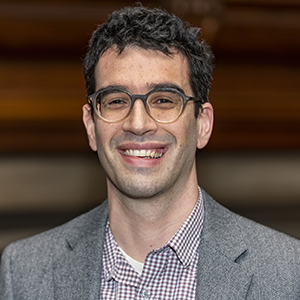
Andrea Forte is a Professor affiliated with the University of Michigan, with a former position at Drexel University. Her research focuses on Human-Computer Interaction (HCI), Privacy Studies, and Social Media, exploring topics such as privacy expertise, marginalized communities' digital experiences, and collaborative systems. She has published extensively in top venues like CHI, CSCW, and ACM Transactions on Computer-Human Interaction. Her work bridges technical, social, and ethical dimensions of technology, addressing challenges in privacy protection, online anonymity, and the impact of social media on vulnerable populations. She has contributed to understanding how technologies like Wikipedia and social platforms mediate trust, credibility, and activism. Notable projects include studies on user privacy rights in people search websites and the sociotechnical challenges faced by disability activists online. Forte collaborates with interdisciplinary teams, addressing issues such as internet-facilitated harassment of researchers and the design of privacy-enhancing technologies. Her research emphasizes equitable and inclusive approaches to technology, particularly in library and educational contexts.
Michael L. Madigan is a Professor in the Grado Department of Industrial and Systems Engineering at Virginia Tech. His research focuses on human factors engineering, biomechanics, and ergonomics, particularly addressing issues related to slips, trips, falls, and musculoskeletal disorders. He leads the Madigan Biomechanics Group, which investigates the biomechanics of human motion and neuromuscular control to enhance occupational safety and elderly health. Education: Ph.D., Biomedical Engineering, Virginia Commonwealth University, 2001 M.S., Bioengineering, Texas A&M University, 1996 B.S., Bioengineering, Texas A&M University, 1994 Research Interests: Obesity’s impact on mobility, aging-related biomechanics, workplace ergonomics, and biomechanical interventions for fall prevention. His work combines experimental and computational methods to develop preventive measures like exercise interventions and ergonomic designs. Professional Roles: Editor-in-Chief, Journal of Applied Biomechanics (2017–present) Formerly Editor, Medicine and Science in Sports and Exercise (2013–2017) Secretary, American Society of Biomechanics (2009–2012) Awards: Kevin P. Granata Faculty Fellow (2013–2014) Virginia Tech College of Engineering Certificate of Teaching Excellence (2014) Finalist for International Society of Biomechanics Clinical Award (2005) Advising & Grants: Advised over 20 doctoral and undergraduate students since 2007. His grants support studies on obesity-related falls, exoskeleton design, and biomechanical modeling. Collaborates with the Virginia Tech-Wake Forest School of Biomedical Engineering and Sciences. Labs/Teams: Director of the Madigan Biomechanics Group and core member of the Occupational Ergonomics and Biomechanics Laboratories. Active in developing smart prosthetics and wearable technologies for injury prevention.
Eli D. Strauss is a behavioral ecologist and Postdoctoral Researcher at the Max Planck Institute of Animal Behavior and the University of Konstanz. He will transition to an Assistant Professor position at the Department of Integrative Biology, Michigan State University in late 2025. His research focuses on the evolution of stable social systems, particularly in spotted hyenas, analyzing how individual behaviors and relationships shape group-level dynamics. Strauss employs field experiments, computational techniques, and long-term observational data to study dominance hierarchies, social inequality, and the interplay between individual experiences and collective behaviors. Research Interests : Strauss investigates how societies emerge from individual interactions, emphasizing long-term perspectives. Key themes include dominance hierarchy dynamics, social inheritance, and the ecological drivers of social behavior. His work bridges behavioral ecology with computational methods, addressing questions about social structure stability and evolutionary adaptations. Key Projects : Co-director of the Mara Hyena Project in Kenya, a long-term study on hyena behavior and ecology. Developing methodologies for longitudinal studies of dominance hierarchies, including frameworks for analyzing hierarchy dynamics across timescales. His computational tools (e.g., DynaRankR ) are widely used for dominance inference. Upcoming Initiatives : Establishing a lab at Michigan State University focusing on social behavior and collective ecology. Recruiting graduate students and postdocs to study social systems, computational ecology, and animal behavior.
Biykem Bozkurt is a Senior Dean of Faculty and Professor in the Department of Medicine-Cardiology at Baylor College of Medicine in Houston, Texas. She holds the Mary and Gordon Cain Chair of Internal Medicine and the W. A. 'Tex' and Deborah Moncrief, Jr. Chair. Her roles include leadership in academic administration and clinical cardiology. Education includes an MD from Istanbul Faculty of Medicine, Turkey, and a PhD in Cardiology from Baylor College of Medicine and the University of Texas Medical School. She completed residencies and fellowships in Internal Medicine and Cardiology at Baylor College of Medicine. Research focuses on heart failure, cardiac transplantation, and myocarditis, with contributions to clinical guidelines (e.g., AHA/ACC/HFSA) and translational studies. Her work addresses biomarkers, frailty in heart failure, and post-COVID cardiac complications. She is a leader in the Heart Failure Society of America, authoring epidemiology reports and consensus statements. Awards include prestigious chairs, and she contributed to high-impact studies such as the MYOFLAME-19 trial and SPRINT trial analyses. She actively participates in guideline development and cardiovascular policy.
Dr. Katerina Deligiorgi is a faculty member in the Department of Philosophy at the University of Sussex, part of the School of Humanities within the Faculty of Media, Arts and Humanities. She holds a PhD from the University of Essex and has conducted research at the Institut Catholique in Paris. Her work focuses on metaphysics, ethics, German Idealism (especially Kant and Hegel), and the philosophy of mind. Dr. Deligiorgi’s research explores topics such as the nature of freedom, autonomy, and the interplay between aesthetics and morality. She has authored books including Kant and the Culture of Enlightenment (2005) and The Scope of Autonomy: Kant and the Morality of Freedom (2012). Her research interests include Kantian ethics, Hegelian social theory, and the philosophical foundations of autonomy. She has contributed to debates on moral psychology and has engaged with contemporary issues such as ethics in finance through collaborations like the Sussex Financial Ethics Network. Dr. Deligiorgi is also involved in educational initiatives, such as The Philosophy Resource , which provides materials for A-level and IB philosophy students, focusing on topics like tolerance. Her publications span over 80 works, including articles on the sublime, addiction, and the historical context of Enlightenment. She actively participates in public philosophy through interviews and panel discussions, addressing topics such as autonomy in modern contexts. Her work bridges historical philosophy with contemporary ethical and social challenges.
Dr. Jeffrey Crouch serves as an associate professor of American politics at American University, specializing in federal executive clemency and the presidential pardon power. He is widely recognized as a leading expert in this niche field, frequently contributing commentary to major media outlets including the New York Times, Washington Post, Atlantic, Los Angeles Times, Politico, NBC News, and Newsweek. Dr. Crouch holds multiple prestigious editorial positions, serving as Editor of Congress & the Presidency journal and Co-Editor of the Congressional Leaders book series for the University Press of Kansas. He is also a Fellow at the Center for Congressional and Presidential Studies (CCPS). B.A. from Hope College J.D. from University of Michigan Law School Ph.D. from The Catholic University of America Dr. Crouch's research centers on the constitutional and practical dimensions of presidential clemency, with particular focus on historical patterns, contemporary applications, and the evolving relationship between executive power and the justice system. His work examines how presidents from different eras have utilized pardon authority, the political implications of high-profile clemency decisions, and the institutional mechanisms surrounding the pardon process. He has extensively analyzed pardon practices across presidential administrations, with special attention to modern controversies involving Trump, Obama, and other recent presidents. His scholarship bridges legal theory, political history, and contemporary political analysis. Dr. Crouch's publication record demonstrates consistent scholarly output focused on executive power and presidential authority. His work shows a clear evolution from foundational research on the pardon power's theoretical framework toward increasingly applied analyses of contemporary presidential actions. While maintaining rigorous academic standards, his recent publications have become more engaged with current political debates, reflecting his dual role as scholar and public commentator. His interdisciplinary approach combines legal analysis, historical research, and political science methodology to examine presidential power through multiple lenses. As an educator, Dr. Crouch teaches courses directly related to his research expertise, including The U.S. Presidency, The Presidency and the Executive Branch, and Presidential Scandals. His Spring 2025 and Fall 2025 course schedule indicates active teaching responsibilities. His role as Editor of Congress & the Presidency provides him with significant influence in shaping scholarly discourse in his field. Dr. Crouch's affiliation with the Center for Congressional and Presidential Studies (CCPS) positions him within a major research hub focused on American political institutions. This center serves as an intellectual home for his work and provides opportunities for collaborative research with other scholars examining the interplay between different branches of government. His ongoing media presence demonstrates how his academic expertise translates into public discourse on critical constitutional issues.
Dr. Catherine Donnelly is an Associate Professor at the Law School of Trinity College Dublin (TCD) and a Fellow of TCD since 2011. Previously, she held roles at the University of Oxford, including University Lecturer and Fellow at Wadham College (2005-2007). She has extensive legal practice experience, including litigation at Davis Polk & Wardwell in New York and pro bono work with Human Rights Watch. Her academic background includes degrees from Trinity College Dublin (LL.B.), Oxford (B.C.L.), Harvard (LL.M.), and a D.Phil. from Oxford on 'Delegation of Governmental Power to Private Parties: A Comparative Perspective.' She is admitted to the bars of England/Wales, Ireland, and New York. Her research focuses on European Union Law, Administrative Law, Constitutional Law, and Human Rights. Notable publications include co-authoring De Smith's Judicial Review (multiple editions) and chapters on EU legal integration, public procurement, and comparative administrative law. Her work bridges legal theory and practice, addressing issues like judicial review, public-private partnerships, and proportionality in human rights cases. Recent articles emphasize EU legal frameworks, preliminary rulings, and transparency in public law. Her awards include the Harvard Law School Fellowship (1998-1999) and Arts and Humanities Research Council Awards (2001-2004, 1997-1998). She has advised on legal reforms and contributed to interdisciplinary debates on transnational law education and governance.
Stephen Waterman is a Clinical Professor at the Herbert Wertheim School of Public Health & Human Longevity Science at UC San Diego. His work focuses on vector-borne disease epidemiology, particularly dengue and Zika viruses, with a strong emphasis on public health preparedness and surveillance. He has conducted extensive research in Puerto Rico and other regions, investigating transmission dynamics, risk factors, and control strategies for mosquito-borne illnesses. Key research areas include: 1) Dengue vaccine efficacy and implementation, 2) Zoonotic disease surveillance, 3) Community-based interventions for vector control, and 4) Cross-border health issues. Over 150 peer-reviewed articles document his contributions to understanding disease epidemiology, clinical outcomes, and public health policy. Recent work addresses challenges in diagnosing dengue amidst the COVID-19 pandemic, optimizing Zika surveillance strategies, and evaluating vaccination cost-effectiveness. He collaborates with CDC, NIH, and global health agencies on outbreak investigations and policy development.
Rosalind Cornforth is a Professor of Climate and Development and Director of the Walker Institute at the University of Reading, Department of Meteorology. She holds a PhD in Tropical Meteorology and has over 15 years of experience collaborating with governments and NGOs in developing nations. As Walker Institute Director, she leads strategic vision, operations, and interdisciplinary projects in climate resilience. Her roles include Senior Research Scientist at the National Centre for Atmospheric Science (NCAS) and Ambassador for the TAMSAT group. Her research focuses on African weather systems, climate early warning systems, rainfall variability, knowledge exchange, and governance for adaptation. Key projects include the Africa Climate Exchange (AfClix), AfClix Early Warning System for Sudan, and BRAVE groundwater studies. She advises on UN initiatives, including WHO/WMO, UNDP, and the African Union. Recent publications (2020–2024) address climate adaptation, flood early warning, heat stress, and transboundary resilience. She supervises postgraduate students and leads NERC-funded projects. Her work bridges science and policy, emphasizing actionable solutions for vulnerable regions.
Bernard Koch is an Assistant Professor in the Department of Sociology at the University of Chicago. His research focuses on the science of science, culture, cultural evolution, AI ethics, and computational social science. Prior to joining the University of Chicago, he was a Postdoctoral Research Fellow at Northwestern University’s Kellogg School of Management. He earned his Ph.D. in Sociology from UCLA in 2023. His work bridges sociology and computational methods, exploring topics such as machine learning applications in social research, ethical implications of AI, and cultural dynamics. Recent projects include analyzing the role of large language models (LLMs) in social simulations and confronting the misuse of genetics in online contexts. Koch’s articles span themes like data-centric machine learning (DMLR), the historical development of deep learning, and the lifecycle of datasets in research. He also investigates cultural evolution through case studies like music subcultures and material culture diversification. He holds no listed awards but has contributed to interdisciplinary collaborations, including genomics research on the Mnemiopsis leidyi organism. While no formal advisees are listed, his research group likely engages in computational social science projects.
Rory A. Pfund, Ph.D., is an Assistant Professor in the Department of Psychology at the University of Memphis and serves as Research Director of the Tennessee Institute for Gambling Education & Research. He specializes in evaluating psychological treatments for gambling disorder and substance use disorder, utilizing methodologies like meta-analysis and randomized controlled trials. His work focuses on improving treatment efficacy through evidence-based practices such as cognitive-behavioral therapy (CBT) and contingency management. Education: B.S., University of Scranton; M.S. and Ph.D., University of Memphis. Research Interests: Dr. Pfund’s research emphasizes optimizing treatment outcomes for addictions and gambling issues. Key areas include developing open-access meta-analytic databases (e.g., www.metapsy.org/database/gambling), modernizing personalized feedback interventions for college students, and creating web-based portals to streamline gambling disorder treatment access (e.g., www.thegamblingclinic.com). His work bridges clinical practice with rigorous statistical evaluation. Grants & Funding: Supported by the National Institute on Alcohol Abuse and Alcoholism, International Center for Responsible Gambling, and Tennessee Department of Mental Health and Substance Abuse. Labs/Teams: Active in the Tennessee Institute for Gambling Education & Research, focusing on translational research to address gambling-related harms. Serves as Associate Editor for Addiction and Journal of Gambling Studies , and Consulting Editor for Psychology of Addictive Behaviors .
Les A. Gellis is a Teaching Professor of Psychology at Syracuse University's College of Arts and Sciences. He holds a Ph.D. in Clinical Psychology from the University of Memphis (2006) and a B.A. in Psychology from SUNY Albany (1995). His research focuses on insomnia treatment, sleep behaviors in college students, cognitive interventions, and the intersection of sleep with substance use. Current projects include smartphone app development for sleep measurement and exploring disparities in sleep health. He teaches courses like Abnormal Psychology and Laboratory in Health Psychology. Dr. Gellis has received significant grants, including a National Institute on Alcohol Abuse and Alcoholism award (2019–2025) for studying sleep-alcohol associations in youth. He also leads innovative projects like the sleep experience assessment app funded by CUSE Grants. He actively contributes to academic governance, serving on committees such as the CAS Faculty Council and Psychology Department Strategic Planning Committee. As a clinical supervisor, he oversees the Psychological Services Center and mentors undergraduate research through programs like STAHR-U.
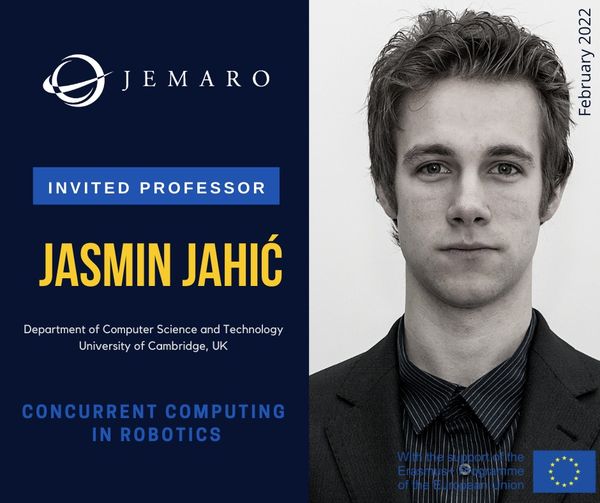
Jasmin Jahic is a Researcher at the Computer Architecture Group of the University of Cambridge, working under Timothy M. Jones. She holds a PhD in 'Supervised Testing of Embedded Concurrent Software' from the University of Kaiserslautern (2020) and has extensive experience as a researcher and project manager at the Fraunhofer Institute for Experimental Software Engineering. Her research focuses on concurrency in embedded systems, software engineering, AI integration, and low-power systems. Education: PhD in Computer Science from the University of Kaiserslautern (2020). Prior roles include Project Manager at Fraunhofer IESE and Coordinator of the European Master Program in Software Engineering. Research Interests: Concurrent computing, embedded systems architecture, AI applications in software engineering, and low-power system design. She explores concurrency bugs, synchronization mechanisms, and software architecture evolution in the context of Industry 4.0 and autonomous systems. Professional Activities: Co-Organizer of SAMOS workshops (2018–2021), Reviewer for IEEE/ACM conferences, and contributor to European Strategic Research Agendas for embedded systems. Teaches courses on software architectures for embedded systems and supervises numerous graduate students. Key Contributions: Frameworks like BOSMI for multithreaded software testing, FERA for concurrency bug detection, and research on AI adoption in traditional embedded systems. Active in HiPEAC conferences and industry partnerships.
Anne Rawls is a Professor of Sociology and Chair of the Department of Sociology at Bentley University. She also holds roles as Professor for Interaction, Work, and Information at the University of Siegen (Germany), Senior Fellow at Yale University's Urban Ethnography Project, and Director of the Garfinkel Archive, LLC. Her academic career began with a B.A. in Sociology (Summa Cum Laude), M.A. in Philosophy, and Ph.D. in Sociology from Boston University, followed by a Post-Doctoral Fellowship in Psychiatry at the University of Wisconsin-Madison. Her research focuses on ethnomethodology, race relations, workplace studies, and the sociology of information. Notable works include Epistemology and Practice: Durkheim's Elementary Forms of the Religious Life (Cambridge University Press) and editorship of Garfinkel’s Archive . She explores how interactional practices shape social order, race dynamics, and modern democratic systems, emphasizing the role of 'constitutive practices' in creating moral and social facts. Teaching interests span race, gender, globalization, and the ethics of situated practices. Her consulting work addresses workplace studies and computer-mediated work design. Rawls' contributions bridge classical sociological theory (Durkheim, Garfinkel) with contemporary issues like racial justice and technology's societal impact. Her research highlights tacit racism in everyday interactions, the moral foundations of public life, and the interplay between sociology and technology. She has presented globally and contributed to debates on sociological methodology and the legacy of key theorists like Goffman and Garfinkel.
Zhanna Sarsenbayeva is a Lecturer in the School of Computer Science at the University of Sydney. Previously, she held a Doreen Thomas Postdoctoral Research Fellowship at the University of Melbourne. Her research focuses on Human-Computer Interaction (HCI), Ubiquitous Computing, Accessibility, and Affective Computing. She earned a PhD in Engineering from the University of Melbourne, an MSc in Computer Science and Engineering from the University of Oulu, and a BSc in Computer Science from University College London. Research Interests: Dr. Sarsenbayeva explores how technology can enhance accessibility, improve emotion recognition in mobile contexts, and address situational impairments. Her work spans wearable sensors, mobile health applications, and ethical AI methodologies. Awards & Honors: 2022–2023: Australia-Germany Joint Research Cooperation Scheme 2021: CIS ECR Grant 2020: Doreen Thomas Postdoctoral Fellowship 2019: Gaetano Borriello Outstanding Student Award Advising & Grants: She currently supervises five PhD students researching topics like mixed reality collaboration and emotion recognition. Her grants include projects on accessibility standards and fairness in AI. International Collaborations: Engages with researchers at Aalborg University (Denmark), University of Oulu (Finland), and LMU Munich (Germany) on interdisciplinary projects.