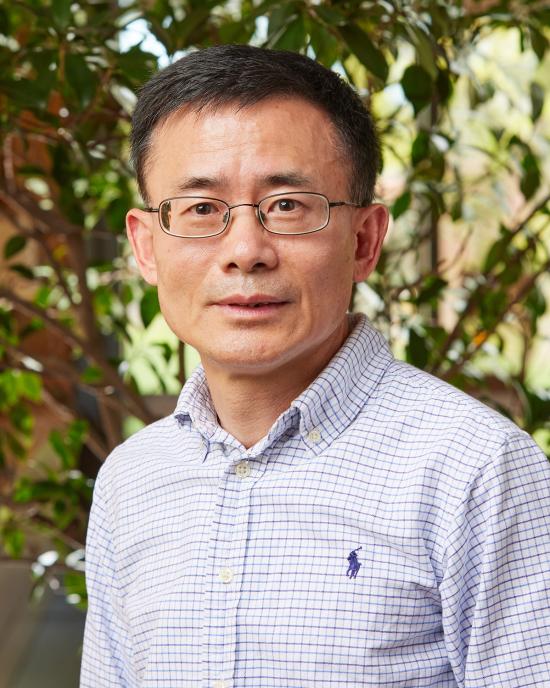
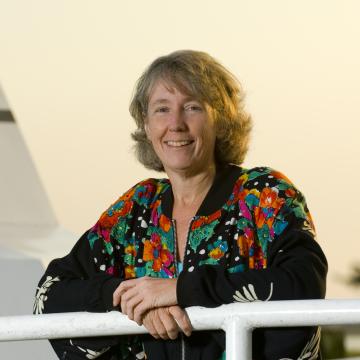
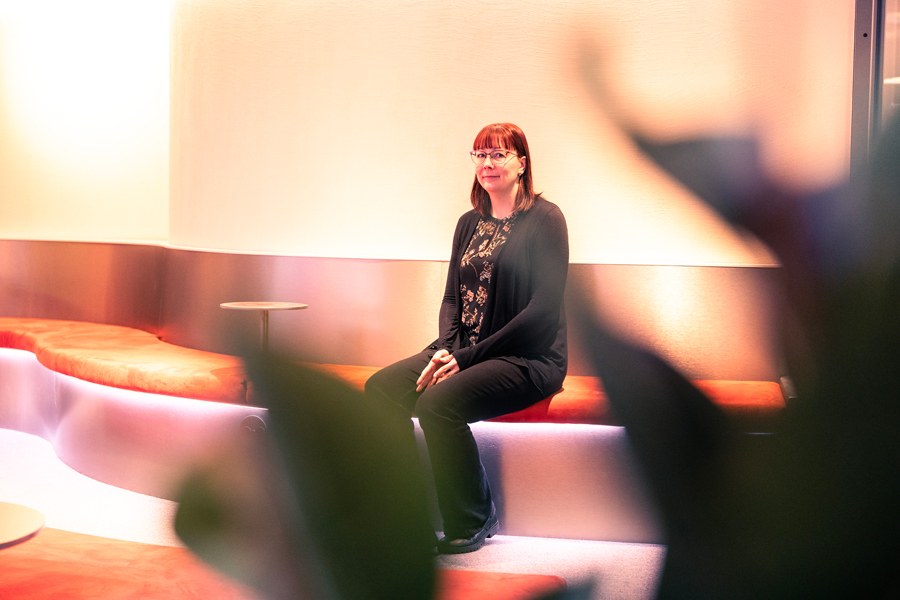
Neal Sullivan is a Professor of Mechanical Engineering at the Colorado School of Mines (CSM), leading experimental research at the Colorado Fuel Cell Center as its director. His expertise lies in electrochemical ceramics, with a focus on fuel cells, electrolyzers, and membrane reactors for energy conversion and storage. Sullivan’s work spans from materials development to large-scale system integration, addressing applications such as hydrogen production, CO₂-to-fuels processes, and geothermic fuel cell systems for unconventional oil recovery. His research is supported by grants from the U.S. Department of Energy (DOE), NASA, and industry partners, totaling over $15M. Notable projects include the development of proton-conducting ceramic electrolyzers for water splitting, high-efficiency hybrid SOFC-IC engine systems, and Mars-based CO₂ methanation. Sullivan has led collaborative efforts with global leaders in electrochemistry, emphasizing scalability and durability in energy systems. Key contributions include innovations in protonic ceramic fabrication, catalyst integration, and multi-stack system design. His lab focuses on bridging early-stage materials research with full-scale demonstrations, achieving power outputs up to 100 kW. Sullivan’s work has been published in top journals like Nature Energy and International Journal of Hydrogen Energy , with a strong emphasis on practical applications and renewable energy solutions. Labs/Teams: Director of the Colorado Fuel Cell Center. Grants/Advising: PI/co-PI on multiple DOE and NASA grants, including $5M for hybrid SOFC systems and $1.5M for geothermic fuel cells. Advises on advanced materials and system integration for energy storage and conversion.
Professor Jing Meng is a leading academic at University College London's Bartlett School of Sustainable Construction, holding the position since 2023 after progressing from Lecturer (2019-2021) to Associate Professor (2021-2023). She concurrently serves as a fellow at the Cambridge Centre for Environment, Energy and Natural Resource Governance and maintains active editorial roles as Executive Editor of the Journal of Cleaner Production and Associate Editor for Journal of Geophysical Research: Atmospheres. Her research spans three interconnected domains: Energy Transitions and Technology Innovation (examining cost forecasts and structural emission declines in China), Climate Change Policies (analyzing South-South trade effects and multinational enterprise emissions), and Emission-Health-Socioeconomics Nexus (assessing air pollution impacts and integrated co-mitigation strategies). This interdisciplinary approach is reflected in her publication record across Nature family journals and PNAS. Analysis of her recent publications reveals a consistent focus on global carbon accounting methodologies, with increasing attention to subnational (city-level) analyses, health co-benefits of climate policies, and technological innovation pathways for hard-to-abate sectors. Her work frequently employs multi-regional input-output modeling to trace emissions through complex supply chains. AGU Global Environmental Change Early Career Award (2023) MIT Technology Review Innovators Under 35 Asia Pacific (2022) Clarivate Highly Cited Researcher (2020-2024) Nature Communications Top 50 Earth Sciences Article (2018) MDPI Emerging Sustainability Leader Award (2020) Environmental Research Letters Best Early Career Article (2017) Professor Meng has secured substantial funding from diverse sources including NERC, the British Council, Quadrature Climate Foundation, The Royal Society, and UCL internal grants. She leads an interdisciplinary research group focused on technology innovation and climate policy, with particular emphasis on China's role in global emissions systems. Her work directly supports Sustainable Development Goal 13 (Climate Action) through actionable policy insights.
Professor Jukka Konttinen serves as Professor of Chemistry of Biorefining at Tampere University within the Faculty of Engineering and Natural Sciences and Department of Materials Science and Environmental Engineering. Previously, he held professorships at the University of Jyväskylä (2009-2014) and research positions at Åbo Akademi University and industry firms including Carbona Inc. His expertise spans thermochemical biomass conversion and sustainable energy systems. Education: D. Sc. (Chemical Engineering), Åbo Akademi University, 1998 Research Interests: Konttinen specializes in biorefining via thermochemical conversion processes including gasification, pyrolysis, hydrothermal liquefaction, and combustion. His work encompasses hybrid energy systems integrating solid/liquid biofuels, biogas, and solar power at distributed scales. He develops chemical process engineering solutions through modeling, simulation, and experimental validation from laboratory to commercial implementation. Publication Trends: His recent publications (2013-2024) demonstrate concentrated expertise in biomass conversion technologies, emphasizing process optimization for lignocellulosic feedstocks, syngas quality enhancement, and techno-economic-environmental assessments. Key themes include pretreatment methods, gasification kinetics, and integration of thermochemical processes with circular economy principles across agricultural and industrial waste streams. Scientific Awards: Supervisor of Best Academic Dissertation (Tiina Keipi) by Tampere University (2019) Supervisor of Best Academic Dissertation (Tiina Keipi) by Academic Engineers and Architects in Finland TEK (2019) Advising and Grants: Konttinen has supervised 13 PhD students (10 completed, 3 ongoing), 70 Master's theses, and 25 Bachelor's theses. His funding portfolio includes €250k as PI for Bio4all (Business Finland, 2024), €861k as WP leader for BL2F (EU Horizon, 2019-2024), plus €425k in confidential contracts (2014-2024) and €1.5M in prior grants. Labs and Teams: He leads the Bio and Circular Economy research unit and previously directed the Laboratory of Chemistry and Bioengineering (2017-2018). Current projects include EU Horizon's BL2F and Business Finland's Bio4all initiatives focused on climate-neutral energy systems and biorefinery commercialization.
Loring Nies is a Professor of Civil Engineering/Environmental and Ecological Engineering at Purdue University, holding roles in the School of Civil Engineering. He serves on key committees such as the University Senate and the Professional Practice Advisory Committee. His research focuses on environmental engineering challenges, including nanomaterial impacts, bioremediation, anaerobic digestion, and sustainability strategies. He has contributed to advancing interdisciplinary education through initiatives like the foundational graduate course in Environmental and Ecological Engineering. Research interests emphasize understanding nanomaterial interactions with soil microbiology and developing sustainable solutions for water reuse, waste recycling, and end-of-life treatment. His work spans laboratory studies on microbial community dynamics to large-scale analyses of water resource management in HUC-4 basins. He has pioneered methods for economic input-output analysis in advanced manufacturing contexts and explored innovations in environmental engineering education curricula. Notable contributions include studies on fullerene toxicity, metal oxide nanomaterial effects, and bioaugmentation strategies for methane production optimization. His research bridges environmental science with engineering applications, addressing modern challenges in energy storage technologies and industrial symbiosis. While no specific awards are listed, his extensive committee involvement reflects institutional recognition of his expertise. Loring Nies advises on recovery alternatives for wind turbine end-of-life management and has explored frameworks for integrating environmental and business aspects in sustainable product development. His work integrates molecular genetic techniques to assess bioremediation efficacy in contaminated sites, demonstrating a commitment to both theoretical and applied environmental solutions.
Dr. John Shepherd is an Associate Professor in the School of Science at RMIT University, specializing in applied mathematics, numerical and computational mathematics, and their applications in engineering and environmental systems. His research focuses on analyzing nonlinear problems, particularly in bioreactor dynamics, fluid mechanics, and nuclear energy policy. He has contributed to studies on anaerobic digestion models, reactor stability, and the role of nuclear energy in climate change mitigation. Education: Doctorate in Applied Mathematics (not explicitly stated in text, inferred from title). His work bridges theoretical analysis and real-world applications, such as optimizing methane production in waste digesters and evaluating environmental policies for nuclear energy. He actively supervises research projects, including the analysis of anaerobic digester dynamics. Dr. Shepherd’s publications span interdisciplinary topics, emphasizing the intersection of mathematics, engineering, and environmental science. He engages with policy discussions on nuclear energy’s role in decarbonization, advocating for its integration into clean energy strategies. His research highlights the importance of multiscale analysis in understanding complex systems like bioreactors and fluid flows. Collaborations involve industry and international institutions, reflecting his commitment to practical solutions for sustainability challenges.
Xuhui Lee is the Sara Shallenberger Brown Professor of Climate Science at Yale University's School of the Environment. He maintains offices at Kroon Hall (195 Prospect Street) and laboratory facilities at the Class of 1954 Environmental Science Center (21 Sachem Street, Room 300) in New Haven, Connecticut. Professor Lee is an active researcher and educator specializing in the interactions between the terrestrial biosphere, atmosphere, and anthropogenic drivers, with particular expertise in boundary-layer meteorology and climate science. He is currently on leave for the Fall 2025 semester but continues to accept doctoral students. Professor Lee received his B.S.C. and M.S.C. from Nanjing Institute of Meteorology in China, followed by a Ph.D. from the University of British Columbia. His academic journey has positioned him as a leading expert in climate science, particularly in the areas of land-atmosphere interactions and urban climate systems. Professor Lee's research focuses on boundary-layer meteorology, micrometeorological instrumentation, remote sensing, and carbon cycle science. His work examines biophysical effects of land use on the climate system, greenhouse gas fluxes in terrestrial environments (including forests, cropland, and lakes), isotopic tracers in carbon dioxide and water vapor cycling, and urban climate adaptation and mitigation strategies. His lab employs diverse methodologies including field observations (eddy covariance, optical isotope instruments, and greenhouse gas analyzers), mathematical models (land surface models, large-eddy simulation, WRF, and earth system models), and environmental remote sensing (satellites and drones). The Lee Lab investigates phenomena across multiple scales from micro (urban greenspaces) to global (land wet-bulb temperature, historical deforestation). Analysis of Professor Lee's recent publications reveals a strong focus on urban climate systems, greenhouse gas emissions, and land-atmosphere interactions. His 2024-2025 work demonstrates increasing application of advanced remote sensing technologies and machine learning approaches to climate problems, with significant attention to urban heat islands, methane and CO2 emissions monitoring, and the impacts of land use change on climate systems. His research shows a clear trajectory toward more sophisticated integration of observational data with modeling approaches to address critical climate challenges. Sara Shallenberger Brown Professor of Climate Science (named professorship) Professor Lee actively mentors doctoral students and has established the Lee Lab as a hub for climate research at Yale. His lab group conducts field observations, mathematical modeling, and remote sensing analysis to advance understanding of climate systems. The lab's research infrastructure supports investigations from micro-scale urban environments to global climate patterns, with particular emphasis on urban heat mitigation and greenhouse gas monitoring. The Lee Lab at Yale, located in Room 300 of the Class of 1954 Environmental Science Center, serves as the primary research facility for Professor Lee's team. The lab deploys an array of research methodologies including field observations with eddy covariance systems and optical isotope instruments, mathematical modeling using land surface models and earth system models, and environmental remote sensing with satellites and drones. The lab's research spans multiple spatial scales from micro (urban greenspaces) to global (land wet-bulb temperature patterns), addressing critical questions about climate change impacts and mitigation strategies.
Cindy Lee Van Dover is a deep-sea biologist and the Harvey W Smith Distinguished Professor of Biological Oceanography at Duke University. She serves as Chair of Duke's Division of Marine Science and Conservation and Director of the Duke University Marine Laboratory in Beaufort, N.C. Her research focuses on chemosynthetic ecosystems, biodiversity, and deep-sea policy frameworks. Ph.D. in Biological Oceanography, MIT/Woods Hole Oceanographic Institution (1989) M.A. in Ecology, UCLA (1985) B.S. in Biological Oceanography, Rutgers University (1977) Van Dover's work spans deep-sea ecology, hydrothermal vent biodiversity, and environmental policy. She investigates gene flow in vent invertebrates, ecological impacts of deep-sea mining, and conservation strategies for chemosynthetic ecosystems. Her research integrates field programs using submersibles and telepresence technologies to study vent connectivity and microbial roles in extreme environments. Her scientific leadership includes 80+ peer-reviewed publications and roles as Chief Scientist in NSF- and NOAA-sponsored expeditions. She pioneered studies on geothermal light at vents and deep-sea symbiosis, with recent work on dual symbiotic relationships in vent snails and methane seep ecology. Virginia Outstanding Scientist (2006) Fulbright Scholar (France 2004) Fellow, American Association for the Advancement of Science Mines Medal for Leadership and Innovation NSF Career Awardee Van Dover's grants include NSF EAGER funding for deep-submergence science leadership and Pew Charitable Trusts' support for deep-sea mining impact assessments. She leads interdisciplinary initiatives like Science and Art at the Moment of Discovery , integrating artists into marine research expeditions. Her outreach includes authoring two books: Deep-Ocean Journeys for public audiences and The Ecology of Deep-Sea Hydrothermal Vents as the first textbook in the field. Her work has been featured in Science News , Discover Magazine , and National Public Radio .
Professor Jun Huang is a faculty member in the School of Chemical and Biomolecular Engineering at the University of Sydney, where he holds the rank of Professor and is Director of the Laboratory for Catalysis Engineering. He is also a Domain Leader for Materials at the nanoscale at Sydney Nano Institute and a member of several interdisciplinary institutes, including the China Studies Centre and Sydney Institute of Agriculture. His research focuses on catalysis engineering, with an emphasis on developing sustainable processes for renewable fuels, pollutant treatment, and greenhouse gas mitigation. Huang has held prestigious awards such as the Australia Research Council Future Fellowship (2022) and the Sydney Accelerator Fellowship (2018). Education: Huang earned his PhD from the University of Stuttgart (2008) and completed postdoctoral research at Georgia Institute of Technology and ETH Zurich. He joined the University of Sydney in 2010 as a Lecturer, advancing to Senior Lecturer, Associate Professor, and Professor. Research Interests: Huang's work centers on catalyst design for green chemical processes, including biomass conversion to biofuels, wastewater treatment, and CO2 utilization. He emphasizes sustainable manufacturing and environmental impact reduction through innovative catalytic systems. Current Projects: These include catalytic transformation of hydrocarbons/CO2/biomass, nano-catalysts for renewable energy, and advanced NMR spectroscopy for catalysis analysis. Collaborative projects involve anti-cancer therapies and drug pharmacology studies. Awards: Over 15 awards, including the 2021 ACS Sustainable Chemistry & Engineering Lectureship and 2017 Vice-Chancellor’s Research Excellence Award. Teaching: Huang instructs courses such as CHNG2801 (Conservation Processes), CHNG3802 (Industrial Systems), and advanced chemical engineering topics. He supervises PhD/Master students in catalysis and sustainable engineering. Labs/Teams: Leads the Catalysis Engineering Lab and collaborates with Sydney Nano Institute on nanomaterials research.
Dr. Daniel H. Zitomer is a Professor and Chair of the Department of Civil, Construction and Environmental Engineering at Marquette University, where he also serves as Director of the Water Quality Center. His research focuses on advancing anaerobic biotechnologies for wastewater treatment and resource recovery. Education: Ph.D. (1994), M.S. (1991) in Environmental and Water Resources Engineering from Vanderbilt University; B.S. (1988) from Drexel University. Research Interests: The Zitomer Lab Group develops environmental technologies to convert wastewater into clean water and resources like methane and biochar. Key areas include: Anaerobic biotechnology and microbial community analysis Biofuels and renewable energy from waste Biosolids pyrolysis for energy and biochar production Advanced oxidation processes for stormwater management Articles: Recent publications highlight innovations in anaerobic digestion, microbial community analysis, and biochar applications for nutrient recovery. Research spans municipal wastewater recovery, bioprocess efficiency, and wet-weather flow treatment. Scientific Awards: EPA STAR Fellowship Grants: Dr. Zitomer leads projects funded by the National Science Foundation (NSF) and Environmental Protection Agency (EPA), including advanced high-rate wet-weather treatment and biomethane production from bioplastics. Collaborative efforts with Kohler Company and Milwaukee Metropolitan Sewerage District focus on wastewater energy reduction and biosolids pyrolysis. Labs & Teams: The Zitomer Lab Group collaborates with the NSF IUCRC for Water Equipment and Policy and the Water Quality Center at Marquette University, integrating molecular tools and bioinformatics to optimize engineered bioprocesses.
Professor Paul Webley is the Woodside Monash Energy Partnership Director and Professor of Chemical Engineering at Monash University's Department of Chemical and Biological Engineering. His research focuses on sustainable energy technologies including carbon capture, hydrogen production/storage, and adsorption engineering. His work spans thermodynamics, gas separation processes, and clean fuel development, with applications in energy efficiency and environmental sustainability. Recent publications demonstrate significant contributions to CO2 utilization, hydrogen liquefaction/storage, and advanced separation technologies. Professor Webley leads multiple projects on carbon dioxide conversion, hydrogen technologies, and adsorption process optimization. He mentors PhD students in areas including carbon capture, hydrogen liquefaction, and adsorption engineering.
Prof. Annemiek ter Heijne is a Full Professor of Environmental Technology at Wageningen University & Research, affiliated with the Agrotechnology & Food Sciences faculty and leading the Environmental Technology group. She focuses on circular economy solutions, microbial electrochemistry, and sustainable resource recovery from waste streams. Her research integrates biological, chemical, and physical processes to develop technologies like bioelectrochemical systems for methane production and nutrient recovery. Education: MSc in Environmental Sciences (Wageningen University), PhD in Environmental Technology (Wageningen University & Wetsus). She has held a 0.8 FTE position since her PhD, balancing work with family and hobbies. Her leadership emphasizes collaboration, work-life balance, and the ethical use of AI in science. Research Interests: Bioelectrochemical systems, microbial fuel cells, carbon capture via electrochemical processes, and sustainable wastewater treatment. She explores how bacteria can clean wastewater while generating energy, emphasizing circularity and global sustainability. Key Projects: Scaling up methane-producing bioelectrochemical systems, CO₂-to-methane conversion, and optimizing bioanodes for ammonium recovery. Collaborates with industry to translate lab innovations into real-world applications. Awards: NWO Vidi Grant (2019) Advising: Supervises 18 PhD candidates including D. Metz (Circular Nutrients), Y. Chang (Sulfur Recovery), and J. Steller (Power-to-Methane) Grants: Multiple EU and industry funded projects on electrochemical technologies Labs/Teams: Leads the Environmental Technology group and chairs the Wageningen Energy Alliance, fostering cross-disciplinary energy research.
Marika Kokko is a Professor of Bio- and Circular Economy at the University of Tampere, affiliated with the Faculty of Engineering and Natural Sciences and the Department of Materials Science and Environmental Engineering. Her research focuses on sustainable solutions for carbon dioxide utilization, nutrient recovery, and bioelectrochemical systems. She leads projects such as isoSUS (developing short-chain fatty acid conversion) and BioNH4 (recovering ammonium nitrogen from wastewater). Education: Doctor of Science (Technology), Tampere University of Technology (2013) Postdoctoral Researcher, University of Freiburg, Germany (2014–2016) Tenure-track career progression at Tampere University since 2016 Research Interests: CO₂ conversion via microbial electrosynthesis and bioelectrochemical processes Electrochemical nitrogen recovery from wastewater Microplastic analysis in environmental matrices Bioremediation of industrial waste streams Grants & Collaborations: Funded by Business Finland, Ministry of the Environment, and international consortia Active in interdisciplinary projects like CICAT2025 and UPCE Labs/Teams: Her research group investigates bioelectrochemical systems, microbial communities, and circular economy innovations. They collaborate with industry partners to scale sustainable technologies.
Stephan Glatzel is a Professor at the Faculty of Earth Sciences, Geography and Astronomy , University of Vienna , affiliated with the Department of Geography and Regional Research . He leads multiple active research projects including Austrian Moor Restoration (2024-2033), MOIST (2024-2025), and Biodiversity Conservation in Austrian Peatlands (2022-2026). Key research areas: Peatland Ecology, Methane Cycling, Ecohydrology, Land Use Impacts SDG contributions: Climate Action (SDG13), Life on Land (SDG15) His recent publications focus on: Land use effects on peat degradation (Soil Use and Management, 2025) Asgard archaea in saline sediments (Frontiers in Microbiology, 2025) Ecohydrology of peatlands in Eswatini (Wetlands Ecology and Management, 2025) Research collaborations span Austria and international partners in Eswatini, with a strong emphasis on applied climate science . He actively engages in public outreach through lectures and media appearances, including topics like 'Die unterschätzte Rolle der Moore im Klimawandel' (2022) and 'Langfristige Studien im Schilf' (2019).
Robin Slawson is a Professor and Interim Chair of the Department of Biology at Wilfrid Laurier University's Faculty of Science in Waterloo, Ontario. With expertise in antibiotic resistance , microbial communities , and waterborne pathogens , he leads the Laurier Environmental Microbiology Laboratory, which serves as the Pathogen Resilience Platform for the Southern Ontario Watershed Consortium. Education : PhD in Environmental Microbiology (University of Guelph, 1993), MSc in Biology (University of Waterloo, 1989) His research focuses on microbial water quality , particularly the environmental persistence of antibiotic-resistant pathogens. Key projects include studying biofilm formation in water distribution systems, constructed wetland bioremediation , and plant-microbe interactions in wetland root systems. Prior to Laurier, he worked as a research assistant professor at the University of Waterloo on microbiological aspects of drinking water treatment. Recent publications highlight trends in waterborne pathogen dynamics , antibiotic resistance in wetlands , and biofilter optimization for contaminant removal. His work integrates ecological modeling , microbial community analysis , and water treatment engineering . The lab's initiatives include the Southern Ontario Watershed Consortium's Pathogen Resilience Platform, investigating microbial responses to environmental stressors in drinking water systems and wetlands.
Mark van Loosdrecht is a Full Professor of Environmental Biotechnology at Delft University of Technology (The Netherlands). He holds academic ranks including Prof.dr.ir. and is affiliated with the Faculty of Applied Sciences and the Department of Environmental Biotechnology. His research focuses on biofilm processes, nutrient conversion, and wastewater treatment innovations such as the Anammox, Nereda, and BCFS processes. He has pioneered technologies for resource recovery and sustainable water treatment. Dr. van Loosdrecht has published over 700 scientific papers, holds 15 patents, and supervised over 50 PhD students. He is Editor-in-Chief of Water Research , a member of prestigious academies (KNAW, AcTI, NAE), and has received major awards including the Stockholm Water Prize and Lee Kuan Yew Water Prize. His work integrates scientific discovery with practical process development, addressing global environmental challenges. Education: MSc/PhD from Wageningen University. Active roles include leadership in the International Water Association (IWA) and editorial boards. Key achievements include the development of full-scale processes like Nereda aerobic granular sludge technology. He has been knighted in the Order of the Dutch Lion and recognized with the Beijing Great Wall Friendship Award. Research interests emphasize microbial ecology, bioremediation, and sustainable engineering solutions. His contributions span from fundamental microbiology to industrial-scale process implementation, with a focus on circular economy principles in water management.