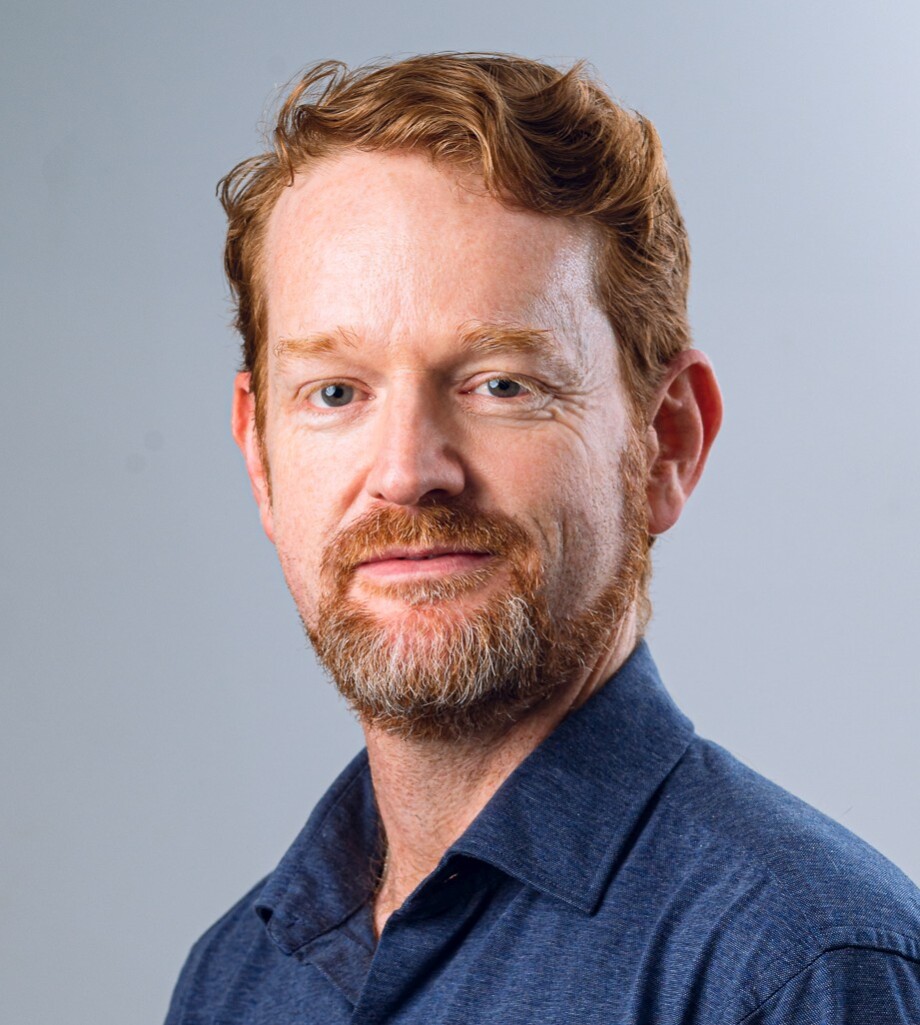
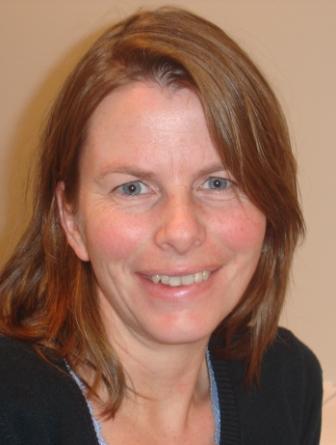
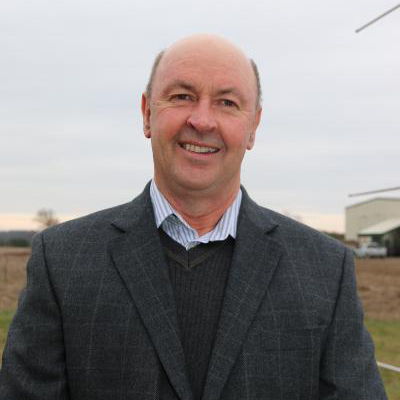
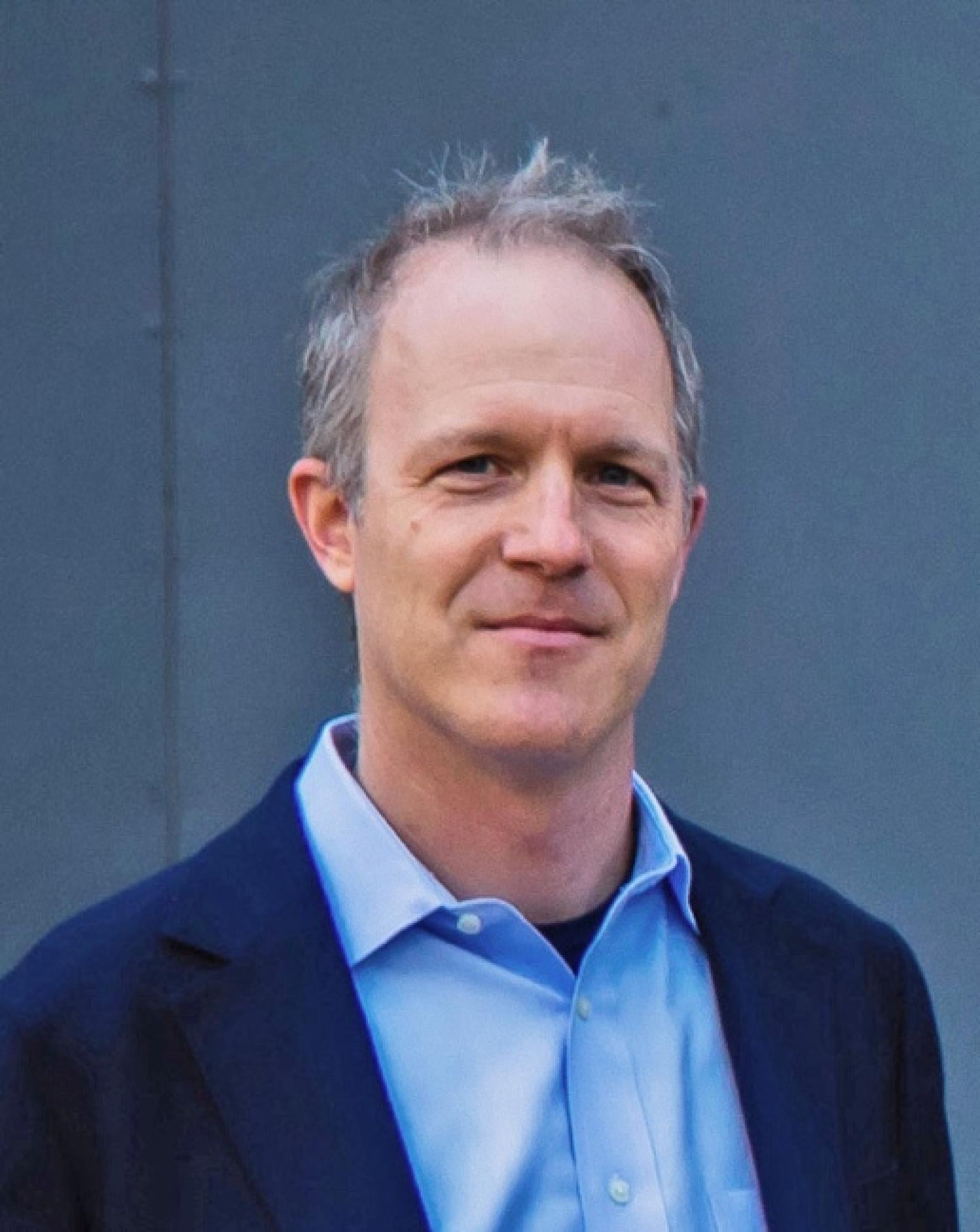
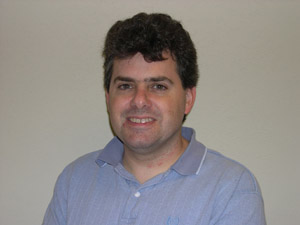
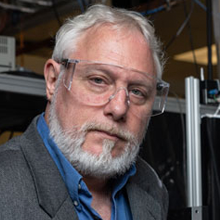
Paul Wiegert is a Full Professor in the Department of Physics and Astronomy at the University of Western Ontario , where he has been since 1996 after positions at York University and Queen's University. He is a member of the Institute for Earth and Space Exploration (IESX) and the Centre for Planetary Science and Exploration (CPSX) . His research spans asteroid dynamics , exoplanet systems , and celestial mechanics , with notable work on Earth co-orbital asteroids like (3753) Cruithne and Earth's first Trojan asteroid 2010 TK7. Education : PhD in Astronomy (University of Toronto, 1996) Research Domains : Planetary Science, Astronomy, Big Data Analytics His recent publications focus on interstellar transport mechanisms , asteroid impact risks , and exomoon detection . Key findings include quantifying risks from asteroid 2024 YR4's potential lunar impact and demonstrating the feasibility of detecting alpha Centauri-origin material in our solar system. He actively supervises graduate students like Cole Gregg and participates in NSERC-funded summer research programs for undergraduates. For planetary defense, he has analyzed collision probabilities for Apophis and developed meteoroid hazard models for spacecraft. His work appears in Planetary Science Journal , Nature Astronomy , and Astrophysical Journal Letters , with media coverage in 60+ outlets and 126 X (Twitter) mentions .
Angelo Cervone is a Professor at Delft University of Technology's Department of Astrodynamics & Space Missions within the Faculty of Aerospace Engineering. His research focuses on advanced propulsion systems, CubeSat technology, additive manufacturing for space applications, and space systems design. He leads projects like LUMIO, a CubeSat mission to monitor lunar meteoroid impacts, and has contributed to the development of green propellants and smart composite structures with embedded sensors. His work integrates cutting-edge manufacturing techniques like laser powder directed energy deposition with propulsion system optimization, emphasizing sustainable and robust space technologies. Cervone has authored over 130 publications and edited the book Adaptive On- and Off-Earth Environments , reflecting his expertise in off-world infrastructure and robotic production systems. He received the Rhizome Award (2021) for advancing autarkic systems in off-Earth habitat development. Key Projects: LUMIO CubeSat mission, Rhizome habitat system development, smart propellant tank design Research Themes: CubeSat propulsion, lunar exploration, additive manufacturing for space, in-situ resource utilization His articles highlight advancements in micro-thrusters, structural health monitoring via fiber optics, and autonomous navigation systems for deep-space CubeSats. Cervone collaborates globally on missions requiring innovative propulsion architectures and materials science breakthroughs.
Harald Krüger is a Research Scientist at the Max Planck Institute for Solar System Research (Göttingen), specializing in planetary science and space dust analysis. He leads and contributes to multiple space missions, including the DESTINY+ Dust Analyzer (DDA), the Rosetta COSIMA instrument, and the PHILAE Dust Impact Monitor (SESAME-DIM). His research focuses on cometary dynamics, interstellar dust interactions, and solar system formation processes. Krüger holds a PhD from the University of Göttingen and has held research roles at prestigious institutions like the Max Planck Institutes for Nuclear Physics and Astronomy (Heidelberg). He chairs ESA’s working group on comet 67P/Churyumov-Gerasimenko and participates in international astronomical societies. His work integrates advanced instrumentation design with observational data from spacecraft missions, contributing to our understanding of cosmic dust properties and their role in planetary systems. Key projects include analyzing interstellar dust via the DESTINY+ mission and studying Martian moons through the MMX mission. His publications emphasize instrument constraints, cometary dust trail detection, and spacecraft outgassing effects on measurements.
Savas Ceylan is a Researcher at ETH Zurich's Institute of Geophysics, affiliated with the Swiss Seismological Service (SED) and the Department of Earth and Planetary Sciences. His work focuses on planetary seismology, particularly analyzing seismic data from Mars using advanced techniques like deep learning. Ceylan's research addresses Martian tectonic activity, impact cratering, and seismic event characterization, contributing to understanding Mars' geological dynamics through missions like InSight. Key research interests include seismic denoising, fault rupture modeling, and planetary interior structure analysis. He has collaborated on studies of large earthquakes in Turkey and Martian seismicity patterns, emphasizing real-time seismic analysis and planetary hazard assessment. Publications highlight innovations in seismic data interpretation, from denoising algorithms to impact rate estimation on Mars. His work bridges computational methods with geophysical observation, advancing knowledge of extraterrestrial seismology.
J. Michael Ruohoniemi is a Professor in the Bradley Department of Electrical and Computer Engineering at Virginia Tech. His research focuses on space physics, ionospheric dynamics, and HF radar technology. He leads the Virginia Tech SuperDARN group, managing radar sites like Blackstone and Fort Hays to study magnetosphere-ionosphere coupling. His work contributes to understanding space weather phenomena like geomagnetic storms and traveling ionospheric disturbances. Education: Ph.D., University of Western Ontario (1986); B.S., University of King's College and Dalhousie University (1981). Research Interests: Ionospheric physics, HF radar development, magnetosphere-ionosphere coupling, space weather monitoring, and MSTID dynamics. His group collaborates internationally via the SuperDARN network funded by NSF. Recent Research Trends: Recent articles emphasize MSTID analysis, solar flare impacts, geomagnetic storm effects, and machine learning applications. Key topics include ionospheric conductivity, Joule heating, and global circulation models. Affiliations: Virginia Tech SuperDARN Group, HamSCI collaboration, and international radar networks. Operates radar sites in North America and Antarctica.
Dr. Jenny Feige is a Researcher at the Museum of Natural History Leibniz Institute for Evolution and Biodiversity Research in Berlin, Germany. She serves as the project leader of the ERC Starting Grant NoSHADE (2023-2028), which focuses on novel perspectives on our Solar System history recorded in the Atacama Desert. Her research interests center on the origin of cosmic dust on Earth, including interstellar dust from nearby stellar explosions through the detection of radioactive supernova isotopes, and interplanetary dust found on Earth's surface as micrometeorites. Her work bridges astrophysics, geochemistry, and planetary science, with a particular focus on understanding supernova activity and its signatures in terrestrial archives. Analysis of her publication record from 2012-2024 reveals a strong focus on supernova-produced radionuclides (particularly 60Fe and 244Pu), cosmic dust transport mechanisms, and the application of advanced analytical techniques like Accelerator Mass Spectrometry. Her research spans multiple disciplines including astrophysics, geochemistry, planetary science, and nuclear physics, with publications appearing in high-impact journals such as Nature, PNAS, and Astronomy & Astrophysics. Scientific Awards: ERC Starting Grant NoSHADE (2023-2028) Dr. Feige's research program involves extensive international collaboration across multiple institutions and disciplines. Her work on supernova-produced radionuclides in deep-sea sediments and meteoritic material has significantly contributed to our understanding of recent stellar activity near our solar system and the transport mechanisms of extraterrestrial material to Earth. She employs cutting-edge analytical techniques including Accelerator Mass Spectrometry to detect minute quantities of cosmogenic and supernova-ejected radionuclides.
Nicolas Lee is a Lecturer and Research Engineer in Aeronautics and Astronautics at Stanford University. His research focuses on hypervelocity impact phenomena, spacecraft plasma interactions, and CubeSat technologies for asteroid characterization. Current investigations include meteoroid plasma formation, electromagnetic pulse generation from impacts, and space-based solar power systems. Lee's publication trends reveal concentrated expertise in experimental plasma physics, computational simulations of space phenomena, and radar detection systems. Recent works utilize particle-in-cell methods to model plasma dynamics and machine learning for meteor detection. Educational Background Ph.D., Aeronautics and Astronautics, Stanford University (2013) M.S., Aeronautics and Astronautics, Stanford University (2007) B.A.Sc., Engineering Science - Aerospace, University of Toronto (2005)
Professor Jonathan Paxman is a faculty member in the School of Civil and Mechanical Engineering at Curtin University, affiliated with the Faculty of Science and Engineering and the Office of the Provost. He holds a PhD (Cantab.) and is a Fellow of the Institute of Engineers Australia (FIEAust) and the Society for Higher Education in Australia (SFHEA). His research focuses on space systems engineering, meteor detection, planetary crater analysis, assistive technologies, and autonomous robotics control. Education: PhD in Engineering from the University of Cambridge (Cantab.), MPhil, and professional certifications in engineering and higher education. Teaching: Courses include Microcontroller Project and Linear Systems and Control . His research innovations include the Desert Fireball Network (DFN), a continental-scale meteor tracking system, and the Fireballs in the Sky citizen science app. He has pioneered automatic crater detection algorithms for Mars surface dating and developed control systems for autonomous spacecraft and robots. Key awards include the 2021 Research Team of the Year (Binar Space Program), 2016 Eureka Prize for Innovation in Citizen Science, and multiple teaching excellence citations. His work bridges academia and industry through projects like the Binar lunar mission series and assistive technologies for disability support. Grants and collaborations: Extensive funding for space exploration and planetary science projects. His team’s work has led to meteorite recoveries (e.g., Murrili) and contributed to Mars surface age mapping. Active in STEM outreach and curriculum innovation, including transforming pedagogy in science and engineering education. Labs/Teams: Leads the Desert Fireball Network and collaborates with NASA, ESA, and industry partners on space systems and planetary research initiatives.
Sigrunn Holbek Sørbye is a Professor at the Department of Mathematics and Statistics, UiT The Arctic University of Norway. Her research focuses on Bayesian statistics, time series analysis, and spatial data modeling with applications in climatology, ecological statistics, and computational statistics. Institution: UiT The Arctic University of Norway Department: Department of Mathematics and Statistics Research Interests: Dr. Sørbye specializes in Bayesian computation using integrated nested Laplace approximation (INLA), statistical modeling of long-range dependent processes, and applications to climate systems. Her work includes modeling cosmic dust detection rates, analyzing metabolic risk factors, and studying population dynamics through capture-recapture data. Selected Publications Trends: Recent research spans dietary pattern analysis, solar dust modeling, climate sensitivity studies, and ecological monitoring. Key methodologies involve Bayesian hierarchical modeling (2025, 2023), INLA applications (2022, 2020), and long-memory stochastic processes (2020-2019). Collaborative Networks: Dr. Sørbye collaborates on interdisciplinary projects including "Modellering av komplekse systemer" (Complex Systems Modeling) and "Intermittent fluctuations in physical systems." She also contributes to "Transforming ocean surveying by the power of DL and statistical methods." Contact: Tromsø, Norway. sigrunn.sorbye@uit.no | +47 77 64 55 04
Dr. Wayne Hocking is a Full Professor at Western University's Faculty of Science in the Department of Physics & Astronomy. His research focuses on atmospheric physics, with particular emphasis on mesosphere-stratosphere-troposphere dynamics, tornado genesis, and meteor physics. He contributes to Earth observation and exploration technology innovations as a Western Space Investigator. Research Interests : Atmospheric radar scattering processes Gravity wave-turbulence interactions Polar mesospheric phenomena Radio meteor physics Stratosphere-troposphere exchange The 15 most recent articles highlight his work in radar windprofiling, planetary wave dynamics, meteor trail analysis, and polar atmospheric phenomena. His studies employ meteor radars, ozonesondes, and satellite data to investigate middle-atmosphere coupling, severe weather detection, and dusty plasma in the mesosphere. Methodologically, he advances deconvolution techniques and error analysis for radar systems.
Professor Tobin Munsat is a faculty member in the Department of Physics at the University of Colorado, serving as Chair. His research focuses on space plasma physics, cosmic dust, and planetary science, particularly investigating plasma-surface interactions, planetary surface evolution, and cosmic dust dynamics. He leads efforts at the Institute for Modeling Plasmas, Atmospheres, and Cosmic Dust (IMPACT), utilizing the Colorado Dust Accelerator—a 3 MV facility—to study hypervelocity particle impacts on icy targets and solar wind interactions. Collaborations include work with Mihaly Horanyi, Sascha Kempf, and Zoltan Sternovsky. Key projects involve simulating meteoroid ablation, organic molecule survival in impacts, and solar wind plasma wakes around airless bodies. His research integrates experimental and computational approaches to understand planetary surface evolution and interstellar dust dynamics. Notable facilities include the Colorado Solar Wind Experiment, a flowing plasma device modeling solar wind interactions. Recent studies explore organic molecule detection in icy impact spectra and the development of instruments for interstellar dust analysis (e.g., IDEX on IMAP). Publications highlight advancements in dust impact physics, plasma diagnostics, and hypervelocity experiments. Though no formal advisees are listed, his work contributes to interdisciplinary collaborations across physics, chemistry, and aerospace engineering. His lab’s innovations in dust acceleration and plasma instrumentation position it as a leader in space physics and astrobiology research.
Brian Cudnik is a Lecturer and Lab Coordinator II in the Department of Physics at Prairie View A&M University. He joined the Prairie View Solar Observatory (PVSO) project in 1998 as an outreach technician, transitioning to full-time employment in 1999. His research focuses on lunar meteoroid impacts, solar phenomena, and observational astronomy, with contributions to studies of eclipsing stars, comets, and planetary transits. He holds a B.S. in Physics & Astronomy (Northern Arizona University, 1994) and an M.S. in Astronomy (San Diego State University, 1998). His notable achievements include authoring Lunar Meteoroid Impact and How to Observe Them and Faint Objects and How to Observe Them , and editing the Encyclopedia of Lunar Science (2023). He also coordinates amateur astronomer networks to monitor lunar impacts. Key awards include an asteroid (66999 Cudnik) named in his honor in 2022. Teaching responsibilities include courses in physical science, astronomy, and geology. He actively mentors students and manages laboratory facilities. Professional memberships include the American Astronomical Society, American Meteorological Society, and Houston Astronomical Society. Beyond academia, he contributes to community outreach through star parties and religious involvement at Houston First Church of God.
Álvaro González is a Researcher in Section 2.6 (Seismic Hazard and Risk Dynamics) at Deutsches GeoForschungsZentrum (GFZ) in Potsdam. His research focuses on seismic hazard assessment, earthquake mechanics, and geophysical modeling. His investigations span diverse areas including thermal controls on seismogenesis, seismic catalog analysis, slow-slip earthquakes, and induced seismicity. González employs advanced statistical methods and 3D modeling techniques to study earthquake processes globally, with regional foci on Caribbean, Iberian, and Central American tectonics. His publication record demonstrates consistent contributions to understanding seismic source characterization, subduction zone dynamics, and innovative approaches in probabilistic seismic hazard analysis. Recent work emphasizes the integration of slow-slip earthquake phenomena into hazard models.
Thomas Orlando is a Regents' Professor in the School of Chemistry and Biochemistry at the Georgia Institute of Technology, where he leads the Orlando Research Group. His work focuses on electron- and photon-stimulated interface and surface processes with applications spanning planetary science, environmental chemistry, and biophysics. He maintains laboratory facilities in the Molecular Science and Engineering Building (MoSE G209C) and collaborates extensively with researchers across Georgia Tech and other institutions. His educational background includes a B.S. from Southampton College, a Ph.D. from State University of New York-Stony Brook, and postdoctoral work at Sandia National Labs and the Institut fur Physikalische Chemie. He was also a NATO Collaborative Research Fellow and Visiting Professor at CNR/University of Rome, La Sapienza from 1997-2000. Professor Orlando's research explores three primary areas: Electron- and Photon-stimulated Interface and Surface Processes, Environmental Chemistry and Planetary Surface Science, and Biophysical Chemistry. His group utilizes state-of-the-art ultra-high vacuum surface science systems with UV-laser sources and low-energy electron beams to study reactions on various substrates. They investigate water-related processes in terrestrial and planetary environments, DNA damage mechanisms, and develop new analytical techniques for mass spectrometry imaging. The group's work spans from fundamental molecular physics to applied areas relevant to atmospheric chemistry, catalysis, and human spaceflight. His recent publications reveal a strong focus on lunar and planetary surface chemistry, particularly water formation and detection on airless bodies like the Moon and Mercury. The research combines experimental surface science with theoretical modeling to understand radiation-induced processes, space weathering effects, and volatile formation mechanisms. Key themes include electron-stimulated desorption, photon-induced reactions, and the role of water in planetary environments. Fellow of the American Physical Society Fellow of the American Association for the Advancement of Science NIH Young Investigator Award (1998) NATO Collaborative Research Fellowship Associate Editor, Journal of Geophysical Research-Planets Professor Orlando has mentored numerous graduate students and postdoctoral researchers who have gone on to successful careers in academia and industry. His research has been supported by multiple grants from NASA, NSF, NIH, and other agencies focused on planetary science, radiation chemistry, and analytical instrumentation development. The Orlando Group maintains state-of-the-art facilities for ultra-high vacuum surface science, microplasma development, and advanced mass spectrometry. The Orlando Research Group operates within Georgia Tech's Electron- and Photon-Induced Chemistry on Surfaces (EPICS) laboratory, which features multiple ultrahigh vacuum systems equipped with electron and photon sources, mass spectrometers, and laser detection systems. The group collaborates with researchers at Argonne National Laboratory's Advanced Photon Source and maintains partnerships with planetary scientists studying data from missions to Mercury, the Moon, and outer solar system objects.
Evgenia Salin is a Postdoctoral Researcher at the Department of Geology and Mineralogy, Faculty of Science and Engineering, Åbo Akademi University. Her research focuses on lunar geology, planetary materials, and Precambrian crustal evolution. She investigates impact processes, volcanic glass formation, and the interplay between Svecofennian crust and rapakivi granites in southern Finland. Key research areas include analyzing lunar glass beads from Apollo missions, studying regolith composition, and exploring Proterozoic geological systems in the Baltic Sea region. Collaborations involve institutions like Uppsala University and Université de Lausanne, with presentations at international conferences such as Goldschmidt 2023. Salin’s work spans petrology, geochemistry, and geochronology, with a focus on extraterrestrial materials and terrestrial crustal dynamics. Her recent studies include U-Pb dating of volcanic and impact glass beads, and textural analysis of lunar regolith beads. She has conducted fieldwork in Gotland and the Baltic Sea region, contributing to understanding Paleoproterozoic tectonic frameworks. Education background not explicitly stated in provided texts. Active in peer-review for journals like Bulletin of the Geological Society of Finland . Visiting researcher at Uppsala University (June 2023) and Université de Lausanne (July 2023).