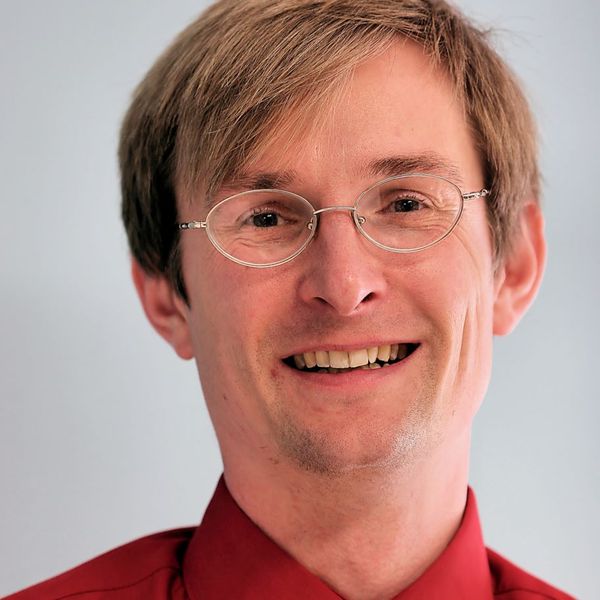
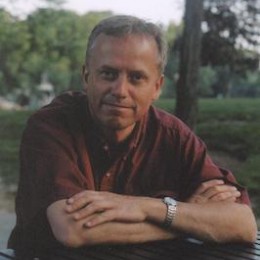
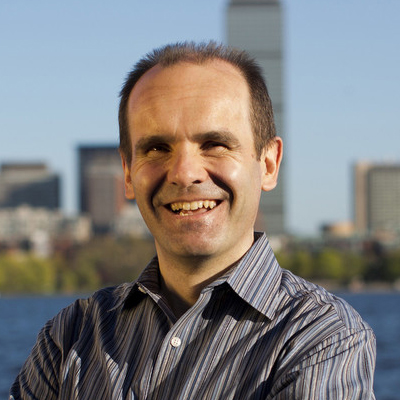
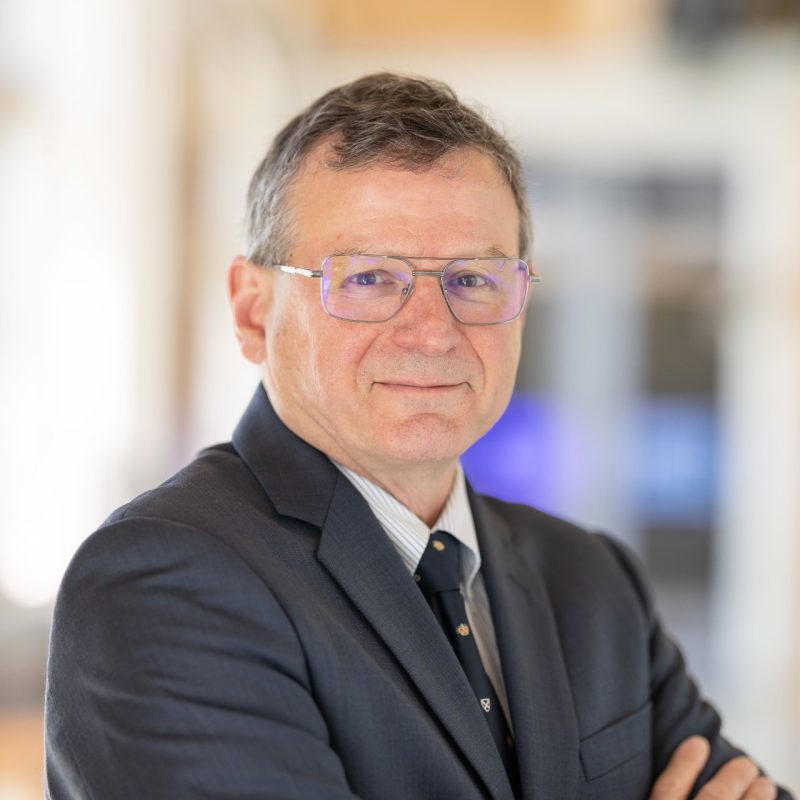
Avi Loeb , the Frank B. Baird Jr. Professor of Science at Harvard University, is a leading astrophysicist and former Chair of Harvard's Department of Astronomy (2011-2020). He directs the Institute for Theory and Computation (ITC) and the Galileo Project (2021-present), while holding the Sackler Senior Professorship at Tel Aviv University. His research spans cosmology, black holes, interstellar objects, and the search for extraterrestrial life. Education: PhD in Physics from Hebrew University of Jerusalem (1986) Former Positions: Member of the Institute for Advanced Study, Princeton (1988-1993) Loeb's research interests include: Gravitational wave detection and interstellar object analysis Simulation hypothesis and cosmic reality Technological signatures beyond the Standard Model His recent publications focus on 3I/ATLAS , gravitational SETI, and AI alignment in space exploration. Awards include being named among TIME's 25 Most Influential People in Space (2012), 14 Most Inspiring Israelis (2020), and ranking #3 in global astronomical impact (2024). He chairs the Breakthrough Starshot Initiative and advises the National Academies' Board on Physics and Astronomy.
Robert Likamwa is an Associate Professor at Arizona State University, affiliated with the School of Arts, Media and Engineering and the School of Electrical, Computer and Energy Engineering. His research focuses on the intersection of mobile computing, augmented reality, and sensor design through Meteor Studio. Ph.D., Rice University M.S., Rice University B.S., Rice University His work spans three core research arcs: (i) advanced visual capture systems, (ii) hybrid virtual-physical immersion through sensory augmentation, and (iii) data-driven frameworks for AR/VR storytelling. He explores mobile operating systems, low-power architectures, computational imaging, and holographic computing. Recent publications analyze multi-resolution visual sensing, geospatial cross-virtuality collaboration, planetary data visualization, spatial audio optimization, and multi-sensory virtual environments. His 2013 paper on energy-proportional image sensors received the Best Paper Award at ACM MobiSys. Best Paper Award, ACM MobiSys 2013 LiKamWa advises graduate students through research and thesis courses and leads grants related to mobile vision systems, haptic interfaces, and energy-efficient sensor design. He directs Meteor Studio, a research group focused on immersive technology innovation.
Paul Withers is a Professor and Chair of the Department of Astronomy at Boston University. He leads research on planetary atmospheres and ionospheres, with a focus on Mars and Venus, and serves as Principal Investigator on multiple NASA-funded research projects. Education: B.A. in Physics, 1998, Queens' College, Cambridge University M.S. in Physics, 1998, Queens' College, Cambridge University M.A., 2001, Queens' College, Cambridge University Ph.D. in Planetary Science, 2003, University of Arizona Professor Withers' research focuses on the upper atmospheres and ionospheres of terrestrial planets, particularly Mars and Venus. His work involves analyzing spacecraft data and developing theoretical models to understand how solar flux, neutral atmospheres, magnetic fields, and ionospheres interact under unique planetary conditions. He has made significant contributions to understanding the response of the Martian ionosphere to solar flares, the structure of the Venus ionosphere, and meteoric plasma layers in planetary ionospheres. His research often involves multi-instrument campaigns and coordinated observations across different spacecraft missions including Mars Express, MAVEN, and Venus Express. Analysis of Professor Withers' recent publications reveals a strong emphasis on Martian ionospheric dynamics, particularly its response to solar activity and its variability under different conditions. His work frequently combines data from multiple missions to create comprehensive models of planetary upper atmospheres. He has developed important methods for analyzing radio occultation data and reconstructing atmospheric properties from entry, descent, and landing measurements. Major Funded Projects: "Characterizing the topside bulge in the ionosphere of Mars" (NASA Mars Data Analysis Program, 2014, $144K) "Integration of MAVEN neutral and plasma observations" (NASA MAVEN Participating Scientist Program, 2013, $284K) "Radio occultation studies at Mars" (NASA Early Career Fellowship Program, 2013, $99K) "EDL reconstruction for MSL" (NASA, JPL contract, 2012, $199K) "Meteoric plasma layers on Venus and Mars" (NASA Planetary Atmospheres Program, 2012, $232K) Professor Withers has been actively involved in mentoring students and collaborating with international researchers. He serves as a key member of the Mars Upper Atmosphere Network (MUAN) and has contributed to community white papers for planetary science decadal surveys. His work supports future Mars landers through atmospheric modeling and surface pressure prediction, with direct applications to mission planning and execution. He has presented his research at numerous international conferences including the American Geophysical Union meetings, Division for Planetary Sciences meetings, and European Planetary Science Congress. His work has important implications for understanding planetary climate evolution, space weather effects on technological systems, and the search for habitable environments beyond Earth.
Göran Ekström is the Newberry Professor of Earth and Environmental Sciences at Columbia University's Lamont-Doherty Earth Observatory. He holds joint affiliations with the School of Earth and Environmental Sciences and the Department of Earth and Environmental Sciences. Previously, he was a professor at Harvard University (1990–2006) before moving to Columbia. His research focuses on seismic wave analysis, earthquake mechanics, and environmental geophysics with notable contributions to understanding glacial earthquakes, volcanic processes, and nuclear explosion monitoring. Education: B.S. in Physics (Swarthmore College, 1981), Ph.D. in Geophysics (Harvard University, 1987). Postbaccalaureate studies at Moscow State University and postdoctoral work at Columbia University. He has served as chair of major organizations like the Incorporated Research Institutions for Seismology and EarthScope Steering Committee. Research interests span seismology, tectonophysics, and environmental geology. Notable achievements include discovering glacial earthquakes linked to Greenland ice dynamics and developing the Global Centroid Moment Tensor Project. His work integrates seismic data from global networks to study Earth’s interior structure and tectonic processes. Awards include the Beno Gutenberg Medal (2015) and election to the U.S. National Academy of Sciences (2019). He advises on geohazard monitoring and collaborates with international agencies for seismic treaty verification. Current projects include studies of mantle dynamics using surface-wave tomography and analysis of geophysical signals from extreme events like landslides and volcanic eruptions.
Giuseppe Vecchi is a Full Professor at the Department of Electronics and Telecommunications (DET) of Politecnico di Torino , Italy. He leads the Applied Electromagnetics research group and contributes to projects in computational electromagnetics, metamaterials, and biomedical applications of electromagnetic fields. He has been a IEEE Fellow since 2010 and serves on PhD college committees for Electrical, Electronic, and Communications Engineering. Research Interests : Antennas, Applied and Computational Electromagnetics, Metamaterials, Microwave Imaging for medical applications, Nuclear Fusion Reactor Physics. Scientific Leadership : Principal Investigator for projects like METEOR, MTSA, and RESOLVED-K, focusing on terahertz generation, metasurface antennas, and real-time temperature mapping in hyperthermia. Awards : IEEE Fellow (2010), recognizing his contributions to electromagnetic simulations and antenna design. Students : Supervises PhD candidates in advanced antenna engineering, computational electromagnetics, and biomedical applications, including Owais Khan, Francesco Lattanzio, and Sara Paknezhad Panahi. Patents : Holds multiple patents in antenna diagnostics, encrypted metasurface antennas, and microwave soil disinfection systems.
Ingrid Mann is a Professor in Space Physics at the UiT The Arctic University of Norway , Department of Physics and Technology. She leads and participates in multiple externally funded research initiatives including the Cosmic dust injection into the upper Earth atmosphere , MXD 2 rocket project to study the mesosphere , and EISCAT Research infrastructure project . ORCID: 0000-0002-2805-3265 Member of research group Space Physics Member of projects: Intermittent fluctuations in physical systems , Maxidusty-2 , CASCADE , Codia , Boosting Space Business , and Forskningsparken 1 A216 Her research spans space and atmospheric physics , focusing on dusty plasmas , cosmic dust dynamics , and polar atmosphere interactions . She employs spacecraft observations , EISCAT radar , rocket experiments , and machine learning for data analysis. Recent publications highlight cosmic dust detection with Parker Solar Probe and Solar Orbiter , PMSE multilayer properties , and dust impact signal modeling . Her work integrates radar , optical , and spacecraft data to understand polar atmospheric systems. She teaches FYS-2000 Kvantemekanikk , FYS-2019 Sun, Planets, and Space , and supervises G-Chaser student rocket projects . Her research group contributes to EISCAT_3D infrastructure and interplanetary dust modeling . Co-edited books: Nanodust in the Solar System (2012) Small Bodies in Planetary Systems (2008) Modern Meteor Science (2005)
Pierre Lermusiaux is the Nam Pyo Suh Professor of Mechanical Engineering and Associate Department Head for Operations Research at MIT. His research focuses on numerical ocean modeling, data assimilation, uncertainty quantification, and applications to ocean dynamics and engineering. He holds a B/M.Eng. from University of Liège, M.Sc. and Ph.D. from Harvard University. Recognized with awards like the MIT Doherty Chair and Spira Teaching Award, his work bridges computational science and marine systems. Education: B/M.Eng., University of Liège, 1992 M.Sc., Harvard University, 1993 Ph.D., Harvard University, 1997 Research Interests: Combines oceanographic modeling with advanced computational methods. Specializes in stochastic ocean prediction, autonomous systems optimization, and interdisciplinary applications of uncertainty quantification. His work enables real-time environmental forecasting and marine robotics navigation strategies. Publications: Focus on developing computational frameworks for probabilistic ocean forecasts, acoustic propagation modeling, and machine learning-based environmental prediction systems. Recent work emphasizes adaptive sampling strategies and energy-efficient path planning for underwater vehicles. Awards: Fulbright Foundation Fellowship (1993-96) Ruth and Joel Spira Award for Teaching (2010) MIT Doherty Chair in Ocean Utilization (2009-2011) Advising & Grants: Leads MIT’s MSEAS group and has secured funding from NSF, ONR, and international collaborations. Advises projects on ocean robotics, climate modeling, and underwater acoustics. Key contributions include the MIT Red Sea Modeling System and real-time forecasting platforms. Labs/Teams: Directs MIT’s multidisciplinary ocean modeling efforts, integrating mechanical engineering, computer science, and environmental science. Co-leads initiatives like the Ocean Predictions with Ensembles (OPEN) project and the METEOR autonomous observatory system.
Dr. Nicholas E. Barrand is Associate Professor of Glaciology and Senior Admissions Tutor at the School of Geography, Earth and Environmental Sciences, University of Birmingham, UK. His research focuses on glacier mass balance, sea-level rise, and glaciers as critical water resources in a changing climate. Education: P.G. Cert. Academic Practice, University of Birmingham (Distinction) Ph.D. Glaciological Remote Sensing, University of Leeds and Swansea University M.Sc. Geographical Information Science, University of Leeds (Distinction) B.Sc. Physical Geography, University of Newcastle-upon-Tyne (1st Class Honours) Dr. Barrand’s research interests lie at the intersection of glaciology, climate change, and hydrology. He investigates glacier and ice sheet dynamics using field observations, numerical modeling, and optical/microwave remote sensing. His group explores the role of glaciers in sea-level rise and water security, with a focus on polar and high-latitude regions. Key methodological interests include glacio-hydrological modeling, ice flow and melt modeling, and interdisciplinary approaches linking earth system science with socio-environmental studies. His recent publications demonstrate a strong trend in Antarctic and Arctic glaciology, with a focus on ice shelf stability, glacier retreat under climate change, Greenland albedo dynamics, and mountain water security. His work increasingly integrates hydrological modeling with glaciological data to assess future water availability in deglaciating basins, particularly in the Andes and Himalayas. Teaching Responsibilities: Research Methods and GIS (co-module lead) Environmental Research in High Latitudes (module lead) Swiss Alps Fieldclass Contributions to Fieldwork & Tutorials, Global Environmental Issues, Research Projects Dr. Barrand supervises research projects on glacier mass balance, remote sensing of ice dynamics, ice flow modeling, and environmental applications of remote sensing in polar regions. He has led research funded by NERC and other agencies, contributing to international assessments of glacier change and sea-level rise. He is actively involved in academic leadership as Senior Admissions Tutor and promotes interdisciplinary collaboration across earth system sciences. Research Group Focus: Mass balance and dynamics of glaciers and ice sheets Sea-level rise contributions Glaciers as water resources Glacio-hydrological modeling Remote sensing of snow and ice melt Climate-glacier-hydrology modeling chain
Dr. Kai-Frederik Lenz is a researcher at the Christian-Albrechts-University of Kiel's Marine Geophysics and Hydroacoustics department under Prof. Dr. Sebastian Krastel. He specializes in glacial dynamics, seismic reflection techniques, and continental shelf evolution. B.Sc. Geosciences (2016) from the University of Bremen M.Sc. Geophysics (2019) and Ph.D. (2024) from Christian-Albrechts-University of Kiel His research focuses on Quaternary glacial dynamics in eastern Canada using 2D seismic reflection and hydroacoustic methods. He investigates impact crater lakes like Lake Manicouagan and contributes to pre-site surveys for continental/ocean drilling projects. His work also includes sediment sampling and physical property analysis of cores. Dr. Lenz has published seven peer-reviewed articles (2020–2024) in journals like Marine Geology and Frontiers in Marine Science , primarily analyzing glacial retreat processes on the Labrador Shelf, tunnel valleys in the North Sea, and seismic stratigraphy of crater lakes. His methodologies emphasize high-resolution seismic data and hydroacoustic mapping. He has participated in over 10 marine expeditions (2015–2023) aboard vessels like RV Maria S. Merian and RV Meteor , leading hydroacoustic and seismic surveys in regions such as the Labrador Sea, Baltic Sea, and Canary Islands. His roles include team leadership in seismic data acquisition and student training in mapping methods. Dr. Lenz is affiliated with the DFG Priority Programme SPP 1006-ICDP and collaborates with researchers like Felix Gross and Arne Lohrberg. His expertise bridges marine geophysics and glacial landform analysis .
Patrick Brissey is an Instructor in the Department of Philosophy at the University of South Carolina’s McCausland College of Arts and Sciences. His research focuses on modern philosophy, particularly the works of Descartes, and philosophy of religion. He teaches courses such as PHIL 213: Communicating Moral Issues. His office is located in Close-Hipp 518. His research explores Descartes' methodological contributions, including his use of doubt, scientific rhetoric, and theories of knowledge. Recent publications analyze Descartes’ approach to meteorology, the structure of his philosophical rules, and the concept of vocation in early modern thought. Brissey has no listed scientific awards or grants in the provided materials. No advisees or students are mentioned in the directory.
Luana Ruiz is an Assistant Professor in the Department of Applied Mathematics and Statistics at Johns Hopkins University (JHU), affiliated with the Mathematical Institute for Data Science (MINDS) and the Data Science and Artificial Intelligence Institute (DSAI). She earned her Ph.D. in Electrical Engineering from the University of Pennsylvania (2022), and dual B.Sc. and M.Eng. degrees in Electrical Engineering from the University of São Paulo (Brazil) and École Supérieure d’Electricité (France, now CentraleSupélec) in 2017. Her research focuses on machine learning, signal processing, and network science, particularly scalable algorithms for non-Euclidean domains like graphs and data manifolds. She has pioneered work on graph neural networks (GNNs), graph sampling, and theoretical limits of transferability and generalization in graph-based learning. Notably, she has developed methods for efficient GNN training on large graphs and stability analysis of neural networks on manifolds. Affiliations: Johns Hopkins University, MINDS, DSAI Education: Ph.D., University of Pennsylvania (2022); B.Sc./M.Eng., University of São Paulo & CentraleSupélec (2017) Her research interests include large-scale graph machine learning, manifold learning, physics-informed ML, and combinatorial optimization. She has received awards such as the iREDEFINE Fellowship (2019), MIT EECS Rising Star (2021), and Best Student Paper Awards at EUSIPCO (2019, 2021). Her work bridges theoretical foundations and practical applications, with contributions to GNN architecture design, signal processing on graphs, and stability guarantees for neural networks on manifolds. Recent publications highlight advances in graph sampling for scalable GNNs, stability of manifold neural networks, and theoretical analysis of GNN expressivity. She collaborates with institutions like MIT and the Simons Institute, and her interdisciplinary approach addresses challenges in graph data analysis and AI efficiency. She advises on grants related to graph signal processing and has contributed to the development of graphon-based frameworks for large-scale graph analysis. Awards: Eiffel Excellence Scholarship (2013–2015), Best Paper Awards at EUSIPCO (2019, 2021) Grants/Advising: METEOR and FODSI postdoctoral fellowships, Google Research Fellowships
J. Michael Ruohoniemi is a Professor in the Bradley Department of Electrical and Computer Engineering at Virginia Tech. His research focuses on space physics, ionospheric dynamics, and HF radar technology. He leads the Virginia Tech SuperDARN group, managing radar sites like Blackstone and Fort Hays to study magnetosphere-ionosphere coupling. His work contributes to understanding space weather phenomena like geomagnetic storms and traveling ionospheric disturbances. Education: Ph.D., University of Western Ontario (1986); B.S., University of King's College and Dalhousie University (1981). Research Interests: Ionospheric physics, HF radar development, magnetosphere-ionosphere coupling, space weather monitoring, and MSTID dynamics. His group collaborates internationally via the SuperDARN network funded by NSF. Recent Research Trends: Recent articles emphasize MSTID analysis, solar flare impacts, geomagnetic storm effects, and machine learning applications. Key topics include ionospheric conductivity, Joule heating, and global circulation models. Affiliations: Virginia Tech SuperDARN Group, HamSCI collaboration, and international radar networks. Operates radar sites in North America and Antarctica.
Xinzhao Chu is a Professor of Aerospace Engineering Sciences at the University of Colorado Boulder and a Fellow at the Cooperative Institute for Research in Environmental Sciences (CIRES). He holds a Ph.D. and B.S. in Physics and Electrical Engineering from Peking University (1996 and 1991). His research focuses on lidar remote sensing, atmospheric and space sciences, and the dynamics of the mesosphere and lower thermosphere. Chu’s work includes developing novel lidar technologies, studying gravity waves, and exploring space-atmosphere interactions. Affiliations: CIRES Fellow, Department of Aerospace Engineering Sciences Key Roles: Director of the NSF Lidar Consortium, Principal Investigator of multiple grants Research Interests: Lidar instrumentation, atmospheric dynamics, metal layer formation in thermosphere, and climate variability studies. His group has pioneered Antarctic lidar campaigns, including record-breaking 174-hour observations and discoveries of thermospheric Fe layers. Awards & Recognition: CEDAR Prize Lecture Award (2019), MRI and CAREER Awards (2007), and Antarctic Service Medal (2001). His team has consistently won CEDAR Student Poster Competitions. Advisees: Notable students include Zhibin Yu, Weichun Fong, and Cao Chen, who have contributed to groundbreaking lidar data and numerical models. Labs & Projects: Leads the Chu Research Group, developing advanced lidar systems (e.g., OASIS Initiative) and collaborating globally on atmospheric observations. The group operates facilities like the McMurdo Station lidar in Antarctica.
Juha Vierinen is a Professor in Space Physics at the Department of Physics and Technology, UiT The Arctic University of Norway. His research focuses on experimental space physics, specializing in radar and radio remote sensing techniques applied to space plasma dynamics, atmospheric physics, space debris characterization, and planetary science. Develops advanced radar systems for ionospheric and mesospheric studies Works with EISCAT, EISCAT_3D, and GNSS networks Investigates Kelvin-Helmholtz Instabilities, GNSS scintillation, and space debris mapping Recent research includes interferometric imaging of ionospheric structures and machine learning applications in ionogram analysis. He collaborates with international institutions on projects like UNICube, QBDebris, and CASCADE. Based in Tromsø, Norway, he operates from Forskningsparken 1 A220. His publications span topics like solar eclipse effects on ionospheric density, smartphone-based space weather mapping, and multi-static meteor radar turbulence studies. Current work emphasizes volumetric radar analysis and fine-scale plasma irregularity characterization using novel imaging techniques.
Erhan Kudeki is a Professor in the Department of Electrical and Computer Engineering at the University of Illinois at Urbana-Champaign. He holds a PhD (1983) and BS (1978) in Electrical Engineering from Cornell University. His research focuses on ionospheric physics and radar remote sensing, including incoherent scatter radar theory, equatorial electrodynamics, atmospheric turbulence, and space science applications. He mentors undergraduate students in ionospheric radar signal processing projects. Education: PhD, Electrical Engineering, Cornell University (1983) BS, Electrical Engineering, Cornell University (1978) Research Interests: Professor Kudeki investigates ionospheric phenomena using radar techniques, specializing in plasma instabilities, equatorial electrodynamics, and atmospheric wave interactions. His work bridges experimental radar diagnostics with theoretical modeling of space weather phenomena, including 150-km echoes and spread-F development. Recent Publications: His 15 most recent articles (2020-2023) demonstrate evolving focus areas: ionospheric irregularities detection using advanced radar systems, quantum physics education for engineers, and immersive STEM pedagogy. Recurring themes include Jicamarca radar experiments, equatorial plasma dynamics, and innovations in engineering education. Awards: Teaching : George Anner Excellence Award (2018), Ronald W. Pratt Teaching Award (2013), College of Engineering Advisor recognition Research : NASA Group Achievement Awards (2004 Equis II, 1998 Cocqui II), NSF CEDAR Prize Lecture (2006) Consistently ranked excellent by students since 1987 Courses: Teaches core electrical engineering courses including ECE 210 (Analog Signal Processing), ECE 329 (Fields and Waves), ECE 350 (Fields and Waves II), and ECE 458 (Radio Wave Propagation).