Dr. Keng-Te Lin is a Research Fellow at RMIT University's School of Science, specializing in advanced materials for energy, photonics, and biomedical applications. His work focuses on metamaterials, radiative cooling, graphene-based technologies, and nanophotonic devices. He supervises research projects on topics like spectral selective radiative cooling, electro-optically tunable waveguides, and machine learning for thermal-photovoltaic systems. Key research interests include developing high-performance materials for thermal management, energy conversion, and biomedical therapies. His recent publications highlight innovations in flexible radiative cooling films, ultrafast heat transfer mechanisms, and scalable manufacturing methods for sustainable cooling solutions. Dr. Lin collaborates on projects involving structured metamaterials for solar thermal energy, plasmonic nanostructures for photodetection, and nanocomposite materials for enhanced catalytic activity. He actively supervises students exploring topics such as photonic topological insulators, perovskite solar cells, and AI-driven material optimization. His research bridges fundamental materials science with applied engineering solutions, targeting applications in renewable energy, environmental sustainability, and healthcare technologies.
Dr. Xu Fang is a Lecturer (Assistant Professor) in the School of Electronics and Computer Science at the University of Southampton. His research focuses on metasurfaces and nanophotonics, with applications in automotive sensing and healthcare. He earned a bachelor's degree in Materials Science and Engineering from Tsinghua University (2004) and a Ph.D. in Condensed Matter Physics from the Chinese Academy of Sciences (2009). Before joining Southampton in 2012, he held a RIKEN research fellowship in Japan, where he also gained fluency in Japanese. Dr. Fang's work includes groundbreaking contributions to metasurface technologies, such as metamaterial thin-film logic gates and excitation-selective spectroscopy. He has received five grants from the Royal Society, EPSRC, and Daiwa Anglo-Japanese Foundation as Principal Investigator. His group collaborates with institutions like MIT and the Tokyo University of Agriculture and Technology, hosting visiting scholars and supervising numerous PhD students. Notable achievements include the 2019 Academic Award from the University of Southampton Student Union for teaching excellence. His research group actively explores topics such as tunable metalenses, surface wave generation for THz sensing, and quantum behavior mimicking with classical optics.
Prof. David J. Norris is a Full Professor at ETH Zurich's Department of Mechanical and Process Engineering and Director of the Optical Materials Engineering Laboratory. He holds a B.S. in Chemistry from the University of Chicago (1990) and a Ph.D. in Physical Chemistry from MIT (1995). His research focuses on engineering materials to achieve novel optical properties, particularly semiconductor nanocrystals (quantum dots) and plasmonic films. Notable awards include the Max Rössler Prize (2015) and ERC Advanced Grant (2014-2019). Research interests span nanoscale optical phenomena, including exciton dynamics in colloidal systems and plasmonic nanofocusing. He has pioneered studies on magic-sized semiconductor nanocrystals and developed methods for high-throughput characterization of atomically thin semiconductors. His work bridges nanotechnology and photonics, addressing applications in lasers, sensors, and energy systems. Awards also include the Credit Suisse Award for Best Teaching (2015) and fellowships from the American Physical Society and AAAS. He serves on editorial boards for ACS Photonics and Nano Letters , reflecting his leadership in nanophotonics and materials science. Grants include an ERC Advanced Grant supporting his exploration of optical materials. His lab’s innovations include template-stripping techniques for plasmonic devices and plasmon-enhanced catalysis. Past roles include Director of Graduate Studies at the University of Minnesota and an Alexander von Humboldt Fellowship at TU Munich (2006-2007).
Sang-Hyun Oh is Distinguished McKnight University Professor and Sanford P. Bordeau Chair in Electrical and Computer Engineering at University of Minnesota. His research develops nano-optical tools for biomedical applications, specializing in plasmonic biosensors, nanophotonic devices, and optical manipulation techniques. Key innovations include nanofluidic platforms for single-molecule analysis, high-Q metasurfaces for vibrational spectroscopy, and waveguide-integrated optical tweezers. Recent projects focus on diagnostic technologies such as Nano-QuIC for Parkinson's detection and computational design of upconversion materials. His laboratory advances nanofabrication methods including template stripping and atomic-layer lithography to create plasmonic nanostructures with atomic-scale precision. Collaborative projects bridge photonics, neuroscience, and clinical medicine to develop next-generation biosensors.
Suresh Venkatesh is an Assistant Professor in the Department of Electrical and Computer Engineering at North Carolina State University. He previously served as a postdoctoral research associate at Princeton University (2018–2022) and earned his Ph.D. in Electrical Engineering from the University of Utah in 2017. His academic journey also includes a Master's degree in Electrical Engineering from NC State in 2010. Education: Ph.D. in Electrical Engineering, University of Utah, 2017 Master's in Electrical Engineering, North Carolina State University, 2010 Research Interests: His work focuses on metamaterials and surfaces at GHz-THz frequencies, millimeter-wave phased arrays, and innovative applications in 5G/6G communication systems. Key areas include antenna design, physical layer security, advanced electromagnetic simulations, and reconfigurable systems using CMOS integration. He explores origami-based platforms for adaptive RF imaging and employs spatio-temporal modulation techniques to enhance wireless security and efficiency. Publications Trends: Recent work emphasizes mmWave and THz communication, with a focus on reconfigurable intelligent surfaces, secure low-latency links, and CMOS-based designs for direct detection receivers and cytometers. His research bridges theoretical concepts with experimental validation, particularly in wavefront manipulation and sparse imaging techniques. Awards and Honors: Mistletoe Research Fellowship (2021) Advising and Grants: Venkatesh contributes to research teams like the NC State 6GNC initiative, which spans 6G technologies. He actively organizes conferences such as the World Microwave Congress 2024 as TPC Co-Chair and participates in IEEE technical committees. His grants and collaborations drive advancements in metamaterials, secure wireless systems, and CMOS-integrated solutions. Labs and Teams: He leads efforts in the NC State ECE Department, focusing on labs involving reconfigurable antennas, computational imaging, and integrated systems. His work intersects with the 6GNC team to develop future communication technologies and secure mmWave/THz systems.
A. Douglas Stone is the Carl A. Morse Professor of Applied Physics and Professor of Physics at Yale University, and Deputy Director of the Yale Quantum Institute. His research focuses on theoretical condensed matter and optical physics, with emphasis on quantum transport, mesoscopic systems, laser physics, and wave chaos. He has contributed to foundational work on microcavity lasers, Steady-state Ab initio Laser Theory (SALT), and non-Hermitian systems such as coherent perfect absorption (CPA). His education includes a Ph.D. from MIT (1983) and a Rhodes Scholarship (1976-1978). Research Highlights: Development of SALT for microlaser design, discovery of CPA as time-reversed lasing, and exploration of Anderson localization in disordered systems. Awards include the Willis Lamb Medal (2015) and Phi Beta Kappa Science Book Award (2014) for his book Einstein and the Quantum . Advising: Supervised numerous Ph.D. students including Li Ge, Harald Schwefel, and Hakan Türeci. Collaborates with experimental groups on laser engineering, quantum computing, and nonlinear optics. Supported by NSF grants in materials and theoretical physics. Labs/Teams: Leads the A. Douglas Stone Research Group at Yale, focusing on non-Hermitian photonics, quantum measurement, and mesoscopic physics. Active in designing novel lasers and exploring topological optical systems.
Dr. Le-Nam Tran is a researcher at the UCD School of Electrical & Electronic Engineering , University College Dublin. His work focuses on optimizing the last hop of 5G/6G wireless networks through mathematical programming, with emphasis on energy efficiency, interference management, and security against eavesdropping. Develops low-cost, low-complexity transmission techniques Projects supported by Science Foundation Ireland Career Development Award Author of over 80 peer-reviewed publications Research Keywords: Wireless Communications Network Security Signal Processing Energy-Efficient Systems Beamforming Optimization Interference Mitigation
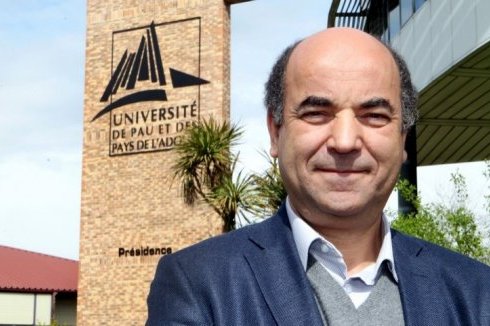
Mohamed Amara is a Professor and President of the Université de Pau et des Pays de l'Adour (UPPA). He is a member of the Inria MAGIQUE-3D team, specializing in numerical analysis and mathematical modeling. His research focuses on finite element methods, computational fluid dynamics, and photovoltaic technologies. He has contributed to advancements in solar energy systems, thermal management of photovoltaic cells, and materials science. Amara has supervised PhD students Elvira Shishenina and Izar Azpiroz, who successfully defended their theses. His work bridges applied mathematics with engineering applications, including studies on estuarian river flows and phase change materials. Roles: Professor, President of UPPA, Inria MAGIQUE-3D researcher Key Research Themes: Numerical Analysis, Solar Energy, Fluid Dynamics Amara's recent publications emphasize structural color metasurfaces, radiative cooling of solar modules, and perovskite solar cell optimization. He collaborates internationally on photovoltaic systems and thermal modeling, addressing challenges in energy efficiency and material performance.
Anatoly Zayats is a Professor of Physics and Head of the Photonics & Nanotechnology Group at King's College London. He holds academic leadership roles as Co-Director of the Net Zero Centre, London Centre for Nanotechnology, and London Institute for Advanced Light Technologies. His research focuses on nanophotonics, plasmonics, metamaterials, and their applications in sensing, quantum technologies, and sustainable energy. He earned his PhD in 1989 from the Moscow Institute of Physics and Technology and previously served as Chair of Physics at Queen’s University Belfast. Education: PhD (1989) and MSc (1986) in Physics from the Moscow Institute of Physics and Technology. Research interests include nonlinear optics, ultrafast plasmonics, topological light quasiparticles, and plasmonic metamaterials. He has pioneered work on hot-electron dynamics, optical spin-orbit coupling, and structured waves. Key achievements include the Royal Society Wolfson Research Merit Award and fellowships from major scientific societies. His work bridges fundamental science and applications in fields like bio-sensing, quantum plasmonics, and renewable energy. He co-edits Advanced Photonics and leads multidisciplinary projects funded by EPSRC and the European Commission. Research highlights include large-area single-crystal gold films for nanophotonics, copper-based ENZ metamaterials, and topological optical skyrmions. He advises on UK national initiatives like the London Quantum Technology Cluster and MetaHUB.
Naomi J. Halas is a University Professor at Rice University, holding appointments in the Department of Electrical and Computer Engineering, Biomedical Engineering, Chemistry, and Physics & Astronomy. She is the Stanley C. Moore Professor in Electrical and Computer Engineering and serves as Director of both the Smalley-Curl Institute and the Laboratory for Nanophotonics. As a University Professor, she holds Rice's highest faculty rank, a distinction awarded to only 10 individuals (and only the second woman) in Rice's 111-year history. Halas is a pioneering researcher in the field of plasmonics, having created the concept of the "tunable plasmon" and invented a family of nanoparticles with resonances spanning the visible and infrared regions of the spectrum. Her research spans fundamental studies of coupled plasmonic systems as well as applications in biomedicine, optoelectronics, machine learning-enabled chemical sensing of environmental toxins, and plasmon-based photocatalysis. She is the author of more than 400 refereed publications, has over 30 issued patents, has presented more than 600 invited talks, and has been cited more than 130,000 times. Her recent publications demonstrate a strong focus on practical applications of plasmonics, particularly in water purification, environmental toxin detection, and cancer treatment. Her work combines nanotechnology with machine learning approaches to create innovative solutions for pressing global challenges in healthcare, environmental sustainability, and energy. The interdisciplinary nature of her research is reflected in publications spanning journals from Nature Water and PNAS to ACS Catalysis. Benjamin Franklin Medal in Chemistry (2025) - For the creation and development of nanoshells for biomedical and chemical applications Mildred Dresselhaus Prize in Nanoscience and Nanomaterials (2024) American Physical Society Frank Isakson Prize for Optical Effects in Solids Willis E. Lamb Award Wood Prize of Optica National Security Science and Engineering Faculty Fellow (Vannevar Bush Fellow) of the U.S. Department of Defense Halas has co-founded two companies based on her research: Nanospectra Biosciences, developing photothermal therapies for prostate cancer (nearing FDA approval), and Syzygy Plasmonics, a deep decarbonization platform. She has advised numerous students who have gone on to successful careers in academia and industry. Her research has been supported by significant grants from NSF, DoD, and other funding agencies. She serves as an advisor to the Mathematical and Physical Sciences Directorate of the National Science Foundation. Halas leads the Laboratory for Nanophotonics at Rice University, where her team focuses on designing new optically active nanostructures, developing nanofabrication strategies, characterizing physical properties of these materials, and prototyping applications of technological and societal interest. Her group is dedicated to producing PhD research scientists with expanded skill sets who can develop solutions beyond traditional disciplinary boundaries.
Peter Zijlstra is a Full Professor in the Department of Applied Physics at Eindhoven University of Technology (TU/e), leading the Molecular Plasmonics group. His research focuses on single-molecule sensing using plasmonic and nanophotonic approaches to study biomolecular interactions in complex environments. He is a core member of the Institute for Complex Molecular Systems at TU/e, collaborating across disciplines like chemistry, biomedical engineering, and mathematics. Education: MSc in Applied Physics, University of Twente (2005) PhD from Swinburne University of Technology (2009), studying plasmonic nanoparticles in optical data storage Postdoctoral fellowship at Leiden University under Prof. Michel Orrit Research Interests: Developing novel sensing concepts via nanophotonics and super-resolution microscopy. Key areas include plasmon-enhanced fluorescence, real-time biomolecular dynamics, and applications in cancer management. His work contributes to UN Sustainable Development Goals through advancements in biosensing technologies. Awards: 2013 NWO Vidi Award for research on plasmonic imaging of enzymes in living cells Teaching & Activities: Teaches courses like Advanced Optical Microscopy and Electromagnetism Supervised 32 academic works Contributed to conferences and editorial roles for journals like npj Biosensing Labs & Collaborations: Molecular Plasmonics group website: www.molecular-plasmonics.nl Marie Curie ITN SuperCol project: www.supercol.eu
Giuseppe Vecchi is a Full Professor at the Department of Electronics and Telecommunications (DET) of Politecnico di Torino , Italy. He leads the Applied Electromagnetics research group and contributes to projects in computational electromagnetics, metamaterials, and biomedical applications of electromagnetic fields. He has been a IEEE Fellow since 2010 and serves on PhD college committees for Electrical, Electronic, and Communications Engineering. Research Interests : Antennas, Applied and Computational Electromagnetics, Metamaterials, Microwave Imaging for medical applications, Nuclear Fusion Reactor Physics. Scientific Leadership : Principal Investigator for projects like METEOR, MTSA, and RESOLVED-K, focusing on terahertz generation, metasurface antennas, and real-time temperature mapping in hyperthermia. Awards : IEEE Fellow (2010), recognizing his contributions to electromagnetic simulations and antenna design. Students : Supervises PhD candidates in advanced antenna engineering, computational electromagnetics, and biomedical applications, including Owais Khan, Francesco Lattanzio, and Sara Paknezhad Panahi. Patents : Holds multiple patents in antenna diagnostics, encrypted metasurface antennas, and microwave soil disinfection systems.
Dr.-Ing Alexander Vahl is a Researcher at the Technical Faculty of Kiel University, leading the subgroup Nanoparticles for Nanocomposites . He specializes in advanced materials science, focusing on nanoparticle synthesis, functional thin films, and neuromorphic engineering. His research bridges nanotechnology with applications in memristive systems and plasmonics, emphasizing strain-invariant conductors and photocatalytic growth mechanisms. Key projects include developing self-assembled nano-object networks for brain-inspired computing and optimizing gas aggregation cluster sources for novel material fabrication. His work spans disciplines such as memristive switching, plasmonic metasurfaces, and bio-inspired electronics. Notable contributions include studies on silver/polymer nanofluids, ITO-TiO₂ heterojunctions, and multicomponent nanoparticle synthesis. Vahl collaborates with the Chair for Functional Nanotechnology, leveraging interdisciplinary expertise to advance materials innovation. His articles highlight advancements in neuromorphic systems, photocatalytic deposition, and thin-film technologies. The research emphasizes scalability and real-world applications, such as energy-efficient sensors and hybrid zinc batteries. Vahl’s subgroup webpage and extensive publications reflect a commitment to pushing boundaries in nanomaterials engineering.
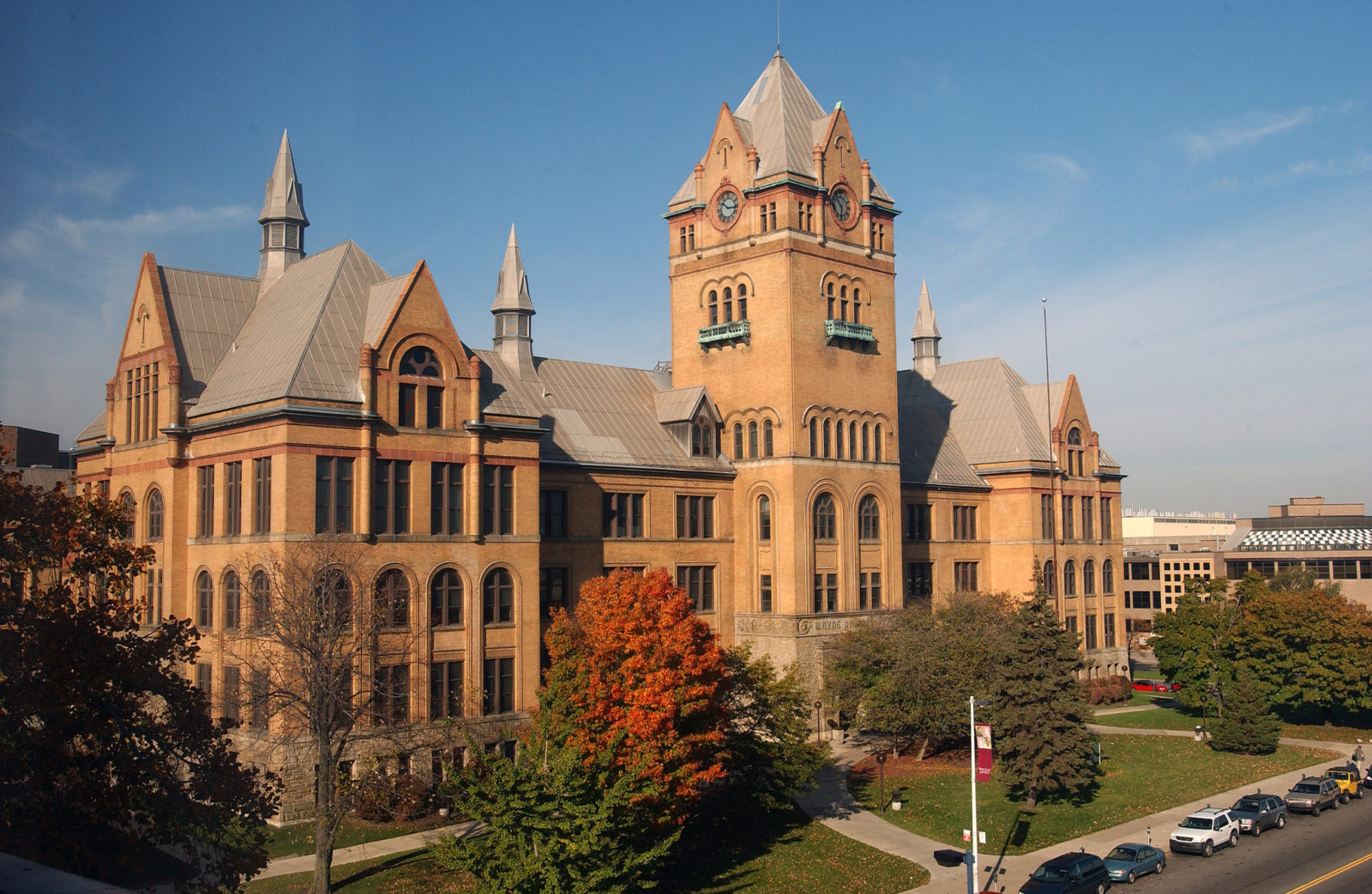
Dimitrios Sounas is an Assistant Professor in the Department of Electrical and Computer Engineering at Wayne State University's College of Engineering. His research bridges electromagnetics, metamaterials, and acoustic systems, with a focus on nonreciprocal devices and time-modulated technologies. He has held academic roles at The University of Texas at Austin and Polytechnique Montreal. Ph.D. in Electrical and Computer Engineering, Aristotle University of Thessaloniki (2009) Diploma/M.Eng. in Electrical and Computer Engineering, Aristotle University of Thessaloniki (2004) His research explores advanced electromagnetic systems, including magnetless circulators, time-modulated metasurfaces, and topological phonon transport. Current projects investigate nonreciprocal acoustic filters and broadband delay lines. Recent publications highlight innovations in time-varying capacitors for energy trapping (2023), non-reciprocal Willis coupling (2023), and magnet-free circulators via photonic crystal modulation (2023). Earlier works established foundational concepts in microwave nonreciprocity and optical signal processing. Scientific accolades include: Brillouin Medal, International Phononics Society (2023) EurAAP Leopold B. Felsen Award (2020) IEEE Senior Membership (2020) He supervises research students in electromagnetic theory, metamaterial simulations (CST, COMSOL), and microwave measurements, with recent Ph.D. advisee Saeed Keshavarz completing work on topological microwave components for wireless systems.
Prof. Laura Na Liu is a Professor and Director at the 2nd Physics Institute, University of Stuttgart, with a dual affiliation at the Max Planck Institute for Solid State Research. Her research bridges nanophotonics, DNA nanotechnology, and plasmonics, focusing on dynamic systems for biomedical applications, optical metamaterials, and synthetic biology. Key contributions include DNA-templated plasmonic architectures, reconfigurable metasurfaces, and synthetic cell components using DNA nanotechnology. Academic training includes advanced work in physics and materials science, with a career spanning leading institutions. Research interests emphasize the interplay between nanoscale structures and optical/chemical functionalities. Recent publications highlight innovations in programmable nanomaterials, real-time molecular tracking, and high-performance holography systems. Her work integrates experimental and theoretical approaches, addressing challenges in biophotonics, nanoelectronics, and smart materials. Awards and recognitions are listed in institutional records, while her lab actively collaborates with industry on applied photonics solutions.