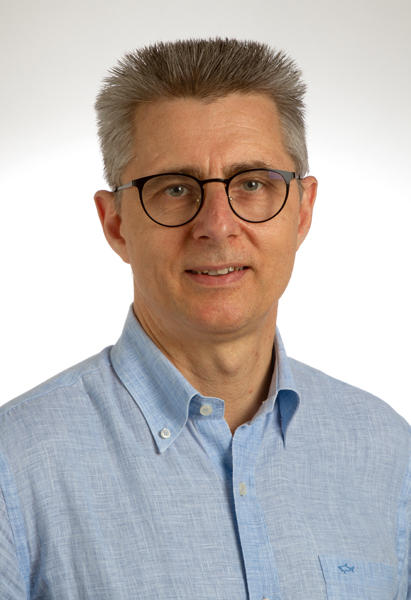
Zijian Shao is a Postdoctoral Research Associate at Princeton University's School of Engineering and Applied Science, affiliated with the Department of Electrical Engineering. His work focuses on advanced antenna design, electromagnetic modeling, and machine learning applications in RF/mmWave systems for 5G/6G telecommunications. Advisor: Kaushik Sengupta Email: zs9193@princeton.edu Office: Engineering Quadrangle Atrium Shao's research explores the intersection of machine learning and electromagnetic design , particularly for next-generation wireless communication. He specializes in antenna miniaturization , MIMO decoupling , and metasurface-enabled beamforming , with applications in sub-terahertz circuits and integrated sensing systems. His recent publications demonstrate expertise in deep learning-assisted inverse design of multi-port RF systems and spoof surface plasmon polariton-based antenna optimization . While no formal awards are listed, his work contributes to advancing compact, high-efficiency antenna arrays for 5G/6G networks.
Professor B M Azizur Rahman is a distinguished academic in the field of photonics at City University London, where he has served as Professor of Photonics in the Department of Electrical and Electronic Engineering since 2000. Previously, he was Reader in Photonics (1996-2000) and Lecturer (1988-1996) at the same institution. His academic journey began with a BEng (1971-1976) and MSc (1976-1979) from Bangladesh University of Engineering and Technology, followed by a PhD from University College London (1979-1982). His educational background laid the foundation for his extensive research career focusing on photonics, integrated waveguides, and optical sensors. Professor Rahman has made significant contributions to fields including plasmonic biosensors, fiber optic sensing technologies, supercontinuum generation, and metamaterial-based sensing systems. His research bridges theoretical modeling with practical applications in environmental monitoring, healthcare diagnostics, and engineering solutions. An analysis of his most recent publications (2022-2025) reveals a strong focus on advanced sensing technologies with applications across multiple domains. His work demonstrates expertise in combining photonics principles with nanotechnology, artificial intelligence, and novel materials to develop highly sensitive detection systems. Key research trends include the integration of deep learning with optical sensing, development of plasmonic-enhanced biosensors, and innovative waveguide designs for improved optical performance. Professor Rahman has maintained a highly productive research career with over 443 publications documented in his ORCID profile. His work shows extensive international collaboration with researchers from institutions in the UK, Bangladesh, Thailand, and other countries. While specific grant information is not provided in the available data, his sustained publication record across high-impact journals indicates successful research funding and supervision of numerous research projects over his career. His research group appears to focus on experimental photonics, computational modeling of optical systems, and development of novel sensing platforms.
Professor Paolo Fornasiero is a Full Professor of Inorganic Chemistry at the University of Trieste, Department of Chemical and Pharmaceutical Sciences, where he has worked since 1998. He serves as Deputy Director of the department since 2021 and Scientific Responsible of the CNR Research Unit associated with the Institute of Chemistry of OrganoMetallic Compounds (ICCOM) since 2008. His career spans EU projects, bilateral collaborations with China, India, and Argentina, and leadership roles in journals like ACS Catalysis (Executive Editor since 2021). Full Professor (2016–present) Associate Professor (2006–2016) Assistant Professor (1998–2006) Post-Doc, University of Reading (1996–1997) His research focuses on multi-functional metal-oxide nanosystems for energy and environmental catalysis, including green hydrogen production , CO2 valorization , and methane emission control . He pioneered core-shell catalysts and single-atom systems for stability and selectivity. His work extends to solid oxide fuel cells and photocatalytic water depollution . Recent publications highlight trends in photothermal catalysis , single-atom catalysts , and CO2 electroreduction . His 280+ papers (3 in Science , 2 in Nature Communications ) reflect expertise across Environmental Catalysis , Nanomaterials , and Green Energy . 2022 Malatesta Medal 2021 European Academy of Sciences member 2017 Edoardo Kramer Award 2016 Heinz Heinemann Award 2013 Chiusoli Gold Medal He oversees PhD/postdoc advising and participates in global capacity-building via UNIDO and World Academy of Sciences . His lab collaborates with institutions like KAUST , Czech Academy of Sciences , and Dalian Institute of Chemical Physics .
Marco Di Renzo is a CNRS Professor (Directeur de Recherche Titulaire) at University of Paris-Saclay, affiliated with CentraleSupelec and the Signals and Systems Laboratory (L2S). He serves as Coordinator of the Communications Networks Area at the DigiCosme Laboratory of Excellence and Editor-in-Chief of IEEE Communications Letters. His academic leadership includes membership in the Ph.D. School on ICT Admission Committee at Paris-Saclay University. His educational background includes a Laurea (cum laude) and Ph.D. in Electrical Engineering from University of L'Aquila, Italy (2003, 2007), and a Habilitation à Diriger des Recherches from University Paris-Sud (2013). Laurea (cum laude), Electrical Engineering, University of L'Aquila (2003) Ph.D., Electrical Engineering, University of L'Aquila (2007) Habilitation à Diriger des Recherches, University Paris-Sud (2013) Di Renzo's research focuses on next-generation wireless communications, particularly reconfigurable intelligent surfaces (RIS), 6G technologies, and stochastic geometry modeling. His work bridges theoretical communication theory with practical implementations in cellular networks, millimeter-wave communications, and ultra-wide band systems. Recent publications demonstrate leadership in holographic metasurfaces, integrated sensing and communication (ISAC), and AI-empowered network design, establishing him as a pioneer in electromagnetic wave manipulation for future networks. His award-winning publications span RIS-aided communications, channel modeling, and security frameworks. Analysis of his recent work reveals consistent focus on three pillars: (1) fundamental electromagnetic theory for wave manipulation, (2) practical RIS implementations across frequency bands, and (3) integration with AI for network optimization. His articles frequently address industrial applications including factory automation and space-air-ground networks. Di Renzo's scientific recognition includes: IEEE Fellow (2020) and IET Fellow (2020) Highly Cited Researcher (Web of Science, 2019) SEE-IEEE Alain Glavieux Award (2017) Multiple Best Paper Awards (IEEE ICC, EURASIP) Nokia Foundation Visiting Professorship (2020) As Principal Investigator for CNRS, he coordinates multiple Horizon 2020 projects including SURFER, PathFinder, and MetaWireless. His leadership extends to serving as Project Coordinator for H2020 5Gwireless, 5Gaura, MAPNET, and REDESIGN. With over 350 publications, 17,000+ citations, and h-index of 66+, his research group maintains strong industry partnerships with Nokia and other telecommunications leaders. Di Renzo directs the Signals and Systems Laboratory (L2S) at Paris-Saclay and coordinates the DigiCosme Excellence Lab's Communications Networks Area. His team specializes in electromagnetic modeling for wireless networks and has pioneered the European Telecommunications Standards Institute (ETSI) Industry Specification Group on RIS. The group maintains active collaborations with Aalto University (Finland), University of Technology Sydney (Australia), and University of L'Aquila (Italy).
Harry Atwater is the Howard Hughes Professor of Applied Physics and Materials Science at the California Institute of Technology (Caltech). He serves as Director of the Joint Center for Artificial Photosynthesis (JCAP) and previously led the Light-Materials Interactions in Energy Conversion (LMI-EFRC) from 2009–2014. His research bridges photovoltaics, solar energy systems, plasmonics, and nanophotonics. Atwater pioneered the field of plasmonics and co-founded Alta Devices, a leader in GaAs photovoltaic technology. He holds over 200 publications and has been recognized with prestigious awards, including induction into the National Academy of Engineering (2015) and the ENI Prize (2012). His work spans cutting-edge innovations such as silicon wire array solar cells, metasurface technologies for optical manipulation, and space solar power systems. Current projects include developing lightsail propulsion for interstellar exploration and photothermocatalytic reactors for sustainable fuels. Atwater’s lab focuses on the intersection of nanophotonics and energy, exploring quantum emitters, carbon capture, and optomechanical systems. Research Highlights: Plasmonic light absorbers, metasurface-based imaging, and solar energy harvesting systems. Key Projects: Lightsail experiments, space-based solar power missions, and CO₂ reduction via electrochemical methods. Awards: Julius Springer Prize (2014), ISI Highly Cited Researcher (2014), and MRS Kavli Lecturer (2010).
Dr. Patrick Kung serves as Associate Professor and Associate Department Head for Undergraduate Programs in the Department of Electrical and Computer Engineering at the University of Alabama's College of Engineering. His research spans nanotechnology, quantum computing, and terahertz photonics with significant contributions to metamaterials and optical systems. Research Focus: Dr. Kung specializes in terahertz spectroscopy, polarization-sensitive imaging, and nanoscale material engineering. His work integrates machine learning with optical systems for applications in underwater imaging, quantum networking, and biodegradable polymers. Recent projects include $1 million Department of Energy funding for quantum networking research (2024) and development of materials for slowing light propagation. Publication Trends: His recent publications (2022-2025) demonstrate a clear trajectory toward multimodal sensing systems combining terahertz technology, polarization control, and AI-driven image processing. Key themes include underwater object recognition using single-photon LiDAR, compact drone-compatible imaging platforms, and cryogenic photonic components for quantum applications. The work consistently bridges fundamental nanophotonics with practical engineering solutions. Department of Energy Funding ($1 Million for Quantum Networking Research, 2024) Dr. Kung actively mentors students in EPA-funded water disinfection projects using UV-LED technology and collaborates with industry partners through the Southeast Executives-on-Roster program. His laboratory work focuses on nanowire-based thin films and metamaterial absorbers, with applications in environmental monitoring and quantum communication hardware.
Niels Quack is an Associate Professor in Micro- and Nanosystems at The University of Sydney's School of Aerospace, Mechanical and Mechatronic Engineering. He joined the university in 2022 after serving as an SNSF Assistant Professor at EPFL (Switzerland). His roles include Academic Director of the Research and Prototype Foundry and membership in the University of Sydney Nano Institute. He holds a Dr.Sc. from ETH Zurich and an M.Sc. from EPFL. His research focuses on micro- and nanosystems engineering, integrating mechanics and photonics at the microscale. Key applications include fiber-optical communication, quantum sensing, and integrated photonics using diamond and silicon materials. Quack has pioneered silicon photonic MEMS and diamond micro-optics, with over 100 publications in journals like ACS Photonics , Optics Letters , and Nanoscale . He leads international collaborations with institutions like Ghent University (Belgium) and EPFL (Switzerland), and serves on editorial boards for IEEE Journal of Microelectromechanical Systems and SPIE Journal of Optical Microsystems . His awards include the Optica Senior Member distinction (2023) and Sydney Research Accelerator Prize (2023). Quack supervises PhD and Master's students in advanced micro- and nanosystems design, offering projects in programmable photonics and diamond-based biosensors. He actively recruits postdoctoral researchers and advises on funded projects like 'Nurturing Commercialization Opportunities for Multipoint Fiber-Optical Pressure Sensors.' His lab develops cutting-edge technologies such as vacuum-sealed silicon photonic MEMS and diamond nanopillar arrays, advancing applications in quantum sensing and optical communication systems.
Eddie C. Red is an Associate Professor of Mathematics and Computational Sciences at Morehouse College , where he currently serves as the Interim Dean of the Science, Technology, Engineering, and Mathematics (STEM) Division. He earned his B.S. from Morehouse College (class of 2000) , followed by his M.S. and Ph.D. from Florida Agricultural and Mechanical University . Dr. Red also completed post-doctoral education at Lawrence Berkeley National Laboratory . Interim Dean, STEM Division Former Chair, Mathematics and Computational Science Division Former Chair, Physics & Dual-Degree Engineering Department Dr. Red’s research interests bridge atomic physics, quantum mechanics, and computational modeling , with a focus on: Photoionization cross-sections Bound states in the continuum Velocity map imaging techniques Mathematical formulations for quantum operators His work has resulted in publications in Physical Review A, Communications Physics, and the Journal of Physics B , alongside numerous conference presentations. Dr. Red has led the NuMaSS (Nuclear, Materials, and Space Science) Summer Enrichment Program for K-12 students and directed the Research Experience with Diversification Laboratory , emphasizing student training and research. Scientific awards include: Principal Investigator for Department of Energy National Nuclear Security Administration awards Dr. Red has served on multiple faculty governance committees, including the Admissions Committee , Faculty Grievance Committee , and Faculty Research Committee .
Hao Liu is a researcher affiliated with institutions like Chinese Academy of Sciences , Beihang University , and Stanford University . His work spans Computer Science , Artificial Intelligence , and Robotics . Key affiliations: National Space Science Center (Beijing), School of Astronautics (Beihang), Key Laboratory of Pervasive Computing (Tsinghua) Research interests include Machine Learning , Image Processing , Graph Neural Networks , and Wireless Communication Optimization His recent publications focus on: Advanced control systems for fuzzy models Medical imaging via hyperspectral analysis Transformer-based approaches in NLP and vision Quantum-safe and edge computing protocols
Dr. Anna Baldycheva is a Senior Lecturer in Electronic Engineering at the University of Exeter, within the College of Engineering, Mathematics and Physical Sciences. She leads the interdisciplinary STEMM Laboratory, focusing on applied R&D in smart materials, photonics, AI, and IoT. With prior research experience at MIT, Trinity College Dublin, and Tyndall National Institute, she has established herself as an internationally recognized innovator and entrepreneur in emerging technologies. PhD in Electronic and Electrical Engineering, Trinity College Dublin (2008–2012) BSc (Hons) in Physics, St. Petersburg State University (2003–2008) Postgraduate Certificate in Academic Practice, University of Exeter (2016–2017) Postgraduate Certificate in Technology Management, Smurfit Business School (2009–2010) Her research spans Nano-Engineering, Opto-Electronics, Photonics, AI, and IoT , with a strong emphasis on real-world applications. She pioneers work in fluid opto-electronics , graphene nanocoatings , and AI-driven emotion recognition and early cancer detection . Her lab develops smart composite materials for flexible electronics, e-textiles, and structural applications, integrating machine learning into healthcare, education, and communications systems. The recent publications highlight a strong trend toward applied interdisciplinary innovation , combining materials science with AI and photonics for healthcare diagnostics, energy-efficient computing, and educational technology. Her work frequently bridges fundamental physics with commercialization potential, as seen in spin-out technologies like GSurf and the Electronic-Nose for lung cancer detection. Fellow, Royal Microscopical Society (RMS) Fellow, Higher Education Academy (FHEA) Expert, Future and Emerging Technologies, European Commission Featured in Forbes and Forbes Tech Council Editor-in-Chief, InSTEMM Journal Associate Editor, Nature Scientific Reports and Discover Nano Trustee, Royal Microscopical Society Founder, STEMM Global Scientific Society Founder, It’s Her! Women in STEMM Initiative Dr. Baldycheva actively supervises PhD students and has secured industrial collaborations with organizations such as Qinetiq and Lumentum. She leads multiple outreach initiatives, including STEMM Junior for underprivileged children, and serves on the committee for the Jocelyn Bell Brunel PhD Scholarship. She has raised significant research funding through national and international grants, though specific grant names are not listed. She leads the STEMM Laboratory , a multidisciplinary research group with divisions in Smart Composite Materials, Machine Learning & AI, and Opto-Electronics & Photonics. The lab emphasizes industry collaboration and technology transfer, having produced a university spin-out (GSurf) and multiple media-highlighted innovations.
Shanhui Fan is the Joseph and Hon Mai Goodman Professor of the School of Engineering at Stanford University, with a courtesy appointment in Applied Physics and a Senior Fellowship at the Precourt Institute for Energy. He directs the Edward L. Ginzton Laboratory and holds a Ph.D. in theoretical condensed matter physics from MIT. His research focuses on nanophotonics, including photonic crystals, metamaterials, quantum optics, and radiative cooling technologies. He has published over 700 papers and holds 80+ patents, with awards including the R. W. Wood Prize and membership in the National Academies of Sciences and Engineering. Education: B.Sc. (Physics, 1992) University of Science and Technology of China; Ph.D. (Physics, 1997) MIT. Affiliations: Edward L. Ginzton Laboratory, Department of Electrical Engineering, Stanford University. Research Highlights: Radiative cooling systems (e.g., subambient cooling), photonic synthetic dimensions, quantum optics with free electrons, and energy-efficient materials. His work bridges theoretical and experimental photonics, with applications in renewable energy, imaging, and quantum technologies. Recent advancements include nighttime electric power generation via radiative cooling and nonreciprocal metasurface devices. He advises over 20 graduate students and postdocs, contributing to breakthroughs in photonics and energy systems. Awards & Honors: R. W. Wood Prize (Optica, 2022) Simons Investigator in Physics (2021) Member, National Academy of Sciences (2025) Member, National Academy of Engineering (2024) Grants & Teams: Leads the Light-Matters Initiative (LMI EFRC) and co-founded Skycool Systems and Flexcompute. His lab collaborates on radiative cooling textiles and photonic neural networks.
Dr. Chenhao Chu is a Professor at ETH Zürich, holding the Professur für Elektronik (Professorship for Electronics). He specializes in RF/mm-Wave circuits, AI-driven design methods, and advanced power amplification technologies. His research focuses on energy-efficient, wideband systems, antenna-in-package solutions, and GaN-based applications for 6G and beyond. Education: Ph.D. in Electronic Engineering, University College Dublin (2022) M.Sc. in Electronic Information Engineering, City University of Hong Kong (2017) Research Interests: His work bridges AI and hardware design, emphasizing reconfigurable circuits , high-linearity power amplifiers , and mm-Wave phased arrays . Key areas include: AI-assisted rapid design synthesis III-V/Si co-design for mm-Wave Efficient antenna integration Dynamic load modulation techniques Awards: Award-winning researcher with distinctions including the First Place Best Student Paper Award (2022 Royal Irish Academy Colloquium) and multiple HEPA-SDC Competition Awards (2021-2022). Recognized for innovations in PA efficiency and design automation. Advising & Grants: Leading projects on 6G PA architectures and AI-driven RF design. Active in IEEE with contributions to conferences like IMS and ARFTG. No explicitly stated grants mentioned but widely cited in industry-academia collaborations. Labs & Teams: Associated with ETH Zürich's Electronics Laboratory, focusing on next-generation wireless systems. Collaborates internationally on 5G/6G infrastructure and mm-Wave innovations.
Prof. Jay Guo is a Distinguished Professor and Founding Director of the Global Big Data Technologies Centre at the University of Technology Sydney (UTS). He also leads the New South Wales Connectivity Innovation Network (CIN) and the TPG-UTS Network Sensing Lab. With over 700 publications, 350+ IEEE journal papers, and 27 patents, his work focuses on 5G/6G antennas, integrated sensing and communications (ISAC), and environmental sensing using 5G/6G networks. Research Interests: 5G/6G Antenna Systems (reconfigurable arrays, multibeam antennas) In-Band Full-Duplex Wireless Systems Integrated Sensing and Communications (ISAC) Environmental Sensing via Network Infrastructure Awards & Recognition: IEEE Schelkunoff Prize Paper Award (2023) Fellowships: IEEE, Australian Academy of Engineering, Royal Society of NSW Australia Engineering Excellence Award (2007) Australia's Top Researcher in Electromagnetics (2020-2023) Highly Ranked Scholar (top 0.05% globally) Grants & Projects: NSW Government-funded environmental sensing projects Industry collaborations with TPG Telecom, Telstra, and CSIRO Leadership in global antenna conferences (e.g., IEEE APS, ISAP) Labs & Initiatives: Global Big Data Technologies Centre TPG-UTS Network Sensing Lab NSW CIN (Connectivity Innovation Network)
Gianluca Piazza is the STMicroelectronics Professor of Electrical and Computer Engineering at Carnegie Mellon University (CMU), with a courtesy appointment in Mechanical Engineering. He directs the John and Claire Bertucci Nanotechnology Laboratory (CMU Nanofab). Previously, he was the Wilf Family Term Assistant Professor at the University of Pennsylvania. His research focuses on piezoelectric micro/nano electromechanical systems (M/NEMS) for RF communication, optomechanics, chemical/biological sensing, and mechanical computing. Key projects include nanorelays for low-power computing, ultrasound-based wireless powering, and piezoelectric MEMS for energy harvesting. Education: PhD (2005) in Electrical Engineering from UC Berkeley; MS (2001) from University of Texas at Austin and Politecnico di Milano (Italy). Research Interests: M/NEMS design, micro/nano fabrication, piezoelectric materials, mechanical switches, and energy-efficient electronics. His work bridges fundamental science and applied engineering, with patents in micromechanical resonators and awards including the IBM Young Faculty Award (2006) and multiple IEEE Best Paper Awards. Grants & Collaborations: NSF LEAP-HI grant ($2M) for nanorelay development (2020); CMU Kavčić-Moura Endowment funding. Collaborates with Maarten de Boer (Mechanical Engineering) and institutions like the University of Pennsylvania and City University of Hong Kong. Labs & Teams: Leads the Piazza Micro and Nano Systems Laboratory, focusing on NEMS/MEMS innovation. Active in CMU’s Center for Silicon System Implementation and Engineering Research Accelerator.
Khurram K. Afridi is a Professor in the Electrical and Computer Engineering Department at Cornell University's College of Engineering. With a BS from Caltech and SM/PhD from MIT, he leads the High-Frequency Power Electronics and Control (HFPEC) research group. His work focuses on high-frequency power electronics, wireless power transfer systems, and electric vehicle charging infrastructure. Dr. Afridi's research spans capacitive wireless power transfer systems for electric vehicles, high-frequency power converters , impedance control networks , and power density optimization . His team has developed innovative approaches for multi-MHz wireless power transfer, reduced-fringing-field systems, and high-efficiency power conversion architectures. Recent work emphasizes practical implementation challenges including thermal management, pavement-embedded systems, and dynamic charging applications. His publications reveal a strong focus on high-power-density systems , wireless charging technologies , and advanced power conversion techniques . The research spans both theoretical modeling and practical implementation, with numerous papers in top conferences like APEC, ECCE, and IEEE journals. Key themes include improving power transfer efficiency at multi-MHz frequencies, developing novel matching network designs, and creating practical systems for electric vehicle charging infrastructure. First Place Prize Paper Award, IEEE Journal of Emerging and Selected Topics in Power Electronics, 2023 First Place Best Contribution Award, IEEE WPTCE, 2023 Second Place Prize Paper Award, IEEE Transactions on Power Electronics, 2022 Distinguished Lecturer, IEEE Vehicular Technology Society, 2022 Cornell Engineering Research Excellence Award, 2021 NSF CAREER Award, 2016 Dr. Afridi has successfully advised numerous graduate students who have received multiple Outstanding Presentation Awards at major conferences. His research has been supported by significant funding including the NSF CAREER Award. The HFPEC group maintains strong industry connections and focuses on translating theoretical advances into practical power electronics solutions with real-world impact. Current research directions include electrified roadways, dynamic wireless charging systems, and high-power-density power conversion architectures for next-generation applications.