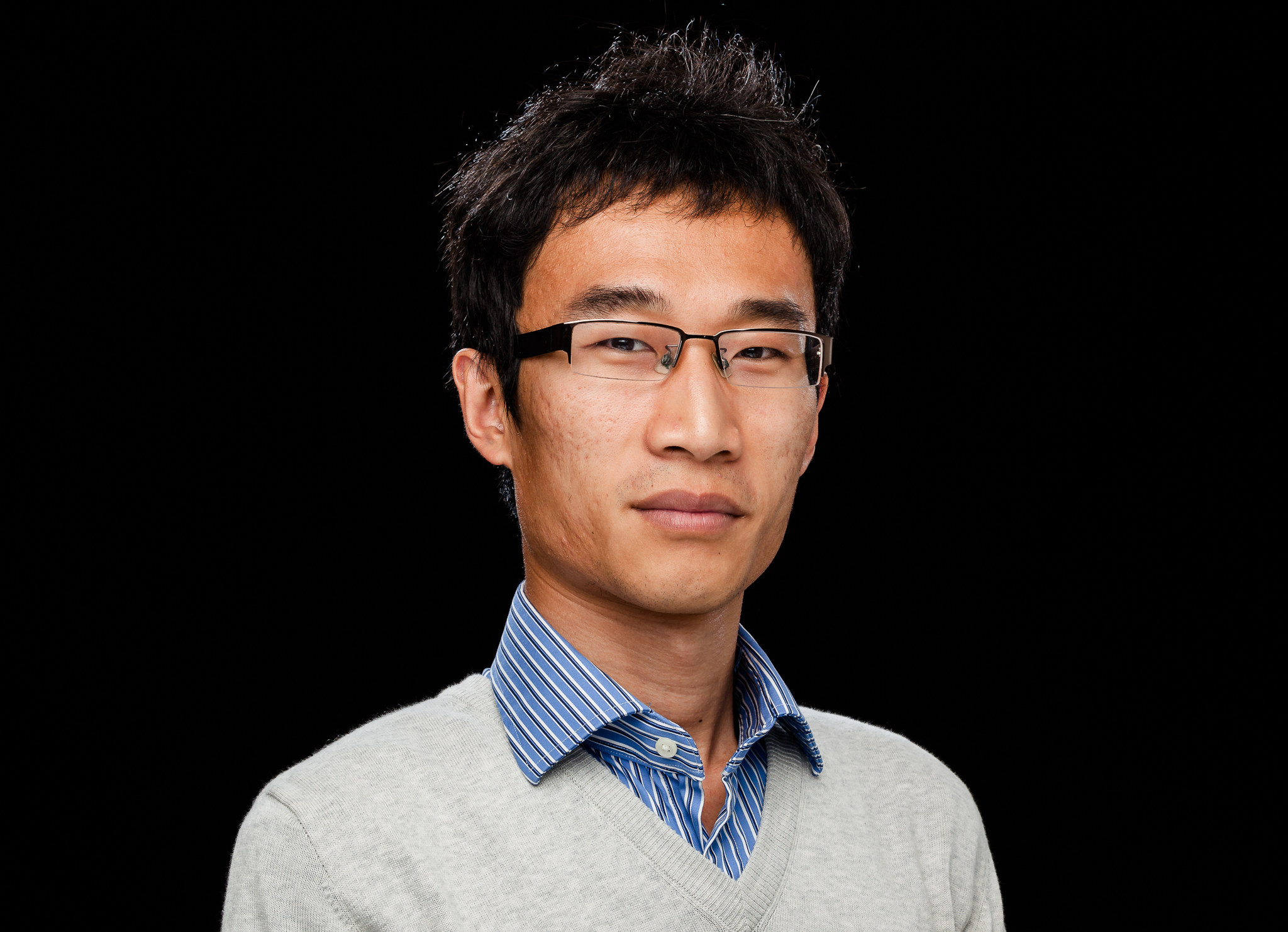
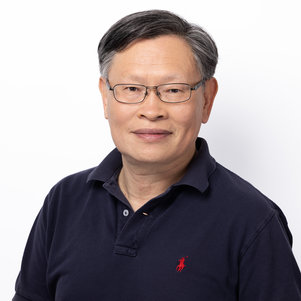
Muhammad Alam is an Assistant Professor of Electrical and Computer Engineering at Queen's University. He holds a PhD and is a licensed Professional Engineer (P.Eng) with extensive research contributions in nanophotonics and related fields. His work has led to over 50 publications and three issued/pending patents. BASc from Bangladesh University of Engineering and Technology (2000) MASc from the University of Victoria (2003) PhD from the University of Toronto (2012) Dr. Alam specializes in nanophotonics , focusing on metasurface design, plasmonics, silicon photonics, and optoelectronics. His PhD research introduced the hybrid plasmonic waveguide, a breakthrough that sparked global research activity. He has also conducted postdoctoral work at the University of Toronto and Caltech, with visiting roles at Jet Propulsion Laboratory and Lawrence Berkeley National Laboratory. Douglas R. Colton Medal for Research He holds three issued/pending patents for his innovations in photonics and has advised numerous graduate students. His research bridges theoretical exploration with practical applications in advanced optical systems and nanoscale device engineering.
Dr. John Bartholomew is a researcher at the University of Sydney's Faculty of Science, leading the Quantum Integration Laboratory. His work focuses on quantum internet technologies using rare-earth ions in integrated systems. He holds a PhD in Physics from the Australian National University (2014), with postdoctoral experience at Chimie Paristech (2015) and Caltech (2016-2019). His research aligns with the University of Sydney's Quantum Frontiers initiative. Education PhD in Physics, Australian National University (2014) Research Focus Quantum networking with photon-spin interactions Rare-earth ion integration for quantum memory Coherent microwave-optical transduction Nanophotonic quantum interfaces Optical linewidth and coherence time optimization Scientific Recognition American Australian Association Northrop Grumman Fellowship (2015) Grants 2024 Er:SiC integrated photonics grant 2023 ARC Training Centre for Future Leaders in Quantum Computing grant 2022 SOAR Prize 2021 Atomic Scale Control over Quantum Materials grant Teaching Quantum nanoscience (PHYS4126/PHYS5126) Interdisciplinary Physics (PHYS3888) experimental coordination Labs Director of Sydney Nanoscience Hub's Quantum Integration Laboratory
Dr. Yan Kei Chiang is a Lecturer at the School of Engineering and Information Technology, UNSW Canberra, specializing in acoustic metamaterials research. He is an active member of the Advanced Electromagnetics group and has established himself as a prominent researcher in wave engineering through metamaterials. His research focuses on acoustic and elastic wave metamaterials , with particular expertise in designing structures that manipulate sound waves in unprecedented ways. Dr. Chiang's work spans theoretical modeling, experimental design, and practical applications including noise control, structural health monitoring, and energy harvesting. His research interests specifically include tunable and reconfigurable metamaterials, nonlinear acoustic systems, and the application of machine learning for acoustic structure optimization. His expertise extends from micro-electro-mechanical systems to medical science applications. Dr. Chiang actively supervises PhD candidates in acoustic metamaterials research, requiring applicants to have a solid background in acoustic or electromagnetic waves. His supervision areas include acoustic wave metamaterials, tunable metamaterials, acoustic resonator modeling for energy harvesting, and machine learning optimization of acoustic structures. His laboratory work involves both theoretical and experimental approaches to acoustic metamaterial design, with recent emphasis on origami-inspired metasurfaces, microacoustic metagratings, and systems for energy harvesting from acoustic waves. His research team collaborates extensively on projects involving wave manipulation, resonance phenomena, and practical applications of metamaterials for engineering solutions.
David Powell is an Associate Professor at the School of Engineering and Information Technology, UNSW Canberra. He specializes in electromagnetic and acoustic metamaterials, with expertise spanning microwave, terahertz, and acoustic experimentation. His research focuses on nonlinear and tunable metamaterials, particularly structures combining electromagnetic and mechanical degrees of freedom. He obtained his PhD from RMIT University (2006) in surface acoustic wave biosensors. From 2006-2017, he was a Researcher at the Nonlinear Physics Centre, Australian National University, before joining UNSW Canberra as Senior Lecturer and advancing to Associate Professor. He maintains membership in the Advanced Electromagnetics research group. Powell's research explores: Novel nonlinear metamaterials and reconfigurable structures Coupled electromagnetic-acoustic dynamics in metamaterials Theoretical frameworks for bianisotropy and chirality Open resonant systems modeling (developer of OpenModes software) Acoustic/electromagnetic wave control via metasurfaces His publications demonstrate consistent focus on wave manipulation through engineered materials, with recent emphasis on acoustic metasurfaces for energy harvesting, noise insulation, and beam control applications.
Dr. Khalil As'Ham is a Research/Lecturer Associate at the School of Engineering & Technology, University of New South Wales (UNSW), Canberra. With a PhD in Engineering (2022) from UNSW and prior degrees from the University of Malaya (M.Sc. 2017) and Taiz University (B.Sc. 2013), his expertise lies in nanophotonics and optoelectronic device optimization , particularly using advanced simulation tools. PhD in Engineering (UNSW, 2022) M.Sc. Eng. with Distinction (University of Malaya, 2017) B.Sc. Eng. with First Class Honors (Taiz University, 2013) His research spans strong light-matter coupling , self-powered photodetectors , and machine learning for optoelectronic design . Recent work focuses on ternary chalcogenides, graphene-based infrared sensors, and hybrid perovskite-TMDC systems. As a mentor, he supports HDR students and teaches courses like Radar Techniques , Communication Systems , and Digital Electronics . Key awards include the UNSW Postgraduate Scholarship (2018-2022), OSHC for RTPs, and the Yemeni Embassy's recognition (2017). His publications highlight trends in 2D material integration , thermal rectification , and UV photodetection with applications in eco-friendly electronics and on-chip sensing. University International Postgraduate Scholarship (2018-2022) OSHC for RTPs University College PG TopUP (2018-2022) Award of Honouring Graduates and Excellent Yemeni Students (2017) M.Sc. Scholarship Programme in Science and Technology (2016-2017)
Jordan Malof is an Adjunct Assistant Professor in the Department of Electrical and Computer Engineering at Duke University. He conducts interdisciplinary research applying advanced signal processing, computer vision, and machine learning (particularly deep learning) techniques to real-world problems in remote sensing, energy systems, and materials science. His notable awards include the 2022 Bass Connections Award for Outstanding Leadership at Duke University. He has taught courses such as ENERGY 795T: Bass Connections Energy & Environment Research Team and ECE 292: Projects in Electrical and Computer Engineering. Malof's research spans several key areas: Remote Sensing Applications Deep Learning for Electromagnetic Materials Energy Infrastructure Mapping Computer Vision in Geospatial Analysis Material Science Modeling AI-Driven Solar Energy Assessment His recent publications in premier venues like NeurIPS and WACV demonstrate expertise in: Physics-informed neural networks Metamaterial design optimization Domain adaptation techniques Energy security assessment frameworks Computational electromagnetics Geospatial data analysis Scientific awards: 2022 Bass Connections Award for Outstanding Leadership Malof's collaborative approach involves working with domain experts across disciplines to develop novel AI methodologies for complex engineering challenges, particularly in energy systems and electromagnetic material design.
Willie Padilla is the Dr. Paul Wang Distinguished Professor in the Department of Electrical and Computer Engineering at Duke University's Pratt School of Engineering. He has established himself as a leading researcher in the field of electromagnetic metamaterials and related technologies across multiple frequency regimes. Padilla earned his Ph.D. from the University of California, San Diego in 2004. His educational background provided the foundation for his subsequent groundbreaking work in metamaterials and electromagnetic theory. Dr. Padilla's research focuses on the theoretical, computational, and experimental investigation of electromagnetic metamaterials and metasurfaces, with particular emphasis on artificial intelligence and deep/machine learning applications. His work spans microwave, terahertz, and infrared frequencies, with applications in spectroscopy, computational imaging, and sensing. His lab specializes in the THz, infrared, optical and magneto-optic properties of novel materials utilizing various spectroscopic methods, including Fourier transform spectroscopy and ellipsometry. A significant portion of his recent work involves tailoring the emissivity of objects with metamaterial coatings and developing active metamaterial arrays for imaging systems. Analysis of his recent publications reveals a strong trend toward integrating artificial intelligence with electromagnetic materials research. His work increasingly focuses on physics-informed machine learning for metamaterial design, inverse problems in electromagnetic theory, and the application of deep learning techniques to accelerate metamaterial simulation and design processes. This represents a significant shift from purely experimental work to a more computational and AI-driven approach to metamaterial research. IEEE Fellow (2025) Optica Fellow (2013) Presidential Early Career Awards for Scientists and Engineers (2009) Dr. Padilla has mentored numerous students, including Yang Deng who passed a milestone examination in the Ph.D. program in 2021. His research has been supported by significant grants that have enabled the development of tunable metamaterials, metamaterial absorbers, and energy harvesting applications using metamaterial technology. His work on metamaterial thermal emission and high-temperature metamaterials demonstrates a strong focus on practical applications of fundamental research. The Padilla Lab at Duke University is a multidisciplinary research environment focusing on metamaterials for various applications. The lab has several major research thrusts including tunable metamaterials using semiconductors, graphene, MEMS/NEMS, and liquid crystals; metamaterial absorbers; energy harvesting applications; and advanced spectroscopy techniques. The lab has made significant contributions to the field of metamaterials, particularly in the terahertz frequency range, and continues to push the boundaries of what's possible with engineered electromagnetic materials.
Miguel Camacho Aguiar serves as an Associate Professor in the Department of Electronics and Electromagnetism at the Faculty of Physics, University of Seville, with cross-affiliations in Mathematics, Chemistry, and Pharmacy faculties. His academic career centers on advancing electromagnetic theory through innovative applications of metamaterials and computational methods. His research portfolio spans Metamaterials, Electromagnetic Theory, Antenna Design, Microwave Engineering, Computational Electromagnetics, and Plasmonics. As a core member of the MICROONDAS (GMUS) research group, he investigates wave propagation phenomena in periodic structures and metasurfaces. Current projects focus on extraordinary optical transmission mechanisms and surface wave engineering for next-generation antenna systems. Analysis of his 15 most recent publications reveals a dominant research trajectory in metamaterial applications for analog computing (2021-2023) and Casimir effect engineering using epsilon-near-zero materials (2022-2023). His work consistently bridges theoretical modeling with experimental validation, particularly in THz transmission phenomena and polarization conversion techniques. Camacho leads the MICROONDAS research group specializing in microwave engineering and electromagnetic applications, where his team develops advanced simulation frameworks for periodic structures while maintaining strong collaborations with international institutions including University of Pennsylvania and MIT.
Ashraf Uz Zaman is an Associate Professor and Senior Researcher at Chalmers University of Technology, affiliated with the Antenna Systems research group. His work focuses on advanced antenna design for millimeter-wave applications, particularly in 5G/6G wireless backhaul, automotive radar, and high-frequency communication systems. Current Role: Associate Professor in Antenna Systems, Chalmers University of Technology Research Themes: Gap waveguide technology, millimeter-wave antenna arrays, 5G/6G networks, automotive radar systems, and high-efficiency microwave components His recent publications highlight innovations in compact and high-efficiency antenna systems using gap waveguide technology, with applications in SATCOM, 5G backhauling, and automotive radar operating in E-band, Ka-band, and D-band frequencies. Key trends include dual-polarization capabilities, single-layer feeding networks, and mechanical co-design for beam-tracking functionality. Notable contributions include the development of ultra-wideband slot arrays, low-loss power dividers, and reconfigurable phase shifters for 100 GHz+ applications. Collaborations span institutions and industries, particularly in Sweden and Japan.
Jian Yang is a Professor in the Antenna research group at Chalmers University of Technology. His work focuses on advanced antenna systems, particularly gap waveguide technology, millimeter-wave communication, and high-performance antenna arrays for 5G and automotive radar applications. Recent publications highlight innovations in circular polarization, beam steering, and decoupling techniques for D-band and E-band systems. Email: jian.yang@chalmers.se His research spans from Ka-band satellite communications to ultra-wideband (UWB) antenna design, with a strong emphasis on practical implementation and mechanical-electrical co-design. Scientific contributions include novel transitions, power dividers, and metasurface applications for sidelobe reduction.
Laurent Gallais is a Full Professor at Centrale Marseille and leads the PICSEL deepening option in laser engineering. His research at the Institut Fresnel focuses on high-power laser-materials interactions , particularly laser damage of optical components , laser processing , and thermal stress analysis for nuclear applications. He has supervised doctoral students like Carlos Cifuentes and Maxime Lemetais. Research Expertise: Laser damage thresholds, optical coatings, nuclear ceramics, and photonic metasurfaces Key Techniques: Lock-in thermography, Z-scan measurements, finite element thermal modeling Recent publications analyze CO2 laser silica microablation , sub-picosecond UV laser contamination , and tungsten recrystallization under extreme heat . His work spans industrial laser applications, nuclear fuel studies, and advanced optical metrology. Collaborations include institutions like ITER and Lawrence Livermore National Laboratory .
Dr. Xiaopeng Li is an Associate Professor at the School of Mechanical and Manufacturing Engineering , University of New South Wales (UNSW Sydney) , leading research in Additive Manufacturing , Advanced Materials , and Machine Learning . He earned his PhD in Materials Engineering from The University of Queensland (2013), where his thesis won the Best Thesis Award from the Australian Research Council Centre of Excellence for Design in Light Metals. Academic Journey : Assistant Professor at The University of Western Australia (2013–2016), Research Fellow at KU Leuven (2016–2017), and UNSW faculty (2017–present). Research Focus : Additive manufacturing of metallic glasses/light alloys, bioactive materials, and medical devices. His work integrates machine learning for process-structure-property optimization. Collaborations : Partnerships with Stanford University , MIT , KU Leuven , CSIRO , and industry leaders in advanced manufacturing. Awards : Australian Research Council DECRA Fellow (2020), World’s Top 2% Scientists (2020–present, Materials & Applied Physics).
Jie Ji is a Researcher at the Eindhoven University of Technology , affiliated with the Photonics and Semiconductor Nanophysics department. Their work focuses on advanced photonics research in terahertz (THz) metasurfaces, with a particular interest in polaritons, bound states, and electromagnetic field manipulation. Research Interests : Jie Ji’s research explores the topology and tunability of THz vibro-polaritons, symmetry-protected bound states, and quasi-bound states in metasurfaces. Key areas include Brillouin zone analysis, Q factor optimization, and electromagnetic field modulation. Projects : Currently involved in a project titled 2e Onderzoek naar biomolecular sensing op THz frequenties (2023–2028), collaborating with experts like J. Gómez Rivas. Email : j.ji@tue.nl
Gregory Houzet serves as a Lecturer at University Savoie Mont Blanc, holding dual roles at the CROMA Laboratory (UMR CNRS 5130) and the University Institute of Technology (IUT) of Chambéry. At the IUT, he heads the Multimedia and Internet Professions (MMI) department and serves as Educational Manager for the DAEU B digitally oriented program. His responsibilities span teaching signal processing fundamentals, electronics for connected objects, and digital literacy across multiple technical curricula. Houzet's research centers on high-frequency electromagnetic systems with emphasis on Microwave Engineering, RF Communications, and Antenna Design. His work explores Ferroelectric Materials for tunable devices, Metamaterials for wave manipulation, and High-Frequency Characterization techniques extending to 100 GHz. Key applications include biomedical sensors, 5G/6G communications, and corrosion-resistant measurement systems. He employs both theoretical modeling and experimental validation through the CROMA Laboratory's advanced facilities. Analysis of his 2022-2025 publications reveals three dominant trends: (1) biomedical sensing through hyperfrequency measurements of physiological fluids, (2) low-cost characterization of corrosive materials using modified SMA probes, and (3) reconfigurable antenna systems for 4G/5G via printed electronics and metamaterials. His work consistently bridges academic research with practical engineering solutions, often featuring cost-effective methodologies and interdisciplinary collaboration within the CROMA framework. Houzet actively contributes to laboratory innovation through the CROMA research unit (UMR CNRS 5130), where his team develops measurement protocols for extreme environments and novel RF components. His leadership in the MMI department drives curriculum development for digital professions while maintaining strong ties to industry applications in IoT and sustainable technology.
Jian-Rong Gao is an Associate Professor at the Department of Imaging Physics , Faculty of Applied Sciences , Delft University of Technology. He also serves as a part-time faculty member in Quantum Nanoscience and leads the "Sensing from Space" theme at TU Delft Space Institute. Senior Instrument Scientist & Head of Cryo-L Section, SRON Netherlands Institute for Space Research Co-chair, Millimeter/Submillimeter Detectors for Astronomy conference (SPIE) Associate Editor, Journal of Astronomical Telescopes, Instruments, and Systems (JATIS) His research spans superconducting THz detectors , quantum cascade lasers , transition-edge sensors (TES) , and space instrumentation , with applications in balloon-borne observatories (GUSTO, STO2) and satellite missions (Athena, LiteBIRD). Key technologies include frequency/microwave multiplexing , nanofabrication , and metasurface design . Recent works focus on improving noise temperatures in THz mixers, optimizing TES microcalorimeters for X-ray spectroscopy, and developing multi-beam multiplexers for THz astronomy. Collaborations span NASA, ESA, SRON, and CCAT-prime. He has supervised 8 PhD students and numerous postdocs, contributing to over 300 publications in THz physics, cryogenics, and spaceborne sensor systems.