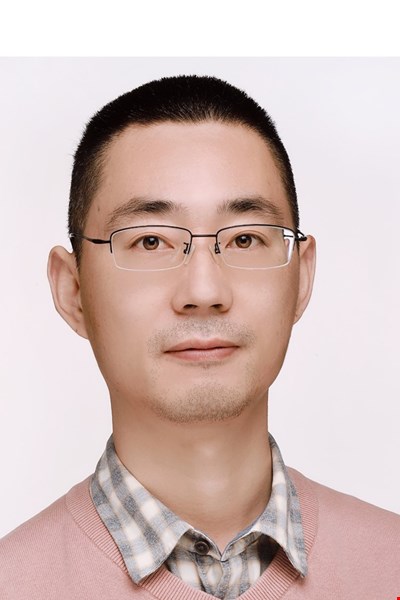
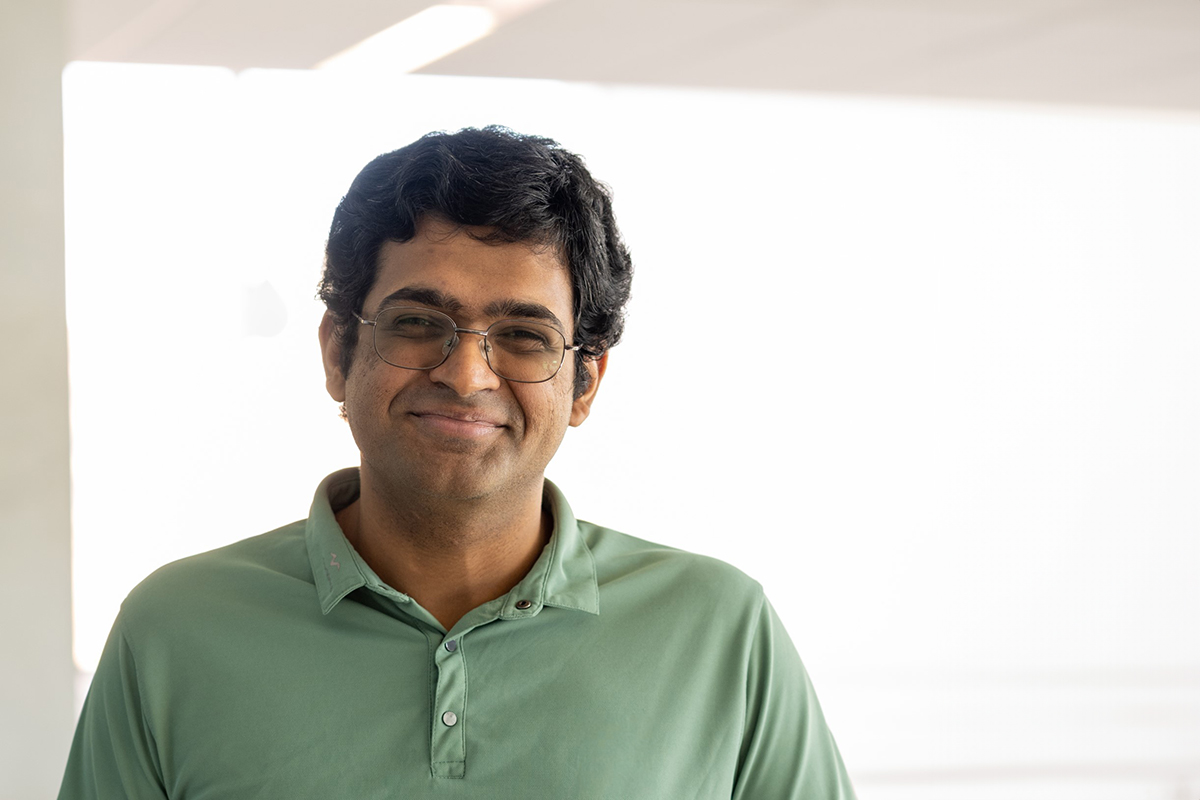
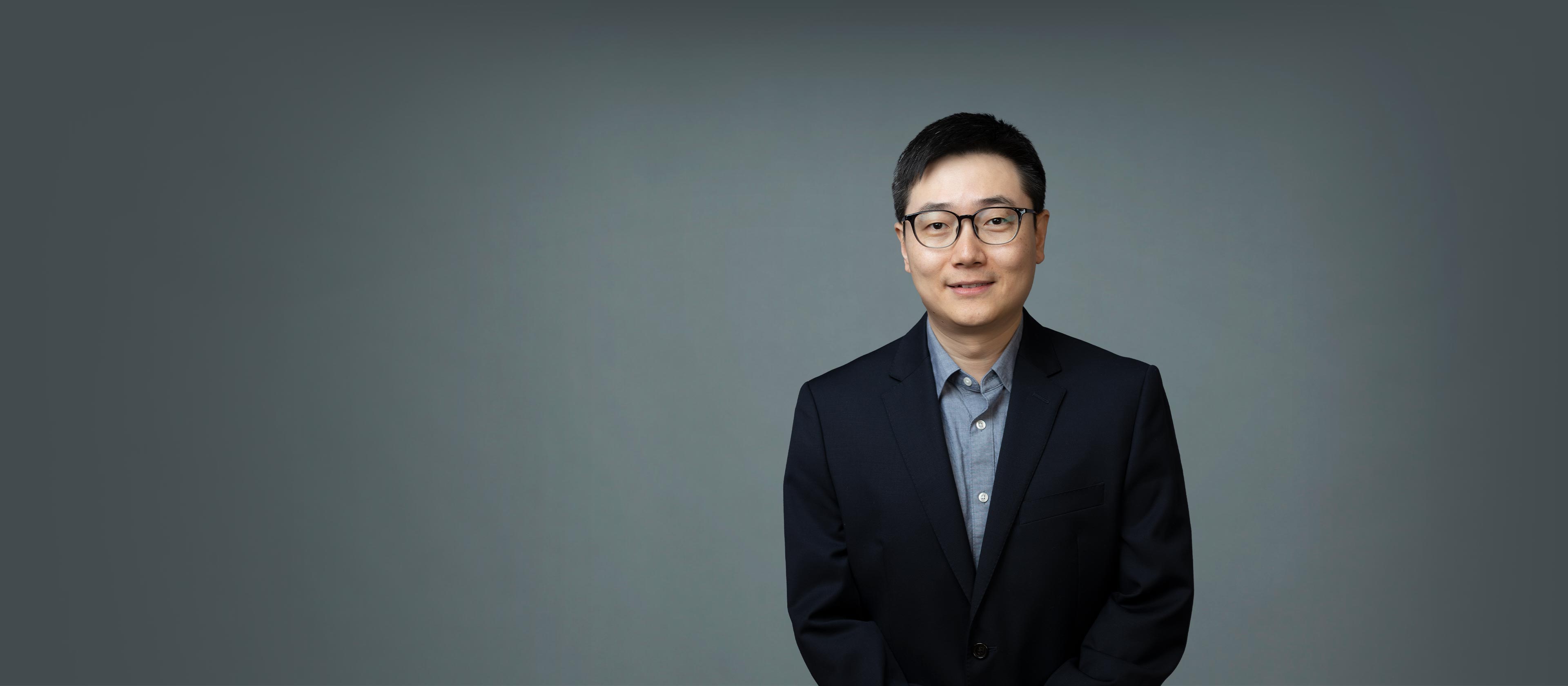
Dr. Lehu Wen is a Lecturer in the Department of Electronic and Electrical Engineering at Brunel University London, affiliated with the College of Engineering, Design and Physical Sciences. He completed his Ph.D. in Electronic Engineering at the University of Kent in 2020. His research focuses on advanced antenna and array designs for wireless communication systems, including metamaterial antennas, metasurface antennas, reflectarray/transmitarray systems, tightly coupled arrays, dual/circular polarization techniques, and mobile terminal antennas. Current work emphasizes wideband performance, polarization reconfigurability, and SAR reduction for mobile applications. Recent publications highlight innovations in dual-polarized vehicular base stations, filtering antennas with integrated analysis, and conformal arrays for wireless power transfer. He has contributed to IEEE journals and conferences as both author and guest editorial chair. Best Student Paper Award, ISAP2019 1/10 Best Conference Paper, iWAT 2022 Best Paper Award (Flash), IEEE MTTS IWS2023 Dr. Wen actively supervises research in wireless antenna technologies and seeks PhD candidates with MSc backgrounds, particularly those funded by government scholarships.
Prof. Dr. Boris Chichkov is a faculty member at Leibniz University Hannover, serving as a Professor at the Institute of Quantum Optics within the Faculty of Mathematics and Physics. He holds multiple leadership positions including membership on the Executive Board, Group Leader of Nanoengineering, and participation in several research task groups including Task Group S2: Optical Materials, Task Group S3: Micro and Nano Photonics, and Task Group M2: Additive/Subtractive Manufacturing. He is also affiliated with the Laboratory of Nano and Quantum Engineering, QuantumFrontiers, and PhoenixD: Photonics, Optics, and Engineering - Innovation Across Disciplines. Prof. Chichkov's research spans multiple cutting-edge fields at the intersection of physics, engineering, and biology. His primary research interests include: Nanotechnology and nanofabrication Quantum optics and photonics Laser physics and applications Bioprinting and tissue engineering Metasurfaces and metamaterials Nanoparticle applications in biomedicine His work demonstrates a strong interdisciplinary approach, bridging fundamental physics with practical applications in medicine and engineering. Prof. Chichkov has pioneered techniques in laser-based fabrication and bioprinting, with significant contributions to the development of advanced optical materials and biomedical devices. Analysis of Prof. Chichkov's recent publications reveals a strong focus on nanotechnology applications in biomedicine, particularly in the areas of laser-based fabrication, metasurfaces, and cryopreservation. His work spans from fundamental quantum optics research to practical applications in dental implants, tissue engineering, and medical device development. The publications show a consistent pattern of interdisciplinary collaboration across physics, engineering, and life sciences. Prof. Chichkov leads the Nanoengineering group and is actively involved in multiple research initiatives at Leibniz University Hannover. His laboratory focuses on advanced laser processing techniques, nanofabrication, and bioprinting applications. The research group collaborates extensively with other institutions through the PhoenixD Cluster of Excellence and QuantumFrontiers, contributing to Hannover's reputation as a center for optics and quantum research.
Ederra Urzainqui Iñigo is a Professor at the Public University of Navarra in the Department of Electrical, Electronic and Communication Engineering. He is affiliated with the Institute of Smart Cities (ISC) and actively participates in the Antenna Research Group. His academic background includes a Doctorate in Telecommunications Engineering obtained in 2004. With an Scopus H-index of 23, he has established himself as a significant contributor to his field. Dr. Urzainqui's research spans advanced antenna design, electromagnetic theory, and high-frequency applications. His work focuses on millimeter-wave and terahertz technologies, gap waveguide systems, metasurfaces, and electromagnetic band gap structures. His research bridges theoretical electromagnetic concepts with practical applications in wireless communications, sensing, and imaging technologies. Over his career, he has published extensively across these domains, demonstrating both depth and breadth in his scholarly contributions. The analysis of his recent publications reveals a strong trend toward terahertz imaging applications, advanced antenna designs for millimeter-wave communications, and innovative approaches to electromagnetic wave manipulation. His work spans fundamental electromagnetic theory to practical device implementation, with particular emphasis on novel antenna configurations, waveguide technologies, and high-frequency circuit design. His research also extends into quantum-related electromagnetic phenomena, indicating a broad intellectual reach across traditional boundaries. Dr. Urzainqui has contributed to numerous research projects and has been involved in various academic collaborations. His work has appeared in prestigious journals including IEEE Transactions on Antennas and Propagation, Optics Express, and Physical Review. His academic service includes participation in doctoral committees and research project evaluations. While specific student mentoring information isn't detailed in the available data, his position as a professor and research group member suggests active involvement in graduate education and research supervision. His laboratory work appears centered around the Institute of Smart Cities, where he likely leads or significantly contributes to research on advanced electromagnetic systems for communication and sensing applications. This environment supports interdisciplinary work connecting antenna technology with broader smart city applications.
Venkat Arun is an Assistant Professor in the Department of Computer Science at the University of Texas at Austin, College of Natural Sciences. His research focuses on making networked systems robust and performant through the application of formal methods. Previously, he completed his PhD at MIT and undergraduate studies at IIT Guwahati. He co-leads the UT Networked Systems Lab (UTNS) and has developed algorithms deployed at Meta. His research interests center around networked systems and formal methods, with a focus on developing conceptual, mathematical, and automated tools to design provably performant networked systems. Arun's work spans internet congestion control, video streaming, privacy-preserving computation, wireless networks, and mobile systems. A common theme across his research is using theoretical ideas to gain insights into real-world systems that would be difficult to discover otherwise. His recent publications demonstrate a strong focus on performance verification and synthesis for networked systems, with significant contributions to congestion control algorithms. His work bridges theoretical foundations with practical implementations, as evidenced by the deployment of his algorithms at Meta. The research spans formal verification techniques, network protocol design, and performance analysis across various networked applications. Scientific Awards: MIT EECS G. M. Sprowls PhD Thesis Award in Computer Science (2024) ACM SIGCOMM Doctoral Dissertation Award Runner-Up (2024) Marconi Society Young Scholar Award (2023) ACM SIGCOMM best student paper award (2022) ACM SIGCOMM best paper award (2017) MIT Jacobs Presidential Fellowship (2017) President of India Gold Medal - IIT Guwahati (2017) KVPY Government of India Scholarship (2013) Venkat Arun currently advises three PhD students: Haoyu Li (co-advised with Aditya Akella), Tony (Jia) Pan (co-advised with Isil Dillig), and Saarth Deshpande (co-advised with Neeraja Yadwadkar). His research group is funded by NSF grants including "Nets: Medium: An End-To-End Framework For Network" (2024) and "FMitF: Performance Verification for Networked Systems" (2024), as well as a generous gift from Mibura (2024). The group is managed by Destiny Turner. He leads several major research projects including Performance Verification and Synthesis, "Solving" Congestion Control, and Metasurfaces with Thousands of Antennas. Arun teaches CS 395T: Performance Analysis of Networked Systems and CS 356: Computer Networks at UT Austin.
Amir Arbabi is an Associate Professor in the Department of Electrical and Computer Engineering at the University of Massachusetts Amherst. He leads the Photonics Laboratory, focusing on experimental and theoretical research in flat optics, photonic integrated circuits, and high-contrast transmitarray metasurfaces. His work bridges nanophotonics and practical applications in wearable electronics, biomedical sensing, and industrial equipment. Education: PhD, University of Illinois at Urbana-Champaign MSc, University of Waterloo BSc, University of Tehran Postdoc/Research Scientist, Caltech Research Interests: Dr. Arbabi's group develops miniaturized optical systems with planar form factors. Their projects include visible metalenses with high focusing efficiency, dispersive metasurface systems, and vertical integration platforms for active devices like lasers and modulators. They emphasize scalable manufacturing techniques such as nanoimprint lithography and atomic layer deposition. Recent Trends: His publications highlight advancements in metalens fabrication (2023), dispersion control via cascaded metasurfaces (2022), and scalable manufacturing of photonic components (2021–2023). Collaborative work spans materials engineering (TiO2, Si3N4), quantum photonics, and THz metasurfaces. Scientific Awards: Best ECE Junior Faculty award (2021) K. C. Yeh Endowed Fellowship (2013) Nick and Katherine Holonyak, Jr. Graduate Fellowships (2011–2012) Advising: Actively recruiting graduate students with backgrounds in electromagnetics, nanofabrication, or optoelectronics. Current advisees include Babak Mirzapourbeinekalaye, Ayyoub Dehmollaian, and Maryam Ghahremani. Former students like Mahdad Mansouree (now at Lumentum Operations LLC) and Andrew McClung (Raytheon Technologies) highlight his lab's industry impact.
Associate Professor Duk-Yong Choi is a faculty member at the Australian National University (ANU) in the Department of Quantum Science and Technology. He leads the Laser Physics, Optics, and Photonics research group, focusing on advanced photonic technologies. His research spans: Integrated Photonics : Design of chip-based devices for microwave signal processing, Brillouin scattering, and nonlinear applications. Metasurfaces & Nanophotonics : Development of dielectric metasurfaces for beam shaping, sensing, encryption, and optical trapping. Chalcogenide Glass : Exploitation of nonlinear properties for supercontinuum generation, mid-IR sensing, and low-loss waveguides. Quantum & Nonlinear Optics : High-harmonic generation, entangled photon sources, and ultrafast optical processing. Recent publications emphasize metasurface innovation (e.g., vector beams, Poincaré beams), integrated mid-IR systems for gas sensing, and Brillouin-based RF photonics. No awards or advised students are listed in the source.
Dragomir Neshev serves as Professor in the Department of Electronic Materials Engineering at the Australian National University and Director of the ARC Centre of Excellence for Transformative Meta-Optical Systems (TMOS) from 2021 to 2027. His career spans over two decades in advanced optical research, with significant contributions to photonics and metamaterials development. He earned his PhD from Sofia University, Bulgaria in 1999, establishing the foundation for his expertise in optical physics and materials science. Neshev's research focuses on cutting-edge optics branches including periodic photonic structures, singular optics, plasmonics, and optical metasurfaces. His work particularly emphasizes dielectric materials, waveguide physics, harmonic generation, and solitary wave phenomena, driving innovation in nanophotonics and optical engineering. This research has positioned him at the forefront of meta-optical systems development. Recent publications demonstrate a clear trajectory toward practical meta-optical applications, particularly in infrared imaging, polarization control, and analog optical computing. His team consistently pioneers dispersion-engineered metamaterials and guided-mode resonance techniques in dielectric structures, enabling breakthroughs in compact optical systems for sensing and imaging. His distinguished recognition includes: Queen Elizabeth II Fellowship (ARC, 2010) Australian Research Fellowship (ARC, 2004) Marie-Curie Individual Fellowship (European Commission, 2001) Academic award for best young scientist (Sofia University, 1999) Highly Cited Researcher (Web of Science, 2021-2023) Fellow of the Optical Society (OSA) Neshev actively supervises graduate researchers while leading major collaborative projects including the National Facility for Performance Characterisation of Infrared Technologies and space-based meta-optical imaging systems. His current research portfolio features significant ARC funding for transformative optical technologies, with particular emphasis on multi-spectral imaging and polarization control through nanostructured materials. As Director of TMOS, he oversees Australia's premier meta-optics research hub, coordinating efforts across multiple institutions to advance meta-optical systems for real-world applications. His leadership extends to specialized teams focusing on tailored metasurfaces for light generation, programming, and detection, creating an integrated ecosystem for optical innovation from fundamental research to commercial implementation.
Dr. Gabriel Goncalves Machado serves as Lecturer in Electronic Engineering at Ulster University's School of Engineering within the Faculty of Computing, Engineering and the Built Environment, Belfast campus. He joined Ulster University in August 2023 after completing a Research Fellowship at Queen's University Belfast's Centre for Wireless Innovation, where he continues a visiting scholar position through early 2025. His teaching responsibilities include Embedded Systems and Sensors for MSc in IoT students. Education: BSc in Electronic Engineering, Federal University of Pernambuco, Brazil PhD in Electronic Engineering (Stealth Technologies Based on Thin Microwave FSS Absorbers), Queen's University Belfast (awarded 2021) Dr. Machado's research program centers on advanced electromagnetic structures with dual focus on next-generation wireless infrastructure and sustainable electronics practices. His primary expertise spans frequency selective surfaces, metasurfaces, and reconfigurable intelligent surfaces for 5G/6G communications, while maintaining strong emphasis on e-waste reduction and energy efficiency in antenna systems. Current projects integrate microwave engineering with UN Sustainable Development Goals through sustainable design methodologies. Analysis of his 28 research outputs reveals evolving specialization from foundational work in microwave absorbers for spacecraft applications toward cutting-edge millimetre-wave RIS development. His recent publications demonstrate increasing industry relevance in wireless propagation challenges, particularly shadow region mitigation and energy-efficient beamforming for future networks. Research Funding: Principal Investigator for 'Building Digital Future using Transformative Technologies: a joint initiative of Ulster University and Brazil' (Department for the Economy, 2024) Dr. Machado maintains active collaboration with Queen's University Belfast's Centre for Wireless Innovation and Brazilian research institutions. His experimental work leverages Ulster University's Engineering Research facilities with focus on sustainable antenna practices and 6G-enabling technologies through international partnerships.
Dr. Judson D. Ryckman is an Associate Professor of Electrical and Computer Engineering at Clemson University's College of Engineering, Computing and Applied Sciences. He leads the Nanophotonics Laboratory and conducts research at the Duke Energy Innovation Center and Advanced Materials Research Laboratory. His work bridges engineering, physics, and biotechnology to develop novel photonic solutions for real-world applications. Dr. Ryckman received his educational training at Vanderbilt University, where he earned both his B.E. and Ph.D. degrees in Electrical Engineering in 2008 and 2013, respectively. His doctoral dissertation was titled "Porous and Phase Change Nanomaterials for Photonic Applications." Dr. Ryckman's research focuses on nanophotonics and silicon photonics, with particular emphasis on developing photonic platforms for applications in sensing, biomedicine, food safety, and computing. His lab specializes in creating integrated optical devices, porous nanomaterials for flat optics, nanofabrication techniques, and colorimetric biosensors that can be read by the naked eye or smartphone. The group's work on hyperchromatic structural color has enabled perceptually enhanced sensing without expensive instrumentation, while their research on silicon photonic integrated circuits has advanced optical security applications. Their publications demonstrate a strong focus on pushing the boundaries of optical sensitivity, miniaturization, and practical implementation. NSF CAREER Award Air Force Office of Scientific Research Young Investigator Program Award Best Student Paper Award at IEEE Group IV Photonics (2012) 2nd Prize for Best Student Paper at IEEE Group IV 2021 As an advisor, Dr. Ryckman mentors numerous graduate and undergraduate students in the Nanophotonics Laboratory. His research is supported by significant grants from the National Science Foundation and the Air Force Office of Scientific Research. He serves on technical committees for conferences such as IEEE Optical Interconnects and reviews for journals published by IEEE and OSA, contributing to the advancement of the photonics field through both research leadership and community service. The Nanophotonics Laboratory operates within Clemson's Advanced Materials Center research park, utilizing state-of-the-art facilities including the Duke Energy Innovation Center and the Advanced Materials Research Laboratory. The lab's interdisciplinary team combines expertise in electrical engineering, materials science, and biotechnology to push the boundaries of photonic device development and application, with ongoing projects spanning from fundamental light-matter interactions to commercializable sensing technologies.
Dr. David R. Smith is the James B. Duke Distinguished Professor of Electrical and Computer Engineering at Duke University's Pratt School of Engineering, with a secondary appointment as Professor of Physics in Trinity College of Arts & Sciences. He serves as Director of the Center for Metamaterials and Integrated Plasmonics at Duke University and holds additional positions as Adjunct Associate Professor at UC San Diego and Visiting Professor at Imperial College London. Dr. Smith received his Ph.D. in Physics from the University of California, San Diego in 1994, following his B.S. degree from the same institution in 1988. His academic credentials have positioned him as a leader in the field of metamaterials research. Dr. Smith's research spans the development and application of metamaterials and plasmonic structures for electromagnetic wave control. His work bridges fundamental physics with practical engineering solutions, particularly in computational imaging using dynamic metasurface apertures. He has pioneered techniques that have revolutionized microwave and millimeter-wave imaging systems, with applications ranging from security screening to nuclear safety. His research also extends to radiation detection, plasma physics for fusion energy, and novel optical devices. Analysis of his recent publications reveals a consistent theme of using metasurface technology to solve challenging problems in electromagnetic wave manipulation, with applications across multiple domains including imaging systems, radiation detection, and wireless communications. His work demonstrates the versatility of metamaterials across different frequency ranges and applications. Fellow of the National Academy of Inventors (2016) Highly Cited Researcher (Thomson Reuters, 2014) Fellow of the Optical Society of America (2013) Top Ten Breakthroughs for 2006 (Science Magazine, for Cloaking) Top 50 Researchers (Scientific American, 2008) Top Ten Breakthroughs for 2003 (Science Magazine, for Negative Index Materials) Top 100 Science Accomplishments for 2006 (Discover Magazine, for Cloaking) Descartes Prize for Research (European Union, 2008) Fellow of the Institute for Electrical and Electronics Engineers (1986) Dr. Smith has secured significant research funding for projects including "Metasurface Antenna for Cloud-Targeting Radar (MACTRad)" (2023-2026), "Metasurface Antennas" (2023-2025), and "Large-scale Adaptive Metamaterial Apertures for Space (LAMAS)" (2023-2024), awarded by MetaCept, Inc., Kymeta Corporation, and NASA. These grants support his innovative work in developing next-generation metamaterial-based technologies. As Director of the Center for Metamaterials and Integrated Plasmonics, Dr. Smith leads a multidisciplinary research team working at the intersection of physics, electrical engineering, and materials science. His laboratory has been instrumental in advancing metamaterials from theoretical concepts to practical applications, particularly in imaging systems and electromagnetic wave control technologies.
Haogang Cai is an Assistant Professor in the Department of Radiology at NYU Grossman School of Medicine. He holds a PhD from Columbia University and leads the Cai Lab, focusing on advanced nano-bio interfaces for biosensing and diagnostics. Education: PhD from Columbia University Current Position: Assistant Professor, Department of Radiology, NYU Grossman School of Medicine Dr. Cai's research spans nanotechnology, biosensing, and cell mechanobiology, with a particular emphasis on metasurface-based optical biosensors and ligand-cell interaction studies. His work integrates nanophotonics, biomedical engineering, and surface engineering to develop innovative diagnostic platforms. Recent publications highlight advancements in TiO₂ nano-biopatterning, dielectric metasurfaces, and CRISPR-Cas13a sensing technologies. His team has also pioneered superhydrophobic-optofluidic devices and explored liquid crystal tunable metasurfaces for visible light applications. The Cai Lab employs cutting-edge techniques like microstereolithography and super-resolution microscopy to analyze cell adhesion, ligand positioning, and nanoscale optical transmission. These studies bridge biophysics, materials science, and biomedical diagnostics.
Ozlem Ozgun is a Professor in the Department of Electrical and Electronics Engineering at Hacettepe University, Ankara, Turkey. She serves as Vice Dean of the Faculty of Engineering (2021-present) and previously held leadership roles including Department Vice Chair (2017-2020) and Chair of the Electromagnetic Fields and Microwave Techniques Division (2021-2024). Her academic journey includes positions at TED University as Founding Department Chair (2012-2015) and at Middle East Technical University-Northern Cyprus Campus as Assistant Professor (2008-2012). Education: Ph.D (2007): Middle East Technical University, Dept. of Electrical and Electronics Engineering M.Sc (2001): Bilkent University, Dept. of Electrical and Electronics Engineering B.Sc (1998): Bilkent University, Dept. of Electrical and Electronics Engineering Professor Ozgun's research focuses on computational electromagnetics with emphasis on transformation electromagnetics, finite element methods, and radio wave propagation. Her work bridges theoretical electromagnetics with practical applications in radar systems, antenna design, and wireless communications. She has pioneered techniques using coordinate transformations to solve complex electromagnetic problems, developing innovative methods for modeling scattering phenomena, wave propagation, and metamaterial applications. Her research has significant implications for radar cross-section reduction, microwave imaging for medical applications, and 5G communication systems. Analysis of her recent publications reveals a consistent focus on advancing computational techniques in electromagnetics, particularly through transformation optics and domain decomposition methods. Her work shows increasing integration of machine learning approaches with traditional electromagnetic modeling, especially in radar cross-section analysis and inverse synthetic aperture radar techniques. There's also a strong emphasis on practical tools development, with multiple software packages released for public use including PETOOL, GO+UTD, and VectGUI. Scientific Awards: Hacetepe Science Award (2024) IEEE Antennas and Propagation Society Distinguished Lecturer (2025-2027) Top 2% of the 'career-long impact' category in the world's most influential scientists list (2023-2024) URSI elevation to senior membership (2020) IEEE elevation to senior membership (2013) Prof. Dr. Leopold B. Felsen Award for Excellence in Electromagnetics (2009) Professor Ozgun has supervised 15 graduate students to completion, with research spanning radar cross-section computation, electromagnetic scattering, and microwave imaging. She has secured multiple research grants including TÜBİTAK-TEYDEB and TÜBİTAK-ARDEB projects focused on high-frequency radar analysis and electromagnetic modeling. Her professional service includes significant editorial roles and leadership positions in URSI-Turkey where she served as President of the Steering Committee (2018-2023). She is actively involved in developing computational tools for electromagnetic education and research, with several MATLAB-based applications available for public use. Her research group maintains strong collaborations with international institutions including Penn State University, and she has established a productive research environment focused on advancing computational electromagnetics through innovation in numerical methods and practical applications.
Mohamed Hesham Mohamed Mostafa is a Doctoral Researcher at Aalto University's Department of Electronics and Nanoengineering. His academic affiliation spans research in electromagnetics, metamaterials, and temporal modulation techniques. Research Interests: His work focuses on electromagnetic wave manipulation through time-varying systems, including temporal interfaces in bianisotropic media and coherently time-varying metasurfaces. Key areas include asymmetric scattering, polarization splitting, and bandwidth engineering for antennas. Publications: Recent contributions examine advanced concepts in electromagnetic theory, such as direction-dependent wave transformations in artificial moving media and spin-dependent phenomena at chiral temporal interfaces. His research bridges theoretical analysis with experimental implementations. Contact: Email: mohamed.mostafa@aalto.fi
Adrien Pelat is a Professor at Le Mans University , affiliated with the Acoustics Laboratory of the University of Le Mans (LAUM) and the National School of Engineering of Le Mans (ENSIM) . His research focuses on vibro-acoustic control of mechanical structures through material and geometric optimization, particularly leveraging the Acoustic Black Hole effect for vibration damping, wave propagation analysis in periodic/graded media , and nonlinear acoustics . He also specializes in theoretical and experimental modeling for industrial applications. Education: PhD in Acoustics (2009), University of Maine. Research Themes: Elastic wave propagation, nonlinear vibration mitigation, metamaterials, opto-acoustic methods. Teaching: Delivers courses on vibration and acoustic engineering at ENSIM. Leads the Vibroacoustics Engineering Degree program (60 students/year) and ENSIM's Industrial Relations Department . Scientific Contributions: Co-authored 38+ publications (Journal of Sound and Vibration, Physical Review Materials). Key work includes Acoustic Black Hole phononic crystals , thermally tunable resonators , and vibro-impact damping systems . Served as president of Inter-Noise 2024 and leadership roles in the French Acoustic Society (2019-2023). Technical Expertise: Combines analytical modeling , finite element analysis , and experimental validation using optical measurement techniques (e.g., laser vibrometry). Collaborates on ANR projects like ETNA (Enhanced Acoustic Black Holes) and METARoom (reconfigurable acoustic treatments).
Yang Zhao is an Assistant Professor at the University of Illinois Urbana-Champaign, affiliated with the Carle Illinois College of Medicine and the Biomedical and Translational Sciences department. His research focuses on nanophotonics, metasurfaces, and biomedical imaging technologies. Recent Courses Taught: ECE 529: Light-Matter Interactions ECE 570: Nonlinear Optics ECE 329: Fields and Waves I ECE 110: Introduction to Electronics Yang's work combines light-matter interactions with biomedical applications, including advanced nanophotonic platforms for chiral molecule detection and label-free imaging techniques. He has pioneered optical force nanoscopy and plasmonic-enhanced sensing methods. Scientific Awards: NIH/NIGMS Maximizing Investigators' Research Award (MIRA ESI) (2025) Dean's Awards for Early Innovation and Research Excellence (2024) IEEE Best Project Award (2023) Engineering Council Outstanding Advisor Award (2023) Yang's lab has trained award-winning students, including recipients of the Paul D. Coleman, Elsa and Floyd Dunn, and Samsung Technology Track Scholarships. His team develops nanophotonic solutions for biomedical diagnostics and sustainable wearable devices.