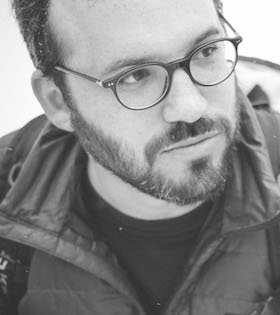
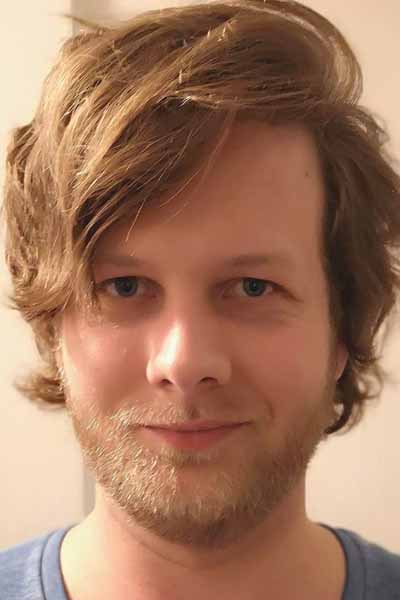
Alejandro Pérez Carballo is an Associate Professor and Graduate Program Director in the Department of Philosophy at the University of Massachusetts Amherst. He specializes in philosophy of mind, language, metaethics, and formal epistemology, with additional work in metaphysics and philosophy of mathematics. He joined UMass in 2013 after a postdoctoral fellowship at the University of Southern California (USC). His research explores intersections between epistemic utility theory, expressivism, and conceptual evaluation. Education: PhD in Philosophy from MIT, prior studies in musicology (Paris IV), logic (Paris I/VII), and philosophy (Paris I). Office: South College E321 | Email: apc@umass.edu Recent courses include graduate seminars on ethics, philosophy of language, and formal epistemology. Research Interests His work bridges formal methods and traditional philosophical questions, addressing topics like: Epistemic rationality and decision theory Expressivist semantics for normative language Conceptual engineering and pragmatic evaluation Metaphysical and epistemic modality Publications Pérez Carballo's recent work focuses on epistemic utility theory (2023 papers in Ergo and Mind ), expressivist accounts of communication (2016 Ethics ), and conceptual ethics (2020 Conceptual Engineering volume). His earlier contributions include analyses of deontic paradoxes and semantic interpretation frameworks. Academic Service He currently directs the graduate program and has taught over 20 courses at UMass, including advanced topics in epistemology, ethics, and logic. His advising focuses on fostering rigorous argumentation and interdisciplinary engagement in early-career philosophers.
Derek Egan Anderson serves as a Senior Permanent Lecturer in Philosophy at Boston University, where he has taught since 2015. Holding a B.A. from Rutgers University and a Ph.D. from the University of Texas at Austin, he maintains an active presence in both undergraduate instruction and cutting-edge philosophical research. His academic credentials include: B.A. from Rutgers University Ph.D. from the University of Texas at Austin Anderson's research program centers on the dynamic interplay between epistemology, language, and social structures. His foundational work in feminist epistemology and social epistemology rigorously examines how power dynamics shape knowledge validation processes, particularly through lenses of race and gender. This manifests in his development of intersectional metasemantic frameworks that analyze politically contested terminology and truth claims in social justice contexts. His 2021 monograph Metasemantics, Intersectionality, and Truth in the Misinformation Age (Palgrave Macmillan) represents a landmark contribution to understanding epistemic violence in digital discourse. Current investigations extend into artistic cognition and scientific knowledge production, as evidenced by his 2025 publication How art contributes to scientific knowledge . Anderson's recent publications reveal three dominant thematic clusters: (1) metasemantic analyses of intersectionality and political truth, (2) epistemological examinations of safe spaces and linguistic hijacking, and (3) empirical studies on philosophical cognition. His 2021 output alone comprises 14 major articles exploring semantic corruption, regimes of truth, and third-order epistemic exclusion in academic philosophy. Teaching responsibilities include core courses Reason & Argumentation (PH 160), Introduction to Ethics (PH 150), and Introduction to Philosophy (PH 100), with specialized offerings in Metaphysics & Epistemology (PH 340) and Philosophy of Gender and Sexuality (PH 256/WS 396). Contact details: Office STH 640A, Wednesday office hours 11:30am-1:30pm (Spring 2023), email deanders@bu.edu, phone 617-353-4584.
Thomas Bullemore is a DPhil candidate in Law at New College, University of Oxford, and holds a Roche Scholarship. He also serves as a part-time Lecturer in Legal Philosophy at the University of Chile (since 2019) and previously at Diego Portales University (2020–2021). His current research focuses on metaethics, exploring the foundations of normativity, epistemic access, and the application of values in AI under the supervision of Professors David Enoch and Timothy Williamson. He collaborates with Professor Ruth Chang on projects about rationality and hard choices. Education: DPhil Law (Ongoing), New College, University of Oxford MPhil in Law (Distinction), University of Oxford LLB, [Institution not specified] Research interests include the modal status of practical normativity, intensional frameworks in metaphysics, referential stability of normative predicates, and collective agency. Recent conference presentations address legal realism, grounding collective imaginings, and metasemantic solutions to the Benacerraf problem in mathematics. Awards: Roche Scholarship (New College, Oxford) MPhil Distinction (Oxford) He contributes to the Jurisprudence in Oxford Research Group and maintains affiliations with institutions in Chile and the UK. His work bridges legal philosophy, ethics, and artificial intelligence, emphasizing interdisciplinary approaches to normative questions.
Graham Moore is a Lecturer in Philosophy at the University of British Columbia Okanagan, affiliated with the Department of Economics, Philosophy and Political Science within the Irving K. Barber Faculty of Arts and Social Sciences. He specializes in philosophy of language, theories of truth and reference, and teaches courses such as Introduction to Philosophy, Logic and Critical Thinking, Metaphysics, and Bioethics. His research explores moderate views on truth and reference, addressing cross-linguistic truth theorizing and the implications of deflationary/inflationary approaches. Notable publications include works on truth theory (2022, 2025) and cross-language reference analysis (2020). Moore contributes to both analytic philosophy and semantics, engaging with foundational questions in metaphysics and logic. No academic awards or grants are explicitly listed in the provided materials. He maintains an office in ART 253 and can be reached via email at graham.moore@alumni.ubc.ca. There is no mention of lab affiliations or collaborative teams in the available data.
Michael Caie is an Associate Professor (tenured) in the Department of Philosophy at the University of Toronto. His research focuses on philosophical logic, epistemology, philosophy of language, and metaphysics. He holds a Ph.D. from UC Berkeley (2011) and a B.A. from McGill University (2004). Prior to Toronto, he taught at the University of Pittsburgh, Syracuse University, and the University of Rochester. His work addresses topics such as semantic indecision, self-locating belief, credal consequentialism, and metaphysical indeterminacy. Notable publications include Rational Probabilistic Incoherence (Philosophical Review, 2013), Calibration and Probabilism (Ergo, 2014), and A Problem for Credal Consequentialism (OUP, 2018). He has received multiple honors, including the Fink Prize (2011) and dual Philosopher’s Annual Honors (2012, 2013). Caie’s teaching spans advanced logic courses, epistemology, and semantic paradoxes. He has contributed to interdisciplinary initiatives, including the Philosophy and Statistics Search Committee at Toronto. His research integrates formal methods with traditional philosophical inquiry, addressing foundational issues in belief, language, and rationality.
Lukas Lewerentz is a Research Fellow holding dual positions: as a postdoc at the Department of Philosophy at Justus Liebig University Giessen and at Heinrich Heine University Düsseldorf's Chair of Epistemology and Philosophy of Language (project: 'Norms and Nature of Acceptance'). His research focuses on philosophy of language, semantics/pragmatics interface, and epistemology, particularly exploring context-dependence in communication and comparative analysis of linguistic vs pictorial assertion. He earned his DPhil from the University of Oxford (2022) under Professors Paul Elbourne and Ofra Magidor, with a thesis proposing a novel theory of conversational contexts to address challenges in situation semantics. Prior education includes studies at the University of Edinburgh and Humboldt University Berlin. Current research includes semantics of definite labels, quantifier theory, and pictorial communication mechanisms. He teaches logic courses (e.g., 'Intermediate Logic,' 'Philosophy of Lying') and supervises theses in philosophy of language. His work has appeared in journals like Journal of Philosophical Logic and Synthese .
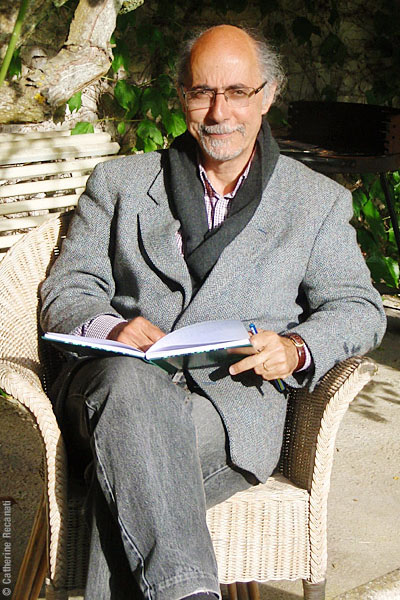
François Recanati is a Professor at Collège de France since 2018, previously serving as Directeur d'Études at École des Hautes Études en Sciences Sociales (EHESS) and Researcher at CNRS. His academic roles include Director of the Institut Jean-Nicod, a research lab at École Normale Supérieure focusing on philosophy, linguistics, and cognitive science. He has held visiting positions at Harvard, UC Berkeley, and University of St Andrews. His research interests span philosophy of language, philosophy of mind, pragmatics, semantics, analytic philosophy, and cognitive science. Notable contributions include theories on mental files, truth-conditional pragmatics, and contextual semantics. He has authored over 100 articles and a dozen monographs, including Literal Meaning (2004) and Mental Files in Flux (2016). Recanati has received prestigious awards such as the CNRS Silver Medal (2014), American Academy of Arts and Sciences membership (2012), and the Pufendorf Medal (2008). He directed the ERC-funded 'Context, Content and Compositionality' project (2009–2013). His academic contributions extend to editorial roles, serving on journal boards and editing book series. He has delivered major lectures including the Pufendorf Lectures (Lund, 2008) and Frege Lectures (Tartu, 2014).
Isabella Bartoli is a Doctoral Research Fellow in Philosophy at the University of Oslo and the University of St. Andrews. Her research focuses on integrating moral considerations into metasemantics, particularly exploring social externalism and semantic expertise through the lens of feminist philosophy of language and conceptual engineering. She is affiliated with the Faculty of Humanities and holds memberships in the Arché Philosophical Research Centre for Logic, Language, Metaphysics and Epistemology, and the Oslo Mind, Language and Epistemology Network. Academically, she holds a BA in Philosophy, International, and Economic Studies from Ca' Foscari University of Venice, and an MA in Philosophy from the University of Oslo. Her MA thesis examined barriers to conceptual implementation in Conceptual Engineering for socially significant terms, supervised by Øystein Linnebo and Joey Pollock. Her research interests span feminist philosophy of language, social ontology, and the application of conceptual engineering to socially significant categories. She collaborates with supervisors Joey Pollock, Derek Ball, and Sanford Goldberg across both institutions.
Max Kölbel serves as a full Professor ( Univ.-Prof. ) in the Department of Philosophy within the Faculty of Philosophy and Education at the University of Vienna. His academic profile demonstrates sustained leadership in analytic philosophy with emphasis on conceptual analysis and relativism. Current research initiatives include major collaborative projects addressing philosophical methodology and epistemic crises. His research centers on relativism , conceptual analysis , and philosophy of language , examining how meaning, truth, and knowledge operate across contexts. Key interests include response-dependent properties, perspectival content, and the normative dimensions of conceptual engineering. His fingerprint analysis reveals strong engagement with Relativism (100%), Representational Content (50%), and Mental State (25%) topics. Recent publications trend toward metaphilosophical inquiry and conceptual revision , particularly through the PACE project which investigates how concepts evolve to meet societal needs. His 2023-2022 work shows increased focus on semantic plasticity and ameliorative conceptual practices , moving beyond traditional truth-conditional semantics toward normative frameworks for concept evaluation. Visiting Fellow (2013) Kölbel actively shapes philosophical discourse through editorial work and conference organization. He co-organizes the annual Truth workshop series and the 2025 PACE/KIC Metaphilosophical Workshop for PhD Researchers. His 51 recorded activities include 27 talks, 4 journal editorships, and participation in government-related philosophical consultations. Current projects include the €2.1M ERC-funded Knowledge in Crisis initiative (2023-2028) examining epistemic breakdowns in democratic societies. He leads the international Philosophy as Conceptual Engagement (PACE) network developing frameworks for concept evaluation. Recent collaborations include workshops with Jason Stanley (2024) on linguistic representation and Truth workshops with Benjamin Schnieder. His research group focuses on applying conceptual engineering to contemporary issues like epistemic polarization and democratic knowledge institutions.
Professor Kasia Jaszczolt is Professor of Linguistics and Philosophy of Language at the University of Cambridge, where she is affiliated with the Faculty of Modern and Medieval Languages and Linguistics and the Department of Theoretical and Applied Linguistics. She is also a Professorial Fellow at Newnham College, where she serves as Director of Studies in Linguistics. Joining Cambridge in 1995 as an Assistant Lecturer, she progressed through the ranks to become a full Professor in 2010. She previously taught at Oxford, Brighton, and Sussex universities. Her educational background includes Master's degrees in English and Linguistics (1987) and Philosophy (1988) from the University of Łódź, Poland, followed by a D.Phil. in Linguistics and Philosophy from the University of Oxford (1992), where she was a Rawnsley Scholar at St Hugh's College and previously a Soros Scholar at Somerville College. Jaszczolt's research sits at the intersection of linguistics and philosophy, with particular focus on semantics, pragmatics, and the philosophy of language. She developed the influential theory of Default Semantics, which proposes 'dynamic functional propositions' as a way to capture meaning as it evolves in discourse. Her recent work centers on two major projects: (i) dynamic meaning in discourse, where she develops the concept of a functional, dynamic proposition, and (ii) the semantics, pragmatics, and metaphysics of time, particularly human concepts of time and time flow as externalized in different languages. Her research bridges linguistic analysis with philosophical inquiry, examining how language reflects and shapes our understanding of fundamental concepts. Her scholarly output shows a clear evolution from foundational work on propositional attitude reports and semantic ambiguities toward more expansive investigations of self-expression across languages and cultures, and most recently to comprehensive examinations of time representation. The articles demonstrate increasing interdisciplinary engagement, connecting linguistics with philosophy of mind, cognitive science, anthropology, and healthcare communication. Member of Academia Europaea (2012) Alumnus VIP, University of Łódź (2015) Throughout her career, Jaszczolt has secured significant research funding, including from The Leverhulme Trust for projects on Default Semantics (2003-4) and Expressing the Self: Cultural Diversity and Cognitive Universals (2014-17). She currently collaborates on the CHRONOS project 'Rethinking and Communicating Time' with Universitat Autònoma de Barcelona. She serves as General Editor of the Oxford Studies of Time in Language and Thought book series and sits on numerous editorial boards including Journal of Pragmatics and Intercultural Pragmatics. Her academic leadership includes serving as President of the Cambridge Institute of Language Research and Head of Department of Linguistics (2009-11). Based at Newnham College, Jaszczolt maintains an active research group focused on time representation and discourse meaning. She collaborates internationally, particularly with researchers in Barcelona on temporal linguistics, and with scholars across Europe on cross-cultural aspects of self-expression. Her work has created a distinctive approach that bridges formal linguistic analysis with philosophical inquiry into fundamental concepts.
Christine Tiefensee is a Professor of Philosophy at the Frankfurt School of Finance & Management, Germany. Her academic journey includes studies in philosophy and political science at the universities of Mannheim, Mainz, and Nottingham, followed by advanced degrees at the University of Cambridge (M.Phil. and Ph.D. in 2011). Her research focuses on metaethical questions surrounding normativity , integrating these with debates in philosophy of language and social science. Key areas include moral realism, error theory, and inferentialist approaches to ethics. She has held significant roles, including Vice President of the Society for Analytic Philosophy (2016-2022), and has received the Frankfurt School Teaching Award (2018). Recent publications explore semantic challenges to moral error theory, the relationship between moral doctrines and expressivism, and the implications of relaxed realism. Her work bridges abstract metaethical debate with practical concerns in political philosophy and collective responsibility. Scientific Awards: Frankfurt School Teaching Award (2018)
Dr. Will Gamester is a Lecturer in Philosophy at the University of Leeds , affiliated with the School of Philosophy, Religion and History of Science . His expertise spans foundational questions in philosophy of language, mind, and truth, with a focus on metaethics and paradoxes. Education: PhD in Philosophy, MA in Philosophy, BA in Philosophy Research Interests include: Philosophy of language Philosophy of mind Truth and metasemantics Expressivism and metaphysics Scientific Awards: British Academy Post-Doctoral Research Fellowship