Gregor Kiczales is a Professor of Computer Science at the University of British Columbia , with a career spanning over three decades. His work focuses on programming language design, modularity, and aspect-oriented programming (AOP). Primary affiliation: University of British Columbia Verification email: gregor@cs.ubc.ca Kiczales' research centers around modularity and aspect-oriented programming , with significant contributions to understanding crosscutting concerns, developing AOP frameworks like AspectJ, and exploring novel abstractions for software systems. His work includes: Foundational research in AOP semantics and implementation Studies on code-design alignment and software architecture Developing registration-based abstractions and late-binding mechanisms Investigating scalability challenges in AOP systems
Benjamin Lee Greenman is an Assistant Professor at the Kahlert School of Computing , part of the John and Maria Price College of Engineering at the University of Utah. His research focuses on programming languages, gradual/migratory type systems, formal methods, and human factors in software development. He holds a Ph.D. from Northeastern University (2020), a CIFellows postdoc at Brown University (2020–2022), and degrees from Cornell University (B.S. in ILR, M.Eng. in CS). Key projects include: Forge: A tool for teaching formal methods with lightweight model finding. FlowFPX: Tools for debugging floating-point exceptions in scientific computing. LTL Tutor: An adaptive learning system addressing temporal logic misconceptions. Gradual Typing Benchmarks: Evaluating performance and guarantees of type systems. His work emphasizes rigorous methods for language design, including empirical studies, performance evaluation, and human-centered approaches. Recent contributions include exploring misconceptions in LTL education and advancing type system interoperability between typed and untyped code. Teaching roles include courses on compilers, software verification, and programming languages. He advocates for practical tools like Rhombus (Python-like syntax with Lisp macros) and Static Python ’s sound gradual typing system.
Benjamin Delaware is an Assistant Professor in the Department of Computer Science at Purdue University since 2016. He earned his Ph.D. in Computer Science from the University of Texas at Austin in 2013 under William Cook and Don Batory, following an M.Sc. in Computer Science from Washington University in St. Louis (2007) and a dual B.S. in Computer Science and B.A. in Russian from Truman State University (2005). Research focuses on program synthesis , formal verification , and relational program properties . Key contributions include KestRel (relational verification), PALM (LLM-assisted proof automation), and Clotho (distributed system testing). His publications span top venues like OOPSLA, PLDI, and POPL, with recent work (2025) on coverage-type-guided synthesis and LLM-integrated proof repair . He has received multiple scientific awards , including a SIGPLAN Distinguished Paper Award (2023) and CRII Award from NSF (2018). Ben advises a research group producing graduates such as Qianchuan Ye (now at SUNY Buffalo) and Kia Rahmani (UT Austin postdoc). He teaches graduate courses on program reasoning (CS560) and programming language design (CS456/CS565), with earlier teaching experience at UT Austin. Active in academic service , he served as Program Committee Co-Chair for RocqPL 2026 and CoqPL 2025 , and as Diversity, Equity, and Inclusion Chair at POPL 2023. His grants include NSF funding for input generator verification (2023-2026) and Cisco research on privacy-preserving computation (2022-2023).
Neil Julien Ross is an Associate Professor in the Department of Mathematics at Dalhousie University. His research primarily focuses on quantum computing and quantum programming languages, with extensive contributions to quantum circuit design, optimization, and formal verification methods. He maintains an active research profile with numerous publications in top-tier quantum computing conferences and journals. His research interests span: Quantum circuit synthesis and optimization techniques Formal methods for quantum programming languages (e.g., Proto-Quipper) Algebraic structures in quantum computation Quantum gate universality and resource theory Category theory applications in quantum information Ross's recent publications demonstrate a consistent focus on advancing quantum circuit design methodologies, particularly through symbolic synthesis techniques and formal verification approaches. His work frequently bridges theoretical computer science, algebraic structures, and practical quantum implementation challenges.
Yizhou Zhang is an Assistant Professor at the Cheriton School of Computer Science, University of Waterloo. He specializes in programming language design and implementation, focusing on balancing expressive power with strong guarantees through language abstractions and compiler verification. Designing modular, type-safe language systems Probabilistic programming and inference optimization Algebraic effects and control flow management His recent publications explore lexical effect handlers, certified compiler frameworks, and nested polymorphism models. Awards include the ACM SIGPLAN Distinguished Paper Award (2023) for his work on probabilistic program compilation. Current advisees include PhD candidates Cong Ma, Zhaoyi Ge, Jianlin Li, and Ende Jin. He has served on program committees for POPL, PLDI, and OOPSLA conferences.
Qirun Zhang is the Catherine M. and James E. Allchin Early Career Associate Professor in the School of Computer Science at Georgia Institute of Technology. His research focuses on program analysis, compiler optimization, and formal language theory, with numerous publications in top-tier programming language and software engineering conferences including PLDI, POPL, OOPSLA, and FSE. He teaches courses on compilers, program analysis, and software testing. Dr. Zhang's research interests center on improving software reliability and security through advanced program analysis techniques. He approaches problems from perspectives including computational complexity, analytic combinatorics, graph theory, and formal languages. His work often bridges theoretical foundations with practical applications in compiler design and program verification. His recent publications show a strong focus on context-free language reachability, Dyck-language based analyses, and SMT solving techniques. His research demonstrates consistent innovation in making program analysis more precise while maintaining scalability, with applications ranging from debug information validation to software debloating and type inference. PLDI Distinguished Paper Award (2020) SIGSOFT Distinguished Paper Award (2023) OOPSLA Distinguished Artifact Award (2022) Dr. Zhang actively mentors PhD and MS students, with current advisees including Camille Bossut and Benjamin Mikek. His service to the academic community includes Artifact Evaluation Co-Chair roles for PLDI 2025 and 2026, and program committee membership for numerous top conferences including PLDI, POPL, and OOPSLA. He leads research projects including SLOT, Context-Free Language Reachability with Transitive Redundancy Elimination, and Debug Information Validation.
Dr. Sankha Narayan Guria is a Professor at the University of Kansas specializing in programming languages research. He completed his PhD at the University of Maryland, College Park and has industry experience at Meta (Facebook), BrowserStack, and Firefox. His primary research focuses on programming language theory, type systems, and automated program synthesis techniques. His research explores cutting-edge techniques in program verification and synthesis, including abstract interpretation-guided synthesis, refinement types for security applications, and effect-guided program synthesis. His work consistently appears at top-tier conferences including PLDI, ECOOP, and SPLASH. Dr. Guria actively contributes to the programming languages community through committee service, including roles as Artifact Evaluation Co-Chair for SPLASH/OOPSLA (2023-2025) and committee member for PLDI Research Artifacts (2020-2026). He maintains an active research profile with publications spanning programming language design, type systems, and formal methods.
Magnus O. Myreen is a Professor in the Department of Computer Science and Engineering at Chalmers University of Technology, Sweden. He has been with Chalmers since 2014, becoming a tenured Associate Professor in 2015 and being promoted to full Professor in June 2023. Myreen has an extensive record of service to the programming languages and formal methods communities, including serving on program committees for major conferences like PLDI, POPL, ICFP, and CPP, and chairing the steering committee for the ITP conference series since November 2023. Myreen received his academic training at prestigious institutions: B.A. in Computer Science at the University of Oxford, tutored by Dr. Jeff Sanders Ph.D. on program verification in 2009 at the University of Cambridge, supervised by Prof. Mike Gordon Myreen's research focuses on program verification, interactive theorem proving, and compiler verification. He is best known for his work on the CakeML project, which is an ML-style language with a formal semantics and a growing ecosystem of proofs and tools that support construction of verified applications. As he states on his website, "My most recent work has focused on CakeML, which is an ML-style language with a formal semantics and a growing ecosystem of proofs and tools that support construction of verified applications. As far as I know, the CakeML compiler is the first verified compiler to have been bootstrapped." His research spans several key areas: Decompilation into logic — verification of machine code Proof-producing synthesis from logic Verified Lisp and ML runtimes Connecting things up: verified stacks Myreen's publication record shows a strong focus on verified compilation and theorem proving, particularly through the CakeML ecosystem. His work consistently bridges the gap between theoretical foundations and practical implementation, with numerous papers on verified compilers, program verification, and theorem proving. A significant trend in his recent work (2021-2024) has been extending CakeML's capabilities to handle more complex language features, improve performance, and verify increasingly sophisticated compilation techniques including bootstrapping and dynamic computation. Myreen has received several prestigious awards and recognitions: Winner of the BCS Distinguished Dissertation Competition 2010 for his PhD work Royal Society Research Fellow (UK) since 2012 ACM SIGPLAN Most Influential POPL Paper Award for the 2014 CakeML paper Amazon Research Award for his proposal "Compiling Dafny to CakeML" Myreen has advised several PhD students to completion, including Alejandro Gomez (Sep 2017 – Jun 2023), Oskar Abrahamsson (Aug 2017 – Dec 2022), and Andreas Loow (Sept 2016 – Sep 2021). He also collaborated with postdocs including Hira Syeda, Thomas Sewell, and Johannes Aman Pohjola. His research has been supported by various funding sources, though specific grants aren't detailed in the provided text. Notably, he received an Amazon Research Award for his work on compiling Dafny to CakeML, and his CakeML project has clearly attracted significant attention in the programming languages and formal methods communities. Myreen leads research on the CakeML project, which has grown into a substantial ecosystem for verified compilation. The project involves a team of researchers working on various aspects including compiler verification, program synthesis, and theorem proving. Myreen also collaborates with researchers at other institutions, as evidenced by his visits to EPFL (meeting Viktor Kuncak, Martin Odersky, and James Larus) and NUS (visiting Ilya Sergey's group). In October 2023, he began a ten-month sabbatical at Cambridge UK, where he worked part-time for Arm Ltd., indicating ongoing industrial collaboration.
Kunle Olukotun is a Professor of Electrical Engineering and Computer Science at Stanford University's School of Engineering, where he has been faculty since 1991. He directs the Stanford Pervasive Parallelism Lab (PPL) and co-leads the Transactional Coherence and Consistency (TCC) project. His research focuses on computer architecture, parallel programming environments, and scalable parallel systems. Key areas include chip multiprocessors (CMPs), transactional memory systems, domain-specific languages (DSLs) for heterogeneous computing, and hardware-software co-design for machine learning workloads. His work bridges theoretical foundations with practical systems implementation. Notable contributions include the Stanford Hydra research project (one of the first chip multiprocessors with thread-level speculation), founding Afara Websystems (acquired by Sun Microsystems), and developing the Niagara processor architecture. His DSL frameworks like Green-Marl and Spatial enable efficient graph analysis and hardware acceleration. His publications reveal strong trends in parallel systems evolution: from foundational CMP research (2000s) to transactional memory (2004-2010), then DSLs for heterogeneous computing (2010-2015), and currently foundation model systems (2023-2025). Subfield analysis shows consistent focus on hardware-software co-design, sparse computation, and compiler techniques across decades. ACM Fellow (2006) for contributions to multiprocessors on a chip and multi-threaded processor design Best Paper Award at IEEE International Symposium on Workload Characteristics (IISWC '10) for EigenBench Olukotun actively mentors researchers through the Stanford Pervasive Parallelism Lab (PPL), which seeks to proliferate parallelism across application domains. His projects have secured significant industry partnerships, including the acquisition of his startup Afara Websystems by Sun Microsystems. Current research focuses on compiler frameworks for foundation model systems and hardware acceleration for sparse machine learning workloads, supported by collaborations with major tech companies. He leads the Stanford Pervasive Parallelism Lab (PPL), which develops compiler and runtime systems for heterogeneous architectures. The lab's work spans DSLs, hardware acceleration, and parallel programming models, with strong industry ties to companies like NVIDIA and Google. Current initiatives include the Mosaic compiler framework and Stardust architecture for sparse tensor computation.
Clément Pit-Claudel is an assistant professor at École Polytechnique Fédérale de Lausanne (EPFL) in the School of Computer and Communication Sciences, Department of Computer Science. He leads the SYSTEMF lab which he founded in January 2023. Prior to joining EPFL, he was a PhD candidate at MIT with Adam Chlipala and subsequently worked as a senior applied scientist at Amazon AWS. His academic journey began at École Polytechnique in France, followed by doctoral studies at MIT. Dr. Pit-Claudel's research focuses on programming languages, compilers, and formal verification, with broader interests spanning systems engineering, hardware design languages, security, performance engineering, databases, and type theory. His work centers around three main axes: extensible compilation (teaching compilers domain-specific optimization tricks), hardware design languages and verification, and tooling for proof assistants. He has developed several influential systems including Elk (a linear-time engine for JavaScript regexes), Warblre (a Coq translation of JS regex specification), Fiat (a library for correct-by-construction refinement), Narcissus (for verified binary encoders/decoders), F2F (a program extraction framework), Rupicola (a compiler-construction toolkit), Kôika (a rule-based hardware design language), Cuttlesim (a fast hardware simulator), and Alectryon (a literate programming system for Coq). His publications span top venues including PLDI, POPL, ICFP, ASPLOS, and SLE, with recent work focusing on verified JavaScript regular expressions, foundational integration verification of cryptographic servers, and relational compilation techniques. His research aims to build small, fast, and completely verified components for critical systems through a combination of machine-checked proofs, hardware-software co-design, low-level compiler engineering, and new tools for interactive theorem proving. His notable awards include the Distinguished Artifact award at SLE 2020 for 'Untangling Mechanized Proofs,' the William A. Martin Memorial Thesis Award from MIT in 2016, and the Frederick C. Hennie III Teaching Award from MIT in 2016. He has served on program committees for numerous conferences including PLDI, POPL, ICFP, and SPLASH, and has organized workshops such as the Coq Workshop and Proof Systems. As an educator, he teaches 'Software Construction' (undergraduate level, ~400 students) and 'Interactive Theorem Proving' (graduate level) at EPFL. His teaching philosophy emphasizes hands-on learning, continuous assessment through oral examinations, and designing assignments that lead students to build concrete artifacts they can be proud of. His approach is informed by hundreds of hours of in-class instruction in Europe and the US, resulting in stellar student reviews and multiple teaching awards.
Koushik Sen is a Professor in the Department of Electrical Engineering and Computer Sciences at the University of California, Berkeley. His academic career spans major contributions to software engineering and programming languages research through active participation in premier conferences including PLDI, ICSE, and ISSTA. His research focuses on Software Engineering , Programming Languages , and Formal Methods , with particular emphasis on developing software tools that enhance programmer productivity and software quality. Key research thrusts include automated test generation , symbolic execution , fuzzing techniques , and program synthesis . His work bridges theoretical foundations with practical tool development for real-world software verification challenges. Analysis of his publication record reveals consistent contributions to automated testing methodologies, with recent work integrating machine learning (particularly large language models) into traditional program analysis techniques. His research shows strong continuity in improving software reliability through innovative input generation and vulnerability detection approaches. As an active academic leader, he has served as General Chair for MAPL (2020), Program Chair for ISSTA (2017), and committee member for numerous top-tier conferences including PLDI, ICSE, and SPLASH across multiple years. His academic advising manifests through collaborative publications with students on topics like test corpus expansion (Bonsai Fuzzing), visualization synthesis (VizSmith), and smart contract auditing (ItyFuzz), though specific student names aren't listed in the source material. His research has been supported through conference participations and likely associated grants given his extensive publication record.
Christophe Gouel is a Researcher at the French National Institute for Agricultural Research (INRA) working in the Public Economics Unit (EcoPub) at the Île-de-France – Versailles-Grignon center. He specializes in agricultural economics with a focus on food price volatility and stabilization policies. His research interests include: Agricultural price volatility Food price stabilization policies International trade policy coordination Impact of climate change on food security Nutrition transition and global food demand Dr. Gouel's recent work analyzes the competitive storage model with trending commodity prices, trade policy coordination in relation to food price volatility, and case studies on managing food price volatility in large open countries like India. His research combines economic modeling with practical policy applications to address global food security challenges. His notable awards include: 2018 Laurier Inra Espoir scientifique (INRA Scientific Hope Laurel) 2015 Prize from the European Association of Agricultural Economists Dr. Gouel has collaborated with international institutions including the World Bank and the International Food Policy Research Institute (IFPRI). He is involved in the "Transitions for Global Food Security" (GloFoods) metaprogram and the CLand Convergence Institute, working across disciplines including agronomy, physics, and animal husbandry to address complex food security challenges.
Jeremy G. Siek is a Professor at Indiana University Bloomington in the School of Informatics and Computing. His research spans programming language design, type systems, gradual typing, mechanized theorem proving, and optimizing compilers. Gradual typing integration in functional languages Co-inventor of the Boost Graph Library Former NSF CAREER award recipient Active in programming language foundations research Jeremy's research focuses on reconciling static and dynamic type checking through gradual typing, with current work on parametricity in polymorphic blame calculus, combining gradual typing with dependent types, and formal criteria for gradual type systems. He investigates high-performance implementations of gradual typing and its application to security enforcement. His recent publications examine verified nanopass compilers, gradual security guarantees, and parameterized cast calculi. He has received multiple distinguished visiting fellowships and maintains the Deduce proof assistant for educational use. NSF CAREER Award (2009) Distinguished Visiting Fellowships (2010, 2015) Jeremy leads the Center for Programming Systems at IU and advises Ph.D. students Tianyu Chen (gradual security) and Darshal Shetty (gradual dependent types). He teaches courses in compilers, data structures, and programming language foundations.
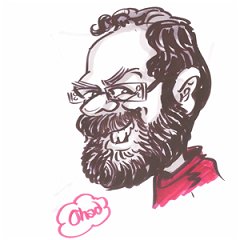
Ohad Kammar is a researcher at the University of Edinburgh , actively contributing to programming language theory, denotational semantics, and algebraic effects. His work bridges theoretical foundations with practical implementations. Research Themes : Type-driven development, concurrency, probabilistic programming, normalization algorithms, and algebraic effects. Conference Involvement : Committee member in Diversity, Equity and Inclusion , Student Research Competition , and LAFI tracks at POPL; program committee roles in ICFP, APLAS, PEPM, and HOPE. Publications : Focus on denotational semantics, effect handlers, relaxed memory concurrency, and dependently-typed probabilistic models.
Dr. Ante Prodan serves as Senior Lecturer in Computational Epidemiology within the School of Computing & ICT at Western Sydney University, where he is also affiliated with the Translational Health Research Institute (THRI). His academic network extends to the University of Sydney's Brain and Mind Centre as Research Associate and Monash University's Psychiatry department as Adjunct Senior Lecturer. Additionally, he directs the charity Computer Simulation & Advanced Research Technologies, which builds global capacity in simulation technologies for health policy decisions. Dr. Prodan holds a PhD from the University of Technology, Sydney, establishing his foundation in computational methodologies. His research integrates dynamic data-driven simulation with public health applications, developing decision support systems through: Agent-based and discrete event modeling Metaprogramming techniques for complex systems AnyLogic multimethod simulation frameworks Statistical computing with R environment His work specifically targets persistent health challenges through computational epidemiology and healthcare simulation modeling. Dr. Prodan actively contributes to online education while leading global capacity-building initiatives through his charity directorship, focusing on translating advanced research technologies into practical policy tools for health and social systems worldwide.