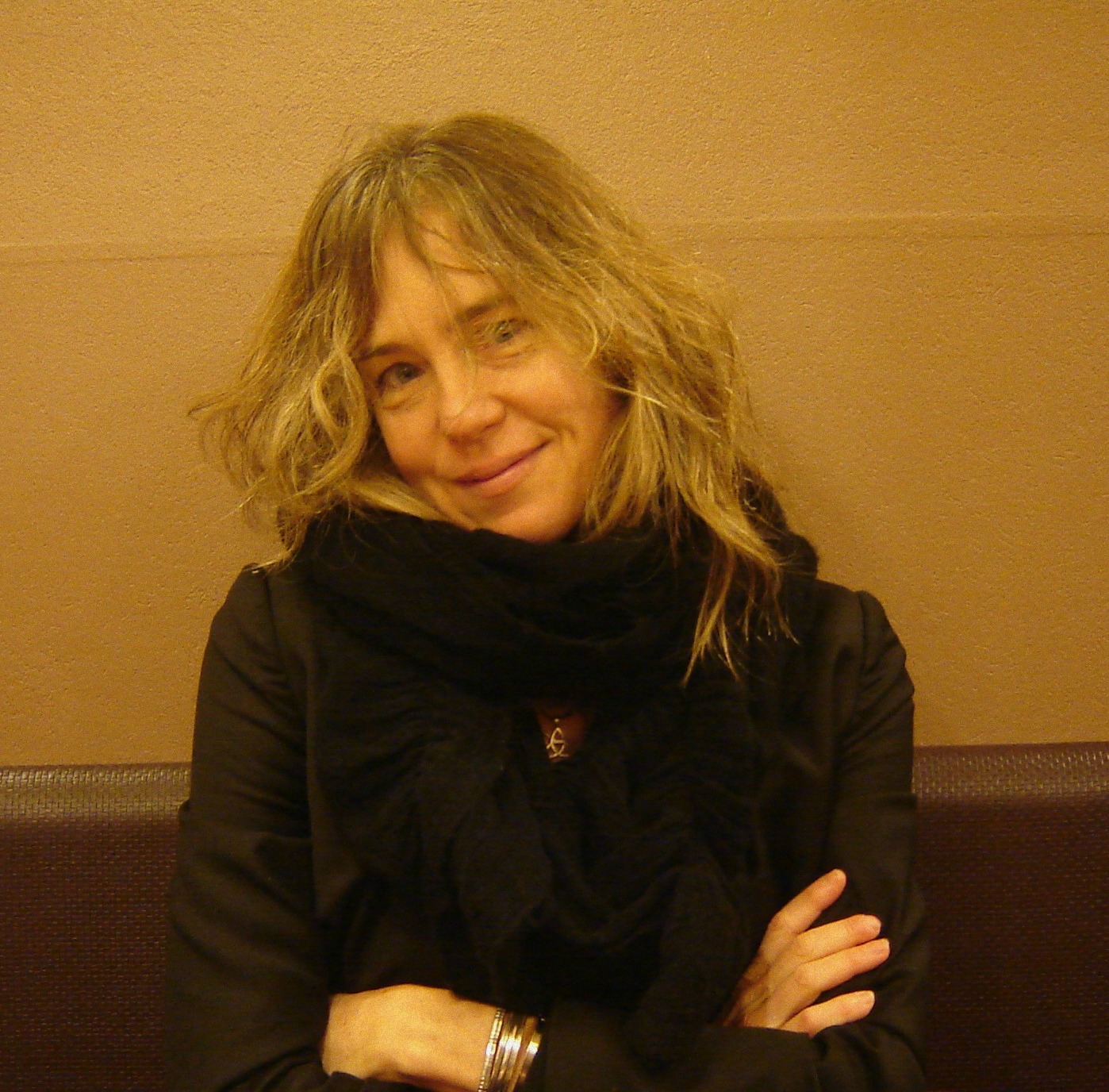
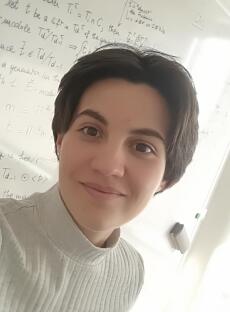
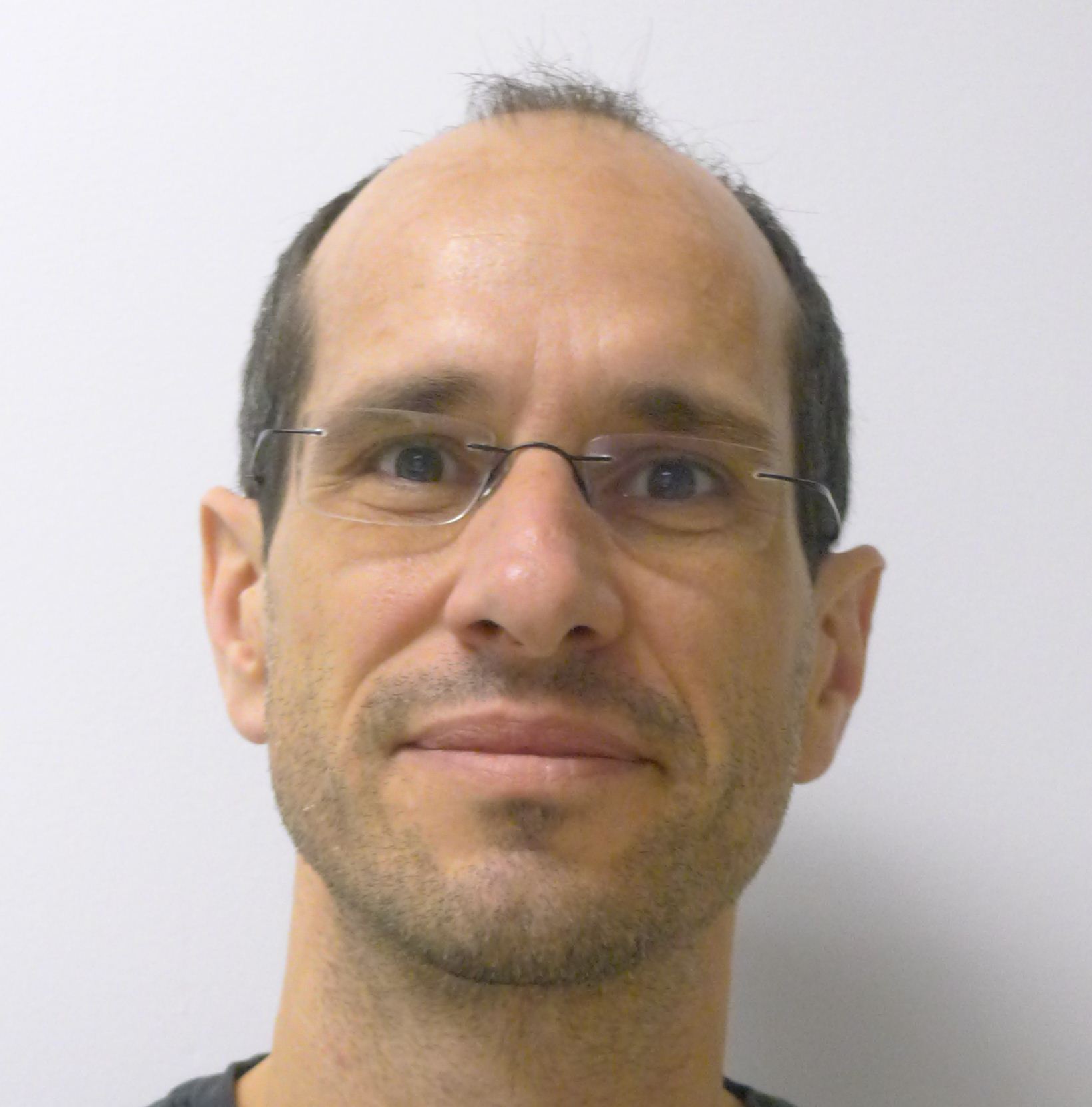
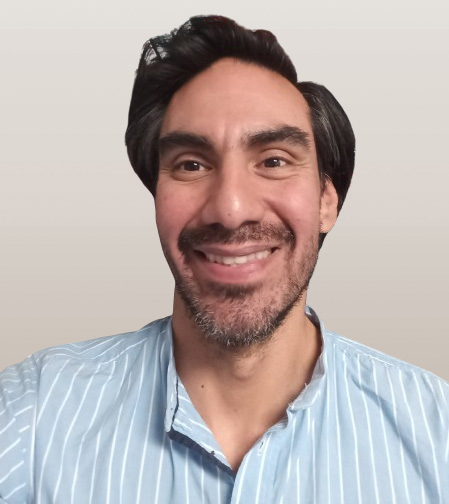
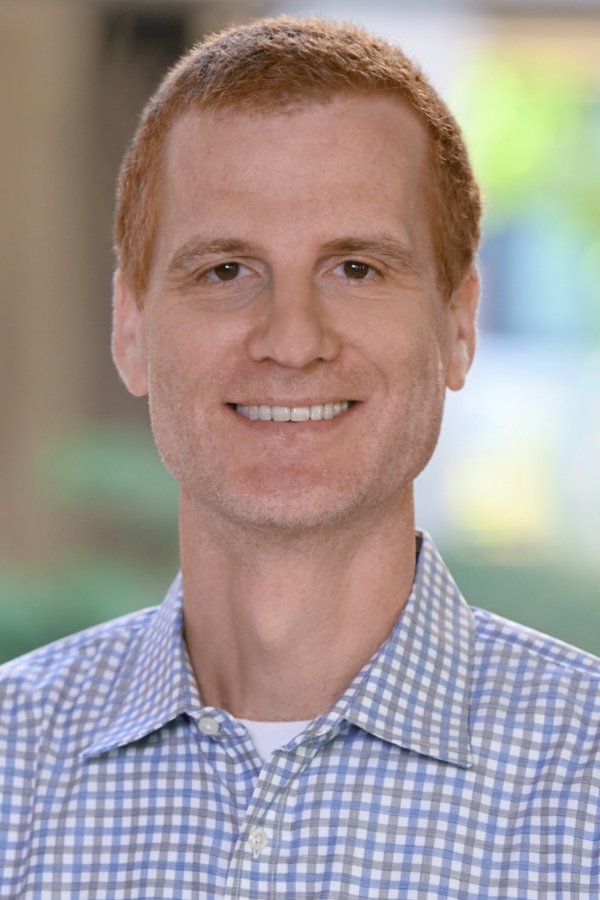
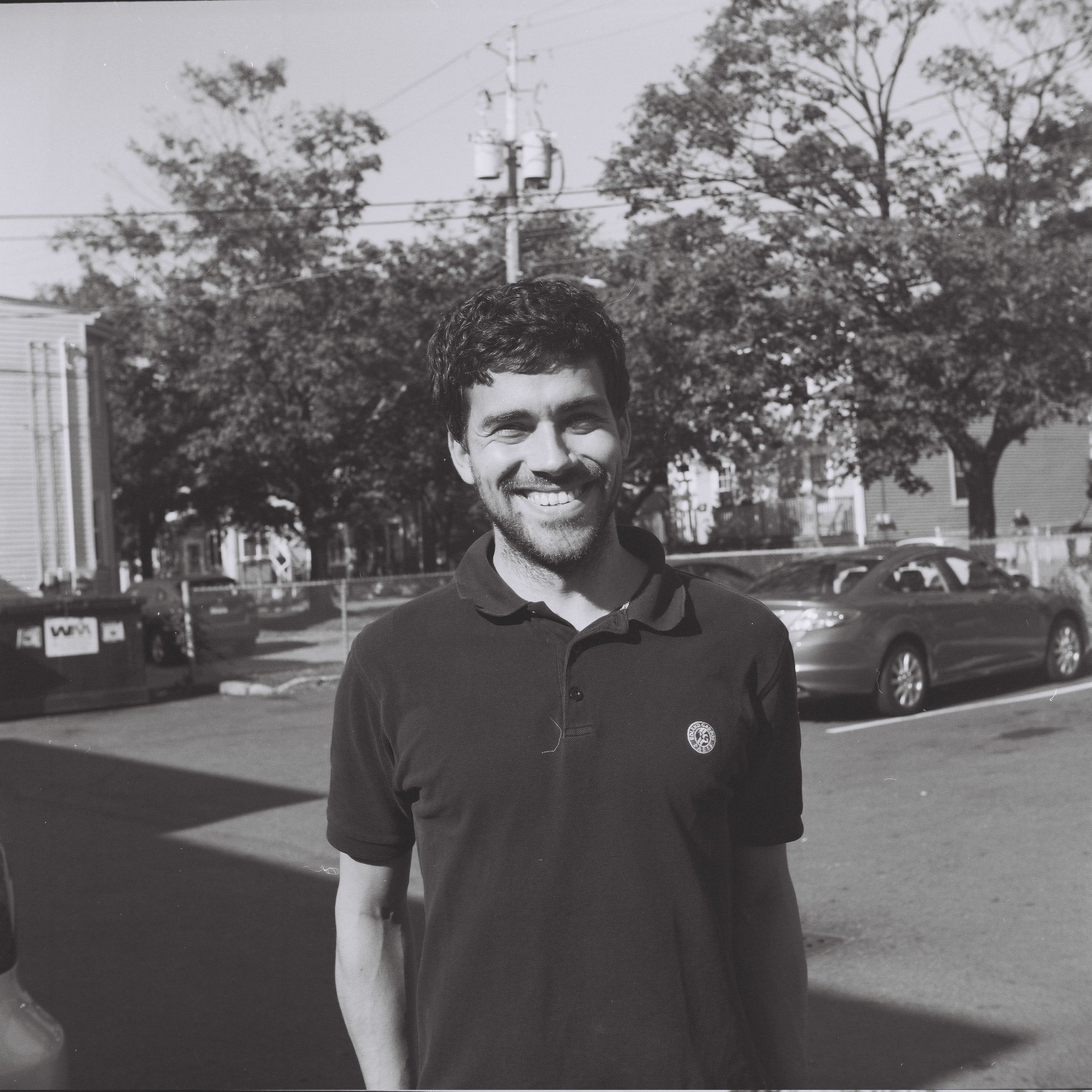
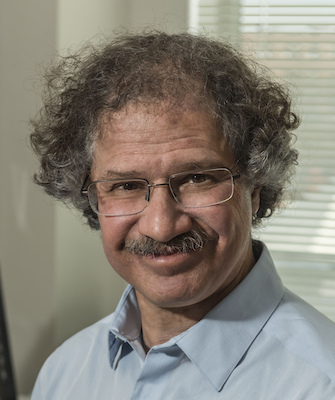
Chantal David is a Professor in the Department of Mathematics and Statistics at Concordia University. Her research focuses on number theory and its intersections with mathematical statistics. Formal Affiliation: Concordia University, Department of Mathematics and Statistics Email: chantal.david@concordia.ca Office: Library Building, LB 927.09 Research Interests revolve around Number Theory , particularly: L-functions and their non-vanishing properties Elliptic curves over finite fields and function fields Statistics of group structures and root numbers Connections to random matrix theory and metaplectic functions Extremal primes and Frobenius distributions Drinfeld modules and supersingular reductions Article Trends show a focus on cubic and quartic L-functions, non-vanishing phenomena, and statistical properties of elliptic curves over finite fields. Recent work explores metaplectic theta functions, extreme value distributions, and one-level density analysis. Labs & Teams : She is affiliated with the Montreal Number Theory Group (CICMA) .
Prof. Dr. Eva Viehmann is a leading mathematician at the University of Münster within the Faculty of Mathematics and Computer Science and a key figure in the Mathematics Münster cluster. She was awarded the prestigious Gottfried Wilhelm Leibniz Prize 2024 for her groundbreaking work in arithmetic algebraic geometry and representation theory within the Langlands program . University: University of Münster Department: Mathematical Institute Her research focuses on the intersection of algebra , geometry , and analysis , particularly through the lens of Shimura varieties and moduli spaces of local G-shtukas . She has pioneered the study of affine Deligne-Lusztig varieties in equal and mixed characteristics, advancing understanding of their dimension , connectedness , and irreducible components . Recent publications highlight her work on Newton stratification , Harder-Narasimhan theory , and p-adic moduli spaces . Her scientific advisory contributions include mentoring former doctoral student Stefania Trentin and collaborating with Prof. Urs Hartl over 15 years. Awards and honors include the Leibniz Prize 2024 , reflecting her status as a trailblazer in arithmetic geometry and p-adic geometry . Her research projects span the CRC 1442 and EXC 2044 , aiming to unify Galois representations , automorphic forms , and geometric methods .
Daniele Turchetti is an Assistant Professor in the Department of Mathematical Sciences at Durham University, where he teaches advanced mathematics and data science courses. His academic journey includes a PhD from Paris-Saclay University (2014) and postdoctoral positions at Leiden University, Max-Planck Institute for Mathematics, Caen University, Dalhousie University, and Warwick University. His educational background includes: PhD in Mathematics from University of Paris-Saclay (2011-2014) Turchetti's research spans pure mathematics and educational applications. His primary interests focus on the intersection of algebraic geometry and number theory, particularly non-Archimedean analytic geometry, Galois theory, and their applications to problems in positive characteristic. He also explores connections to toric varieties, logarithmic structures, dynamical systems, and modular forms. In addition, he has developed significant interests in mathematics education, including e-assessment, student engagement, and the application of statistical learning to advance pure mathematics. His publication record demonstrates a consistent focus on Berkovich geometry and related topics in non-Archimedean geometry, with recent expansion into applications of algebraic geometry to other scientific fields and machine learning techniques in mathematical research. His work often involves collaborations with researchers across Europe and North America. Turchetti is actively involved in mathematical outreach, serving as chair of the mathematical science outreach committee at Durham University. He has collaborated with numerous organizations including Images des Mathématiques, Fête de la Science, and various STEM outreach initiatives in Atlantic Canada and the UK, focusing on demonstrating that 'mathematics is useful, empowering, and beautiful' to diverse audiences. As an educator, he teaches courses including 'Data Exploration, Visualization, and Unsupervised Learning' and 'Multilevel Modelling,' and supervises undergraduate research projects on algebraic geometry topics. His teaching philosophy emphasizes effective assimilation of mathematical concepts and communicating the beauty of mathematics to students.
Paul Mezo is a Professor at the School of Mathematics and Statistics of Carleton University . His research focuses on Representations of Algebraic and Metaplectic Groups , the Langlands Program , Endoscopy , and Trace Formula Comparisons . He has contributed extensively to these areas through numerous publications. His research interests include advanced topics such as the interplay between automorphic forms and representation theory, with a particular emphasis on endoscopic methods and their applications to the Langlands correspondence. Recent work explores twisted endoscopy, spectral transfers, and sheaf-theoretic perspectives in representation theory. Dr. Mezo's articles collectively address foundational questions in harmonic analysis on real reductive groups, metaplectic groups, and their coverings, with applications to the local and global Langlands conjectures. His preprints further investigate functoriality and Arthur packets in classical groups. Scientific Awards: No awards explicitly listed in the provided texts. Advising & Grants: No formal advisees or grant information mentioned. His contributions are primarily through research publications and academic service. Labs/Teams: No specific laboratories or collaborative teams highlighted in the text.
Justin Trias is a Senior Research Associate at the School of Mathematics , University of East Anglia (UEA) , with a focus on Algebra, Number Theory, and the Langlands Programme. He was previously a postdoctoral researcher at UEA (2019–2021) under Shaun Stevens , followed by a postdoc at Imperial College London (2021–2023) with David Helm . His current research is supported by an Engineering and Physical Sciences Research Council (EPSRC) grant (2022–2025), collaborating with Stevens on local theta correspondence and ℓ-modular representations. Education Doctor of Science (2015–2019), Sorbonne Université (Jussieu), Paris Master in Pure Mathematics (2013–2015), Université Pierre et Marie Curie (Jussieu), Paris Bachelor in Pure Mathematics (2010–2012), École Normale Supérieure, Cachan, France Agrégation Exam (2012–2013), France Research Interests Trias works at the intersection of Algebra and Number Theory, particularly within the Langlands Programme . His research emphasizes the modular representation theory of p-adic groups and its connections to the local Langlands Programme, with a special focus on local theta correspondence and its applications to representation theory. He explores tools like Harish-Chandra theory and Weil modules in characteristic not p to advance understanding of automorphic forms and dual pairs. Publications His work includes preprints on Local theta correspondences of supercuspidal representations (in preparation) and The universal Harish-Chandra character (with Gil Moss, in preparation). Recent publications span topics such as ℓ-modular local theta correspondence (2025), theta correspondence in families (2023), and Whittaker functionals in non-p characteristic (2022).
Qing Zhang is a Visiting Assistant Professor at the University of California, Santa Barbara. His research focuses on quantum algebra, category theory, and mathematical physics, with a particular emphasis on modular and super-modular categories, their structural properties, and applications in topological quantum computing and low-dimensional topology. His work explores topics such as modular tensor categories, Galois orbits, zesting techniques, and fusion rules. Recent studies include non-semisimple modular categories and equivariantization in topological phases of matter. Zhang's contributions bridge algebraic structures with physical applications, addressing challenges in quantum symmetry classification and topological invariants. Advising and grants information is not explicitly provided. No scientific awards are listed in the current text. Zhang's office is located in South Hall RM. 6522.
Norbert Kaiblinger is an Associate Professor at the Institute of Mathematics, BOKU University, Vienna, Austria. His research focuses on applied mathematics, harmonic analysis, and numerical methods, with applications in fluid mechanics, statistics, and chemical engineering. He holds a habilitation in Mathematics from the University of Vienna, granting him teaching authorization in the field. His work bridges theoretical mathematics with practical computational problems, particularly in adsorption modeling and fluid dynamics. Key research interests include multicomponent batch adsorption models, dynamics of subaqueous systems, analysis of variance (ANOVA) methodologies, and special functions. Recent publications (2023–2025) highlight advancements in equilibrium composition calculations and statistical experimental design. His earlier work (2007–2019) explores Fourier analysis, operator theory, and algebraic structures like cyclotomic rings and circulant matrices. While no formal advising relationships or grants are listed, his collaborative research involves co-authors from diverse fields such as chemical engineering and fluid mechanics. Kaiblinger’s work is disseminated through journals like Adsorption, Journal of Fluid Mechanics, and Transactions of the American Mathematical Society.
Dr. Cesar Valverde is an Associate Professor affiliated with the City University of New York (CUNY). His academic work focuses on advanced mathematical theories and collaborative research with students. Areas of expertise: Number Theory, Automorphic Forms, Representation Theory Current research involves extensions of Shintani lifts, geometric Relative Trace Formulas, and generalizations of Ramanujan-Faulhaber identities Dr. Valverde's research bridges local p-adic representation theory with global geometric methods, emphasizing connections between symplectic, general linear, and metaplectic groups. He actively mentors students in exploring mathematical conjectures related to Bessel functions and Bernoulli number identities.
Benjamin Brubaker is a Professor and Department Head at the School of Mathematics, University of Minnesota. He received his PhD from Brown University in 2003 and has held academic positions at Stanford University (2003-2006), MIT (2006-2012), and the University of Minnesota (2012-present). His primary research interests lie at the intersection of analytic number theory and representation theory, with specific focus on automorphic forms, representations of algebraic groups, and their generalizations on arithmetic covering groups. His work frequently employs combinatorial methods, particularly lattice models from statistical mechanics, to address problems in representation theory and number theory. His recent publications demonstrate a strong trend toward connecting metaplectic Whittaker functions with solvable lattice models, crystal bases, and combinatorial representation theory. This interdisciplinary approach bridges number theory, representation theory, mathematical physics, and algebraic combinatorics. Scientific Awards and Funding: NSF Grant DMS-2101392 (current) NSF Grant DMS-1801527 (previous) Professor Brubaker has advised numerous PhD students throughout his career, with nine students graduating from the University of Minnesota and MIT. His current research group includes three PhD students working on topics related to Hecke algebras, metaplectic forms, and p-adic representation theory. His collaborative work, particularly with Dan Bump, has significantly advanced the understanding of metaplectic Whittaker functions and their connections to combinatorial structures.
Professor Daniel Bump is a faculty member in the Department of Mathematics at Stanford University, specializing in representation theory, automorphic forms, and related areas. His research focuses on Lie groups, number theory, and combinatorics, with significant contributions to the study of quantum groups, crystal bases, and multiple Dirichlet series. He has authored notable books such as *Lie Groups* and *Automorphic Forms and Representations*. His recent work explores solvable lattice models, Whittaker functions, and metaplectic duality. Bump has been actively involved in teaching advanced courses like *Solvable Lattice Models* and *Quantum Groups*. His research spans decades, with publications in top journals including *Communications in Mathematical Physics* and *Inventiones Mathematicae*. He collaborates extensively with researchers like Ben Brubaker and Solomon Friedberg on topics in algebraic combinatorics and representation theory.
Prof. Dr. Elmar Schrohe is a faculty member at the Institute for Analysis within the Faculty of Mathematics and Physics at Leibniz University Hannover . His academic career has been closely tied to the university, where he has contributed to research and graduate training programs. Email: elmar.schrohe@math.uni-hannover.de Location: Welfengarten 1, 30167 Hanover, Building 1101, Space F123 Research Interests : His work focuses on analysis on manifolds with conical singularities , partial differential equations , spectral theory , and operator algebras . He explores geometric and analytic aspects of differential operators, index theorems, and quantum field theory on singular spaces. Key keywords: Conical singularities, Elliptic operators, Spectral triples, Noncommutative residues, Boundary value problems, Fourier integral operators Collaborations : Schrohe is affiliated with the Riemann Center for Geometry and Physics and has participated in interdisciplinary research initiatives at Leibniz University.
Martin H. Weissman is a Professor in the Department of Mathematics at UC Santa Cruz. His work bridges pure mathematics with interdisciplinary applications, earning him recognition as a Guggenheim Fellow in 2020. Teaching roles include graduate and remote courses in Advanced Linear Algebra, Calculus with Applications, and Algebraic Number Theory. He has contributed to course design for Programming for Mathematics and coordinated Scientific Inquiry courses with team teaching. Research focuses on Number Theory, Representation Theory, Modular Forms, and Automorphic Representations. His recent work explores metaplectic groups, Coxeter arrangements, and mathematical biology. Scientific awards include the prestigious Guggenheim Fellowship (2020). His publications span algebraic structures, automorphic forms, and interdisciplinary collaborations. Weissman has engaged in academic service through course coordination, remote teaching, and educational outreach. His unpublished correspondence with Deligne and computational projects highlight his collaborative and experimental approach to mathematics.
Neil J. Ross serves as an associate professor of mathematics at Dalhousie University, actively contributing to quantum computing research through publications spanning 2012-2025. His work bridges theoretical computer science and mathematical physics with a focus on foundational quantum computation challenges. Educational background: Ph.D. in Mathematics, Dalhousie University (2015) Ross's research centers on quantum circuit synthesis and programming language theory, particularly exact synthesis methods for Clifford-based gate sets and formal models for quantum programming. He investigates mathematical structures like category theory and number theory to optimize quantum circuits and establish completeness theorems, with emphasis on qubit and qutrit systems. Analysis of his 15 most recent publications (2021-2025) reveals three dominant trends: (1) Advancements in exact synthesis algorithms for Clifford-Cyclotomic circuits across multiqubit/multiqutrit systems; (2) Development of equational theories for Toffoli-Hadamard circuits enabling formal verification; (3) Categorical modeling of Proto-Quipper extensions including dynamic lifting and control structures. His work consistently targets gate decomposition efficiency and circuit universality. Scientific awards: None mentioned in source material. Ross has no listed advisees or grant funding in the provided text. Collaborations with researchers like M. Amy and P. Selinger suggest active academic engagement, but specific mentoring or funding details are absent. His Google Scholar profile indicates ongoing scholarly impact without institutional support references. No laboratory or research team affiliations are specified in the scraped content.
Neil Julien Ross is an Associate Professor in the Department of Mathematics at Dalhousie University. His research primarily focuses on quantum computing and quantum programming languages, with extensive contributions to quantum circuit design, optimization, and formal verification methods. He maintains an active research profile with numerous publications in top-tier quantum computing conferences and journals. His research interests span: Quantum circuit synthesis and optimization techniques Formal methods for quantum programming languages (e.g., Proto-Quipper) Algebraic structures in quantum computation Quantum gate universality and resource theory Category theory applications in quantum information Ross's recent publications demonstrate a consistent focus on advancing quantum circuit design methodologies, particularly through symbolic synthesis techniques and formal verification approaches. His work frequently bridges theoretical computer science, algebraic structures, and practical quantum implementation challenges.
Solomon Friedberg is the James P. McIntyre Professor of Mathematics at Boston College, holding an endowed chair in the Department of Mathematics within the Morrissey College of Arts and Sciences. His research explores automorphic forms, number theory, and representation theory, with applications to L-functions and combinatorial mathematics. Education includes a B.A. from UC San Diego, M.S. and Ph.D. from University of Chicago. Research focuses on multiple Dirichlet series, metaplectic Eisenstein series, and theta functions on covering groups. His work bridges analytic number theory with representation theory and has implications for mathematical physics. Recent publications emphasize doubling constructions, Shimura lifts, and mathematics education policy. Awards and honors: Sloan Fellowship (1989-92) Fellow of the American Mathematical Society (2014) Simons Fellowship (2021) AMS Teaching Award (2021) Fellow of AAAS (2024) Advising and grants: Mentored 12 PhD students and 3 postdocs. Principal investigator for NSF grant DMS-2401309 supporting number theory research. Co-PI on NSF projects for teacher development in high-need schools. Organizes BC-MIT Number Theory Seminar and serves as editor for Research in Number Theory .