
Oliver Krüger is a Full Professor of Religious Studies in the Department of Social Sciences at the University of Fribourg, Switzerland. Appointed in 2007, he has served as president of the Swiss Association for the Study of Religion (2011-2014) and is a Fellow of the International Centre for Advanced Studies Morphomata at the University of Cologne. His academic journey spans from studying Sociology, Archaeology and Religious Studies in Bonn to research positions at Princeton University and Heidelberg University, establishing him as a leading scholar at the intersection of religion, media, and digital culture. Dr. Krüger studied Sociology, Archaeology and Religious Studies at the University of Bonn (1994-1999), working with scholars including Werner Gephart, Karl Hoheisel, and Wolfgang Gantke. He received his doctorate in 2003 from the University of Bonn with a dissertation on "Virtuality and Immortality: The Visions of Posthumanism," which was awarded by the German Association for the History of Religion. His academic development included research at Heidelberg University's Collaborative Research Center Ritual Dynamics (2002-2005) on Wicca movement communication online and at Princeton University's Center for the Study of Religion (2005-2007) exploring alternative funeral culture in the United States. Professor Krüger's research focuses on the intersection of religion, media, and digital culture, with particular emphasis on posthumanism and transhumanism. His work critically examines how religious concepts and practices transform in digital environments, analyzing phenomena like online rituals, virtual communities, and the religious dimensions of emerging technologies. He has developed significant theoretical frameworks for understanding "virtuality" as "the availability of the unavailability" and has consistently challenged normative preconceptions in the study of religion and media. His scholarship demonstrates how religious studies frameworks can illuminate technological discourses that often present themselves as purely secular. His publications reveal a consistent trajectory from early work on internet-based religious communities to current explorations of AI, posthumanism, and digital religion. Recent works increasingly analyze the relational aspects between secular and religious interpretations of technological progress, showing how posthumanist visions often replicate traditional religious patterns while claiming scientific objectivity. Krüger's approach emphasizes dynamic, relational perspectives over static definitions of religion, contributing significantly to paradigm shifts in the field. Professor Krüger has received notable recognition for his scholarly contributions, including: Dissertation Prize from the German Association for the History of Religions (2003/2004) Fellowship at the International Centre for Advanced Studies Morphomata, University of Cologne (2012/13) At the University of Fribourg, Krüger supervises graduate students researching digital religion, posthumanism, and media theory. He has edited several special journal issues that have shaped scholarly discourse, including "Theory and Methodology" (2005), "Religion and Ecology" (2022), and "The Dynamics of Religion, Media and Community" (2022). His habilitation thesis "Media-based religion. Problems and perspectives of media research in religious studies and the sociology of knowledge" (2012) comprehensively examines the history and research field of religion and media. Professor Krüger has been instrumental in developing academic networks around digital religion and posthumanism. He co-founded and edits the journal AЯGOS (Argonauts), which focuses on innovative approaches in religious studies. At Fribourg, he leads research initiatives examining the intersection of religion, media, and technology, fostering collaborations between scholars in religious studies, sociology, philosophy, and digital humanities. He has also worked extensively on the history of religious studies, particularly on Edmund Hardy (1852-1904), contributing to a more nuanced understanding of the discipline's development.
جستوجوی استاد و پژوهشگر
استاد راهنما، استاد دانشگاه یا پژوهشگر مناسب برای مسیر پژوهشیتان را پیدا کنید و با او ارتباط بگیرید.
نمایش ۱۶-۳۰ از ۳۷۰ استاد راهنما
اطلاعات این پروفایلها از صفحات عمومی دانشگاهها جمعآوری شده و ممکن است بهروز نباشد.
Joanna Jurewicz serves as Professor at the University of Warsaw's Faculty of Oriental Studies within the Department of South Asian Studies. Elected to Academia Europaea in 2002 following her habilitation, she maintains active scholarly engagement in Vedic studies and cognitive linguistics. Her institutional affiliation spans decades, rooted in Warsaw's Indological tradition since her 1990 doctorate. Her research centers on cognitive-linguistic analysis of the Ṛgveda, examining metaphorical structures, conceptual formation in archaic thought, and philosophical continuities into Upaniṣadic literature. Key contributions include deconstructing Vedic concepts of self (ātmán), desire (kāma), and cosmic order through frameworks like "fire cognition" and spatial metaphors. This interdisciplinary approach bridges linguistics, philosophy, and religious studies to reveal systematic cognitive patterns in ancient Indian thought. Jurewicz's publication trajectory shows consistent focus on Ṛgvedic semantics since the 1990s, evolving toward comprehensive analyses of Indian philosophical development. Her work demonstrates methodological innovation through cognitive linguistics applied to classical texts, influencing contemporary Indological scholarship across Central and Eastern Europe. Prime Minister Award for outstanding academic achievements (2010) for 'Fire and Cognition in the Ṛgveda' Member of Academia Europaea (2002) Her editorial leadership includes co-editing significant volumes like 'Symbolism of Meadows and Pastures in Ancient Beliefs' and 'Cultural Conditions of Development in Asia and Africa.' Jurewicz actively participates in commemorative academic projects, such as the 50th Anniversary of Indological Studies at Warsaw University (2003/2004), where she contributed analyses of ritual language and hydraulic metaphors. Her scholarly network extends across European Indological conferences, evidenced by collaborations with institutions like the Polish Semiotic Society and University of Warsaw Press.
- Semantics
- Pragmatics
- Linguistic Worldview
- +۶ مورد دیگر
Dorota Piekarczyk is a full Professor at the University of Marie Curie-Skłodowska (UMCS) in Lublin, Poland, affiliated with the Faculty of Languages, Literatures and Cultures. She has served since 2002 and held the position of Deputy Director at the Institute of Polish Philology from 2013-2019. Her research focuses on the intersections of language and cognition, particularly through semantic analysis , pragmatic frameworks , and linguistic worldview studies. She specializes in paratextual elements of publications, examining how covers, blurbs, and series information shape reader expectations and societal knowledge reception. The 2020 monograph on book covers represents her most comprehensive work on paratextual analysis. Her recent publications (2020-2019) investigate paratextual persuasion techniques popular culture integration in science communication publisher-reader dynamics while maintaining long-term contributions to floral categorization studies and cognitive schemata in texts. Scientific achievements include 2014 Prime Minister's Award for 'Metafory metatekstowe' ORCID: 0000-0002-8859-7897 648 total ministerial points across 12 publications
- contemporary British literature and culture
- children's and young adult literature
- cognitive approaches to literature
- +۶ مورد دیگر
Susanne Reichl is a full Professor at the Department of English and American Studies within the Faculty of Philological and Cultural Studies at the University of Vienna. She serves as Head of the interdisciplinary research platform Mediatised Lifeworlds: Young people's narrative constructions, connections and appropriations, a position she has held since autumn 2021 for its second period. Reichl maintains an active teaching schedule, offering courses on contemporary British literature, children's and young adult literature, and teaching methodology for literature and culture. Her research interests span contemporary British literature and culture, children's and young adult literature, cognitive approaches to literature, tales of time travel, Black and Asian British literature, and teaching literature at university and school. Reichl's work demonstrates a consistent focus on how young people engage with literature and media, particularly examining narrative construction in digital environments and the intersection of reading practices with identity formation. Reichl's recent publications reveal a strong trend toward interdisciplinary research connecting literary studies with media studies, cognitive science, and educational theory. Her work on youth media practices, particularly through the #YouthMediaLife platform, demonstrates innovative approaches to understanding how young people navigate contemporary digital landscapes through narrative construction. She has made significant contributions to understanding time travel narratives, multimodal literature, and social reading practices, particularly on platforms like Goodreads. Figdor-prize of the Austrian Academy of Sciences for literary studies (2005) Erwin-Schrödinger international scholarship by the FWF (Austrian research fund) (2005/2006) Reichl has supervised numerous master's students, though she has announced she cannot take on new master supervision until March 2026. Her research platform Mediatised Lifeworlds has secured significant institutional support at the University of Vienna, indicating successful grant acquisition. Reichl maintains an active research agenda with consistent publication output across multiple formats including monographs, edited collections, journal articles, and book chapters. As Head of the interdisciplinary research platform Mediatised Lifeworlds, Reichl leads a collaborative team examining young people's narrative constructions in digital environments. This platform brings together researchers from multiple disciplines to investigate how youth appropriate and connect through mediatised experiences, with particular attention to the narrative frameworks they employ in social media and other digital spaces.
- Cognition
- Neuroscience
- Computational Linguistics
- +۴ مورد دیگر
Morten H. Christiansen is the William R. Kenan, Jr. Professor of Psychology at Cornell University and holds a concurrent position as Professor of Cognitive Science at Aarhus University's School of Communication and Culture and the Interacting Minds Centre. His research focuses on the interplay between biological and environmental factors in language evolution, acquisition, and processing. Key methodologies include computational modeling, neuroimaging, and experimental psychology. He is an elected member of Denmark’s and Norway’s Royal Academies of Sciences and a Fellow of the Association for Psychological Science and Cognitive Science Society. His work spans over 250 papers and four edited volumes, with his monograph The Language Game (2022) proposing a novel theory of language emergence through improvisation. Research interests emphasize multiword chunking, statistical learning, and individual differences in language processing. Current projects explore Danish language challenges, computational models of cultural evolution, and the impact of large language models (LLMs) on human cognition. Christiansen directs the Cognitive Science of Language Lab, teaches undergraduate and graduate courses (e.g., PSYCH 2150: Psychology of Language), and collaborates internationally on projects like the Danish Gigaword Corpus. His recent work highlights language as an emergent system shaped by interactive and ecological pressures.
Robert Jacob is a Professor of Computer Science at Tufts University's School of Engineering, where he leads research in human-computer interaction with particular focus on implicit brain-computer interfaces. His work bridges computer science, cognitive science, and interface design to create adaptive systems that respond to users' cognitive states without explicit input. His educational background includes a Ph.D. from Johns Hopkins University. Professional milestones include: ACM CHI Academy membership (2007) ACM Fellow designation (2016) Leadership roles as ACM SIGCHI Vice President and conference chair for CHI, UIST, and TEI Professor Jacob's research centers on implicit interaction techniques, particularly using fNIRS brain sensing to create adaptive interfaces. His work has evolved from foundational studies in reality-based interaction and tangible programming to current neuroadaptive systems that measure cognitive workload in real-time. This research spans domains including music learning, museum education, and general user interface adaptation. His publications reveal consistent focus on brain-computer interfaces since 2012, with increasing sophistication in physiological measurement and machine learning techniques. Recent work integrates multiple physiological signals beyond brain data to create comprehensive user state models. Major recognitions include: CHI 2016 Best Paper Award for music learning research CHI 2014 and 2012 Best Paper Honorable Mentions Keynote addresses at major conferences including Neuroadaptive Technology Conference (2017) Extensive media coverage in New Scientist, IEEE Computer, and Boston Globe Professor Jacob has mentored 17 PhD students who now hold faculty positions at institutions including Worcester Polytechnic Institute, Northwestern University, and Carleton University. His HCI Lab, located in the Joyce Cummings Center, receives funding from NSF and other sources supporting neuroadaptive interface research. Current projects focus on broadening implicit interaction to include multiple physiological measurements while maintaining user privacy and system transparency.
- Apocalypticism (Ancient to Contemporary)
- Apocalypticism and Popular Culture
- Biblical Apocrypha and Pseudepigrapha
- +۵ مورد دیگر
Lorenzo DiTommaso serves as Professor in the Department of Religions and Cultures at Concordia University, Montreal, where he has progressed from Assistant Professor (2004) to full Professor (2013), including service as Department Chair. His academic home encompasses Jewish Studies and Christianity programs, with biennial teaching of the graduate religion and popular culture seminar. Ph.D. in Religious Studies, McMaster University (2002) Postdoctoral Fellow, Yale University Divinity School (2001-03) NEH Postdoctoral Fellow, Center for Medieval and Renaissance Studies, Saint Louis University (2003-04) DiTommaso's research constitutes a comprehensive exploration of apocalyptic speculation across temporal and cultural boundaries, from ancient Near Eastern traditions to contemporary digital media. His work uniquely bridges textual scholarship on biblical apocrypha and medieval manuscripts with cutting-edge analysis of apocalyptic expression in video games, anime, and popular music. The intellectual scope spans apocalyptic historiography , manuscript studies , apocalyptic and millenarian movements , and religion in contemporary media , with distinctive expertise in Japanese cultural intersections. His methodological approach combines rigorous textual analysis with interdisciplinary cultural theory, particularly examining how apocalyptic frameworks shape human responses to crisis across historical periods. Analysis of his recent publications reveals a pronounced shift toward contemporary apocalyptic manifestations, with nearly half of his 2021-2024 output focusing on digital media, video games, and modern cultural phenomena. Simultaneously, he maintains deep engagement with medieval manuscript traditions and early Jewish-Christian apocalyptic literature, demonstrating remarkable versatility across historical periods. The thematic through-line remains apocalyptic determinism versus human agency , examined through diverse lenses from ancient prophecy to interactive gaming environments. Bibliographical Society of America - Pine Tree Foundation Fellowship in Hispanic Bibliography (2019) Nicky Carpenter Fellow in Manuscript Studies Marilyn Hollinshead Visiting Scholar (2023) Research Fellow at Herzog August Bibliothek (2024) DiTommaso has supervised over 20 graduate students since 2019 across diverse apocalyptic topics including disability studies in biblical interpretation, Satanism in virtual communities, and environmental apocalypse in radical movements. His research has been continuously supported by four major SSHRC grants (2004-07, 2007-11, 2011-16, 2018-24), supplemented by specialized fellowships at premier manuscript repositories including the Vatican Film Library, Herzog August Bibliothek, and special collections at Michigan State and Minnesota universities. He co-organizes the biennial 'Through a Glass Darkly' Symposium on Apocalyptic with Colin McAllister, now in its eighth year, rotating between Colorado Springs and Montreal. The 'Through a Glass Darkly' symposium serves as his primary collaborative platform, fostering international scholarly exchange on apocalyptic themes. He maintains active research partnerships with institutions including the Enoch Seminar and Azrieli Institute for Israel Studies, while leveraging special collections access at major libraries for manuscript-based projects. Current work on apocalyptic comic art involves collaboration with special collections at Michigan State and Minnesota universities, demonstrating his commitment to bridging traditional textual scholarship with contemporary cultural analysis.
- Metaphoric Competence in First and Second Languages
- Vocabulary Knowledge
- Language Play/Creativity
- +۴ مورد دیگر
Dr. David O'Reilly is a Lecturer in Education (Research and Teaching) at the University of York's Department of Education since 2022. Previously, he held roles as Lecturer (2021–2022) and Associate Lecturer (2017–2021). His academic journey includes a PhD in Applied Linguistics from the University of York (2013–2017), an MA in Applied Linguistics (2012–2013), and a BA in English Language and Literature from the University of Manchester (2003–2006). His research focuses on metaphoric competence in first and second languages, language play/creativity, test design, and quantitative methods. He leads projects like OASIS (Open Accessible Summaries in Language Studies) and contributed to the IRIS repository for second language research materials. He is a Fellow of the Higher Education Academy and holds editorial roles, including Review Editor at Metaphor and the Social World . Key Projects: OASIS (ESRC/British Academy funded), IRIS Repository Awards: RaAM Early Career Research Paper Prize (2021), Vice-Chancellor’s Teaching Award (2021) Professional Roles: Secretary of RaAM (2020–2022), Member of RaAM Executive Committee (2014–2020) Dr. O'Reilly teaches undergraduate and postgraduate modules in educational research methods, language assessment, and applied linguistics. He actively promotes open research practices and digital literacy in academia.
Matti Minkkinen is a Docent at the Turku School of Economics (University of Turku) and a Postdoctoral Researcher in Information Systems Science at the Department of Management and Entrepreneurship. His work bridges futures studies with ethics, privacy, and socio-technical systems in digital transformation. Recent roles focus on responsible AI governance and foresight methodologies. University: University of Turku School: Turku School of Economics Department: Department of Management and Entrepreneurship His research explores how digital technologies reshape organizational practices, emphasizing Futures Consciousness as a human capacity. Key themes include responsible AI , privacy protection , and causal layered analysis in scenario planning. Publications highlight ethical governance frameworks and EU policy debates. Recent articles address generative AI ethics , ML system integration , and AI auditing across journals like Communications of the Association for Information Systems and Information and Management . Topics cluster around socio-technical systems, digital ethics, and institutional adaptation to AI. Teaching and editorial roles include co-curating student research collections at Finland Futures Research Centre. No explicit scientific awards are listed, but his work contributes to foresight theory and practice.
José Juan Morcillo Pérezمشاهده پروفایل
استاد مهمان
- Spanish Literature
- Renaissance Humanism
- Mysticism
- +۳ مورد دیگر
José Juan Morcillo Pérez is a Visiting Professor at the Universidad Pontificia de Salamanca 's Faculty of Humanities and Social Sciences. Holding a 'Cum Laude' Doctorate in Hispanic Philology from the University of Salamanca (2002), he has held teaching positions at the University of St. Andrews, Universidad de Castilla-La Mancha, and the Universidad Pontificia de Salamanca's International Courses. His research focuses on Renaissance Spanish literature Francisco de Osuna's linguistic innovations Lazarillo de Tormes authorship debates Historical linguistics Cultural intersections of law and literature His 2002 doctoral thesis presented a critical edition of Francisco de Osuna's Abecedario Espiritual (1528-1530), analyzing its linguistic registers and neological contributions. He has received recognition for educational innovation projects, particularly in bilingual education and technology integration (2006-2007). Academic contributions include: Pioneering textual editions of Spanish Golden Age mystical works Interdisciplinary analysis of legal discourse in picaresque novels Lexical studies connecting Renaissance humanism with theological expression Scientific recognition includes: Doctor 'Cum Laude' , University of Salamanca (2002) Award for innovative educational project in Castilla-La Mancha public education system
Gabe Horn is a distinguished author, educator, and lecturer renowned for his contributions to Native American studies, children's literature, and environmental writing. His works have been formally adopted in educational systems across the United States and Canada, including selection by the California State Board of Education and Manitoba Department of Education. Horn has served as a keynote speaker and workshop leader at numerous colleges, universities, and national conferences since 1990, focusing on Indigenous philosophy and ecological perspectives. Horn's research explores the intersection of Native American spirituality, cultural identity, and humanity's relationship with the natural world. His seminal works like Ceremony: In the Circle of Life and the Native American Book series examine traditional knowledge systems, ceremonial practices, and the preservation of indigenous wisdom through accessible educational frameworks. These publications consistently bridge academic scholarship with practical classroom applications in social studies and multicultural education. Analysis of Horn's 30-year publication history reveals an evolution from poetic explorations of Native American themes toward comprehensive educational resources addressing cultural preservation and environmental ethics. His later works increasingly integrate spiritual philosophy with contemporary ecological concerns, demonstrating a lifelong commitment to making indigenous perspectives accessible to diverse audiences while maintaining scholarly rigor. Horn's significant recognition includes: Four-time listing in Who's Who Among America's Teachers Distinguished Service Award from Florida Spacecoast Writers Guild (1996) Distinguished Alumni Award from University of South Florida (2002) Kennedy Center Honored Book award for The Great Change (2004) National Council of Social Studies Best Children's Trade Award (1983) Phi Theta Kappa Honor Society induction (1994) Featured presenter at University of South Florida Library (2005) Though specific advisees aren't documented, Horn's educational impact manifests through widely adopted textbooks and his role as a workshop leader for educators nationwide. His project "Ghosts of the Land" received funding from the Florida Humanities Council, reflecting institutional support for his culturally significant work. Horn's legacy centers on translating complex indigenous philosophies into engaging educational materials that foster cross-cultural understanding. While not affiliated with a formal research laboratory, Horn's collaborative network includes contributions to edited volumes with prominent figures like Jane Goodall and presentations at venues including CBS Sunday Morning and the Kennedy Center, establishing him within a broader ecosystem of indigenous scholars and environmental advocates.
Stuart Marshallمشاهده پروفایل
مدرس ارشد
Dr. Stuart Marshall serves as Associate Dean of Academic Development in the Faculty of Science and Engineering at Victoria University of Wellington - Te Herenga Waka, where he also holds the academic rank of Senior Lecturer. Previously, he served as Head of School for the School of Engineering and Computer Science from 2015-2021 after joining the institution as a Lecturer in 2003. His academic journey includes completing his BSc, MSc, and PhD in Computer Science at Victoria University of Wellington, with his doctoral research focusing on software reuse. Marshall's research interests center on information and data visualization, particularly exploring how visualization can function as collaborative tools in team environments rather than single-user applications. He also investigates explainable AI and mobile user interface design with emphasis on promoting healthy device usage patterns. His work bridges theoretical computer science with practical applications in education and environmental analysis. Analysis of his publication record reveals a consistent focus on visualization techniques, with recent work shifting toward immersive analytics and virtual reality applications for complex data analysis, particularly in ecosystem services. Earlier publications concentrated on mobile learning applications grounded in transactional distance theory, software visualization for large codebases, and graph layout algorithms. Marshall has supervised six PhD students and eight Masters students to completion, with current doctoral supervision spanning immersive environments for reading assistance, medical diagnosis interfaces, and cardiac procedure simulation. His grant portfolio includes multiple ACM ISS 2022 projects with industry partners including Sensor Holdings Limited, Niantic, Autodesk, and Northeastern University, along with an Australian Research Council grant for digital games preservation. Teaching responsibilities encompass foundational programming, safety-critical systems, human-computer interaction, and data visualization across undergraduate and graduate courses. He teaches subjects including SWEN326 (Safety-Critical Systems), CGRA151 (Introduction to Computer Graphics and Games), and DATA301 (Data Science in Practice), with teaching assignments scheduled through 2026.
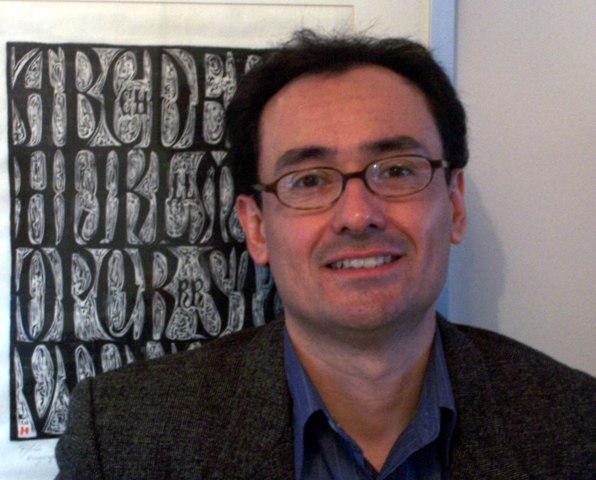
Paul Firbasمشاهده پروفایل
دانشیار
Paul Firbas is an Associate Professor in the Department of Hispanic Languages and Literature at Stony Brook University, with affiliations in the Department of History. He holds a Ph.D. from Princeton University (2001), an M.A. from the University of Notre Dame (1995), and a B.A. from Universidad Católica del Perú (1992). Previously, he was an Assistant Professor at Princeton University (2001-2007) and a Visiting Professor at Columbia University (Spring 2007). Education: Ph.D., Princeton University, 2001; M.A., University of Notre Dame, 1995; B.A., Universidad Católica del Perú, 1992 His research focuses on Epic Poetry , Colonial Latin American Literature , Textual Criticism , Colonial Geopolitics , and Digital Humanities . He has extensively studied Spanish-American texts from the colonial period, particularly those discussing transatlantic South America's geography, information circulation, and moral geography. His work bridges literary analysis with historical documentation, emphasizing the role of epic poetry in shaping colonial identity. Recent publications include a 2025 digital humanities project on Magellanic route information flows, the 2023 two-volume edition of Lima's early news-sheets, and critical studies on 18th-century Lima's satire (2009), 16th-17th century Peruvian poetry (2019), and 2006 critical edition of 'Armas antárticas' . These works highlight transatlantic networks, geopolitical shifts, and literary responses to colonial crises. He has co-edited multiple volumes, including 'La biblioteca del Inca Garcilaso' (2016) and 'La forma inicial' (2015), a conversation book with Ricardo Piglia. His research also intersects with documentary film studies, as seen in 'Conversaciones en Princeton' (1998), co-edited with Pedro Meira Monteiro.
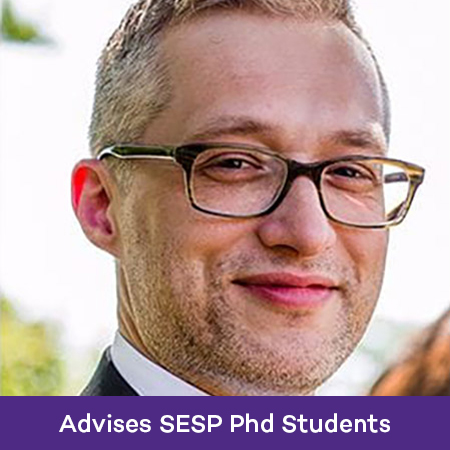
David N. Rapp is a distinguished academic serving as the Charles Deering McCormick Professor of Teaching Excellence at Northwestern University. He holds dual professorships in the School of Education and Social Policy (SESP) and the Department of Psychology, with a primary affiliation in the Learning Sciences. As Director of Undergraduate Education for SESP, he oversees academic programs and initiatives. His research focuses on cognitive mechanisms underlying learning, memory, and the processing of accurate and inaccurate information, particularly in educational and multimedia contexts. Education: PhD in Experimental Psychology, State University of New York, Stony Brook (2000) MA in General Psychology, New York University (1996) BA in Psychology, State University of New York, Albany (1994) Research Interests: Reading comprehension and multimedia learning Memory dynamics and misinformation effects Translation of cognitive science into educational tools Visualization and STEM education Social contagion of knowledge and beliefs Notable Achievements: Recipient of the McKnight Land-Grant Professor Award (2006) Tom Trabasso Young Investigator Award (2010) Fellow of the Association for Psychological Science Lead Editor of the Journal of Discourse Processes Principal Investigator of NSF and NIH-funded projects Lab & Collaborations: Directs the Reading Comprehension Lab, exploring cognitive processes in learning and misinformation. Collaborates with institutions like the Feinberg School of Medicine and Kellogg School of Business. Advises over 20 graduate and undergraduate students, many pursuing academic and industry roles.

Stéphanie Caillies is a Professor of Cognitive Psychology at the University of Reims Champagne-Ardenne and serves as Deputy Director of the C2S Laboratory (Cognition, Santé, Socialisation EA 6291). Her research focuses on social cognition, language processing, and theory of mind from developmental, neuropsychological, and psychopathological perspectives. Research Interests: Pragmatic language comprehension and figurative language processing Neural correlates of social cognition in clinical populations (schizophrenia, bipolar disorder) Developmental trajectories of theory of mind in neurotypical and at-risk children Neurocognitive mechanisms of irony and metaphor understanding Parent-child interactions in premature infants Her recent publications demonstrate strong emphasis on neuroimaging approaches (fMRI, ERP) to study social cognition, with recurring themes in clinical populations and developmental disorders. Research frequently bridges psycholinguistics, clinical psychology, and cognitive neuroscience. Current Research Projects: POSTURE (2023-2027): Psychologie et réalité virtuelle - ANR-funded project on dynamic posture recognition EDIRE (2022-2025): Horizon Europe project on educational development PHRC CALIN: Hospital clinical research on sensory-tonic stimulation for premature infants Teaching Activities: Regularly teaches courses in Statistics, Language Development, Academic Learning, and Social Cognition Disorders. Organized multiple scientific conferences including the 59th Congress of the French Society of Psychology. Doctoral Supervision: Currently supervising theses on executive functions in premature children and parent-child interactions. Previously supervised dissertations on pragmatic language in reading comprehension and neurofunctional correlates of theory of mind in schizophrenia.