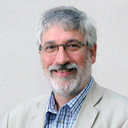
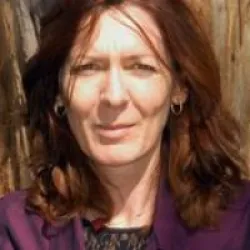
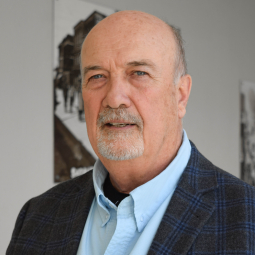
Associate Professor Derek Wyman is a geologist at the University of Sydney's Faculty of Science, specializing in tectonics, magmatism, and crustal evolution. His research focuses on Archean continental growth, Tibetan Plateau dynamics, and the interplay between mantle processes and mineral systems. Wyman has contributed to over 114 publications, including seminal works on subduction zone dynamics and continental collision processes. Notable contributions include studies on Mo isotope tracing in Tibetan basalts, Archean high-Mg magmas, and the petrogenesis of Triassic granites in Tibet. He leads research projects funded by the Australian Research Council (e.g., 2014 grant on Archean boninites) and holds patents in geophysical data processing (e.g., natural gamma log analysis). Wyman collaborates internationally on projects like the Central Asian Orogenic Belt and Pamir-Tibet geodynamics. His work integrates field observations, geochemical analysis, and geodynamic modeling, with a focus on resolving controversies in early Earth tectonics and modern continental evolution processes.
Crystal LaFlamme is an Adjunct Professor at the School of Earth and Oceans, University of Western Australia, and holds an Associate Professor position at Université Laval (since June 2023). She specializes in geochemistry and isotope studies, with significant contributions to understanding gold mineralization, hydrothermal systems, and metamorphic processes. Her research aligns with UN Sustainable Development Goals related to sustainable resource management. Education: PhD in Geology, Awarded May 2014 MSc in Earth Sciences, Memorial University of Newfoundland, Awarded Dec 2010 BSc in Geology, Acadia University, Awarded May 2007 Research Interests: LaFlamme’s work focuses on isotope geochemistry, particularly sulfur isotopes in ore deposits, metamorphic petrology, and the geochemical evolution of hydrothermal fluids. She investigates processes like gold remobilization, sulfide transformations, and fluid-rock interactions in orogenic gold systems. Grants & Collaborations: Lead investigator on multiple industry-funded projects, including sulfur isotope analysis for exploration (Sandfire Resources, BHP Billiton). Collaborated on projects like the Global Sedimentary Sulfur Isotope Database and studies of the Kanowna Belle Gold Deposit. Labs & Teams: Contributes to collaborative networks in Canada and Australia, focusing on ore-forming processes and analytical geochemistry techniques.
Yvette Kuiper is an Associate Professor in the Department of Geology and Geological Engineering at the Colorado School of Mines. Her research examines structural evolution of mountain belts through integrated field mapping, geochronology, and geophysical analysis. Current projects focus on shear zone kinematics in the New England Appalachians, southern Abitibi Greenstone Belt, and Colorado Front Range. Her research integrates structural analysis with U-Pb geochronology to date deformation events and quantify strain rates in complexly deformed terrains. She investigates linkages between microstructural development, accessory mineral growth, and tectonic processes in collisional orogens. Ore deposit settings in Yukon's Rackla Gold Belt and Colorado's mineral districts provide additional field areas for structural analysis. Recent publications explore Mesoproterozoic tectonics in Colorado (2024), channel flow hypotheses in Massachusetts (2024), and Variscan belt evolution in Northwest Africa (2023). Her work combines geological mapping with advanced geochemical and geophysical techniques to reconstruct orogenic histories.
Richard Goldfarb is a Research Professor specializing in Geology and Geological Engineering, focusing on advanced studies of gold deposits within metamorphic terranes, tectonic metallogeny, and regional ore genesis. His work emphasizes understanding the formation mechanisms of orogenic gold deposits and their spatial-temporal distribution across major ore provinces like those in China, Alaska, and Asia. Key research interests include exploring the tectonic controls on ore deposits, the secular variation of gold endowment, and the interplay between metamorphic processes and mineralization. He has conducted extensive studies on major gold provinces such as the Jiaodong Peninsula in China, the West Qinling Orogen, and the Canadian Cordillera. Goldfarb's contributions include groundbreaking analyses of structural controls in orogenic gold systems, the role of fault architectures, and the application of geochronology to constrain mineralization timing. His work bridges field observations, geochemical analyses, and tectonic interpretations to advance global understanding of precious metal systems. Recent studies emphasize the integration of advanced techniques like thermochronology and fluid inclusion analysis to unravel complex ore-forming processes. His publications highlight the significance of plate tectonic settings in shaping gold metallogeny, particularly in post-collisional environments and subduction-related systems.
Thomas Belgrano is an Assistant Professor of Petrology & Geochemistry at University College Dublin's School of Earth Sciences, specializing in oceanic lithosphere formation and hydrothermal processes. He holds appointments including Assistant Professor (2023–present), SMMI Research Fellow (2021–2023), and SNSF Postdoctoral Fellow (2020–2021). His academic journey includes a PhD (2019) and M.Sc. (2017) from the University of Bern, Switzerland, and a BSc from Victoria University of Wellington, New Zealand. Prior to academia, he worked as a Mineral Exploration Geologist in Canada (2012). His research focuses on ocean crust aging, hydrothermal systems, and ophiolite studies, utilizing techniques like laser ablation ICP-MS and satellite remote sensing. He collaborates on major initiatives such as the South Atlantic Transect (IODP Expeditions 390/393) and the Oman-UAE ophiolite mapping. Belgrano teaches Metamorphic Petrology and field geology, and contributes to the National Centre for Isotope Geochemistry at UCD. Key contributions include studies on ocean crustal veins dynamics, paleobathymetry reconstruction, and gold metallogeny in proto-arc settings. His work integrates field, analytical, and theoretical approaches to understand crustal evolution and ore formation processes.
Simon Cuthbert is an Associate Professor at AGH University of Science and Technology's Faculty of Geology, Geophysics and Environmental Protection , affiliated with the Department of Mineralogy, Petrography and Geochemistry. His research focuses on tectonic processes, eclogite-facies metamorphism, and environmental geochemistry. Current Position: Associate Professor, AGH University of Krakow Research Themes: Ultrahigh-pressure rocks, Caledonian orogeny, gold mineralization, halogen geochemistry Key publication trends include: U-Pb zircon dating of Scandinavian Caledonides rocks Hydroxyl content analysis in eclogitic minerals Environmental impacts of potentially toxic elements Tectonic implications of gold mineralization in collision zones Laboratory collaborations include the Orogen Dynamics Team , with extensive work in Norway's Western Gneiss Region and Scotland's Caledonian belt.
Associate Professor Marnie Forster is an Argon Geochronologist at the Research School of Earth Sciences , The Australian National University. She serves as a MinEx CRC researcher and Project Director of The National Argon Map , AuScope. Her work bridges structural geology and geochronology, focusing on shear zone deformation timing and thermal histories of terranes. Ph.D. and M.Sc. from Monash University Academic Manager of ANU Argon Laboratory 2008-2013: ARC Australian Research Fellow Research Interests : Using 40Ar/39Ar geochronology to date ductile shear zone movement and metamorphic events. Studies temperature-time histories of collision zones (e.g., Himalaya, European Alps, Australia) and deformation dynamics in tectonic settings. Key contributions include demonstrating K-feldspar retentivity for shear zone dating and linking microstructural changes to argon systematics. Recent Research Trends : 2023-2024 publications highlight innovations in alunite dating for hydrothermal systems, Rb-Sr reference materials for LA-ICP-MS/MS analysis, and monazite-muscovite provenance studies in Poland. Ongoing work in Himalayan tectonics and Southeast Asian metallogenesis. Facilities : Leads the ANU Argon Laboratory , specializing in 40Ar/39Ar geochronology. Collaborates with AuScope and MinEx CRC for continental-scale geological mapping.
Dr. Keith Bell is a Professor in the Department of Earth Sciences at Carleton University, Faculty of Science. His research focuses on economic geology, mineral exploration, and tectonic evolution with a strong emphasis on Arctic geology and geochronology. He holds a PhD from the University of Toronto, an MSc from the University of British Columbia, and a BSc from Queen's University. Dr. Bell's research integrates fieldwork, geochronology, and geophysical techniques to study mineral systems in the Arctic and the Canadian Shield. He leads projects on gold and base metal deposits, tectonic controls on mineralization, and the evolution of the Slave Province. His work has been supported by major grants including the Killam Research Fellowship and NSERC Discovery Grant. He is actively involved in the Ottawa-Carleton Geoscience Centre (OCGC) and contributes to field trip programs for undergraduate and graduate students. His recent publications (2023) highlight advancements in Arctic mineral exploration techniques, tectonic frameworks of mineral systems, and geochronological studies of Precambrian terranes. Dr. Bell has advised numerous graduate students and collaborates with international researchers. His fieldwork spans Arctic regions and contributes to both academic and industry-driven mineral exploration initiatives.
Laura Morrissey is a Research Fellow at the Future Industries Institute , University of South Australia, with affiliations to the ARC Centre of Excellence for Core to Crust Fluid Systems and the University of Adelaide . Her work integrates geochronology, metamorphic petrology, and tectonic modeling to understand crustal evolution and geodynamic processes. Key Affiliations : University of South Australia, University of Adelaide, ARC Grants DP220103037 and DE210101126 Research Interests : High-temperature metamorphism and granulite facies processes Thermal buffering and conductive heat flow in crustal systems U-Pb zircon and Hf isotopes for crustal linkage studies Subduction dynamics and back-arc collapse models Fluid-rock interactions in metamorphic environments Tectonic evolution of Gondwana and Laurentia Article Trends : Her recent publications focus on thermal regimes in metamorphic terranes (2025), argon geochronology (2025), and tectonic reworking of cratonic margins. She combines phase equilibria modeling, isotopic dating, and field-based structural analysis across Australia, Antarctica, and East Gondwana. Scientific Awards : Australian Research Council DECRA Fellowship (DE210101126) ARC Discovery Project funding (DP220103037, DP16010437) University of Adelaide Robert Francis Thyer Award Australian Institute of Geoscientists Student Bursary Grants & Collaborations : Morrissey leads multidisciplinary studies funded by ARC grants and the AuScope National Argon Map project, with collaborations spanning Curtin University, Australian National University, and international institutions in China and Norway.
apl. Prof. Dr. habil. Bernhard Schulz is an Associate Professor for Petrology at the Chair of Mineral Deposits and Petrology, Institute of Mineralogy, Faculty of Geosciences, Geotechnology and Mining at Freiberg University of Mining and Technology (TU Bergakademie Freiberg) in Germany. He has held this position since 2005, following previous academic roles at the Universities of Würzburg, Erlangen-Nuremberg, and earlier appointments as a lecturer and research fellow. His scholarly work spans metamorphic petrology, geochronology, and mineral deposit studies with particular expertise in electron microprobe monazite dating and SEM-based automated mineralogy techniques. Professor Schulz's research focuses on metamorphic rocks and petrochronology, employing methods including geothermobarometry, EPMA-Th-U-Pb-monazite dating, microstructure analysis, and geochemistry to reconstruct geodynamic processes and mineral deposit formation. His work covers regions including the Eastern Alps, Saxony, Armorican Massif, and South America. He also investigates ores and processed ores using SEM-based automated mineralogy methods (MLA) for characterizing metal ores, technical mineral processing, and recycling processes. His analytical expertise includes SEM automated mineralogy with MLA and EPMA electron probe microanalysis for silicates and Th-U-Pb-CHIME dating of monazite. Analysis of his recent publications reveals strong trends in metamorphic petrology, geochronology (particularly monazite dating), ore deposit geology, and SEM-based mineralogy applications. His work spans diverse geological settings from the Variscan orogeny in Europe to Precambrian terranes in Africa and South America. The research demonstrates consistent methodological innovation, particularly in electron microprobe techniques for dating and characterizing metamorphic events and ore formation processes across different geological timescales. Hermann-Credner-Preis 1990 der Deutschen Geologischen Gesellschaft (1990) Korrespondent der Geologischen Bundesanstalt in Wien (2001) Ernennung zum Professor apl. an der Universität Erlangen-Nürnberg (2003) Professor Schulz has served on multiple review committees including the Scientific Priority Program (SPP) 1144 'From Mantle to Ocean: Energy, Material and Life Cycles at Spreading Axes' and SPP 1158 'Antarctica Research' (both Deutsche Forschungsgemeinschaft). He has received research fellowships from the German Research Foundation (DFG) and maintains active international collaborations, particularly with institutions in France, Switzerland, Austria, and the United States. His current research involves extensive fieldwork in metamorphic terranes across Europe, Africa, and South America, with a strong emphasis on methodological development in geochronology and mineral characterization. Professor Schulz works within the Institute of Mineralogy at Freiberg University, where he leads research on metamorphic petrology and mineral deposits. His team utilizes state-of-the-art analytical facilities including a Quanta 600 FEG SEM for automated mineralogy and a JEOL electron microprobe for EPMA analysis. He collaborates closely with Dr. Joachim Krause at the Helmholtz Institute Freiberg for Resource Technology, sharing access to advanced JEOL-JXA-8530-FEG instrumentation. His research group maintains strong connections with international laboratories including Géosciences Rennes and Université Paris Jussieu in France.
Kyle Larson is a Professor in the Department of Earth and Environmental Sciences at the Irving K. Barber Faculty of Science , University of British Columbia. He serves as Director of the Fipke Laboratory for Trace Element Research (FiLTER) and holds the administrative title of Associate Dean, Research . Education: PhD and MSc from Queen's University Research Interests focus on structural geology, tectonics, petrology, microstructural analysis, and geochronology. Key areas include the tectonic evolution of the Himalaya-Tibet-Karakorum system and Southwestern British Columbia. His work employs advanced petrochronological techniques like in situ Rb-Sr, U-Pb, and Lu-Hf dating to unravel deformation histories, metamorphic processes, and crustal evolution across diverse regions including the Canadian Arctic, Himalaya, and Grenville Province. Selected Publications demonstrate expertise in shear zone dating, fault zone thermodynamics, U-Pb and Rb-Sr systematics, and tectonometamorphic reconstructions. His recent studies examine gold-bearing quartz-breccia mineralization, transpressional deformation in East China, and long-lived ductile flow in the Great Slave Lake shear zone. Laboratory: As Director of the Fipke Laboratory for Trace Element Research (FiLTER) , he oversees cutting-edge trace element analysis supporting tectonic and petrological investigations.
Margaret Forster serves as Associate Professor and Academic Manager of the Argon Laboratory within the Research School of Earth Sciences at The Australian National University. She directs the National Argon Map project (AuScope/ANU) and contributes as a MinEx CRC researcher, maintaining active laboratory leadership since 2013. Education: Ph.D. in Earth Sciences, Monash University (2003) M.Sc. Level I (Hons. HI Equivalent), Monash University (1996) B.Sc. in Earth Sciences, Monash University (1994) Research Focus: Specializing in Argon Geochronology and Structural Geology , Forster develops methodologies to date deformation/metamorphic events and reconstruct thermal histories. Her work integrates Ar/Ar geochronology with structural analysis across diverse settings including the Himalayas, SE Asia, European Alps, and Australian lithosphere, examining shear zones, terrane evolution, and fluid-alteration systems. Research Trends: Recent publications (2023-2024) demonstrate methodological innovation in dating alunite, muscovite, and glauconite, applied to Himalayan tectonics, epithermal gold systems, and sediment provenance. Her work increasingly bridges geochronology with mineral exploration and crustal evolution studies. Scientific Recognition: ARC Australian Research Fellowship (2008-2013) ARC Australian Post-Doctoral Fellowship (2004-2008) Research Leadership: As Principal Investigator, Forster directs multiple projects including MinEx CRC Project 7 (2022-2024), National Argon Map development, and fluid-flow studies in Mount Isa orebodies. Current projects (2021-2025) focus on mineral system dating, metallogenesis barcoding, and spectrometer optimization. Facilities: She manages ANU's Argon Laboratory (argon.anu.edu.au), a key geochronology facility supporting national and international research through the AuScope infrastructure.
Donnelly Archibald is a Senior Lab Instructor and Adjunct Professor in the Department of Earth and Environmental Sciences at St. Francis Xavier University. He holds a PhD from the University of Adelaide (2016), specializing in Neoproterozoic tectonic evolution of Central Madagascar. His research focuses on mid-Palaeozoic tectonic development in Atlantic Canada, particularly the Northern Appalachian Orogen. He employs zircon geochronology, whole-rock geochemistry, and isotopic analyses to study ancient tectonic environments. Education: PhD in Geology, University of Adelaide (2016). Research interests include tectonic evolution, magmatic processes, and isotope geochemistry with a focus on Proterozoic to Paleozoic geological systems. Key areas include the Meguma and Avalon terranes in Nova Scotia, and crustal growth dynamics in the Caledonides and Appalachian Orogen. His recent work examines Devonian plutonism in the Meguma terrane, Ordovician magmatism in the Antigonish Highlands, and the tectonic implications of LCT pegmatites. He has contributed to studies on mantle-derived water in appinite complexes and the genetic relationships between mafic and granitoid plutons. No scientific awards or advising records are mentioned in the text. Laboratory affiliations or ongoing grants are not specified.
Dr. Harold L. Gibson is a Professor at Laurentian University , with a research focus on volcanogenic massive sulfide (VMS) ore systems , submarine volcanism , and hydrothermal alteration . His career spans academic research and industry experience, having transitioned from a 12-year role in mining exploration. Education : B.Sc. (Queen’s), M.Sc. & PhD (Carleton) Courses : GEOL 4026 (Field Geology III), GEOL 5326 (Mineral Exploration in Volcanic Terrains) His research interests center on the interplay of magmatism , volcanism , tectonics , and paleohydrology in VMS ore formation. Field-based studies span Canada , Mexico , and the modern seafloor , including the Flin Flon and Snow Lake districts , Abitibi Greenstone Belt , and Guerrero terrane . Recent publications highlight 3D reconstructions of ore environments, structural controls on mineralization, and geochemical insights into VMS systems. His work bridges academic research and industry applications , particularly in mineral exploration . Scientific awards include the Duncan Ramsay Derry Medal (2012), Julian Boldy Award (2003, 1996), Barlow Medal (1998), and William Harvey Gross Medal (1992). Advising includes current PhD students like Thomas Gemmell (Swayze greenstone belt) and Paulina Nordfeldt (Åkulla deposit, Sweden), as well as MSc students such as Julian Melo-Gomez (Ontario gold deposits).
Demet Yıldırım is a Lecturer in the Department of Geological Engineering at Istanbul Technical University (ITU), holding this position since 2015. She earned her PhD in Geological Engineering from ITU in 2013, following a Master's (2004) and Bachelor's (2001) in the same field from the same institution. Her research focuses on mineral deposits, economic geology, and geochemistry, with notable work on NW Turkey's geological formations and ore deposits. She has held roles including Visiting Research Affiliate at the University of South Carolina (2023–present) and Board/Commission memberships at ITU since 2016. Her research interests include petrogenesis of alkaline potassium rocks, gold mineralization in the Biga Peninsula, and application of fractal models in ore zone delineation. She has developed software tools like Wingrt for garnet supergroup analysis and contributed to studies on fossilized wood and metamorphic rocks. Her work aligns with UN Sustainable Development Goals, particularly those addressing responsible consumption and sustainable resource management. Dr. Yıldırım has led projects such as investigating rare earth element enrichments in the Isparta Trench and modeling epithermal gold-copper formations. Her international collaborations include work with US institutions and contributions to global geological databases.