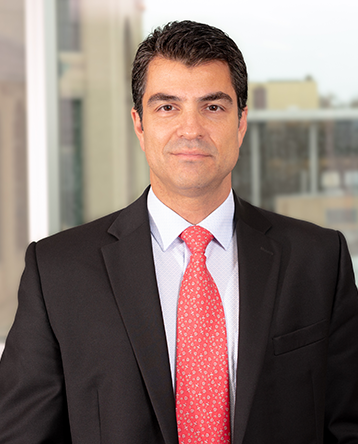
Burak Ozdoganlar is a Ver Planck Endowed Chair Professor of Mechanical Engineering at Carnegie Mellon University (CMU) and Associate Director of the Engineering Research Accelerator. He holds courtesy faculty positions in Biomedical Engineering and Materials Science and Engineering. Ozdoganlar earned his Ph.D. in Mechanical Engineering from the University of Michigan (1999), M.S. degrees from Ohio State University (1993, 1995), and a B.S. in Aeronautical Engineering from Istanbul Technical University (1991). Ph.D., Mechanical Engineering, University of Michigan (1999) MS, Mechanical Engineering, Ohio State University (1995) MS, Aeronautical and Astronautical Engineering, Ohio State University (1993) BS, Aeronautical Engineering, Istanbul Technical University (1991) Ozdoganlar’s research focuses on multi-scale manufacturing processes (macro/micro/nano), precision engineering , structural dynamics , and modal testing , with applications in biomedical device fabrication , microneedle arrays , soft electronics , and 3D ice printing for vascular networks. His work bridges computational modeling with experimental validation. Recent scientific awards include the 2023 AIMBE College of Fellows induction, ASME Fellow (2019), and NSF CAREER Award (2006). He served as interim CTO of the Advanced Robotics for Manufacturing (ARM) Institute and chaired the ASME-MED Manufacturing Equipment Technical Committee. Ozdoganlar leads projects in scalable manufacturing for implantable medical devices , bioelectric medicine , and wearable robotics . His lab develops 3D ice-printed vascular templates for tissue engineering and liquid metal circuits for soft electronics, funded by institutions like the Manufacturing Futures Institute and ARPA-H.
Elif BAŞTÜRK is an Associate Professor at Kırşehir Ahi Evran University's Faculty of Arts and Sciences, Department of Archaeology, specializing in Settlement Archaeology, Hittite studies, and Early Bronze Age ceramics. With a PhD from Ege University (2014), she has led excavations at Tanır Yassıhöyük since 2022 and participated in major projects across Anatolia. Education: PhD in Protohistory and Near Eastern Archaeology, Ege University (2014) MA in Protohistory and Near Eastern Archaeology, Ege University (2006) BA in Archaeology, Ege University (2003) Research Focus: Her work examines archaeological transitions in Anatolia and the Near East, particularly ceramic traditions, settlement patterns, and Assyrian influence during the Bronze and Iron Ages. She employs statistical and technological methods to analyze material culture. Projects: Notable projects include the Tanır Yassıhöyük excavations (2021–present), Assyrian trade influence studies in Afşin-Elbistan plain, and documentation of Early Bronze Age ceramics in Siirt Başur Höyük. She has also led regional surveys threatened by the Ilısu Dam. Publications: Recent outputs include 2025 studies on Iron Age ceramics and Assyrian mill technology, alongside excavation reports from 2016–2024. Her work bridges field archaeology with material analysis, contributing to understanding cultural dynamics in ancient Anatolia.
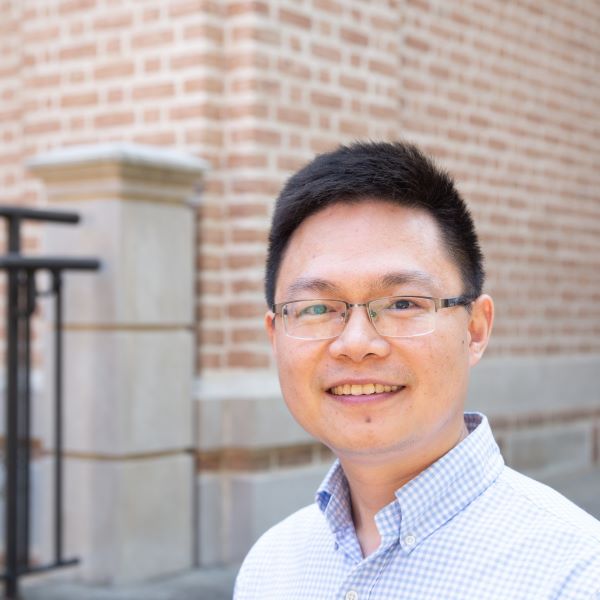
Dr. Kai Gong is an Assistant Professor of Civil and Environmental Engineering at Rice University, with affiliations at the Rice Advanced Materials Institute and Ken Kennedy Institute. His research focuses on sustainable infrastructure materials, environmental sustainability, and materials science. He holds a Ph.D. in Civil & Environmental Engineering and Materials Science from Princeton University, an MEngSci from Monash University (Australia), and dual B.S. degrees from Monash University and Central South University (China). Research Interests: Development of durable, sustainable infrastructure materials Waste encapsulation and conversion to value-added products Carbon mineralization and utilization Advanced characterization techniques (synchrotron/neutron scattering) Data-driven modeling and atomistic simulations Notable Awards: 2023 Le Chatelier Medal (Cement and Concrete Research) 2024 Giatec Award for Best Paper in Sustainability Walbridge Fund Graduate Award (2019) His work integrates computational methods (e.g., molecular dynamics) with experimental techniques to address decarbonization challenges in infrastructure. The Gong Research Group actively seeks motivated researchers for opportunities in sustainable materials innovation.
Denis Fougerouse is a Senior Lecturer at Curtin University’s School of Earth and Planetary Sciences (EPS), specializing in structural and economic geology with a focus on nanogeoscience and advanced characterization techniques. He leads research using atom probe tomography (APT) to study mineral interfaces, fluid dynamics, and critical metal distribution. His work spans asteroid mineralogy (e.g., Ryugu samples), ore genesis, and nuclear geology (e.g., Chernobyl zircon re-equilibration). Fougerouse is a key member of Curtin’s Geoscience Atom Probe Facility, advancing applications of APT in geosciences. Research interests include gold remobilization mechanisms, sulfide chemistry, and shock metamorphism. He has contributed to landmark studies on pyrite microtextures, xenotime geochronology, and nanoparticle transport in gold deposits. Fougerouse’s awards include the 2024 Mineralogical Society of America Award for pioneering nanoscale mineral analysis. His interdisciplinary collaborations span planetary science, environmental geochemistry, and materials science, reflecting his role at the forefront of geoscience innovation.
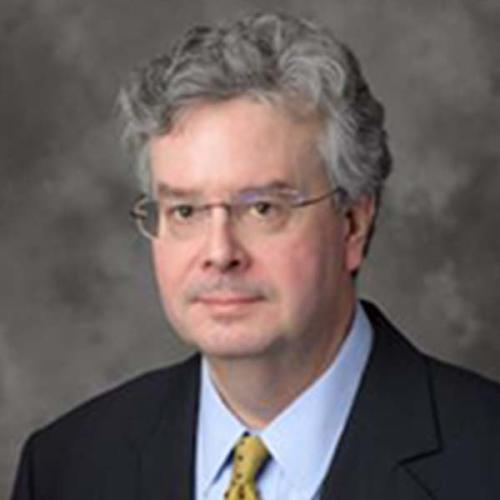
Thomas Hacker is a Professor in the Department of Computer and Information Technology at Purdue Polytechnic Institute, Purdue University. His research focuses on cloud computing, high-performance computing, operating systems, computer networking, and cyber infrastructure . He holds a Ph.D. and M.S. in Computer Science & Engineering from the University of Michigan, along with dual B.S. degrees in Computer Science and Physics from Oakland University. Education: PhD (Computer Science & Engineering), University of Michigan (2004) MS (Computer Science & Engineering), University of Michigan (1993) BS (Computer Science, Mathematics Minor), Oakland University (1989) BS (Physics), Oakland University (1989) Dr. Hacker's research spans cloud and grid computing, operating systems, and distributed systems , with applications in earthquake engineering data systems and AI-driven infrastructure analysis. His recent work explores extended layer 2 networking for bare-metal provisioning ( 2023 IEEE Cloud Summit ) and machine-supported bridge inspection using artificial intelligence ( Transportation Research Record, 2023 ). Notable scientific contributions include 15+ publications on topics like cyberinfrastructure for earthquake engineering, container-based virtualization, and data-intensive systems. His work has been recognized with awards such as the NSF CAREER Award (2010) and multiple Purdue Seed for Success Awards . Key Scientific Awards: NSF CAREER Award (2010) Purdue Seed for Success Awards (2008-2013) ASEE Information Systems Division Best Paper Award (2012) College of Technology Outstanding Faculty in Discovery Award (2010) He has held leadership roles at Purdue, including Department Head (2018-2021) and Interim Department Head (2011-2016) . His career spans academic positions at Indiana University, University of Michigan, and industry roles at Storage Technology Corporation.
Thomas Faulkner is an Associate Professor in the Department of Physics at the University of Illinois at Urbana-Champaign, where he has been a faculty member since 2014. His research bridges condensed matter physics, high energy physics, and quantum information science through the framework of holographic duality (AdS/CFT correspondence), exploring connections between quantum field theories and gravitational theories. Dr. Faulkner received his BSc in Physics from the University of Melbourne in 2003 and his PhD from MIT in 2009 under Hong Liu and Krishna Rajagopal. He held postdoctoral positions at the Kavli Institute for Theoretical Physics (2009-2012) and the Institute for Advanced Study in Princeton (2012-2013) before joining the Illinois faculty. His primary research focuses on three interconnected areas: entanglement entropy as a tool to study quantum phases and gravity; string-inspired models of strongly correlated phenomena including non-Fermi liquids and quantum criticality; and holographic approaches to QCD under extreme conditions. His work leverages theoretical tools from both condensed matter and string theory communities to address fundamental questions in quantum gravity and many-body physics. Dr. Faulkner's publication record shows an evolving research trajectory from early work on strange metal transport and QCD applications toward increasingly sophisticated investigations of entanglement structure, quantum information aspects of holography, and fundamental constraints on quantum field theories. His recent work demonstrates deep connections between quantum information theory, gravitational physics, and condensed matter phenomena. DOE Early Career Award (2018) DARPA Young Faculty Award (2015) Dr. Faulkner has taught a comprehensive range of physics courses from undergraduate College Physics to advanced graduate-level field theory courses. His research program receives significant external funding, supporting his investigations into the quantum structure of spacetime and its connections to condensed matter phenomena. He participates in a vibrant research ecosystem exploring the quantum information foundations of spacetime geometry, contributing to collaborative efforts that are reshaping our understanding of the relationship between quantum mechanics and gravity.
Beatriz Noheda is a Full Professor of Functional Nanomaterials at the University of Groningen's Faculty of Science and Engineering, where she chairs the Solid State Materials for Electronics group at the Zernike Institute for Advanced Materials. She also serves as the founding Director of the Groningen Cognitive Systems and Materials center (CogniGron). Her academic journey began with a PhD in Physics from the Autonomous University of Madrid in 1996, followed by research positions at Brookhaven National Laboratory and various European institutions before joining Groningen through the prestigious Rosalind Franklin Fellowship program in 2004. Her research interests span the physics of functional materials with particular emphasis on ferroelectric, piezoelectric, and multiferroic thin films . She investigates the relationship between structure and functionality, focusing on nano-domain control through strain engineering and the unique properties of domain walls. Her work bridges fundamental physics with two promising application areas: piezoelectric energy harvesting for low-power electronics and the development of novel materials for neuromorphic computing . This dual focus reflects her vision of enabling the next technological revolution through materials science. Noheda's publication record shows a clear evolution from fundamental structural studies of ferroelectric materials toward cutting-edge research in hafnia-based ferroelectrics and neuromorphic computing materials. Her most recent work focuses on oxygen migration in hafnium-zirconium oxide systems, metal-insulator transitions in nickelates, and the development of novel ferroelectric phases suitable for next-generation electronic devices. These publications demonstrate her leadership in advancing the field from basic understanding toward practical applications in memory devices and cognitive computing systems. Fellow of the American Physical Society (2011) - awarded for fundamental structural studies of new phases in perovskite-type ferroelectric materials and domain nanostructures IEEE Robert E. Newnham Ferroelectrics Award (2020) - for outstanding contributions to understanding giant piezoelectricity in lead zirconate titanate Member of the Netherlands Academy of Technology and Innovation (AcTI) (2022) Elected Senior member IEEE (2021) Rosalind Franklin Fellowship (2004) - enabling her successful academic career in Groningen Noheda has secured substantial research funding throughout her career, including a Rosalind Franklin Fellowship (2004-2009), VIDI-NWO Fellowship (2004-2008), TOP-NWO project on Functional Nanowalls (2007-2012), multiple Zernike Institute Dieptestrategie grants, and a significant TOP-PUNT grant (2016-2021). She has supervised numerous students and early-career researchers, contributing to the development of the next generation of materials scientists. Her leadership extends to editorial roles on prestigious journals including Science, Physical Review Applied, and npj Quantum Materials. As Director of CogniGron, Noheda leads an interdisciplinary center focused on developing materials and systems for cognitive computing. Her team combines expertise in functional oxides, nanoelectronics, and neuromorphic engineering to create novel computing paradigms inspired by the human brain. The center represents a strategic initiative at the University of Groningen to position itself at the forefront of cognitive systems research.
Prof. Dr. Taner Akbay is a faculty member at Yeditepe University, Faculty of Engineering , Department of Materials Science and Nanotechnology Engineering. He has held academic positions at institutions including Kyushu University, Oita University, and Imperial College London. Education: PhD in Materials Engineering (1993, Imperial College London); Master’s (1989) and Bachelor’s (1986) degrees from Middle East Technical University. His research spans Materials Engineering , Metallurgy , and Solid Oxide Fuel Cells (SOFCs) , with a focus on oxide ion conductivity, laser surface treatment, and phase transformations. Recent work explores photocatalysis , anion intercalation , and CO2 reduction using computational and experimental approaches. Key article trends include SOFC optimization (2004–2009), strain effects on catalysts (2015–2020), and dual-carbon battery technology (2016–2020). His work bridges fundamental metallurgy and advanced energy materials . Scientific Awards: Postdoctoral Research Sponsorship Award (EPSRC, UK) JSPS Fellowship (Japan) Daiwa Adrian Prize (2016, UK) PhD Studentship at Imperial College (European Commission) He has supervised multiple PhD and Master’s theses, including projects on dual-carbon batteries , microwave absorption nanocomposites , and rare earth recovery . Administrative roles include Head of Department (2020–2021). Non-University Experience: Worked with Mitsubishi Materials Corporation (2001), Çolakoğlu Metalurji (2010), and National Research Council Canada (2009).
Professor Jasper van Wezel is a distinguished academic in the field of Condensed Matter Theory at the University of Amsterdam's Faculty of Science, where he serves as Professor in the Institute for Theoretical Physics (ITFA) within the Institute of Physics. With a career spanning over two decades, he has progressed from Assistant Professor (2014-2016) to Associate Professor (2016-2024) and currently holds the position of Professor since 2024. His academic journey began with a PhD in theoretical condensed matter physics from Leiden University in 2007, followed by prestigious fellowships at Argonne National Laboratory and Homerton College, Cambridge. PhD in theoretical condensed matter physics (cum laude), Leiden University, 2007 Master's diploma in theoretical condensed matter physics (cum laude), Leiden University, 2003 Dutch VWO Diploma (cum laude), Dalton Scholengemeenschap, Den Haag, 1997 US High School Diploma (cum laude), Sanford High School, Maine, USA, 1998 Professor van Wezel's research focuses on several interconnected areas within Condensed Matter Theory. His work explores competing instabilities in Charge Density Wave materials, including Superconductivity and Charge Order, Combined Charge and Orbital Order, and Transition-metal dichalcogenides. He has made significant contributions to Topology in Condensed Matter, particularly examining the Role of crystal symmetries and Topology in non-Hermitian systems. A major theme in his research involves investigating the Connections between Quantum and Classical behaviour, with special emphasis on Spontaneous Symmetry Breaking both in equilibrium (The role of the Thin Spectrum) and dynamically (Spontaneous loss of Unitarity). Analysis of Professor van Wezel's recent publications reveals a strong focus on quantum phenomena in condensed matter systems, with particular attention to topological aspects, symmetry breaking, and connections to fundamental physics concepts like black hole thermodynamics. His work often bridges theoretical concepts with potential experimental realizations, as evidenced by studies on electron patterns in materials like TaS2 and theoretical frameworks for understanding quantum phase transitions. Bristol Physics Teaching Award (2014) Students' Award for Outstanding Teaching (2014) Fellow of the Higher Education Academy (2014) Aneesur Rahman Fellowship at Argonne National Laboratory (2010-2012) Junior Research Fellowship at Homerton College, Cambridge (2007-2010) Physics 'Discovery of the year' by Leiden University Physics department (2005) 'Onderwijsprijs Natuurkunde' teaching award (2004/2005) Professor van Wezel has secured numerous research grants including an ENW-M grant (2023), an ENW-Groot project with Leiden University (2021), and a prestigious VIDI personal grant from NWO (2014). He has supervised over 50 students at various levels, including PhD candidates, MSc students, and BSc students, fostering the next generation of physicists. His leadership extends to organizing conferences, serving on PhD committees, and holding administrative roles such as chair of the educational committee for the Dutch Research School in Theoretical Physics. His research group at the University of Amsterdam's Institute for Theoretical Physics maintains active collaborations with institutions worldwide, including Leiden University, University of Cambridge, University of Bristol, and research centers in France, Germany, and Poland. The group's work combines analytical theoretical approaches with computational methods to tackle fundamental questions in quantum condensed matter physics.
Professor Stefan Maier holds the position of Head of School in Physics and Astronomy at Monash University. Previously, he served as the Lee Lucas Chair in Experimental Physics at Imperial College London (2007–2018) and built a new chair at Ludwig-Maximilians-Universität München (2019–2022). His research focuses on nanophotonics, plasmonics, and metasurface engineering, with emphasis on optical trapping, nonlinear optics, and novel photonic devices. Education: Bachelor’s degree in Physics, Technical University of Munich M.Sc. and Ph.D. in Applied Physics, California Institute of Technology (Caltech) Research Interests: Development of metamaterials and metasurfaces for light manipulation Applications of nanophotonics in sensing, imaging, and quantum technologies Optical trapping and plasmonic catalysis Nonlinear optical phenomena in nanostructured materials Articles Trends: Recent work emphasizes bound states in the continuum (BICs), 3D nanoprinted optical platforms, and active metasurfaces with tunable properties. Key themes include hybrid nanophotonics, ultra-high-Q resonators, and plasmonic nanomaterials for energy applications. Awards: ISI Highly Cited Researcher (2017–present) Grants/Projects: Chief Investigator in the All-on-chip twisted light modulator project (2022–2025) Leadership in Monash’s nanophotonics research team Labs/Teams: Directs a multidisciplinary lab at Monash focused on integrating 3D nanofabrication with optical physics, including collaborations in metafiber development and plasmonic biosensing.
Anne BOUTIN is a Research Director at the French National Center for Scientific Research (CNRS) and Professor at the École Normale Supérieure (ENS) in Paris, France. She leads the Department of Chemistry at ENS, focusing on the thermodynamics of confined fluids and molecular simulations of porous materials like metal-organic frameworks (MIL-53, ZIF-8) and zeolites. Education: Habilitation (1999), PhD in Chemical Physics (1992), Graduate of École Normale Supérieure (1992), MSc (1990) – all from University of Paris XI, Orsay. Positions: CNRS Research Fellow (1994–2009, University of Paris XI; 2009–present, ENS), Visiting Scientist at UC Santa Barbara (1999), Postdoctoral at Imperial College London (1993–1994). Research spans thermodynamic modeling of adsorption-induced structural transitions, polarizable force fields for charged materials, fluid dynamics in nanopores, and stability analysis of flexible frameworks. Google Scholar highlights recent work on electrolyte intrusion (2023) and defect impacts in zeolites (2023). Publications emphasize computational approaches to water confinement , gas separation , and material flexibility . Her 41+ peer-reviewed articles reflect expertise in Monte Carlo , molecular dynamics , and force field development . Awards: Nathalie Demassieux PhD Award (1993) CNRS Bronze Medal (1999) Legion of Honor (2017) Teaching: Statistical thermodynamics. Students: Supervised 17 PhD/postdoc directions.
Dr. Simon Beaumont is an Associate Professor in the Department of Chemistry at Durham University , with additional responsibilities as Associate Dean (PGR) in the Faculty of Science. His research program integrates heterogeneous catalysis , nanomaterials , and in situ spectroscopic techniques to develop sustainable chemical processes. BA & MSci Natural Sciences, University of Cambridge (2003-2007) PhD in Heterogeneous Catalysis, University of Cambridge (2010) Postdoctoral Fellowship at UC Berkeley (2010-2012) Research foci include mechanistic studies of catalytic processes, nanoparticle synthesis , and in situ characterization via X-ray absorption (NEXAFS), DRIFTS, and Raman. His work addresses challenges in CO2 hydrogenation , biomass conversion , and environmental remediation , supported by national/EU/industrial funding. Recent publications highlight trends in selective hydrogenation (furfural), multi-functional catalysts (acid-base systems), and nanoparticle stability under reactive conditions. All studies emphasize molecular-level understanding for practical catalyst design. Scientific awards include Leverhulme Trust and Addison Wheeler fellowships. Teaching portfolio spans first-year laboratories , organic chemistry tutorials , and advanced catalysis lectures . Supervision of five research postgraduates and leadership of industry-funded projects further demonstrate his academic impact.
Prof. Prita Pant is a faculty member in the Department of Metallurgical Engineering and Materials Science at the Indian Institute of Technology Bombay (IIT Bombay). She holds a Ph.D. and M.S. in Materials Science from Cornell University and a B.E. in Metallurgical Engineering from Roorkee University. Her research focuses on the mechanical behavior of advanced materials, particularly thin films and shape memory alloys. B.E., Metallurgical Engineering, Roorkee University (1997) M.S., Materials Science, Cornell University (2001) Ph.D., Materials Science, Cornell University (2004) Her research interests include mechanical behavior of thin films , dislocation dynamics , nanoindentation studies , simulation of deformation processes , and Ni-Ti based shape memory materials . She employs both experimental and computational techniques to investigate microstructural evolution and deformation mechanisms in metals. The available publications indicate a strong focus on thin film mechanics , dislocation behavior , and microstructure-property relationships , particularly under mechanical loading. Her work bridges computational modeling and experimental characterization, with applications in structural and functional materials. There are no scientific awards explicitly mentioned in the provided text. While no specific students are listed, Prof. Pant leads the Computational Mechanics and Experimental Group (CMEG@IITB) , indicating active supervision of graduate students and involvement in research grants. Her research group website suggests ongoing funded projects and collaborative work. She is affiliated with the Computational Mechanics and Experimental Group (CMEG@IITB) , which conducts research on multiscale mechanics of materials, combining simulation and experimentation to understand deformation phenomena.
Prof. Gustau Catalán is an ICREA Research Professor and Group Leader of the Oxide Nanophysics Group at the Catalan Institute of Nanoscience and Nanotechnology (ICN2). He earned his PhD in Physics from Queen’s University of Belfast (2001) and held postdoctoral positions at IMEDEA (2002–2004), University of Groningen (2004–2005), and University of Cambridge (2005–2009). Since 2009, he has led pioneering research in flexoelectricity, domain wall physics, and strain-engineered oxide materials, supported by an ERC Grant. Education: PhD in Physics, Queen’s University of Belfast (2001) BSc in Physics, Universitat de Barcelona (1997) Research Interests: Gustau Catalán's work focuses on the interplay between ferroelectricity, flexoelectricity, and metal-insulator transitions in oxide materials. His research explores how these properties manifest at reduced dimensions, with applications in nanoelectronics, photovoltaics, and smart mechanical systems. Key areas include polarization dynamics, domain wall engineering, and strain-gradient effects. Recent Publications (2024–2025): The 15 most recent articles highlight advancements in flexoelectricity (e.g., water ice and halide perovskites), domain wall dynamics (e.g., tungsten trioxide), and strain-gradient-induced photovoltaic effects. These studies span materials like PbZrO3, BaTiO3, and BiFeO3, with implications for energy harvesting, memory devices, and nanoscale actuators. Scientific Awards: ERC Grant for flexoelectricity laboratory establishment Advising and Collaborations: While specific students are not listed, Catalán collaborates extensively with researchers across Europe. His group develops novel oxide-based systems and investigates their electromechanical and optoelectronic properties. Laboratory & Team: At ICN2, he established one of the world's first flexoelectricity laboratories, leading a team that explores oxide nanophysics through advanced characterization techniques like AFM, X-ray diffraction, and electrocaloric imaging.
Moussa Ngom is an Associate Professor in the Department of Physics, Applied Physics and Astronomy at Rensselaer Polytechnic Institute (RPI), affiliated with the School of Science and research centers including the Center for Ultrafast Optical Sciences (CUOS) and the Center for Materials, Devices, and Integrated Systems (CMDIS). His work focuses on wavefront shaping, quantum optics, and structured light manipulation to address challenges in biological imaging, quantum communication, and nuclear security.